
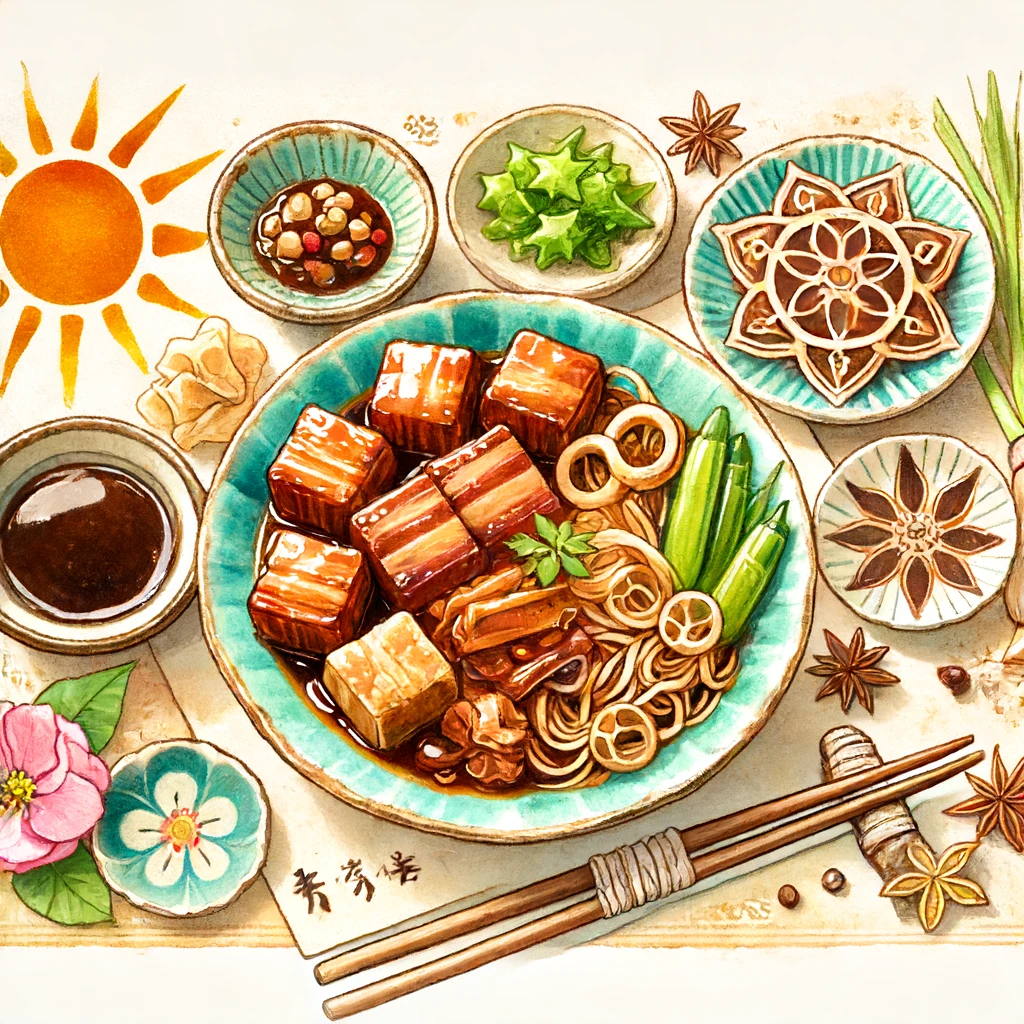
Nurtured under the warm sun of Okinawa, “Rafute” is a dish rich in tradition and history. This exquisite dish, characterized by the tenderness of pork and its deep flavors, is especially beloved among Okinawan cuisine. However, recreating its authentic taste requires a few special techniques. In this article, we’ll introduce you to everything you need to know about Rafute, starting from its basics to its various recipes and modifications. We provide detailed explanations on how to tenderize the meat, the key points of seasoning, and tips to avoid mistakes, making it easy for even beginners to try. Additionally, we recommend beverages to enjoy with Rafute, so you can fully savor the depth of Okinawan cuisine at home. By reading this article, you will be one step closer to mastering Rafute. Bring the warmth and love of Okinawa to your dining table and enrich your meals with family and friends.
What is Rafute?
Rafute is a traditional dish that stands as a symbol of Okinawan cuisine, carrying a rich history and cultural significance. Its deep flavors and unique tenderness have continued to captivate many people.
The History and Cultural Significance of Rafute in Okinawa
Rafute is a pork dish believed to have been introduced from China during the Ryukyu Kingdom era. Originally, it was a high-class dish enjoyed by royalty and nobility, often prepared during special occasions or family gatherings. In Okinawa, there is a culture of “eating every part of the pig,” reflecting a philosophy of not wasting any part of the animal, from the ears to the feet. This ethos is embodied in Rafute, making it not just a meal but a means of expressing gratitude and respect for life among Okinawans.
The Characteristics and Secrets of Rafute’s Deliciousness
The hallmark of Rafute is its incredibly tender texture and deep flavor. This distinctive texture is achieved by simmering the meat slowly at a low temperature for a long time. Traditional Okinawan ingredients like brown sugar, awamori (Okinawan distilled spirit), and soy sauce are used, creating a rich blend of sweetness and umami that gives Rafute its unique flavor. These ingredients are crucial in defining Rafute’s taste, with their delicate balance being the secret to its deliciousness. Furthermore, using fresh pork nurtured in Okinawa’s rich natural environment enhances the flavor of Rafute even more.
In this way, Rafute, with its history, cultural background, and unique cooking methods and seasonings, is one of the most beloved dishes in Okinawan cuisine. Including this information in your blog can convey the depth of Okinawan cuisine and its allure, encouraging readers to visit. By introducing tips for making Rafute and easy recipes for home cooking, you can provide practical information that enriches readers’ lives and attracts more visitors to your blog.
Preparations for Making Rafute
Before making Rafute, confirming the necessary ingredients and tools is the first step to success. Here, we introduce what you need to prepare for making Rafute.
List of Necessary Ingredients
The main ingredients for making Rafute include pork belly, brown sugar, soy sauce, and awamori. These ingredients form the basic flavor of Rafute. Choose pork belly with a good balance of meat and fat. Using Okinawan brown sugar will result in a more authentic taste. It’s recommended to use Okinawan soy sauce and awamori if possible. By preparing these ingredients, you can recreate a taste close to authentic Rafute.
Introduction to Tools and Cooking Utensils
For making Rafute, you’ll need a large pot or pressure cooker and a heat-resistant container for simmering the meat. Since it involves long cooking times, a large pot is convenient. Also, prepare tongs for turning the meat and measuring spoons for adjusting the seasoning. Using these tools will make the cooking process smoother and help you make delicious Rafute.
Where to Buy and Tips for Choosing Ingredients
You can find ingredients at supermarkets, online shops, and especially Okinawan food specialty stores. It’s recommended to buy brown sugar and awamori from Okinawan food specialty stores. When choosing ingredients, prioritize fresh, high-quality meat and Okinawan seasonings whenever possible. Following these tips will allow you to enjoy more authentic Rafute at home.
Guiding readers on making the right choices from the preparation stage enhances the value of your blog. This way, readers can take the first step to enjoying authentic Okinawan cuisine at home. Continuously providing valuable information through your blog can help attract and retain readers.
Basic Rafute Recipe
To help you recreate the traditional taste of Okinawa at home, here is a basic Rafute recipe. This recipe is detailed enough for beginners to follow easily.
Preprocessing and Preparation of Ingredients
The first step in making Rafute is preprocessing the ingredients. Prepare 1kg of pork belly, ideally in a large chunk, to ensure it turns out delicious when simmered. Pour hot water over the meat to remove impurities from the surface, ensuring a clean start to the cooking process. This step clarifies the overall taste and brings out the meat’s natural deliciousness. Pre-measuring the awamori, soy sauce, and brown sugar is also crucial for smooth cooking.
Detailed Cooking Steps
Once the preprocessing is done, move on to the cooking steps. First, put the meat in a large pot, add enough water to cover it, and bring to a boil over high heat. Once boiling, reduce to a simmer, skimming off any scum, and cook for about an hour. Then, add 100g of brown sugar, 200ml of soy sauce, and 100ml of awamori, and simmer for another 2-3 hours until the meat becomes tender. The long simmering process at low heat creates Rafute’s unique tenderness and rich flavor.
Introduction to Modified Recipes
Once you’ve mastered the basic Rafute recipe, try experimenting with modifications. You can add vegetables or spices to suit your taste. Popular modifications include “vegetable-loaded Rafute” with goya or papaya, or “spicy Rafute” with added chili peppers. These variations help you discover new charms of Rafute.
This section introduces the basics and variations of making Rafute. By reading this, your readers can easily try traditional Okinawan cuisine at home and enjoy the fun of adding originality. Providing such content helps offer valuable information to your readers and promotes blog traffic.
Tips and Techniques
When making Rafute, the key to success lies in the tenderness of the meat and the seasoning. Here, we share tips and techniques to make your Rafute even more delicious.
Secrets to Tenderizing the Meat
The biggest secret to tenderizing Rafute meat is slow cooking at low temperatures. After bringing the water to a boil with the meat, reduce the heat and simmer slowly to break down the meat fibers gently. Pouring hot water over the meat before simmering to remove surface impurities also helps achieve tender meat. Additionally, keeping the pot covered to retain steam while simmering helps maintain the meat’s moisture, making it tender.
Key Points for Seasoning
The key to seasoning Rafute is the balanced use of ingredients. The sweetness of brown sugar, the umami of soy sauce, and the flavor of awamori are crucial. Brown sugar adds depth and richness, soy sauce balances the sweetness, and awamori not only adds aroma but also tenderizes the meat. Adding these seasonings at the right timing brings out the unique flavor of Rafute.
Tips to Avoid Mistakes
To avoid mistakes when making Rafute, pay attention to a few key points. Overcooking the meat can make it too soft and mushy, so be mindful of the simmering time. Add seasonings in stages to adjust the flavor gradually. Adding all the seasonings at once can make the taste too strong or unbalanced. Regularly check the taste during simmering and adjust the seasonings as needed.
Troubleshooting in Rafute Making
Knowing how to deal with common problems and questions in Rafute making is a shortcut to success, especially for beginners. Here, we introduce common issues and their solutions.
Causes and Solutions for Tough Meat
The main causes of tough meat in Rafute are short simmering times or too high a heat. To tenderize the meat, simmer it slowly at a low temperature for a long time. If the meat becomes tough, add a little water, reduce the heat to the lowest setting, and simmer for additional time to tenderize the meat. Proper adjustment of simmering time and heat is key to tender meat.
Adjusting the Flavor when it is Too Bland or Too Strong
If the Rafute tastes too bland, gradually add soy sauce, brown sugar, or awamori to adjust the flavor. Add small amounts and taste frequently until you reach the desired flavor. If the flavor is too strong, dilute it by adding a bit of water, but be careful not to dilute too much. The key to successful flavor adjustment is to proceed carefully.
Storage Methods and Shelf Life
Rafute can be refrigerated for about three days to maintain its flavor. When storing, transfer the cooled Rafute to a clean container and refrigerate. For longer storage, freezing is recommended, which can preserve the quality for about a month. When using, thaw naturally or defrost in the microwave and reheat. Proper storage methods allow you to enjoy Rafute anytime.
Including these FAQs and troubleshooting tips in your blog can help readers preemptively solve potential problems and provide a more enjoyable cooking experience. Practical information
like this enhances reader satisfaction and encourages revisits to your blog.
Suggestions for Enjoying Rafute
While Rafute is delicious on its own, it can be enjoyed in various dishes for a broader Okinawan culinary experience. Here, we introduce some ideas for enjoying Rafute.
Okinawan Dishes Using Rafute
A recommended Okinawan dish using Rafute is “Rafute Don.” Place tenderly simmered Rafute over rice and drizzle with some broth for a simple yet satisfying dish. Another recommendation is “Rafute Soba,” where Rafute is used as a topping for Okinawan soba, adding a deep flavor to the usual soba experience.
Modified Dishes Using Rafute
Rafute can be adapted into various dishes. For example, “Rafute Taco Rice” involves finely chopping Rafute and using it as a taco rice topping. The umami of Rafute blends perfectly with the spices, creating a new flavor experience. “Rafute Salad” is another great option, where tender Rafute is used as a salad topping for a hearty dish. These modifications bring out new aspects of Rafute.
Recommended Drinks to Enjoy with Rafute
To accompany Rafute, awamori is a perfect choice. Its clear flavor complements Rafute’s richness. Sanpincha (jasmine tea) is also a good match, as its refreshing aroma balances the richness of Rafute and refreshes the palate after the meal. Pairing these drinks with Rafute enhances the overall dining experience.
Incorporating these suggestions into your blog can introduce various ways to enjoy Rafute, captivating readers’ interest. By conveying the diverse appeal of Rafute, you can communicate the depth and enjoyment of Okinawan cuisine, driving traffic to your blog.
Q&A about Making Rafute
The meat in Rafute turns out tough. What can I do?
The main cause of tough meat is either a short simmering time or too high a heat. To make the meat tender, simmer it slowly at a low temperature for a long time. If the meat is already tough, add some water, reduce the heat, and simmer for additional time.
How can I adjust the flavor if Rafute tastes bland?
If the flavor is bland, gradually add soy sauce, brown sugar, or awamori. Add in small increments and taste frequently until the desired flavor is achieved.
How can I store Rafute for a longer period?
Rafute can be refrigerated for about three days and frozen for about a month. For refrigeration, transfer cooled Rafute to a clean container. For freezing, pack appropriately and store in the freezer.
What are the key points for seasoning Rafute?
The key points for seasoning Rafute are balancing brown sugar, soy sauce, and awamori. These ingredients create Rafute’s unique depth of flavor. Season gradually and adjust based on taste.
What are some modified dishes using Rafute?
Modified dishes include Rafute Don and Rafute Soba. Rafute can also be used in Taco Rice or as a salad topping, allowing you to enjoy its umami in various ways.
Conclusion
Rafute, a hallmark of Okinawan cuisine, continues to captivate many with its deep flavor and tenderness. The dish has a long history, intertwined with Okinawan culture, and its unique seasoning using brown sugar, soy sauce, and awamori is key to its deliciousness.
Before making Rafute, proper preparation of ingredients and tools is crucial. Ensure you have pork belly, brown sugar, soy sauce, and awamori, and use a large pot or pressure cooker. Choosing fresh, high-quality meat and Okinawan seasonings will help recreate an authentic taste.
The basic Rafute recipe involves simple steps, but preparation and cooking techniques are essential. Slow cooking at a low temperature tenderizes the meat, and balanced seasoning with brown sugar, soy sauce, and awamori brings out the unique flavor of Rafute. Be careful not to overcook the meat.
To further enjoy Rafute, try various modifications. From Rafute Don and Rafute Soba to Taco Rice and salads, Rafute’s possibilities are endless. Pairing it with awamori or sanpincha enhances the dining experience.
When making Rafute, pay attention to meat preprocessing, cooking steps, seasoning, and storage methods. These details help you enjoy authentic Okinawan cuisine at home. Rafute, a dish filled with Okinawan tradition and flavor, is a special meal to enjoy both in the making and eating process.

コメント