
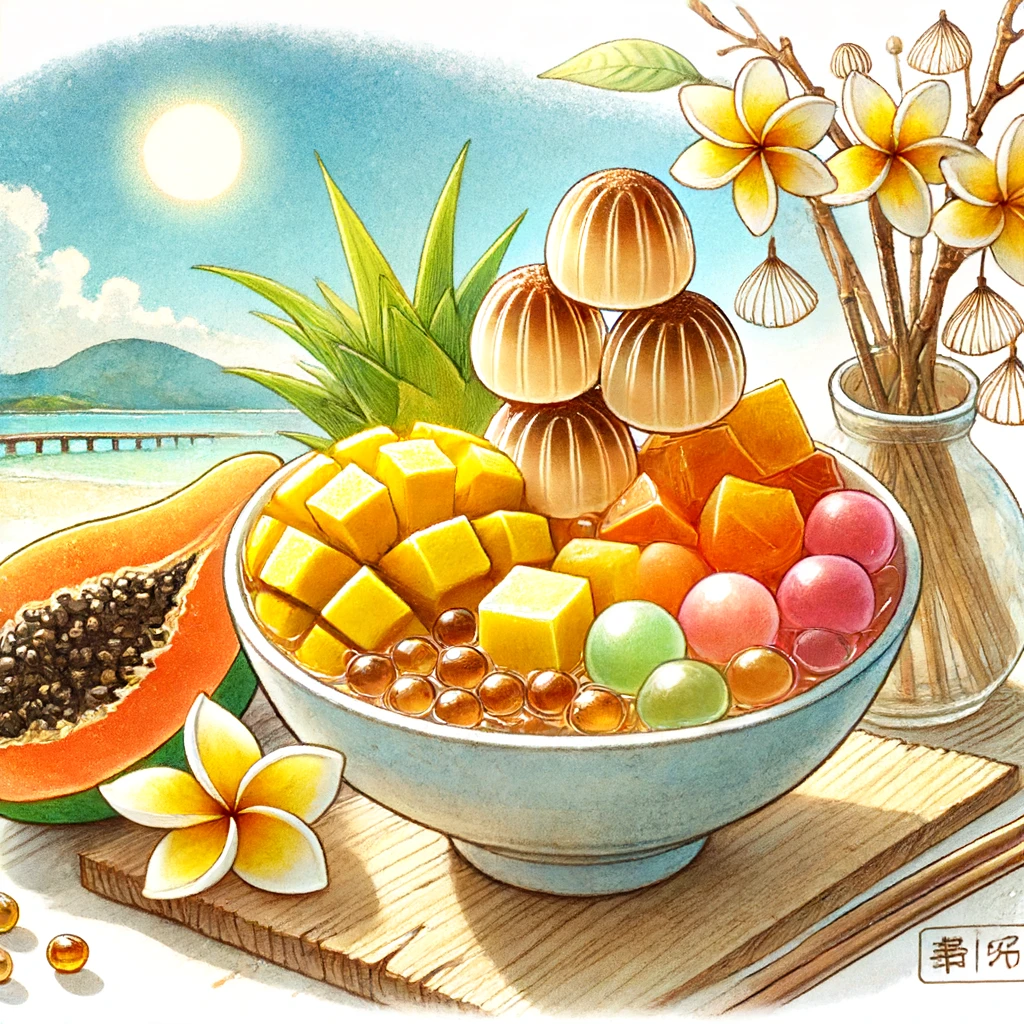
Okinawa Anmitsu, a special dessert born from the rich nature and culture of Okinawa, is the ultimate treat to savor the unique flavors of this region. By combining traditional Japanese anmitsu with tropical fruits, brown sugar, and agar jelly, it captures the essence of Okinawa’s sun and sea. Making this Okinawa-style anmitsu at home might seem challenging, but here, we’ll introduce tips for creating this delightful dessert easily and deliciously, even for beginners.
First, we’ll explain every step in detail, from selecting the base agar and brown sugar to the small techniques that make anmitsu delicious, and finally, the final checks to enhance texture and flavor. Additionally, we’ll provide advice on arranging Okinawan-style anmitsu using fruits, choosing seasonal fruits, and tips for colorful presentation to bring out the best of Okinawa anmitsu.
The key to making delicious Okinawa anmitsu is to pay attention to each ingredient and not skimp on effort. By reading this article, you can enjoy professional-level Okinawa anmitsu at home. Enjoy a special moment with Okinawa anmitsu, a fusion of tradition and modern techniques.
- Introduction: The Charm of Okinawa Anmitsu
- Basic Anmitsu Recipe
- Creative Recipes
- Common Questions and Troubleshooting
- Professional Tips for Enhancing Flavor
- Enjoying Okinawa Anmitsu at Home
- FAQs about Okinawa Anmitsu
- Conclusion
Introduction: The Charm of Okinawa Anmitsu
Okinawa anmitsu is a unique dessert nurtured by the distinctive climate and culture of the island. This traditional sweet not only delights the taste buds but also serves as a precious link to Okinawa’s history and traditions. Featuring vibrant fruits, locally-sourced beans, distinctive agar jelly, and shiratama, Okinawa anmitsu stands out from similar desserts in other regions. In this section, we’ll delve into the charm of Okinawa anmitsu and explore why it captivates so many people.
History and Characteristics of Okinawa Anmitsu
The Origins of Okinawa Anmitsu
The origins of Okinawa anmitsu date back to the Ryukyu Kingdom era. Through trade with China and Southeast Asia, various cultures and ingredients were introduced to Okinawa. Among these was a dessert that could be considered the prototype of anmitsu, which evolved by merging with Okinawan food culture into its current form. This deep history gives Okinawa anmitsu its unique flavor and diversity.
Why It’s Loved Locally
Okinawa anmitsu is deeply loved locally due to its seasonal appeal and use of local ingredients. Okinawa’s warm climate produces a variety of fruits throughout the year, which are abundantly used in anmitsu, offering seasonal flavors to visitors. It’s also a staple at family and friend gatherings, making it a beloved sweet that accompanies special memories for Okinawans.
What Makes Okinawa Anmitsu Different
Unique Ingredients and Flavors
The main feature of Okinawa anmitsu is its unique ingredients. In Okinawa, anmitsu is enhanced with local specialties like brown sugar, island tofu, and even umi-budo (sea grapes), creating flavors that can’t be found elsewhere. These ingredients, nurtured by Okinawa’s natural environment and history, add a deep taste and story to the anmitsu.
Distinct Okinawan Techniques
Another reason Okinawa anmitsu is special is its unique preparation methods. For example, instead of agar, Okinawans sometimes use gelatin from Agu pork to create a jelly-like anmitsu. These traditional yet distinct methods make Okinawa anmitsu different from those in other regions, offering unique textures and flavors.
Okinawa anmitsu embodies the stories woven by Okinawa’s rich nature and culture, from its origins and techniques to its ingredients. These characteristics not only allow visitors to feel Okinawa’s history and environment but also offer local people the joy of pursuing new flavors while preserving traditions. Sharing the depth of Okinawa’s food culture through Okinawa anmitsu is a crucial mission for those running blogs on Okinawan cuisine, providing readers with a deeper connection to Okinawan culinary charm.
Basic Anmitsu Recipe
Okinawa anmitsu, a traditional Japanese dessert adapted with Okinawan flair, uses local ingredients to add unique flavors. Like standard anmitsu, it consists of sweet anko (red bean paste), fruits, and agar jelly, but the Okinawan version features brown sugar anko and tropical fruits. Here, we introduce a basic Okinawa anmitsu recipe that anyone can make easily.
Basic Okinawa Anmitsu Recipe
Ingredients (Serves 4)
Brown Sugar Agar
- Water: 500ml
- Powdered agar: 5g
- Brown sugar: 100g
Anko (Sweet Red Bean Paste)
- Azuki beans: 200g (or canned/pouch anko)
- Brown sugar (to adjust sweetness if desired)
Fruit Toppings
- Tropical fruits like mango, papaya, pineapple (as needed)
Shiratama Dumplings
- Shiratama flour: 100g
- Water: 120ml
- Brown sugar syrup (for topping, use store-bought)
Instructions
Preparing the Brown Sugar Agar
- In a pot, combine water and powdered agar, and heat until the agar is fully dissolved, stirring well.
- Add the brown sugar and dissolve it completely before pouring the mixture into molds.
- Chill in the refrigerator until set.
Preparing the Anko
- If making from azuki beans, cook the beans until soft, then add brown sugar to sweeten and thicken. If using pre-made anko, mix in some brown sugar to give it an Okinawan touch.
Preparing the Fruit Toppings
- Cut tropical fruits like mango, papaya, and pineapple into bite-sized pieces.
Preparing Shiratama Dumplings
- Forming and Boiling: To make shiratama dumplings, start by mixing shiratama flour with a small amount of water, kneading until the dough reaches the softness of an earlobe. Gradually add water to prevent stickiness, then shape the dough into small balls. Boil the dumplings in hot water until they float, then cook for another 1-2 minutes before transferring to cold water to cool. This process ensures a firm outside and chewy inside.
Assembly
- Cut the set brown sugar agar into bite-sized pieces and place them in a serving dish.
- Add the anko, fruit, and shiratama dumplings, and drizzle with brown sugar syrup.
Okinawa anmitsu, with its cold, sweet, and flavorful components, is perfect for hot weather. The distinct taste of brown sugar and the vibrant, tangy tropical fruits make for a delightful and unique experience.
Tips for Making Delicious Okinawa Anmitsu
Choosing the right ingredients is crucial for making delicious Okinawa anmitsu. Here are some tips for selecting key ingredients.
Brown Sugar
- Choosing: Opt for Okinawan brown sugar for its rich, deep flavor. Look for products labeled “kurozato” instead of “sugar” or “black sugar” for authenticity.
- Tips: Brown sugar’s strong flavor influences the entire dish, so adjust the sweetness to your preference gradually by adding small amounts.
Agar
- Choosing: Agar is essential for the texture of anmitsu. Powdered agar is recommended for beginners as it’s easier to handle and sets uniformly.
- Tips: Adjust the agar quantity based on the water volume, following package recommendations to achieve the desired firmness.
Anko
- Choosing: Okinawa anmitsu uses sweet anko made with brown sugar. For convenience, use store-bought anko and add brown sugar, or make it from scratch for a more authentic taste.
- Tips: Even with store-bought anko, adding brown sugar enhances the unique flavor. Adjust the amount to suit your taste.
Tropical Fruits
- Choosing: Key to Okinawa anmitsu are fresh, vibrant tropical fruits like mango, papaya, and pineapple. Choose ripe fruits with bright colors and sweet aromas.
- Tips: Select fruits that are in season for the best taste. Their quality enhances the overall flavor and presentation of the anmitsu.
Shiratama Flour
- Choosing: Choose shiratama flour made from high-quality glutinous rice for a smooth texture. Look for products labeled “joshipon” for a chewy texture.
- Tips: Select natural, additive-free products to retain Okinawa’s flavors.
Presentation and Garnishing Tips
Basic Presentation
The presentation of Okinawa anmitsu relies on a balance of colors and textures. Use transparent containers to highlight the layered beauty of the dish. Start with a base of brown sugar agar, layer with shiratama dumplings, evenly distribute the anko, and top with colorful fruit. Drizzle with brown sugar syrup for a rich finish.
Ideas for Beautiful Presentation
Enhance the appeal of Okinawa anmitsu by playing with colors. Use bright fruits like mango and papaya for yellow, and add green or pink fruits like kiwi and dragon fruit. A small sprig of mint adds a refreshing touch. Arrange the fruits in a deliberate pattern for a more aesthetically pleasing look.
Creative Recipes
Okinawa-Style Anmitsu with Fruits
Recommended Fruits
Okinawa’s rich nature produces a variety of tropical fruits perfect for anmitsu. Recommended fruits include mango, papaya, pineapple, and
shikuwasa. These fruits balance sweetness and acidity, adding a refreshing flavor to the anmitsu. Mango, in particular, stands out with its rich sweetness.
Fruit Cutting and Presentation
Cut the fruits to enhance both flavor and visual appeal. Slice mango and papaya thinly, and cut pineapple into bite-sized pieces. Arrange the fruits with contrasting colors to create a vibrant and appetizing dish.
Colorful Anmitsu with Yokan
Choosing and Preparing Yokan
Colorful anmitsu benefits from the inclusion of vibrant yokan (sweet bean jelly). Select yokan with bright colors and flavors that complement Okinawa anmitsu, such as green matcha or red strawberry.
Making Colorful Anmitsu
To create colorful anmitsu, use various yokan pieces alongside the agar and fruits. Layer the yokan with the other ingredients to add visual interest and depth of flavor.
By following these tips, you can enjoy authentic Okinawa-style anmitsu at home, celebrating the vivid colors and unique flavors that make it special.
Common Questions and Troubleshooting
What to Do When Agar Doesn’t Set
Checking the Agar Dissolution
It’s crucial to fully dissolve agar. Boil it in water until completely transparent. Inadequate dissolution can prevent proper setting. Stir regularly during boiling to ensure even dissolution.
Re-setting the Agar
If the agar doesn’t set, reheat it with a bit more water if necessary, bringing it to a boil and simmering until fully dissolved. Pour into molds again and chill until set.
Why Shiratama Dumplings Become Hard and How to Fix It
Causes of Hard Dumplings
Hard dumplings usually result from dry dough or overcooking. Proper hydration during kneading and careful boiling are key.
Tips for Making Fluffy Dumplings
For fluffy dumplings, ensure the dough is soft and pliable, not too dry. Boil until they float and then transfer to cold water to cool rapidly, preserving a soft interior.
Following these tips helps solve common issues, ensuring a delicious and visually appealing anmitsu every time.
Professional Tips for Enhancing Flavor
Handling and Tips for Using Stick Agar
Applications in Other Desserts
Agar has a stronger gelling ability than gelatin and is suitable for vegetarian desserts. Use it to make jelly, pudding, or mousse by adjusting the quantity for desired texture.
Storage of Agar
Store opened stick agar in an airtight container in a cool, dark place to avoid moisture. Proper storage maintains its quality for a long time.
Choosing and Preparing Fruits for Color and Taste
Selecting Seasonal Fruits, Cutting Techniques, and Colorful Presentation
Choose the freshest, most flavorful fruits in season. In summer, use mangoes and pineapples; in winter, opt for strawberries and citrus. Uniformly cut the fruits and arrange them attractively to enhance the dessert’s visual appeal.
Variations Using Fruits
Fruits can be pureed, made into jam, or compoted to add new flavors and textures. Experimenting with different preparation methods enriches the variety and enjoyment of fruit-based desserts.
Incorporating these professional tips will elevate your anmitsu-making skills, leading to more delicious and beautifully presented desserts. Handling ingredients and preserving seasonal qualities are key to successful recipes. Applying these insights from professionals will broaden your culinary repertoire and make home dessert-making more enjoyable.
Enjoying Okinawa Anmitsu at Home
Okinawa anmitsu, with its unique flavors and vibrant appearance, continues to captivate many. To enjoy making Okinawa anmitsu at home, knowing a few handy tips can significantly enhance its taste and presentation. These tips ensure your anmitsu is as delicious as it can be.
Small Tricks to Enhance Anmitsu
Final Checks for Texture and Flavor
Before serving, ensure the texture and flavor are just right. Check that the agar is properly set, the anko is sweet enough, and the fruits are fresh and colorful. The balance of agar and anko is crucial for delicious anmitsu. If the agar is too firm, a bit of warm water can help adjust its texture. Adjust the sweetness of anko with brown sugar or regular sugar to your preference.
Storage and Shelf Life
Anmitsu is best enjoyed fresh, ideally on the day it’s made. While it can be stored in the fridge for a couple of days, the agar may lose moisture and the fruits their freshness. If storing, keep the fruits in a separate container and add them just before serving to maintain their quality.
Sharing these tips on your blog provides valuable insights for readers, enhancing their culinary experience. Detailed instructions on making delicious Okinawa anmitsu attract interest and increase site visits. These contents are also shareable on social media, reaching a broader audience. Spread the charm of Okinawa cuisine through traditional desserts like anmitsu.
FAQs about Okinawa Anmitsu
What fruits are best for Okinawa anmitsu?
The best fruits for Okinawa anmitsu are tropical varieties like mango, papaya, and pineapple. These fruits balance sweetness and acidity, enhancing the anmitsu’s flavor. Seasonal local fruits like shikuwasa and dragon fruit are also great options.
How do I fix agar that doesn’t set?
Ensure the agar is fully dissolved by boiling it in water until transparent. If it doesn’t set, reheat it with a bit more water, boil, and simmer until fully dissolved. Then, pour it into molds again and refrigerate until set.
Tips for making fluffy shiratama dumplings?
To make fluffy shiratama dumplings, ensure the dough is soft and not too dry. Boil until they float, then quickly transfer to cold water to cool. This process ensures a soft, chewy texture.
Storage and shelf life of Okinawa anmitsu?
For the best taste, enjoy Okinawa anmitsu on the same day it’s made. It can be stored in the fridge for 2-3 days in an airtight container, but the freshness of the fruits might decline. For optimal flavor, keep fruits separate and add them just before serving.
Any tips to make Okinawa anmitsu even tastier?
Adjust the sweetness by adding more brown sugar to taste, and experiment with different tropical fruits. Adjust the amount of brown sugar syrup to balance sweetness according to your preference.
Conclusion
Okinawa anmitsu is a traditional dessert that reflects Okinawa’s unique food culture. Recreating this delicious treat at home requires attention to details such as selecting the right brown sugar, properly preparing agar and shiratama dumplings, and beautifully arranging the fruits.
From handling stick agar to choosing fruits and proper storage, each step is vital for success. Common issues like unset agar or hard dumplings are easily solvable with the right tips. Experimenting with fruit variations and seasonal selections enhances the enjoyment of Okinawa anmitsu.
Ultimately, making Okinawa anmitsu at home allows you to experience and share Okinawa’s rich culinary heritage. By mastering small tricks and checking texture and flavor before serving, you ensure a delightful dessert. Sharing these insights on your blog can engage readers, increase traffic, and promote Okinawa cuisine’s charm to a wider audience. Enjoy the depth of Okinawa’s food culture through the beautiful and flavorful anmitsu.


コメント