
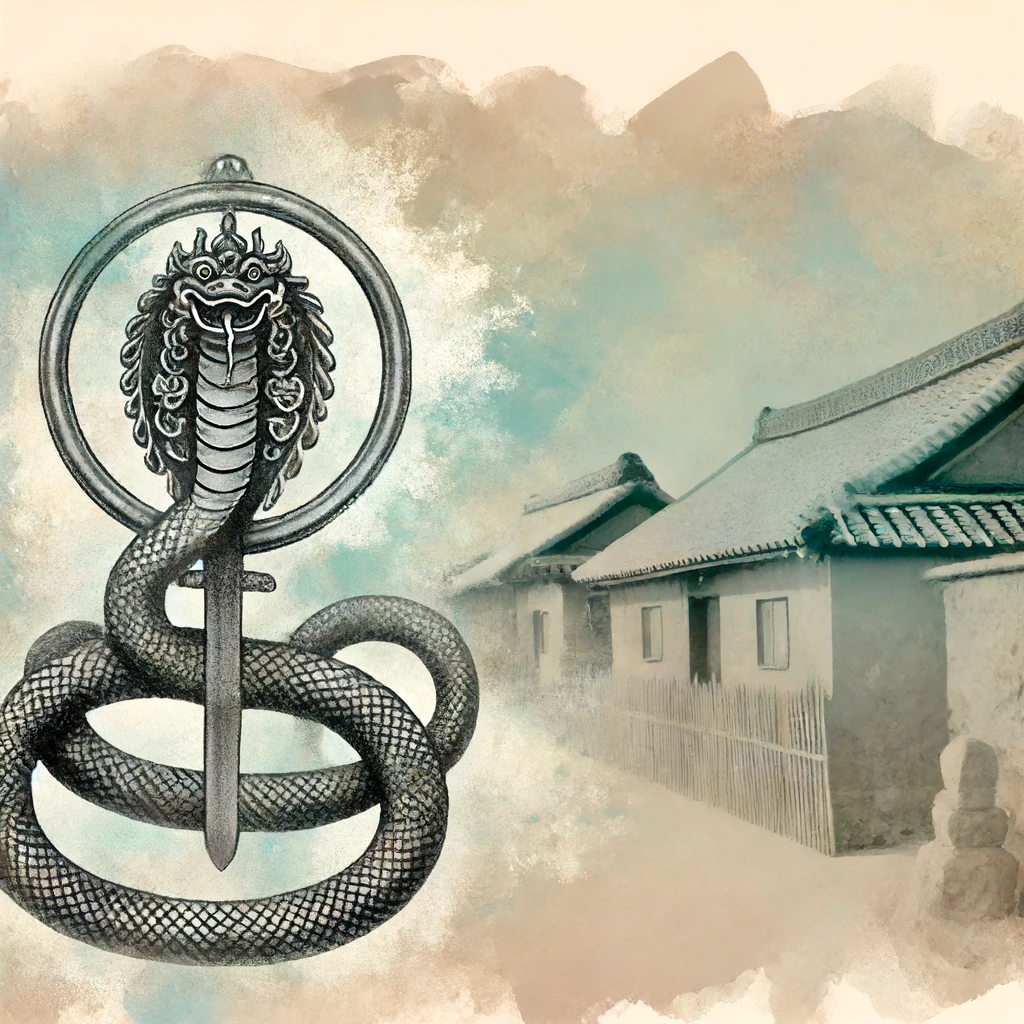
Okinawa is home to a rich tapestry of ancient traditions and unique cultural elements. Among these, the metal serpent talisman known as “Kani Jashi” continues to evoke both fear and reverence in many people’s hearts. Kani Jashi is not merely a superstition or urban legend; it is deeply intertwined with the spiritual world of the Okinawan people and forms a significant part of their traditional culture.
The Gushikawa Village Incident of the 1960s vividly illustrated the terrifying power of Kani Jashi’s curse. The tragic misfortunes that befell a single family, plunging the entire village into fear, highlight the potential for Kani Jashi to affect the real world.
However, Kani Jashi is not just a tool of sorcery. It is a cultural symbol that encapsulates the worldviews, values, and history of the Okinawan people. Through Kani Jashi, we can glimpse the profound depths of Okinawa’s spiritual landscape.
In today’s globalized world, preserving regional traditions and passing them on to the next generation is a responsibility that falls on each of us. Traditions like Kani Jashi offer a worldview distinct from scientific thought, potentially providing new insights into our way of life.
This article delves into the origins, legends, and real-life instances of Kani Jashi’s curse, as well as its impact on contemporary society. It also explores the lessons we can learn from Kani Jashi, particularly the importance of preserving traditional culture. Through the rich cultural heritage of Kani Jashi, we can gain new insights into the relationship between Okinawa’s spiritual world and the real world.
- Introduction
- What is Kani Jashi?
- Examples of Kani Jashi’s Curse
- Why Kani Jashi Evokes Fear
- Lessons from Kani Jashi
- Conclusion
- Q&A
- Summary
Introduction
Okinawa boasts numerous unique cultural traditions, among which the curse of the “Kani Jashi” (a metal serpent talisman) stands out as a crucial element in understanding the spiritual world of the Okinawan people. This blog delves into Kani Jashi, exploring its origins, legends, and its impact on modern society. Whether you are interested in Okinawan traditions, folklore, or fascinated by supernatural phenomena and curses, this blog aims to offer a comprehensive view of Kani Jashi. Through this exploration, we hope to provide you with a deeper appreciation of Okinawa’s rich spiritual world.
What is Kani Jashi?
Overview of Kani Jashi
Definition of Kani Jashi
Kani Jashi is a feared talisman in Okinawan folklore, shaped like a metal serpent. It is said to be used to harm enemies or exorcise evil spirits. Found in various forms and sizes across Okinawa, it is typically serpent-shaped. Kani Jashi is more than just a talisman; it is deeply connected to the spiritual beliefs and practices of the Okinawan people.
Characteristics of Kani Jashi
The defining feature of Kani Jashi is its serpent shape, which gives it a sinister appearance. Believed to possess mystical powers, its effects can be harnessed for both good and evil, depending on the owner’s intentions. As an ancient element of Okinawan sorcery, understanding Kani Jashi’s characteristics is key to exploring the spiritual world of Okinawa.
The Origins and Legends of Kani Jashi
Origins of Kani Jashi
While the exact origins of Kani Jashi are unclear, it is widely believed to have been introduced from China, with whom Okinawa has had extensive cultural exchanges. Historical records suggest that metal serpents were used as talismans in Chinese Taoism, hinting at the possible roots of Kani Jashi. However, the precise timeline of its adoption into Okinawan culture remains a mystery. Investigating its origins provides valuable insights into Okinawa’s cultural background.
Legends Surrounding Kani Jashi
Legends of Kani Jashi can be found throughout Okinawa, consistently portraying it as a feared object that brings curses and misfortune. Mishandling Kani Jashi or using it to harm others is believed to result in the curse rebounding on the user. Such tales have been passed down through generations, underscoring the deep-seated fear and reverence for Kani Jashi within Okinawan culture.
Kani Jashi and Taoism
The connection between Kani Jashi and Taoism is significant, with evidence suggesting it originated from Taoist practices where metal serpents were used in rituals to repel evil spirits and harm enemies. Exploring this relationship sheds light on the cultural exchanges between Okinawa and China and helps understand the broader context of Kani Jashi’s place in Okinawan tradition.
Examples of Kani Jashi’s Curse
The Gushikawa Village Incident
Overview of the Incident
In the 1960s, a shocking incident related to Kani Jashi occurred in Gushikawa Village, Okinawa. A family experienced a series of unexplained illnesses and misfortunes, rumored to be the result of a Kani Jashi curse. Widely reported in the media, this incident drew significant public attention and remains a stark example of Kani Jashi’s feared power. The Gushikawa Village incident underscores the potential real-world impact of Kani Jashi’s curse.
Impact and Repercussions of the Incident
The Gushikawa Village incident had a profound impact on Okinawan society, heightening fear of Kani Jashi’s curse. It reignited interest in the legends and folklore surrounding Kani Jashi, extending its influence beyond the village to the entire region. This incident is a critical example of how Kani Jashi’s curse can penetrate real life, reinforcing the importance of understanding its cultural significance.
Other Regional Examples
Legends from Miyako Island
Miyako Island holds unique legends about Kani Jashi, suggesting that its curse can lead to the death of livestock or the destruction of crops. It is also believed to affect human relationships, used to curse rivals in love or enemies. These legends illustrate the pervasive influence of Kani Jashi’s curse on daily life.
Examples from the Yaeyama Islands
In the Yaeyama Islands, there are stories of entire villages falling ill due to a Kani Jashi curse and tales of curses rebounding on those who misuse the talisman. These examples highlight the communal impact of Kani Jashi’s curse and emphasize the importance of handling it with caution.
Instances from Okinawa Island
Numerous cases from Okinawa Island report family discord and personal misfortune attributed to Kani Jashi’s curse. These instances illustrate the potential for Kani Jashi’s curse to influence familial and personal fate, emphasizing the need for respectful and proper treatment of the talisman.
Why Kani Jashi Evokes Fear
The Invisible Threat
Unexplained Events and the Curse
One reason Kani Jashi evokes fear is its nature as an invisible threat. The curse is often linked to unexplained events that defy scientific explanation, such as sudden illnesses or strings of misfortune within a family. This association between the curse and mysterious occurrences fuels people’s fears, as the unseen threat inherently induces anxiety.
Challenges in Scientific Explanation
Another reason for the fear surrounding Kani Jashi is the difficulty in explaining its effects scientifically. The curse’s impact is often perceived as beyond the scope of physical laws, which contributes to the sense of dread. The challenge of scientifically explaining these phenomena enhances the mystical and frightening reputation of Kani Jashi.
Okinawa’s Spiritual Beliefs
Traditional Spiritual Beliefs of Okinawa
Okinawan people’s fear of Kani Jashi is also rooted in their traditional spiritual beliefs. Okinawans have long revered natural objects, ancestral spirits, and deities, believing that these unseen entities influence their lives. Kani Jashi, regarded as a spiritual object, is feared for its believed mystical powers, deeply connected to Okinawa’s spiritual heritage.
Connection Between Kani Jashi and the Spiritual World
Kani Jashi’s deep connection to Okinawa’s spiritual world is central to its feared status. As more than a mere talisman, it is believed to possess spiritual power, linking the invisible and physical realms. Understanding this connection is crucial to comprehending the fear it evokes among Okinawan people.
The Role of Faith in Kani Jashi’s Perceived Power
The strong faith of the Okinawan people enhances the fear of Kani Jashi. Traditional beliefs continue to influence their lives, and this faith underpins the belief in Kani Jashi’s curse. The stronger the faith, the more potent the perceived power of Kani Jashi, making it a formidable presence in their spiritual landscape.
Impact of Kani Jashi in Modern Society
Influence on Human Relationships
In modern society, Kani Jashi continues to affect people’s minds, particularly in their relationships. It is still used in acts of jealousy or revenge, potentially causing significant interpersonal conflicts. Such actions can lead to severe repercussions, illustrating Kani Jashi’s continuing influence on human behavior and relationships.
Psychological Issues
Kani Jashi’s curse also contributes to psychological issues in modern society. Fear of the curse can lead to constant anxiety and paranoia, with some individuals believing they are cursed, affecting their mental and physical health. These psychological effects are difficult to address with conventional medicine, highlighting Kani Jashi’s troubling impact on mental well-being.
The Struggle Between Tradition and Modernity
Kani Jashi symbolizes the struggle between tradition and modernity in contemporary society. Despite the prevalence of scientific and rational thought, fear and reverence for Kani Jashi persist. This conflict reflects broader cultural identity issues within Okinawan society, offering important insights into the place of traditional beliefs in the modern world.
By exploring Kani Jashi’s rich cultural heritage and its ongoing influence, we gain a deeper understanding of Okinawa’s spiritual and cultural identity.
Lessons from Kani Jashi
The Importance of Preserving and Understanding Traditional Culture
Okinawa’s Cultural Identity
One of the most significant lessons we can learn from Kani Jashi is the importance of preserving and understanding traditional culture. Kani Jashi is a key element that shapes Okinawa’s cultural identity. Understanding its meaning is essential to deeply knowing Okinawa’s culture. The people of Okinawa have cultivated a unique culture throughout their long history. While this culture may sometimes be difficult for outsiders to understand, it is crucial to cherish Okinawa’s cultural identity and pass its significance on to future generations.
Protecting and Passing on Traditional Culture
Kani Jashi is a part of Okinawa’s traditional culture, and its protection and inheritance are vital to maintaining Okinawa’s cultural diversity. In our modern, globalized society, the erosion of regional traditions has become a global issue. Although traditional sorcery like Kani Jashi may seem far removed from scientific thinking, it reflects the spirituality and worldview of the Okinawan people. Recognizing its value is crucial. Protecting traditional culture and passing it on to the next generation is a responsibility that falls on each of us.
The Cultural Value of Kani Jashi
Kani Jashi is not merely a tool of sorcery but a representation of Okinawa’s cultural values. It embodies the spirituality, worldview, and history of the Okinawan people. Through Kani Jashi, we can appreciate the depth and richness of Okinawa’s culture. As a symbol of Okinawa’s traditional culture, Kani Jashi holds significant meaning. Recognizing its cultural value and exploring its significance is essential for deepening our understanding of Okinawan culture.
Insights into Okinawa’s Spiritual World
Okinawa’s Worldview and Values
Kani Jashi provides crucial insights into understanding Okinawa’s spiritual world. The people of Okinawa have a unique worldview and set of values, reflected in Kani Jashi. For example, in Okinawa’s worldview, invisible spiritual entities are believed to have a significant influence on people’s lives. This includes ancestor worship and nature worship, among other unique values. Kani Jashi embodies these aspects of Okinawa’s worldview and values. Exploring its meaning is essential for deepening our understanding of Okinawa’s spiritual world.
The Relationship Between the Spiritual and Real Worlds
Kani Jashi offers valuable insights into the relationship between the spiritual and real worlds in Okinawa. For the Okinawan people, the spiritual and real worlds are closely connected. Kani Jashi serves as a bridge between these two realms, symbolizing how the spiritual world can influence the real world. This perspective may be difficult to grasp in modern society, but it is an integral part of the Okinawan people’s mindset. Through Kani Jashi, we can gain new insights into the relationship between the spiritual and real worlds in Okinawa.
Lessons from Kani Jashi
Kani Jashi imparts many lessons. For instance, it symbolizes the darker aspects of the human heart, such as jealousy, resentment, and anger, which give rise to curses. Kani Jashi teaches us the importance of confronting our inner darkness. Additionally, it emphasizes the significance of preserving and understanding traditional culture. While traditional sorcery like Kani Jashi may be challenging to comprehend in modern society, it is a crucial element of Okinawa’s cultural identity. Understanding its meaning is vital. The lessons from Kani Jashi can provide us with valuable insights into how we live our lives.
Conclusion
Kani Jashi is a symbol of Okinawa’s traditional culture and spiritual world. Exploring its meaning is essential for deepening our understanding of Okinawan culture. Kani Jashi is not just a tool of sorcery but a representation of the Okinawan people’s worldview, values, and history. In modern society, traditional sorcery like Kani Jashi may be difficult to understand. However, this makes it even more important to explore its meaning and pass it on to future generations. Kani Jashi offers us numerous lessons, including the importance of confronting our inner darkness and the need to preserve and understand traditional culture. We must protect and pass on the rich cultural heritage of Kani Jashi to the next generation.
Q&A
What is Kani Jashi?
Kani Jashi is a feared talisman in Okinawan folklore, shaped like a metal serpent. It is said to be used to harm enemies or exorcise evil spirits.
What are the origins of Kani Jashi?
While the origins of Kani Jashi are not entirely clear, it is widely believed to have been introduced from China. Records in Chinese Taoism mention the use of metal serpents as talismans, suggesting this could be the root of Kani Jashi.
What is the Gushikawa Village Incident?
In the 1960s, a shocking incident related to Kani Jashi occurred in Gushikawa Village, Okinawa. A family experienced a series of unexplained illnesses and misfortunes, rumored to be the result of a Kani Jashi curse. This incident was widely reported in the media and attracted significant public attention.
Why does Kani Jashi evoke fear?
Kani Jashi evokes fear for several reasons: it is an invisible threat, its effects are difficult to explain scientifically, and it is deeply connected to Okinawa’s traditional spiritual beliefs. Additionally, the fear of its curse can cause psychological issues.
What can we learn from Kani Jashi?
From Kani Jashi, we learn the importance of preserving and understanding traditional culture. It is a crucial element of Okinawa’s cultural identity, and understanding its meaning is vital. Kani Jashi also teaches us the importance of confronting our inner darkness.
Summary
The curse of “Kani Jashi” (a metal serpent talisman) is a crucial element in understanding Okinawa’s traditional culture and spiritual world. Believed to have originated from Chinese Taoism, Kani Jashi has been feared in Okinawan folklore for centuries. Its curse continues to influence people’s minds, even in modern society, as evidenced by incidents like the Gushikawa Village case.
The reasons for fearing Kani Jashi include its nature as an invisible threat, the difficulty of scientific explanation, and its connection to Okinawan spiritual beliefs. However, Kani Jashi is not merely a tool of sorcery; it is a cultural symbol that encapsulates Okinawa’s worldview, values, and history.
From Kani Jashi, we learn the importance of preserving and understanding traditional culture. In our modern, globalized society, protecting and passing on regional traditions is a responsibility we all share. Additionally, Kani Jashi teaches us the importance of confronting our inner darkness.
Through the rich cultural heritage of Kani Jashi, we gain new insights into the relationship between Okinawa’s spiritual world and the real world. Recognizing its cultural value, exploring its meaning, and passing it on to future generations is our mission.


コメント