
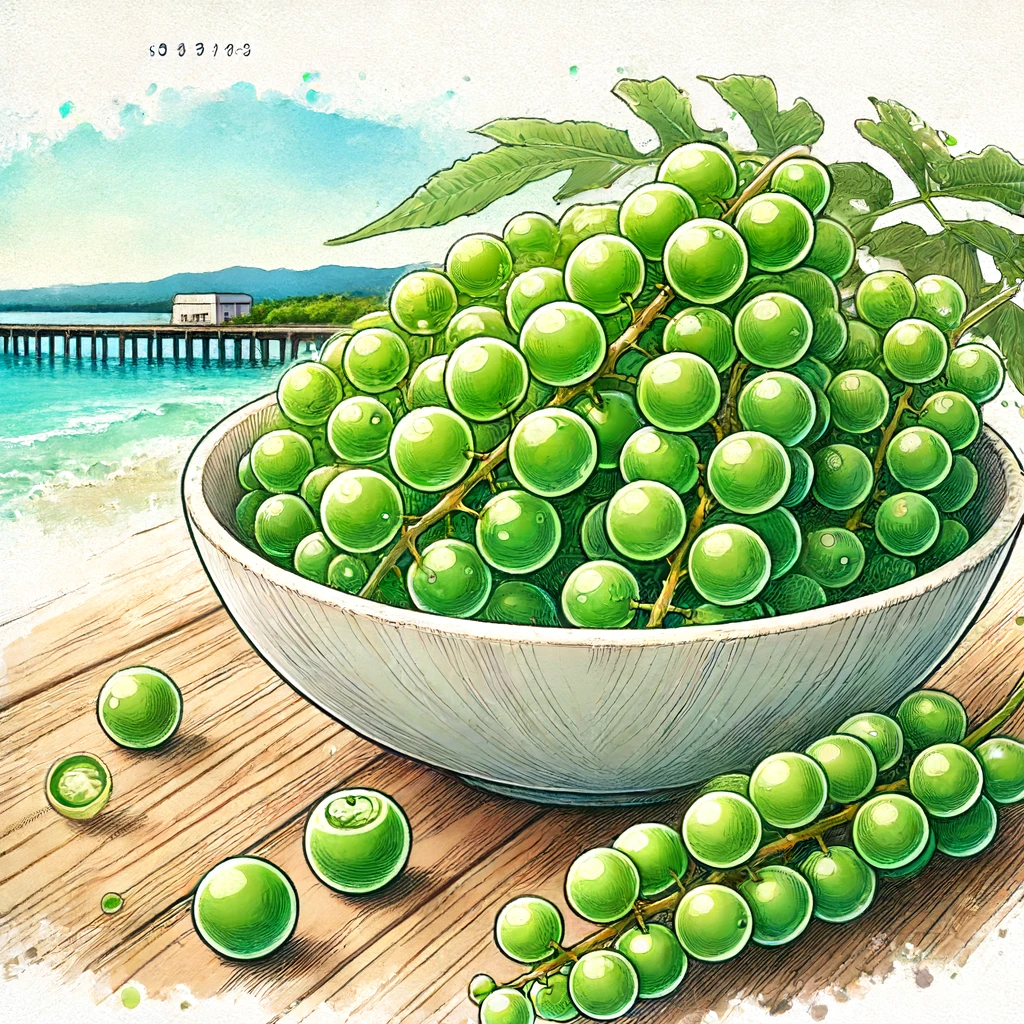
The sparkling sea grapes, nurtured by the blue seas of Okinawa, shine like precious jewels. Their unique texture and flavor are sure to bring a fresh breeze into your culinary life. Sea grapes are not just any seaweed; they are a special ingredient steeped in the traditions and culture of Okinawa. Their distinctive popping texture offers a memorable and delightful experience with every bite. Moreover, sea grapes are packed with remarkable nutritional value, providing numerous benefits for beauty and health. However, to enjoy them in a delicious and healthy way, proper preparation is essential. This article will fully introduce the charm of sea grapes, from the method of removing salt to simple and tasty recipes that will brighten your daily meals.
As a centerpiece of Okinawan food culture and a superfood supporting a healthy lifestyle, sea grapes are gaining attention from various angles. However, to truly appreciate their value, it’s important to understand a few key points. This article provides information for everyone, from those encountering sea grapes for the first time to those already familiar with their allure, to deepen their enjoyment. From choosing and storing sea grapes to original recipes that will amaze your family and friends, the potential of sea grapes is condensed here.
Additionally, we will answer frequently asked questions about sea grapes and share tips for enjoying them safely and deliciously. This includes information on allergies and the importance of removing salt. Sea grapes are a gift from the sea of Okinawa, but to make the most of this blessing, proper knowledge is necessary. Through this article, learn everything about sea grapes and experience how incorporating them into your diet can enrich your daily meals.
Sea grapes, as a traditional food of Okinawa, have a long history. Knowing this history deepens the meaning of eating them. Through sea grapes, you can also experience the beauty of Okinawan culture and nature. Let’s explore together the infinite possibilities of these tiny jewels and how they make their way to our tables and their future.
Introduction
The jewel-like food nurtured by Okinawa’s beautiful sea, sea grapes. Their unique texture and distinctive flavor continue to captivate many people. We will delve into the charm, history, and uses of this miraculous gift from the sea, created by Okinawa’s nature. Through sea grapes, we hope you will feel closer to the culture and diversity of Okinawan cuisine and enjoy its rich flavors more intimately.
What are Okinawan Sea Grapes?
Characteristics of Sea Grapes
Sea grapes, as the name suggests, are a type of seaweed shaped like grapes, featuring a unique popping texture. This texture is often referred to as “green caviar,” and due to its rarity, it is prized as a delicacy. The translucent green beads are visually appealing and excellent for adding color to dishes. Sea grapes are highly nutritious, particularly rich in minerals, making them beneficial for both health and beauty.
Origin and Cultural Background
The main production area for sea grapes is Okinawa Prefecture, where the warm climate and rich seas provide the perfect environment for their growth. In Okinawa, sea grapes have been loved by locals for centuries, often used in celebratory meals and special occasions. This ingredient symbolizes the bounty of the Okinawan sea and is deeply rooted in the local food culture, also attracting tourists with its unique taste and texture.
The Origin and Meaning of the Name “Sea Grapes”
The History of the Name “Sea Grapes”
The name “sea grapes” comes from their appearance, resembling bunches of grapes found on land. The small, round beads strung together like grape clusters inspired this unique name. While different regions may use other names for this ingredient, “sea grapes” most intuitively reflects its characteristics.
The Meaning Behind the Name
The name “sea grapes” not only reflects their shape but also symbolizes the richness and bounty of the sea for the people of Okinawa. As a food that embodies the purity and vitality of the Okinawan sea, sea grapes have been cherished by locals. The name also signifies the unique food culture fostered by the Okinawan sea, forming an essential part of the region’s culinary identity.
Nutritional Value and Health Benefits of Sea Grapes
Okinawan sea grapes are not only delicious but also gain attention for their high nutritional value and significant health benefits. This section explores the secrets behind why sea grapes are called a “superfood.” From beauty to health maintenance, we delve into the benefits that sea grapes bring.
Nutrients Contained in Sea Grapes
A Treasure Trove of Minerals and Vitamins
Sea grapes are rich in minerals such as calcium, magnesium, and zinc, essential for bone health and nerve function. They also contain vitamins A and C, which help boost immunity and maintain skin health. These nutrients support daily health and prevent illnesses, making sea grapes a highly valuable ingredient in a healthy diet.
Ingredients Beneficial for Beauty and Health
Sea grapes contain fucoidan, which has antioxidant properties and is expected to have anti-aging and skin-beautifying effects. They are also rich in dietary fiber, which helps improve gut health and supports healthy dieting. These components work together to support inner beauty and health, bringing vitality to everyday life.
Health Benefits of Sea Grapes
Effects on Boosting Immunity
The vitamins, minerals, and fucoidan in sea grapes are known to boost immunity. Fucoidan, in particular, is believed to activate the activity of white blood cells, potentially strengthening resistance to illnesses such as colds and flu. Maintaining a healthy body requires a robust immune system, and sea grapes are highly anticipated as a supportive role in this regard.
Impact on Beauty
The antioxidant properties of sea grapes help prevent skin aging and maintain a youthful appearance. Additionally, their rich mineral content helps balance skin moisture, preventing dryness and skin irritation. For those aiming for beautiful skin or interested in anti-aging, sea grapes are a wonderful ingredient worth adding to their beauty routine.
Thus, sea grapes, rich in nutrients beneficial for both beauty and health, offer various benefits when incorporated into daily life. Utilize this natural gift from Okinawa to achieve a richer lifestyle.
How to Choose and Store Sea Grapes
To purchase and enjoy sea grapes deliciously, it’s important to know how to choose and store them. Here we introduce tips on selecting fresh sea grapes and methods for storing them to enjoy for a long time at home. By following these points, you can always savor the deliciousness of Okinawa.
How to Identify Fresh Sea Grapes
Points to Judge by Color and Shape
Fresh sea grapes have a translucent and vivid green color. Choose those with uniformly round beads that are firm. Avoid those with faded colors, shriveled beads, or unusually large beads mixed in. Beads that do not stick together are also a sign of freshness.
Tips for Purchasing
When purchasing, always check the expiration date and storage method on the package. Choosing products in transparent containers allows you to directly check the color and shape, making it easier to select fresher sea grapes. Also, check if the unique smell of sea grapes is not too strong. A strong odor may indicate a loss of freshness.
Storage Methods to Keep Them Fresh
Tips for Refrigeration
Refrigeration is the basic method for storing sea grapes. It is recommended to consume them as soon as possible after opening, but if storing, place them in an airtight container or sealed bag and keep them in the vegetable compartment of the refrigerator. Keeping the sea grapes in the original saltwater can help maintain their freshness. Typically, they can be stored in the refrigerator for a few days.
Precautions for Freezing
For long-term storage, freezing is suitable. Before freezing, remove the sea grapes from the saltwater and rinse lightly with water. Then, pat them dry with a kitchen towel, divide them into portions, and place them in sealed bags or containers before freezing. When defrosting, it is recommended to thaw naturally or slowly in the refrigerator. Avoid rapid temperature changes to maintain the texture.
By following these points, you can enjoy the fresh taste and texture of sea grapes for a long time. Bring the deliciousness of Okinawa into your daily meals and add richness to your table.
Basic Cooking Methods and Uses of Sea Grapes
Sea grapes, with their unique texture and flavor, can add color and a special taste to many dishes. Here, we introduce the basic preparation methods, simple ways to eat them, and easy recipes. Using this information, why not incorporate the blessings of the Okinawan sea into your daily meals?
Basic Preparation and Simple Ways to Eat Sea Grapes
How to Remove Salt and Important Points
The first step to enjoying sea grapes deliciously is removing the salt. Since sea grapes are often preserved in saltwater, it’s necessary to remove the salt before eating. The method is simple: first, take the sea grapes out of the saltwater and gently rinse them several times with clean water. Then, soak them in water for about 10 minutes to remove the salt. Changing the water several times during this process is more effective. Handle the sea grapes carefully during salt removal to avoid damaging them.
Simple Ways to Eat and Arrange Sea Grapes
Salt-removed sea grapes are delicious as they are. Adding a little soy sauce and some wasabi offers a simple yet refreshing taste. They can also be combined with vegetables like tomatoes and avocados in salads or used as toppings on cold tofu. The popping texture of sea grapes and their combination with other ingredients will bring
fresh surprises to your table.
Easy Recipes Using Sea Grapes
Sea Grape Salad
A salad made with sea grapes is colorful and adds a vibrant touch to your table. Cut fresh vegetables (lettuce, cucumber, tomato, etc.) into appropriate sizes and add salt-removed sea grapes. For the dressing, mix olive oil, lemon juice, salt, and pepper. The saltiness of the sea grapes and the acidity of the dressing perfectly match, offering a refreshing taste.
Sea Grape Vinegared Dish
A vinegared dish with sea grapes is perfect for a refreshing summer dish. Add finely sliced vegetables such as cucumber and myoga to salt-removed sea grapes and season with vinegar, sugar, and soy sauce. This dish stimulates the appetite with the texture of sea grapes and the acidity, making it ideal for hot days.
By mastering these basic cooking methods and uses, you can enjoy a variety of dishes with Okinawan sea grapes. Fully savor the charm of sea grapes and enjoy a healthy and delicious culinary life.
Original Recipes Using Sea Grapes
Okinawan sea grapes, with their unique texture and flavor, can add a fresh accent to various dishes. Here, we introduce original recipes from appetizers to desserts using sea grapes. Through these recipes, incorporate the blessings of the Okinawan sea into your daily meals with fresh surprises.
Appetizers Using Sea Grapes
Sea Grape Carpaccio
A carpaccio topped with sea grapes is visually beautiful and flavorful. Season fresh seafood slices simply with olive oil, lemon juice, salt, and black pepper. The popping texture of sea grapes and the tenderness of the seafood perfectly match, making it an ideal appetizer for special occasions or entertaining guests.
Chilled Sea Grape Soup
A chilled soup using sea grapes is perfect for hot summer days. Add salt-removed sea grapes to a cold soup base made from cucumber and tomato. Adding herbs like mint or dill enhances the refreshing taste, making it an ideal dish for summer refreshment.
Main Dishes with Sea Grapes
Sea Grape Fried Rice
Adding sea grapes to fried rice introduces a new texture and flavor. Add the sea grapes last to preserve their texture. Adjust the ingredients such as shrimp, char siu, and vegetables to balance with the saltiness of the sea grapes. This dish will surely surprise your family and friends.
Healthy Stir-fry with Sea Grapes and Tofu
A healthy stir-fry with sea grapes and tofu is nutritious and satisfying. Lightly stir-fry the tofu first to make the outside slightly crispy and the inside soft. Then, add salt-removed sea grapes and season with oyster sauce and soy sauce. This simple yet nutritionally balanced dish is easy to incorporate into daily meals.
Desserts Using Sea Grapes
Sea Grape Jelly
A jelly with sea grapes is a visually enjoyable dessert. Encapsulate sea grapes in transparent jelly and garnish with fruits and mint. The sweetness of the jelly and the saltiness of the sea grapes perfectly match, creating a refreshing dessert for hot days. This jelly adds a refreshing touch to your post-meal moments.
Fruit Parfait with Sea Grapes
Adding sea grapes to a fruit parfait offers a different way to enjoy a common dessert. Layer colorful fruits, ice cream, and sea grapes, and top with granola or nuts. The popping texture of sea grapes enhances the enjoyment of the parfait. This dessert adds a touch of elegance to the end of a special day.
Through these original recipes using sea grapes, enjoy the blessings of the Okinawan sea with all your senses and bring a fresh breeze to your dining table. The possibilities of sea grapes are endless.
Frequently Asked Questions
Here we have summarized frequently asked questions and their answers about sea grapes. We hope this information will help you enjoy sea grapes even more.
Can sea grapes be eaten raw?
About Raw Consumption
Yes, sea grapes can be eaten raw. In fact, eating them raw allows you to enjoy the unique popping texture and sea flavor most directly. However, it is important to remove the salt properly before eating. If the salt is too strong, it can spoil the taste, so make sure to remove the salt thoroughly and enjoy them fresh.
Are there any allergies to sea grapes?
Allergy Information and Countermeasures
Reports of allergies specifically to sea grapes are extremely rare, but those with seaweed allergies should be cautious. Allergic reactions to seaweed, including sea grapes, vary among individuals, and some may react to specific components of seaweed. It is essential to try a small amount before consuming, or consult a doctor if you have concerns. If you are worried about allergic reactions, it is recommended to avoid consumption or seek expert advice.
Is it necessary to remove the salt from sea grapes?
The Necessity and Method of Removing Salt
Yes, removing the salt is necessary. Sea grapes are often preserved in saltwater for storage, and eating them directly can be too salty. Proper salt removal allows you to enjoy the true taste of sea grapes. The method involves gently washing the sea grapes with clean water and soaking them in water for 10-15 minutes. Changing the water 2-3 times during this process is more effective in removing salt. After removing the salt, consume immediately or store in the refrigerator.
We hope these questions and answers will resolve any doubts or concerns you have about sea grapes, allowing you to enjoy them with peace of mind. With proper handling, sea grapes can fully showcase their charm. We hope this information enriches your sea grape life.
Summary
Through Okinawan sea grapes, you can discover the richness of food culture and new ways to enjoy daily life. This summary explores the points for enjoying sea grapes and their value as a traditional Okinawan food. By exploring the infinite possibilities of sea grapes, you can bring a fresh breeze into the world of food.
Points for Enjoying Sea Grapes
Value as a Food Culture
Sea grapes have long adorned the local food culture as a symbol of Okinawa’s maritime bounty. Their unique texture and flavor represent Okinawan cuisine, enjoyed in various dishes. Learning about the depth and diversity of Okinawan food culture through sea grapes deepens one’s understanding of food.
Everyday Uses
Sea grapes can be enjoyed in various dishes beyond just eating them as they are. Salads, soups, main dishes, and even desserts—all can be enhanced with sea grapes. For modern people conscious of health and beauty, sea grapes are nutritious and easy to incorporate into daily meals. Discover new joys in daily life through dishes that highlight their fresh taste.
Sea Grapes as a Traditional Okinawan Food
Contribution to Okinawan Culture
Sea grapes are a traditional food rooted in the region, nurtured by Okinawa’s natural environment and people’s lives. They have been indispensable ingredients for festivals and special occasions, passed down through generations. This food influences Okinawan culture and people’s lives, playing an important role in forming the region’s identity.
Future Potential of Sea Grapes
Sea grapes are gaining attention domestically and internationally for their high nutritional value and unique texture. Moving forward, it’s essential to preserve their value as a traditional food while developing new cooking methods and uses to convey their charm to more people. By promoting sustainable production methods, Okinawan sea grapes can spread to tables worldwide, connecting Okinawan culture and traditions to the future.
We hope you find new ways to enjoy food through sea grapes and deeply savor Okinawa’s rich food culture. Enjoy to your heart’s content the jewel-like food nurtured by the sea of Okinawa.


コメント