
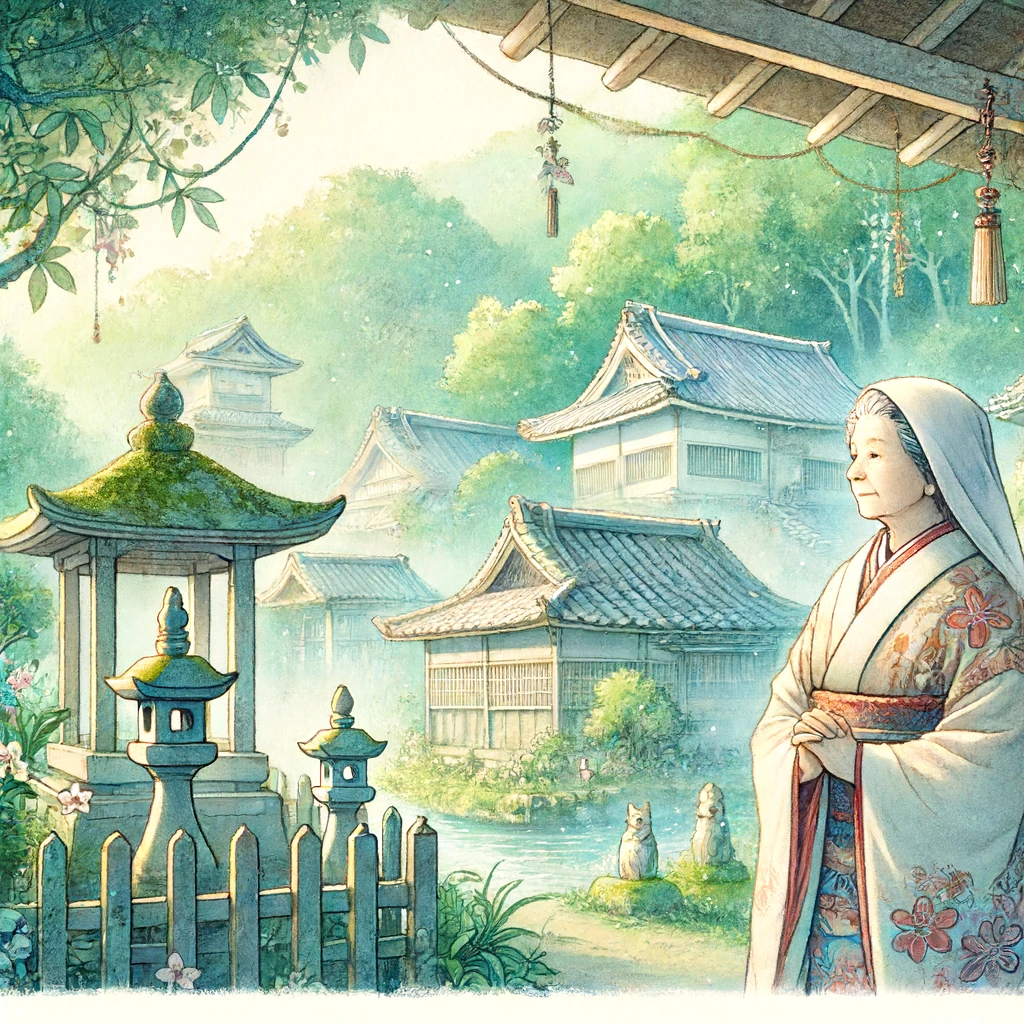
Okinawa’s deep-seated belief in the Onari-gami still thrives in the hearts of its people. This belief weaves a unique spiritual world, filled with reverence and awe for the Onari-gami, who are worshiped as the guardian deities of family lines and blood relations.
It is said that the wrath of the Onari-gami manifests as issues threatening the continuity of the family line, such as discord and misfortune among descendants. Disrespecting ancestors and neglecting traditions are believed to provoke the anger of the Onari-gami. An incident in Yomitan Village in the 1990s is known as a terrifying example of the Onari-gami’s curse. However, the belief in Onari-gami is not just about superstition and fear. It embodies the values of coexistence with nature, connection with ancestors, and the importance of family that Okinawans have cherished. Even in modern society, the belief in Onari-gami maintains a balance between tradition and innovation, conveying the essence of Okinawan culture.
Exploring the reality of the Onari-gami’s curse is a journey into the depths of Okinawa’s spiritual world. The belief in Onari-gami, which values interaction with the invisible world, might be a reminder of the importance of spirituality in today’s materialistic society.
This article delves into the origins and characteristics of the Onari-gami faith, examples of curses, and the profound spiritual world of Okinawa. What message does the Onari-gami faith, amidst the intersection of tradition and modernity, aim to convey? Join us on a journey to explore the roots of Okinawan spirit.
- What is Onari-gami?
- What is the Curse of Onari-gami?
- Legends and Incidents Related to Onari-gami’s Curse
- The Fear of Onari-gami Among Okinawans
- Learning from Onari-gami about Okinawa’s Spiritual World
- Q&A
- Conclusion: The Curse of Onari-gami: Exploring Okinawa’s Spiritual World
What is Onari-gami?
Overview of Onari-gami
Definition of Onari-gami
Onari-gami refers to the deities worshiped as guardians of family lines and blood relations in Okinawa’s traditional belief system. “Onari” is pronounced “onari” and means “self-becoming,” signifying one’s existence and the prosperity of the family line. Onari-gami have been worshiped as guardians of family peace, prosperity of descendants, and continuity of the family line. For Okinawans, Onari-gami are respected as important members of the family.
The Role of Onari-gami
The primary role of Onari-gami is to protect and ensure the prosperity of the family line. Okinawans believe that Onari-gami guide their family’s happiness and the success of their descendants. Onari-gami are deeply involved in the inheritance of family traditions and customs, strengthening family bonds. Additionally, Onari-gami symbolize ancestors and are closely tied to ancestor worship. Respecting Onari-gami is also seen as honoring one’s ancestors.
The Origins of Onari-gami Faith
Connection to Ainu Culture
The origins of the Onari-gami faith are believed to trace back to Ainu culture. The Ainu culture emphasizes family lines and blood relations, and this idea is thought to have been integrated into Okinawa’s belief system. In Ainu culture, the existence of Kotankorokamui (the village guardian god) as the guardian deity of family lines is known, and the Onari-gami faith is similar to this concept. It is believed that the exchange between Ainu and Okinawan cultures led to the development of the Onari-gami faith.
Incorporation into Okinawan Belief Systems
The Onari-gami faith naturally blended into Okinawa’s traditional belief systems. Okinawans held various beliefs, including nature worship and ancestor worship, and the Onari-gami faith evolved by merging with these beliefs. Especially, the role of Onari-gami as guardians of family lines closely aligned with the concept of ancestor worship. Thus, the Onari-gami faith established a unique position within Okinawa’s belief systems.
Characteristics of Onari-gami
Guardians of Family Lines and Blood Relations
The most significant characteristic of Onari-gami is their role as guardians of family lines and blood relations. Onari-gami are worshiped as deities protecting the safety, health, and prosperity of families. For Okinawans, the continuity of the family line holds great importance, and Onari-gami are symbolic of this value. Respecting Onari-gami is connected to cherishing the family line and preserving traditions passed down from ancestors.
Connection to Ancestor Worship
The Onari-gami faith is closely linked to ancestor worship. Okinawans believe that the spirits of ancestors become Onari-gami and protect the family line. Respecting Onari-gami is also about honoring ancestors and valuing family history. Preserving and passing down traditions and values from ancestors to the next generation is a crucial aspect of the Onari-gami faith. Onari-gami connect the past, present, and future.
What is the Curse of Onari-gami?
The Concept of the Curse
Definition of a Curse
A curse refers to calamities or misfortunes brought upon people due to the anger or dissatisfaction of gods or ancestors. In traditional Japanese beliefs, actions that disrespect gods or ancestors or breaking taboos are believed to invite curses. Curses are seen as warnings from gods or ancestors in response to human actions, with further misfortune believed to follow if ignored.
The Concept of Curses in Traditional Japanese Beliefs
In traditional Japanese beliefs, the concept of curses is widely recognized. In Shinto, curses resulting from the anger of gods are known, and in Buddhism, the idea of karma suggests that evil deeds lead to curses. Curses have played a role in adjusting the relationship between humans and gods or ancestors. By respecting gods and ancestors and adhering to their will, people believed they could avoid curses. The concept of curses is deeply rooted in the Japanese spiritual world.
Characteristics of Onari-gami’s Curse
Issues Related to Family Line Continuity
The curse of Onari-gami is said to occur particularly in issues related to the continuity of the family line. Events threatening the family’s prosperity, such as family discord or misfortune among descendants, lead to suspicions of an Onari-gami curse. As Onari-gami are guardians of family lines, their curses are perceived as directly impacting family continuity.
Discord and Misfortune among Descendants
The curse of Onari-gami can also manifest as discord and misfortune among descendants. Family disputes, illnesses, accidents, and failures hindering family prosperity may be attributed to an Onari-gami curse. Onari-gami value family bonds, so their curse is perceived as discord and misfortune within the family. The curse of Onari-gami involves not only family continuity but also the happiness of the family.
Causes of Onari-gami’s Curse
Disrespect for Ancestors and Family Line
The primary cause of an Onari-gami curse is the disregard for ancestors and family lines. For Okinawans, respecting ancestors and valuing the family line are crucial values. However, in modern society, traditional values are fading, and there is a tendency to neglect ancestors and family lines. Such attitudes are believed to provoke the anger of Onari-gami and bring about curses.
Failure to Perform Traditional Rituals
The curse of Onari-gami is also triggered by the failure to perform traditional rituals. Okinawa has numerous rituals for worshiping Onari-gami and honoring ancestors. Neglecting these rituals or allowing them to become mere formalities is said to provoke the anger of Onari-gami. Traditional rituals play a crucial role in maintaining the relationship between Onari-gami and humans. Failure to perform these rituals can damage the relationship with Onari-gami and cause curses.
Legends and Incidents Related to Onari-gami’s Curse
Legends: Family Line Extinction
Issues with Heirship
One of the legends concerning Onari-gami’s curse involves heirship issues. In Okinawa, the continuity of the family line is of great importance, and having an heir has been regarded as a family duty. However, if no heir is born or if the heir dies early, leading to concerns about the family line’s extinction, an Onari-gami curse is suspected. Such legends highlight the importance of family continuity.
Crisis of Family Line Continuity
Situations where the family line is at risk are often associated with an Onari-gami curse. When no descendants are born, when descendants die early, or when the family line is threatened, an Onari-gami curse is suspected. Such legends show how crucial family continuity is and reflect people’s fear of Onari-gami’s curse.
Incidents: The Case of Yomitan Village
Overview of the Yomitan Village Incident
An incident that occurred in Yomitan Village, Okinawa, in the 1990s, is a representative case involving Onari-gami’s curse. In one family, a series of misfortunes, such as illnesses, accidents, and discord among descendants, occurred. The villagers began to whisper that these misfortunes were due to an Onari-gami curse.
Judgment by the Village Elders
In the Yomitan Village incident, the village elders judged it to be an Onari-gami curse. The elders investigated the family experiencing the misfortunes and pointed out that the ancestors were
not being properly honored and traditional rituals were being neglected. They concluded that the misfortunes were due to an Onari-gami curse and advised taking measures. The judgment by the village elders demonstrated the strength of belief in Onari-gami.
Purification Ritual
To dispel the curse of Onari-gami, a purification ritual was conducted. This ritual, performed by a priest, aimed to appease the anger of Onari-gami and pray for the family’s peace. Offerings were made, and sacred words were recited during the ritual. Additionally, rituals to honor the family’s ancestors were performed to restore the relationship with Onari-gami. The purification ritual illustrated the practical aspect of Onari-gami belief.
The Fear of Onari-gami Among Okinawans
Connection with Ancestor Worship
The Value of Respecting Ancestors
For the people of Okinawa, respecting ancestors is an important value. Ancestors are considered the foundation of the current family’s existence and are subjects of respect and gratitude. Honoring ancestors means valuing family history and preserving traditions. By respecting their ancestors, Okinawans strengthen family bonds and affirm their identity.
The Curse of Onari-gami and Ancestors’ Anger
The curse of Onari-gami is often associated with the anger of ancestors. Actions that disrespect ancestors or attitudes that neglect traditions are believed to provoke their anger. Onari-gami represent the will of the ancestors, and their curse is seen as an expression of that anger. Fear of the curse of Onari-gami reflects a deep respect for ancestors.
The Presence of Onari-gami in Modern Society
Inheritance of Traditional Values
Even in modern society, the faith in Onari-gami continues to live in the hearts of Okinawans. In families that value traditional beliefs, the custom of respecting Onari-gami is passed down. Honoring ancestors and praying for family peace remain significant for modern Okinawans. The belief in Onari-gami plays a role in inheriting traditional values in Okinawa.
The Resilience of Onari-gami Faith
The belief in Onari-gami remains strong even in modern society. Despite the decline of traditional beliefs due to urbanization and modernization, the faith in Onari-gami remains a spiritual support for Okinawans. Especially when facing life’s milestones or family issues, many people become conscious of the presence of Onari-gami. The belief in Onari-gami is deeply rooted in the spiritual world of Okinawans.
The Impact of the Fear of Onari-gami
Addressing Family Issues
The fear of the curse of Onari-gami prompts Okinawans to face family issues sincerely. When discord or misfortune continues within a family, they suspect an Onari-gami curse and seek to find the cause. They reflect on whether they have neglected ancestor worship or traditional rituals. The fear of the curse of Onari-gami serves as a driving force to resolve family issues.
Continuation of Traditional Rituals
The fear of the curse of Onari-gami encourages the continuation of traditional rituals. Rituals to worship Onari-gami and ceremonies to honor ancestors are considered essential to avoid the curse. Continuing these rituals helps maintain the relationship with Onari-gami and ensures the family’s peace. The fear of the curse of Onari-gami supports the continuation of traditional rituals.
Learning from Onari-gami about Okinawa’s Spiritual World
The Relationship Between Nature and Humans
Coexistence with Nature
The belief in Onari-gami illustrates the deep relationship between Okinawans and nature. Okinawans have valued living in harmony with nature, which is both a source of blessings and an object of awe. Onari-gami are part of nature and symbolize harmony with it. The belief in Onari-gami teaches Okinawans the importance of coexistence with nature.
Connection with Gods and Ancestors
The belief in Onari-gami shows the connection between Okinawans and gods and ancestors. Okinawans believe they live together with gods and ancestors. Onari-gami are believed to embody the spirits of ancestors and convey the will of the gods. Respecting Onari-gami means maintaining the connection with gods and ancestors. The belief in Onari-gami teaches Okinawans the importance of bonds with gods and ancestors.
The Symbolism of Onari-gami Faith
The belief in Onari-gami symbolizes Okinawa’s spiritual world. Various aspects of Okinawa’s spiritual world, such as coexistence with nature, connection with gods and ancestors, and the importance of family lines, are condensed in the belief in Onari-gami. Onari-gami link the invisible world with the real world and serve as a spiritual support for Okinawans. The belief in Onari-gami embodies the essence of Okinawa’s spiritual world.
Inheritance and Transformation of Tradition
Okinawa’s Traditional Spiritual World
The belief in Onari-gami reflects Okinawa’s traditional spiritual world. Ancestor worship, nature worship, and a magical worldview are strongly reflected in the belief in Onari-gami. Understanding the belief in Onari-gami leads to an understanding of Okinawa’s traditional spiritual world. The belief in Onari-gami is a core element of Okinawa’s spiritual world.
Inheritance of Onari-gami Faith in Modern Society
The belief in Onari-gami is still passed down in modern society. Despite the decline of traditional beliefs due to urbanization and modernization, the belief in Onari-gami remains strong. Many people become conscious of Onari-gami when facing family issues. Traditional rituals are also passed down, and the practice of Onari-gami faith continues. The belief in Onari-gami remains a part of Okinawa’s spiritual world in modern society.
The Balance Between Tradition and Modernity
The belief in Onari-gami plays an important role in balancing tradition and modernity. In modern society, traditional values are fading while new values are emerging. The belief in Onari-gami possesses the strength to inherit traditional values while adapting to modern society. Through the belief in Onari-gami, Okinawans maintain a balance between tradition and modernity and protect their identity.
The Significance of Onari-gami Faith
Understanding the Essence of Okinawan Culture
The belief in Onari-gami is important for understanding the essence of Okinawan culture. The coexistence with nature, ancestor worship, and the importance of family lines are condensed in the belief in Onari-gami. Exploring the belief in Onari-gami leads to a deeper understanding of Okinawan culture. The belief in Onari-gami embodies the essence of Okinawan culture.
The Importance of Exploring the Spiritual World
The belief in Onari-gami emphasizes the importance of exploring the spiritual world. In modern society, the pursuit of material wealth is often prioritized, but spiritual fulfillment is equally important. The belief in Onari-gami teaches the significance of valuing the invisible world and connections with ancestors. Through the belief in Onari-gami, Okinawans are dedicated to exploring the spiritual world. The belief in Onari-gami conveys the importance of exploring the spiritual world to those living in modern times.
The belief in Onari-gami is a core element of Okinawa’s spiritual world and embodies the essence of Okinawan culture. Coexistence with nature, ancestor worship, and the importance of family lines are condensed in the belief in Onari-gami. Even in modern society, the belief in Onari-gami is passed down and remains a spiritual support for Okinawans. Exploring the belief in Onari-gami leads to a deeper understanding of Okinawan culture and reaffirms the importance of the spiritual world. Onari-gami may be the light that illuminates Okinawa’s spiritual world.
Q&A
What is Onari-gami?
Onari-gami are deities worshipped as guardians of family lines and blood relations in Okinawa’s traditional belief system. They protect the peace of the family, the prosperity of descendants, and the continuity of the family line.
What is the curse of Onari-gami like?
The curse of Onari-gami is said to manifest as problems threatening the continuity of the family line, such as discord and misfortune among descendants. Disrespecting ancestors or neglecting traditional rituals is believed to provoke the anger of Onari-gami.
What is the incident related to the curse of Onari-gami that occurred in Yomitan Village?
In the 1990s, a series of misfortunes befell a family in Yomitan Village, Okinawa. The village elders judged that these misfortunes were caused by the curse of Onari-gami, and a purification ritual was performed.
What is the position of the Onari-gami faith in modern society?
Even in modern society, the faith in Onari-gami remains deeply rooted in the hearts of Okinawans. It inherits traditional values and serves as a spiritual support when facing family issues.
What are the characteristics of Okinawa’s spiritual world learned from the Onari-gami faith?
The Onari-gami faith embodies various aspects of Okinawa’s spiritual world, such as coexistence with nature, connection with ancestors, and the importance of family lines. It plays a crucial role in understanding the essence of Okinawan culture while balancing tradition and modernity.
Conclusion: The Curse of Onari-gami: Exploring Okinawa’s Spiritual World
In Okinawa’s traditional belief system, Onari-gami have been worshipped as guardian deities of family lines and blood relations. The curse of Onari-gami is said to manifest as problems related to the continuity of the family line, such as discord and misfortune among descendants, and is believed to be caused by disrespecting ancestors or neglecting traditional rituals. An incident in Yomitan Village in the 1990s is known as a real example of the curse of Onari-gami.
Even in modern society, the faith in Onari-gami remains deeply rooted in the hearts of Okinawans, inheriting traditional values and serving as a spiritual support when facing family issues. The Onari-gami faith embodies various aspects of Okinawa’s spiritual world, such as coexistence with nature, connection with ancestors, and the importance of family lines, playing a crucial role in understanding the essence of Okinawan culture while balancing tradition and modernity.
Exploring the faith in Onari-gami offers an opportunity to delve into the depths of Okinawa’s spiritual world and re-examine the significance of tradition in modern society. The Onari-gami faith, which values the invisible world and connections with ancestors, may suggest the importance of the spiritual world in a modern society that often prioritizes material wealth.


コメント