
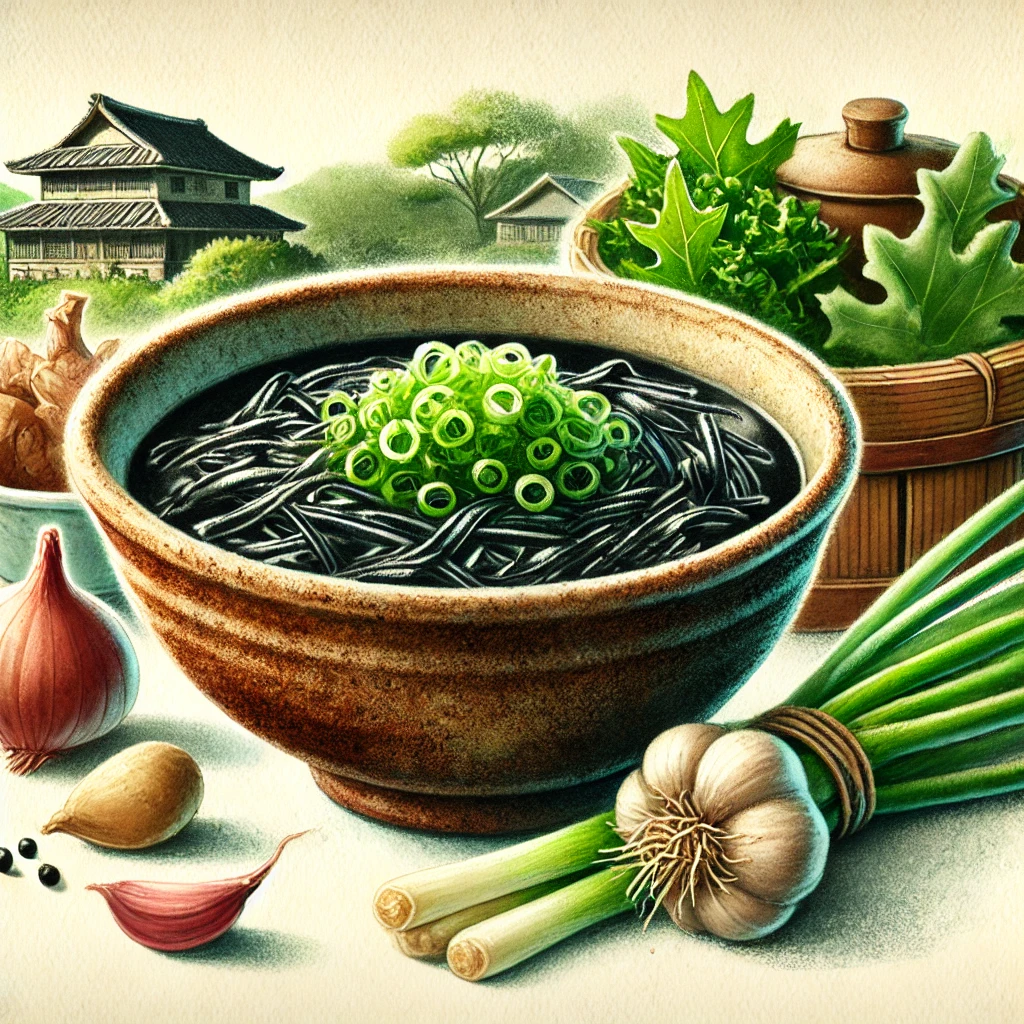
Are you familiar with the traditional Okinawan dish “Chiiricha”? From its name, you might imagine something quite gory and unappealing. However, one taste is enough to reveal the profound flavors and the rich history and culture of Okinawa encapsulated in this dish.
Chiiricha is a stir-fried and simmered dish made with pork blood. During the post-World War II era, when food was scarce, the people of Okinawa ingeniously utilized every possible source of protein, including blood, which is how this dish was born. It is a taste from a time when luxury was unknown.
At first glance, its reddish-black color might be off-putting, but the fragrant aroma of the vegetables and the rich, savory broth create a perfect harmony in your mouth. When eaten warm, it warms the body, and when chilled, the concentrated flavors provide a unique taste. It pairs exceptionally well with Okinawa soba, jimami tofu, and rice.
The preparation involves stir-frying pork belly with blood and aromatic vegetables, then thickening it with potato starch. Any unpleasant odor from the blood is masked by the fragrant ginger and garlic. The fresher the ingredients, the deeper the authentic flavor you can enjoy.
Chiiricha embodies the essence of Okinawa’s nature, food culture, and way of life. Enjoying this dish is not only about tasting something delicious but also about appreciating the history and culture of this region. Don’t let its appearance deceive you; give it a try and be captivated by its unexpectedly profound flavor.
What is Chiiricha?
Chiiricha is one of Okinawa’s representative local dishes. Its name may sound mysterious, but it is a homely flavor derived from familiar ingredients.
The Origin and Meaning of the Name
The Etymology of “Chi” and “Iricha”
“Chi” means “blood” in Okinawan dialect, and “iricha” is a verb that means “to stir-fry.” Combined, “Chiiricha” literally means “stir-frying blood.”
Why It Refers to Stir-Fried Blood
As the name suggests, Chiiricha is a dish made using pork blood. In the past, many Okinawan households raised pigs, and the blood obtained during slaughter was used without waste in cooking. Blood was a nutritious and readily available source of protein.
The Historical Background of Chiiricha
A Dish from Okinawa’s Hard Times
Chiiricha originated in a period when Okinawa was impoverished. During the post-World War II era of food shortages, people ingeniously created dishes to survive by utilizing leftovers. Blood, a rare and precious ingredient, was used to create the flavorful stir-fried dish known as Chiiricha.
A Traditional Dish That Endures
While times have changed and food is no longer scarce in modern Okinawa, Chiiricha has been cherished and preserved as a beloved traditional dish. Even today, it remains popular and is a staple in Okinawan households and during special events.
Characteristics of Chiiricha
Chiiricha stands out with its distinctive reddish-black color, but its taste and aroma attract many enthusiasts.
Features and Appeal of the Dish
Ingredients and Cooking Method
The main ingredients are pork blood, pork belly, garlic, ginger, and green onions. The blood is boiled and solidified, while the pork belly is finely chopped and stir-fried. Combined with aromatic vegetables and seasonings, the dish achieves a rich and deep flavor.
Color and Aroma
Due to the use of pork blood, Chiiricha has a striking reddish-black hue. However, it hardly has any unpleasant odor, as the aroma of ginger and garlic eliminates it. Despite its appearance, the dish’s rich taste often becomes addictive.
A Taste Reflective of Okinawa’s Land
The flavor of Chiiricha is imbued with the essence of Okinawa’s nature and culture. The pork has been a staple livestock in Okinawa for centuries. The combination of aromatic vegetables also evokes a sense of Okinawa, providing a rustic yet profound flavor that is truly local.
Nutritional and Health Benefits
Rich in Protein and Vitamins
The primary ingredients in Chiiricha are blood and meat. Blood is rich in protein, iron, and B vitamins, while the meat provides high-quality protein. Vegetables add vitamins and dietary fiber, making this dish nutritionally balanced.
Cholesterol-Lowering Effects
Blood contains heme iron, known for its ability to lower cholesterol levels. Okinawa is known for its longevity, and diet is considered a significant factor. Incorporating Chiiricha into your meals can contribute to a healthy diet.
How to Make Chiiricha
Authentic Chiiricha, as made in Okinawan households, offers a distinctive and genuine flavor. Mastering the recipe allows you to enjoy authentic Chiiricha at home.
Necessary Ingredients and Preparation
Main Ingredients
- Pork blood (fresh or frozen)
- Pork belly
- Green onions
- Garlic
- Ginger
- Potato starch
- Chicken broth powder
- Soy sauce, sake, sugar, salt, pepper
Preparation and Ingredient Selection
Use fresh or thawed blood. Fresh blood offers better flavor, while frozen blood should be thoroughly washed after thawing. Remove skin and tough fibers from the pork belly and cut it into bite-sized pieces. Finely chop the green onions, garlic, and ginger.
Cooking Steps and Tips
Preparing the Ingredients
First, lightly boil the blood until it solidifies, then cut it into bite-sized pieces. Season the pork belly and ensure it is easy to cook.
Cooking Steps
- Heat vegetable oil in a frying pan and stir-fry the pork belly.
- Add garlic, ginger, and green onions to release their aroma.
- Add the blood and seasonings, and simmer.
- Thicken with potato starch dissolved in water.
- Adjust the flavor with chicken broth powder.
Tips and Techniques
- Slightly over-boil the blood to prevent crumbling.
- Use well-seasoned meat for better flavor integration.
- Keep the heat low and simmer slowly.
- Add a generous amount of thickener for a substantial texture.
Toppings and Variations
Popular Toppings
Popular toppings for Chiiricha include mozuku vinegar, sesame seeds, mustard powder, and three-layer pork.
Variation Recipes
- Chiiricha soba (served on Okinawa soba)
- Chiiricha donburi (served over rice)
- Chiiricha yakisoba (mixed with fried noodles)
- Chiiricha onigiri (wrapped in rice balls)
These variations allow you to enjoy Chiiricha in various ways, making it a versatile and delightful dish.
How to Enjoy Chiiricha
Chiiricha can be enjoyed both hot and cold, offering diverse ways to savor this traditional dish.
Recommended Pairings
Okinawa Soba, Jimami Tofu, and More
Chiiricha pairs exceptionally well with Okinawa soba and jimami tofu. Adding a generous amount of Chiiricha to Okinawa soba creates a harmonious blend of flavors with the broth. Combining Chiiricha with the rich pork broth of jimami tofu enhances its umami.
As a Side Dish with Rice
Chiiricha’s seasoning makes it a perfect companion for rice. Pouring hot Chiiricha over warm rice creates an appetizing contrast of colors and a savory depth that makes you crave more. It also complements other Okinawan dishes like rafute (braised pork belly) and champuru (stir-fry).
Hot vs. Cold
Hot Chiiricha
When hot, Chiiricha’s meat and broth flavors spread richly in the mouth. The blood’s flavor is pronounced, and the thickened texture is enjoyable. Eating it warm allows you to appreciate the aromatic ingredients fully.
Cold Chiiricha
When chilled, Chiiricha’s broth solidifies into a jelly-like consistency, concentrating the meat and broth’s umami. In the summer, cold Chiiricha is more popular, offering a refreshing and palate-pleasing taste.
How It Is Eaten in Okinawan Households
A Staple Home Dish
In Okinawan households, Chiiricha is a regular dish, often appearing on the dinner table. Originating from the need to use leftovers efficiently, it remains a valued recipe for utilizing food without waste.
A Festive Dish
Chiiricha is also an essential dish during significant Okinawan events like New Year’s and Obon (ancestor worship). It is almost always served during these celebrations, cherished as a traditional taste passed down through generations.
Thus, whether hot or cold, Chiiricha is a versatile dish commonly enjoyed in Okinawan homes and plays an essential role in various occasions.
How to Store Chiiricha
Chiiricha is a labor-intensive dish, so storing leftovers properly is crucial to enjoy them later. Knowing the appropriate storage methods ensures its deliciousness for days to come.
Tips for Refrigeration and Freezing
The Importance of Airtight Storage
When storing
Chiiricha in the refrigerator or freezer, airtight storage is paramount. Exposure to air accelerates oxidation, degrading its flavor. Use tightly sealed containers or storage bags, and cool the dish before sealing to prevent air expansion.
Defrosting Tips
For frozen Chiiricha, it is recommended to defrost it naturally in the refrigerator. Microwave defrosting can cause uneven heating, compromising the taste and texture. Allow ample time for natural defrosting.
Shelf Life and Storage Duration
Refrigeration Period
Airtight refrigerated Chiiricha lasts about 3-4 days in its freshly made state. However, it is best to consume it as soon as possible.
Freezing Period
When stored airtight in the freezer, Chiiricha can last for about a month. For long-term storage, divide it into smaller portions and seal them tightly.
By maintaining the proper storage environment, you can preserve Chiiricha’s deliciousness for an extended period. Preparing it in bulk allows you to enjoy Chiiricha conveniently whenever you desire.
The Charm of Okinawa’s Local Dish Chiiricha
While Chiiricha might initially seem unappetizing, many people are drawn to its profound flavor and the connection to Okinawa’s history and culture.
Key Points for Enjoying Chiiricha
The key to enjoying Chiiricha is to look past its appearance and give it a try. The strange reddish-black color may be off-putting, but one bite will surprise you with its rich and savory taste. The fragrant aroma of the vegetables and the rich broth create a delightful harmony.
Warm Chiiricha is comforting and heats the body, while cold Chiiricha offers a refreshing and concentrated taste. It pairs perfectly with Okinawa soba, jimami tofu, and rice, and can be creatively incorporated into various dishes like onigiri or yakisoba.
Using fresh ingredients is crucial. The freshness of the blood and meat significantly impacts the flavor. If you want to experience the authentic taste, pay attention to the quality of your ingredients.
An Opportunity to Understand Okinawan Culture
Eating Chiiricha offers an excellent opportunity to understand Okinawa’s culture and history. This dish reflects Okinawa’s past hardships and the wisdom of making the most of available resources.
The ingredients and preparation methods of Chiiricha reveal much about Okinawa’s nature and food culture. The combination of meat and blood comes from long-established livestock practices, and the use of aromatic vegetables showcases the local culinary traditions.
Local dishes are invaluable treasures that embody the history and culture of their regions. By savoring Chiiricha, you can appreciate the warmth and ingenuity of Okinawan people and their connection to nature.
In conclusion, Chiiricha is a vivid and unique dish packed with Okinawa’s history and culture. It is worth trying despite its appearance.
Q&A
What is the origin of Chiiricha’s name?
Chiiricha’s name comes from “chi” meaning “blood” in Okinawan dialect, and “iricha” meaning “to stir-fry.” The name refers to a dish made by stir-frying blood.
When did people start eating Chiiricha?
Chiiricha originated in the post-World War II era of food shortages. It was created as a way to utilize pork blood and leftovers, making it a survival dish during difficult times.
What are the nutritional benefits of Chiiricha?
Blood is rich in iron, protein, and B vitamins, and heme iron in the blood helps lower cholesterol levels. Chiiricha is a balanced, nutritious dish.
What should be noted when storing Chiiricha?
Airtight storage is crucial to maintain flavor. Ensure the dish is stored in tightly sealed containers. For frozen Chiiricha, natural defrosting is recommended.
What can you enjoy by eating Chiiricha?
Chiiricha encompasses the wisdom and lifestyle of Okinawan people and their connection to nature. Enjoying this dish allows you to appreciate Okinawa’s history and culture.
Conclusion
Chiiricha is a representative local dish of Okinawa, known for its mysterious name and deep flavor.
The name “Chiiricha” means “stir-frying blood” in Okinawan dialect. It originated as a dish of the common people during the post-World War II era of food shortages when blood was a precious protein source.
Chiiricha is characterized by its distinctive reddish-black color, but its rich and savory taste is surprising. This dish, made by stir-frying pork belly with blood and aromatic vegetables, embodies Okinawa’s nature and culture.
The recipe involves solidifying the blood and cutting it into pieces, stir-frying the meat with seasonings, and thickening it with potato starch. The key is to slightly over-boil the blood. Popular toppings include mozuku vinegar and sesame seeds, and it can be enjoyed in various ways such as Chiiricha soba, donburi, and yakisoba.
Whether hot or cold, Chiiricha pairs well with Okinawa soba, jimami tofu, and rice. Hot Chiiricha spreads the meat and broth flavors richly, while chilled Chiiricha offers a concentrated taste. It is also an essential dish for significant Okinawan events like New Year’s and Obon.
The shelf life is 3-4 days in the refrigerator and about a month in the freezer. Airtight storage is crucial, and natural defrosting is recommended.
Enjoying Chiiricha is an excellent way to appreciate Okinawa’s wisdom, warmth, and connection to nature. Despite its appearance, it is a unique local dish worth trying.


コメント