
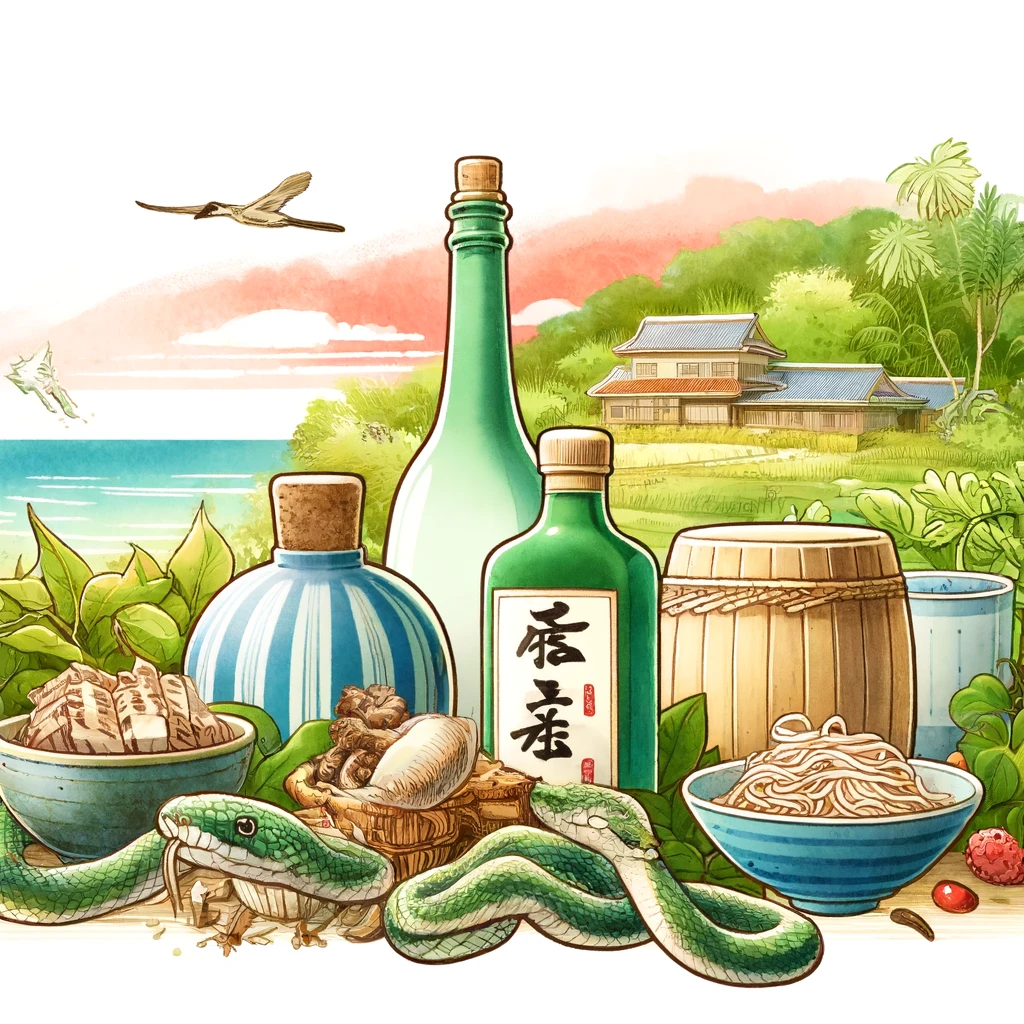
- Special Okinawan Sake: Habushu
- What is Habushu?
- Using Habushu in Cooking
- Meaning of the Name “Habushu”
- Origin of the Term “Habu”
- Origin of the Name “Habushu”
- Meaning of the “Sake” Part
- Why “Habu” and “Sake” Were Combined</h4 > The combination of “Habu” and “Sake” is straightforward because the drink is made by fermenting snake meat in alcohol. Utilizing locally available ingredients in Okinawa’s natural environment led to the creation of this distinctly local beverage. The culture of revering snakes and using them in brewing likely contributed to the development of a richer flavor in the sake.
- Regional Names in Okinawan Dialect
- How to Purchase and Store Habushu
- Additional Information on Habushu
- Habushu Q&A
- Conclusion
Special Okinawan Sake: Habushu
Okinawa, known for its stunning seas and rich natural environment, is home to a unique type of sake: “Habushu.” Made using the venomous habu snake, this distinctive drink is unlike any typical health beverage in both flavor and benefits.
Habushu originated on Kume Island in Okinawa around the 14th century. Due to the potent venom of the habu snake, it was initially used primarily as medicinal liquor. Over time, however, it has become an indispensable part of Okinawan culinary culture.
The allure of Habushu lies in its distinctive taste. The unique flavors and depth provided by the habu enhance various dishes. It’s an excellent pairing with traditional Okinawan foods like soba noodles and island pork dishes.
In addition to its culinary uses, Habushu is also valued for its health benefits. It has long been cherished by the people of Okinawa for its reputed ability to boost vitality and relieve fatigue.
However, the appeal of Habushu extends beyond its taste and health benefits. This sake encapsulates the culture, history, and natural philosophy of Okinawa. The local wisdom that respects and coexists with the dangerous habu snake is vividly expressed in the form of Habushu.
Would you like to delve deeper into the world of Habushu? Beyond just drinking it, considering its background can lead to new discoveries. Various experiences, such as brewery tours and cooking classes, offer chances to explore the charm of Habushu.
When visiting Okinawa, be sure to try Habushu. It’s a unique taste interwoven with history and culture.
What is Habushu?
Habushu is a traditional Okinawan snake liquor, as its name suggests, it is made using the habu snake. This potent beverage is characterized by its unique flavor and ingredients.
Overview and Origins of Habushu
Definition of Habushu
Habushu is a type of Okinawan snake liquor made from habu meat and rice malt, following traditional brewing methods. It typically has an alcohol content of about 12% and is distinguished by its clear, amber color. The aroma is unique, harmonizing the umami of the snake meat with the sweetness from the rice malt.
History of Habushu in Okinawa
The history of Habushu dates back to the 14th century when it was first produced in Kume Island, Okinawa. Initially popular as medicinal liquor, it gradually became an integral part of Okinawan cuisine. During the Edo period, it was even presented as a tribute by the Ryukyu Kingdom, gaining national recognition.
Background of Habushu’s Origin
Habushu is closely tied to Okinawa’s subtropical marine climate. In such hot and humid conditions, preserved foods were highly valued. By salting the snake and fermenting it with rice malt, long-term preservation became possible. Additionally, the cultural reverence for snakes fostered the tradition of making this unique liquor.
How Habushu is Made
Types of Snakes Used
The primary ingredient for Habushu is the venomous habu snake, specifically the three varieties found in Okinawa: Taiwan Habu, Hime Habu, and Sakishima Habu, with Sakishima Habu being the most commonly used.
Fermentation Process of Snake Meat and Rice Malt
The process begins with the snake being disassembled and salted. Simultaneously, rice malt is cultivated and thoroughly dried. The salted snake meat and dried rice malt are then blended in appropriate proportions and packed into a special ceramic vessel. This mixture is fermented and aged at low temperatures for an extended period to produce Habushu.
Aging Period of Habushu
The fermentation and aging process takes at least three years, but it is common to let it mature for five years or more. The longer the aging period, the more mellow and rich the flavor becomes. Some premium Habushu is aged for up to ten years.
Health Benefits and Cautions of Habushu
Nutrients and Expected Benefits of Habushu
Habushu is rich in proteins, vitamins, and minerals. The nutrients derived from the snake meat are believed to have tonic effects, helping with fatigue recovery and overall health improvement. However, its effectiveness is not scientifically proven.
Cautions on Overconsumption of Habushu
Due to its high alcohol content, overconsumption of Habushu can be harmful to health. It is essential to consume it in moderation. The recommended daily intake is around 30ml, but this can vary from person to person.
Contraindications for Habushu
Pregnant and breastfeeding women, minors, and those allergic to snake venom should avoid Habushu. Individuals with existing medical conditions should consult a doctor before consuming Habushu due to the potential risk of residual snake venom.
This detailed explanation of Habushu should give you a deeper understanding of this traditional Okinawan liquor. Next, we will explore “Using Habushu in Cooking.”
Using Habushu in Cooking
The Role of Habushu in Okinawan Cuisine
Aroma and Flavor of Habushu
Adding Habushu to Okinawan cuisine introduces a unique aroma and flavor. The umami from the snake meat and the sweetness from the rice malt fermentation blend harmoniously, enhancing the overall taste of the dishes. Its gamey aroma also adds a distinctive accent to the cuisine.
Adding Depth to Dishes
Habushu, aged over a long period, provides a deep, rich flavor to dishes. This depth enhances the overall umami, making dishes more complex and flavorful. It is particularly effective in marinating fish and meat, bringing out their natural flavors.
As a Health-Boosting Ingredient
Historically, Habushu has been valued for its tonic properties. Rich in proteins, vitamins, and minerals from the snake meat, it has been considered a health-boosting ingredient in Okinawan cuisine. It’s believed to enhance physical strength and serves as a secret ingredient in many dishes.
Representative Dishes Using Habushu
Okinawa Soba Stewed with Habushu
Okinawa soba stewed with Habushu is a representative dish. Adding a suitable amount of Habushu to the pork bone or chicken broth deepens the flavor. Incorporating Habushu into the noodle soup enhances its aroma and umami, making it a must-have for Okinawa soba.
Traditional Island Pork Cooked with Habushu
Okinawan island pork is a high-protein, valuable ingredient. Cooking this pork with Habushu is a traditional recipe that brings out the best in the meat. The aroma and umami of Habushu elevate the meat’s texture and flavor, making it a supreme dish often served on special occasions.
Other Local Dishes
Habushu is widely used in various local dishes. It is utilized in miso or vegetable stews and steamed meat and fish dishes. Additionally, a condiment made by mixing Habushu with salt, known as “Chibisu,” is cherished as an all-purpose seasoning in traditional Okinawan cuisine.
Tips for Using Habushu in Cooking
How to Use the Right Amount
Using too much Habushu can overpower the dish with its strong aroma. The appropriate amount varies depending on the dish, but generally, 20ml to 40ml is recommended. Following these guidelines ensures you can enjoy the aroma and richness without overwhelming the dish.
Combining with Other Seasonings
While Habushu is delicious on its own, combining it with other seasonings can enhance its flavor. Mixing it with umami seasonings increases the umami, and combining it with vinegar or sake creates a refreshing aroma. Blending it with soy sauce, mirin, and garlic adds depth to the dish.
Cooking Tips and Visual Appeal
Using Habushu as a base seasoning is ideal. Adding a few drops at the end of simmering or steaming dishes enhances the aroma. For a more robust flavor, sprinkle it as a finishing touch. To improve the visual appeal, using Habushu to create a beautiful glaze can be effective.
Thus, Habushu is a versatile seasoning that enhances flavor, umami, and visual appeal in various dishes. It is an essential ingredient in Okinawan cuisine, and incorporating it into your cooking is highly recommended.
Meaning of the Name “Habushu”
Origin of the Term “Habu”
Meaning of “Habu” in Habu Dialect
The term “Habu” comes from the Okinawan dialect, where it refers to venomous snakes in general. It encompasses species like the Sakishima Habu, Hime Habu, and Taiwan Habu, which inhabit Okinawa.
Origin of the Habu Snake Name
There are various theories about the origin of the name “Habu.” One theory suggests it comes from the term “Habuku” (張布), meaning to spread out, referring to the snake’s posture when it spreads its neck in a threatening manner.
Origin of the Name “Habushu”
Meaning of the “Sake” Part
The latter part of “Habushu,” “shu” (酒), refers to alcoholic beverages. Being traditionally brewed, it is categorized as a type of fermented liquor. Unlike typical sake or shochu, its primary ingredient is snake meat.
Why “Habu” and “Sake” Were Combined</h4 > The combination of “Habu” and “Sake” is straightforward because the drink is made by fermenting snake meat in alcohol. Utilizing locally available ingredients in Okinawa’s natural environment led to the creation of this distinctly local beverage. The culture of revering snakes and using them in brewing likely contributed to the development of a richer flavor in the sake.
Regional Names in Okinawan Dialect
Differences in Names by Region
The name for Habushu varies slightly across different regions in Okinawa. In Kume Island, the heart of Habushu, it is called “Habusaa,” while in Miyako Island, it is known as “Habusaa,” and in the Yaeyama Islands, it is referred to as “Habusu.”
Representative Dialect Names and Their Meanings
These dialect names combine the word “Habu” (snake) with “Saa” (酒), which means “sake” in Okinawan dialect. In the Yaeyama Islands, “Suu” also means “sake,” thus the names reflect the local language’s influence.
The name “Habushu” reflects the natural and cultural aspects of Okinawa, embodying a respect for the snake and the wisdom of utilizing locally available materials. It symbolizes Okinawa’s unique brewing culture.
How to Purchase and Store Habushu
Where to Buy Habushu
Okinawa-Based Breweries and Specialty Stores
The best place to purchase Habushu is within Okinawa. Primarily, breweries and specialty stores in Kume Island, Miyako Island, and the Yaeyama Islands are renowned for their Habushu. Notable breweries include Kume Sen Brewery, Sakiyama Brewery, and Higa Brewery.
Naha City and the area around Kokusai Street in Okinawa also have many stores specializing in Habushu. These shops offer various types of Habushu with different origins and ages, and you can choose according to your preference with the help of the store staff.
Purchasing Online
If you cannot visit Okinawa, you can buy Habushu online. Many official brewery websites and online specialty stores offer Habushu. It is also available on general sake retail websites featuring famous brands.
Online shopping is convenient, but it’s essential to be cautious about quality. Avoid purchasing from unauthorized sellers or items with unclear expiration dates. It is recommended to buy from official brewery websites or reputable sites.
Shelf Life and Storage of Habushu
Shelf Life When Unopened
Unopened Habushu has a shelf life of about 5 to 10 years from the manufacturing date. The longer the aging period, the longer it can be enjoyed. Five-year-aged Habushu lasts five years, ten-year-aged Habushu lasts ten years, and premium bottles can last up to thirty years.
Period After Opening and Storage Method
Once opened, it is best to consume Habushu promptly to maintain its quality. It can be stored in the refrigerator for about a month after opening but should be kept away from high temperatures and humidity. For long-term storage, transferring it to an airtight glass bottle is recommended.
Exposure to light and air accelerates oxidation, affecting the flavor. If there’s leftover Habushu, transfer it to another container and store it in a cool, dark place. Ensure the bottle is tightly sealed to minimize air exposure.
Habushu is a rare sake that embodies Okinawa’s brewing culture. By following these purchasing and storage methods, you can enjoy this unique flavor. Although it may be costly and rare, its value is undeniable.
Additional Information on Habushu
Historical and Cultural Background of Habushu
Origin and Tradition of Habushu
The birthplace of Habushu is Kume Island in southern Okinawa. It is believed that snake liquor production began around the 14th century. Initially enjoyed as medicinal liquor, it gradually became a part of the local food culture. This tradition continues to this day, with Habushu still being revered.
In Kume Island, there were designated roles for catching habu snakes and for brewing Habushu. Both skills were highly valued and laid the foundation for Habushu production. These roles are still respected today, with Habushu being produced with a sense of reverence.
Connection Between Habushu and Okinawa’s Natural Environment
Habushu is closely related to Okinawa’s subtropical climate. The hot and humid environment posed challenges for food preservation. Salting and fermenting snakes with rice malt allowed for long-term preservation.
Additionally, the cultural practice of venerating snakes reflects Okinawa’s natural philosophy. Instead of fearing the dangerous habu, Okinawans valued it as a source of vitality. This harmonious coexistence with nature enabled the creation of Habushu.
Legends and Stories Related to Habushu
Legends and Anecdotes about Habushu
There are many legends surrounding Habushu. One famous story is that it is considered a “longevity medicine.” In Okinawa, it has been passed down from grandparents to grandchildren as a wish for health and longevity.
There are also tales of expert snake catchers who could sense the presence of habu snakes with their eyes. These stories speak of the profound skills and techniques handed down through generations.
Famous People Who Loved Habushu
Many notable figures have enjoyed Habushu. During the Meiji era, Kawaji Toshiyoshi, known for his sweet potato shochu, is said to have lived a long life by drinking Habushu.
Okinawan singer BEGIN also praises Habushu, saying, “Habushu keeps your blood flowing smoothly. It’s perfect when combined with sweet potato shochu!” They extol its benefits enthusiastically.
Events and Spots Related to Habushu
Habushu Brewery Tours
Major Okinawan breweries offer factory tours where you can observe the Habushu production process up close. For example, Kume Sen Brewery provides a tour showcasing the entire process, from snake dissection to bottling. Visitors can also taste rare Habushu during the tour.
Cooking Classes Using Habushu
In Naha City, Motobu Town, and Ishigaki Island, cooking classes featuring Habushu are offered. Participants can learn how to use Habushu in dishes, including soba and jorafu cuisine. These popular programs allow you to explore Okinawan culinary culture while delving into the charms of Habushu.
Events Featuring Habushu
Every May, the “Habu Festival” is held in Kume Island. The event includes Habushu tasting sessions, snake-catching experiences, and snake cuisine. It’s an opportunity to experience the coexistence of humans and snakes and to learn about the history and culture of Habushu.
Habushu offers many unique experiences. Exploring its historical and cultural aspects can lead to new discoveries beyond just being a rare sake.
Habushu Q&A
Where does Habushu come from?
Habushu originated around the 14th century on Kume Island in southern Okinawa. Initially enjoyed as medicinal liquor, it gradually became part of the local food culture. In Okinawa’s hot and humid climate, salting and fermenting snakes with rice malt allowed for long-term preservation. The veneration of snakes also reflects Okinawa’s natural philosophy.
What are the distinctive flavors of Habushu?
Habushu blends the umami from snake meat with the sweetness and aroma from rice malt fermentation. This complex flavor profile enhances dishes and provides a gamey aroma. Additionally, long aging imparts a deep, rich taste that adds depth to culinary creations.
What is the origin of the name “Habushu”?
The name “Habushu” combines “Habu” (snake) from Okinawan dialect and “shu” (sake). It reflects the cultural practice of making sake with locally available ingredients. The term “Habu” in Okinawan dialect refers to venomous snakes like the Sakishima Habu, Hime Habu, and Taiwan Habu.
How can I purchase Habushu?
The best place to buy Habushu is from breweries and specialty stores in Okinawa. Notable areas include Kume Island, Miyako Island, and the Yaeyama Islands. In Naha City, there are many shops specializing in Habushu. If you cannot visit Okinawa, you can purchase it online from brewery websites or reputable online stores.
What events are related to Habushu?
The annual “Habu Festival” in Kume Island is a well-known event featuring Habushu tasting, snake-catching experiences, and snake cuisine. Major Okinawan breweries also offer tours where you can observe the Habushu production process. Additionally, cooking classes in Naha City and other areas teach how to use Habushu in Okinawan dishes.
Conclusion
Habushu, a traditional Okinawan snake liquor, is renowned for its unique flavor and health benefits. Made from venomous habu snakes and rice malt, it follows a centuries-old brewing process that originated around the 14th century on Kume Island.
Habushu plays an essential role in Okinawan cuisine, enhancing the aroma and depth of dishes. Representative dishes include Okinawa soba stewed with Habushu and traditional island pork cooked with Habushu. Using the right amount and combining it with other seasonings is crucial for the best results.
The name “Habushu” reflects Okinawan dialect and cultural practices. The term combines “Habu” (snake) and “shu” (sake), with regional variations adding to its richness.
Habushu can be purchased from Okinawan breweries and specialty stores, or online. Unopened, it has a shelf
life of 5 to 10 years, while opened bottles should be consumed within a month. Its production is closely tied to Okinawa’s subtropical climate and cultural reverence for snakes.
Legends and stories about Habushu abound, along with notable figures who cherished it. Events such as the “Habu Festival,” brewery tours, and cooking classes offer opportunities to experience its unique charm.
Exploring Habushu’s taste and background provides a deeper appreciation of this exceptional Okinawan sake. Enjoy the special flavor interwoven with history and culture during your next visit to Okinawa.

コメント