
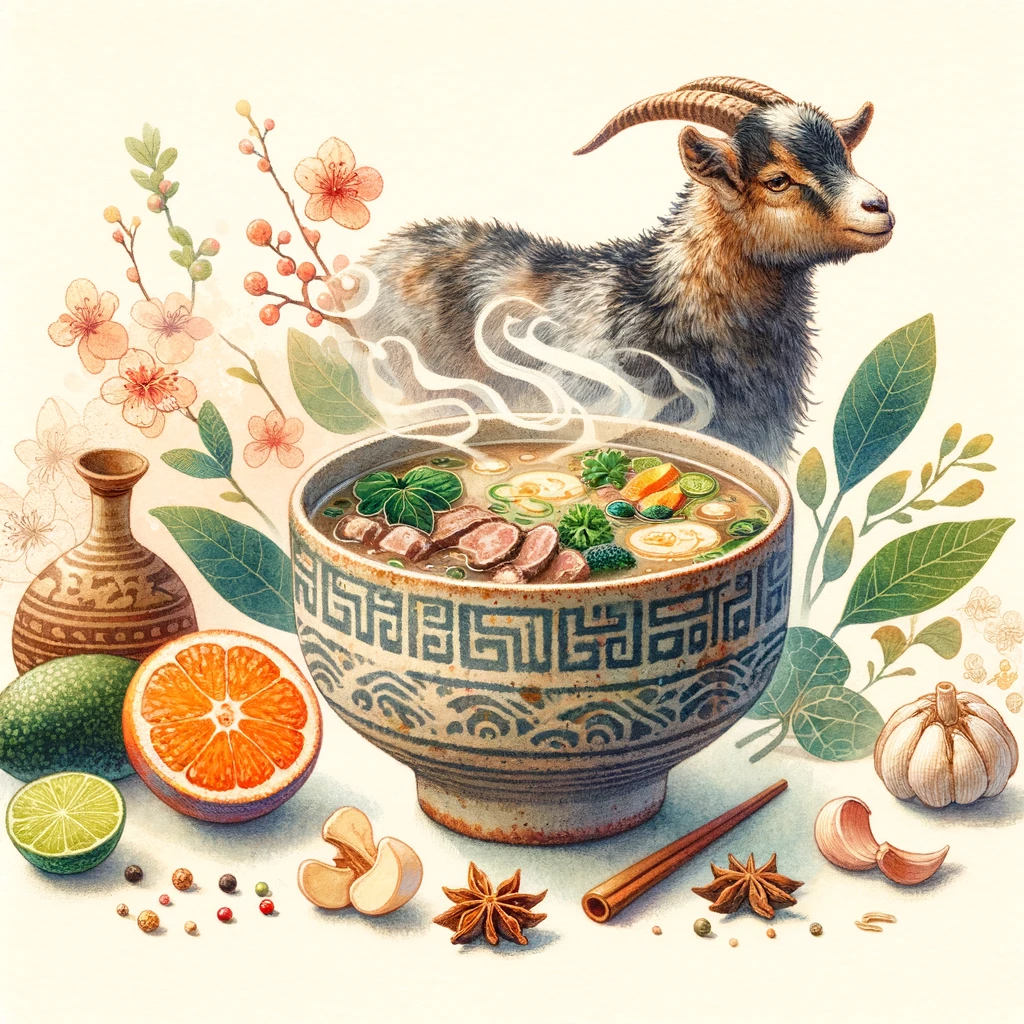
Do you know about the famous Okinawan dish, goat soup? Goat soup, made with nutritious goat meat, is a special dish filled with Okinawa’s history, culture, and the wisdom of its people.
The charm of goat soup lies in its unique flavor. The distinct taste of goat meat, combined with ingredients like shikuwasa and koregusu unique to Okinawa, creates a rich and unforgettable flavor.
However, the appeal of goat soup doesn’t stop there. It also has surprising health benefits. The B vitamins and vitamin E found in goat meat boost immunity, while collagen helps maintain skin elasticity. Enjoying this delicious soup while gaining health benefits is truly a win-win situation.
Goat soup is also essential for Okinawan ceremonies and celebrations. Especially at weddings, it is served as “Hija-jiru” to wish the couple long life and fertility. Through goat soup, one can experience the history and culture of Okinawa.
When you visit Okinawa, be sure to try authentic goat soup. Both on the main island and the surrounding islands, there are many well-loved and hidden gem restaurants.
This blog will fully convey the charm of goat soup. We will share the secrets of its flavor, its amazing health benefits, and its deep connection to Okinawan culture and history.
Through goat soup, why not immerse yourself in Okinawa’s rich culinary culture and history? Surely, you too will be captivated by the allure of Okinawa and its goat soup.
- What is Goat Soup? Understanding Okinawa’s Traditional Dish
- The Flavor and Appeal of Goat Soup
- How to Make Goat Soup – Recipes
- The Origin and Meaning of the Name “Goat Soup”
- Recommended Places and Restaurants to Enjoy Goat Soup
- The Health Benefits and Nutritional Value of Goat Soup
- The Cultural and Traditional Significance of Goat Soup in Okinawa
- Goat Soup Q&A
- Summary
What is Goat Soup? Understanding Okinawa’s Traditional Dish
Goat soup, one of Okinawa’s representative local dishes, is a nutritious soup made from goat meat. Goat meat, with its unique flavor and texture, is an indispensable part of Okinawan food culture. This traditional dish, filled with Okinawa’s history, culture, and the wisdom of its people, has been cherished by the islanders for generations. This article will delve into the origins and development of goat soup, and its relationship with Okinawan food culture. Additionally, we will discuss the ingredients and nutritional value of goat soup, as well as the health benefits of goat meat. Enjoy exploring the fascinating world of Okinawa’s traditional dish, goat soup.
The History and Cultural Background of Goat Soup
The history of goat soup is long and deeply intertwined with Okinawan food culture. Here, we will examine the origins of goat soup, its development in Okinawa, and its connection to Okinawan food culture in detail.
The Origins and Development of Goat Soup in Okinawa
Goats have been one of the livestock present in Okinawa since ancient times. It is said that goats were brought to Okinawa during the Ryukyu Kingdom era through trade with China and Southeast Asia. At that time, goats were a valuable food source, with their milk, meat, and skins being utilized. Goat meat, in particular, was prized for its high protein content and nutritional value, making it an important dietary component.
Over time, dishes using goat meat evolved throughout Okinawa. Among them, goat soup became a beloved dish among islanders as a testament to the wisdom developed to survive in Okinawa’s harsh natural environment. The utilization of goat milk, blood, and organs reflects a resourceful approach to maximizing nutrition intake without waste.
The Relationship Between Goat Soup and Okinawan Food Culture
Goat soup is essential in discussing Okinawan food culture. Due to its geographical and historical background, Okinawa has developed a unique food culture. Within this culture, goats have been positioned as a vital food source.
Goat soup is not just a dish; it is deeply rooted in Okinawan life events such as weddings, funerals, and celebrations. It is often served at weddings, funerals, and festive occasions, strengthening familial, regional, and community bonds.
Furthermore, goat soup is a product of wisdom that makes full use of Okinawa’s ingredients. Utilizing limited island resources without waste and creating nutritionally balanced dishes has supported the health of Okinawan people. Goat soup encapsulates Okinawa’s history, culture, and the wisdom of its ancestors.
The Ingredients and Nutritional Value of Goat Soup
Goat soup is a nutritionally balanced dish. Here, we will explain the ingredients used in goat soup, particularly the nutritional value and health benefits of goat meat. We will also look at the essential vegetables and seasonings for goat soup and the overall nutritional balance.
The Nutritional Value and Health Benefits of Goat Meat
Goat meat, the star of goat soup, is a high-protein, low-calorie food. It is rich in essential amino acids, helping maintain muscle and aiding in recovery from fatigue. Additionally, it is abundant in B vitamins and minerals, which can boost metabolic functions.
Goat meat contains unsaturated fatty acids, which are said to lower blood cholesterol levels. The collagen in goat meat is also expected to maintain skin elasticity and firmness and is beneficial for joint health.
Essential Vegetables and Seasonings for Goat Soup
In addition to goat meat, various vegetables and seasonings are used in goat soup. Representative vegetables include bitter melon, island carrots, and winter melon. These vegetables are rich in vitamins, minerals, and dietary fiber, which help regulate body functions.
Furthermore, shikuwasa and koregusu are indispensable. Shikuwasa, with its refreshing acidity, is rich in vitamin C, which helps in fatigue recovery and boosts immunity. Koregusu, with its deep spiciness, is expected to enhance metabolism.
The Nutritional Balance and Calorie Content of Goat Soup
Goat soup offers a good balance of protein, fat, and carbohydrates, and is rich in vitamins and minerals from vegetables and spices. Given that goat meat is low in calories, it is also suitable for those on a diet.
The calorie content per serving varies depending on the amount of ingredients but is roughly around 200 to 300 kcal. The savory flavor and richness of goat meat provide satisfaction even in small quantities. Goat soup, with its excellent nutritional balance, is a representative dish supporting the health of Okinawan people.
The Flavor and Appeal of Goat Soup
The flavor and appeal of goat soup come from the unique taste and texture of goat meat and the aromatic vegetables and spices used. Here, we will explain the characteristics of goat meat and the essential ingredients for goat soup in detail. Be sure to savor the deep flavors of goat soup yourself.
The Unique Flavor and Texture of Goat Meat
Goat meat has a unique flavor and texture. Here, we will explore the secrets of the distinctive aroma and tenderness of goat meat and the differences in flavor depending on the parts of the meat.
The Secrets of the Distinctive Aroma and Tenderness of Goat Meat
Goat meat is sometimes said to have a peculiar odor. This odor comes from a fatty acid called “capric acid,” unique to goats. While capric acid is an important component characterizing the flavor of goat meat, an excessive amount can cause a strong smell.
However, in goat soup, measures are taken to suppress this odor. Washing the goat meat, and using spices effectively, help to soften the odor and bring out the flavor. Additionally, cooking the meat slowly at low temperatures results in tender meat, with collagen dissolving to create a melt-in-your-mouth texture.
The Differences in Flavor Depending on the Parts of the Goat Meat
Different parts of the goat meat offer varying flavors. Commonly used parts for goat soup include the shoulder, thigh, and belly. Shoulder meat is lean and has a light flavor, often paired well with a mild broth. Thigh meat is rich in red meat, offering a firm texture. Belly meat, with more fat, provides a melt-in-your-mouth experience.
By combining these different parts, goat soup offers a variety of flavors and textures. Adjusting the cooking time for each part is also a key to making delicious goat soup.
Essential Aromatic Vegetables and Spices for Goat Soup
The flavor of goat soup is enhanced by aromatic vegetables and spices. Here, we will look at the importance of shikuwasa and koregusu, and other spices and seasonings used in goat soup.
The Refreshing Acidity of Shikuwasa
Shikuwasa, an Okinawan citrus fruit, is essential for goat soup. Its juice, with refreshing acidity and a slight bitterness, helps to suppress the odor of goat meat and create a refreshing flavor.
Shikuwasa is also rich in vitamin C, which is beneficial for fatigue recovery and boosting immunity. Adding it to goat soup provides health benefits as well.
The Deep Spiciness of Koregusu
Koregusu, a representative Okinawan spice, is indispensable for goat soup. Its deep spiciness enhances the flavor of goat meat and adds depth to the soup.
Koregusu is also said to boost metabolism, warm the body from the inside, and promote fat burning, making it good for dieting.
The Role of Other Spices and Seasonings
In addition to shikuwasa and koregusu, various other spices and seasonings are used in goat soup. For example, ginger helps to suppress the odor of goat meat and warms the body. Garlic enhances the flavor of goat meat and has an antibacterial effect. Green onions add color to the soup and stimulate appetite.
These spices and seasonings each play a role in adding depth and complexity to the flavor of goat soup. Okinawan people have chosen the best ingredients for goat soup through years of wisdom and experience, resulting in the current delicious taste of goat soup.
How to Make Goat Soup – Recipes
Making delicious goat soup requires some tips and tricks. Here, we will explain how to make authentic goat soup step by step. Even beginners can make delicious goat soup.
We will also introduce time-saving recipes and variations. Challenge yourself to make goat soup at home.
How to Make Authentic Goat Soup
Making authentic goat soup requires following specific steps. Here, we will explain the process from preparing the ingredients to finishing the dish in detail.
Preparing and Prepping the Ingredients
First, gather your ingredients: goat meat, bitter melon, island carrots, winter melon, shikuwasa, koregusu, and more. Trim the excess fat from the goat meat and cut it into bite-sized pieces. Cut the vegetables into manageable sizes.
Start by washing the goat meat under running water to remove blood, which helps to reduce the odor. Bitter melon should be halved, seeds removed, and thinly sliced. If you want to reduce bitterness, rub it with salt.
Boiling and Skimming Goat Meat
Boil the prepped goat meat in plenty of water, skimming off any foam that rises to the surface. This process helps to reduce the odor and makes the meat tender.
Boil the meat for 30 minutes to an hour, depending on the part and size of the meat. Once cooked, discard the boiling water, rinse the meat with fresh water, and repeat this process 2-3 times for maximum odor reduction.
Sautéing Vegetables and Finishing the Soup
Transfer the boiled goat meat to a pot, add fresh water, and bring it to a simmer. Add the prepped vegetables, starting with the island carrots and winter melon, and simmer for a while. Then add the bitter melon and continue to simmer.
Simmer over low heat to ensure the goat meat becomes tender and the vegetables are fully cooked. Once tender, adjust the taste with shikuwasa juice and koregusu. Finish with salt to taste, and the goat soup is ready to serve.
Tips for Beginners: Easy Ways to Make Goat Soup
Even if you’re making goat soup for the first time, there are some easy tips to ensure it’s delicious. Here, we will explain a time-saving recipe using a pressure cooker and how to adjust the simmering time for tender goat meat.
Time-Saving Recipe Using a Pressure Cooker
Goat soup usually requires long simmering times, but using a pressure cooker can significantly reduce the time. With a pressure cooker, you can tenderize goat meat in about 20 to 30 minutes.
To use a pressure cooker, place the goat meat and prepped vegetables in the cooker, add water, and seal the lid. Once pressure is reached, simmer over low heat for 20 to 30 minutes. Once the pressure is released, open the lid, adjust the flavor with shikuwasa and koregusu, and serve.
Adjusting Simmering Time for Tender Goat Meat
The tenderness of goat meat varies with simmering time. Be careful not to overcook the meat, as it can affect the texture.
The ideal simmering time differs depending on the part of the meat. Shoulder meat becomes tender relatively quickly, while thigh and belly meat require longer simmering. Initially, start with shorter simmering times and adjust to your preferred tenderness.
Variation Recipes: Using Goat Soup for Other Dishes
Goat soup can be transformed into various dishes with some creative variations. Here, we introduce how to make goat meat curry and goat soup ramen.
How to Make Goat Meat Curry
You can make goat meat curry using the ingredients from goat soup. Prepare the goat meat and vegetables as you would for goat soup. Once tender, add curry roux to thicken the mixture.
The unique flavor of goat meat pairs perfectly with the spiciness of curry. Serve it over rice or with naan or chapati for a delicious meal.
Goat Soup Ramen Idea
Transform goat soup into a delicious ramen dish. Prepare the goat soup as usual, with goat meat and vegetables. Cook the noodles separately and place them in a bowl, pouring the soup over the top.
For toppings, add goat meat, vegetables, green onions, bean sprouts, and a boiled egg. The rich goat meat flavor and chewy noodles create a mouthwatering combination.
The Origin and Meaning of the Name “Goat Soup”
The name “goat soup” may seem simple, but its origin carries deep meaning. Here, we explain the etymology of “goat soup” and its local names in Okinawan dialects. Discover the history and culture embedded in the name of goat soup.
The Etymology of the Name “Goat Soup”
The name “goat soup” combines “goat” and “soup,” but why? Here, we explore the reasons behind this combination and compare it to similar dishes from other regions.
The Reason for Combining “Goat” and “Soup”
The name “goat soup” reflects the primary ingredient, goat meat, and the fact that it is a soup. In Okinawa, goats, called “hija,” have been consumed for a long time. Goats are relatively easy to raise, feeding on grass and weeds, making them a valuable protein source.
Dishes using goat meat were created from the wisdom developed to survive in Okinawa’s harsh natural environment. Goat soup, a dish made by slowly simmering goat meat, represents this wisdom by utilizing all parts of the goat for maximum nutrition.
Comparison with Similar Dishes from Other Regions
Dishes using goat meat exist in regions outside of Okinawa as well. For example, in Indonesia’s Sumba Island, there is “Soto Kambing,” a goat meat soup. In China’s Sichuan province, “goat meat hotpot” is famous.
However, these dishes differ from goat soup in seasoning and ingredients. Goat soup creates its unique flavor by using Okinawan ingredients like shikuwasa and koregusu. Comparing it to dishes from other regions highlights the uniqueness and appeal of goat soup.
Local Names and Regional Differences in Okinawa
In Okinawan dialect, goat soup is sometimes called “hija-jiru.” Here, we explain the unique local names and the characteristics of goat soup on different islands.
Regional Names like “Hija-jiru”
In Okinawan dialect, goats are called “hija.” Thus, goat soup is sometimes referred to as “hija-jiru.” “Hija” means “goat” in Okinawan.
Additionally, regional variations of the name exist, such as “hija-shiru” and “hija-jiru,” reflecting the local dialect. These names show the diversity of the Okinawan language and culture. The name of goat soup provides a glimpse into the history and culture of Okinawa.
Regional Characteristics and Names of Goat Soup on Different Islands
Okinawa consists of many islands, each with its own version of goat soup. For example, in Ishigaki Island, goat soup often includes island peppers, giving it a spicy flavor. In Miyako Island, goat soup sometimes contains papaya, adding a unique sweetness.
Additionally, the name for goat soup varies by island. In the Yaeyama region, it is often called “hija-shiru.” The regional characteristics and names of goat soup reflect the local environment and culture.
The name “goat soup” embodies the history and culture of Okinawa. The combination of “goat” and “soup” represents the wisdom of Okinawan life, and the dialectal names highlight the diversity of Okinawan language. Knowing the name of goat soup deepens understanding of Okinawa itself.
Recommended Places and Restaurants to Enjoy Goat Soup
If you’re looking to try goat soup in Okinawa, where should you go? Here, we introduce popular goat soup specialty restaurants on the Okinawan main island and its remote islands. These establishments are loved by both tourists and locals alike. When you visit Okinawa, be sure to try goat soup at these recommended spots.
Popular Goat Soup Specialty Restaurants on the Okinawan Main Island
There are many specialty restaurants on the Okinawan main island that serve delicious goat soup. Here, we highlight famous restaurants in Naha City where people line up, as well as hidden gems cherished by locals.
Famous Restaurants with Long Lines in Naha City
In Naha City, “Yagiya Main Branch” is a well-known goat soup restaurant that often has long lines. Although it’s a bit away from Kokusai Street, it attracts many customers every day. The goat soup at “Yagiya Main Branch” is characterized by its rich flavor, with the umami of the goat meat fully evident.
Another popular goat soup specialty restaurant in Naha City is “Yagi Soba-ya.” In addition to goat soup, they are also famous for their soba made with goat meat. The goat soup at “Yagi Soba-ya” is light yet flavorful, with the distinct taste of goat meat. If you visit Naha, be sure to stop by.
Hidden Goat Soup Restaurants Loved by Locals
A bit further from Naha City, there are hidden goat soup restaurants that are beloved by locals. For example, “Hija-goya,” a small shop in a residential area of Okinawa City, has been loved by locals for over 30 years. The goat soup at “Hija-goya” has a simple seasoning but is rich in the umami of goat meat.
Another hidden gem is “Gabusoka Shokudo” in Nanjo City. Their goat soup is known for its rich yet light flavor. This restaurant, cherished by locals for many years, allows you to enjoy traditional Okinawan home cooking.
Exceptional Goat Soup on Remote Islands
There are also excellent goat soup restaurants on Okinawa’s remote islands. Here, we introduce goat soup restaurants on Ishigaki Island and Miyako Island.
Traditional Goat Soup Restaurant on Ishigaki Island
For traditional goat soup on Ishigaki Island, “Totto Market” is recommended. Located in the public market of Ishigaki Island, this restaurant is known for its rich and flavorful goat soup made with fresh goat meat.
Another popular goat soup restaurant on Ishigaki Island is “Yaeyama Soba.” They serve both goat soup and soba made with goat meat. The light yet flavorful goat soup here is a must-try.
Unique Goat Soup Dishes on Miyako Island
Miyako Island offers unique dishes made with goat soup. For instance, “Teebichi-ya” serves not only goat soup but also dishes made with goat meat, such as “teebichi,” which refers to pork trotters in Okinawan dialect. However, at “Teebichi-ya,” they offer a version made with goat meat.
Another popular dish on Miyako Island is “Yagi Soki Soba” at “Miyako Soba.” This dish combines the island’s famous soki soba with goat meat, creating a unique and delightful flavor.
On both the Okinawan main island and its remote islands, you can find a variety of goat soup specialty restaurants. From famous establishments with long lines to hidden gems loved by locals, there are many types of restaurants to choose from. When you visit Okinawa, be sure to try goat soup at these places. You’ll surely appreciate the depth of Okinawan food culture.
The Health Benefits and Nutritional Value of Goat Soup
Goat soup is known not only for its delicious taste but also for its health benefits. Here, we will detail the nutrients found in goat meat, the main ingredient of goat soup, and its health benefits. Let’s look at the benefits of the proteins and vitamins in goat meat, as well as the beauty benefits of the collagen found in goat soup.
The Benefits of Protein and Vitamins in Goat Meat
Goat meat is known as a high-protein, low-fat food. Here, we explain the benefits of the proteins and vitamins found in goat meat.
Protein for Muscle Maintenance and Fatigue Recovery
Goat meat is rich in high-quality protein. Protein is an essential nutrient that serves as a building block for muscles, organs, and hormones. It is particularly beneficial for fatigue recovery and muscle maintenance after exercise.
Goat meat contains a balanced amount of essential amino acids. These essential amino acids cannot be produced by the body and must be obtained through diet. Goat meat is an excellent food source for efficiently obtaining these essential amino acids.
Moreover, the protein in goat meat is highly digestible and absorbable, meaning the protein consumed is effectively utilized by the body. This makes goat meat an ideal food for those engaging in exercise or strength training.
Vitamins for Boosting Immunity
Goat meat contains various vitamins, especially rich in B vitamins and vitamin E, known for their immune-boosting effects.
B vitamins play a crucial role in energy metabolism and maintaining nervous system functions. Particularly, vitamin B6 is involved in regulating the immune system. A deficiency in vitamin B6 can lead to a weakened immune system and increased susceptibility to infections.
Vitamin E is known for its antioxidant properties, neutralizing free radicals in the body and preventing cell damage. A deficiency in vitamin E can reduce the body’s ability to protect against damage caused by free radicals, leading to a weakened immune system.
The B vitamins and vitamin E found in goat meat can help boost immunity, protecting the body from infections and diseases. Regular consumption of goat meat can help maintain immunity and promote a healthy lifestyle.
The Beauty Benefits of Collagen in Goat Soup
Goat soup is rich in collagen from goat meat. Here, we explain the beauty benefits of collagen.
Collagen for Maintaining Skin Elasticity and Firmness
Collagen is the most abundant protein in the body, making up about 30% of total protein. It is mainly found in the skin, bones, and joints, playing a vital role in maintaining the body’s structure.
Collagen is especially crucial for maintaining skin elasticity and firmness. It is abundantly found in the dermis layer of the skin, helping to keep the skin elastic and firm.
However, collagen levels in the body decrease with age, leading to wrinkles and sagging. Consuming collagen can help supplement the skin’s collagen levels.
The collagen in goat soup is characterized by its low molecular weight, making it easily absorbable by the body. Drinking goat soup can help maintain skin elasticity and firmness.
Collagen for Joint Health
Collagen also plays an essential role in maintaining joint health. The cartilage that makes up joints is rich in collagen, which helps maintain its elasticity and strength.
With age, collagen levels in the cartilage decrease, leading to joint pain and reduced mobility. Consuming collagen can help supplement the collagen in the cartilage.
The collagen in goat soup can help maintain joint health, particularly in weight-bearing joints like the knees and hips. Regular consumption of goat soup can help maintain joint health.
Goat soup is not only delicious but also beneficial for health. The protein and vitamins in goat meat, as well as the collagen in goat soup, play essential roles in maintaining overall health. It is especially effective in boosting immunity and providing beauty benefits. Consider incorporating goat soup into your diet for a healthy lifestyle.
The Cultural and Traditional Significance of Goat Soup in Okinawa
Goat soup is not just a dish; it holds special meaning deeply connected to Okinawan culture and traditions. Here, we explain the role of goat soup in ceremonies and celebrations, and how it helps us understand Okinawa’s food culture. We will also touch on how goat soup reflects the continuation of Okinawan history and culture.
The Role of Goat Soup in Ceremonies and Celebrations
In Okinawa, goat soup is an indispensable dish for ceremonies and celebrations. Here, we explain the significance of “Hija-jiru” at weddings and the use of goat soup for offerings during New Year and Obon.
The Significance of “Hija-jiru” at Weddings
At Okinawan weddings, “Hija-jiru,” a goat soup, is often served. “Hija” means “goat” in Okinawan dialect. Hija-jiru is a special dish served to wish the newlyweds long life and fertility.
Goats are symbolic of strong reproductive capabilities and are seen as symbols of prosperity. Additionally, goat horns are believed to have the power to ward off evil spirits. Serving Hija-jiru at weddings is meant to protect the newlyweds from evil spirits and ensure a prosperous future.
Hija-jiru is served to the newlyweds, their families, and guests, helping to strengthen the bond of the new family. It is an essential dish for Okinawan weddings.
Goat Soup Offerings During New Year and Obon
In Okinawa, goat soup is sometimes made as an offering to ancestors during New Year and Obon. Goat meat is also considered an important offering to the gods.
During New Year, some families make “Hija-shi,” a dish of goat meat, daikon, and kelp. The umami of the goat meat and the sweetness of the daikon create a distinctive New Year flavor.
During Obon, a ceremony called “Unkee” is held to welcome the spirits of ancestors. Making goat soup and offering it
to the spirits during this period expresses gratitude to the ancestors. Goat soup is a special dish that pleases the spirits of ancestors.
New Year and Obon are important times for family gatherings. Making goat soup during these times helps to strengthen family bonds and share gratitude to ancestors. Goat soup is an essential dish for Okinawa’s important ceremonies.
Understanding Okinawan Food Culture Through Goat Soup
Goat soup is an indispensable dish for understanding Okinawan food culture. Here, we explain the wisdom behind using Okinawan ingredients and how goat soup reflects the continuation of Okinawan history and culture.
The Wisdom of Using Okinawan Ingredients
Okinawa’s subtropical climate, characterized by warmth and humidity, produces unique ingredients. Okinawan cuisine has developed by making the most of these ingredients’ characteristics.
Goat soup is a dish filled with the wisdom of surviving in Okinawa’s harsh natural environment. Goats, which feed on grass and weeds, are relatively easy to raise and have been treasured as a high-protein, low-fat food source.
Furthermore, goat soup incorporates citrus fruits like shikuwasa and spices like koregusu, which are special products of Okinawa’s climate. The refreshing acidity of shikuwasa and the deep spiciness of koregusu help to mellow the odor of goat meat and create a unique flavor.
Goat soup is a product of wisdom, utilizing Okinawan ingredients without waste and considering nutritional balance. The food culture of Okinawa is preserved by passing down this wisdom from generation to generation.
Goat Soup Reflects the Continuation of Okinawan History and Culture
Goat soup is also a dish that tells the history and culture of Okinawa. Goats are said to have been present in Okinawa since the Ryukyu Kingdom era. At that time, goats were a valuable food source and were even served at royal banquets.
During the Battle of Okinawa, many residents suffered from food shortages. Goats became an important protein source during these difficult times. Goat soup supported the lives of Okinawan people during the war.
Even today, goat soup continues to be loved by Okinawans. It is passed down as a family dish and is essential for ceremonies and celebrations. Making goat soup allows people to reflect on Okinawan history and culture and appreciate the wisdom and hardships of their ancestors.
Goat soup symbolizes Okinawan food culture and plays a role in the continuation of its history and culture. Enjoying goat soup allows you to experience the richness of Okinawan food culture.
Goat soup is not just a dish; it holds special meaning deeply connected to Okinawan culture and traditions. It plays a role in ceremonies and celebrations and is essential for understanding Okinawan food culture. Goat soup continues to be loved by Okinawans and allows for reflection on Okinawan history and culture. Why not immerse yourself in Okinawan history and culture through goat soup?
Goat Soup Q&A
What ingredients used in goat soup help reduce the unique odor of goat meat?
Citrus fruits and spices such as shikuwasa and koregusu used in goat soup help reduce the unique odor of goat meat. The refreshing acidity of shikuwasa and the deep spiciness of koregusu work together to mellow the odor and create a distinctive flavor.
Why is goat soup served at Okinawan ceremonies and celebrations?
Goats are considered symbols of fertility and prosperity due to their strong reproductive capabilities. Additionally, goat horns are believed to ward off evil spirits. Serving goat soup at ceremonies and celebrations is a way to wish for the prosperity of descendants and protection from evil. At weddings, in particular, “Hija-jiru,” a goat soup, is served to wish the newlyweds long life and fertility.
Which vitamins in goat meat are effective in boosting immunity?
Goat meat is rich in B vitamins and vitamin E. Vitamin B6 is involved in regulating the immune system, while vitamin E, known for its antioxidant properties, helps boost immunity. These vitamins support the body’s defense against infections and diseases.
Why has goat soup developed as a traditional local dish in Okinawa?
Okinawa’s subtropical climate and the wisdom of surviving in its harsh natural environment have contributed to the development of goat soup. Goats are relatively easy to raise as they feed on grass and weeds. Goat meat, high in protein and low in fat, has been a valuable protein source. The use of unique Okinawan ingredients like shikuwasa and koregusu has created a distinctive flavor.
What are the beauty benefits of collagen found in goat soup?
The collagen in goat soup helps maintain skin elasticity and firmness. Collagen is abundant in the dermis layer of the skin and decreases with age, leading to wrinkles and sagging. The low-molecular-weight collagen in goat soup is easily absorbed by the body, helping to supplement the skin’s collagen. Collagen also plays a crucial role in maintaining joint health, as it is a key component of cartilage.
Summary
Goat soup, a traditional Okinawan dish, is not just a meal but a special dish filled with the history, culture, and wisdom of Okinawa. Goat meat, the main ingredient, is high in protein, low in fat, and has a unique flavor and texture. The use of Okinawan ingredients like shikuwasa and koregusu helps reduce the odor of goat meat and creates a rich flavor.
Goat soup is highly nutritious and is noted for its health benefits, including boosting immunity and providing beauty benefits. The B vitamins and vitamin E in goat meat enhance immunity, while collagen helps maintain skin elasticity and firmness.
Goat soup is also essential for Okinawan ceremonies and celebrations. At weddings, “Hija-jiru” is served to wish the newlyweds long life and fertility. Born from the wisdom of surviving in Okinawa’s harsh natural environment, goat soup carries forward the knowledge of the ancestors to the present day.
When you visit Okinawa, be sure to try authentic goat soup. Both on the main island and the remote islands, there are many well-loved and hidden gem restaurants. Through goat soup, you can experience the rich culinary culture and history of Okinawa.


コメント