
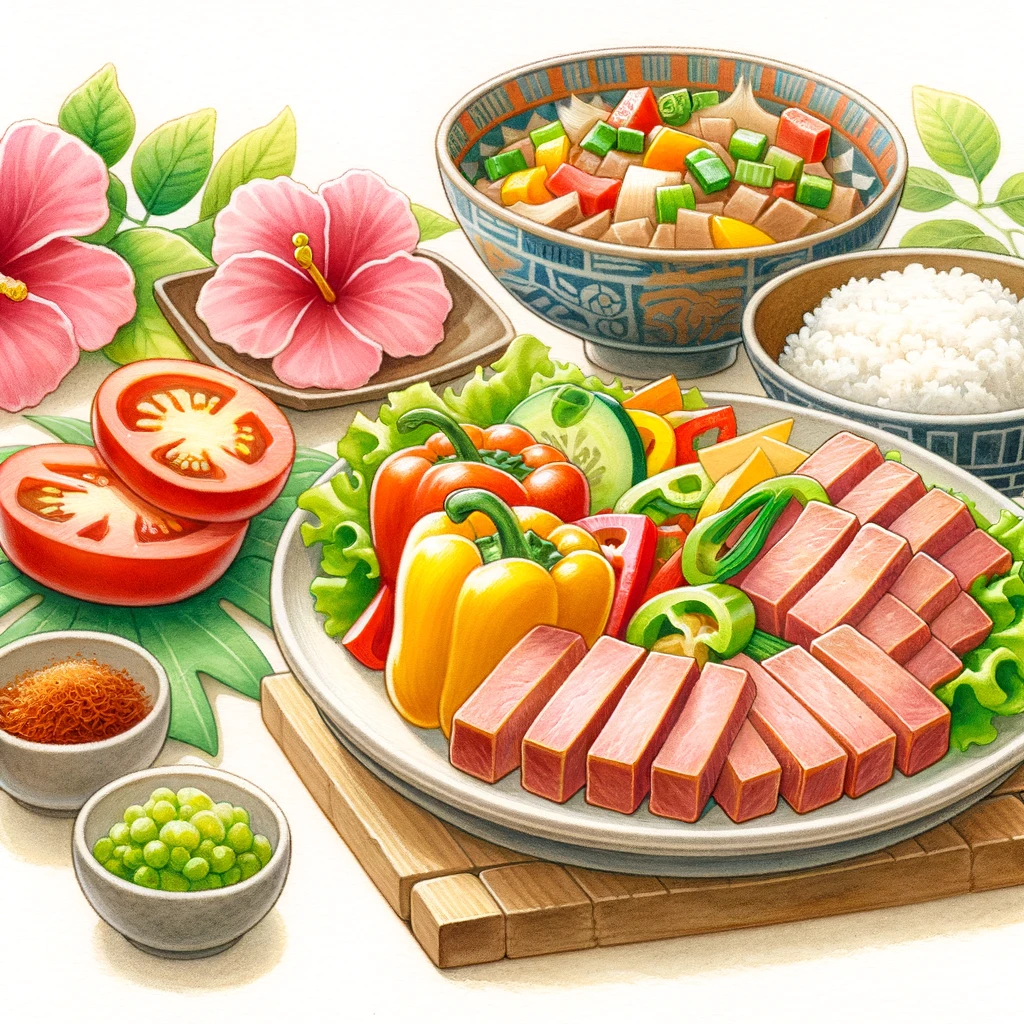
There is a special canned food that is indispensable on Okinawan tables. It’s the Tulip Pork Luncheon Meat Can. Known for its slightly sweet taste and tender texture, this pork product is renowned for being easy to enjoy.
But do you know what pork luncheon meat is? This canned delicacy actually tells the story of Okinawa’s history and culture. It became popular under American rule after World War II and is now a staple in Okinawan home cooking and local cuisine, playing a versatile role in various dishes.
The charm of Tulip’s Pork Luncheon Meat Can lies in its convenience and deliciousness. It’s wonderful to be able to eat it immediately with just a can opener. It’s already tasty on its own, but it also adds flair to stir-fries, salads, pastas, and more, depending on how you use it.
Moreover, it’s nutritionally rich, containing high-quality protein, B vitamins, and iron. It’s a handy ingredient for everyday meal preparation.
However, be mindful of the salt and fat content. Eating too much just because it’s canned can have health impacts. It’s important to consume it in moderation and balance it with other food groups like vegetables.
You might be wondering, where can you buy Tulip Pork Luncheon Meat? The answer is many places, including supermarkets, convenience stores, and online shops in Okinawa. It’s often available in bulk at a better price, so be sure to check it out.
So, why not try enjoying the taste of Okinawa with Tulip Pork Luncheon Meat Can? It’s a versatile ingredient that allows you to easily prepare authentic Okinawan dishes while also getting good nutrition. Incorporate it wisely into your diet, keeping health in mind, and your culinary life is sure to become more enriched.
- What is Tulip Pork Luncheon Meat?
- The Relationship Between Okinawa and Pork Luncheon Meat
- The Appeal of Tulip Pork Luncheon Meat Can
- Recipe Ideas Using Pork Luncheon Meat Can
- How to Purchase Tulip Pork Luncheon Meat Can
- Nutritional Value and Health Impact of Pork Luncheon Meat
- Enjoy the Taste of Okinawa with Tulip Pork Luncheon Meat Can
- Tulip Q&A
- Conclusion
What is Tulip Pork Luncheon Meat?
Pork luncheon meat is a type of processed meat product made from pork, and it is an essential part of Okinawan cuisine. Among these, the Tulip brand’s pork luncheon meat can is beloved by many for its convenience and taste. This article delves into the details of Tulip Pork Luncheon Meat, including its ingredients, manufacturing process, and the brand’s history.
Ingredients and Manufacturing Process of Pork Luncheon Meat
Parts of Pork Used and Their Quality
The pork used in Tulip Pork Luncheon Meat is selected from only high-quality cuts. Primarily, pork shoulder and pork thigh, which contain the right amount of fat, are chosen. These cuts are tender and rich in umami, making them ideal for delicious pork luncheon meat. By sourcing high-quality pork, Tulip ensures consistent and excellent taste.
The Role of Seasonings and Additives in the Manufacturing Process
The selected pork is cut into blocks and then cured with salt. The salt used in this process enhances the meat’s flavor and improves its preservation. The cured pork is then cooked with seasonings such as soy sauce, mirin, and sugar, which create the distinctive taste of Tulip Pork Luncheon Meat. Additionally, necessary additives are used in the manufacturing process to maintain product quality and flavor. Tulip uses optimal amounts of additives with safety in mind.
History and Features of the Tulip Brand
The Birth and Development of the Tulip Brand
The Tulip brand was born in Okinawa in the 1950s. During this time, under American rule, pork luncheon meat became widely popular due to the presence of American military forces. Amidst this environment, Tulip developed and began selling pork luncheon meat tailored to Okinawan tastes. Since then, Tulip Pork Luncheon Meat has been cherished as an indispensable part of Okinawan food culture. Today, it is loved not only in Okinawa but across Japan.
Why Tulip Pork Luncheon Meat is Chosen by Many
Tulip Pork Luncheon Meat is chosen by many due to its meticulous manufacturing process and unique taste. The pork used as the main ingredient meets strict quality standards and is carefully processed by skilled artisans. The unique flavor, achieved through special seasonings and methods, sets it apart from other brands. Additionally, the convenience of the canned form, allowing for easy storage and enjoyment anytime, is a significant reason for its popularity.
The Relationship Between Okinawa and Pork Luncheon Meat
The relationship between Okinawa and pork luncheon meat is deep, making it an essential part of Okinawan food culture. This section explains the positioning of pork luncheon meat in Okinawan cuisine and introduces popular Okinawan dishes that use this versatile ingredient.
The Positioning of Pork Luncheon Meat in Okinawan Food Culture
Features and History of Okinawan Food Culture
Okinawan food culture has unique characteristics shaped by its historical and geographical context, distinct from other parts of Japan. Historical interactions with China and Southeast Asia introduced ingredients and cooking methods from these regions. Additionally, the subtropical climate of Okinawa has created a rich variety of ingredients. Within this cultural backdrop, pork luncheon meat has become a fixture in Okinawan cuisine.
Reasons Why Pork Luncheon Meat is Loved in Okinawa
Pork luncheon meat is loved in Okinawa for several reasons. First, during the difficult post-World War II era under American rule, it was a valuable food source due to its high preservation quality and ease of preparation. The preference for pork in Okinawan cuisine also played a significant role in its acceptance. Additionally, brands like Tulip developed pork luncheon meat that suited Okinawan tastes, making it even more accessible and beloved.
Popular Pork Luncheon Meat Dishes in Okinawa
How to Make and the Appeal of Pork Tamago Onigiri
Pork Tamago Onigiri is a popular dish in Okinawa. It’s simple to make: prepare some rice and mix in crumbled pork luncheon meat and scrambled eggs. Shape the mixture into onigiri (rice balls) and you’re done. The umami of the pork luncheon meat combined with the fluffy texture of the scrambled eggs creates a satisfying dish. Its portable form makes it perfect for on-the-go enjoyment.
Adding Pork Luncheon Meat to Goya Champuru
Goya Champuru is a representative Okinawan dish, and adding pork luncheon meat to it is a popular variation. This dish features the bitter taste of goya (bitter melon), which is enhanced by the savory richness of pork luncheon meat, creating a perfect balance. This addition makes the dish more substantial and satisfying, widely loved in Okinawan homes as a versatile way to use pork luncheon meat.
The Appeal of Tulip Pork Luncheon Meat Can
Tulip Pork Luncheon Meat Can is loved for its convenience and versatility. This section explains how it serves as an easy and practical preserved food, its benefits as a long-term storage item, and tips on opening the can and handling it safely.
Uses as a Convenient Preserved Food
Benefits as Emergency and Stockpile Food
Tulip Pork Luncheon Meat Can is ideal as emergency or stockpile food. Its long shelf life at room temperature makes it perfect for disaster preparedness or emergency situations. It can be eaten without heating if necessary, providing a reliable source of energy-rich nutrients. Its compact and lightweight nature also makes it easy to store and transport.
Use in Outdoor and Camping Meals
Tulip Pork Luncheon Meat Can is also great for outdoor and camping meals. It’s easy to prepare without the need for cooking, reducing the hassle of meal prep. It’s delicious on its own but can be paired with rice, bread, or vegetables for variety. Its lightweight and compact nature make it a convenient choice for outdoor adventures.
Long-term Storage and Benefits as a Staple Food
Shelf Life and Storage Methods
Tulip Pork Luncheon Meat Can has a long shelf life, typically 2-3 years unopened at room temperature. Store it in a cool, dry place away from direct sunlight. Once opened, transfer any leftovers to another container and refrigerate, consuming within a few days to maintain quality.
Benefits of Using Canned Food as a Staple
Using canned food like Tulip Pork Luncheon Meat as a staple offers various benefits. It saves refrigerator or freezer space, reduces grocery shopping frequency, and provides an easy meal solution on busy days. Its versatility allows it to be used in numerous dishes, enhancing your daily diet with minimal effort.
How to Open Cans and Safety Tips
Safe Opening with a Can Opener
Using a can opener is the common way to open canned food. Whether manual or electric, ensure the cutting edge is securely placed on the can’s edge. Be cautious to avoid hand injuries during the process.
Preventing Injuries from Sharp Edges
After opening the can, be mindful of the sharp edges. Remove the lid entirely or press it inside the can to prevent cuts. Keep opened cans out of children’s reach to avoid accidents.
In summary, Tulip Pork Luncheon Meat Can’s convenience and versatility make it valuable for emergency supplies, outdoor meals, and daily cooking. By leveraging its long shelf life and ease of use, while taking care when opening and handling, you can safely and deliciously enjoy Tulip Pork Luncheon Meat.
Recipe Ideas Using Pork Luncheon Meat Can
Tulip Pork Luncheon Meat Can is delicious on its own, but it can be even more enjoyable when incorporated into various recipes. This section introduces easy-to-make dishes, traditional Okinawan recipes, and creative adaptations using pork luncheon meat.
Easy-to-Make Pork Luncheon Meat Dishes</h 3>
Stir-fried Pork Luncheon Meat
Stir-fried Pork Luncheon Meat is a simple dish to make. Crumble the pork luncheon meat from the can and stir-fry it in a hot pan with some oil. Add vegetables like onions or bell peppers for color and nutrition. Season with salt, pepper, or soy sauce. This dish pairs well with rice or can be enjoyed as a snack with drinks.
Pork Luncheon Meat and Lettuce Salad
Pork Luncheon Meat and Lettuce Salad is a refreshing and satisfying dish. Tear lettuce into bite-sized pieces and place them on a plate. Crumble the pork luncheon meat over the lettuce. Dress with your favorite dressing or a mix of mayonnaise and soy sauce for a delicious combination. The savory pork pairs perfectly with the crisp lettuce.
Traditional Okinawan Pork Luncheon Meat Dishes
Creative Recipes for Pork Tamago Onigiri
Pork Tamago Onigiri is a staple in Okinawa, but you can add creative twists to enhance its flavor. Mix in additional ingredients like chopped shiso leaves or pickled ginger for extra flavor and color. Wrapping the onigiri with nori seaweed also adds a delightful touch, blending the seaweed’s taste with the pork’s umami.
Using Pork Luncheon Meat in Champuru
Champuru is a classic Okinawan dish, and adding pork luncheon meat makes it even more flavorful. Crumble the pork luncheon meat and stir-fry it with vegetables like bean sprouts, chives, and carrots. Season with salt, pepper, or soy sauce to taste. This dish balances the pork’s richness with the fresh vegetables, making it a hearty meal.
Enjoying Pork Luncheon Meat Can with Creative Recipes
Combining Pork Luncheon Meat with Pasta
Combining pork luncheon meat with pasta offers a surprising and delicious twist. Cook the pasta and set it aside. Crumble the pork luncheon meat and sauté it with garlic in olive oil. Add the cooked pasta and toss to combine. Sprinkle with Parmesan cheese for added flavor. The savory pork and pasta create a delightful new dish.
Recipes Highlighting Pork Luncheon Meat and Cheese
Recipes combining pork luncheon meat and cheese are worth trying. For example, make an open-faced sandwich by placing crumbled pork luncheon meat and cheese on a slice of bread, then toasting it. The melted cheese and pork create a mouthwatering treat. Alternatively, mix pork luncheon meat and cheese into an okonomiyaki batter for a savory pancake bursting with flavor.
As shown, Tulip Pork Luncheon Meat Can can be enjoyed in many ways, from simple stir-fries and salads to traditional Okinawan dishes and creative recipes with pasta or cheese. This versatile ingredient enhances a wide range of meals, offering delicious and diverse culinary experiences. Explore and enjoy the flavors of Tulip Pork Luncheon Meat Can in your own cooking.
How to Purchase Tulip Pork Luncheon Meat Can
Tulip Pork Luncheon Meat Can, widely loved in Okinawa, is also available outside the region. This section explains how to buy it from supermarkets and convenience stores, online shops, and the benefits of bulk purchases and proper storage methods.
Finding It in Supermarkets and Convenience Stores
Availability in Okinawan Supermarkets
Tulip Pork Luncheon Meat Can is widely available in Okinawan supermarkets. Most stores keep it in stock regularly, making it easy to find. Check the canned food section or Okinawan ingredients corner. It’s often included in special sales, so keep an eye out for bargains.
Availability in Convenience Stores
You can also find Tulip Pork Luncheon Meat Can in Okinawan convenience stores. Availability varies by store, but many carry it regularly. Look in the canned food section or Okinawan ingredients corner. Convenience stores are open long hours, making them a handy option for sudden needs.
Purchasing from Online Shops
Buying from Amazon and Rakuten
Tulip Pork Luncheon Meat Can is available on major online shops like Amazon and Rakuten. These platforms offer a range of sellers, allowing you to compare prices and find good deals. Online shopping is convenient as it delivers the products to your door, saving you from carrying heavy cans.
Purchasing from Okinawan Souvenir Websites
Okinawan souvenir websites also sell Tulip Pork Luncheon Meat Can. These sites often feature other Okinawan specialties, making it easy to buy various local products together. They provide detailed information about Okinawan culture and cuisine, enriching your understanding of the food you purchase.
Benefits of Bulk Purchases and Storage Methods
Discounts and Shipping Savings with Bulk Purchases
Buying Tulip Pork Luncheon Meat Can in bulk offers discounts and saves on shipping. Many online shops offer free shipping for orders over a certain amount. Bulk purchases often reduce the per-can price, making it economical. Since canned food has a long shelf life, bulk buying is practical.
Proper Storage of Bulk-Purchased Cans
Store your bulk-purchased Tulip Pork Luncheon Meat Cans properly to keep them fresh. Unopened cans should be kept in a cool, dry place away from direct sunlight. After opening, transfer any leftover contents to another container and refrigerate, consuming within a few days for best quality.
As shown, Tulip Pork Luncheon Meat Can is easily purchased from Okinawan supermarkets, convenience stores, and online shops. Bulk buying offers economical benefits and long-term storage solutions. Follow proper storage guidelines to enjoy the authentic taste of Okinawa anytime.
Nutritional Value and Health Impact of Pork Luncheon Meat
Pork luncheon meat is known not only for its taste but also for its nutritional value. However, attention is needed regarding the salt and additives in canned foods. This section explains the nutrients in pork luncheon meat, considerations about canned foods, and its place in a balanced diet.
Nutrients in Pork Luncheon Meat
Protein and Fat Content
Pork luncheon meat is rich in high-quality protein, essential for building body tissues such as muscles and organs. It also contains fat, which provides energy and plays important roles in the body. However, excessive fat intake can increase the risk of obesity and lifestyle diseases, so moderation is key.
Vitamin and Mineral Content
Pork luncheon meat contains vitamins and minerals derived from pork. It is particularly rich in B vitamins, which aid energy metabolism and nerve function. It also contains iron, beneficial for preventing anemia. Some vitamins may be lost during the canning process, so it’s good to supplement with other foods.
Considerations Regarding Salt and Additives in Canned Foods
Health Risks of High Salt Intake
Canned foods often contain more salt for preservation, and pork luncheon meat is no exception. Excessive salt intake can increase the risk of high blood pressure, heart disease, and kidney disease. Those with a history of such conditions should monitor their salt intake from canned foods.
Types and Effects of Additives
Various additives are used in canned foods to enhance preservation and flavor. Pork luncheon meat may contain some additives, all within legal safety limits. However, some individuals may be sensitive to certain additives, so it’s important to check for any that might not suit your body.
The Role of Pork Luncheon Meat in a Balanced Diet
Moderate Intake and Frequency
While pork luncheon meat is nutritionally rich, its salt and fat content means it shouldn’t be consumed in large quantities daily. Aim for moderate intake, such as once or twice a week, with about 100 grams per serving. Consume it soon after opening to maintain freshness.
Balanced Diet with Other Foods
A balanced diet includes a variety of foods. Combine pork luncheon meat with vegetables, seaweed, fruits, and other food groups to enhance nutritional balance. Adjust the overall daily salt intake by reducing salt in other meals when consuming pork luncheon meat. This balanced approach ensures you benefit from its nutrition while maintaining overall health.
As shown, pork luncheon meat is nutritionally rich but requires mindful consumption due to its salt and additive content. By eating it in moderation and balancing it with other foods, you can enjoy its taste and nutrition as part of a healthy diet.
Enjoy the Taste of Okinawa with Tulip Pork Luncheon Meat Can
Tulip Pork Luncheon Meat Can is one of the representative foods of Okinawan cuisine, beloved for its delicious taste and convenience. This section revisits the appeal and uses of pork luncheon meat can, considers the relationship between Okinawan food culture and pork luncheon meat, and offers tips on enjoying it healthily.
Recap of the Appeal and Uses of Pork Luncheon Meat Can
The greatest appeal of Tulip Pork Luncheon Meat Can lies in its convenience and deliciousness. As a canned food, it can be stored for a long time and is ready to eat whenever needed, making it highly valued. It’s delicious on its own but also highly versatile, fitting into various dishes such as stir-fries, salads, and pasta. Its wide range of uses makes it a handy ingredient for daily meal preparation. Additionally, it serves well as emergency or stockpile food, being a reliable ally in times of need. By leveraging these advantages, you can enrich your culinary life with the smart use of pork luncheon meat can.
The Relationship Between Okinawan Food Culture and Pork Luncheon Meat
Pork luncheon meat is deeply intertwined with Okinawan food culture. Pork has long been an important source of protein in Okinawa. Additionally, during the post-World War II American occupation, pork luncheon meat became widely popularized by the American military, further solidifying its place in Okinawan cuisine. Today, pork luncheon meat features in various settings, from home-cooked meals to local delicacies. It’s especially cherished in traditional dishes like pork tamago onigiri and goya champuru. Thus, pork luncheon meat is not only a vital part of Okinawan cuisine but also a beloved food with a rich history.
Tips for Enjoying Pork Luncheon Meat Can Healthily
While pork luncheon meat can is nutritious, it’s important to be mindful of its high salt and fat content. To enjoy it healthily, moderate your intake and frequency. Aim for about one can (100g) per meal, once or twice a week. Additionally, balance your diet by including vegetables, seaweed, fruits, and other food groups. Consider the salt content of the pork luncheon meat can and reduce salt in other meals to manage your overall daily salt intake. By practicing moderation, balance, and mindful consumption, you can enjoy the deliciousness and nutrition of pork luncheon meat can in a healthy way.
Tulip Pork Luncheon Meat Can, a food emblematic of Okinawan culture, offers various uses and benefits. With its rich history, it continues to be loved by many. By considering health aspects, practicing moderate consumption, and balancing your diet, you can enjoy its deliciousness more healthily. Make the most of Tulip Pork Luncheon Meat Can and savor the taste and culture of Okinawa. It will surely enrich your culinary life.
Tulip Q&A
What are the attractions of Tulip Pork Luncheon Meat Can?
The appeal of Tulip Pork Luncheon Meat Can lies in its convenience, deliciousness, and versatility in cooking. As a canned product, it can be stored for a long time and is ready to eat whenever needed. It’s tasty on its own and can be adapted into various dishes like stir-fries, salads, and pasta, making it a valuable ingredient for daily meal preparation.
How is pork luncheon meat related to Okinawan food culture?
Pork luncheon meat is closely linked to Okinawan food culture. Pork has historically been an important protein source in Okinawa. After World War II, under American occupation, pork luncheon meat became popular through the American military, further embedding it into Okinawan cuisine. Today, it is featured in a wide range of dishes, from home-cooked meals to local delicacies.
What nutrients are contained in pork luncheon meat can?
Pork luncheon meat can contains high-quality protein derived from pork, providing essential nutrients for body tissues. It also contains fats, serving as an energy source. Additionally, it includes vitamins and minerals, particularly rich in B vitamins, which support energy metabolism and nerve function, and iron, which helps prevent anemia.
What are the tips for enjoying pork luncheon meat can healthily?
To enjoy pork luncheon meat can healthily, moderate your intake and frequency. Aim for about one can (100g) per meal, once or twice a week. Include vegetables, seaweed, fruits, and other food groups in your diet to maintain balance. Consider the salt content in the can and reduce salt in other meals to manage overall daily salt intake.
How can you purchase Tulip Pork Luncheon Meat Can?
Tulip Pork Luncheon Meat Can can be easily purchased from supermarkets and convenience stores in Okinawa. It’s also available on major online shops like Amazon and Rakuten. Additionally, Okinawan specialty online stores offer it. Bulk buying can provide discounts and save on shipping costs. Choose the best purchasing method that suits you.
Conclusion
Tulip Pork Luncheon Meat Can is a versatile ingredient representing Okinawan food culture. Its convenience, deliciousness, rich nutrition, and wide range of culinary applications make it appealing. Pork luncheon meat, cultivated alongside Okinawa’s history, continues to be loved in home-cooked meals and local delicacies.
In terms of nutrition, it is rich in high-quality protein, B vitamins, and iron. However, be mindful of its salt and fat content. To enjoy it healthily, practice moderate intake and frequency, and balance it with other food groups.
There are many recipes you can try with pork luncheon meat can, from stir-fries and salads to pasta dishes, adding variety to your daily meals. It is also indispensable in traditional Okinawan dishes.
You can purchase it from supermarkets, convenience stores, and online shops. Bulk buying is often cost-effective.
Tulip Pork Luncheon Meat Can is a convenient, delicious, and nutritious ingredient. By appreciating Okinawan food culture and incorporating it healthily into your diet, you can enrich your culinary life.
Through this blog, we have shared the charm of Tulip Pork Luncheon Meat Can. Use this as a reference to enjoy the taste of Okinawa.


コメント