
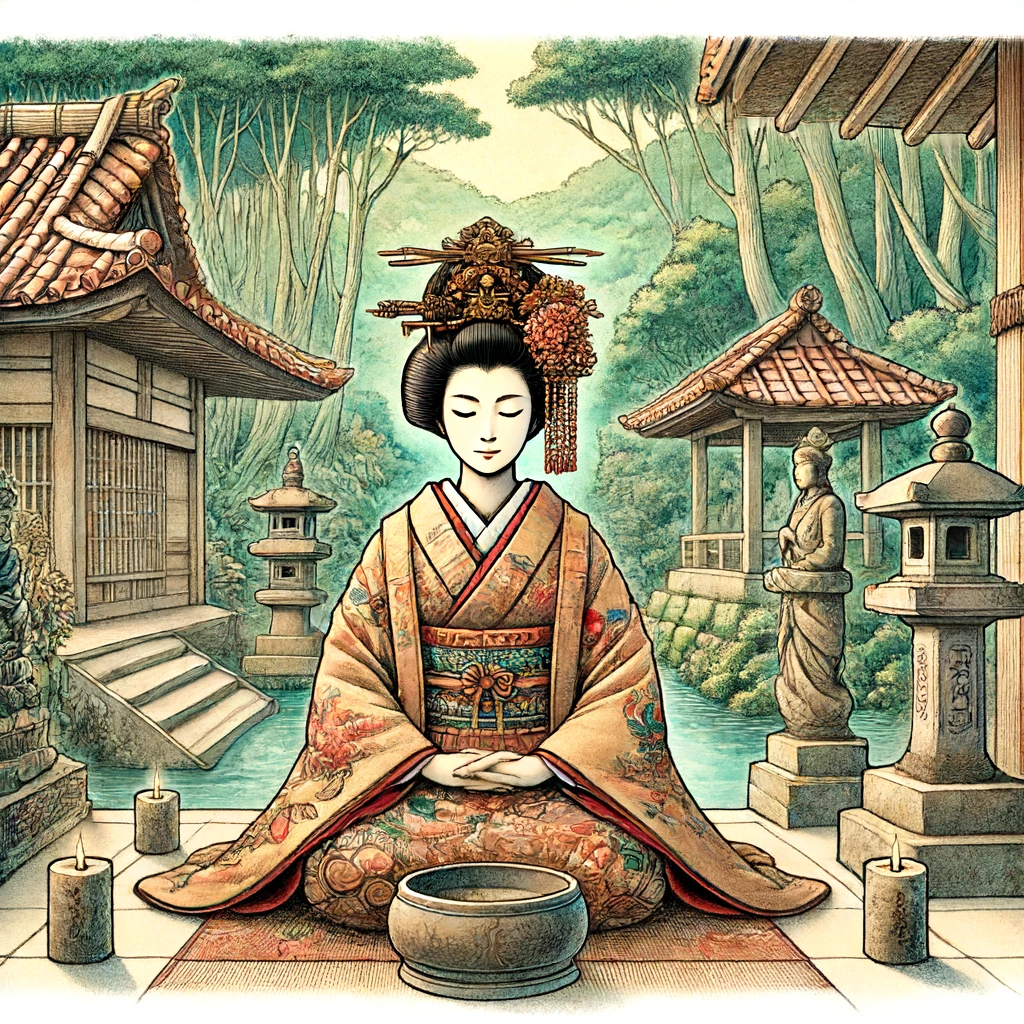
The mystical island of Okinawa has long captivated people with its rich natural beauty and unique culture. But how much do you know about the “Noro’s possession by the gods,” lurking in the depths of Okinawa’s spiritual world?
The Noro are special priestesses who serve as mediators between gods and humans, and they are indispensable in Okinawa’s traditional culture. Through their possession by the gods, these priestesses communicate with deities and ancestral spirits, delivering divine messages to the people. Sometimes, they provide prophecies and revelations that guide the peace and prosperity of their villages.
However, the Noro’s possession is not merely a religious act. It is a cornerstone of the Okinawan people’s spirituality, reflecting their unique beliefs in nature worship and ancestor veneration. Even in modern society, the Noro continue to be significant as custodians of traditional culture and as a source of spiritual richness for those seeking deeper meaning.
In this blog, we will delve into the realities of the Noro’s divine possession and its impact on Okinawa’s spiritual world. By stepping into the enigmatic world of the Noro, and exploring the core of the spirituality that the Okinawan people have cherished, we can gain valuable insights for living in the present day.
The spiritual world of Okinawa, as revealed through the Noro’s divine possession, weaves a grand narrative of nature, humans, and gods. It is time to unveil this mystery and touch the wisdom that breathes within the depths of Okinawa’s soul. You too will be captivated by the worldview presented through the Noro’s possession. Let’s embark on a journey to open the door to Okinawa’s spiritual world.
What is a Noro?
In Okinawan traditional culture, the Noro, or priestesses, play a crucial role. These sacred female mediators between gods and people are revered as protectors of the villages. The Noro receive messages from the gods and communicate them to the people, praying for the community’s peace and prosperity. Additionally, they preside over religious rituals and ceremonies, strengthening the bonds between the gods and the people. Within Okinawa’s unique belief system, the Noro are indispensable.
The Role and Selection of Noro
The Noro as Conductors of Religious Ceremonies
The Noro have a vital role in conducting religious ceremonies. They perform rituals and prayers at sacred sites and shrines dedicated to village guardian deities, mediating between the gods and the people. By interpreting the will of the gods and conveying it to the community, the Noro ensure its peace and prosperity. They also seek divine assistance during crises such as natural disasters and illnesses, guiding the people. The presence of the Noro is a spiritual pillar for the people of Okinawa.
The Selection and Succession of Noro
Becoming a Noro requires special qualities and lineage. Typically, the position of Noro is matrilineally inherited, with women whose mothers or grandmothers were Noro being chosen as successors. Candidates for Noro participate in religious activities and rituals from a young age, learning the attitudes and knowledge required for their role. Upon reaching adulthood, they undergo a formal ceremony to be appointed as Noro. The position of a Noro lasts for a lifetime, and training the next generation is also an important duty. This succession system ensures the continuity of the Noro tradition across generations.
What is Divine Possession by Noro?
The Meaning and Purpose of Divine Possession
The divine possession experienced by Noro is a sacred act of directly encountering the will of the gods. In this state, the Noro enters a realm beyond their own consciousness, receiving messages from the gods. These messages provide crucial guidance for the community’s destiny and individual lives. Through divine possession, the Noro understand and convey the intentions of the gods. Additionally, this state enables the Noro to use divine power to heal illnesses and prevent calamities.
Noro’s Behavior and Characteristics During Divine Possession
During divine possession, the Noro exhibit specific behaviors. Initially, they sit in front of sacred sites or altars, closing their eyes to meditate. The Noro then begin to tremble, and at times, may utter strange cries, believed to be a sign of the gods inhabiting their bodies. In this state, the Noro speak in an altered tone, delivering prophecies and revelations. They may also write down the words of the gods. During divine possession, the Noro are revered as messengers of the gods, and their words are taken as absolute.
Examples of Divine Possession by Noro
There are many known instances of Noro’s divine possession throughout Okinawan history and culture. These instances demonstrate the mystical power of the Noro and the deep faith of the Okinawan people. Records and traditions document times when crises were averted and important prophecies were made through the Noro’s divine possession. These examples not only underscore the significance of the Noro but also narrate the richness of Okinawa’s unique spiritual world. Let’s explore some actual events and traditional stories that illustrate examples of Noro’s divine possession.
Actual Events
The Fishermen’s Distress Incident and Noro’s Prophecy
In Okinawan fishing villages, Noro’s prophecies have safeguarded fishing safety and abundance. In one village, a Noro in a state of divine possession warned against going out to fish on a particular day. However, some fishermen ignored the Noro’s prophecy and went out, only to be caught in a storm and their boat wrecked. On the other hand, those who heeded the Noro’s warning stayed safe. This incident highlights the accuracy of Noro’s prophecies and the importance of adhering to them. Noro’s divine possession is deeply integrated into the life of fishing villages, and their trust is unshakeable.
Forecasting Natural Disasters and Noro’s Role
Located in the path of typhoons, Okinawa frequently suffers from natural disasters. However, predictions made through Noro’s divine possession have prompted villagers to prepare and minimize damage. In one village, a Noro predicted a significant typhoon in the near future while in a state of divine possession. The villagers believed the Noro’s prophecy and fortified their homes and stockpiled food. As predicted, a strong typhoon hit the village, but thanks to the preparations, there were no human casualties. Noro’s active role is indispensable in protecting lives in disaster-prone Okinawa.
Traditional Stories
The Legend of a Noro Saving a Village in Crisis
Once, a village was struck by a severe drought, causing crops to wither and water shortages. Desperate, the villagers turned to a Noro for help. In a state of divine possession, the Noro prayed to the village’s guardian deity and performed a rainmaking ritual. Suddenly, under a star-filled sky, clouds gathered, and heavy rain began to fall. The drought ended, and the village regained its vitality. This legend demonstrates the Noro’s power to save a village in crisis. The Noro stands between the gods and people, connecting and protecting them as a guardian of the village.
Legends Demonstrating the Connection Between Noro and the Gods
Numerous legends throughout Okinawa illustrate the deep connection between the Noro and the gods. In one legend, a Noro, while in a state of divine possession, received a direct message from the village’s guardian deity. The deity warned of an impending crisis and gave the Noro measures to counter it. The Noro relayed this message to the villagers, who worked together to overcome the crisis. Another legend says that the Noro visited the realm of the gods and spoke directly with them. These stories indicate that Noro holds a special relationship with the gods and plays a critical role in conveying the divine will to the people.
Why the People of Okinawa Find Noro’s Divine Possession Frightening
The reason why the people of Okinawa find Noro’s divine possession frightening stems from the Noro being special beings who connect gods and humans. The Noro serve as intermediaries conveying the will of the gods and are also entities that bridge the physical world and the spiritual realm. Therefore, Noro’s divine possession is perceived not just as a religious act but as a mystical phenomenon beyond human understanding. The fear associated with Noro’s divine possession is deeply rooted in the spiritual world of the Okinawan people, cultivated over a long history. Here, we will look closely at the special significance of Noro’s divine possession and its impact on the people.
The Noro as Messengers of Divine Will
The Divine Messages Conveyed Through Noro
The Noro, in their state of divine possession, communicate messages from the gods. These messages often concern significant matters related to the fates of individuals and the future of villages, and the words of the Noro are seen as carrying absolute authority. Sometimes, the divine messages may impose severe trials on people or overturn traditional values. Consequently, the divine messages conveyed through Noro’s possession leave a strong impression on the people and become a source of awe. Moreover, carrying these divine messages can also be a burden for the Noro themselves, as the state of divine possession involves substantial physical and mental strain.
Fear of Contradicting the Will of the Gods
The people of Okinawa greatly fear going against the will of the gods. Because the divine messages conveyed through Noro’s possession are taken as absolute, failing to follow them is considered blasphemous and believed to invite calamity. Village elders decide to act according to the Noro’s words, and the villagers follow suit. Fear that defying the will of the gods could bring misfortune to individuals or the entire village prompts people to regard Noro’s divine possession with reverence. This fear is based on a unique Okinawan understanding of the relationship between gods and humans, passed down through the ages.
The Noro as Mediators Between This World and the Spirit Realm
The Spiritual Powers of the Noro
The Noro are believed to possess special powers that connect the physical and spirit realms. In their state of divine possession, the Noro can communicate with spiritual entities and harness the powers of the gods to heal diseases or avert disasters. They are also thought to interact with the spirits of ancestors, bringing their wisdom to the present world. Such spiritual powers are difficult for ordinary people to comprehend and are regarded with awe. The special abilities of the Noro play a crucial role in the spiritual world of Okinawa, serving as a source of reassurance for the people.
Fear of Contact with the Spirit Realm
The people of Okinawa harbor a strong sense of awe towards contact with the spirit realm. Spiritual entities are considered to possess invisible powers and exist beyond human comprehension. Therefore, the Noro’s communication with the spirit realm during divine possession is a terrifying event for ordinary people. Additionally, messages from the spirit realm can sometimes drastically alter people’s destinies, adding to the fear of their profound impact. Although the Noro play a vital role in connecting the physical and spirit worlds, their unique position also makes them an object of awe among the people.
The Spiritual World of Okinawa as Seen Through Noro’s Divine Possession
Noro’s divine possession is an essential element in understanding the spiritual world of Okinawa. Noro, who are central to Okinawan beliefs in nature worship and ancestor veneration, play a crucial role in connecting the gods and the people. Through Noro’s divine possession, we can learn how the people of Okinawa have historically interacted with nature and their ancestors. Here, we will examine the characteristics of Okinawa’s spiritual world as reflected through Noro’s divine possession, particularly from the perspectives of nature worship and ancestor veneration. By exploring the sources of Okinawa’s rich spirituality, we can gain valuable insights applicable in our modern society.
Nature Worship and Coexistence with the Gods
Belief in the Divine Presence in Natural Elements
Okinawan nature worship is based on the worldview that deities reside within natural elements. Forests, seas, rivers, and waterfalls are believed to house various gods, and the people have respected and cared for these elements deeply. For example, a forest near a village may be considered the dwelling of the village’s guardian deity and is thus preserved as a sacred place. Additionally, the gods of the sea are believed to ensure safety and bountiful catches for fishermen, with prayers and rituals often held on the shores. The Noro communicate with these natural deities and relay the people’s wishes. Noro’s divine possession acts as a significant testament to the presence of these deities in natural elements, narrating the depth of Okinawan nature worship.
The Worldview Emphasizing Harmony Between Humans and Nature
In the spiritual world of Okinawa, the harmony between humans and nature is highly valued. People are seen as part of nature, and coexistence with it is considered ideal. Noro’s divine possession reflects this worldview, as they communicate with nature’s deities to convey the importance of this harmony to the people. Messages brought about through Noro’s divine possession often are based on natural laws, advising people on the importance of adhering to these principles. Thus, Noro’s presence serves as a guideline for the Okinawans to live in harmony with nature, offering significant insights for contemporary society, especially in the face of environmental issues.
Ancestor Veneration and Respect for the Souls of the Deceased
Customs of Revering Ancestral Souls
In Okinawa, there is a deeply rooted custom of revering and caring for ancestral souls. People believe that the souls of ancestors watch over and guide their descendants, and events to welcome these souls are held during festivals like Bon and Equinox. Homes often have altars where daily prayers are offered. Noro are believed to be capable of communicating with ancestral souls, transmitting messages from ancestors to the living. It is also believed that during divine possession, ancestral souls may enter the Noro, providing a special opportunity for the wisdom of the ancestors to be conveyed to the present world. Thus, the presence of Noro is a critical element supporting the tradition of ancestor veneration in Okinawa.
Noro’s Role in Transmitting Ancestral Wisdom
Noro play a significant role in conveying ancestral wisdom to the modern world. In their state of divine possession, they can communicate with ancestral souls, relaying past experiences and lessons to the present. For example, wisdom on cultivating crops or dealing with natural disasters, accumulated by forebears, has been passed down through Noro. The knowledge and skills that Noro themselves have inherited over generations also form part of this ancestral wisdom. By transmitting these insights to the next generation of Noro, they contribute to the preservation of Okinawan cultural heritage. The respect for ancestral wisdom remains highly relevant today, as it offers important lessons for modern society. We must learn from the experiences of our forebears and use their wisdom to forge a path into the new era.
In Conclusion
In this blog, we have thoroughly explored the divine possession of the Noro (celebrant women) within the traditional culture of Okinawa. It has become clear that Noro’s divine possession is not merely a religious act but a vital element at the core of Okinawa’s spiritual world. Noro serve as intermediaries connecting gods and people, as well as the present world with the spirit realm, becoming a cornerstone for the Okinawans’ hearts. Through Noro’s divine possession, we gain insights into Okinawa’s rich spirituality and the worldview that emphasizes coexistence with nature and ancestors. As a summary of this blog, let’s reconsider the significance of Noro’s divine possession and its relevance in modern society.
The Significance of Noro’s Divine Possession
Importance in Okinawan Traditional Culture
Noro’s divine possession occupies an extremely important place in Okinawan traditional culture. Noro preside over religious rituals and festivals and play a role in praying for the peace and prosperity of the village. The divine messages conveyed through Noro’s possession carry significant meanings that can influence the fate of the people and village decisions. Moreover, Noro are pillars supporting the unique traditions of nature worship and ancestor veneration in Okinawa. Noro’s divine possession is deeply connected to these beliefs and forms the source of Okinawa’s spirituality. The importance of Noro’s divine possession in understanding Okinawan traditional culture cannot be overlooked.
Symbolizing the Connection to the Spiritual World
Noro’s divine possession symbolizes the connection to a spiritual world beyond human capabilities. Noro communicate with gods and ancestral spirits, conveying their will to the people. The existence of Noro suggests that an invisible spiritual world truly exists and impacts our lives. Additionally, Noro’s divine possession narrates the importance of living in harmony with nature and ancestors. In a modern society focused on material wealth, the worldview presented by Noro’s divine possession offers significant insights. The presence of Noro can awaken our lost spirituality and prompt us to reconsider our way of living.
The Relevance of Noro in Modern Society
Noro as Custodians of Traditional Culture
Even in contemporary society, the role of Noro is indispensable for perpetuating Okinawa’s traditional culture. As globalization advances, regional cultures are at risk of fading away, yet Noro embody and transmit Okinawa’s spirituality and values to the next generation. The wisdom conveyed through Noro’s divine possession provides valuable guidance for addressing various modern issues. Furthermore, the very presence of Noro constitutes a proud part of Okinawa’s cultural heritage, and protecting and preserving this heritage is a responsibility we all share. Supporting Noro activities and widely communicating their value is crucial for maintaining Okinawa’s traditional culture for future generations.
A Spiritual Refuge for People Living in Modern Times
The existence of Noro holds significant meaning as a spiritual refuge for people living in modern times. In a society where material wealth is often prioritized, people seek peace of mind. Noro’s divine possession serves as a medium to convey people’s worries and wishes to the gods, providing spiritual support. Additionally, the ideology of coexistence with nature and ancestors, embodied by Noro, reawakens crucial values that modern society is gradually losing. The presence of Noro helps us reclaim our inherent spirituality and provides guidance for living a fulfilling life. In today’s world, the relevance of Noro cannot be understated. By engaging with the spiritual world revealed through Noro’s divine possession, we may find our true spiritual anchor.
This concludes the blog post about Noro’s divine possession. The practice is an indispensable element for understanding Okinawa’s traditional culture and spirituality, and it continues to hold important significance in modern society. Through this blog, we hope that readers deepen their understanding of Noro’s divine possession and the spiritual world of Okinawa, and find inspiration to reflect on their own way of life. It is our collective duty to preserve and communicate the value of Noro and Okinawa’s rich cultural heritage for future generations.
Q&A
What is a Noro?
Noro are female priestesses in Okinawan traditional culture who play a crucial role in connecting gods and humans. They preside over religious rituals and festivals, and through divine possession, convey messages from the gods.
What is Noro’s divine possession?
Noro’s divine possession is a special state in which Noro communicate with gods and the souls of ancestors, transmitting their will to people. During divine possession, Noro receive messages from the gods, sometimes including prophecies and revelations.
Why do the people of Okinawa find Noro’s divine possession frightening?
Noro are special beings who connect gods and humans, acting as intermediaries for the will of the gods. The fear of opposing the will of the gods and the awe of contacting the spirit realm make Noro’s divine possession frightening to the people.
What are the characteristics of Okinawa’s spiritual world as seen through Noro’s divine possession?
Through Noro’s divine possession, we can see characteristics of Okinawan nature worship and ancestor veneration. Beliefs in the divinity residing in natural objects, the importance of harmony between humans and nature, customs of revering ancestral souls, and the transmission of ancestral wisdom are all deeply connected to Noro’s role.
What is the significance of Noro in modern society?
In modern society, Noro play a crucial role in preserving Okinawan traditional culture. Additionally, as modern people often lose touch with spiritual richness, Noro serve as a refuge for the soul, providing an opportunity to reflect on one’s true way of living.
Summary
“Divine Possession of Noro: Delving into the Core of Okinawa’s Spiritual World”
In Okinawan traditional culture, the presence of Noro (female priestesses) is indispensable. Noro are special female priestesses who connect gods and people, playing a crucial role in conveying the messages of the gods through divine possession. This blog has thoroughly explored the reality of Noro’s divine possession and its impact on the spiritual world of Okinawa.
Noro’s divine possession is not just a religious act; it has become a refuge for the hearts of the Okinawan people. Noro, who communicate with the gods and the souls of ancestors, convey people’s wishes to the gods and sometimes provide prophecies and revelations. However, because they are messengers of the divine will, Noro’s divine possession has also been a source of awe.
Through Noro’s divine possession, the characteristics of Okinawa’s spiritual world become apparent. Beliefs in the divine presence within natural elements, a worldview emphasizing harmony between humans and nature, and customs of revering ancestral souls are deeply intertwined with the presence of Noro, reflecting Okinawa’s unique spirituality.
In modern society, the relevance of Noro has not diminished. As custodians of traditional culture, Noro play a vital role in preserving and passing Okinawa’s proud cultural heritage to future generations. Moreover, for modern people seeking spiritual richness, the worldview presented through Noro’s divine possession provides an opportunity to reconsider their way of life.
Noro’s divine possession is a crucial element forming the core of Okinawa’s spiritual world. It is our hope that this blog has conveyed the importance and value of Noro to our readers, and has deepened their understanding of Okinawa’s rich cultural heritage.


コメント