
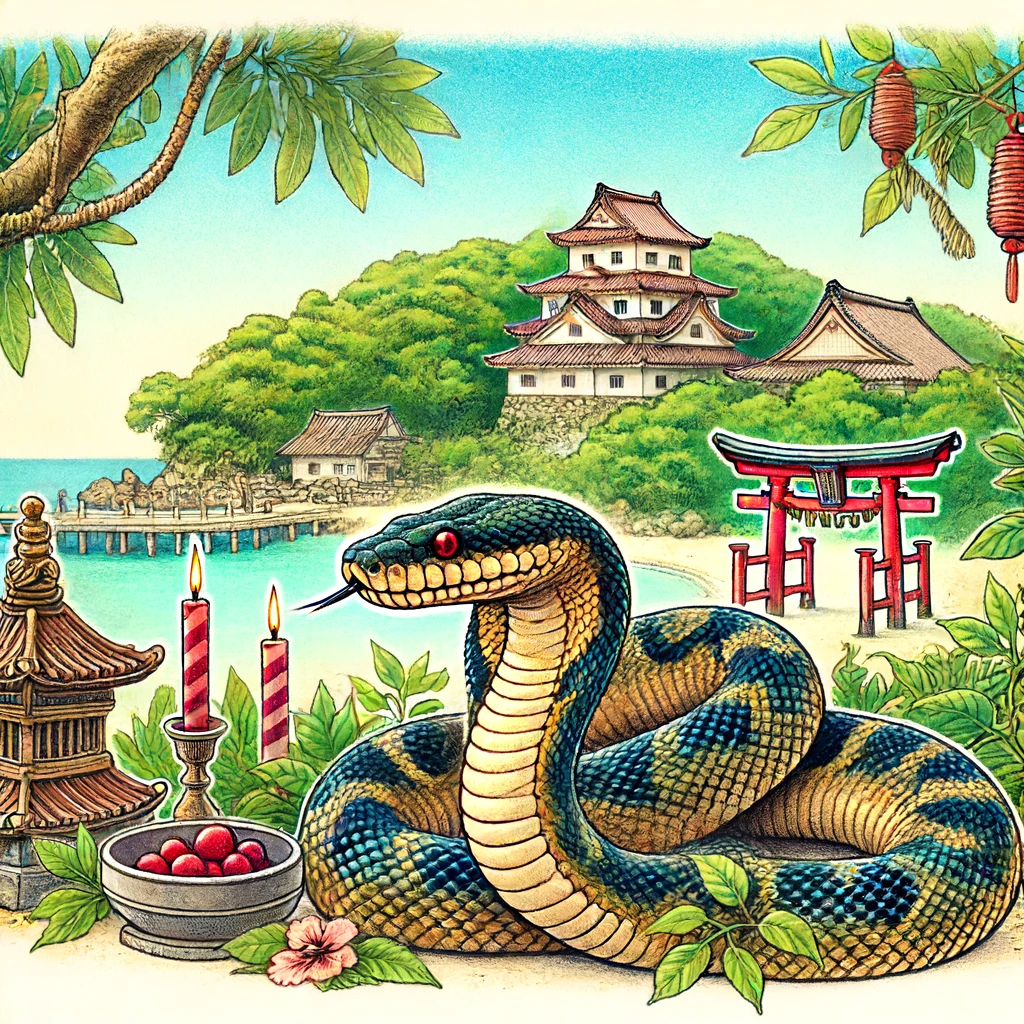
Okinawa is known for its beautiful sea, blue sky, and abundant nature. However, did you know that there is a lurking threat to the people of this paradise? That threat is the habu snake.
The habu holds a special place in Okinawan society, embodying a complex relationship of fear, faith, threat, and reverence. Accidents involving habu bites are not uncommon during farming or outdoor activities. The venom of the habu is potent and can sometimes be life-threatening.
However, the habu is not just a menace. It is also deeply intertwined with Okinawan culture and spirituality. Historically, the habu has been revered as a sacred being believed to bring bountiful harvests, healthy livestock, and recovery from illness. This belief, known as the Habu Kami, continues to be passed down among many people even today.
Additionally, the venom of the habu has played an indispensable role in traditional Okinawan medicine, used for various medicinal purposes.
In modern society, various measures are being taken to prevent habu-related incidents. Efforts include government-led habu eradication projects, public awareness campaigns, and the development and improvement of habu antivenom. These initiatives aim to coexist with the habu while minimizing harm.
This blog will delve into the impact of the habu on the people of Okinawa, the traditional culture surrounding the habu, its relationship with modern society, and the importance of coexistence and harm prevention.
The way Okinawans deal with the habu, marked by a blend of fear and faith, threat and reverence, mirrors their culture and spirituality. Understanding the habu is the first step towards protecting Okinawa’s rich nature and culture.
So, why not join us in uncovering the true nature of the habu? Let’s embark on a journey to explore how to wisely coexist with the habu while preserving Okinawa’s precious cultural heritage.
We hope this blog helps deepen your understanding of the habu and sparks greater interest in Okinawa’s nature and culture.
What is the Habu of Okinawa?
The habu in Okinawa is known as one of the most dangerous snakes in Japan. Understanding its characteristics, ecology, and impact on people is essential for comprehending Okinawa’s nature and culture. Here, we will explain the classification, types, morphological features, habitat, and behavioral patterns of the habu. Additionally, we will explore the history of habu-related incidents from past to present, highlighting the deep connection between the people of Okinawa and the habu.
Characteristics and Ecology of the Habu
Classification and Types of Habu
The habu belongs to the viper family, with the representative species in the Okinawa Islands being the habu (Protobothrops flavoviridis) and the Sakishima habu (Protobothrops elegans). The habu is found on Okinawa’s main island and Kume Island, while the Sakishima habu is distributed in the Sakishima Islands, including Ishigaki and Iriomote Islands. Both species possess potent venom and have similar ecologies and habits.
Morphological Features of the Habu
The habu grows to about 1.5 to 2 meters in length, making it a medium-sized snake. It has a brown or gray body with irregular blotches forming a distinctive pattern along its back. Its triangular head is equipped with heat-sensing pits, adapting it for a nocturnal lifestyle. The tail tip is hardened, forming a “rattle” that produces a warning sound when vibrated.
Habitat and Behavioral Patterns of the Habu
The habu inhabits various environments, including forests, grasslands, and farmlands, with a preference for riverbanks and stone wall crevices. Being nocturnal, it rests in hiding places during the day and becomes active at night. Its primary diet consists of mice and lizards, which it subdues with venom before swallowing whole. The breeding season is from spring to early summer, during which a female habu can give birth to 10 to 20 young snakes at a time.
History of Habu-Related Incidents
Habu Incidents Before World War II
The presence of habu in Okinawa has been known since ancient times, with mentions in historical documents such as the “Omorosoushi.” Incidents of people being bitten by habu while farming have been frequent, but effective treatments were lacking, resulting in many fatalities. The threat of the habu was deeply ingrained in the lives of Okinawans.
Post-World War II Habu Incidents and U.S. Military Bases
After World War II, Okinawa came under U.S. military control, leading to the construction of numerous military bases. During this time, many U.S. soldiers were bitten by habu, often during grass-cutting or construction activities on base. The U.S. military undertook habu control measures, including eradication efforts and antivenom development.
Modern Habu Bite Cases
Even today, habu bite incidents continue in Okinawa, with around 100 cases reported annually, mostly involving locals. Tourists are also occasionally bitten. For instance, in 2020, a man in northern Okinawa was bitten by a habu and had to be hospitalized. The threat of the habu persists.
Habu Entering Homes
The phenomenon of habu entering homes poses a significant threat to the residents of Okinawa. Understanding why habu invade houses and how to deal with such incidents is crucial. By understanding the reasons for habu intrusions and taking appropriate preventive measures, dangerous situations can be avoided. Additionally, knowing how to respond if you encounter a habu and what first aid steps to take if bitten is essential. Encounters with habu can be life-threatening, so having the correct knowledge and responding calmly is critical.
Reasons for Habu Entering Homes
Habu Entering Homes in Search of Food
One of the main reasons habu enter homes is in search of food. Their primary prey, mice, are commonly found around human dwellings. Kitchens, basements, and storage areas, with their food smells and warmth, attract mice. Habu follow these mice into homes. Additionally, insects like cockroaches can also be food for habu. Maintaining good hygiene and taking measures to prevent the entry of mice and insects are important.
Habu Activity After Emerging from Hibernation
Habu hibernate, typically from November to March. After emerging from hibernation in spring, habu become active, increasing the risk of house intrusions. Habu, having expended energy during hibernation, actively seek food. Spring is also the breeding season, and male habu might enter homes in pursuit of females. Extra caution is needed in spring.
House Structure and Habu Entry Points
Habu can enter homes through gaps in walls, pipe holes, and ventilation openings. Older houses and buildings with inadequate maintenance are particularly vulnerable. Traditional Okinawan red-tiled houses have many gaps in the attic, posing a high risk of habu entry. Gaps under sliding doors and windows also provide entry points. Regularly sealing gaps in the house is essential.
How to Deal with Habu in the Home
What to Do When You Find a Habu
If you find a habu in your home, stay calm and avoid approaching or provoking it. Habu can become aggressive when threatened and may bite. Leave the room, close the door to contain the habu, and create an escape route by opening a window. Wait for the habu to leave on its own or contact a professional for removal.
Contacting Professional Habu Removal Services
If the habu does not leave or if removal is difficult, contact a professional removal service. Okinawa has several specialized habu removal companies. Professionals can safely and effectively capture and remove the habu. Attempting to capture a habu yourself is dangerous, so it is best left to experts. Provide the removal service with information about possible entry points and hiding spots for efficient removal.
First Aid and Medical Treatment for Habu Bites
If bitten by a habu, immediate first aid and medical treatment are crucial. Habu venom is potent and life-threatening. Keep the bite area lower than the heart and stay calm. Do not suck out the venom, as it is dangerous. Avoid using alcohol to disinfect or tying a bandage around the wound. Call 119 for an ambulance and seek medical attention promptly. In the hospital, antivenom and monitoring will be provided.
Okinawan Folklore and Spirituality Surrounding the Habu
The habu is not merely a threat to the people of Okinawa. For centuries, various legends and beliefs about the habu have been passed down. Here, we explore the rich spiritual world of Okinawa surrounding the habu. We will detail the origins and content of Habu Kami belief, the aversion to killing habu, and the traditional medicinal use of habu venom. We will also analyze the reasons behind the fear of habu among Okinawans, which is influenced by factors such as the history of habu-related injuries, the potency of its venom, and the reverence for Habu Kami. By understanding the relationship between the habu and the people of Okinawa, we can gain deeper insight into the island’s culture and spirituality.
Legends Surrounding the Habu
The Origin and Content of Habu Kami Belief
In Okinawa, there is a unique belief system known as Habu Kami, which holds the habu as sacred. This belief dates back to ancient times, with references in historical documents like the “Omorosoushi” depicting the habu as a deity. The Habu Kami is revered as a bringer of bountiful harvests, safe livestock births, and healing from illnesses. Habu skins are considered sacred and are often placed in household shrines. Some villages have shrines dedicated to the Habu Kami, where regular rituals are performed. This belief system reflects a blend of fear and reverence unique to Okinawa.
Aversion to Killing Habu
Okinawans tend to avoid killing habu, a practice deeply connected to Habu Kami belief. Killing a habu is seen as desecration and thought to bring misfortune. Therefore, even if a habu enters a home, efforts are made to drive it out without killing it. If a habu is killed, a ritualistic prayer may be offered to atone for the act. This aversion to killing habu illustrates the complex emotions Okinawans have towards these snakes.
Traditional Medicinal Use of Habu Venom
On the other hand, there is a tradition in Okinawa of using habu venom for medicinal purposes. Due to its anticoagulant properties, habu venom has long been used as a folk remedy. Habu sake, a medicinal liquor made by infusing habu in awamori (Okinawan distilled liquor), is believed to treat various ailments. Topical medicines using habu venom are also used to treat joint and nerve pain. Modern scientific research into the pharmacological effects of habu venom continues, with hopes for new drug development. Thus, habu venom, while dangerous, is also a valuable resource.
Reasons for Fear of the Habu
The History of Habu-Related Injuries
One reason for the strong fear of habu among Okinawans is the long history of habu-related injuries. As mentioned earlier, incidents of habu bites have been frequent from pre-war times to the present. In the past, without effective treatments, many people died from habu bites. This historical background has ingrained a fear of the habu as a deadly threat. During the construction of U.S. military bases after World War II, numerous American soldiers were bitten by habu, highlighting the threat anew. The history of habu injuries is deeply etched in the collective memory of Okinawans.
The Potency and Danger of Habu Venom
Another major factor contributing to the fear of the habu is its potent venom. Habu venom prevents blood clotting, leading to hemorrhage. Severe cases can result in low blood pressure, shock, and even death. Children and the elderly are particularly vulnerable and require extra caution. The fearsome reputation of habu venom has deeply permeated Okinawan society, increasing vigilance against habu. The excruciating pain and swelling caused by a bite further amplify the fear.
Awe Inspired by Habu Kami Belief
The fear of the habu is also intertwined with the belief in Habu Kami. While the habu is revered as sacred, there is also a fear of retribution from the deity if a habu is killed. This anxiety about invoking the wrath of Habu Kami contributes to the complex feelings towards the snake. Habu Kami is believed to govern life and death, standing at the threshold between this world and the afterlife. This reverence and fear shape Okinawans’ attitudes towards the habu.
Incidents Involving the Habu
Habu-related incidents are a real threat to the people of Okinawa. Here, we look at actual cases of habu-related incidents in detail. We will cover major recent habu bite incidents, fatalities, and the impact of long-term effects. Additionally, we will explain Okinawa Prefecture’s efforts to eradicate habu, including the installation of habu traps, awareness campaigns, and the development and improvement of habu antivenom. Preventing habu-related harm requires both government initiatives and individual awareness. By understanding these incidents, we can better recognize the threat posed by the habu and take appropriate measures.
Habu Bite Incidents
Recent Major Habu Bite Incidents
In recent years, Okinawa has reported habu bite incidents annually. In 2020, a man in northern Okinawa was bitten by a habu and hospitalized. He encountered the habu while farming. In 2019, a tourist woman was bitten by a habu while visiting a park, hiding in the grass. These incidents highlight the ongoing danger of habu bites. As habu can appear near populated areas, constant vigilance is necessary.
Fatal Habu Bite Cases
Fatalities from habu bites have become relatively rare in modern times, but there were many victims in the past. Before the development of habu antivenom, severe cases often led to death. Until the 1960s, over ten habu bite fatalities were reported annually. In recent years, a male tourist died from a habu bite in 2019, shocking the public. The delay in receiving proper treatment was the cause of death. Knowing the dangers of habu bites and appropriate first aid measures is crucial.
Long-Term Effects and Impact of Habu Bites
Habu bites can lead to various long-term effects beyond the immediate danger. The venom can cause hemorrhagic complications by preventing blood clotting. It can also affect the nervous system, leading to numbness, paralysis, and sensory disturbances. Necrosis or chronic ulcers at the bite site can result in functional disabilities or disfigurement. Psychological impacts, such as PTSD, can also occur from the traumatic experience. These long-term effects significantly reduce the quality of life for victims.
Efforts to Eradicate Habu
Habu Eradication Projects by Okinawa Prefecture
Okinawa Prefecture conducts various habu eradication projects to prevent habu-related harm. The Environmental Protection Division’s Natural Conservation Section leads these efforts, including habitat surveys and capture operations. Measures are focused on areas with high human activity, such as residential areas and tourist sites. Collaborative efforts with municipalities and community-based eradication activities are also promoted. Events involving local residents are held to enhance participation. These administrative efforts are vital to reducing habu-related harm, but eradication is challenging and requires ongoing measures.
Installing Habu Traps
One effective method for capturing habu is through traps. Okinawa Prefecture has developed habu traps and installed them in various locations. These traps use bait to lure habu inside, preventing their escape. Traps are regularly checked, and captured habu are eradicated. Traps are environmentally friendly and effective for capturing habu. However, managing traps requires effort, making community cooperation essential. Trap installation is a key component of habu eradication.
Awareness Campaigns for Preventing Habu Bites
Individual awareness is crucial for preventing habu bites. Okinawa Prefecture actively conducts awareness campaigns about habu. Information about habu’s ecology and dangers is disseminated through media such as TV, radio, and newspapers. Leaflets and posters for tourists are also created to raise awareness in tourist areas. Educational programs in schools teach children about habu. These awareness campaigns significantly contribute to preventing habu bites. Joint efforts by the government and residents are needed to increase vigilance against habu.
Development and Improvement of Habu Antivenom
Habu antivenom is essential for treating habu bites. It contains specific antibodies against habu venom, neutralizing its effects. The Okinawa Prefectural Institute of Health and Environment leads the development and improvement of habu antivenom. Modern antivenom has fewer side effects and higher safety compared to earlier versions. Improved administration methods allow for quicker treatment. However, further improvements are needed. The development of habu antivenom plays a crucial role in treating habu bites.
Conclusion
The habu remains a special presence for the people of Okinawa. As both a subject of fear and reverence, the habu is deeply connected to Okinawan culture and spirituality. This article has explored the impact of the habu on Okinawans, its relationship with traditional culture and modern society, and the importance of coexistence and harm prevention. Understanding the habu is essential for appreciating Okinawa’s rich cultural heritage. Knowledge to prevent habu-related harm is vital for residents and tourists alike. Considering how to coexist with the habu is also a way of thinking about the coexistence of nature
and humans.
The Impact of Habu on Okinawans
The habu has significantly impacted the lives of Okinawans. Accidents involving habu bites during farming or outdoor activities are not uncommon. The venom is potent and life-threatening. This history of incidents has instilled a strong fear of the habu among Okinawans. However, the habu is also a subject of worship. Revered as Habu Kami, killing habu is avoided. Habu venom has been used medicinally, embedding the habu deeply into Okinawan culture. The impact of the habu on Okinawans is a complex mix of fear, faith, threat, and reverence.
Traditional Culture and Modern Society’s Relationship with Habu
The traditional culture surrounding the habu is still prevalent in modern society. Habu Kami belief continues to be passed down, and the aversion to killing habu remains strong. Simultaneously, efforts to prevent habu-related harm are actively pursued. Habu eradication projects, the installation of habu traps, and awareness campaigns are conducted by the government and residents. The development and improvement of habu antivenom are progressing, enhancing the treatment system for habu bites. Balancing traditional culture with modern measures to deal with the habu is a challenge for Okinawans.
The Importance of Coexistence and Harm Prevention with Habu
The habu is a part of Okinawa’s ecosystem and cannot be recklessly eradicated. However, as human living areas overlap with habu habitats, preventive measures are essential. It is crucial to coexist with the habu while preventing bite incidents. This requires not only governmental efforts but also individual awareness. Having correct knowledge about the habu’s ecology and dangers, and being vigilant, is vital. Knowing how to respond if encountering a habu and first aid measures in case of a bite are also important. Coexistence and harm prevention with the habu are key to protecting Okinawa’s rich nature and culture.
The habu continues to be a special presence for the people of Okinawa. The relationship with the habu, marked by a blend of fear and faith, threat and reverence, mirrors Okinawan culture and spirituality. We hope this article has deepened your understanding of the habu. It is essential to seek wise ways to coexist with the habu to protect Okinawa’s rich nature and culture.
Q&A
What are the main reasons why habu enter houses?
The main reason habu enter houses is to search for food. If there are mice, which are the primary diet of the habu, hiding inside the house, the habu may follow them inside. Additionally, during early spring when they emerge from hibernation, habu are more active, increasing the risk of house invasions.
What is Habu Kami belief?
Habu Kami belief is a unique Okinawan faith that reveres the habu as a sacred entity. The habu is worshiped as a bringer of bountiful harvests, safe livestock births, and healing from illnesses. Conversely, it is believed that desecrating the Habu Kami can bring misfortune, which leads to an aversion to killing habu.
What are the long-term effects of a habu bite?
The long-term effects of a habu bite can include hemorrhagic complications, neurological issues such as numbness and paralysis, necrosis, and persistent ulcers at the bite site. Additionally, the traumatic experience of a bite can lead to PTSD, indicating significant psychological impacts.
What measures does Okinawa Prefecture take for habu eradication?
Okinawa Prefecture conducts various habu eradication projects, including habitat surveys, captures, and the installation of traps. Public awareness campaigns about the dangers of habu are carried out through television, radio, and leaflets. Educational programs in schools also teach children about habu.
What is important for coexistence and harm prevention with habu?
For coexistence and harm prevention with habu, the awareness of individual residents is crucial along with administrative efforts. It is important to have correct knowledge about the habu’s ecology and dangers, remain vigilant, and know the appropriate response measures in case of an encounter.
Conclusion
The habu holds a special place for the people of Okinawa, embodying a complex mix of fear, faith, threat, and reverence, deeply connected to the culture and spirituality of the island.
In this blog, we have detailed the ecology and characteristics of the habu and their impact on people. We have highlighted the reasons why habu invade homes, the realities of bite incidents, and the long-term effects of such incidents. Additionally, we have explored the traditional culture surrounding the habu, exemplified by Habu Kami belief, and its relationship with modern society.
We also introduced measures to prevent habu-related harm, including eradication projects, awareness campaigns, and the development and improvement of habu antivenom by Okinawa Prefecture. However, we emphasized that the awareness and efforts of individual residents are crucial for a fundamental solution.
Coexistence and harm prevention with habu are key to preserving Okinawa’s rich nature and culture. It is essential for everyone living in Okinawa to have a proper understanding of the habu and appropriate response measures.
We hope this blog has deepened your understanding of the habu. Protecting Okinawa’s precious cultural heritage while finding wise ways to coexist with the habu is a mission for all of us.


コメント