
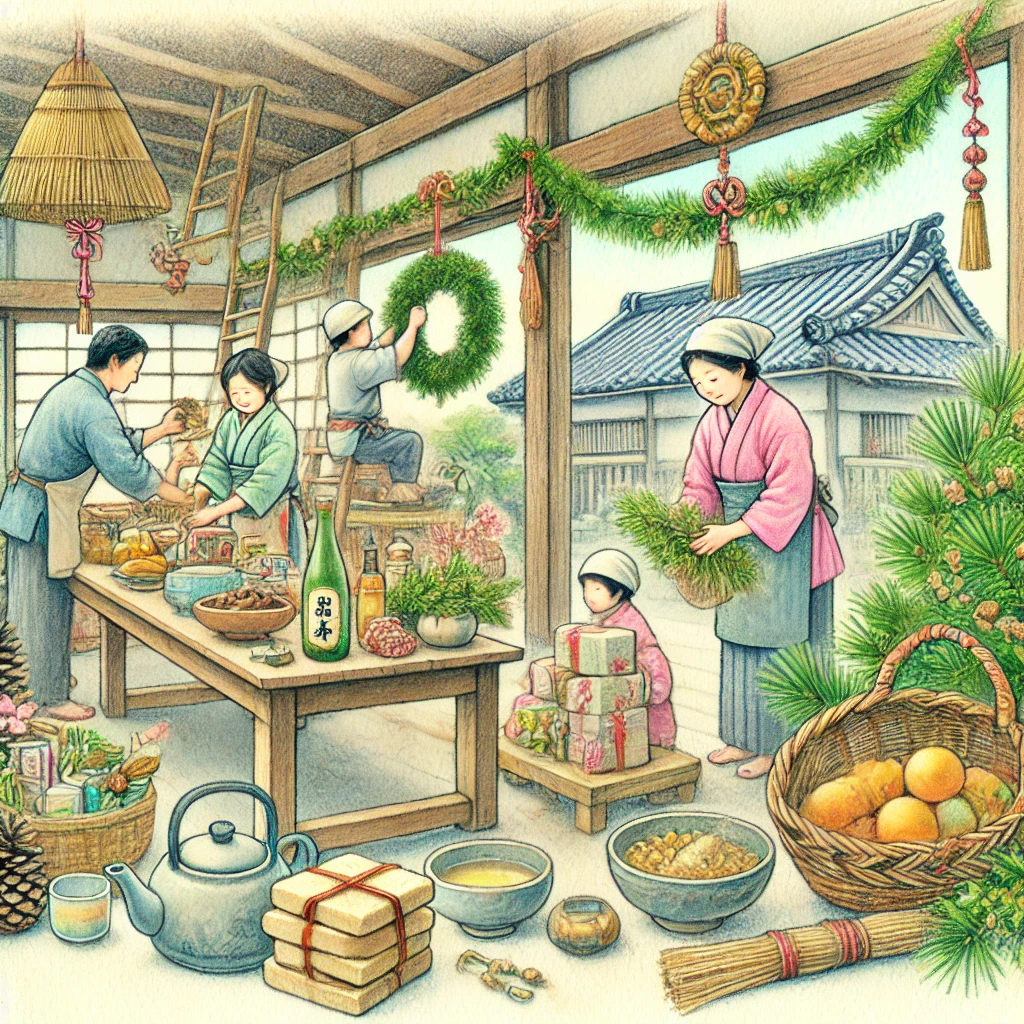
Have you heard of the traditional belief in Okinawa that during the lunar New Year, a god visits each household? This god is known as “Tushibi.” Believed to bring happiness for the year and accompanied by ancestral spirits, Tushibi holds a special place in the hearts of the Okinawan people.
To welcome Tushibi, Okinawans engage in thorough cleaning, decorating, and preparing offerings, all with great care and devotion. This series of events is not just an annual ritual but serves as a cornerstone of the Okinawan spirit and a guide for living.
Through the visit of Tushibi, we learn the importance of diligence, filial piety, and reverence for our ancestors. It also teaches us the significance of living harmoniously with nature. These lessons hold profound meaning even in our modern society.
However, the belief in Tushibi is not merely a relic of the past. Today, the tradition of welcoming Tushibi continues to be preserved and passed down to future generations across Okinawa.
In this blog, we will explore the significance of Tushibi’s visit and delve into the spiritual world of Okinawa that underlies this tradition. We will also introduce the legends associated with Tushibi and how its teachings can be applied in contemporary life.
Wouldn’t you like to experience the rich culture and traditions of Okinawa through the visit of Tushibi? By connecting with the wisdom passed down from our ancestors, we may find new perspectives on how we live our lives.
Now is the time to dive into the world of Tushibi. Let’s contemplate together the irreplaceable meaning of this tradition, which is a spiritual anchor for the people of Okinawa.
- Introduction
- The Visit of Tushibi
- Tushibi and the Spiritual World of the Okinawan People
- Lessons Learned from Tushibi
- The Significance of Tushibi in Modern Society
- Conclusion
- Q&A
- Summary
Introduction
About Okinawan Traditional Events
The Historical and Cultural Background of Okinawa
Okinawa is a group of southern Japanese islands with a unique history and culture. It has a long history of interaction with China and Southeast Asia, which has fostered its distinctive culture. The people of Okinawa have long valued living in harmony with nature and honoring their ancestors. This unique history and cultural background have significantly influenced Okinawan traditional events.
The history of Okinawa begins with the ancient Ryukyu Kingdom. The Ryukyu Kingdom thrived on trade with China, Japan, and Southeast Asia, developing its own culture. However, in 1879, it was annexed by Japan during the Ryukyu Disposition. Despite this, the people of Okinawa have continued to cherish and protect their culture and traditions.
Diversity and Characteristics of Traditional Events
Okinawa boasts numerous traditional events deeply tied to its people’s lives, related to agriculture, fishing, and ancestor worship. Notable events include the “New Year” celebrated according to the lunar calendar, the “Harvest Festival” praying for a good crop, and “Obon,” which welcomes ancestral spirits.
The characteristics of Okinawan traditional events vary by region. Each area has its own history and customs, reflected in its events. These events often incorporate songs, dances, and theatrical performances, adding a high degree of artistic expression. These traditions embody the spirituality and aesthetics of the Okinawan people and continue to be cherished today.
What is Tushibi (Toshigami)?
The Origin and History of Tushibi
Tushibi is an indispensable figure in Okinawa’s New Year celebrations. Believed to visit each household as a New Year’s visitor, Tushibi is thought to bring happiness for the year. Its origin is said to date back to the era of the ancient Ryukyu Kingdom.
During the Ryukyu Kingdom period, the concept of “Toshigami” (year god) was introduced from China. Toshigami was believed to visit homes during the New Year and bring blessings. This concept merged with traditional Okinawan beliefs, giving rise to Tushibi. Tushibi is considered a god who visits homes and is also believed to be accompanied by ancestral spirits.
The Origin of the Name Tushibi
The name Tushibi combines “Tushi,” meaning “year” in the Okinawan dialect, and “Bi,” meaning “god” or “spirit.”
Tushibi is sometimes called “Toshibi” or “Tusbi” depending on the region. Despite the variations in name, the belief in a god visiting during the New Year is consistent. The name Tushibi represents the fusion of Okinawan language and faith.
The Visit of Tushibi
The Role and Characteristics of Tushibi
Tushibi as the New Year’s Visitor
Tushibi is believed to visit households during the lunar New Year in Okinawa. Tushibi is thought to bring happiness, good harvests, and family health for the year, and people have high expectations for this visit.
When Tushibi enters a house, it is said to inspect the cleanliness and the offerings prepared. If satisfied, it is believed that blessings will come to the house. Conversely, if the house is dirty or offerings are not prepared, Tushibi is said to become angry and bring misfortune.
The Appearance and Symbolic Meaning of Tushibi
Tushibi is generally depicted with a frightening appearance, characterized by hair standing on end and a large open mouth. This fearsome visage is said to represent Tushibi’s supernatural powers, evoking reverence among the people.
Additionally, Tushibi is believed to be accompanied by ancestral spirits. These spirits are thought to watch over and guide their descendants. Tushibi’s visit serves as an opportunity to reaffirm connections with ancestors. Tushibi’s appearance symbolizes the link between the living world and the spirit world.
The Timing and Preparations for Tushibi’s Visit
The Relationship Between the Lunar New Year and Tushibi
Tushibi is believed to visit during the lunar New Year, which holds significant importance in Okinawa, where many traditional lunar calendar events still remain. The lunar New Year falls around January to February.
Known as “Sogwachi,” the lunar New Year involves important events such as thorough house cleaning, decorating with pine branches, and preparing offerings. These preparations are essential for welcoming Tushibi. The lunar New Year is deeply connected to Tushibi’s visit.
Preparations in the Household to Welcome Tushibi
To welcome Tushibi, households engage in meticulous preparations. First, a thorough house cleaning is conducted, removing dirt and clutter to create a pure environment for Tushibi’s visit.
Next, decorations such as pine branches and shimenawa (sacred ropes) are set up. Pine branches symbolize the New Year and are believed to invite Tushibi into the house, while shimenawa are placed at the entrance to ward off evil spirits. These decorations are important preparations to welcome and protect the home from Tushibi.
Offerings to Tushibi
Types and Meanings of Traditional Offerings
Various offerings are prepared to welcome Tushibi. A representative offering is “Muchi,” a type of rice cake believed to be favored by Tushibi, expressing gratitude to the deity.
Other offerings include sacred sake called “Kasa” and various items placed on the household altar known as “Uchikabi.” These offerings show respect for Tushibi and wish for happiness throughout the year. Offerings are a crucial means of communicating with Tushibi.
Preparation and Decoration of Offerings
The preparation of offerings begins before the lunar New Year. Muchi is often made the day before the New Year, by steaming glutinous rice and shaping it into round forms, then placing it on the household altar or Buddhist altar.
Kasa is offered on the morning of the New Year, while Uchikabi includes fruits, vegetables, and other items. These offerings are carefully arranged and displayed with heartfelt devotion. Preparing and decorating the offerings is an essential task to sincerely welcome Tushibi.
Tushibi and the Spiritual World of the Okinawan People
Fear and Reverence for Tushibi
Belief in Tushibi’s Supernatural Powers
The people of Okinawa hold a deep faith in Tushibi. Tushibi is not merely a New Year’s visitor but is believed to possess supernatural powers. It is thought that Tushibi has the power to determine the happiness or misfortune of the year.
Tushibi’s power is believed to be influenced by the cleanliness of the house and the presence of offerings. If the house is dirty or offerings are not prepared, it is thought that Tushibi will become angry and bring misfortune to that household. Conversely, if the house is clean and offerings are prepared, Tushibi is believed to be pleased and bring happiness.
Psychological Impact of Fearing Tushibi
The belief in Tushibi has a significant impact on the psychology of the Okinawan people. Fearing Tushibi encourages them to maintain physical and spiritual cleanliness in their daily lives. Cleaning the house and preparing offerings are actions born out of fear of Tushibi.
Moreover, fearing Tushibi also fosters discipline and morality. It is believed that one cannot lie or lead a lazy life in front of Tushibi. The fear of Tushibi serves as a guiding force for people’s behavior.
The Relationship Between Tushibi and Ancestor Worship
The Importance of Ancestor Worship in Okinawa
Ancestor worship holds great importance in Okinawa. Ancestors are believed to protect and guide their descendants. The people of Okinawa continuously honor and express gratitude to their ancestors.
Ancestor worship is practiced at sacred sites called “Utaki” and at household altars. Utaki are places believed to house the spirits of ancestors, and regular visits are made to these sites. Daily offerings and prayers are conducted at household altars. Ancestor worship is a vital practice that supports the spirituality of the Okinawan people.
The Connection Between Tushibi and Ancestral Spirits
Tushibi is believed to have a deep connection with ancestral spirits. When Tushibi visits a house, it is thought that ancestral spirits accompany it. Thus, Tushibi’s visit is also an opportunity to reunite with ancestors.
Furthermore, it is said that Tushibi reports the state of the house to the ancestral spirits. If the house is clean and offerings are prepared, the ancestral spirits are believed to be pleased. Conversely, if the house is dirty or offerings are not prepared, the ancestral spirits are thought to be saddened. Tushibi serves as a crucial link between ancestors and their descendants.
Legends and Traditions About Tushibi
The Tale of the Filial Son
The Story and Its Lessons
“The Tale of the Filial Son” is a well-known legend about Tushibi. In a certain village, there was a poor yet filial son who worked hard every day and cared deeply for his parents. During one New Year, Tushibi visited the son’s house. Although the house was poor, it was clean and offerings were prepared with heartfelt care. Tushibi was moved by the son’s filial piety and brought happiness to the household.
This story teaches the importance of honoring one’s parents. It conveys the message that Tushibi is pleased when there is a spirit of respect for parents, even in poverty. It also highlights the importance of maintaining a pure heart.
Modern Interpretation and Significance
“The Tale of the Filial Son” holds significant meaning even in modern times. In today’s society, parent-child relationships can often be strained. This story reminds us of the importance of respecting and valuing our parents. It also conveys the message that spiritual richness is more important than material wealth.
This tale reflects Okinawan family values and the importance of caring for and supporting each other, which are fundamental aspects of Okinawan culture. It serves to convey these cultural values to the present day.
The Tale of the Lazy Man
The Story and Its Lessons
“The Tale of the Lazy Man” is a contrasting story to “The Tale of the Filial Son.” In a certain village, there was a lazy man who disliked working and spent his days idly. During one New Year, Tushibi visited the man’s house. The house was messy, and no offerings were prepared. Tushibi became furious and brought misfortune to the household.
This story warns of the consequences of laziness. It conveys the message that disliking work and leading a lazy life angers Tushibi and brings about misfortune. It also emphasizes the importance of continuous effort.
Modern Interpretation and Significance
“The Tale of the Lazy Man” also provides important lessons for us living in modern society. Today, with the convenience of modern life, it is easy to fall into laziness. This story warns against the dangers of laziness and stresses the necessity of daily effort.
Additionally, this story reflects the hardworking nature of the Okinawan people, who have long valued diligence and admonished laziness. It represents the values of the Okinawan people.
Lessons Learned from Tushibi
The Contrast Between Diligence and Laziness
The Importance of Diligence as Demonstrated by Tushibi
Many of the legends about Tushibi emphasize the importance of diligence. In “The Tale of the Filial Son,” the son continues to work hard and honor his parents despite his poverty. Tushibi recognizes the son’s diligence and brings happiness.
Preparing to welcome Tushibi also requires diligence. Cleaning the house and preparing offerings are time-consuming tasks, yet the people of Okinawa carry them out without hesitation. This reflects the Okinawan value of seeing diligence as a virtue.
The Negative Consequences of Laziness
On the other hand, “The Tale of the Lazy Man” depicts the negative consequences of laziness. The lazy man neither cleaned his house nor prepared offerings, resulting in Tushibi’s anger and the arrival of misfortune.
This story warns of the misfortune that laziness brings. Laziness not only angers Tushibi but also threatens one’s own life. Laziness is the vice that Okinawans most strongly admonish.
The Importance of Honoring Ancestors
Gratitude and Respect for Ancestors
Tushibi’s visit teaches the importance of honoring ancestors. Tushibi is believed to visit households accompanied by ancestral spirits. Welcoming Tushibi also means welcoming the ancestors.
The people of Okinawa never forget their gratitude and respect for their ancestors. Ancestors are seen as protectors and guides for their descendants. Therefore, Okinawans regularly honor and pray for their ancestors with heartfelt gratitude.
The Significance of Upholding Ancestral Teachings
Honoring ancestors also means upholding their teachings. The forebears of Okinawa valued diligence, honesty, and compassion, essential for surviving in a harsh natural environment.
Upholding ancestral teachings connects Okinawa’s culture and values to future generations. Tushibi’s visit is an important opportunity to recall these teachings.
The Significance of Tushibi in Modern Society
Preservation and Development of Traditional Events
The Current State of Tushibi Visit Events
Today, the tradition of Tushibi visits is cherished across Okinawa. During the lunar New Year, many households prepare to welcome Tushibi, continuing age-old customs such as cleaning the house and preparing offerings.
In some regions, events reenacting Tushibi’s visit are also held. People dressed as Tushibi visit homes and distribute New Year’s gifts to children. These events are crucial for passing on the belief in Tushibi to the next generation.
Efforts to Preserve and Pass Down Traditional Events
Preserving and passing down Tushibi visit events is essential for maintaining Okinawa’s culture. Various efforts are made across different regions for this purpose.
For instance, schools provide opportunities for children to learn about Tushibi. Children learn the meaning and origins of Tushibi and engage with Okinawan traditional culture. Activities where elders share stories about Tushibi with children are also conducted.
Through such efforts, the tradition of Tushibi visits is passed on to the next generation. Preserving tradition while adapting it to contemporary contexts is key to connecting Okinawan culture to the future.
Understanding and Respecting Okinawa’s Spiritual World
Learning Okinawa’s Values Through Tushibi
The tradition of Tushibi visits is a crucial key to understanding Okinawa’s spiritual world. The beliefs surrounding Tushibi reflect the values and worldview of the Okinawan people.
Through Tushibi, we learn the importance of diligence, honesty, and filial piety. We are also taught the significance of respecting ancestors and living harmoniously with nature. These values form the foundation of Okinawan culture. Understanding Tushibi leads to a deeper understanding of Okinawa’s spiritual world.
Realizing a Society that Embraces Diversity
Understanding and respecting Okinawa’s spiritual world contributes to realizing a society that embraces diversity. In today’s globalized world, various cultures intermingle. In this context, understanding and respecting each other’s cultures is essential.
The tradition of Tushibi visits exemplifies the uniqueness of Okinawan culture. Valuing such unique cultures while engaging in dialogue with others is crucial. By doing so, we can build a society that recognizes and appreciates diversity.
Conclusion
Reaffirming the Significance of Tushibi’s Visit
The visit of Tushibi holds great significance for the people of Okinawa. Tushibi is considered a sacred being who brings happiness for the year and accompanies the spirits of ancestors. The people of Okinawa prepare for Tushibi’s visit with heartfelt care.
Through the visit of Tushibi, the people of Okinawa learn the importance of diligence, filial piety, and reverence for ancestors. They also learn the importance of living in harmony with nature. These values form the foundation of Okinawan culture.
The Importance of Okinawan Traditions and Spiritual World
The event of Tushibi’s visit symbolizes Okinawa’s traditions and spiritual world. Preserving and passing down this event to the next generation is essential for maintaining Okinawan culture.
Moreover, understanding the spiritual world of Okinawa through Tushibi contributes to realizing a society that embraces diversity. Valuing Okinawa’s unique culture while engaging in dialogue with other cultures is necessary.
Applying Tushibi’s Lessons in Modern Society
The lessons learned from Tushibi’s visit hold great meaning for us living in modern society. The values of diligence, honesty, and filial piety are timeless.
Furthermore, the importance of honoring ancestors and living in harmony with nature is something we must not forget in our convenient modern lives. Now more than ever, it is essential to recall the lessons of Tushibi.
The event of Tushibi’s visit symbolizes the rich culture and spiritual world of Okinawa. Through this event, we can understand the depth and richness of Okinawan culture. By applying the lessons of Tushibi to modern life, we can connect Okinawan culture to future generations. This is perhaps our mission in contemporary times.
The visit of Tushibi is not just an annual event. It is a spiritual anchor and a guide for living for the people of Okinawa. Continuing to cherish and preserve Tushibi’s visit means preserving Okinawan culture and spirit. By passing down this valuable culture inherited from our ancestors to the next generation, the teachings of Tushibi will live on forever.
Q&A
What is Tushibi?
Tushibi is a deity who visits each household during the lunar New Year in Okinawa. It is believed to bring happiness for the year and comes accompanied by ancestral spirits.
What preparations are made to welcome Tushibi?
To welcome Tushibi, people clean their homes thoroughly, decorate with pine branches and shimenawa (sacred ropes), and prepare offerings such as Muchi (rice cakes) and Kasa (sacred sake).
What are the representative legends about Tushibi?
The “Tale of the Filial Son” and the “Tale of the Lazy Man” are representative legends. The “Tale of the Filial Son” depicts a son who honors his parents despite being poor, while the “Tale of the Lazy Man” warns of the misfortune brought by laziness.
What lessons can be learned from Tushibi’s visit?
From Tushibi’s visit, we learn the importance of diligence, honesty, filial piety, reverence for ancestors, and living in harmony with nature.
What is the significance of Tushibi in modern society?
Through the event of Tushibi’s visit, we can understand and pass down Okinawa’s traditions and spiritual world to the next generation. Applying Tushibi’s teachings in modern society contributes to realizing a rich and diverse society.
Summary
The “Visit of Tushibi (Year God)” is an essential traditional event during the lunar New Year in Okinawa. Tushibi is a deity believed to bring happiness for the year and visits each household accompanied by ancestral spirits. The people of Okinawa prepare for Tushibi’s visit with thorough cleaning, decorating, and preparing offerings.
There are legends about Tushibi, such as the “Tale of the Filial Son” and the “Tale of the Lazy Man.” These stories teach the importance of diligence, filial piety, and the dangers of laziness. Through Tushibi’s visit, the people of Okinawa learn the significance of reverence for ancestors and living in harmony with nature.
Today, the event of Tushibi’s visit is cherished across Okinawa. Through school education and community efforts, the belief in Tushibi is passed down to the next generation. The event of Tushibi’s visit is crucial for understanding Okinawa’s spiritual world.
The lessons of Tushibi hold significant meaning for us living in modern society. The timeless values of diligence, honesty, and filial piety are essential. Additionally, the importance of honoring ancestors and living harmoniously with nature is something we must remember.
Cherishing and preserving the event of Tushibi’s visit is synonymous with protecting Okinawan culture and spirit. By passing down this valuable culture inherited from our ancestors to the next generation, the teachings of Tushibi will live on forever.
The visit of Tushibi is a spiritual anchor and a guide for living for the people of Okinawa. Through this traditional event, we can experience the rich culture and spiritual world of Okinawa.


コメント