
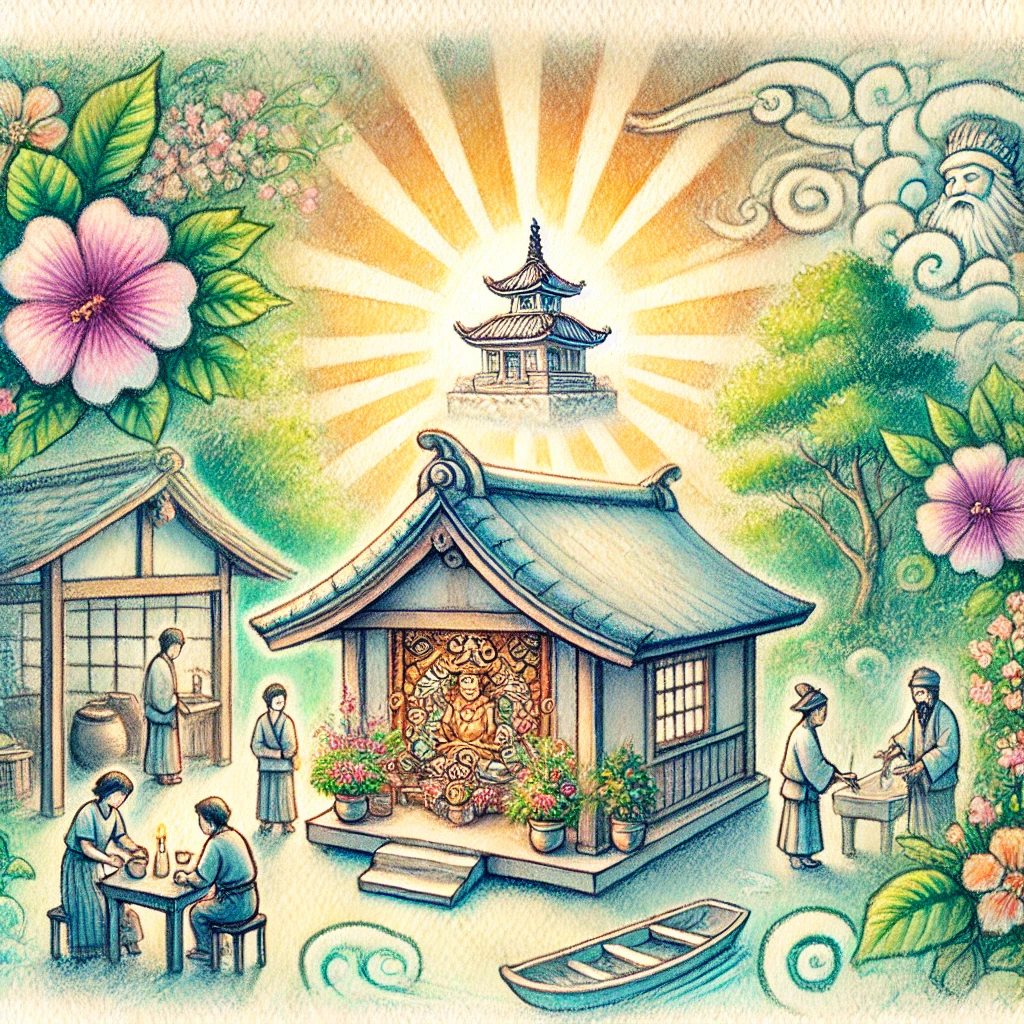
Are you aware of the terrifying concept of “Yādu’s (Household God’s) wrath” in Okinawan traditional beliefs? Yādu is a deity that protects families and communities, but if angered, it is believed to bring various misfortunes such as illness, accidents, poor harvests, and family discord.
Acts that provoke Yādu’s anger include family disputes, immoral behavior, and disrespect towards Yādu, all of which can be found in everyday life. Traditional stories passed down through generations record numerous unfortunate events caused by Yādu’s wrath. People in Okinawa have long respected Yādu and feared its anger.
However, the belief in Yādu is not solely about fear. Respecting Yādu strengthens family and community bonds, promotes coexistence with nature, and nurtures the spirit of honoring ancestors. Yādu belief is a crucial element that shapes Okinawa’s rich spiritual world.
In modern society, Yādu belief faces various challenges. Urbanization and the rise of nuclear families have led to a decrease in places dedicated to Yādu, and traditional values are changing. Nevertheless, the importance of Yādu belief has not been lost.
This article will delve into the fearsome nature of “Yādu’s wrath” and the impact Yādu belief has on Okinawa’s spiritual world. By fostering a good relationship with Yādu, we can lead a happy and prosperous life. We hope this article will provide insights into the depth of Okinawa’s traditional beliefs and the significance of Yādu belief in modern society.
- What is Yādu (Household God)?
- The Wrath of Yādu and Its Effects
- Legends and Incidents Concerning Yādu’s Wrath
- The Presence of Yādu for the People of Okinawa
- The Significance and Challenges of Yādu Belief in Modern Society
- In Conclusion
- Q&A
- Summary
What is Yādu (Household God)?
The Role and Characteristics of Yādu
Protecting the Safety and Health of the Family
Yādu is a guardian deity that has been worshipped in Okinawan homes since ancient times. Its main role is to protect the safety and health of the family. It is believed that Yādu safeguards the family from illness and injury, ensuring a healthy and happy life. Additionally, Yādu is thought to be deeply involved in the family’s prosperity, overseeing the success of family businesses and the flourishing of descendants.
To the people of Okinawa, Yādu is considered a member of the family and an essential guardian deity. By respecting and valuing Yādu, families believe they can live in peace. The presence of Yādu strengthens family bonds and is indispensable in ensuring the safety and health of the family.
Strengthening Family Bonds
Yādu also plays a role in strengthening family bonds. The faith centered around Yādu deepens family ties and enhances family unity. Sharing the respect for Yādu fosters a sense of care and mutual assistance among family members.
Moreover, the place where Yādu is worshipped is a significant gathering spot for the family. Rituals and ceremonies dedicated to Yādu involve the entire family, providing opportunities to pray together. Through these rituals and ceremonies, family bonds are further strengthened.
Yādu belief plays an important role in enhancing family cohesion and unity. By sharing the respect for Yādu within the family, stronger familial bonds can be formed.
The Fusion of Ancestral Spirits and Nature Gods
Yādu is considered a fusion of ancestral spirits and nature gods. Okinawans believe that the spirits of ancestors protect their families. It is thought that these ancestral spirits reside in Yādu. Additionally, Yādu is believed to embody the power of nature gods. Okinawa’s nature is deeply intertwined with people’s lives, and the gratitude for nature’s blessings is reflected in Yādu belief.
Yādu is a special entity that combines the power of ancestral spirits and nature gods. By respecting Yādu, one can express gratitude towards ancestors and nature’s blessings simultaneously. Yādu belief is a crucial faith that connects Okinawan people with their ancestors and nature.
Types of Yādu
Fūnuyā (House Yādu)
Fūnuyā is the Yādu worshipped in individual households. As a family guardian deity, Fūnuyā is believed to protect the safety, health, and happiness of the family. Fūnuyā is enshrined in a special place within the house, and through daily prayers and offerings, the bond between the family and Yādu is strengthened.
Fūnuyā is deeply connected to the family’s history. By valuing the Fūnuyā passed down through generations, families feel a connection to their history and remember their ancestors with gratitude. Additionally, Fūnuyā is a guardian of the family’s future. When a child is born, families report it to Fūnuyā and pray for the child’s healthy growth.
Fūnuyā is an indispensable, important entity for families. By respecting and valuing Fūnuyā, families believe they can live in peace, and the family bonds become stronger.
Murayā (Village Yādu)
Murayā is the Yādu that protects entire communities. As a guardian deity, Murayā is believed to safeguard the safety and prosperity of the community, and it is widely revered by the people. Murayā is enshrined in sacred places at the heart of the community, where people gather to pray together.
Murayā is deeply connected to the community’s history. By valuing the Murayā passed down through generations, the community feels its history and remembers its ancestors with gratitude. Additionally, Murayā is a guardian of the community’s future. During community events and festivals, people report to Murayā and pray for the community’s safety and prosperity.
Murayā is an indispensable, important entity for communities. By respecting and valuing Murayā, communities believe they can live in peace, and community bonds become stronger.
Other Yādu (Wells, Gardens, Fields, etc.)
Yādu is worshipped not only within homes but also in various locations around them, such as wells, gardens, and fields. These Yādu are guardian deities of these specific places, believed to protect their safety and abundance.
The Yādu of wells is a water deity, thought to keep the well’s water pure and provide the family with abundant water. The Yādu of gardens is believed to protect the plants in the garden and bring rich harvests to the family. The Yādu of fields is thought to guard crops and ensure bountiful harvests.
By respecting and valuing these Yādu, families believe they can lead rich and blessed lives. Yādu is a significant entity that protects and guides families in all aspects of their lives.
The Wrath of Yādu and Its Effects
Acts That Provoke Yādu’s Wrath
Family Discord
Yādu values family unity above all. Family discord is considered a major cause of Yādu’s wrath. Quarrels and disputes among family members are believed to sadden and anger Yādu.
As a member of the family, Yādu wishes for the happiness of the family, desiring them to live harmoniously, caring for and helping each other. Family discord goes against Yādu’s wishes, thereby provoking its wrath.
Avoiding family discord and valuing family unity are important in respecting Yādu. By caring for and helping each other, Yādu will be pleased and continue to protect the family.
Immoral Behavior in the Household
Yādu values moral integrity within the family. Immoral behavior is a significant cause of Yādu’s wrath. Lying, breaking promises, and deceiving others are actions that sadden and anger Yādu.
Yādu wishes for honesty and sincerity within the family. Immoral behavior contradicts Yādu’s wishes and provokes its wrath.
Maintaining honesty and sincerity and avoiding immoral behavior are important in respecting Yādu. By living with integrity, Yādu will be pleased and continue to protect the family.
Disrespectful Attitude Towards Yādu
Yādu should be respected by the family. Disrespectful attitudes towards Yādu are significant causes of its wrath. Ignoring Yādu or behaving rudely towards it saddens and angers Yādu.
Yādu wishes to be respected and valued by the family. Disrespectful behavior contradicts Yādu’s wishes and provokes its wrath.
Respecting Yādu sincerely and with gratitude is important in honoring Yādu. By valuing and respecting Yādu, it will be pleased and continue to protect the family.
The Misfortunes Brought by Yādu’s Wrath
Illness
Yādu’s wrath is believed to bring illness to the family. Although Yādu protects the family’s health, its wrath weakens this power, making the family more susceptible to illness.
Unexplained or persistent illnesses are sometimes attributed to Yādu’s wrath. In such cases, it is important for the family to reflect on any disrespectful behavior towards Yādu.
By respecting Yādu and living with gratitude, the family can avoid Yādu’s wrath and protect their health. Valuing Yādu is crucial for maintaining a healthy life free from illness.
Accidents
Yādu’s wrath is believed to bring accidents to the family. Although Yādu protects the family’s safety, its wrath weakens this power, making the family more prone to accidents.
Unexplained or unusual accidents are sometimes attributed to Yādu’s wrath. In such cases, it is important for the family to reflect
on any disrespectful behavior towards Yādu.
By respecting Yādu and living with gratitude, the family can avoid Yādu’s wrath and protect their safety. Valuing Yādu is crucial for maintaining a safe life free from accidents.
Poor Harvest
Yādu’s wrath is believed to bring poor harvests. Although Yādu ensures bountiful harvests, its wrath weakens this power, leading to poor crop growth and reduced yields.
Unexplained or unexpected poor harvests are sometimes attributed to Yādu’s wrath. In such cases, it is important for the family to reflect on any disrespectful behavior towards Yādu.
By respecting Yādu and living with gratitude, the family can avoid Yādu’s wrath and ensure rich harvests. Valuing Yādu is crucial for maintaining a prosperous life.
Family Discord
Yādu’s wrath is believed to cause family discord. Although Yādu values family unity, its wrath weakens this power, leading to disputes and a negative atmosphere in the household.
Unexplained or sudden family discord is sometimes attributed to Yādu’s wrath. In such cases, it is important for the family to reflect on any disrespectful behavior towards Yādu.
By respecting Yādu and living with gratitude, the family can avoid Yādu’s wrath and maintain unity. Valuing Yādu is crucial for a harmonious and happy family life.
Legends and Incidents Concerning Yādu’s Wrath
Legends Passed Down About Yādu’s Wrath
Generational Misfortune Due to Disrespectful Acts
Legends about Yādu’s wrath have been passed down throughout Okinawa. Among them, stories of generational misfortune caused by disrespectful acts toward Yādu are particularly well-known. For example, there is a legend where a family neglected to respect Yādu and repeatedly committed disrespectful acts, resulting in generations suffering from illness, accidents, and poor harvests. Another legend tells of a family that treated the food offered to Yādu poorly, causing all family members to fall ill. These legends teach the importance of respecting Yādu. Disrespectful acts toward Yādu can bring not only temporary misfortune but also generational suffering. By respecting and valuing Yādu, families can live happily.
Special Rituals to Appease Yādu’s Wrath
Some legends about Yādu’s wrath include special rituals to appease it. These rituals are performed to apologize for disrespectful acts toward Yādu and to calm Yādu’s anger. For example, a family that mishandled the food offered to Yādu performed a special ritual to appease Yādu’s wrath. In this ritual, the entire family sincerely apologized to Yādu and offered abundant offerings. Additionally, rituals to appease Yādu’s wrath are sometimes conducted by the entire community. The people of the community come together to apologize to Yādu and offer tributes to bring peace to the community. These legends teach that sincere apologies and offerings are necessary to appease Yādu’s wrath. By respecting and valuing Yādu, one can avoid its wrath and lead a happy life.
The Lessons and Significance of Legends
Legends about Yādu’s wrath offer important lessons to the people of Okinawa, highlighting the significance of respecting and valuing Yādu. These legends warn about the misfortunes that can arise from disrespectful acts toward Yādu. They also teach that sincere apologies and offerings are necessary to calm Yādu’s anger. These lessons serve as guidelines for the people of Okinawa to respect and value Yādu, leading to happiness for families and communities. Furthermore, the legends convey the significance of Yādu belief, strengthening family and community bonds and teaching the importance of moral integrity. Through these legends, the importance of Yādu belief is passed down to future generations.
Incidents Related to Yādu’s Wrath in Modern Times
Alteration of Yādu’s Shrine and Family Illness
Incidents related to Yādu’s wrath continue to occur even in modern times. One such incident involves family illness caused by the alteration of a Yādu shrine. A family, during renovations of Yādu’s shrine, proceeded without showing proper respect, resulting in several family members falling ill. The family believed that the illness was due to Yādu’s wrath and hastily restored the shrine to its original state. This incident underscores the importance of valuing Yādu’s shrine, as it is a sacred dwelling for Yādu. Disrespecting this place invites Yādu’s wrath, leading to misfortune. By respecting and valuing Yādu’s shrine, families can live healthy and happy lives.
Business Failures Due to Inappropriate Acts
Yādu’s wrath can also bring about business failures. There is an incident where a business failed due to inappropriate acts near a Yādu shrine. A company conducted improper development near a Yādu shrine without showing respect, resulting in the business failing. This incident highlights the importance of showing respect to Yādu even in business activities. Respecting and valuing Yādu leads to not only the happiness of families and communities but also to business success. By having a respectful attitude towards Yādu and acting appropriately, businesses can be guided to success.
The Impact of Yādu Belief in Modern Society
Incidents related to Yādu’s wrath demonstrate the significant influence of Yādu belief in modern society. The belief in Yādu is deeply rooted in the lives of Okinawan people and continues to have a substantial impact. These incidents reaffirm the importance of respecting and valuing Yādu. Respecting Yādu not only contributes to the happiness of families and communities but also affects business success. Moreover, these incidents emphasize the need to interpret and practice Yādu belief in a manner suited to modern society. As urbanization and development continue, it is essential to maintain respect for Yādu in all actions. Yādu belief remains meaningful in modern society. By respecting and valuing Yādu, the people of Okinawa can lead happy and prosperous lives.
The Presence of Yādu for the People of Okinawa
Awe and Respect for Yādu
Awareness of Yādu in Daily Life
For the people of Okinawa, Yādu is deeply intertwined with daily life. Yādu shrines are found in homes, gardens, and fields, and people live with an awareness of Yādu. For example, treating objects with care in the home and keeping the garden and fields clean are considered acts of respect towards Yādu. When a family member falls ill or misfortune occurs, families often discuss whether they need to apologize to Yādu. In this way, the people of Okinawa feel close to Yādu and act with an awareness of Yādu in their daily lives. The sense of awe and respect for Yādu is deeply rooted in the lives of Okinawan people.
Actions and Customs to Respect Yādu
The people of Okinawa cherish various actions and customs to respect Yādu. Offering tributes to Yādu is one of the most important acts of respect. This may involve offering a small portion of daily meals to Yādu or preparing lavish offerings on special occasions. Additionally, keeping the Yādu shrine clean and regularly maintaining it is another act of respect. Since the Yādu shrine is a sacred place, it should not be treated carelessly or disrespectfully. These actions and customs express a sense of awe and respect for Yādu. By valuing these actions and customs, the people of Okinawa maintain a good relationship with Yādu.
The Inheritance and Evolution of Yādu Belief
Yādu belief has been carefully inherited by the people of Okinawa. The respect for Yādu has been passed down from parents to children and grandchildren. However, with the changes in modern society, Yādu belief has also undergone transformations. As nuclear families and urbanization have increased, some families no longer have places to worship Yādu. The challenge now is how to continue passing down Yādu belief in these changing times. It is important to communicate the significance of Yādu belief to the younger generation and to find ways to adapt Yādu belief to modern society. Despite these changes, Yādu belief remains a vital spiritual support for the people of Okinawa. By valuing the respect for Yādu, the people of Okinawa can continue to inherit Yādu belief.
The Influence of Yādu Belief on Okinawa’s Spiritual World
Strengthening Family and Community Bonds
Yādu belief plays a role in strengthening family and community bonds. Sharing the respect for Yādu deepens the connections among family members and within the community. For families, the Yādu shrine serves as a focal point for unity. Activities like offering tributes and cleaning the Yādu shrine together create a sense of togetherness. For communities, the central Yādu shrine fosters a sense of unity among community members as they come together to respect Yādu. In this way, Yādu belief strengthens family and community bonds, linking the hearts of the people of Okinawa. By sharing the respect for Yādu, the people of Okinawa are bound by strong ties.
Coexistence of Nature and Humanity
Yādu belief nurtures the idea of coexistence between nature and humanity. Yādu, embodying the power of nature gods, links respecting nature to respecting Yādu. The people of Okinawa cherish the blessings of nature and value coexistence with it. Natural features like mountains, forests, and the sea are considered dwellings of Yādu, and valuing nature is equivalent to respecting Yādu. Yādu shrines are often placed in natural settings, promoting coexistence between nature and humanity. Through this, Yādu belief fosters a respect for nature, instilling the people of Okinawa with an appreciation for the natural world.
The Spirit of Valuing Ancestors
Yādu belief fosters the spirit of valuing ancestors. Yādu is believed to house ancestral spirits, and respecting Yādu is akin to honoring ancestors. The people of Okinawa place great importance on honoring and valuing ancestors. They believe that the spirits of ancestors, worshiped as family guardians, bring happiness to the family. Some Yādu shrines also contain ancestral tablets, blending the worship of Yādu with respect for ancestors. This integration nurtures the spirit of valuing ancestors among the people of Okinawa. Through Yādu belief, the people of Okinawa cultivate respect for their ancestors.
The Relationship Between Yādu Belief and Other Religions
In Okinawa, Yādu belief coexists with other religions. Despite the presence of Buddhism, Shintoism
, Christianity, and other religions, Yādu belief has developed uniquely. Rather than conflicting with other religions, Yādu belief has evolved through integration. For example, some Yādu shrines may incorporate Buddhist altars, or Yādu may be perceived similarly to angels under Christian influence. In this way, Yādu belief has supported the spiritual world of the people of Okinawa through its integration with other religions. Yādu belief coexists with other religions, serving as a spiritual foundation for the people of Okinawa.
The Significance and Challenges of Yādu Belief in Modern Society
The Inheritance and Development of Yādu Belief
Passing Down Yādu Belief to the Younger Generation
Passing down Yādu belief to the next generation is a significant challenge in modern society. With the rise of nuclear families and urbanization, opportunities to inherit Yādu belief are decreasing. To pass down Yādu belief, it is crucial to communicate its importance to the younger generation. Families, schools, and communities must collaborate to convey the significance of Yādu belief. For instance, parents can demonstrate respect for Yādu to their children, schools can include Yādu belief in cultural and historical education, and communities can organize events that involve Yādu worship. By doing so, the importance of Yādu belief can be conveyed to the younger generation, ensuring its inheritance and development.
Modern Interpretation and Adaptation of Yādu Belief
Adapting and interpreting Yādu belief for modern society is also essential. As nuclear families and urbanization increase, the traditional practice of Yādu belief becomes challenging. Therefore, it is necessary to find ways to interpret and adapt Yādu belief to modern society. For instance, with the rise of nuclear families, it may become difficult for each household to have its own Yādu shrine. In such cases, communal Yādu shrines in residential complexes could be considered. Additionally, as urbanization progresses and Yādu shrines are lost, efforts to rebuild or establish new Yādu shrines are needed. By adapting Yādu belief to modern society, its inheritance and development can be ensured.
Challenges Facing Yādu Belief
Impact of Urbanization and Nuclear Families
Yādu belief is significantly affected by urbanization and the rise of nuclear families. Urbanization leads to the loss of Yādu shrines, while nuclear families make it challenging to continue the tradition of Yādu worship. Addressing how to inherit Yādu belief amid these changes is a major challenge. Securing Yādu shrines amidst urbanization and maintaining Yādu worship practices within nuclear families are pressing issues. To address these challenges, collaboration between governments, communities, and individuals is essential.
Transformation of Traditional Values
In modern society, traditional values are undergoing transformation. The pursuit of material wealth often overshadows the importance of spiritual richness, leading to a decline in traditional values. Amid these changes, preserving the traditional values conveyed by Yādu belief is crucial. Yādu belief fosters values such as family and community cohesion, coexistence with nature, and respect for ancestors. Interpreting and inheriting these values in alignment with modern society is necessary. How Yādu belief confronts the transformation of traditional values is a pressing question.
Efforts to Preserve and Inherit Yādu Belief
Various efforts are required to preserve and inherit Yādu belief. Collaboration between governments, communities, and individuals is necessary to protect and pass down Yādu belief. For example, governments can work on protecting Yādu shrines and providing education about Yādu belief. Communities can organize Yādu worship events and conduct activities to pass down Yādu belief. Individuals can maintain the tradition of worshiping Yādu at home and learn about Yādu belief. Through these efforts, preserving and inheriting Yādu belief is essential. Protecting and inheriting Yādu belief is crucial for preserving Okinawan culture and spirituality.
In Conclusion
The Importance of Yādu Belief
Yādu belief is a crucial part of the spiritual world of the Okinawan people. The respect for Yādu has nurtured traditional values in Okinawa, such as family and community cohesion, coexistence with nature, and the spirit of honoring ancestors. Even in modern society, Yādu belief holds significant meaning, serving as a spiritual anchor that brings mental richness. Recognizing the importance of Yādu belief and working towards its inheritance and development is essential.
The Relationship Between Okinawa’s Spiritual World and Yādu Belief
Yādu belief is deeply connected to Okinawa’s spiritual world. Faith in Yādu has greatly influenced the lives and values of the Okinawan people. Yādu belief has shaped Okinawa’s spiritual world by fostering family and community bonds, promoting coexistence with nature, and nurturing the spirit of honoring ancestors. Additionally, Yādu belief has integrated with other religions, serving as a spiritual foundation for the people of Okinawa. Understanding Okinawa’s spiritual world requires knowledge of Yādu belief.
The Future and Challenges of Yādu Belief
Yādu belief faces various challenges in modern society. Urbanization and the rise of nuclear families have made the inheritance of Yādu belief difficult. Addressing how to pass down Yādu belief amidst these changes is a significant challenge. It is necessary to interpret and adapt Yādu belief to modern society. Furthermore, protecting the traditional values conveyed by Yādu belief is also a challenge. Collaboration between governments, communities, and individuals is needed to protect and inherit Yādu belief. The future of Yādu belief is in our hands. Recognizing its importance and working towards its inheritance and development will help preserve Okinawa’s culture and spirituality.
The above provides a detailed explanation of Okinawa’s “Yādu (Household God) Wrath.” Yādu belief is an indispensable element in understanding Okinawa’s spiritual world. The sense of awe and respect for Yādu is deeply rooted in the lives and values of the Okinawan people. In modern society, the inheritance and development of Yādu belief is a challenge, but its importance is never lost. Valuing Yādu belief and passing it down to the next generation will help preserve Okinawa’s rich spiritual world. It is important not only to fear Yādu’s wrath but also to respect and appreciate Yādu. By building a good relationship with Yādu, we can lead a happy and prosperous life.
Q&A
What is Yādu?
Yādu is a guardian deity worshipped in Okinawan homes and communities. It protects the safety, health, and happiness of families and strengthens family bonds. Yādu is believed to consist of various spirits, including ancestral and nature deities.
What actions provoke Yādu’s wrath?
Actions that provoke Yādu’s wrath include family discord, immoral behavior within the household, and disrespectful attitudes toward Yādu. These actions are believed to sadden and anger Yādu.
What misfortunes does Yādu’s wrath bring?
Yādu’s wrath is believed to bring misfortunes such as illness, accidents, poor harvests, and family discord. Families or communities that provoke Yādu’s wrath are believed to suffer from various misfortunes.
How does Yādu belief affect Okinawa’s spiritual world?
Yādu belief strengthens family and community bonds and fosters the idea of coexistence between nature and humanity. It is also connected to the spirit of honoring ancestors. Yādu belief is deeply rooted in the lives and values of the Okinawan people and serves as a spiritual anchor.
What challenges does Yādu belief face in modern society?
Challenges for Yādu belief in modern society include the reduction of places to worship Yādu due to urbanization and nuclear family trends, as well as the transformation of traditional values. Inheriting Yādu belief and adapting it to modern society is essential.
Summary
“Yādu (Household God) Wrath” is one of the most feared concepts in the traditional belief of Yādu in Okinawa. Yādu is a guardian deity of families and communities, and its wrath is believed to bring various misfortunes such as illness, accidents, poor harvests, and family discord. Actions that provoke Yādu’s wrath include family discord, immoral behavior, and disrespectful attitudes towards Yādu. Avoiding these actions and respecting and appreciating Yādu is essential. Legends about Yādu’s wrath have been passed down throughout Okinawa, emphasizing the importance of Yādu belief.
Yādu belief significantly impacts Okinawa’s spiritual world, strengthening family and community bonds, promoting coexistence with nature, and nurturing the spirit of honoring ancestors. The respect for Yādu is deeply rooted in the lives and values of the Okinawan people. However, in modern society, the inheritance of Yādu belief faces challenges due to urbanization and nuclear family trends. The transformation of traditional values is also a challenge. Addressing these challenges requires adapting Yādu belief to modern times and communicating its importance to younger generations.
It is important not only to fear Yādu’s wrath but also to respect and appreciate Yādu. By building a good relationship with Yādu, we can lead a happy and prosperous life. Yādu belief is the key to understanding and preserving Okinawa’s rich spiritual world.


コメント