
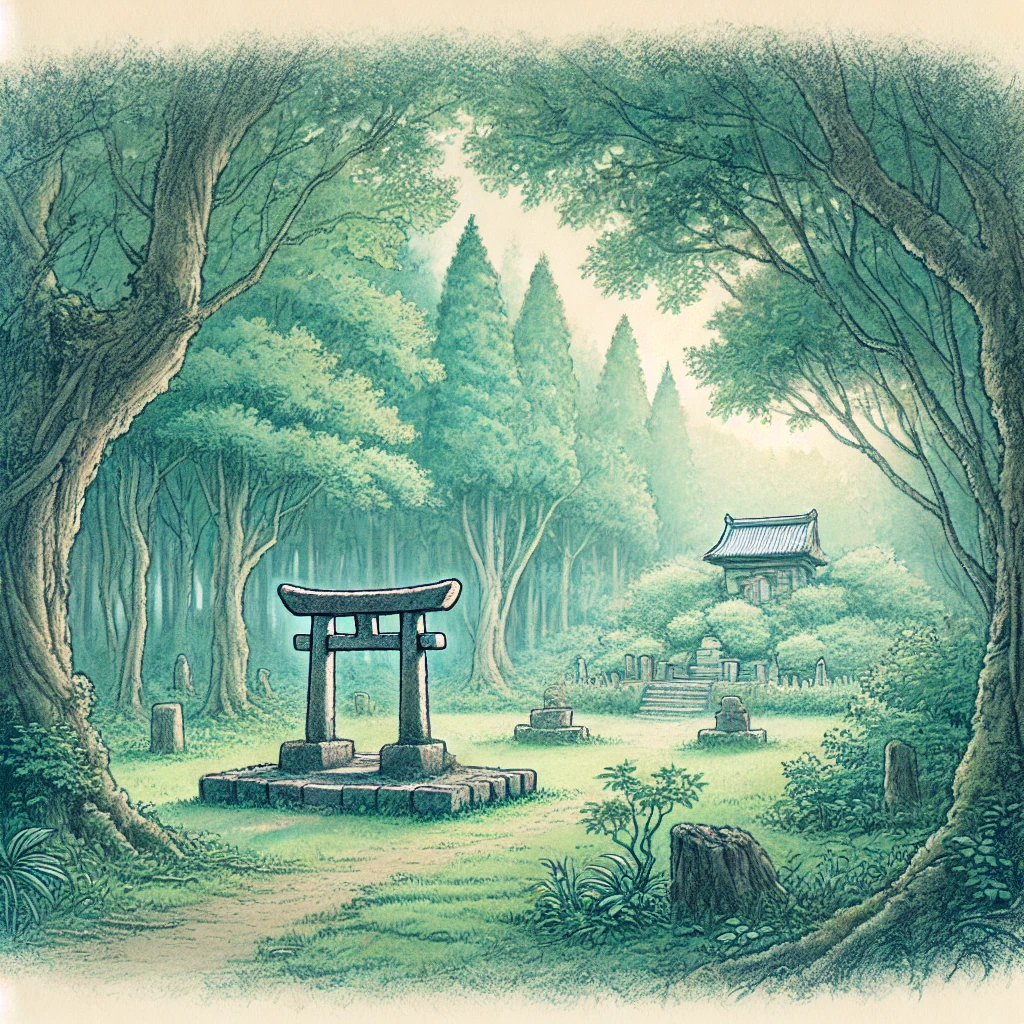
Utaki, the sacred sites scattered across Okinawa, hold a mysterious space that conceals ancient tales and messages for those living in the modern era. Many who visit Utaki report unique experiences that are hard to find in daily life. Some feel the presence of gods, connect with ancestral spirits, or sense a unity with nature. Utaki invites us into an unseen world.
However, the allure of Utaki extends beyond these mystical experiences. Utaki is also the core of Okinawa’s culture and spirituality. It is the birthplace of traditional arts and rituals and a site for ancestor worship, embodying the values and worldview cherished by the Okinawan people.
Moreover, Utaki offers crucial messages for us in today’s society. It emphasizes the importance of spiritual fulfillment, which cannot be achieved through material wealth alone. It teaches us the value of living in harmony with nature. Utaki presents these universal wisdoms.
Yet today, the environment surrounding Utaki faces increasing threats. Urbanization is encroaching upon these sacred sites. Therefore, each of us must take responsibility to protect and pass down Utaki to future generations.
In this blog, we will explore the charm and significance of Utaki. From mystical experiences at Utaki to its role in Okinawan culture and its meaning in modern society, we will delve into the various aspects of Utaki. Through Utaki, why not touch the rich spiritual world of Okinawa? The wisdom you gain will surely illuminate your own life.
Now, let’s step into the sacred space of Utaki, where gods and ancestral spirits dwell. Shall we listen to the heart of Okinawa conveyed through Utaki?
- What is Utaki?
- Mystical Experiences at Utaki
- Legends and Real Incidents
- The Spiritual World of Okinawans and Utaki
- The Relationship Between Okinawa and Utaki
- Q&A
- “Utaki: The Spiritual Homeland of Okinawa”
What is Utaki?
Are you familiar with Utaki, the sacred places in Okinawa? Utaki is an indispensable spiritual place for the people of Okinawa. Here, we will explain in detail the definition, role, and historical background of Utaki. By deepening your understanding of Utaki, you can touch upon Okinawan culture and spirituality.
Definition and Role of Utaki
What exactly is Utaki? Let’s look into its etymology, meaning, and religious and cultural roles.
Etymology and Meaning of Utaki
The word “Utaki” is formed by combining the honorific prefix “U” with “taki,” which means mountain or hill. Thus, Utaki refers to sacred mountains or hills. Various Utaki exist across Okinawa, each serving as an object of faith for local people.
Utaki is not just a part of nature; it is a place where gods reside and ancestral spirits gather. For the people of Okinawa, Utaki is a vital place connecting the physical world and the spiritual realm.
Historical Background of Utaki
The origins of Utaki date back to ancient times. Throughout Okinawa’s history, Utaki has played various roles. In ancient times, Utaki was a place where the village’s guardian deity was enshrined. Every village had an Utaki where rituals were held to pray for safety and prosperity. Utaki was also a place for important village decisions.
As times changed, the role of Utaki evolved, but it remains a spiritual support for the people of Okinawa today.
Religious and Cultural Roles of Utaki
Utaki reflects Okinawa’s religious views and worldview. In the traditional Okinawan religion of “Kimi-chi faith,” Utaki plays a crucial role as a place for communicating with the gods.
Utaki is also deeply connected to Okinawan culture and performing arts. Many traditional events and performances have been held at Utaki.
Utaki nurtures the spirituality of the Okinawan people and serves as a place for cultural heritage.
Types and Characteristics of Utaki
Okinawa hosts a variety of Utaki. Here, we will look into the Utaki in individual villages, those shared by entire regions, and the structure and ritual sites of Utaki.
Village Utaki
Each village in Okinawa has its unique Utaki. These Utaki are places where the village’s guardian deity is enshrined and serve as the most familiar sacred sites for the villagers. Village Utaki preserve important traditions and rituals related to their guardian deity, such as harvest festivals and seed planting ceremonies.
The village Utaki is also a place for ensuring the safety and health of the villagers. It is believed that the guardian deity enshrined in Utaki protects the village from illnesses and disasters.
Regionally Shared Utaki
In addition to village Utaki, there are Utaki shared by entire regions. These larger sacred sites attract the faith of a broader community. Examples of regionally shared Utaki include “Sefa Utaki” in northern Okinawa Island and “Ogami Island” in Miyako Island. These Utaki are rich in regional history and culture, filled with many legends and myths.
Regionally shared Utaki also serve as places that connect people in the region. Sharing Utaki helps form a regional identity and strengthens the bonds among people.
Structure and Ritual Sites of Utaki
The structure of Utaki varies depending on its role and location. Generally, Utaki features simple constructions that utilize natural terrain. Many Utaki have an altar called a “Haisho,” where gods are enshrined. The Haisho is often made of stones or wood, characterized by its simplicity.
Utaki also has an open space for rituals, where offerings are made to the gods, and dances and songs are dedicated.
The structure of Utaki exudes a sacred atmosphere that harmonizes with nature, allowing people to step away from the ordinary and touch the world of the gods.
Mystical Experiences at Utaki
Many mysterious experiences are reported at Okinawa’s Utaki. People feel the presence of gods, encounter inexplicable phenomena related to natural occurrences, or connect with spiritual entities. Here, we will explore these mystical experiences at Utaki with specific examples.
Experiencing the Presence of Gods
Utaki is a sacred place where gods reside. Therefore, many visitors to Utaki report feeling the presence of gods.
Kamidari (Divine Thunder)
Kamidari refers to the phenomenon of sudden thunder at Utaki. It can happen on a clear day or concentrate only around Utaki. Okinawans believe that Kamidari signifies the gods’ anger. Many have experienced Kamidari at Utaki, such as hearing thunder during prayers or witnessing it when inappropriate actions were taken at Utaki.
Kamidari is considered a way for gods to announce their presence, making people feel the sacredness of Utaki.
Messages from the Gods
It is said that prayers at Utaki can sometimes lead to receiving messages from the gods through dreams or sudden revelations. Some people have reported seeing gods in dreams while praying all night at Utaki or hearing the voice of gods during meditation.
These experiences are direct communications with the gods, underscoring Utaki as a sacred place.
Holy Atmosphere and Spiritual Elevation
Being at Utaki allows one to feel an indescribable holy atmosphere, providing a sense of a special space different from daily life. Praying at Utaki can induce a unique spiritual elevation, a sense of cleansing, or feeling embraced by a greater presence.
These experiences affirm that Utaki is not merely part of nature but a sacred place.
Mysterious Events Related to Natural Phenomena
Many mysterious events related to natural phenomena are reported at Utaki.
Sudden Weather Changes
Sudden weather changes, such as clear skies turning cloudy or sudden rain, can occur during prayers at Utaki. Some have experienced strong winds or fog appearing during important rituals at Utaki, interpreted as signs of the gods’ presence.
Unusual Behavior of Flora and Fauna
Unusual behavior of animals and plants is often observed around Utaki. Unseen animals appearing or plants showing abnormal growth are reported. For instance, a white snake appearing and circling around someone praying at Utaki, or fruits appearing on a tree overnight near Utaki.
These unusual behaviors of flora and fauna are seen as manifestations of Utaki’s sacred power.
Inexplicable Sounds and Light Phenomena
Inexplicable sounds or light phenomena occur at Utaki, such as mysterious music heard before dawn or dragon-shaped lights seen in the sky above Utaki.
These phenomena indicate that Utaki is a place filled with mystery.
Encounters with Spiritual Entities
Utaki is a gathering place for spiritual entities. Many visitors report encounters with such entities.
Meetings with Ancestral Spirits
Praying at Utaki can lead to encounters with ancestral spirits, who appear to convey important messages. For example, seeing a deceased grandfather during prayers at Utaki.
These experiences show that Utaki connects the physical and spiritual worlds.
Spiritual Experiences of Yuta (Mediums)
Yuta, Okinawan mediums, often have special spiritual experiences at Utaki, such as receiving prophecies from gods or recalling past life memories.
These experiences affirm Utaki’s spiritual power.
Interaction with Guardian and Messenger Gods
It is believed that guardian and messenger gods reside in Utaki, and direct interactions with them are sometimes possible. For instance, encountering a radiant god during prayers at Utaki or receiving solutions to problems from messenger gods.
These experiences show that Utaki is a place for interaction with gods.
These mystical experiences at Utaki reveal that it is a special place with sacred power, allowing people to directly feel Okinawa’s spiritual worldview.
Legends and Real Incidents
Utaki are steeped in numerous ancient legends that tell of their origins and miraculous events that occurred there. Additionally, many reports of mysterious experiences at Utaki have been documented. Here, we will explore both the legends associated with Utaki and actual events that have taken place.
Legends about Utaki
There are various legends about Utaki, which not only highlight their sacredness but also serve as a spiritual foundation for the people of Okinawa.
Legends of Utaki Origins
Many Utaki have legends concerning their origins. For example, it is said that the Utaki in one village is where a deity descended to protect the village. Another legend states that an Utaki on an island is where a deity appeared to vanquish evil spirits tormenting the island’s inhabitants. These legends underscore the sacred nature of Utaki and are cherished stories passed down through generations.
Myths and Folktales Related to Utaki
Utaki often appear in Okinawan myths and folktales. For instance, there is a myth that the creator god Amamikiyo first descended to Utaki, and a tale about a young man meeting a god at Utaki. These myths and folktales illustrate that Utaki are not only sacred places but also deeply intertwined with people’s lives and culture.
Legends of Miraculous Events at Utaki
There are many legends of miraculous events occurring at Utaki. For instance, during a drought, prayers at Utaki brought rain, or a person suffering from illness recovered after praying at Utaki. These legends demonstrate the sacred power of Utaki and strengthen people’s faith.
Actual Incidents at Utaki
In addition to legends, there are numerous reports of real mysterious events occurring at Utaki.
Mysterious Events in Historical Records
Historical records document mysterious events at Utaki. For example, records from the 1600s describe seeing gods gathering for meetings at night at an Utaki, and records from the 1800s mention a priest ascending to the heavens during prayers at Utaki. These historical records indicate that Utaki have long been recognized as sacred places.
Mysterious Experiences at Utaki in Modern Times
Even in modern times, there are numerous accounts of mysterious experiences at Utaki. Some people report hearing the voice of a deity while praying at Utaki or feeling like they are merging with the universe during meditation. There are also reports of mysterious photographs taken at Utaki, showing what appear to be deities or spiritual beings. These experiences demonstrate that Utaki remain places of mystery.
Cases of Crimes or Accidents Related to Utaki
Not all incidents related to Utaki are positive. There are reports of crimes and accidents associated with Utaki. For example, some people have attempted suicide at Utaki, committed crimes driven by superstition, or faced accidents due to reckless entry into Utaki. These cases suggest that Utaki, being sacred places, must be approached with caution and respect. It is important to maintain reverence for Utaki and engage with them appropriately.
In conclusion, we have explored the legends and real incidents related to Utaki. The legends highlight the sacredness of Utaki and support people’s faith, while actual incidents show that Utaki are still places of mystery in modern times and underscore the need for appropriate attitudes towards them.
The Spiritual World of Okinawans and Utaki
Utaki are deeply connected to the spiritual world of Okinawans. Here, we will examine the reverence Okinawans hold for Utaki, the impact of Utaki on Okinawan cultural identity, and the psychological effects of Utaki.
Reverence for Utaki
Okinawans hold a strong reverence for Utaki, considering them sacred spaces where gods and ancestral spirits reside.
Reasons for Viewing Utaki as Sacred
Several reasons account for the sacred view of Utaki. Firstly, Utaki are believed to be places where gods descend. Additionally, they are where ancestral spirits gather. These gods and spirits are thought to protect and guide people. Moreover, Utaki are considered to connect this world and the spiritual realm, acting as a bridge between the two. These beliefs have led to Utaki being revered and carefully preserved.
Taboos and Etiquette at Utaki
Given their sacredness, there are various taboos and etiquette associated with Utaki. For instance, one must purify themselves before entering Utaki. It is also forbidden to shout or engage in unnecessary conversation within Utaki. Offerings made at Utaki must be fresh and of high quality, and chosen according to the preferences of the gods. Observing these taboos and etiquette demonstrates reverence for Utaki and respect for the gods and ancestral spirits.
Expressions of Faith in Utaki
The faith Okinawans hold in Utaki manifests in various ways. Many visit Utaki at specific times each year to pray to the gods and ancestral spirits. Some seek the gods’ will at Utaki before making important decisions. Faith in Utaki also permeates daily life, with some people creating small Utaki in their homes for daily prayers, or decorating their homes with paintings or sculptures of Utaki. Thus, faith in Utaki is deeply rooted in the lives of Okinawans.
Utaki and Okinawan Cultural Identity
Utaki are a crucial part of Okinawan cultural identity. It is not an exaggeration to say that Okinawan culture cannot be discussed without mentioning Utaki.
Influence of Utaki on Traditional Okinawan Culture
Utaki have significantly influenced traditional Okinawan culture. Many traditional performing arts originate from Utaki, where dances and music were dedicated to comfort the gods and ancestral spirits. Utaki also serve as central stages for traditional festivals, such as the Guso Umaachi (New Year’s festival) and Uku-i (harvest festival), which are centered around Utaki. Thus, Utaki are the source and stage for preserving traditional culture.
Relationship Between Utaki and Ancestor Worship
Ancestor worship is a vital element of Okinawan cultural identity. Okinawans highly value honoring and memorializing deceased ancestors. Utaki are closely related to ancestor worship, as ancestral spirits are believed to gather there. Visiting Utaki to pray to ancestral spirits is an important practice of ancestor worship. Additionally, Utaki themselves symbolize the spirits of ancestors. Cherishing Utaki is akin to honoring ancestors.
Transmission of Okinawan Spirituality Through Utaki
Utaki play an essential role in passing down Okinawan spirituality. Faith and reverence for Utaki are transmitted from parents to children and grandchildren. Visiting Utaki and praying there reaffirms inherited spirituality and ensures its transmission to the next generation. Thus, Utaki function as places for perpetuating Okinawan spirituality.
Psychological Impact of Utaki
Utaki also significantly influence the psychology of Okinawans, providing a sense of security and playing crucial roles during life’s milestones.
Sense of Security and Spiritual Support from Utaki
Utaki offer Okinawans a great sense of security and spiritual support. During hardships, visiting Utaki and seeking help from gods and ancestral spirits brings peace of mind. The existence of Utaki offers daily reassurance, knowing that gods and ancestral spirits are watching over them, giving people courage and hope.
Utaki and Important Life Milestones
Utaki are deeply involved in significant life milestones. For instance, after a child is born, people visit Utaki to pray for the child’s healthy growth. Before a wedding, it is important to receive blessings from the gods at Utaki. At the end of life, Utaki play a significant role, as it is believed that the soul of the deceased is guided to Utaki and finds eternal peace with the ancestral spirits. Thus, Utaki support and guide people through life’s key moments.
Influence of Utaki Experiences on Okinawan Values
Experiences at Utaki influence the values of Okinawans. Facing gods and ancestral spirits at Utaki teaches people that visible things are not the only important ones, highlighting the significance of the unseen world and spiritual values. Utaki experiences also make people realize the importance of harmony with nature and others, as Utaki are sacred spaces created within nature. These experiences foster values that prioritize spiritual richness over material wealth.
In conclusion, we have examined the relationship between the spiritual world of Okinawans and Utaki. Utaki are objects of faith, the foundation of cultural identity, and provide significant psychological support for Okinawans. Through Utaki, one can glimpse the rich spiritual world of Okinawa.
The Relationship Between Okinawa and Utaki
Utaki in Okinawa are more than just parts of nature; they are invaluable elements that form the core of Okinawa’s culture and spirituality. Here, we will reaffirm the importance and necessity of preserving Utaki and consider the spiritual world of Okinawa that can be understood through Utaki.
The Importance and Necessity of Preserving Utaki
Utaki are indispensable to Okinawa’s culture and spirituality. Protecting and passing down Utaki to future generations is a responsibility we all share.
The Role of Utaki in Okinawa’s Culture and Spirituality
Utaki are fundamental to Okinawa’s culture and spirituality. Traditional performing arts and rituals have been centered around Utaki, nurturing people’s faith. It is no exaggeration to say that without Utaki, Okinawa’s culture and spirituality cannot be fully explained.
Additionally, Utaki serve as a spiritual refuge for the people of Okinawa. They provide an irreplaceable place where one can escape daily life’s chaos and connect with the gods and ancestral spirits. Utaki are the source of Okinawa’s identity, supporting both its culture and spirituality.
Efforts to Protect and Preserve Utaki
However, in recent years, the environment surrounding Utaki has significantly changed. The wave of urbanization is relentlessly encroaching on Utaki, threatening their existence. In this situation, efforts to protect and preserve Utaki are essential. It requires the cooperation of the government, local communities, and individuals.
Specifically, physical protection of Utaki is necessary, as well as efforts to preserve their cultural and spiritual values. Maintaining traditional events at Utaki and passing them down to future generations are crucial.
The Need to Pass Down the Value of Utaki to Future Generations
Passing down the value of Utaki to future generations is our collective responsibility. We, who understand and appreciate the importance of Utaki, must convey this to the next generation. Taking children to Utaki to experience its sacred atmosphere, sharing legends and histories about Utaki, and fostering a sense of respect for Utaki are all vital activities. These efforts ensure that the value of Utaki is conveyed to future generations.
Protecting Utaki and passing on its value is also a way to connect Okinawa’s culture and spirituality to the future.
Understanding Okinawa’s Spiritual World Through Utaki
Utaki provide crucial insights into understanding Okinawa’s spiritual world. The unique worldview of Okinawa that emerges through Utaki, the nature of spirituality in contemporary society, and the wisdom of coexisting with nature can all be gleaned from Utaki.
The Unique Worldview of Okinawa Revealed by Utaki
Utaki reflect Okinawa’s unique worldview, where the visible and invisible worlds are continuous, and not only humans but also nature, gods, and ancestral spirits coexist. This worldview is demonstrated to us through Utaki, leading us from the material world to the spiritual world.
The worldview presented by Utaki offers new perspectives to those living in contemporary society, reminding us that what we see is not everything and emphasizing the importance of spiritual values. Utaki convey such messages to us.
Utaki and Spirituality in Modern Society
Utaki provide insights into the nature of spirituality in modern society. In a world where the pursuit of material wealth often leads to losing our spiritual anchor, Utaki hold significant meaning. They offer opportunities for self-reflection, providing a quiet space away from daily life to engage in inner dialogue.
Furthermore, Utaki remind us of the existence of the invisible world. Through interactions with gods and ancestral spirits, we realize that the material world is not all there is. Utaki teach us the importance of spirituality in modern society.
Learning the Wisdom of Coexistence with Nature from Utaki
Utaki teach us the wisdom of coexistence with nature. Created within nature, Utaki are sacred spaces where nature itself is an object of worship. Praying at Utaki integrates people with nature; they listen to the whispers of the wind, the songs of birds, and the rustling of trees while connecting with gods and ancestral spirits.
This demonstrates the harmony and coexistence between humans and nature. Respecting nature and listening to its voices allow humans to become one with nature. Utaki reveal the wisdom of coexistence with nature, which is increasingly lost in contemporary society.
In conclusion, we have examined the importance of Utaki and the spiritual world of Okinawa that can be understood through them. Utaki form the core of Okinawa’s culture and spirituality, providing many insights to those living in modern society.
When we visit Utaki and immerse ourselves in their sacred space, we can touch the rich spiritual world of Okinawa. The wisdom gained there can be applied to our own lives. Utaki are the spiritual homeland of Okinawa, and we must never forget their importance.
Q&A
What is Utaki?
Utaki are sacred sites revered by the people of Okinawa as holy places. They are believed to be inhabited by gods and ancestral spirits, serving as objects of faith.
What kind of mystical experiences can one have at Utaki?
At Utaki, it is said that one can feel the presence of gods, encounter inexplicable events related to natural phenomena, and communicate with spiritual beings.
What impact does Utaki have on Okinawan culture?
Utaki are the origins of Okinawan traditional performing arts and festivals, and they also serve as places for ancestor worship. Utaki form the foundation of Okinawa’s cultural identity.
What messages does Utaki convey to contemporary society?
Utaki teach us that the material world is not all there is and emphasize the importance of spiritual values. They also show the wisdom of living in harmony with nature.
What can we do to protect and pass down Utaki to future generations?
It is crucial to physically protect Utaki and preserve their cultural and spiritual values. Each individual should recognize the importance of Utaki and pass it on to the next generation.
“Utaki: The Spiritual Homeland of Okinawa”
In Okinawa, there are sacred places called Utaki. Believed to be inhabited by gods and ancestral spirits, Utaki have been objects of faith for the people of Okinawa.
Visiting Utaki can make one feel the presence of gods and have mystical experiences. From the mysterious thunder phenomenon known as Kamidari to encounters with ancestral spirits, Utaki offer sacred experiences that are hard to find in daily life.
Utaki are also the core of Okinawa’s culture and spirituality. They are the origins of traditional performing arts and festivals and serve as places for ancestor worship, supporting Okinawa’s identity.
Furthermore, Utaki convey important messages to those of us living in modern society. They highlight the importance of spiritual fulfillment that cannot be achieved through material wealth alone, and the value of living in harmony and coexistence with nature. Utaki offer such universal wisdom.
However, the environment surrounding Utaki is becoming increasingly harsh. The wave of urbanization is threatening the existence of Utaki.
Therefore, each of us must take responsibility to protect Utaki and pass them down to the next generation. Along with the physical protection of Utaki, efforts to preserve their cultural and spiritual values are essential.
Through Utaki, we can touch the rich spiritual world of Okinawa. The wisdom we learn from there can be applied to our own lives. In doing so, Utaki will become the spiritual homeland for us living in the modern age.


コメント