
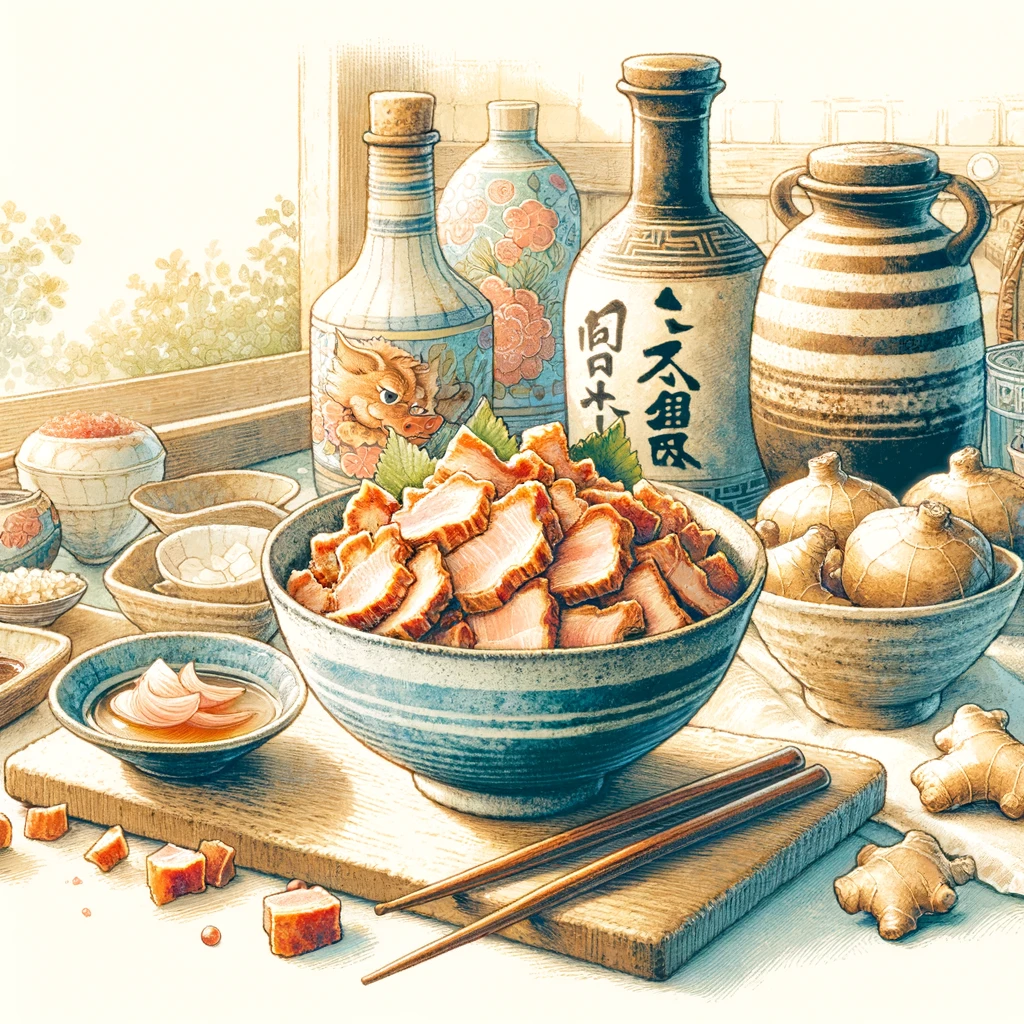
Would you like to try recreating delicious Okinawan home-cooked meals in the comfort of your own kitchen? Today, I’m introducing a recipe for “Okinawan-style Ginger Pork,” a beloved dish in Okinawan households for generations. This simple yet profoundly flavorful dish, made by sautéing pork with ginger, pairs perfectly with both rice and alcohol. The sweet and savory seasoning combined with the harmonious balance of pork and ginger will surely whet your appetite.
This dish encapsulates the history, culture, and wisdom of Okinawa. The use of pork reflects Okinawa’s suitability for pig farming. Ginger is a local specialty, and Awamori (a traditional Okinawan liquor) is used as it has been a staple in the region for centuries. The knowledge and traditions of our ancestors continue to thrive in this dish.
Moreover, Okinawan-style Ginger Pork is not just delicious but also a nutritionally balanced and healthy meal. It’s packed with protein and B vitamins from the pork, and antioxidants and digestive benefits from the ginger. This traditional taste supports the longevity and health that Okinawans are known for.
The recipe is straightforward, using common ingredients. Its versatility is another charm, as it can be transformed into various dishes. Add your favorite vegetables, turn it into a rice bowl or pasta, or enjoy it as a side dish. Find your own favorite version of “Okinawan-style Ginger Pork.”
In this article, we will thoroughly explore the appeal of Okinawan-style Ginger Pork. From the culinary culture and history of Okinawa to tips for a healthy diet, this traditional dish is one you’ll want to bring to your table. Let’s enjoy the taste of Okinawa together!
- What is Okinawan-style Ginger Pork?
- How to Make Okinawan-style Ginger Pork
- Using Okinawan-style Ginger Pork
- Nutritional Value and Health Benefits of Okinawan-style Ginger Pork
- The Meaning and Origin of the Name “Okinawan-style Ginger Pork”
- Frequently Asked Questions
- Enjoy Okinawan-style Ginger Pork!
- Q&A
- Conclusion
What is Okinawan-style Ginger Pork?
Okinawan-style Ginger Pork is a representative dish of Okinawa, featuring pork and ginger sautéed together. It has long been loved in Okinawan households and is popular as both a main dish and a side dish for rice and alcohol. Its distinctive sweet and savory flavor is a hit with everyone, making it a perfect accompaniment to rice.
Characteristics of Okinawan-style Ginger Pork
The standout feature of Okinawan-style Ginger Pork is the exquisite balance between the pork and ginger. The rich taste of pork and the spiciness of ginger harmonize beautifully, creating an appetizing flavor. Additionally, the unique sweet and savory seasoning using soy sauce, sugar, and Awamori is a significant appeal. This dish pairs wonderfully with rice and alcohol, making it a staple on Okinawan tables.
The Perfect Balance of Pork and Ginger
For Okinawan-style Ginger Pork, cuts of pork with a good balance of fat and lean meat are chosen. Pork belly or pork loin are common, but pork shoulder, with its well-balanced fat and lean meat, is also recommended. Ginger enhances the flavor of the pork. Its spiciness cuts through the fat, making the dish easy to eat. The combination of pork and ginger is the key to the dish’s flavor.
Unique Sweet and Savory Seasoning
Another characteristic of Okinawan-style Ginger Pork is its unique sweet and savory seasoning. Typically, soy sauce, sugar, and Awamori are used, though recipes can vary by household. The balance of sweetness and spiciness is perfect, making the dish highly palatable. Adding pepper or Doubanjiang (spicy bean paste) can give it a deliciously spicy twist.
Great Pairing with Rice and Alcohol
Okinawan-style Ginger Pork pairs perfectly with both rice and alcohol. Placed atop warm rice, the rich pork flavor and ginger fragrance seep into the rice, creating a fantastic rice bowl. It also makes an excellent side dish for alcohol, especially Awamori. It pairs well with carbonated drinks like beer and highballs, making it a versatile addition to any meal.
The History and Cultural Background of Okinawan-style Ginger Pork
Okinawan-style Ginger Pork is one of the most popular dishes in Okinawan cuisine. It has been a staple in Okinawan households for generations, cherished as a simple yet delicious dish that reflects the region’s culinary heritage.
Its Place in Okinawan Cuisine
Okinawan cuisine has developed uniquely under the influences of Chinese and Southeast Asian cuisines. The frequent use of pork is one of its hallmarks. Among these dishes, Okinawan-style Ginger Pork stands out as a simple yet essential part of Okinawan dining, appreciated both as home cooking and as a traditional local dish.
Its Role as a Traditional Home-cooked Meal
Okinawan-style Ginger Pork has long been made in Okinawan households. Using familiar ingredients like pork and ginger, it has been a popular and accessible dish. While recipes vary by household, it’s a dish that can be found in every Okinawan home.
Reflecting Okinawa’s Culinary Culture
The flavors of Okinawan-style Ginger Pork embody the region’s culinary culture. The extensive use of pork reflects Okinawa’s suitability for pig farming. Ginger, a local specialty, has been cherished as a seasoning for ages. The use of soy sauce, sugar, and Awamori in the seasoning showcases Okinawa’s unique food culture. This dish truly embodies the essence of Okinawan cuisine.
How to Make Okinawan-style Ginger Pork
Though popular as a home-cooked dish, making delicious Okinawan-style Ginger Pork requires some key points. Here, we’ll go over everything from choosing the ingredients to the cooking steps and plating tips for making Okinawan-style Ginger Pork.
Ingredients and Quantities
To make Okinawan-style Ginger Pork, you’ll need pork, ginger, and seasonings. Let’s look at how to choose and measure each ingredient in detail.
Choosing the Right Pork and Recommended Cuts
For Okinawan-style Ginger Pork, choose pork cuts with a good balance of fat and lean meat. Pork belly and pork loin are common choices, but pork shoulder, with its balanced fat and lean meat, also works well. Plan on about 100 grams of pork per serving.
The Type and Amount of Ginger
Ginger is essential for Okinawan-style Ginger Pork. Choose fresh ginger with a firm texture. You’ll need about 10 grams of ginger per serving. If you find the spiciness of ginger too strong, you can adjust the amount to taste.
Types and Ratios of Seasonings
Common seasonings for Okinawan-style Ginger Pork include soy sauce, sugar, and Awamori. Use dark soy sauce for a richer flavor. For sugar, options like brown sugar or cane sugar add depth to the taste. While Awamori is the traditional choice, you can substitute it with sake or shochu. The basic ratio for seasonings is 2 tablespoons of soy sauce, 1 tablespoon of sugar, and 1 tablespoon of Awamori per serving, but feel free to adjust to your preference.
Preparation and Tips
Proper preparation is crucial for making delicious Okinawan-style Ginger Pork. Here’s how to handle the pork and ginger and mix the seasonings.
Preparing the Pork
Cut the pork into bite-sized pieces. For fattier cuts, cut slightly larger pieces. Drizzle a tablespoon of sake over the pork and let it sit for 10 minutes to remove any odor and tenderize the meat.
Preparing the Ginger
Peel the ginger and cut it into thin strips. Cutting along the fibers improves the texture. Soaking the ginger in water can mellow its spiciness, making it more palatable for those sensitive to spicy flavors.
Mixing the Seasonings
Combine the soy sauce, sugar, and Awamori. If the sugar doesn’t dissolve easily, add a small amount of water. The key to the seasoning is achieving a perfect balance of sweetness and savoriness. Adding pepper or Doubanjiang for a spicy kick can also be delicious.
Cooking Steps
With the preparation done, it’s time to cook. Here’s a detailed guide from choosing the right pan to cooking the pork and ginger, and adding the seasonings.
Choosing the Pan and Heat Level
For cooking Okinawan-style Ginger Pork, a deep pan is recommended to prevent ingredients from spilling while sautéing. Cook over medium to high heat.
How to Sauté the Pork and Ginger
Heat oil in the pan and add the pork. Once the pork begins to change color, add the ginger. When the ginger’s aroma is released, proceed to the next step.
Adding the Seasonings and Timing
Add the seasonings to the pan once the pork and ginger are sautéed. Stir quickly over high heat to blend the flavors. Once the seasonings are well incorporated, move to the next step.
Finishing Steps and Cooking Through
After adding the seasonings, cover the pan and steam on low heat for 2-3 minutes. This step ensures the pork is fully cooked and the flavors meld. Uncover and cook until the liquid evaporates, and the dish is ready.
Plating and Serving Suggestions
To make your Okinawan-style Ginger Pork even more enjoyable, here are some tips for plating and serving.
Attractive Plating Techniques
Okinawan-style Ginger Pork is also delicious as a rice bowl. When serving over rice, spread the ingredients evenly for a visually appealing dish. Adding side vegetables enhances the presentation.
Choosing and Combining Side Dishes
Side dishes that pair well with Okinawan-style Ginger Pork include other Okinawan dishes like Goya Champuru (bitter melon stir-fry) or simple dishes
like cold tofu or radish salad. These light dishes complement the main dish well.
Creative Recipes and Variations
Okinawan-style Ginger Pork is versatile enough to be adapted into various dishes. Add eggs for an omelet twist, or mix in vegetables for a stir-fry. The possibilities are endless. Customize with your favorite ingredients to create your unique version of Okinawan-style Ginger Pork.
Using Okinawan-style Ginger Pork
Okinawan-style Ginger Pork is a versatile dish that can be used in various contexts. Here, we’ll explore different ways to incorporate it into your meals.
As a Main Dish
Due to its pork content, Okinawan-style Ginger Pork can stand alone as a main dish. Pair it with rice or noodles to create different meal options.
As a Dinner Main Dish
Okinawan-style Ginger Pork is perfect as a dinner main dish. Served with rice and vegetables, it makes for a balanced meal. Its slightly bold flavor ensures it’s a crowd-pleaser.
Transforming into a Rice Bowl
This dish pairs excellently with rice. Placed atop warm rice, the pork and ginger flavors permeate, creating a fantastic rice bowl. “Ginger Pork Don” is a popular menu item in Okinawan diners.
Combining with Noodles
Okinawan-style Ginger Pork also pairs well with noodles. Combine it with Okinawa soba or spaghetti for a fresh take. “Ginger Pork Pasta,” with the rich pork flavor and ginger spiciness clinging to the noodles, is a favorite in Okinawan homes.
As a Side Dish or Lunch Box Item
This dish is also great as a side dish or a lunch box item. It’s convenient to prepare ahead of time and pack for a quick meal.
Storage Tips as a Make-ahead Dish
Okinawan-style Ginger Pork is a handy make-ahead dish. It can be stored in the fridge for 3-4 days, so making a batch in advance is recommended. Store it in an airtight container in the fridge.
Balancing Nutrition and Appearance in Lunch Boxes
When packing in a lunch box, consider nutrition and visual appeal. Adding colorful vegetables improves both the look and the nutritional balance. Pairing with rice, bread, or noodles makes for a well-rounded meal.
Combining with Other Side Dishes
Okinawan-style Ginger Pork pairs well with other side dishes. For instance, combining it with Goya Champuru or salads ensures a nutritionally balanced meal. It also pairs well with protein-rich dishes like omelets or meatballs.
As Party Food or Appetizers
This dish is also suitable for parties or as an appetizer. Its excellent pairing with alcohol makes it perfect for entertaining.
Adjusting Quantities for Large Groups
When preparing for a large group, adjust the quantities accordingly. Use the serving size as a guide and multiply it by the number of guests. Using multiple pans can make the cooking process more efficient.
Pairing with Alcohol like Beer or Awamori
Okinawan-style Ginger Pork pairs exceptionally well with beer or Awamori. For a more alcohol-friendly version, you can intensify the flavors. Adding more ginger for a stronger aroma is also an option.
Plating and Presentation for Parties
For parties, focus on plating and presentation. Serving on a large platter placed in the center of the table adds a festive touch. Garnishing with finely sliced ginger or adding a sprinkle of shichimi (seven-spice) can enhance the dish’s appeal.
Freezing and Reheating Tips
Okinawan-style Ginger Pork can also be frozen for convenience. This makes it a great option for busy days when you need a quick meal.
Choosing Containers and Storage Duration
For freezing, use airtight containers or ziplock bags. It can be stored in the freezer for up to a month. Preparing in large batches and freezing in portions is recommended.
Freezing Tips and Best Practices
Make sure the dish cools completely before freezing. Removing as much air as possible from the storage bag can prevent freezer burn.
Thawing and Reheating Tips and Recipe Ideas
To enjoy the best flavor, thaw in the refrigerator. It can be enjoyed as is or used in other dishes like omelets or fried rice. This versatility makes it a convenient meal prep option.
Nutritional Value and Health Benefits of Okinawan-style Ginger Pork
Okinawan-style Ginger Pork is not only delicious but also known for its high nutritional value. Let’s delve into the nutritional components of the ingredients used in this dish and the health benefits that come from combining them.
Nutrients and Benefits of Ginger
One of the essential ingredients in Okinawan-style Ginger Pork is ginger, which is packed with various nutrients offering numerous health benefits.
Antioxidant Properties of Gingerol
Ginger contains a compound called gingerol, which has excellent antioxidant properties. Antioxidants help eliminate free radicals in the body, preventing cell oxidation. Free radicals can damage cells, leading to aging and diseases. The antioxidant properties of gingerol are beneficial for maintaining good health.
Body Warming Effects and Metabolism Boost
Ginger has a warming effect on the body, which can increase metabolism and promote fat burning. Additionally, ginger contains a compound called gingerol, which induces sweating and helps eliminate excess salt from the body.
Appetite Stimulation and Digestive Aid
Ginger also has appetite-stimulating properties. Its aroma can enhance appetite by promoting the secretion of saliva and gastrin, a digestive hormone. This results in improved digestion and absorption of food.
Protein and Vitamins in Pork
The main ingredient of Okinawan-style Ginger Pork is pork, which is rich in high-quality protein and vitamins.
High-Quality Protein for Muscle Maintenance and Growth
The protein in pork is crucial for building and maintaining muscles. Muscles are composed of protein, and consuming pork helps efficiently intake the protein necessary for muscle growth and maintenance.
Rich Source of B Vitamins
Pork is also rich in B vitamins, essential for energy metabolism and maintaining nerve functions. Vitamin B1, in particular, helps convert carbohydrates into energy and is abundant in pork.
Nutrients for Fatigue Recovery and Increased Stamina
Pork contains nutrients such as vitamin B2 and niacin, which aid in energy metabolism and help eliminate fatigue substances, promoting recovery from fatigue. Protein also contributes to improved stamina.
Health Benefits of Eating Okinawan-style Ginger Pork
Combining ginger and pork in Okinawan-style Ginger Pork offers various health benefits due to their high nutritional value.
Balanced Nutritional Intake
Eating Okinawan-style Ginger Pork provides a variety of nutrients, including protein, vitamins, and minerals, in one meal. The high-quality protein from pork and the vitamins from ginger are essential for maintaining good health.
Prevention of Lifestyle Diseases
Ginger contains gingerol, which can help regulate blood sugar levels, aiding in the prevention of diabetes. Additionally, ginger can inhibit cholesterol absorption, reducing the risk of arteriosclerosis and heart disease.
Improved Immunity and Stress Relief
Ginger also boosts the immune system. The compounds in ginger activate immune cells, helping prevent infections from viruses and bacteria. Moreover, the aroma of ginger has stress-relieving effects, providing a sense of relaxation.
In conclusion, Okinawan-style Ginger Pork is a highly nutritious dish that offers numerous health benefits. Including this balanced meal in your diet can contribute to a healthy lifestyle.
The Meaning and Origin of the Name “Okinawan-style Ginger Pork”
Okinawan-style Ginger Pork is a well-known dish in Okinawa, and its name has a particular origin. Here, we’ll explore the etymology of “Ginger Pork” and the significance of “Okinawan-style.”
The Etymology of “Ginger Pork”
How did the name “Ginger Pork” come about? Let’s take a closer look at its origins.
A General Term for Dishes Using Ginger
“Ginger Pork” is sometimes used as a general term for dishes that use ginger. Ginger dishes are made not only in Okinawa but also throughout Japan. For example, in the Kansai region, a dish of stir-fried pork and ginger is called “Ginger Pork.”
Name Derived from the Cooking Method of Stir-frying
The name “Ginger Pork” comes from the cooking method of stir-frying with ginger. Although there are ginger dishes that are prepared using other methods, Okinawan-style Ginger Pork involves stir-frying pork and ginger in a pan, which is why it is called “Ginger Pork.”
Comparing Names in Different Regions
While it is called “Ginger Pork” in Okinawa, other regions may have different names for similar dishes. For instance, in the Kansai region, stir-fried pork with ginger is called “Ginger Pork,” but it is a different dish from Okinawan-style Ginger Pork. In the Tohoku region, a dish of stir-fried chicken and ginger is also called “Ginger Pork.”
The Significance of “Okinawan-style”
“Okinawan-style” indicates the unique elements of Okinawan cuisine. Let’s delve into its meaning.
Use of Okinawan Ingredients and Seasonings
“Okinawan-style” means using Okinawan ingredients and seasonings. For example, Okinawan-style Ginger Pork often uses Awamori, a traditional Okinawan liquor. Using Okinawan pork and ginger enhances the authenticity of the flavor.
Reflecting Okinawan Tastes and Cooking Methods
“Okinawan-style” also signifies incorporating Okinawan flavors and cooking methods. The sweet and savory seasoning of Okinawan-style Ginger Pork reflects Okinawan taste preferences. Stir-frying pork and ginger is a common cooking method in Okinawan home cooking.
A Name Reflecting Okinawan Food Culture and Traditions
“Okinawan-style” is a term that reflects Okinawan food culture and traditions. Okinawa is known for its unique culinary culture, characterized by the frequent use of pork and Awamori. Adding “Okinawan-style” indicates that the dish embodies these cultural and traditional elements.
Differences and Characteristics Compared to Other Regions
Okinawan-style Ginger Pork differs from similar dishes in other regions. Let’s explore these differences and characteristics.
Differences in Flavor from Other Regions’ Ginger Pork
The primary difference lies in the seasoning. Okinawan-style Ginger Pork features a sweet and savory seasoning using soy sauce and sugar, whereas other regions might use simpler seasonings like salt or soy sauce. Additionally, Okinawan-style Ginger Pork may include Awamori, which is typically not used in other regions.
Unique Okinawan Cooking Methods and Presentation
Okinawan-style Ginger Pork has unique cooking methods and presentation. For example, when stir-frying pork and ginger, the pan is often covered to steam the pork while locking in the ginger’s aroma. It is commonly served over rice as a bowl dish or with vegetables on the side.
Utilizing Okinawan Ingredients for Distinct Flavors
Okinawan-style Ginger Pork highlights the flavors of Okinawan ingredients. Okinawan pork is known for its rich, sweet fat, which adds depth to the dish. Okinawan ginger is notably spicy and aromatic, contributing to the dish’s distinctive taste.
Thus, the name “Okinawan-style Ginger Pork” encompasses the general meaning of ginger dishes and reflects Okinawan food culture and traditions. Understanding these aspects allows you to appreciate and enjoy Okinawan-style Ginger Pork more deeply.
Frequently Asked Questions
Okinawan-style Ginger Pork uses pork and ginger, but you might have questions about alternative ingredients or cooking methods. Here, we answer common questions about Okinawan-style Ginger Pork.
Can You Use Other Meats Instead of Pork?
While pork is typically used, you might prefer other meats. Let’s explore the taste differences and adjustments in cooking methods when using different meats.
Taste Differences When Using Chicken or Beef
Using chicken or beef instead of pork results in different flavors. Chicken offers a lighter taste compared to pork, while beef provides a richer flavor. However, the distinctive taste of ginger and sweet-savory seasoning remains, preserving the essence of Okinawan-style Ginger Pork.
Adjusting Cooking Time for Alternative Meats
Cooking times need adjustment when using chicken or beef. Chicken cooks faster than pork, so shorten the cooking time. Beef takes longer to cook than pork, so extend the cooking time. Generally, cook chicken for 2-3 minutes and beef for 5-6 minutes.
Vegetarian Alternative Recipes
For a vegetarian version, use tofu, mushrooms, or vegetables. Tofu, cut into bite-sized pieces and stir-fried with ginger, makes a healthy dish. Use mushrooms like king oyster or shimeji for their texture. Vegetables like bell peppers, carrots, and onions add vibrant colors and nutrients.
Can You Adjust the Amount of Ginger?
You might want to adjust the ginger amount according to your taste preference. Let’s see how changing the ginger quantity affects the flavor and how to tweak the seasoning.
Flavor Changes with Different Ginger Amounts
Increasing the ginger amount intensifies the spiciness and ginger flavor. Reducing the ginger makes the dish milder. However, reducing it too much might lose the characteristic flavor of Ginger Pork, so adjust carefully.
Mild Seasoning for Those Sensitive to Spiciness
For a milder flavor, reduce the ginger amount and add more sugar to emphasize sweetness. Decrease the soy sauce and add more sake or water to create depth without excessive spiciness.
Enhancing Ginger Flavor
To emphasize the ginger flavor
, increase the ginger amount and finely chop it. Stir-fry longer to release more aroma. You can also reduce the amounts of soy sauce and sugar to let the ginger shine through.
What Side Dishes Go Well with Okinawan-style Ginger Pork?
Okinawan-style Ginger Pork pairs excellently with rice and alcohol, but choosing suitable side dishes can enhance the meal. Here, we suggest some classic side dishes, main dish pairings, and appetizers that complement Ginger Pork.
Classic Vegetable Side Dishes and Their Preparation
Classic side dishes include Goya Champuru and stir-fried garlic chives. Goya Champuru, a stir-fry with bitter melon, eggs, and tofu, is a staple in Okinawan homes. Stir-fried garlic chives with pork is rich in vitamins and minerals. Both dishes complement the sweet-savory flavor of Ginger Pork.
Pairing with Staple Foods like Rice and Bread
Okinawan-style Ginger Pork pairs perfectly with rice but also goes well with bread. Hard breads like French bread or baguettes absorb the sauce well. Pairing with Okinawan staples like Okinawa soba or taco rice also works great.
Appetizer Side Dishes for Alcohol
Ginger Pork makes a great appetizer for alcohol. Try pairing it with salted tofu or vinegared mozuku seaweed. Salted tofu is a traditional Okinawan dish with a rich flavor, and vinegared mozuku provides a refreshing taste. Both pair well with beer or Awamori.
What Substitute Ingredients Can Be Used for Allergies?
Some ingredients in Okinawan-style Ginger Pork may trigger allergies. Let’s explore substitute ingredients for common allergens.
Substitutes for Soy Sauce in Case of Wheat Allergy
For those with wheat allergies, alternatives to regular soy sauce include tamari, coconut aminos, and fish sauce. Tamari is a soy sauce made from soybeans without wheat. Coconut aminos, made from fermented coconut sap, offer a strong umami flavor. Fish sauce, made from fermented fish, is commonly used in Southeast Asia.
Substitutes for Miso in Case of Soy Allergy
For those with soy allergies, alternatives to miso include salt koji, chicken bouillon, and tomato paste. Salt koji, made from rice malt and salt, has a strong umami flavor. Chicken bouillon adds depth to the flavor. Tomato paste offers acidity and richness.
Substitutes for Eggs as Binding Agents
For those with egg allergies, alternatives include potato starch, mayonnaise, and soy milk. Potato starch, mixed with water, works as a binding agent. Mayonnaise can be used as a substitute, though it changes the flavor. Soy milk, made from the same soybeans as tofu, also works as a binder.
In conclusion, we’ve addressed common questions about Okinawan-style Ginger Pork, including ingredient substitutions and cooking tips. These alternatives allow more people to enjoy this dish. Use these tips as a reference when making Okinawan-style Ginger Pork.
Enjoy Okinawan-style Ginger Pork!
Okinawan-style Ginger Pork is a staple in Okinawan home cooking, popular as both a main dish and a side for rice and alcohol. This simple stir-fry dish of pork and ginger offers profound flavors that reflect Okinawan culinary culture. Here’s how to rediscover its charm and enjoy it easily at home.
Recreating Okinawan Flavors at Home
Okinawan-style Ginger Pork is an easy-to-make dish with just pork, ginger, and seasonings, making it an accessible recipe for anyone. In Okinawan homes, it’s a familiar taste from childhood, and recreating a mother’s recipe is part of the fun.
Using Okinawan ingredients enhances the authenticity. Okinawan pork is known for its sweet fat, and Okinawan ginger is particularly spicy and aromatic, making your dish stand out.
Using Okinawan seasonings also brings out the authentic taste. For example, using moromi soy sauce instead of regular soy sauce or brown sugar instead of white sugar adds a rich sweetness and unique flavor.
Thus, Okinawan-style Ginger Pork is an easy-to-make dish that can capture the authentic taste of Okinawa by using local ingredients and seasonings. If you want to enjoy the flavors of Okinawa, give it a try.
A Nutritionally Balanced and Healthy Dish
Okinawan-style Ginger Pork is also a nutritionally balanced and healthy dish. The primary ingredient, pork, is rich in high-quality protein, essential for muscle maintenance and growth. It also contains B vitamins, which are effective for fatigue recovery.
Ginger, on the other hand, warms the body, boosts metabolism, and induces sweating. It also has antioxidant properties and aids digestion, contributing to overall health.
Adding vegetables to Okinawan-style Ginger Pork further enhances its nutritional balance. Including Okinawan vegetables like goya or shima ninjin increases vitamins, minerals, and dietary fiber intake.
By incorporating Okinawan-style Ginger Pork into your diet, you can enjoy a balanced meal that supports a healthy lifestyle. Okinawa is known for its longevity, partly attributed to its balanced diet. By enjoying this dish, you can incorporate Okinawa’s healthy culinary culture into your life.
A Versatile Dish for Various Recipes
Okinawan-style Ginger Pork is a versatile dish that can be adapted into various recipes. The basic ingredients are just pork and ginger, allowing for endless variations with different additions.
Adding vegetables enhances both the color and nutritional balance. Standard vegetables like bell peppers, onions, and carrots work well, as do Okinawan vegetables like goya, garlic chives, and bean sprouts.
Including tofu, mushrooms, or eggs adds volume and variety. Tofu is a healthy option, mushrooms add a pleasant texture, and eggs provide a creamy touch, enriching the dish’s flavor.
Okinawan-style Ginger Pork also pairs well with other dishes like rice bowls or pasta. For instance, Ginger Pork Don is easy to make by simply placing the pork over rice. Mixing it with pasta creates an Okinawan-style pasta dish.
Thus, Okinawan-style Ginger Pork is a versatile dish that can be adapted to various recipes. It’s easy to make at home, so experimenting with different variations can be enjoyable.
Enjoying the Taste While Experiencing Okinawan Culture
Eating Okinawan-style Ginger Pork is not just about savoring a delicious dish but also about experiencing Okinawan culinary culture. Okinawa has developed a unique culinary culture, and Ginger Pork has been a beloved home-cooked dish for generations.
Ginger Pork reflects the wisdom of Okinawan people. For example, using pork because Okinawa is suitable for pig farming, using ginger because it’s a local specialty, and using Awamori because it’s a traditional Okinawan liquor. Ginger Pork embodies Okinawa’s environment, history, and culture.
You can also enjoy Okinawan-style Ginger Pork the way Okinawan people do. Eating it over rice is a typical Okinawan style. Enjoying it as a side dish for alcohol is another Okinawan delight.
Moreover, through Ginger Pork, you can feel the warmth and hospitality of Okinawan people. In Okinawan homes, it’s common to make a large batch of Ginger Pork and share it with family, relatives, and neighbors, reflecting Okinawa’s culture of valuing connections among people.
Thus, enjoying Okinawan-style Ginger Pork is not just about savoring a delicious dish but also about experiencing Okinawan culinary culture and the warmth of its people. Rediscover the charm of Okinawa through Ginger Pork.
In conclusion, we have explored the appeal of Okinawan-style Ginger Pork in detail. It’s an easy-to-make dish that you can enjoy at home, offering nutritional balance and various health benefits. You can also adapt it into numerous recipes and experience Okinawan culinary culture through its flavors. Enjoy Okinawan-style Ginger Pork and the delights it brings to your table.
Q&A
What are the recommended cuts of pork for Okinawan-style Ginger Pork?
For Okinawan-style Ginger Pork, choose cuts with a good balance of fat, such as pork belly or pork loin. Pork shoulder, with its balanced fat and lean meat, also works well. Aim for about 100 grams of pork per serving.
What should I consider when preparing ginger for Okinawan-style Ginger Pork?
Peel the ginger and cut it into thin strips. Cutting along the fibers improves the texture. If you find the spiciness of ginger too strong, soak the slices in water to mellow the flavor. Finely chopping the ginger can also enhance its aroma.
What are some classic vegetable side dishes that pair well with Okinawan-style Ginger Pork?
Classic side dishes include Goya Champuru and stir-fried garlic chives. Goya Champuru, a stir-fry with bitter melon, eggs, and tofu, is a staple in Okinawan homes. Stir-fried garlic chives with pork are rich in vitamins and minerals, complementing the sweet-savory flavor of Ginger Pork.
What substitutes can be used for soy sauce if you have a wheat allergy?
For those with wheat allergies, alternatives to regular soy sauce include tamari, coconut aminos, and fish sauce. Tamari is made from soybeans without wheat. Coconut aminos, made from fermented coconut sap, have a strong umami flavor. Fish sauce, made from fermented fish, is commonly used in Southeast Asia.
What aspects of Okinawan food culture can be experienced through Okinawan-style Ginger Pork?
Okinawan-style Ginger Pork reflects Okinawa’s environment, history, and culture. It uses pork because Okinawa is suitable for pig farming, ginger because it’s a local specialty, and Awamori because it’s a traditional Okinawan liquor. It also embodies the warmth and hospitality of Okinawan people, often made in large batches to share with family, relatives, and neighbors.
Conclusion
Okinawan-style Ginger Pork is a staple in Okinawan home cooking, a simple yet profound dish that reflects the region’s culinary culture. In this blog, we rediscovered its charm and provided tips for enjoying it easily at home.
We discussed its characteristics and history, highlighting the balance of pork and ginger and its sweet-savory seasoning. We detailed the ingredients, preparation tips, and cooking steps, along with various recipe variations.
We also highlighted its high nutritional value and health benefits, making it a balanced meal for a healthy lifestyle. We explained the origins of its name and its reflection of Okinawan food culture and traditions.
Finally, we addressed common questions, offering tips for ingredient substitutions and cooking adjustments. Okinawan-style Ginger Pork is versatile, nutritious, and an excellent way to experience Okinawan culinary culture at home.
We hope this blog inspires you to enjoy the flavors of Okinawa, creating delicious and healthy meals with Okinawan-style Ginger Pork.


コメント