
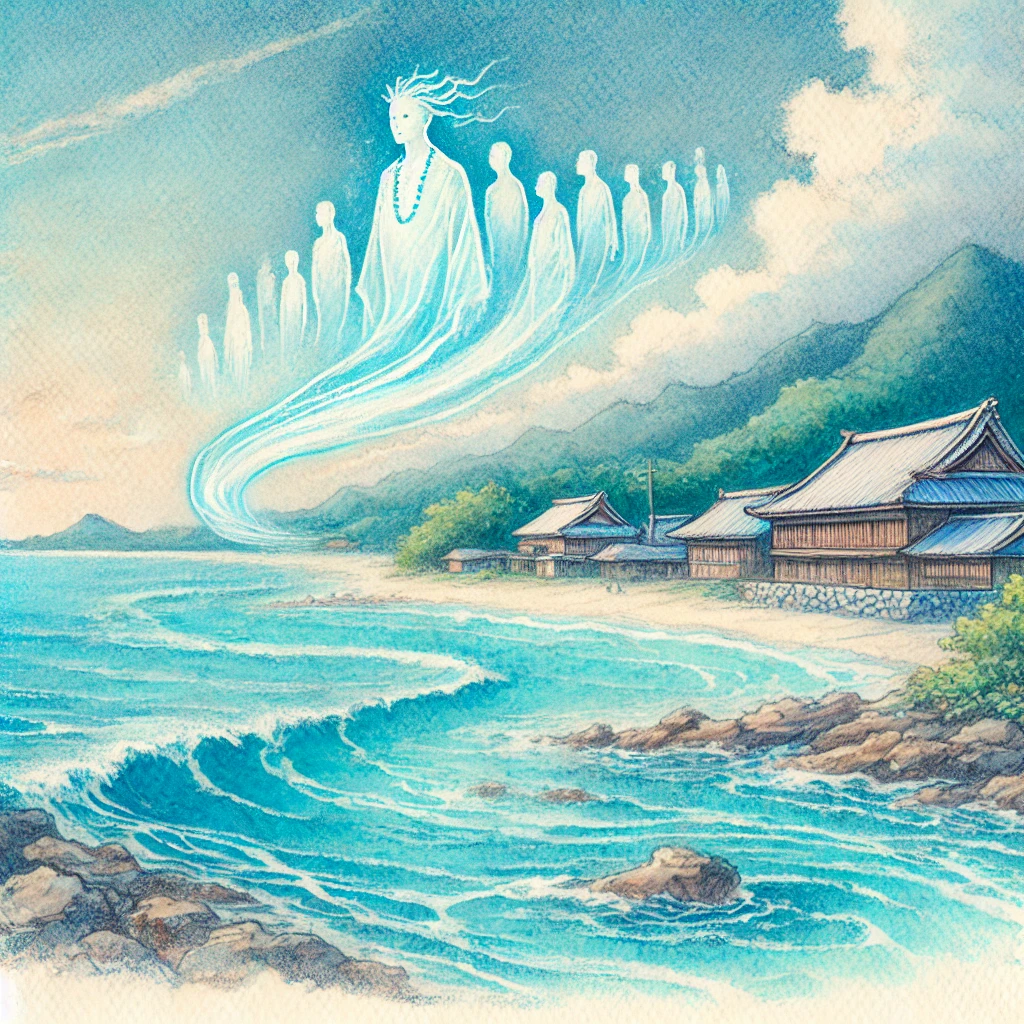
Okinawa’s stunning seas and blue skies, its abundant nature and unique culture captivate many. Among these islands, an ancient and mystical belief system known as the Gusoo faith thrives.
Gusoo refers to the souls or spirits of the deceased. The people of Okinawa believe that the Gusoo continue to influence the living world, and they respect and fear their presence. Even as it spawns terrifying legends and events, the Gusoo faith remains a vital part of Okinawan spirituality, still alive in people’s hearts today.
However, the Gusoo faith is not merely a relic of the past. It offers many insights for those of us living in the modern world. It teaches us to honor our ancestors, cherish family bonds, coexist with nature, and respect the unseen realms. It also highlights the continuity between life and death and the importance of maintaining connections with the deceased. These lessons and perspectives can prompt us to reevaluate our way of living.
In this blog, we will delve into the mysteries of the Gusoo faith. Through ancient legends, events, and the perspectives of contemporary believers, we will explore the essence of this belief system. We will also consider how we can apply its lessons and insights to our daily lives.
As a rich source of Okinawan spirituality, the Gusoo faith invites us to gain new understandings and emotions. Let’s open the door to the mystical world of Gusoo faith together.
- Introduction
- What is Gusoo?
- Legends and Incidents Involving Gusoo
- Legend 1: The Gusoo Who Abducts Children
- Legend 2: The Tale of a Person Possessed by Gusoo
- Actual Incident: Murder Related to Gusoo Beliefs
- Afterlife Beliefs and Gusoo
- Reverence and Respect for Gusoo
- Gusoo Beliefs and the Spiritual World of Okinawa
- The Importance of Preserving and Understanding Traditional Culture
- Sensibilities Surrounding the Boundary Between Life and Death
- In Conclusion
- Q&A
- Summary
Introduction
The Uniqueness and Appeal of Okinawa
Okinawa refers to a group of beautiful islands located at the southernmost tip of Japan, known for their unique culture, traditions, and language. Blessed with blue seas, white sandy beaches, and lush nature, Okinawa attracts numerous tourists. However, the allure of Okinawa extends beyond its stunning landscapes. The people of Okinawa hold distinctive values and worldviews, which are reflected in their culture and customs. Traditional Okinawan beliefs and festivals, deeply rooted in the local spirituality, captivate visitors endlessly. Exploring the uniqueness and charm of Okinawa is essential for understanding Japan’s cultural diversity.
The Importance of Gusoo (Afterlife Beliefs)
Understanding the spiritual world of Okinawa is profoundly tied to the concept of “Gusoo,” which refers to the souls or spirits of the deceased. The Okinawans believe that these Gusoo continue to influence the living world. Traditions and customs surrounding Gusoo penetrate the core of Okinawan culture and values, making it impossible to discuss Okinawan spirituality without them. Moreover, the Gusoo faith offers insights into contemporary views on life and death and the transmission of traditional culture. Grasping the importance of Gusoo is vital for a deeper appreciation of Okinawa’s charm.
What is Gusoo?
Meaning and Overview of Gusoo
The Meaning and Origin of the Word
“Gusoo” is a word from the Okinawan dialect meaning “afterlife,” derived from the Japanese word “gosei,” which refers to the next world or the hereafter. The people of Okinawa view the Gusoo as the souls or spirits of the deceased, believing that they maintain a connection with the living world. The term reflects significant aspects of Okinawan views on life and death.
Characteristics and Roles of Gusoo
Gusoo are not merely souls of the deceased but are believed to possess the power to influence the living world. They are thought to desire and protect the happiness and prosperity of their descendants. Gusoo are also said to monitor the actions and morality of living people, sometimes even administering punishment. Deeply connected to ancestor worship, the people of Okinawa respect and perform rituals for Gusoo to maintain connections with their ancestors. Understanding the characteristics and roles of Gusoo is key to grasping the depth of Okinawa’s spiritual world.
The Origins and History of Gusoo
Origins of Gusoo Beliefs
Exploring the origins of Gusoo beliefs is crucial for understanding how Okinawa’s spiritual landscape was shaped. While the Gusoo faith has evolved over the course of Okinawan history, its origins are believed to date back to ancient times. It developed uniquely in Okinawa, influenced by the indigenous Ainu religion, and elements from Buddhism and Daoism introduced from the mainland. The harsh natural environment and historical circumstances of Okinawa have also significantly influenced the development of Gusoo beliefs. For instance, frequent wars and natural disasters, which led to numerous deaths, have intensified the faith in the souls of the deceased. Investigating the origins of Gusoo beliefs offers a fascinating journey into the depths of Okinawa’s history and culture.
Development and Changes in Gusoo Beliefs
Gusoo beliefs have transformed and evolved over time. Initially, Gusoo were seen as guardian spirits of village communities, but gradually they came to be regarded more as individual protectors. These beliefs merged and adapted with other religious practices; for example, Buddhist influences led to the creation of rituals to honor Gusoo, and female priests known as Noro became intermediaries with Gusoo. In modern times, wars and social changes have significantly affected Gusoo beliefs. The loss of lives during wars intensified the faith in Gusoo, while modernization led to a decline in these beliefs. However, Gusoo beliefs continue to live on in the hearts of the Okinawan people, and tracing their evolution is indispensable for understanding the essence of Okinawa’s spirituality.
Legends and Incidents Involving Gusoo
Legend 1: The Gusoo Who Abducts Children
Content and Spread of the Legend
In Okinawa, there are numerous eerie legends about Gusoo abducting children. These stories are told across various regions of Okinawa, with slight variations in detail depending on the area. Commonly, it is said that if a child who goes out at night disappears or suddenly begins to act strangely, it is because a Gusoo has taken or possessed them. While these tales are passed down to protect children, they also serve to communicate the terror associated with Gusoo. The widespread nature of this legend reflects the deep-seated fear of Gusoo among the Okinawan people and attests to the enduring strength of Gusoo beliefs.
Interpretation and Meaning of the Legend
The legend of Gusoo abducting children is not merely a scare tactic but holds profound significance. It is shared not only to safeguard children but also to express the blurred lines between life and death. The act of Gusoo taking a child suggests an interaction across the boundaries between this world and the afterlife, where the living and the dead can communicate. Additionally, this legend can be seen as symbolizing the innocence and purity of children. Because they are more sensitive and vulnerable than adults, children are considered more susceptible to being taken by Gusoo. The legend of the Gusoo who abducts children encompasses various dualities such as life and death, the living world and the hereafter, adults and children, making it a richly suggestive and multilayered narrative.
Legend 2: The Tale of a Person Possessed by Gusoo
Symptoms and Characteristics of Possession
The tale of a person possessed by Gusoo is one of the terrifying legends long passed down in Okinawa. It is said that those possessed by Gusoo exhibit behaviors completely different from their usual selves. For instance, they may suddenly become less talkative or start speaking incoherently. Additionally, those possessed might forget their own names or behave like someone else entirely. There are also accounts of individuals displaying superhuman strength when possessed by Gusoo. These symptoms and characteristics not only incite fear among those who believe in Gusoo but also command a deep respect. The stories of possession reflect the complex feelings the Okinawan people harbor towards Gusoo.
Causes of Possession and Remedies
The causes of Gusoo possession vary, but commonly, angering Gusoo or failing to show proper respect are believed to trigger such events. For example, desecrating a site dedicated to Gusoo or displaying disrespectful behavior towards Gusoo can incur their wrath. Additionally, walking alone at night or calling out the name of Gusoo may also lead to possession. As for remedies, it is typical to visit a shrine dedicated to Gusoo to apologize or consult with a female priestess known as a Noro. Performing rituals to appease Gusoo is also said to calm their anger. The tales of possession by Gusoo serve to convey the importance of respecting and fearing Gusoo.
Actual Incident: Murder Related to Gusoo Beliefs
Overview and Background of the Incident
A murder case related to Gusoo beliefs in the 1970s caused a significant shock to Okinawan society. The incident involved a housewife, deeply engrossed in Gusoo beliefs, who claimed to be acting under the commands of Gusoo when she sequentially killed her family members. The woman asserted that she could hear the voice of Gusoo and followed its commands to commit the murders. This case not only shocked the society at the time but also highlighted the darker aspects of the Gusoo faith. It spurred increased social interest in Gusoo beliefs and ignited vigorous debates about their merit. The murder case remains a stark symbol of the shadowy side of Gusoo beliefs and is still etched in the memory of the people.
Social Impact and Reactions to the Incident
The murder related to Gusoo beliefs had a profound impact on Okinawan society. Following the incident, critical views of Gusoo beliefs intensified, leading to lively debates over their validity. Some individuals condemned Gusoo beliefs as superstitions and advocated for the importance of scientific thinking. Additionally, the case prompted further research into Gusoo beliefs, clarifying their history and characteristics. Meanwhile, there were strong voices defending Gusoo beliefs, emphasizing their significance as traditional culture. Although the murder case shocked Okinawan society, it also served as a catalyst for deeper understanding of Gusoo beliefs. This incident proved to be a critical event, prompting reflection on the relationship between traditional culture and modern society.
Afterlife Beliefs and Gusoo
The Relationship Between Okinawan Views on Life and Death and Gusoo
For the people of Okinawa, the afterlife is intimately connected with the presence of Gusoo. According to traditional Okinawan beliefs about life and death, when individuals die, their souls leave this world and become ancestors, known as Gusoo, who protect their descendants. Thus, Gusoo represent not only the souls of the deceased but also the spirits of ancestors. This perspective views the world of the living and the afterlife as a continuum, with Gusoo at its core. For Okinawans, Gusoo are crucial links between the afterlife and the present world, allowing them to feel connected to their ancestors. This reverence and care for Gusoo are considered fundamental aspects of Okinawan culture. Understanding the relationship between Okinawan beliefs on life and death and Gusoo is essential for delving into the essence of Okinawa’s spiritual world.
The Afterlife Shaped by Gusoo
For the Okinawan people, Gusoo are vital in forming the image of the afterlife. Believed to have the power to influence the living world, Gusoo are thought to engage with the present in various ways to wish for the happiness and prosperity of their descendants. For example, Gusoo are believed to appear in the dreams of their descendants to offer advice or even heal illnesses. They are also said to monitor the behavior of the living, providing reprimands for moral deviations. In this way, the afterlife shaped by Gusoo is closely intertwined with the living world, significantly affecting the lives of the living. For the people of Okinawa, the afterlife is not a distant realm but a familiar world that is connected to the present through Gusoo. Understanding the image of the afterlife shaped by Gusoo is crucial for grasping the worldview of the Okinawan people.
Reverence and Respect for Gusoo
Fear and Reverence Towards Gusoo
The people of Okinawa harbor a deep sense of awe towards Gusoo. Although Gusoo are invisible entities, they are believed to significantly impact people’s lives. Particularly, angering Gusoo or failing to show them respect is thought to bring about their wrath, leading people to fear them. However, since Gusoo are also considered to be the souls of ancestors, there is a profound respect paid towards them. Revering Gusoo is equated with honoring ancestors, which is believed to contribute to the prosperity of the family. Thus, the emotions Okinawans feel towards Gusoo are a complex mix of fear and reverence. These sentiments form the foundation of Okinawa’s spiritual world, and understanding this is essential to discussing Okinawan culture.
Customs and Rituals to Honor Gusoo
The people of Okinawa engage in various customs and rituals to honor and feel the presence of Gusoo. For instance, on special days known as “Gusoo no Hi,” offerings are made at shrines dedicated to Gusoo, and rituals are performed to comfort the souls of the ancestors. Additionally, households often maintain altars called “butsudan” to honor Gusoo daily. Respect for Gusoo is also expressed during significant life events such as weddings and funerals. These customs and rituals are vital practices for maintaining relationships with Gusoo and reaffirming bonds with ancestors. The traditions of honoring Gusoo are not merely formalities but are expressions of the spirituality of the Okinawan people. Understanding these practices is crucial for grasping the essence of Okinawan culture.
Gusoo Beliefs and the Spiritual World of Okinawa
The Worldview Shaped by Gusoo Beliefs
Gusoo beliefs form the core of the Okinawan worldview. In this belief system, the material world and the afterlife are seen as continuous, connected through Gusoo. According to this perspective, individuals continue to protect their descendants as spirits after death, thus linking the living world and the afterlife inseparably. Gusoo beliefs also embrace the notion that all entities harbor souls, leading to respect for nature and objects alike. This worldview reflects the traditional Okinawan values that emphasize coexistence between humans and nature. Understanding the worldview shaped by Gusoo beliefs is foundational to discussing Okinawan culture, as examining Okinawa through the lens of Gusoo beliefs is crucial for a deeper appreciation of its allure.
The Relationship Between Gusoo Beliefs and Other Okinawan Beliefs
Gusoo beliefs are closely intertwined with other traditional Okinawan beliefs. For instance, Okinawans often seek to understand the will of Gusoo through a type of medium known as “Yuta.” Yuta are believed to hear the words of Gusoo and play a critical role in resolving people’s problems. Additionally, across Okinawa, there are sacred sites called “Utaki,” dedicated to worshiping Gusoo, which also serve as the focal points of village communal faith. Furthermore, many of Okinawa’s traditional annual events are conducted to honor Gusoo and seek their blessings. Thus, Gusoo beliefs are deeply connected with other local beliefs, and understanding these relationships is essential to grasp the entirety of Okinawa’s spiritual landscape. Exploring the interplay between Gusoo beliefs and other beliefs offers an intriguing journey into Okinawa’s rich spirituality.
The Importance of Preserving and Understanding Traditional Culture
The Value of Traditional Culture as Seen Through Gusoo Beliefs
Gusoo beliefs hold a particularly important place within Okinawan traditional culture. Reflecting the worldviews and values of the Okinawan people, understanding Gusoo beliefs is indispensable for discussing Okinawan culture. Even in modern society, Gusoo beliefs provide numerous insights. For instance, they teach us to respect our ancestors and cherish family bonds. They also highlight the importance of living in harmony with nature and respecting the unseen realms. Furthermore, Gusoo beliefs offer profound insights into fundamental human questions about life, death, and ethics. Learning from Gusoo beliefs covers a wide range, and their value does not diminish even in contemporary society. Re-acknowledging the value of Gusoo beliefs as traditional culture can serve as a catalyst for reevaluating our way of life.
The Significance and Methods of Preserving Traditional Culture
Preserving traditional cultures like Gusoo beliefs is significantly meaningful in modern society. Traditional culture represents a crystallization of wisdom and values cultivated over long histories, forming the foundation of our identity. Preserving traditional culture involves learning from the wisdom of our ancestors and connecting it to the future. However, preserving traditional culture is not merely about maintaining old customs. It is crucial to understand the essential values of traditional culture and apply them within the context of modern society. To this end, creating opportunities to learn about and experience traditional culture is vital. It is also essential to articulate traditional culture in modern terms and communicate its appeal broadly. Considering the significance and methods of preserving traditional culture through Gusoo beliefs provides important insights for safeguarding and enhancing our cultural richness.
Sensibilities Surrounding the Boundary Between Life and Death
The Continuity of Life and Death as Suggested by Gusō Beliefs
The Gusō beliefs present a unique perspective on the boundary between life and death. In Gusō beliefs, death is not seen as an end but also as a beginning. It is believed that after death, individuals become Gusō, continuing to protect their descendants. This perspective differs significantly from modern societal views on life and death, yet it offers valuable insights. Gusō beliefs emphasize the continuity between life and death, suggesting that life and death are inextricably linked and that death is a part of life. This perspective teaches the importance of not fearing death but embracing it as a natural process. Moreover, Gusō beliefs highlight the importance of honoring the deceased and maintaining bonds with them. The continuity of life and death learned from Gusō beliefs could also serve as an opportunity to reevaluate our views on life and death.
Implications for Modern Society’s Perception of Life and Death
The continuity of life and death suggested by Gusō beliefs offers significant insights into how life and death are perceived in contemporary society. In modern contexts, death is often viewed as something to be avoided. However, Gusō beliefs advocate for accepting death as a natural process and respecting the deceased. This perspective could serve as a catalyst for reevaluating modern attitudes toward death. Additionally, Gusō beliefs imply that the boundary between life and death is ambiguous, teaching the importance of viewing life and death not as separate entities but as a continuous process. Furthermore, the beliefs stress the importance of cherishing bonds with the deceased. This approach provides a crucial perspective for considering the nature of human relationships in contemporary society. The understanding of life and death from Gusō beliefs may deeply influence our approach to living in modern society.
In Conclusion
The Importance and Significance of Gusō Beliefs
Gusō beliefs are a crucial element at the core of Okinawa’s spiritual world. These beliefs reflect the worldview and values of the Okinawan people, and discussing Okinawan culture without understanding them is incomplete. Moreover, Gusō beliefs continue to offer numerous insights in modern society, ranging from the inheritance of traditional culture to perceptions of life and death. Re-acknowledging the importance and significance of Gusō beliefs may serve as an opportunity to reexamine our ways of living. Learning about Gusō beliefs, a rich source of Okinawan spirituality, holds significant meaning for us in the contemporary world.
Lessons and Perspectives to Learn from Gusō
The lessons and perspectives offered by Gusō beliefs provide important insights into our way of life in contemporary society. Gusō beliefs teach us to honor our ancestors and cherish family bonds. They also highlight the importance of coexisting with nature and fostering reverence for the unseen world. Furthermore, Gusō beliefs prompt a reevaluation of our views on the continuity of life and death and the importance of maintaining bonds with the deceased. These teachings and perspectives should deeply influence our way of living in modern society. By learning from Gusō beliefs, we can explore a richer and more profound way of life. Valuing the lessons and perspectives learned from Gusō might be essential for us as we navigate the future.
Q&A
What is “Gusō”?
“Gusō” is a term from the Okinawan dialect meaning “afterlife,” and it refers to the souls or spirits of the deceased. The people of Okinawa believe that Gusō continue to influence the living world.
Where do Gusō beliefs originate from?
The origins of Gusō beliefs are not entirely clear, but they are considered to be deeply rooted in Okinawan tradition. They have evolved in a unique form, influenced by Ainu beliefs and religions from the mainland such as Buddhism and Taoism.
What symptoms appear in a person possessed by Gusō?
It is said that a person possessed by Gusō exhibits unusual behaviors. For example, they might become less talkative, speak nonsensically, or forget their own name.
How do Okinawan people honor Gusō?
Okinawans honor Gusō by offering sacrifices at shrines on Gusō Day and by setting up altars in their homes to worship Gusō in their daily lives. Respect for Gusō is also shown during important life ceremonies such as weddings and funerals.
What can modern society learn from Gusō beliefs?
Gusō beliefs teach the importance of respecting ancestors, cherishing family bonds, coexisting with nature, and fostering reverence for the unseen world. They also prompt a reevaluation of our views on the continuity of life and death and the importance of maintaining bonds with the deceased.
Summary
The story of “Gusō (afterlife)” is a vital belief at the heart of Okinawan spirituality. Gusō refers to the souls or spirits of the dead, and the people of Okinawa believe that Gusō continue to influence the living world. While the origins of Gusō beliefs are not entirely clear, they are long-standing in Okinawa, having evolved uniquely under the influence of Ainu beliefs and religions such as Buddhism and Taoism from the mainland. There are various legends and actual incidents related to Gusō, including those about Gusō who abduct children or those possessed by Gusō. For the Okinawans, Gusō are important entities that connect the afterlife with the present world, and by honoring and offering rituals to Gusō, they feel a connection with their ancestors. Gusō beliefs also provide significant insights into our ways of living in modern society, influencing the inheritance of traditional culture and our perceptions of life and death. Valuing the lessons and perspectives from Gusō beliefs may be essential for us as we navigate the future.


コメント