
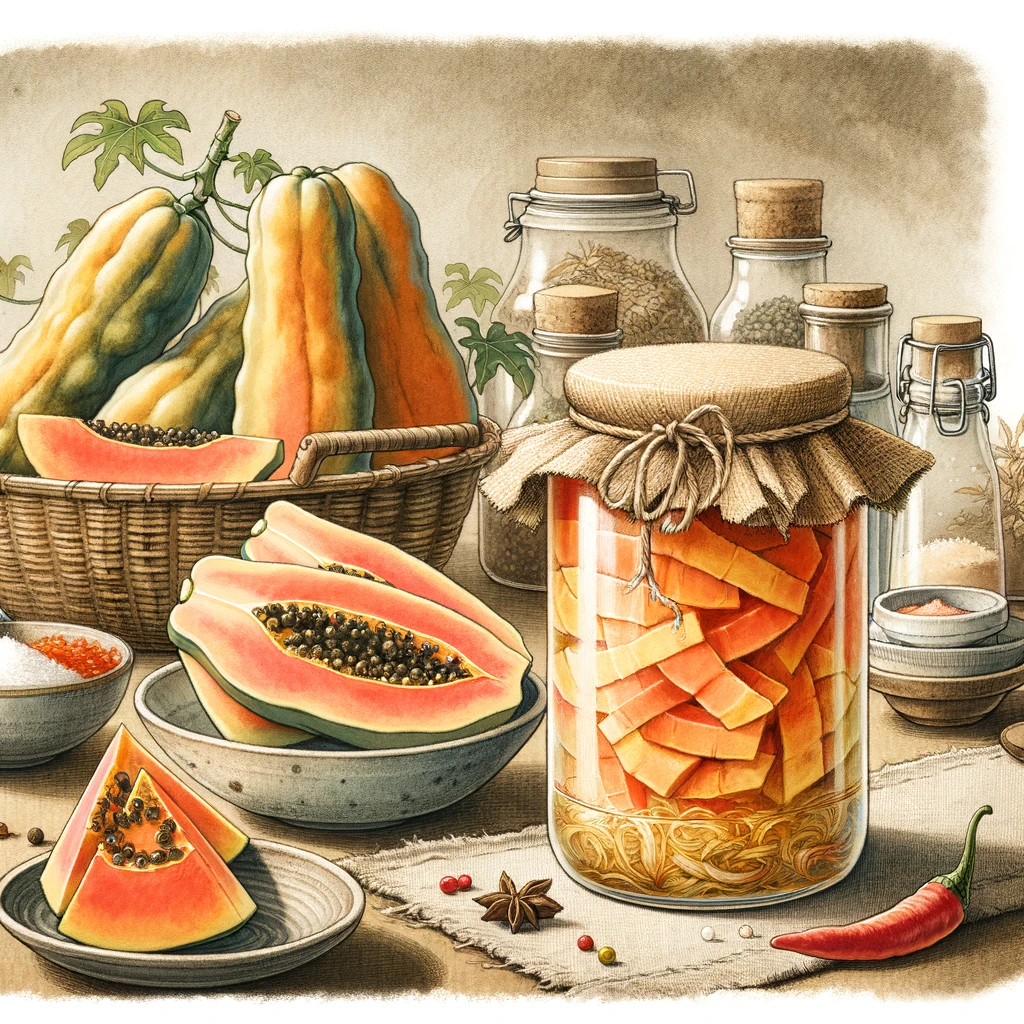
What comes to mind when you think of Okinawan cuisine? Perhaps Goya Champuru, Rafute, or Shikuwasa. But did you know there’s another essential side dish that graces Okinawan tables? It’s Papaya Pickles.
The flavor of “Papaya Pickles” varies widely. They offer a crunchy texture, a refreshing tartness, and a unique taste that will have you hooked from the first bite. But the allure of papaya pickles goes beyond their flavor. They are rich in vitamin C and dietary fiber, making them a boon for both beauty and health.
Papaya pickles are also incredibly versatile in the kitchen. They pair wonderfully with both meat and fish dishes, potentially transforming your everyday meals into culinary delights. They’re also a great addition to salads and sandwiches.
The best part? They’re surprisingly easy to make. Once you master a few key points, you can easily prepare them at home. Why not give it a try and get hooked on the taste of Okinawan home cooking? Papaya pickles offer a unique texture and flavor, rich nutrients, and endless culinary possibilities. Dive into the world of papaya pickles and discover the depth of Okinawan food culture.
In this article, we’ll thoroughly explore the charm of papaya pickles. From easy-to-make recipes to culinary applications and health benefits, we’ll delve deep into everything papaya pickles have to offer. Let this delicious and healthy addition bring a new breeze to your table. Let’s dive together into the delightful world of papaya pickles!
- What are Okinawan Papaya Pickles?
- How to Make Papaya Pickles
- Culinary Uses of Papaya Pickles
- The Origin and Meaning of Papaya Pickles
- Variations of Papaya Pickles
- Creative Recipes Using Papaya Pickles
- The Health Benefits of Papaya Pickles
- Q&A About Papaya Pickles
- Okinawan Food Culture and the Charm of Papaya Pickles
- Q&A
- Summary
What are Okinawan Papaya Pickles?
Papaya pickles, a traditional pickle that is indispensable to Okinawan dining tables, have a unique texture, flavor, and vibrant color, giving them a special presence in Okinawan cuisine. Papaya pickles are made by pickling ripe papayas with salt and seasoning them with ingredients like awamori and island peppers. There are various types and flavors, each reflecting the unique taste handed down through different households and regions.
Papayas thrive in Okinawa’s warm climate and are known for their high nutritional value, particularly their rich vitamin C content, which is said to be more than twice that of lemons. They are also rich in dietary fiber, which aids digestion and helps relieve constipation. Because of this high nutritional value, papaya pickles are gaining attention as a healthy side dish.
Features of Papaya Pickles
Unique Texture and Flavor
The most notable characteristic of papaya pickles is their unique texture and flavor. The pickling process brings out the natural sweetness and soft texture of the papaya, which combines with the saltiness and the flavor of awamori to create an impressive taste experience. Due to their excellent texture, papaya pickles are popular not only as a side dish with rice but also as a snack with alcohol.
The texture of papaya pickles can change depending on the pickling time. Shorter pickling times result in a firmer texture, while longer pickling times create a softer texture with the flavors deeply absorbed, offering a mellow taste.
Vibrant Color
Papaya pickles are also known for their vibrant color. The bright orange of ripe papayas becomes even deeper when pickled, adding a splash of color to the table. This color comes from carotenoids, pigments that also have antioxidant properties and are converted into vitamin A in the body, offering health benefits.
The color of papaya pickles can vary depending on the seasonings used. For example, pickles with a lot of awamori have a deeper orange color, while adding island peppers gives them a reddish hue. This color variation depending on the seasoning provides visual enjoyment as well.
Variety and Seasoning
Papaya pickles come in many varieties depending on the seasonings and the way they are prepared. They range from simple salt-pickled ones to those rich in flavor with added awamori, island peppers, and kelp. You can also enjoy unique tastes by adding garlic, sesame, or chili oil.
Each household and region has its own traditional way of seasoning papaya pickles. For instance, in Miyako Island, they prefer pickles with a strong awamori flavor, while in the Yaeyama Islands, spicy pickles with plenty of island peppers are popular. This variety allows you to enjoy the unique flavors of each area.
History of Papaya Pickles
Place in Okinawan Cuisine
Papaya pickles hold a special place in Okinawan cuisine. Okinawa, a major papaya-producing region, has a long history of various papaya dishes. Among them, papaya pickles have served as a crucial preservative food.
Okinawa’s subtropical climate, characterized by high temperatures and humidity, made food preservation challenging. To tackle this, the ancestors developed preserved foods like papaya pickles, which could be stored for long periods by salting, making them a valuable protein source.
Development of Pickle Culture
Okinawan pickle culture has developed uniquely, utilizing local ingredients like island peppers and awamori. Papaya pickles have been enjoyed as a familiar dish since papayas were introduced.
Pickles are indispensable as a side dish with rice, not just as preserved food. Various pickles, including papaya pickles, are made regularly in Okinawan households, adding color to everyday meals. This pickle culture remains an important part of Okinawan food culture.
Modern Popularity of Papaya Pickles
With the nationwide attention on Okinawan cuisine, papaya pickles have gained significant popularity. Their unique texture, flavor, and healthy image attract many people.
Papaya pickles have become a staple Okinawan souvenir. Airports and souvenir shops stock a variety of papaya pickles, catching the eye of tourists. With the advent of the internet, you can now buy papaya pickles even without traveling to Okinawa, allowing many people across the country to enjoy the taste of Okinawa at home.
Nutritional Value of Papaya Pickles
Rich in Vitamin C
Papayas are known for their exceptionally high vitamin C content, with more than twice the amount found in lemons per 100 grams. Vitamin C is an antioxidant nutrient that helps boost immunity and maintain healthy skin.
Papaya pickles retain a good amount of this vitamin C even after the pickling process, making them a tasty and easy way to supplement your vitamin C intake.
High in Dietary Fiber
Papayas are also rich in dietary fiber, which helps improve digestive health and prevent constipation. Modern diets often lack sufficient dietary fiber, but papaya pickles provide an easy way to increase fiber intake.
Papayas contain both soluble and insoluble fiber. Soluble fiber feeds beneficial gut bacteria and can help lower cholesterol, while insoluble fiber adds bulk to stools and improves bowel regularity. Papaya pickles provide a balanced source of both types of fiber.
Other Nutrients
Besides vitamin C and dietary fiber, papayas contain various other nutrients. For example, potassium helps prevent high blood pressure, and folic acid is important for preventing anemia and supporting fetal development during pregnancy.
Papaya pickles are a balanced source of these nutrients. While it’s important to consume them in moderation due to their salt content, they can be a healthy addition to your diet. The traditional knowledge of Okinawan cuisine can contribute to modern health.
As you can see, papaya pickles represent Okinawan food culture, offering unique texture and flavor along with high nutritional value. Enjoy this traditional taste on your modern table and discover the deep charm of papaya pickles.
How to Make Papaya Pickles
Papaya pickles have been cherished in Okinawan households for years, offering an unforgettable taste and unique texture. Surprisingly, making papaya pickles at home is easy. Here, we’ll guide you through the steps from preparing the ingredients to pickling and storing your papaya pickles. Enjoy the taste of Okinawa right at home with homemade papaya pickles.
Preparing the Ingredients
Choosing the Right Papayas
Selecting quality papayas is crucial for making good pickles. Choose ripe papayas that are slightly soft to the touch and have vibrant orange skin. Avoid overripe papayas, as they can become too watery when pickled. Ensure the papayas are free from blemishes or damage.
Types and Amounts of Seasonings
Salt is the basic seasoning for papaya pickles. Use 1-2 tablespoons of salt per papaya. Salt draws out moisture and helps preserve the pickles. For an Okinawan flavor, you can also add awamori, island peppers, and kelp. Use about 1 tablespoon of awamori and 1 teaspoon of island peppers per papaya.
Necessary Tools
You’ll need a bowl and a colander to make papaya pickles. The bowl is used for salting the papayas, so a large bowl makes this process easier. The colander is used to drain the excess moisture from the salted papayas. Ensure the colander is the right size for the amount of papayas you’re using.
Prepping the Papayas
How to Cut the Papayas
Cut the papayas in half lengthwise, remove the seeds, and peel them. Then, cut them into bite-sized pieces. Thin strips are typical, but you can cut them to your preferred size. Just be mindful that larger pieces take longer to pickle.
Salting the Papayas
Place the cut papayas in a bowl and add the salt. Massage the salt into the papayas with your hands
to ensure it’s evenly distributed. The salt will draw out moisture, making it easier for the flavors to penetrate. Continue salting until the papayas are wilted.
Draining the Moisture
Transfer the salted papayas to a colander and let them drain. Lightly press down on the papayas to remove excess water. This prevents the pickles from becoming too wet. Be gentle to avoid crushing the papayas.
Pickling the Papayas
Making the Pickling Brine
The pickling brine is made by mixing the liquid from the salted papayas with your chosen seasonings. Combine the brine with awamori, island peppers, and kelp if desired. Mix well to ensure the flavors are evenly distributed.
Pickling Time
Place the papayas in the brine and let them pickle in the refrigerator for half a day to a day. The longer they pickle, the more flavorful they become. However, avoid over-pickling, as the papayas can become too soft. Taste periodically to find your preferred texture.
Adjusting the Flavor
After pickling, taste the papayas and adjust the seasoning if necessary. If they lack salt, add a small amount. If they are too salty, add a bit of water to the brine. You can also adjust the amount of awamori or island peppers to suit your taste.
Storage and Shelf Life
Choosing the Right Storage Container
Store your papaya pickles in a clean, airtight container. Glass jars or ceramic containers are ideal. If using plastic containers, choose those resistant to acids. The container size should match the amount of pickles to minimize air exposure.
Refrigeration Period
Papaya pickles should be stored in the refrigerator, where they will last for about a week to ten days. Over time, the flavors may become more intense, so taste regularly. If the brine level drops, you can add a bit of saltwater to maintain moisture.
Freezing Option
You can also freeze papaya pickles, although this may alter their texture. For freezing, portion the pickles into smaller containers and seal tightly. Thaw in the refrigerator before eating for the best results.
This detailed guide on making papaya pickles covers everything from ingredient preparation to pickling and storage. Homemade papaya pickles allow you to adjust the flavors to your liking. Enjoy making and savoring this special Okinawan dish at home.
Culinary Uses of Papaya Pickles
Papaya pickles are an essential part of Okinawan cuisine, thanks to their unique texture and flavor. However, their use is not limited to Okinawan dishes. They can be enjoyed in various cuisines, including Japanese, Western, and Chinese. Here, we’ll explore the versatile uses of papaya pickles in main dishes, side dishes, and as snacks.
Pairing with Main Dishes
With Meat Dishes
Papaya pickles pair excellently with meat dishes, especially fatty pork or chicken. Their acidity helps cut through the richness of the meat, making it more palatable. For example, serving papaya pickles with Okinawan pork belly (rafute) is a classic combination. They also complement grilled meats or barbecues, enhancing the flavors.
With Fish Dishes
Papaya pickles also go well with fish dishes. They provide a tangy contrast to white fish cooked in salt or simmered in sauces. Try pairing them with sashimi, where their acidity can neutralize any fishy aftertaste. They also make a great addition to fried fish, adding a refreshing element to the dish.
In Stir-Fries
Papaya pickles can be used in stir-fries for added flavor and texture. Chop them finely and add to vegetable stir-fries for a tangy twist. They also work well in fried rice, enhancing the overall taste. Another option is adding them to yakisoba, where their acidity balances the savory noodles.
As a Side Dish
In Salads
Papaya pickles make a great topping for salads. Their crunch and acidity add a refreshing element, making salads more enjoyable. They pair well with bitter melon salads or Caesar salads. Another option is adding them to macaroni salads for an extra zing.
In Bento Boxes
Papaya pickles are a delightful addition to bento boxes. They can be eaten with rice or used as a filling for onigiri (rice balls). They also add color and flavor to bento box mainstays like karaage (fried chicken) or hamburg steak, making meals more appealing.
As a Snack
With Alcoholic Beverages
Papaya pickles are a popular snack with alcoholic drinks, particularly awamori. Their acidity helps soften the alcohol, making it more enjoyable. They also pair well with beer and highballs, where their tanginess complements the drink’s bitterness.
Presentation Tips
Papaya pickles can be served as a simple yet tasty snack. For a stylish presentation, slice them thinly and wrap with cheese or prosciutto. They also make a great topping for crackers with cream cheese, creating an elegant appetizer.
Party Uses
Papaya pickles shine at parties as part of an appetizer platter. Their bright color and unique flavor make them a standout addition. You can also make canapés by spreading cream cheese on small bread slices and topping with papaya pickles, creating a chic and tasty treat.
Combining with Other Okinawan Dishes
With Goya Champuru
Papaya pickles pair wonderfully with Goya Champuru, a stir-fry featuring bitter melon. The pickles’ acidity balances the bitterness of the melon, enhancing the dish’s overall flavor. They also add a colorful touch to the plate.
With Rafute
Papaya pickles complement Rafute, a dish of simmered pork belly. The pickles’ tanginess cuts through the pork’s richness, making it more enjoyable. They also add a vibrant color contrast to the dish.
With Jushi
Papaya pickles go well with Jushi, a seasoned rice dish. The pickles’ acidity and texture complement the rice’s flavors, creating a delightful combination. They also add a pop of color to the dish.
As you can see, papaya pickles are a versatile ingredient that pairs well with various dishes. From main courses to side dishes and snacks, they can enhance many culinary creations. Their unique flavor and texture will expand your cooking repertoire and add a touch of Okinawan flair to your meals.
The Origin and Meaning of Papaya Pickles
Papaya pickles are a traditional Okinawan delicacy, but not many people know the origins and meaning behind their name. How did the word “papaya” come to Japan, and what exactly does “pickle” refer to? Here, we’ll delve into the history and significance of the name “papaya pickles.”
The Etymology of “Papaya”
The Origin of Papayas
Papayas originate from Central and South America, with key countries of origin being Mexico, Venezuela, and Colombia. Papayas thrive in hot, humid environments and are grown in warm climates. In Japan, Okinawa is the main region where papayas are cultivated.
The Etymology and Spread of “Papaya”
The word “papaya” is believed to have originated from the Spanish word “papaya.” The fruit was introduced to Southeast Asia by Spaniards in the 16th century and subsequently made its way to Japan via China and Southeast Asia.
Introduction of Papayas to Okinawa
Papayas are thought to have been introduced to Okinawa around the 18th century. At that time, Okinawa had active trade with China and Southeast Asia, leading to the introduction of various cultural elements, including papayas. Given Okinawa’s suitable climate, papayas quickly became established.
Definition of “Pickle”
General Definition of Pickles
Pickles are foods made by soaking vegetables, fruits, or seafood in salt, soy sauce, vinegar, or other seasonings to ferment them. Pickles have been consumed in Japan since ancient times, with each region developing its own unique pickling culture.
Characteristics of Okinawan Pickle Culture
Okinawan pickle culture is somewhat unique. In Okinawa, salt pickling is predominant, and there are fewer fermented pickles compared to other regions, possibly due to the hot and humid climate of Okinawa.
The Role of Papaya Pickles
Papaya pickles hold a special place in Okinawa’s pickle culture. Unlike other regions where papayas are rarely used for pickles, Okinawa has a long history of making papaya pickles. They are a quintessential representation of Okinawan food culture.
Okinawan Dialect Names
Local Names for Papaya Pickles
In Okinawa, papaya pickles are sometimes called “Nbeeru,” which means “salted” in the Okinawan dialect. Since papaya pickles are primarily salt-based, this name likely reflects that characteristic.
Regional Differences in Naming
The name for papaya pickles varies by region in Okinawa. For instance, in Miyako Island, they are called “Pipai-zuke,” and in the Yaeyama Islands, they are known as “Pipai-zuke.” These names reflect the linguistic characteristics of each region.
Meaning and Origin of Dialect Names
The dialect names “Pipai-zuke” or “Pipai-zuke” mean “papaya pickles.” “Pipai” refers to papaya, and “zuke” means pickled. These names clearly express the nature of papaya pickles.
Thus, the name of papaya pickles encapsulates the history of papaya’s introduction and Okinawan pickle culture’s distinctiveness. Understanding the origin and meaning of the name can deepen your appreciation of papaya pickles.
Variations of Papaya Pickles
Although the basic preparation method for Okinawan papaya pickles is consistent, the recipes vary by island and household, resulting in many variations. There are also numerous commercial products available, each with unique flavors and textures. Here, we’ll explore the different variations of papaya pickles, including regional flavor differences, household recipe innovations, and tips for selecting store-bought options.
Regional Flavor Differences
Flavor from the Main Island
Papaya pickles from Okinawa’s main island are characterized by their relatively simple seasoning. They typically use salt and vinegar as the base, with additions like awamori and chili peppers. These pickles highlight the natural sweetness and texture of the papaya, offering a light and refreshing flavor.
Another popular variety on the main island is shredded papaya pickles. Shredding the papaya enhances its crunchy texture and helps it absorb the pickling liquid more effectively.
Flavor from Miyako Island
Miyako Island’s papaya pickles are noted for their strong awamori flavor. They use more awamori during the pickling process, resulting in a pronounced alcohol taste. Additionally, Miyako Island’s method involves a longer salt massage time, which thoroughly removes the moisture from the papaya, helping the pickles last longer. The combination of awamori’s robust flavor and the papaya’s texture creates an addictive taste.
Flavor from the Yaeyama Islands
Papaya pickles from the Yaeyama Islands are distinguished by the generous use of island peppers, adding a significant spicy kick. The blend of the peppers’ spiciness and the papaya’s sweetness creates a compelling flavor. Some households also add garlic, enriching the pickles’ taste. The balance of spiciness and umami makes Yaeyama papaya pickles particularly appealing.
Household Recipe Innovations
Adjusting Sweetness
While papaya pickles generally leverage the natural sweetness of the fruit, some households adjust the sweetness level. If the papayas are very ripe and sweet, they may use less sugar to balance the flavor. Conversely, if the papayas are less sweet, more sugar can be added to enhance the sweetness. Adjusting the sweetness to suit personal preferences is key.
Adding Spiciness
Enhancing the depth of flavor by adding spiciness is another common household modification. Island peppers are typically used, but some households incorporate doubanjiang or ichimi togarashi (Japanese chili pepper) for variation. The added heat balances the papayas’ sweetness, making the pickles more palatable. Adjust the level of spiciness to match your family’s preferences.
Using Aromatic Vegetables
Incorporating aromatic vegetables into papaya pickles can also elevate their flavor. Garlic, green onions, and ginger are excellent choices. These vegetables’ flavors blend well with the papayas’ sweetness. Adding them can also enhance the pickles’ appearance, making them more visually appealing.
Selecting Store-Bought Papaya Pickles
Checking Ingredients
When choosing store-bought papaya pickles, it’s important to check the ingredients. While papaya and salt are the primary ingredients, some products may contain colorants or preservatives. Opt for pickles with minimal additives. Additionally, check the origin of the ingredients; those made with Okinawan papayas are typically of higher quality.
Manufacturer’s Reputation
Consider the reputation of the manufacturer. Established brands or local Okinawan producers often offer high-quality papaya pickles. Checking the manufacturer’s website or social media can provide insights into their production process and commitment to quality.
Taste and Texture
The flavor and texture of store-bought papaya pickles can vary widely. Taste samples when possible to ensure the balance of sweetness and saltiness is to your liking. Look for pickles with a crisp texture and well-integrated flavors. Finding a brand that suits your palate will enhance your enjoyment.
As you can see, papaya pickles offer a wide range of variations. Regional differences, household recipe tweaks, and a variety of commercial options provide endless ways to enjoy papaya pickles. Knowing these variations allows you to savor papaya pickles more deliciously and enjoyably.
Creative Recipes Using Papaya Pickles
While papaya pickles are delicious on their own, exploring creative recipes can help you enjoy them in new and diverse ways. Here, we’ll introduce four easy and tasty recipes featuring papaya pickles: a tofu and papaya pickle salad, a tuna salad, a stir-fry, and a cheese pairing. These recipes will show you how versatile papaya pickles can be.
Tofu and Papaya Pickle Salad
Preparing the Ingredients
You’ll need papaya pickles, silken tofu, green onions, sesame oil, soy sauce, and toasted sesame seeds. Finely chop the papaya pickles. Drain the silken tofu and cut it into small bite-sized pieces. Slice the green onions thinly.
Steps
In a bowl, mash the drained tofu and mix it with the chopped papaya pickles and green onions. Add sesame oil and soy sauce, and mix until well combined. Serve in a bowl and sprinkle with toasted sesame seeds.
Tips and Tricks
Ensure the tofu is thoroughly drained to avoid excess water, which can dilute the flavors. Adjust the amount of sesame oil and soy sauce to taste. Balancing the quantity of tofu and papaya pickles is crucial for achieving the desired flavor.
This dish offers a refreshing combination of the tangy papaya pickles and the smooth tofu, making it a healthy and delicious side dish or appetizer.
Papaya Pickle and Tuna Salad
Preparing the Ingredients
You’ll need papaya pickles, a can of tuna, cucumber, onion, mayonnaise, salt, and black pepper. Finely chop the papaya pickles, slice the cucumber into thin rounds, finely chop the
onion, and drain the tuna.
Steps
In a bowl, mix the papaya pickles, cucumber, onion, and tuna. Add mayonnaise and mix well. Season with salt and black pepper to taste. Serve on a plate.
Tips and Tricks
Thinly slicing the cucumber and finely chopping the onion adds texture to the salad. Adjust the amount of mayonnaise based on the acidity of the papaya pickles.
This salad combines the tangy papaya pickles with the savory tuna and creamy mayonnaise, creating a satisfying and hearty dish perfect for lunch or as a side.
Stir-Fried Papaya Pickles
Preparing the Ingredients
You’ll need papaya pickles, pork belly, cabbage, garlic, salt, black pepper, and vegetable oil. Cut the papaya pickles into bite-sized pieces, slice the pork belly and cabbage into bite-sized pieces, and mince the garlic.
Steps
Heat vegetable oil in a pan and add the minced garlic to release its aroma. Add the pork belly and stir-fry until cooked through. Add the cabbage and stir-fry briefly. Finally, add the papaya pickles and stir-fry until everything is well combined. Season with salt and black pepper to taste.
Tips and Tricks
Stir-fry the pork belly over medium heat to extract its umami flavor. Stir-fry the cabbage briefly to retain its crispness. Add the papaya pickles last to maintain their texture and tangy flavor.
This stir-fry dish combines the tangy papaya pickles with the savory pork belly and sweet cabbage, making it a perfect accompaniment to rice or as a bento box item.
Papaya Pickles and Cheese Combination
Preparing the Ingredients
You’ll need papaya pickles, cream cheese, and crackers. Finely chop the papaya pickles, and let the cream cheese come to room temperature.
Steps
Spread cream cheese on the crackers and top with finely chopped papaya pickles.
Tips and Tricks
Letting the cream cheese come to room temperature makes it easier to spread and enhances its flavor. Finely chopping the papaya pickles makes them easier to place on the crackers.
The combination of tangy papaya pickles and rich cream cheese makes for a delightful appetizer, perfect for pairing with wine at parties or as a sophisticated snack.
We hope these recipes inspire you to explore the versatility of papaya pickles. From salads and stir-fries to elegant appetizers, these recipes highlight the unique flavor and texture of papaya pickles in diverse and delicious ways.
The Health Benefits of Papaya Pickles
Papaya pickles are renowned for their unique texture and flavor, but they also offer a variety of health benefits. Rich in nutrients, papayas can aid digestion, boost immunity, improve skin health, and support weight loss. Here, we explore the various health benefits of papaya pickles.
Digestive Benefits
The Role of Dietary Fiber
Papayas are rich in dietary fiber, which is crucial for digestive health. Soluble fiber absorbs water and helps slow digestion, while insoluble fiber adds bulk to stool and aids in regular bowel movements. The combination of both fibers in papaya pickles supports digestion and helps prevent constipation.
Activation of Digestive Enzymes
Papayas contain the enzyme papain, which helps break down proteins. Papain in papaya pickles aids in protein digestion and can help alleviate digestive issues. Additionally, papain promotes gastric acid secretion, improving overall digestion.
Improvement of Gut Health
The dietary fiber in papaya pickles also promotes gut health by feeding beneficial gut bacteria, increasing the population of good bacteria in the intestines. This helps reduce harmful substances and improve gut health, leading to better overall digestive function.
Boosting Immunity
The Role of Vitamin C
Papayas are packed with vitamin C, which boosts the immune system by enhancing white blood cell function and promoting the production of interferons. Consuming papaya pickles can help prevent colds and other infections.
Antioxidant Properties
Papayas also contain beta-carotene and vitamin E, both of which are antioxidants. These substances help remove free radicals from the body, protecting cells from damage and supporting the immune system.
Activation of Immune Cells
Papain in papayas also activates macrophages, essential immune cells that help eliminate pathogens. Consuming papaya pickles can enhance the activity of these cells, thereby boosting immunity.
Skin Health Benefits
Promoting Collagen Production
Papayas boost collagen production, essential for maintaining skin elasticity and firmness. Vitamin C in papayas supports collagen synthesis, while papain prevents collagen breakdown.
Preventing Spots and Wrinkles
Papayas help prevent spots and wrinkles. Beta-carotene in papayas protects the skin from UV damage, while vitamin E improves skin hydration, preventing dryness and wrinkles.
Enhancing Skin Elasticity
Papayas improve skin elasticity. Vitamin C not only boosts collagen production but also enhances skin metabolism, promoting the removal of old skin cells and the growth of new ones. Vitamin E helps maintain skin hydration, preserving skin firmness.
Impact on Weight Loss
Low-Calorie Food
Papayas are low in calories, making them ideal for weight loss. They contain only 38 kcal per 100 grams. Papaya pickles, primarily seasoned with salt and vinegar, are also low in calories.
Sustaining Fullness
The dietary fiber in papaya pickles helps sustain fullness. Fiber absorbs water and expands in the stomach, prolonging the feeling of fullness and reducing the likelihood of overeating.
Boosting Metabolism
Papayas boost metabolism. Papain helps break down waste in the body, enhancing metabolism. Vitamin C aids fat burning, contributing to weight loss.
As you can see, papaya pickles offer numerous health benefits, from aiding digestion and boosting immunity to improving skin health and supporting weight loss. Incorporating papaya pickles into your daily diet can contribute to a healthier lifestyle. Experience the health benefits of papaya pickles and enjoy a healthier you.
Q&A About Papaya Pickles
While papaya pickles are a well-loved traditional Okinawan delicacy, you may have various questions and concerns about them. Here, we address some common questions about papaya pickles, such as whether people with papaya allergies can eat them, their shelf life, how to deal with bitterness, and adjusting salt content.
Can People with Papaya Allergies Eat Papaya Pickles?
Symptoms of Papaya Allergy
Papaya allergies occur when the body overreacts to proteins in the fruit. Symptoms can include itching or tingling in the mouth, throat tightness, difficulty breathing, hives, stomach pain, and vomiting. Symptoms vary in severity, but even mild reactions can lead to anaphylactic shock, so caution is needed.
The Need to Consult a Doctor
If you experience symptoms of papaya allergy, consult a doctor immediately. A doctor can perform allergy tests to diagnose the condition and recommend appropriate treatment. If diagnosed with papaya allergy, you must avoid all foods containing papaya, including papaya pickles.
Suggestions for Alternatives
If you have a papaya allergy, you can still enjoy other pickles. For example, cucumber pickles, radish pickles, and cabbage pickles are all great alternatives. Traditional Okinawan pickles like mozuku vinegar and island shallots are also good substitutes. Finding pickles that suit your taste is key.
What is the Shelf Life of Papaya Pickles?
When Refrigerated
Refrigerating papaya pickles can extend their shelf life to about one week to ten days. This is a general guideline, as shelf life can vary based on the state of the papaya, pickling method, and type of container used. Always store papaya pickles in an airtight container to prevent exposure to air.
When Frozen
Papaya pickles can also be frozen, extending their shelf life to about one to two months. However, freezing may alter the texture of the papaya, so keep this in mind. When freezing, divide the pickles into small portions and store them in airtight containers. Thaw in the refrigerator for the best results.
Differences in Shelf Life Based on Storage Methods
The shelf life of papaya pickles varies based on storage methods. Refrigeration typically keeps them fresh for about one week to ten days, while freezing can extend their life to one to two months. Always use clean containers and store hygienically to maximize shelf life.
What to Do if Papaya Pickles Taste Bitter?
Causes of Bitterness
Bitterness in papaya pickles is usually due to the fruit being under-ripe. Papayas take time to ripen fully, and unripe papayas tend to have a stronger bitterness. The seeds and skin of the papaya can also contribute to bitterness. Use fully ripe papayas for pickling to avoid bitterness.
Adjusting Salt Massage Time
Adjusting the time spent massaging the papayas with salt can help reduce bitterness. Longer salt massages draw out more moisture and bitter
compounds. However, be careful not to overdo it, as this can make the papayas too soft. Adjust the salt massage time based on the state of the papayas and your taste preference.
Adjusting the Amount of Sugar
Increasing the amount of sugar in the pickling solution can also help mitigate bitterness. Adding more sugar balances the bitter taste, making the pickles more palatable. Be careful not to add too much sugar, as it can affect the overall flavor balance. Adjust the sugar based on the state of the papayas and your taste preference.
How to Adjust the Salt Content in Papaya Pickles?
Methods for Adjusting Salt Content
To adjust the salt content in papaya pickles, start by reducing the amount of salt used. Be careful not to reduce the salt too much, as it can weaken the flavor. You can also balance the flavor by adding vinegar or citrus juice. Alternatively, you can add umami-rich ingredients like kelp or bonito flakes to compensate for reduced salt.
Suggestions for Low-Salt Recipes
If you want to lower the salt content in papaya pickles, try low-salt recipes. For instance, halve the amount of salt and add vinegar or citrus juice. You can also use fermented seasonings like miso or soy sauce instead of salt. Low-salt recipes allow you to enjoy tasty papaya pickles while reducing salt intake.
Using Other Seasonings
To adjust the salt content, you can also use other seasonings. Adding sugar or honey can enhance sweetness while reducing saltiness. Vinegar or citrus juice can add acidity, balancing the flavor while lowering salt. Additionally, spicy ingredients like chili peppers or wasabi can add punchy flavors without increasing salt content.
By addressing these common questions, we hope to alleviate any concerns you might have about papaya pickles. Whether dealing with allergies, adjusting flavors, or storage, understanding these aspects can help you enjoy papaya pickles more deliciously and healthily.
Okinawan Food Culture and the Charm of Papaya Pickles
Okinawan food culture, shaped by unique history and natural environment, is rich and diverse. Papaya pickles, a traditional Okinawan delicacy, have been cherished for years. Here, we reaffirm the significance of papaya pickles in Okinawan cuisine, explore their charm, and appreciate the depth of Okinawan food culture through papaya pickles.
The Importance of Papaya Pickles in Okinawan Cuisine
Okinawan cuisine features unique ingredients and cooking methods that utilize the region’s natural bounty. Among these, papaya pickles play an essential role, with their refreshing acidity and unique texture enhancing the flavors of Okinawan dishes.
Papaya pickles are indispensable in dishes like Goya Champuru, Rafute, and Jushi. Their acidity balances the richness of these dishes, adding a light and refreshing taste. Papaya pickles are also a staple in everyday Okinawan home cooking, bringing a distinctive Okinawan flavor to the table.
Reaffirming the Charm of Papaya Pickles
Papaya pickles are loved for their unique texture, flavor, and nutritional value. Their refreshing acidity and crunchy texture are their greatest charms. The papaya flesh absorbs the pickling liquid while retaining a pleasant bite, creating a unique taste experience.
Papaya pickles are also rich in vitamin C, carotenoids, and dietary fiber, making them beneficial for beauty and health. Eating papaya pickles can improve digestion, boost immunity, and enhance skin health. Their refreshing acidity makes them a perfect food for hot summer days.
While delicious on their own, papaya pickles are also versatile in various dishes. They can be chopped and added to salads and sandwiches or used in stir-fries and mixed dishes. The possibilities are endless, showcasing the versatility of papaya pickles.
Understanding Okinawan Food Culture Through Papaya Pickles
Papaya pickles symbolize Okinawan food culture and reflect the wisdom, creativity, and respect for nature of the Okinawan people. The history of transforming papayas into delicious pickles demonstrates the ingenuity and perseverance of the Okinawan people.
Papaya pickles also represent the diversity and depth of Okinawan home cooking. Each family’s unique recipe has been passed down through generations, creating a rich tapestry of flavors.
Furthermore, papaya pickles illustrate the historical interaction and influence between Okinawan and other food cultures. Papayas, originally from South America, were introduced to Okinawa through trade and adapted into Okinawan cuisine. This integration of new ingredients shows Okinawan food culture’s openness and adaptability.
Papaya pickles allow us to experience the richness and diversity of Okinawan food culture. Through papaya pickles, we can appreciate the history, environment, and creativity of Okinawa.
In conclusion, we have explored the importance of papaya pickles in Okinawan cuisine, their charm, and the depth of Okinawan food culture they reveal. Papaya pickles are a symbol of Okinawan food culture, offering endless fascination. Enjoy papaya pickles and immerse yourself in the richness and diversity of Okinawan food culture. Discover new insights and experiences with each bite.
Q&A
What are the characteristics of papaya pickles?
Papaya pickles are known for their unique texture and flavor, vibrant color, and diverse varieties and seasonings. The natural sweetness and soft texture of papayas combine with the saltiness and flavor of awamori, creating a surprising taste experience. The bright orange color, enhanced by carotenoids in papayas, is also distinctive.
What is the nutritional value of papaya pickles?
Papaya pickles are rich in vitamin C, containing more than twice the amount found in lemons per 100 grams. This makes them beneficial for beauty and health. They are also high in dietary fiber, aiding digestion and relieving constipation. The fiber includes both soluble and insoluble types, improving gut health and promoting regular bowel movements.
How long can papaya pickles be stored, and what is the best method?
Papaya pickles can be stored in the refrigerator for about one week to ten days. Ensure they are kept in an airtight container to prevent exposure to air. They can also be frozen, extending their shelf life to about one to two months. However, freezing may alter the texture of the papayas, so use this method with caution.
How can papaya pickles be used in cooking?
Papaya pickles are versatile and pair well with various dishes. They complement meat and fish dishes, reducing the richness. They can be added to stir-fries for extra flavor and texture or used as a topping for salads and sandwiches. Papaya pickles also enhance Okinawan dishes like Goya Champuru and Rafute.
What are the key points in making papaya pickles?
Key points include choosing the right papayas, adjusting the salt massage time, and pickling time. Select moderately ripe papayas with vibrant orange skin. Salt massage the papayas until they become slightly wilted. Adjust the pickling time to achieve the desired texture, being careful not to over-pickle.
Summary
Papaya pickles are a beloved traditional Okinawan delicacy known for their unique texture, flavor, and vibrant color. The natural sweetness and soft texture of papayas, combined with the saltiness and flavor of awamori, create a delightful taste experience. Rich in vitamin C and dietary fiber, papaya pickles offer various health benefits, including improved digestion, boosted immunity, and enhanced skin health.
Papaya pickles are versatile and can be used in various dishes, complementing meat and fish, adding zest to salads and sandwiches, and enhancing Okinawan dishes. Key points in making papaya pickles include selecting the right papayas, adjusting salt massage and pickling times, and storing them properly.
Papaya pickles symbolize Okinawan food culture, reflecting the region’s history, environment, and creativity. Enjoy papaya pickles and experience the richness and diversity of Okinawan food culture. Discover new insights and experiences with each bite.


コメント