
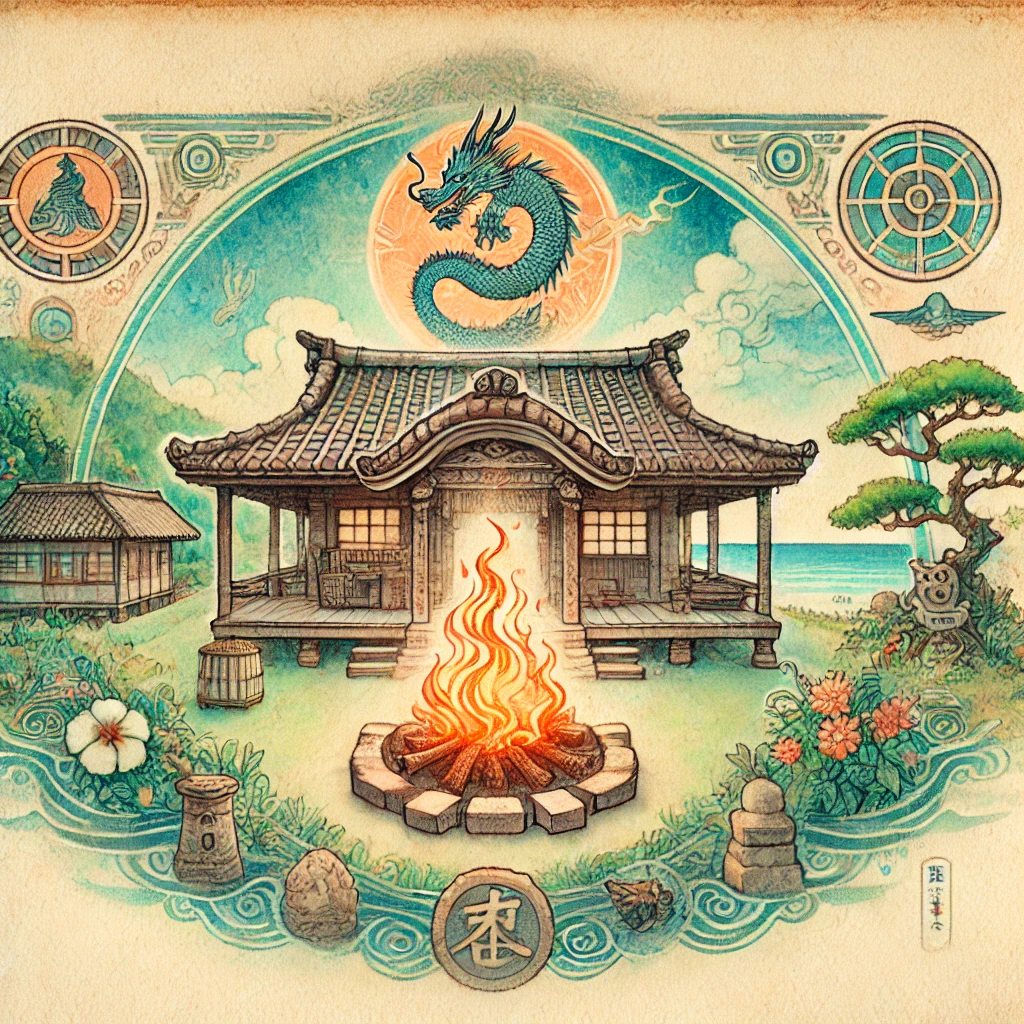
Have you ever heard of the term “Curse of the Fire God”? It is one of the terrifying traditions that has been passed down in Okinawa for generations. According to legend, disrespectful actions or blasphemy towards the Fire God can bring about various calamities, such as illness, misfortune, and fires.
However, behind this seemingly dreadful tradition lies a profound lesson that resonates with modern society. The Curse of the Fire God reflects the Okinawan people’s views on nature, the world, and their values, teaching us the importance of family and community bonds. It also suggests the significance of harmonizing traditional beliefs with contemporary society.
In this article, we will delve into the truth behind the “Curse of the Fire God” and explore how this legend influences Okinawan culture and the spiritual world. Additionally, we will discuss the lessons to be learned from the curse and the relevance of traditions in modern society.
Through Okinawa’s mystical folklore, we may gain insight from the wisdom of our ancestors and reconsider the challenges of contemporary society. What questions does the ancient “Curse of the Fire God” pose to those of us living in the present? Please read this article and join us in contemplating these questions.
- What is the Curse of the Fire God?
- Legends and Incidents Related to the Curse of the Fire God
- Why Okinawans Fear the Fire God’s Curse
- Lessons Learned from the Curse of the Fire God
- Research and Future Prospects on the Curse of the Fire God
- Conclusion
- Q&A
- Conclusion
What is the Curse of the Fire God?
Overview of the Fire God
Origin and History of the Fire God
The Fire God plays a significant role in Okinawa’s traditional belief system. Its origin dates back to the time when Okinawans first began using fire. Fire was essential for daily life, including cooking, heating, and lighting. As a result, the Fire God was worshipped as the deity governing fire. Over the centuries, the Fire God has been revered as a protector of household peace and safety.
Role and Importance of the Fire God
The Fire God is believed to protect household peace and safety. Okinawans think the Fire God resides in places where fire is used, such as the hearth and the hinpun. By honoring the Fire God, they believe their family’s health and fortune will be safeguarded. The Fire God is also said to have the power to maintain harmony within family relationships. For Okinawans, respecting the Fire God is a crucial practice for ensuring family happiness.
Characteristics of the Curse of the Fire God
Causes of the Curse
The Curse of the Fire God is said to be triggered by disrespectful actions or blasphemy towards the Fire God. For example, dirtying the hearth or the hinpun, where the Fire God resides, or treating fire carelessly, are considered acts that provoke the Fire God’s wrath. Offering salt to the Fire God or sleeping with feet pointed towards the Fire God are also believed to cause the curse. Okinawans avoid these actions to protect themselves from the Fire God’s curse.
Symptoms and Effects of the Curse
The Curse of the Fire God can manifest in various forms. Illnesses, injuries, a series of unfortunate events, and fires are common symptoms attributed to the curse. Families afflicted by the curse may experience continuous misfortunes and even a decline in household fortune. The curse is a significant threat to Okinawans, who strive to avoid it by respecting the Fire God and refraining from actions that could provoke the deity’s anger.
Legends and Incidents Related to the Curse of the Fire God
Legends: Folktales About the Fire God
Taboos and Prohibitions Related to the Fire God
In Okinawa, there are numerous taboos and prohibitions regarding the Fire God. For instance, it is said that offering salt to the hearth or the hinpun, where the Fire God resides, is forbidden. While salt is a symbol of purification, it also extinguishes fire, thus disrespecting the Fire God. Sleeping with feet pointed towards the Fire God is another taboo. These prohibitions serve as essential guidelines for Okinawans to respect the Fire God and avoid incurring the deity’s wrath.
Customs and Rituals to Honor the Fire God
Okinawans practice various customs and rituals to honor the Fire God. For example, during New Year, a ritual called “Fitsukanuhi” is performed to express gratitude to the Fire God. This ritual involves cleaning the hearth and offering food to the Fire God, wishing for household safety throughout the year. In daily life, expressing thanks before using fire and keeping the hearth clean are important practices. These customs and rituals demonstrate respect for the Fire God and are essential for maintaining household peace and safety.
Incidents: Real-life Cases of the Fire God’s Curse
Historical Records of the Fire God’s Curse
Numerous incidents attributed to the Fire God’s curse are recorded in Okinawan history. For example, a family that disrespected the Fire God experienced continuous illnesses and fires. There are also stories of households that faced declining fortunes due to neglecting rituals honoring the Fire God. These cases illustrate the fearsome power of the Fire God and have reinforced the Okinawan people’s faith in the deity.
Modern Reports of the Fire God’s Curse
Even in modern times, incidents believed to be caused by the Fire God’s curse are reported. Unexplained misfortunes, such as familial discord, illnesses, and accidents, are sometimes attributed to the curse. These incidents keep the belief in the Fire God’s power alive among some people. However, there are also efforts to explain the curse scientifically. The discussion about the Fire God’s curse continues, balancing traditional beliefs and modern rationality.
Why Okinawans Fear the Fire God’s Curse
The Position of the Fire God in Okinawa’s Spiritual World
The Role of the Fire God in Okinawa’s Traditional Belief System
The Fire God holds a significant position in Okinawa’s traditional belief system, acting as a guardian of household peace and safety, deeply intertwined with daily life. Additionally, the Fire God is believed to have close connections with other deities and ancestral spirits. Honoring the Fire God is seen as maintaining not only household tranquility but also the connection with ancestors. Thus, the Fire God is an indispensable entity in Okinawa’s spiritual world.
Relationships with Other Deities and Spiritual Entities
The Fire God is believed to work in harmony with other deities and spiritual entities in Okinawa. For instance, the Fire God is said to cooperate with the house guardian deity “Hinkan” to protect the household. During “Ukui,” the event of welcoming ancestral spirits, the Fire God is believed to guide the spirits. In this way, the Fire God is seen as watching over people’s lives in cooperation with other spiritual beings.
Impact of the Fire God’s Curse
Impact on Individuals and Households
The Fire God’s curse is believed to have severe impacts on individuals and households, threatening health and household peace with illness, injury, and a series of unfortunate events. It is also said to lead to a decline in household fortune, causing economic hardship and social status loss. Thus, the curse is seen as a terrifying force that can significantly affect individuals and households.
Impact on Communities and Society
The Fire God’s curse is thought to impact communities and society, isolating or discriminating against affected households. The spread of the curse can cause community-wide anxiety, and conflicts between traditional beliefs and modern values may arise. Therefore, the Fire God’s curse is a complex phenomenon with both individual and social implications.
Lessons Learned from the Curse of the Fire God
Relationship Between Traditional Beliefs and Modern Society
Inheritance and Adaptation of Traditional Beliefs
The legend of the Fire God’s curse continues to influence Okinawan life in modern society. Inheriting traditional beliefs is essential for preserving and passing down Okinawan culture and spirituality. However, it can be challenging to accept these beliefs in a modern context where scientific and rational thinking is prevalent. The challenge lies in adapting traditional beliefs to contemporary life. The discussions surrounding the Fire God’s curse provide important insights into achieving harmony between tradition and modernity.
The Importance of Traditional Values in Modern Society
One lesson from the Fire God’s curse is the importance of traditional values in modern society. Respecting the Fire God reflects Okinawa’s traditional values of cherishing family and community connections. While modern society often emphasizes individualism and rationalism, traditional values remain crucial. The Fire God’s curse reminds us of the importance of family and community bonds. Incorporating traditional values into modern life can lead to richer relationships and a more harmonious society.
The Importance of Understanding Okinawan Culture
Learning About Okinawan Spirituality Through the Fire God’s Curse
The Fire God’s curse is a key to understanding Okinawan spirituality. Belief in the Fire God reflects Okinawans’ views on nature, the world, and values. For instance, respecting the Fire God shows reverence for the forces of nature and a belief in the unseen world. Fearing the Fire God’s curse also reflects the idea that human actions influence nature and the gods. Through the Fire God’s curse, we can delve into the depths of Okinawan spirituality.
Promoting Respect for Diversity and Coexistence Through Cultural Understanding
Understanding Okinawan culture is vital for promoting respect for diversity and coexistence. Traditional beliefs like the Fire God’s curse showcase the uniqueness of Okinawan culture. Recognizing and respecting different cultures is essential for diversity and coexistence. Additionally, understanding Okinawan culture helps relativize our own culture and gain new perspectives. By learning from
the Fire God’s curse, we can respect cultural diversity and build a richer society.
Research and Future Prospects on the Curse of the Fire God
Academic Perspectives on the Curse of the Fire God
Current Research in Anthropology and Folklore Studies
The Curse of the Fire God is a prominent research theme in the fields of anthropology and folklore studies. Researchers have collected and analyzed various legends and cases related to the curse. Studies have also explored the connection between the curse and Okinawan social structures and culture. However, there are still many aspects of the Curse of the Fire God that remain unclear, necessitating further research. Key research topics for the future include the role of the curse in modern society and the methods for preserving traditional beliefs.
The Need for an Interdisciplinary Approach
To gain a deeper understanding of the Curse of the Fire God, an interdisciplinary approach is essential. Combining insights from anthropology, folklore studies, religious studies, psychology, and sociology can provide a more comprehensive perspective on the curse. Collaboration with the natural sciences is also desirable to study natural phenomena and physiological reactions associated with the curse. An interdisciplinary approach can help uncover the essence of the Curse of the Fire God and clarify its significance in contemporary society.
Efforts to Preserve and Pass Down the Tradition of the Curse of the Fire God
Traditional Activities in Local Communities
Local communities play a crucial role in preserving and passing down the tradition of the Curse of the Fire God. Elders and knowledgeable individuals should lead efforts to convey their knowledge and experiences related to the curse to younger generations. Incorporating rituals that honor the Fire God into local festivals and events can also effectively preserve the tradition. By working together, local communities can protect the tradition of the Curse of the Fire God and pass it on to future generations.
Education and Awareness of Okinawan Culture in Educational Institutions
Educational institutions also play an essential role in preserving the tradition of the Curse of the Fire God. Integrating lessons on Okinawan traditional culture and beliefs into school curricula is important. Teaching about the Curse of the Fire God, including its significance and historical background, can deepen students’ understanding. Higher education institutions, such as universities, should promote research on Okinawan culture and disseminate their findings to the public. By collaborating with local communities, educational institutions can help preserve Okinawan traditions, including the Curse of the Fire God.
Conclusion
The Impact of the Curse of the Fire God on Okinawan Culture and Spirituality
The Curse of the Fire God significantly influences Okinawan culture and spirituality. Faith in the Fire God reflects the Okinawan people’s views on nature, the world, and their values, deeply intertwined with daily life and human relationships. Through the curse, one can gain insight into the depths of Okinawan spirituality and understand its uniqueness. The curse also emphasizes the importance of family and community bonds, making it an indispensable element in understanding Okinawan culture and spirituality.
The Importance of Harmonizing Traditional Beliefs with Modern Society
Discussions around the Curse of the Fire God provide important insights into achieving harmony between traditional beliefs and modern society. While preserving traditional beliefs is crucial for maintaining Okinawan culture and spirituality, adapting them to contemporary society is also necessary. Balancing scientific thinking and rational judgment with traditional values is a challenge. The lessons learned from the Curse of the Fire God hold significant meaning in striving for harmony between tradition and modernity, leading to richer human relationships and a better society.
The Significance of Understanding Okinawan Culture and Respecting Diversity
The Curse of the Fire God highlights the importance of understanding Okinawan culture and respecting diversity. Recognizing and appreciating different cultures is essential for respecting diversity and coexisting with others. Understanding Okinawan culture also allows for the relativization of one’s own culture and gaining new perspectives. Learning from the Curse of the Fire God helps us respect cultural diversity and build a richer society. Exploring Okinawan culture and spirituality and applying their significance to modern society is a task that lies ahead of us.
Q&A
What causes the Curse of the Fire God?
The main causes are disrespectful actions or blasphemy towards the Fire God. Examples include dirtying the hearth or the hinpun, treating fire carelessly, offering salt to the Fire God, or sleeping with feet pointed towards the Fire God.
What impact does the Curse of the Fire God have on individuals and households?
The curse threatens personal health and household peace, causing illnesses, injuries, and a series of unfortunate events. It is also said to lead to a decline in household fortune, resulting in economic hardship and social status loss.
What efforts are needed to preserve and pass down the tradition of the Curse of the Fire God?
Key efforts include traditional activities in local communities and education and awareness of Okinawan culture in educational institutions. Elders and knowledgeable individuals should convey their knowledge and experiences to younger generations, and schools should integrate lessons on Okinawan traditional culture and beliefs.
What impact does the Curse of the Fire God have on Okinawan culture and spirituality?
Faith in the Fire God reflects the Okinawan people’s views on nature, the world, and their values, deeply intertwined with daily life and human relationships. The curse helps understand Okinawan spirituality and emphasizes the importance of family and community bonds.
What is the significance of understanding the Curse of the Fire God?
Understanding the curse offers a valuable opportunity to explore the essence of Okinawan culture and spirituality and consider the significance of tradition in modern society. This mystical phenomenon bridges the wisdom of the ancestors and contemporary challenges, helping build a richer future.
Conclusion
The “Curse of the Fire God” plays a crucial role in Okinawa’s traditional belief system. The Fire God is seen as a guardian of household peace and safety, and its curse is believed to be triggered by disrespectful actions or blasphemy. Symptoms of the curse include illnesses, misfortune, and fires, significantly impacting individuals and households.
The reason Okinawans fear the curse lies in the Fire God’s position in their spiritual world. The Fire God is closely connected with other deities and ancestral spirits and deeply involved in daily life. The curse’s impact extends beyond individuals and households to communities and society.
Lessons learned from the curse highlight the importance of harmonizing traditional beliefs with modern society. Applying traditional values to contemporary life can lead to richer human relationships and a better society. Understanding Okinawan spirituality through the curse also promotes respect for diversity and coexistence.
Efforts to preserve and pass down the tradition include traditional activities in local communities and education and awareness of Okinawan culture in educational institutions. An interdisciplinary research approach is also essential for uncovering the essence of the curse.
Understanding the Curse of the Fire God offers a valuable opportunity to explore the essence of Okinawan culture and spirituality and consider the significance of tradition in modern society. This mystical phenomenon bridges the wisdom of the ancestors and contemporary challenges, helping build a richer future.


コメント