
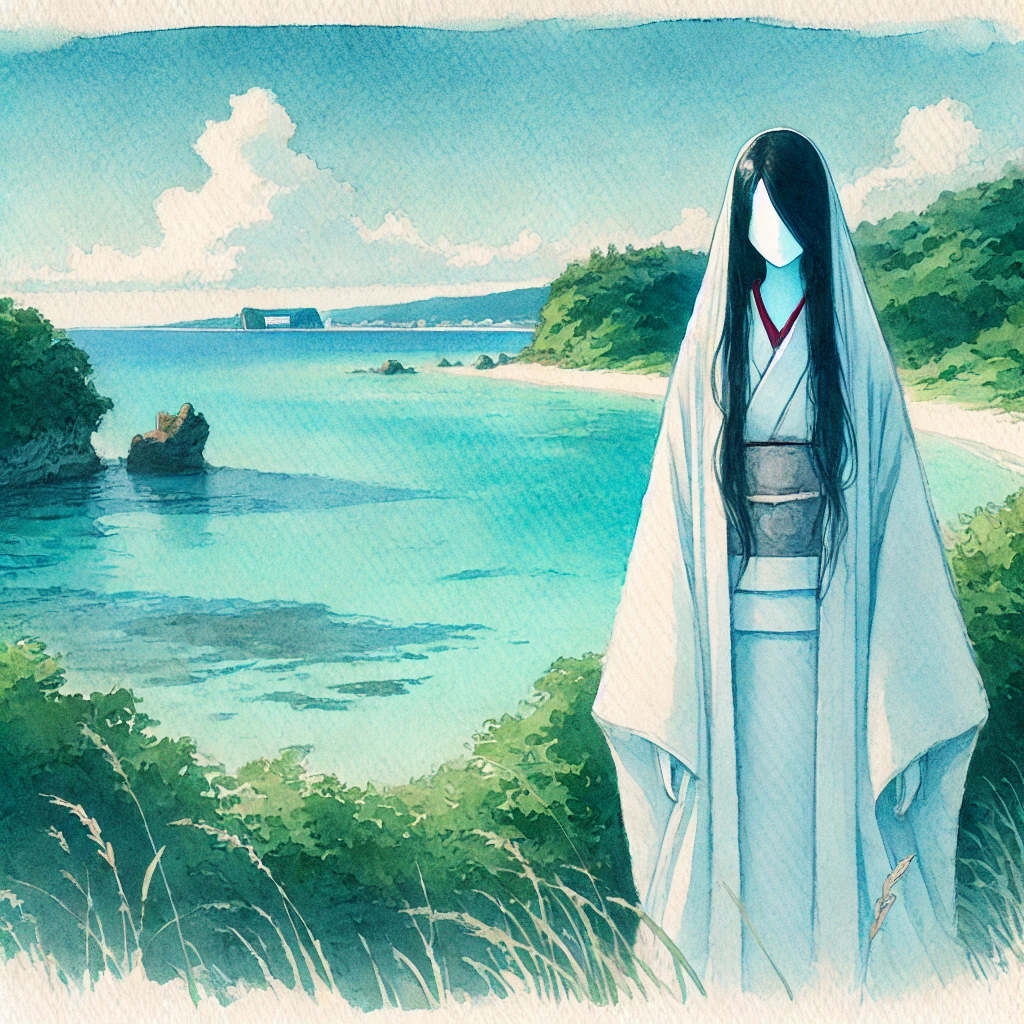
In the dark nights of Okinawa, a woman dressed in a pure white kimono appears. Her name is “Chara-yo” (White Spirit). This eerie figure is said to frighten people and bring misfortune. This yokai is an indispensable part of Okinawa’s folklore.
However, the legend of Chara-yo is more than just a ghost story. It encapsulates Okinawa’s unique worldview, including its perspectives on nature, life and death, and community spirit. Chara-yo is a symbol of Okinawa’s spirituality.
In modern society, reexamining these traditions holds significant meaning for us. The idea of coexistence with nature embedded in the Chara-yo story can offer insights as we face environmental issues. Additionally, the emphasis on family bonds and community norms may provide a counterpoint to the often-isolated nature of contemporary life.
Okinawan folklore offers a new perspective that bridges tradition and modernity. It encourages us to reflect on our own lives. Learning about Chara-yo is the first step in this journey.
This blog will explore the spiritual world of Okinawa hidden in the legend of Chara-yo. What questions does this white-clad yokai pose to us? Let’s delve into the depth of Okinawan folklore and its modern significance together.
- Introduction
- About Chara-yo
- The Etymology and Meaning of Chara-yo
- Characteristics of Chara-yo
- Eerie Atmosphere
- Appearance Locations and Times of Chara-yo
- Remote Places</ Chara-yo is said to appear in remote places. These locations include mountain paths, deep forests, or deserted beaches—places with little human presence. This suggests that Chara-yo belongs to a spiritual realm separate from the human world. Additionally, remote locations are non-ordinary spaces, indicating that Chara-yo disrupts everyday order by appearing in such settings.
- Nighttime, Especially Midnight
- Legends and Incidents Related to Chara-yo
- Why Okinawans Fear Chara-yo
- Okinawa’s Spiritual World Through Chara-yo
- Conclusion
- Q&A
- Summary
Introduction
Interest in Okinawan Folklore
Fascination with Okinawa’s Uniqueness
Okinawa is known for its unique culture and history within Japan. This uniqueness is reflected in every aspect of life, including language, music, festivals, and beliefs. I have been captivated by this uniqueness and have become interested in exploring the deep folkloric worldview it represents. Okinawan folklore is not merely a relic of the past; it is a living wisdom that continues to thrive in the islands, offering much for us to learn. This time, I would like to delve deeply into the particularly intriguing figure of “Chara-yo” (White Spirit).
The Importance of Folklore
Folklore is the study of the lifestyles, customs, and beliefs of people living in a particular region. It reveals the wisdom and values cultivated over many years by the people of that land and provides valuable insights for those of us living in modern society. In today’s globalized world, understanding and respecting regional uniqueness is extremely important. Studying Okinawan folklore allows us to understand the mindset of the Okinawan people and prompts us to reflect on our own way of life.
Why I Researched Chara-yo
Familiarity with Chara-yo
Among Okinawan folklore, “Chara-yo” (White Spirit) is particularly well-known. Chara-yo is a type of yokai that has been passed down in various parts of Okinawa, feared by many for its eerie appearance and behavior. However, Chara-yo is also an essential figure for understanding the spiritual world of the Okinawan people. The legend of Chara-yo reflects how Okinawans perceive nature, life and death, and community norms.
Gateway to Okinawa’s Spiritual World
Chara-yo can be seen as a gateway to Okinawa’s spiritual world. By unraveling the legend of Chara-yo, we can touch upon the values and worldview cherished by the Okinawan people. For instance, the places and times Chara-yo is said to appear tell us how Okinawans view nature. Stories of those haunted by Chara-yo reveal the importance of community norms in Okinawan society. Exploring Okinawa’s spiritual world through Chara-yo offers an opportunity to question our own mindset.
About Chara-yo
The Etymology and Meaning of Chara-yo
The Origin of “Chara”
The term “Chara-yo” is said to derive from the Okinawan word for “white,” which is “Shira.” In Okinawan dialect, “Shi” often changes to “Chi,” thus “Shira” became “Chara.” This word “Chara” is a key term that evokes the image of Chara-yo’s white kimono. In Okinawan folklore, colors are not just visual elements but often carry symbolic meanings. White can represent the spirits of the dead or sacred beings, and Chara-yo’s white kimono suggests she is an entity distinct from ordinary humans.
The Meaning of “Yo”
The “Yo” in “Chara-yo” means “yokai” or “ghost.” In Okinawan folklore, “Yo” refers to spiritual beings that exist outside the human world. Thus, Chara-yo means a white yokai or white ghost. The term “Yo” expresses the awe and respect Okinawans have for the invisible world. Chara-yo embodies the spiritual world of the Okinawan people.
Characteristics of Chara-yo
A Woman in a White Kimono
The most striking feature of Chara-yo is her appearance as a woman in a pure white kimono. This white kimono not only evokes the spirits of the dead but also symbolizes purity and sanctity. The fact that she appears as a woman is also significant. In Okinawan folklore, women are often seen as possessing spiritual power, suggesting that Chara-yo’s female form indicates she holds special powers.
Long Black Hair
Another characteristic of Chara-yo is her long black hair. Black hair is an important element in Japanese aesthetics, often symbolizing a mysterious power. Chara-yo’s long black hair might symbolize her supernatural abilities. Additionally, long hair is a traditional symbol of female beauty. Chara-yo’s black hair indicates that she embodies both beauty and terror.
Eerie Atmosphere
Chara-yo is said to have an incredibly eerie presence. Clad in a white kimono with long black hair, she appears like a ghost floating in the dark. She is also said to appear as a harbinger of ill fortune, her very presence invoking anxiety and fear. This eerie atmosphere underscores that Chara-yo is a spiritual being distinct from ordinary humans.
Appearance Locations and Times of Chara-yo
Remote Places</ Chara-yo is said to appear in remote places. These locations include mountain paths, deep forests, or deserted beaches—places with little human presence. This suggests that Chara-yo belongs to a spiritual realm separate from the human world. Additionally, remote locations are non-ordinary spaces, indicating that Chara-yo disrupts everyday order by appearing in such settings.
Nighttime, Especially Midnight
Chara-yo is known to appear at night, especially at midnight. The sight of a white-clad figure emerging in the darkness is both fantastical and eerie. Midnight is a time when human activity is minimal, and spiritual beings are believed to be most active. Chara-yo’s nighttime appearances suggest she operates on a different temporal flow than the human world. Nighttime also carries a mystical atmosphere distinct from the daytime. Chara-yo’s presence at night highlights her status as a special entity separate from the ordinary world.
Legends and Incidents Related to Chara-yo
Ancient Legends
Chara-yo Brings Misfortune
Chara-yo is a yokai that has been spoken of throughout Okinawa for generations. Many of these legends describe Chara-yo as a bringer of misfortune. For instance, it is said that those who see Chara-yo fall ill or their families encounter bad luck. There are also stories of people who met Chara-yo and subsequently had accidents or disappeared. These legends suggest that Chara-yo is not just a ghost but a being that has the power to influence people’s destinies. Chara-yo is a fearsome presence that brings chaos and anxiety to the human world.
Stories of People Haunted by Chara-yo
Among the legends about Chara-yo, there are also stories of people haunted by her. For example, a person who encountered Chara-yo on a nighttime path reported seeing her lurking around their house every night thereafter. Another story tells of someone who gradually became mentally unstable after being haunted by Chara-yo, eventually going missing. These tales indicate that Chara-yo profoundly impacts people’s minds, not just causing physical harm but also eroding their mental well-being.
Modern Sightings
Encounters on the Roadside at Night
Chara-yo is not only a figure of ancient legends; sightings continue into the modern day. Many reports involve encounters with Chara-yo on the roadside at night. Witnesses describe seeing a woman in a pure white kimono appearing to float in the darkness, exuding an eerie presence. Many report feeling intense fear at the sight of her, and some say she vanished when they tried to approach. These modern sightings demonstrate that Chara-yo remains a threat to people today.
Inexplicable Experiences
Many modern accounts of Chara-yo involve inexplicable experiences. One person reported that Chara-yo suddenly appeared in the back seat of their car while driving late at night. Another spoke of seeing a woman in a white kimono standing in the corner of their hotel room despite being alone. These experiences suggest that Chara-yo can manifest beyond physical constraints, hinting at her supernatural powers that transcend human understanding.
Incidents Related to Chara-yo
Cases of Mental Instability
Some incidents related to Chara-yo involve individuals becoming mentally unstable after encounters with her. One woman reported experiencing hallucinations and delusions after meeting Chara-yo on a nighttime path. There is also a story of a man who, haunted by Chara-yo, gradually lost the ability to distinguish reality from fantasy, eventually being admitted to a mental hospital. These cases illustrate that Chara-yo can have severe impacts on people’s mental health, instilling fear and confusion deep within their minds.
Connections to Missing Person Cases
The most mysterious incidents involving Chara-yo are her connections to missing person cases. In Okinawa, there have been several reports of people disappearing after encountering Chara-yo. One young woman, who saw Chara-yo while playing on the beach with friends, was never seen again. Another story involves a man who vanished after meeting Chara-yo on a nighttime path. These incidents foster the fear that Chara-yo may be luring people to another world, leaving her true purpose shrouded in mystery.
Why Okinawans Fear Chara-yo
Fear of the Unknown
Unexplainable Phenomena
Humans tend to fear phenomena beyond their understanding. Chara-yo evokes strong fear because her appearance and actions defy common sense. The sight of a woman in a pure white kimono suddenly appearing and disappearing on a nighttime path is surreal and incomprehensible. Furthermore, stories of inexplicable experiences and mental instability following encounters with Chara-yo suggest she possesses powers beyond human comprehension. Fear of the unknown is an instinctive reaction, and Chara-yo epitomizes this terror.
Awe of Supernatural Beings
Chara-yo is feared because she is believed to be a supernatural being beyond human knowledge. She is thought to possess powers that transcend the laws of the human world, such as appearing through physical barriers and vanishing at will. Stories of people meeting misfortune after encountering Chara-yo indicate she has the power to influence their fate. Humans naturally fear invisible forces beyond their control, and Chara-yo embodies such a presence.
Beliefs About Death and Spirits
Fear of the Spirits of the Dead
Okinawans’ fear of Chara-yo stems from their beliefs about the spirits of the dead. In Okinawa, the spirits of the deceased are believed to influence the living world, and this power can be terrifying. Chara-yo, dressed in a white kimono, evokes the image of a spirit of the dead. Her appearance in remote places suggests she belongs to a spiritual world separate from the living. For Okinawans, Chara-yo may personify the dread of the dead’s spirits, manifesting their fear of the deceased.
Reverence for Spiritual Powers
Okinawans hold a deep reverence for spiritual powers, believing that invisible forces can affect the human world. They respect these powers, acknowledging their influence. Chara-yo is seen as one of these spiritual entities. The tales of misfortune following encounters with Chara-yo suggest she has the power to control people’s destinies. Additionally, stories of mental instability after meeting Chara-yo indicate she profoundly affects people’s minds. Okinawans’ fear of Chara-yo is rooted in their reverence for her spiritual power.
Vigilance Against Deviation from Community Norms
Emphasis on Traditional Lifestyles
Okinawans place great importance on traditional lifestyles and community norms. They maintain community cohesion by adhering to ancestral customs and values. Chara-yo represents a deviation from these traditional ways of life. Stories of Chara-yo appearing at night highlight her as a figure outside the community norms that emphasize daytime activities. Additionally, tales of Chara-yo deceiving people suggest she disrupts community order. Okinawans fear Chara-yo because she threatens their traditional lifestyle.
Chara-yo as a Warning Against Deviation
Chara-yo serves as a warning against deviating from community norms. Okinawans learn through her existence that straying from these norms can be dangerous. For example, walking alone at night is avoided due to the risk of encountering Chara-yo. Stories of misfortune following encounters with Chara-yo demonstrate the frightening consequences of such behavior. Chara-yo emphasizes the importance of adhering to community norms, and Okinawans fear her as a reminder of this.
Okinawa’s Spiritual World Through Chara-yo
The Relationship Between Nature and Humans
The Philosophy of Nature Worship
The people of Okinawa have long worshiped nature as something sacred. They believed that deities resided within nature and have emphasized living in harmony with it. The legend of Chara-yo heavily reflects this philosophy of nature worship. Chara-yo is said to appear in natural settings such as mountain paths, forests, and beaches. This suggests that Chara-yo is a part of nature and embodies its mysteries. Furthermore, stories of Chara-yo bringing harm to people include a lesson about not underestimating nature’s power. For the people of Okinawa, Chara-yo may symbolize the mystery and power of nature.
Coexistence with Nature
The people of Okinawa have valued coexistence with nature, showing gratitude for its blessings and striving to maintain harmony with it. The legend of Chara-yo embodies this idea of coexistence with nature. Chara-yo is considered a being that warns against destroying nature for human convenience or disrupting its order. For example, walking through nature at night is seen as an act that disrupts its order, increasing the risk of encountering Chara-yo. Additionally, the misfortunes experienced by those who meet Chara-yo can be interpreted as the consequences of failing to maintain harmony with nature. Chara-yo emphasizes the importance of coexistence with nature.
Ancestor Worship and Family Bonds
Respect for Ancestors
The people of Okinawa have always placed great importance on respecting and honoring their ancestors. They believe that ancestral spirits watch over the living world, offering gratitude and prayers to them. The legend of Chara-yo reflects this philosophy of ancestor worship. Chara-yo is considered to evoke the spirits of ancestors. The image of Chara-yo in a pure white kimono may symbolize these ancestral spirits. Furthermore, stories of Chara-yo warning people suggest that ancestors are watching over and guiding their descendants. For the people of Okinawa, Chara-yo serves as a reminder of the presence of ancestral spirits.
The Strength of Family Bonds
The people of Okinawa highly value family bonds, prioritizing protecting and helping one another to strengthen these ties. The legend of Chara-yo reflects this emphasis on family bonds. Chara-yo is seen as a threat to family unity. For instance, those possessed by Chara-yo are said to become isolated from their families. Stories of misfortune befalling those who encounter Chara-yo can be interpreted as the result of weakened family bonds. Chara-yo paradoxically highlights the importance of maintaining strong family ties, emphasizing the need to protect these bonds.
The Blurred Boundary Between This World and the Other World
Interaction Between the Living World and the Other World
The people of Okinawa have long believed that the boundary between this world and the other world is ambiguous. They think there are places where these worlds intersect, where one can encounter spiritual beings. The legend of Chara-yo reflects this belief. Chara-yo is considered to appear at the boundary between the living world and the other world. Chara-yo’s appearances in remote places or at night suggest she exists at this boundary. Stories of people having inexplicable experiences after encountering Chara-yo can be interpreted as events occurring where the living world and the other world intersect. Chara-yo embodies the ambiguity of this boundary.
Coexistence with Spiritual Beings
The people of Okinawa have accepted coexistence with spiritual beings. They believe that invisible entities are around them and have tried to interact with these beings harmoniously. The legend of Chara-yo reflects this idea of coexistence with spiritual beings. Chara-yo is considered a spiritual being different from humans. People both fear and accept Chara-yo, striving to coexist with her. For example, one should never act violently towards Chara-yo upon encountering her. Additionally, offerings are made to Chara-yo to maintain a harmonious relationship. Chara-yo demonstrates the importance of coexisting with spiritual beings, teaching Okinawans how to interact with the invisible world.
Conclusion
The Significance of the Legend of Chara-yo
A Symbol of Okinawa’s Spirituality
The legend of Chara-yo is an essential cultural heritage that symbolizes the spirituality of the Okinawan people. Stories about Chara-yo are not just ghost stories or urban legends; they provide valuable insights into how Okinawans perceive nature, life and death, and community. The legend of Chara-yo condenses Okinawa’s unique worldview, including nature worship, ancestor worship, and the interaction between the living world and the other world. Moreover, the fear of the unknown and the vigilance against deviation from norms embodied by Chara-yo reflect the fundamental emotions of the Okinawan people. Understanding the legend of Chara-yo brings us closer to the essence of Okinawa’s spiritual culture.
The Need for Preservation and Reinterpretation of Traditions
The legend of Chara-yo has been passed down through generations in Okinawa. However, in modern society, traditional values and customs are gradually being lost. The legend of Chara-yo is no exception. Urbanization and globalization have led to a younger generation that is unfamiliar with Chara-yo’s story. In this context, it is essential to preserve and reinterpret the legend of Chara-yo for a new era. It is important to understand the wisdom and lessons of our ancestors within these stories rather than simply seeing them as frightening tales. Additionally, linking the legend of Chara-yo to modern societal issues and reinterpreting it is also necessary. Through preservation and reinterpretation, the legend of Chara-yo can provide new insights for us today.
The Importance of Okinawan Folklore Studies
Understanding Okinawa’s Unique Worldview
The study of Okinawan folklore is indispensable for understanding Okinawa’s unique worldview. Okinawa is a region with a history and culture distinct from mainland Japan, rooted in its unique values and customs. The legend of Chara-yo is a crucial clue for understanding this worldview. The stories of Chara-yo reflect the perspectives on nature and human relationships, ancestor worship, and the interaction between the living world and the other world that Okinawans have cherished. By carefully analyzing these elements, we can delve into the depth of Okinawan spiritual culture. The study of Okinawan folklore helps us understand the mindset of the Okinawan people and approach the essence of Okinawan culture.
The Fusion of Tradition and New Perspectives
The study of Okinawan folklore requires the fusion of tradition and new perspectives. Historically, Okinawan folklore studies have focused on recording and preserving traditional customs and beliefs. However, in modern society, it is necessary to reinterpret and utilize these traditions for a new era. Regarding the legend of Chara-yo, it is essential not only to record it as a story of the past but also to explore its relevance to contemporary society. For example, the philosophy of coexistence with nature embedded in the story of Chara-yo provides insights into modern environmental issues. Additionally, the community norms embodied by Chara-yo offer valuable perspectives for thinking about the nature of communities in contemporary society. The study of Okinawan folklore connects tradition and modernity, incorporating new perspectives to develop into a richer academic field.
In this way, the legend of Chara-yo is an essential cultural heritage symbolizing Okinawa’s spirituality and holds significant value as a subject of Okinawan folklore studies. Through the story of Chara-yo, we can touch upon the mindset and worldview of the Okinawan people. Moreover, by applying the legend of Chara-yo to modern life, we gain an opportunity to reflect on our way of living. The study of Okinawan folklore connects tradition and modernity, approaching the essence of Okinawan culture. Learning about Chara-yo is the first step in this journey.
Q&A
What kind of entity is Chara-yo?
Chara-yo is a type of yokai that appears in Okinawan folklore, depicted as a woman dressed in a pure white kimono. She is said to appear in remote locations at night and is considered an omen of misfortune.
What is the significance of the Chara-yo legend?
The legend of Chara-yo reflects Okinawa’s unique worldview, including perspectives on nature, life and death, and community spirit. Chara-yo symbolizes the spirituality of Okinawa and is an important cultural heritage.
What relevance does the Chara-yo legend have in modern society?
In modern society, it is important to reinterpret and utilize the Chara-yo legend for the new era. For example, the idea of coexistence with nature embedded in Chara-yo’s story provides valuable insights into contemporary environmental issues.
Why is the study of Okinawan folklore important?
The study of Okinawan folklore is crucial for understanding Okinawa’s unique worldview. By recording traditional customs and beliefs and exploring their relevance to modern society, we can delve into the essence of Okinawan culture.
What is the significance of learning about Chara-yo?
Learning about Chara-yo allows us to connect with Okinawan spiritual culture and reflect on our own way of life. The legend of Chara-yo offers lessons on the importance of coexistence with nature and family bonds, which are relevant to modern society.
Summary
In this blog, we provided a detailed explanation of the yokai “Chara-yo” (White Spirit) from Okinawan folklore. Depicted as a woman in a pure white kimono, Chara-yo is both feared and revered by the people of Okinawa. Her legend richly reflects Okinawa’s unique worldview, including nature worship, ancestor worship, and the interaction between the living world and the other world.
We emphasized that the legend of Chara-yo is not merely a ghost story but an important cultural heritage symbolizing Okinawan spirituality. In modern society, it is necessary to preserve and reinterpret such legends for the new era.
Furthermore, we discussed the importance of Okinawan folklore studies, advocating for new perspectives that bridge tradition and modernity. Learning about Chara-yo is the first step towards understanding the essence of Okinawan culture and reflecting on our own way of life.
Through this blog, we hope readers gain an understanding of Chara-yo and develop a deeper interest in Okinawa’s spiritual world. Okinawan folklore is a profound field of study that offers many insights for those of us living in the modern world.


コメント