
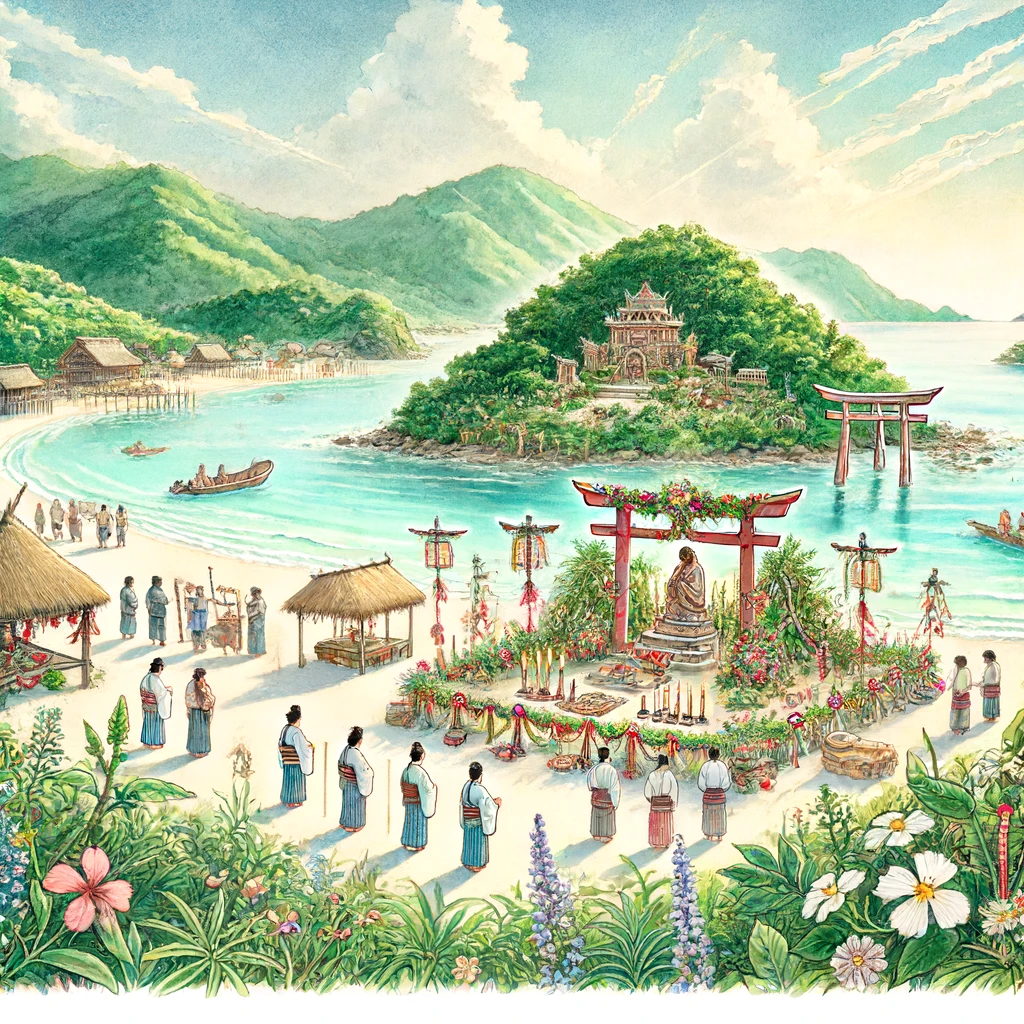
Do you know about Izaiho, the mysterious traditional event of Okinawa? Held on the 16th day of the first month in the lunar calendar, this festival is an essential ritual for Okinawans to give thanks and prayers to the gods, wishing for a bountiful harvest and good health.
Izaiho is not just a festival; it is a spiritual practice that deeply embodies the reverence for gods and nature, ancestral worship, and the importance of tradition rooted in the hearts of the Okinawan people. It includes sacred rituals performed by priestesses, participation from people of all generations, and tales of the gods’ power. Izaiho encapsulates the rich spiritual world of Okinawa.
However, in modern society, this invaluable tradition faces numerous challenges. Issues like a shortage of personnel and a decline in interest among the younger generation threaten the continuation of Izaiho.
Nevertheless, Izaiho remains a vital symbol of Okinawan identity, connecting people at a profound level. Preserving and passing this festival on to the next generation is perhaps a responsibility for each of us.
In this blog, we will delve deeply into the details of the Izaiho ritual, its spiritual significance, and the challenges and possibilities it faces in contemporary society. Join us as we step into the world of Izaiho, imbued with the soul of Okinawa. By touching upon the ancient wisdom and thoughts passed down through generations, our hearts are sure to be enriched.
Let’s open the mystical doors of the island of gods, Okinawa. We invite you to the story of the bonds of life spun by Izaiho.
- What is Izaiho (Sixteenth-Day Festival)?
- The Rituals of Izaiho
- Scary Stories and Legends of Izaiho
- The Spiritual World of Okinawans and Izaiho
- The Contemporary Significance and Challenges of Izaiho
- In Conclusion
- Q&A
- Summary
What is Izaiho (Sixteenth-Day Festival)?
Izaiho (Sixteenth-Day Festival) is a traditional Okinawan festival held on the 16th day of the first month in the lunar calendar. This important ritual is a cornerstone for the people of Okinawa, with a long history and deep significance. Understanding Izaiho is essential for comprehending Okinawan culture and spirituality. Here, we will explain the origins, purposes, and contemporary significance of Izaiho in detail.
Origins and History
Origins and Legends
The origins of Izaiho trace back to ancient Okinawa. According to legend, Izaiho is the day when the gods visit the human world. On this day, people welcome the gods and offer their gratitude and prayers. There are various theories about the origins of Izaiho, but all tell of the deep connection between gods and people. The legends handed down from ancient times highlight the sacredness and importance of Izaiho.
Historical Evolution
Izaiho has evolved and developed along with Okinawa’s history. The ritual, which has continued since ancient times, has changed in form over the years while preserving its essence. During the Ryukyu Kingdom period, it was also conducted as a royal ceremony, carrying political significance. Since modern times, it has been handed down as a festival centered around the local community, continuing to this day. Understanding the historical evolution of Izaiho allows us to comprehend the shifts in Okinawan culture and society.
Purpose and Significance of the Festival
Gratitude and Prayers to the Gods
The central purpose of Izaiho is to offer gratitude and prayers to the gods. The people of Okinawa feel the presence of the gods in their daily lives and are grateful for their blessings. During Izaiho, special offerings are made to express gratitude to the gods. Prayers are also made for a bountiful harvest, health, and happiness in the coming year. These prayers form the core of the spiritual essence of the Okinawan people.
Prayers for Bountiful Harvests and Health
In Izaiho, prayers for bountiful harvests and health are especially emphasized. The people of Okinawa have lived primarily agricultural lives. A bountiful harvest is the foundation of life and a blessing from the gods. During Izaiho, prayers are made for the next year’s harvest and for the protection of the gods. Health is an invaluable treasure. In Izaiho, prayers are made for the health of family members and the community, seeking protection from illness and disaster.
Strengthening Community Bonds
Izaiho also plays a role in strengthening community bonds. Preparing and managing the festival involves the cooperation of the entire community. People of all ages work together to support Izaiho. Through this process, community ties are deepened, and a sense of unity is fostered. For Okinawans, Izaiho is an important opportunity to feel a part of the community. It is also a place where traditions are passed down across generations.
The Rituals of Izaiho
The rituals of Izaiho are among the most sacred and significant ceremonies in Okinawan traditional culture. They are a place for interaction between gods and people and a special occasion for offering prayers and gratitude. Here, we will explain the flow and content of Izaiho’s rituals, the tools and offerings used, and the roles of the participants in detail. Understanding the meaning of the rituals allows us to touch upon Okinawan spirituality and worldview.
Flow and Content of the Rituals
Preparation and Purification
The rituals of Izaiho begin with meticulous preparation. Before the festival, the sacred site called Utaki is cleaned and decorated. Participants purify themselves and prepare their minds. This process signifies the transition from the ordinary to the sacred. Purification is an essential element of the sacred rituals. By purifying body and mind, participants prepare to welcome the gods.
Rituals Conducted by Priestesses
The rituals of Izaiho are conducted by priestesses known as Kaminchu. Kaminchu serve as intermediaries between the gods and people, playing an essential role in offering prayers. During the ritual, the Kaminchu invite the gods, present offerings, and perform prayers. The dance and recitations by the Kaminchu are central to the ritual. The sacred role of the Kaminchu is crucial for preserving the traditions of Izaiho and passing them on to the next generation.
Offering of Gifts and Prayers
In the rituals of Izaiho, offerings are made to the gods. These offerings include rice, sake, vegetables, and fruits, symbolizing the blessings of Okinawan nature. These offerings are tokens of gratitude to the gods and prayers for a bountiful harvest and health. Along with the offerings, the Kaminchu perform prayers. The prayers are expressed not only through words but also through dance and gestures. The words and gestures of prayer are vital means of conveying thoughts to the gods.
Tools and Offerings Used
Meaning and Role of Sacred Tools
Various sacred tools are used in the rituals of Izaiho. These include the attire worn by the Kaminchu, the Onbe that decorates the altar, and the bells used in prayers. These tools are not mere decorations; they hold deep meanings. Sacred tools symbolize the presence of the gods and amplify the power of prayers. Understanding the meanings embedded in each tool leads to a deeper understanding of the rituals of Izaiho.
Types and Symbolism of Offerings
The offerings made during the rituals of Izaiho are deeply connected to Okinawan nature. Rice symbolizes fertility, sake represents communication with the gods, and vegetables and fruits signify the blessings of the land. The choice of offerings also reflects the season and locality. These offerings are both hospitality to the gods and expressions of gratitude from the people. Understanding the symbolism of the offerings allows us to feel the deep connection between Okinawans and nature.
Roles of Participants in the Rituals
Selection and Duties of Priestesses
The Kaminchu, who preside over the rituals of Izaiho, are special beings. They are believed to possess the ability to communicate with the gods and play a crucial role in supporting local faith. The selection of Kaminchu involves stringent criteria, requiring innate qualities and years of training. Once chosen, the Kaminchu bear the responsibility of conducting the rituals throughout their lives. The presence of Kaminchu is indispensable for preserving the traditions of Izaiho.
Participation and Cooperation of Local Residents
Izaiho cannot be held without the participation and cooperation of local residents. The preparation and management of the festival involve many people. Everyone, from children to the elderly, plays their part in ensuring the success of Izaiho as a community festival. Participants become part of the festival by watching the rituals and sharing in the prayers. Participation in Izaiho is also an opportunity to deepen one’s sense of belonging to the community.
Intergenerational Transmission of Tradition
Izaiho is a cherished tradition passed down through generations. Knowledge and techniques of the rituals are transmitted from parents to children, and from seniors to juniors. The participation of the younger generation and their assumption of roles are crucial for the transmission of tradition. Elders have the responsibility to pass on their experiences and wisdom, nurturing the next generation. Izaiho deepens intergenerational bonds and connects Okinawan culture to the future.
Scary Stories and Legends of Izaiho
Izaiho, while being a sacred festival, is also accompanied by numerous terrifying stories and mysterious legends. These tales reflect the Okinawan people’s respect and fear of the gods’ power. Here, we introduce some scary stories and legends associated with Izaiho. By learning about the fate of those who broke taboos and the fearsome consequences of divine punishment, one can grasp the sacredness of Izaiho and delve into the profound spiritual world of Okinawa. Moreover, the strange experiences passed down to modern times demonstrate that Izaiho continues to influence the hearts of people.
Stories of Divine Wrath
Punishment for Breaking Taboos
There are numerous taboos associated with Izaiho. It is said that breaking these taboos invokes the wrath of the gods, resulting in terrifying punishments. For example, there is a story of a fisherman who, despite being blessed with a large catch during the festival period, later fell gravely ill. Another legend tells of someone who committed an impure act at a sacred site and consequently brought misfortune upon their entire family. These stories emphasize the importance of taboos. The taboos of Izaiho exist to show respect to the gods and protect people’s lives.
Calamities Brought by Disrespectful Acts
In the rituals of Izaiho, showing respect to the gods is of utmost importance. It is believed that mocking or disrespecting the gods will bring calamity. In one story, someone who laughed during a ritual collapsed on the spot and never got up again. Another legend speaks of a person who stole offerings meant for the gods and later fell ill along with their family. These stories teach the importance of reverence for the gods. When participating in the rituals of Izaiho, one must purify their heart and never forget to show respect to the gods.
The Fate of Those Who Break Taboos
Examples of Illness and Misfortune
Those who break the taboos of Izaiho are often said to suffer from illness and misfortune. One family performed forbidden acts during the festival period, resulting in a series of illnesses and ultimately leading to the family’s dispersal. Another story tells of someone who violated a taboo during the rituals and subsequently failed in business, falling into poverty. These examples highlight the gravity of taboos. The taboos of Izaiho have a direct impact on people’s lives and destinies.
Legends of Divine Punishment Affecting Entire Families
The punishment for breaking the taboos of Izaiho is sometimes said to extend to entire families. One lineage reportedly experienced generations of misfortune due to an ancestor violating a taboo during the rituals. There is also a story of the descendants of someone who defiled a sacred place, all of whom died young. These legends suggest that individual actions can affect the fate of one’s family and descendants. Observing the taboos of Izaiho is not just for oneself but also for the sake of one’s loved ones.
Mysterious Experiences Passed Down to the Present
Supernatural Phenomena During Izaiho
During the rituals of Izaiho, mysterious phenomena sometimes occur. One participant testified that they suddenly heard the voices of the gods during the ritual. Another story tells of a priestess whose figure appeared to shine divinely during the festival. These experiences indicate that Izaiho is not merely a ceremony but a sacred event where gods and people interact. Even in modern times, Izaiho continues to inspire awe and provide mystical experiences to people.
Testimonies of Participants Who Felt Divine Intentions
Some people who participated in the rituals of Izaiho have strongly felt the intentions of the gods. One participant mentioned feeling as if their body was being guided by the gods during the prayers. There are also testimonies of individuals whose life problems were resolved after the rituals. These stories suggest that Izaiho has a profound impact on people’s hearts. For modern individuals, Izaiho is a precious opportunity to interact with the gods and receive guidance.
The Spiritual World of Okinawans and Izaiho
The spiritual world of the Okinawan people is characterized by a deep connection with the gods and nature. Izaiho embodies this unique spirituality. Here, we will explain the Okinawan people’s views on gods, nature, and the spirituality conveyed by Izaiho. The reverence for the gods and the idea of coexistence with nature offer rich insights even for those living in the modern world. Moreover, the ancestor worship and views on life and death reflected in Izaiho form the core of Okinawan culture. Understanding these elements is the first step toward delving into the depths of Okinawa’s spiritual world.
Relationship Between Gods and People
Reverence and Respect for the Gods
For the people of Okinawa, gods are deeply involved in their daily lives. They revere and respect the gods. This pious attitude is clearly manifested in the rituals of Izaiho. People humbly bow their heads before the gods, offering gratitude and prayers. Reverence for the gods purifies people’s hearts and brings moderation to their lives. Izaiho is an important opportunity to embody and pass on the spirit of respect for the gods to the next generation.
Dialogue and Interaction with the Gods
Okinawans place great importance on communicating with the gods. They believe that the gods listen to and respond to their prayers. During the rituals of Izaiho, the priestess listens to the words of the gods and conveys them to the people. Participants also speak to the gods in their hearts, seeking guidance. This dialogue and interaction with the gods bring peace and strength to the people. Izaiho is a valuable occasion to confirm and strengthen the bond with the gods.
Coexistence with and Reverence for Nature
Gratitude and Prayers to Nature Gods
The people of Okinawa regard nature as sacred and worship the nature gods. They find divinity in elements of nature such as the sun, moon, sea, and mountains. During Izaiho, gratitude and prayers are offered to these nature gods. People express their thanks for the blessings of nature and pray for its continued bounty. Worship of the nature gods instills a sense of reverence for nature and promotes harmony with the environment. Izaiho is an important occasion to express gratitude to nature.
Living in Harmony with Nature
Okinawans idealize living in harmony with nature. They value following the natural order and coexisting with nature. Izaiho reflects this philosophy. The festival’s schedule is determined according to the rhythms of nature, and the offerings used represent nature’s blessings. These elements symbolize the harmony between people and nature. Izaiho embodies the philosophy of coexistence with nature, teaching us the correct relationship with the natural world.
The Spirituality Conveyed by Izaiho
Ancestor Worship and the Importance of Lineage
Ancestor worship holds an important position in Okinawa’s spiritual world. People respect the spirits of their ancestors and seek their guidance. During the rituals of Izaiho, ceremonies to honor the spirits of ancestors are performed. Participation in the festival is often done by family units, highlighting the importance of familial bonds. Izaiho embodies the spirit of ancestor worship and offers an opportunity to reaffirm the importance of lineage.
Reflection of Worldview and Views on Life and Death
Izaiho reflects the Okinawan people’s worldview and views on life and death. In Okinawan cosmology, the present world and the spiritual world are continuous. The rituals of Izaiho aim to interact with the gods and the spirits of ancestors based on this worldview. In Okinawan views on life and death, death is seen not as an end but as a new beginning. Through the rituals honoring ancestor spirits, Izaiho expresses this view on life and death. Izaiho embodies the Okinawan worldview and views on life and death, prompting us to reflect on the meaning of life and death.
The Contemporary Significance and Challenges of Izaiho
Izaiho is one of the most important festivals in Okinawan traditional culture. However, the inheritance and preservation of traditional culture face various challenges in modern society. Here, we will consider the contemporary significance of Izaiho and the challenges related to its inheritance and preservation. Teaching the tradition to young people and preserving records and materials are key to passing Izaiho on to the future. Additionally, attention must be paid to the role of Izaiho as a symbol of regional identity and as a tourism resource. Furthermore, we will examine the challenges related to festival management and participant engagement and discuss possible solutions. Clarifying the contemporary significance and challenges of Izaiho is essential to protect and pass on this valuable cultural heritage to the next generation.
Inheritance and Preservation of Traditional Culture
Teaching Tradition to the Younger Generation
The role of young people is crucial in the inheritance and preservation of Izaiho. However, many young people today are losing interest in traditional culture. Therefore, efforts are needed to convey the significance and appeal of Izaiho to the younger generation. For example, incorporating lessons about Izaiho into school education and creating opportunities for young people to participate in festival management can be considered. Events and promotional activities that attract young people to traditional culture would also be effective. Teaching the knowledge and techniques of Izaiho to the younger generation is essential for passing this tradition on to the future.
Preservation of Records and Materials
To inherit and preserve Izaiho, it is also important to leave records and materials related to the festival. The procedures of the rituals and the use of ceremonial tools have been passed down orally for many years. However, this knowledge is gradually being lost over time. Therefore, it is necessary to leave detailed records of Izaiho and pass them on to future generations. Recording the entire festival through writing, photographs, and videos is required. Additionally, collecting and preserving old documents and ceremonial tools related to Izaiho is crucial. These records and materials will become valuable assets that tell the history and tradition of Izaiho.
The Role of Izaiho in Modern Society
Symbol of Regional Identity
Izaiho is an important festival that symbolizes Okinawan regional identity. This festival strengthens the bonds among local people and enhances their sense of community. By participating in Izaiho, people realize they are part of the community. Additionally, Izaiho embodies Okinawa’s history and culture. Through this festival, the uniqueness and pride of Okinawa are expressed. In modern society, where the importance of regional identity is increasing, the role of Izaiho is significant. Valuing Izaiho leads to protecting Okinawa’s regional identity.
Utilization as a Tourism Resource
Izaiho is also a valuable tourism resource in Okinawa. The unique rituals and the vibrant festival scenes attract many tourists. Utilizing Izaiho for tourism can help revitalize the local economy. Additionally, by conveying the significance of Izaiho to tourists, it can deepen their understanding and interest in Okinawan culture. However, caution is needed in utilizing it as a tourism resource. Care must be taken not to compromise the sacredness and tradition of Izaiho. Balancing tourism and tradition is a challenge in using Izaiho as a tourism resource.
Festival Management and Participant Engagement
Challenges and Improvement Measures for Management Systems
In modern society, various challenges arise in managing Izaiho. Particularly, the shortage of personnel to manage the festival has become severe. Aging and population decline have reduced the number of local people supporting the festival. To address this challenge, it is important to encourage the participation of young people. Strengthening cooperation with government and private organizations and improving the management system are also necessary. Additionally, securing the funds needed for festival management is a challenge. Utilizing subsidies and ensuring tourism income are required. Improving the management system of Izaiho is essential for enhancing the festival’s sustainability.
Initiatives to Increase Participant Numbers
To inherit and preserve Izaiho, it is important for many people to participate in the festival. However, in modern society, there is a decline in interest in festivals. Particularly, the low participation rate of young people is a challenge. To improve this situation, it is necessary to widely promote the appeal of Izaiho. Using social media and websites for information dissemination would be effective. Additionally, addressing Izaiho in school education can increase children’s interest. Furthermore, it is important to create an environment that makes it easy to participate in the festival. For example, ensuring transportation means for participants and creating a system that allows families with children to participate comfortably are considerations. Initiatives to increase participants in Izaiho are essential for connecting this traditional culture to the future.
In Conclusion
Izaiho is one of the most important festivals in Okinawan traditional culture. This festival reflects the spiritual world of the Okinawan people, conveying reverence for gods and nature, as well as the importance of ancestor worship and tradition. Preserving and passing on Izaiho is essential for maintaining Okinawan identity and bridging cultural heritage to the next generation. Here, we reconsider the spiritual world conveyed by Izaiho and the importance of preserving traditional culture. Deeply understanding the significance of Izaiho will enhance our appreciation of Okinawan culture and spirituality, encouraging actions toward its inheritance and preservation.
The Spiritual World of Okinawa as Conveyed by Izaiho
Reverence for Gods and Nature
Izaiho embodies the deep reverence of Okinawan people for gods and nature. For the Okinawan people, gods are close beings, and nature is sacred. During the rituals of Izaiho, gratitude and prayers are offered to the gods, and appreciation for the blessings of nature is expressed. People idealize a life in harmony with gods and nature and entrust these thoughts to Izaiho. Through this festival, the Okinawan people reaffirm their reverence for gods and nature and pass it on to the next generation. Even in modern society, the reverence for gods and nature conveyed by Izaiho provides us with valuable insights. Izaiho teaches us the importance of living with a sense of awe and in harmony with nature.
The Importance of Ancestor Worship and Tradition
Izaiho also highlights the importance of ancestor worship and tradition for the Okinawan people. In Okinawa, it is customary to respect the spirits of ancestors and seek their guidance. During the rituals of Izaiho, ceremonies are held to honor the spirits of ancestors, expressing gratitude and reverence for them. Additionally, Izaiho itself is a traditional event with a long history. Valuing and preserving this festival connects to respecting Okinawan traditions and inheriting the wisdom of the ancestors. Izaiho embodies the importance of ancestor worship and tradition and plays a role in passing it on to the next generation. In modern society, Izaiho prompts us to reflect on the significance of valuing tradition.
The Importance of Preserving Traditional Culture
Maintaining and Inheriting Identity
Preserving traditional culture is crucial for maintaining and inheriting Okinawan identity. Izaiho embodies Okinawan history and spirituality, symbolizing the essence of Okinawa. Valuing and preserving this festival helps maintain Okinawa’s uniqueness and live with pride. Through Izaiho, the Okinawan people reaffirm their roots and rediscover their identity. Traditional culture is the foundation of the Okinawan people’s sense of belonging and identity. In modern society, where globalization is advancing, the importance of protecting regional identity is increasing. Preserving Izaiho is an effort to protect Okinawan identity.
Bridging Culture to the Next Generation
Preserving traditional culture also has significant meaning in bridging culture to the next generation. Izaiho is filled with the wisdom and thoughts of the ancestors. Passing this festival on to the next generation is an effort to connect the cultural heritage inherited from the ancestors to the future. Through Izaiho, children experience Okinawan history and spirituality, learning about their roots. Participating in the festival will also allow them to feel the bonds of community across generations. Traditional culture serves as a bridge connecting generations. Inheriting Izaiho for the next generation ensures that Okinawa’s cultural heritage remains for the future. We have the responsibility to protect this precious culture and pass it on to the next generation.
Izaiho is an irreplaceable festival that embodies the spiritual world and traditional culture of Okinawa. The reverence for gods and nature, as well as the importance of ancestor worship and tradition conveyed by this festival, offer many insights for us living in the present day. Additionally, preserving Izaiho is essential for maintaining Okinawan identity and bridging culture to the next generation. We need to deeply understand the value and significance of Izaiho, protect this festival, and pass it on to the future. We hope that through Izaiho, the rich spiritual world and traditional culture of Okinawa will continue to shine brightly.
Q&A
What kind of spirituality does Izaiho represent in Okinawa?
Izaiho represents the deep reverence the Okinawan people have for gods and nature, ancestor worship, and the importance of tradition. Through this festival, one can glimpse the rich spiritual world of Okinawa.
What tools and offerings are used in the rituals of Izaiho?
In the rituals of Izaiho, various sacred tools are used, such as the attire worn by the priestesses, the Onbe that decorates the altar, and bells used for prayers. Additionally, offerings representing Okinawa’s natural blessings, such as rice, sake, vegetables, and fruits, are made to the gods.
What role does Izaiho play in modern society?
In modern society, Izaiho symbolizes Okinawa’s regional identity and strengthens the bonds among its people. It is also expected to be utilized as a tourism resource, playing a significant role in preserving and continuing traditional culture.
Why is it important to preserve and pass on Izaiho?
Preserving and passing on Izaiho is crucial for maintaining Okinawan identity and bridging cultural heritage to the next generation. Through this festival, Okinawa’s uniqueness is preserved, and the wisdom and thoughts of the ancestors are connected to the future.
What challenges are involved in the management and inheritance of Izaiho?
In modern society, there are challenges such as a shortage of personnel to manage Izaiho and a decline in interest among the younger generation. To address these issues, efforts to promote youth participation, strengthen cooperation with government and private organizations, and secure funding are required.
Summary
“The Rituals of Izaiho (Sixteenth-Day Festival)” is one of the most important festivals in Okinawan traditional culture. This festival represents the reverence of the Okinawan people for gods and nature, ancestor worship, and the importance of tradition, embodying a rich spiritual world. During the rituals of Izaiho, led by priestesses, ceremonies involving sacred tools and offerings are conducted, with participation from people across generations.
Additionally, Izaiho is surrounded by various scary stories and legends that speak of the power of the gods and the sacredness of the festival. In modern society, Izaiho serves as a symbol of regional identity, strengthening the bonds among people, and is expected to be utilized as a tourism resource.
However, there are challenges in managing and inheriting Izaiho, such as a shortage of personnel and a decline in interest among the youth. To address these challenges, efforts to promote participation, strengthen cooperation, and secure funding are necessary.
Preserving and passing on Izaiho is essential for maintaining Okinawan identity and bridging cultural heritage to the next generation. We must deeply understand the value and significance of Izaiho, protect this festival, and pass it on to the future. Through Izaiho, we hope that the rich spiritual world and traditional culture of Okinawa will continue to shine brightly.


コメント