
The Journey of ‘Sudara’ in Okinawa: Connecting Past and Future Generations
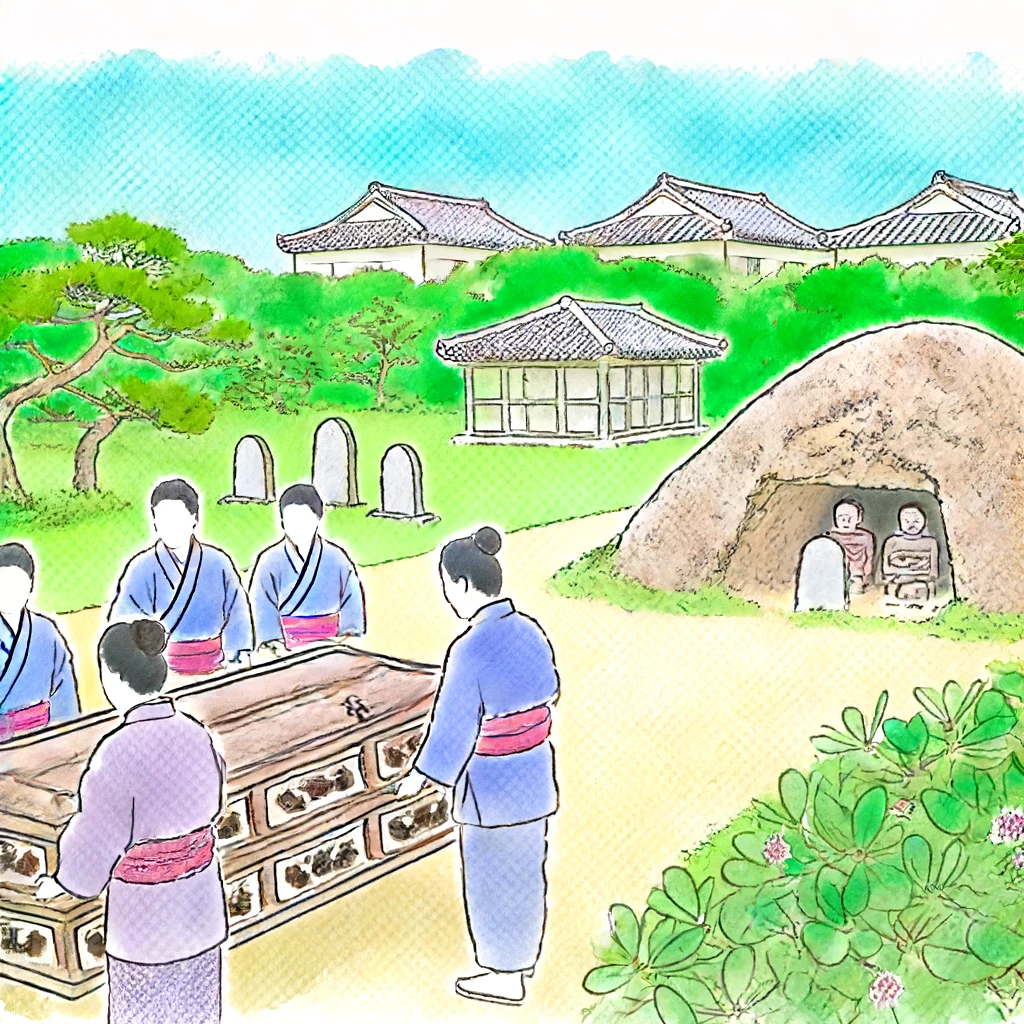
What thoughts do you have when you lose a loved one? Sadness, loneliness, and the fear of eternal separation. However, the people of Okinawa have a different perspective. The remains of the deceased, known as “Sudara,” are considered sacred, as they are believed to house the spirits of ancestors.
The transfer of Sudara from old graves to new ones is not merely the physical relocation of bones; it is a practice that embodies the spirit of Okinawa, connecting the deceased and the living, the past and the future. Over a long history, the custom of moving Sudara has been cultivated. However, modern societal changes, such as urbanization, the rise of nuclear families, and shifting attitudes among younger generations, have gradually altered these traditions.
Amid simplifications and omissions, the true meaning of Sudara’s transfer may be fading away. Yet, we have the heart of Okinawa, inherited from our ancestors.
The spiritual significance of Sudara’s transfer—representing death and rebirth, family bonds, and gratitude toward ancestors—must be preserved while adapting to contemporary forms. This is the duty of our generation.
This blog delves into the spiritual world of Okinawa through the practice of Sudara’s transfer. By exploring the deep meanings embedded in Sudara’s transfer, such as ancestor worship, views on life and death, and beliefs about the soul, we will examine how to sustain these traditions in modern society. What is the heart of Okinawa? What does it mean to connect the thoughts of our predecessors to the future? Let’s explore these questions together.
- Introduction
- Haka-jimai and the Transfer of Sudara
- Reasons for Fearing Sudara’s Transfer
- The Spiritual World of Okinawa and the Transfer of Sudara
- Changes in Sudara’s Transfer in Modern Society
- Conclusion
- Q&A
- The Transfer of Sudara in Okinawa: Between Tradition and Modernity
Introduction
Okinawa’s Unique Traditions and Ceremonies
The Historical and Cultural Background of Okinawa
Okinawa is a beautiful archipelago located at the southernmost part of Japan. Historically known as the Ryukyu Kingdom, it developed its own culture while interacting with China and mainland Japan. Okinawa’s history is marked by numerous transitions, including the kingdom era, rule by the Satsuma Domain, annexation by Japan, fierce battles during World War II, U.S. governance, and its return to Japan in 1972. This complex historical background has significantly influenced Okinawan culture and traditions.
Okinawa’s culture has developed uniquely, despite influences from China and mainland Japan. The local dialect, folk music played with the sanshin (a three-stringed instrument), traditional crafts like indigo dyeing and bingata (a type of resist dyeing), and Okinawa’s status as the birthplace of karate are all notable aspects. Additionally, ancestor worship and spiritual beliefs are crucial cultural elements. These historical and cultural backgrounds form the foundation of Okinawa’s unique traditions and ceremonies.
Examples of Unique Traditional Ceremonies
Okinawa is home to numerous unique traditional ceremonies distinct from those of other Japanese regions. One of the most famous is “Hari,” held on the fourth day of the fifth lunar month. Hari is a festival wishing for abundant catches and safe voyages, featuring vigorous dragon boat races. Another is “Eisa,” held during the lunar month of July, where people perform dances accompanied by taiko drums and sanshin music to welcome and send off ancestral spirits during the Bon Festival.
Other examples include “Shīmī,” a grave-cleaning and ancestor worship event, and “Yukkanuhi,” held on the 15th day of the eighth lunar month. These traditional events are deeply connected to the lives and beliefs of Okinawans, expressing gratitude toward ancestors and nature, and strengthening community bonds. Understanding these unique traditional ceremonies is essential to comprehending Okinawa’s history and culture.
What is Sudara (Bones) Transfer?
The Meaning and Importance of Sudara
“Sudara” is a term in the Okinawan dialect that means “remains” or “bones.” In Okinawa, the remains of deceased individuals are referred to as Sudara and are treated with great care. Sudara is not just bones but is believed to house the spirits of ancestors and is an object of ancestor worship.
For Okinawans, Sudara is a crucial link to family history. Treating Sudara with care expresses respect for ancestors and a wish for the prosperity of descendants. Additionally, properly enshrining Sudara is believed to pacify the spirits of ancestors and protect the family’s well-being.
Sudara is closely associated with Okinawa’s burial customs. Traditional practices such as “kaze no,” or natural burial, and “senko,” or washing of the bones, have been performed. In kaze no, the body is left to decompose naturally until it becomes bones, while in senko, the bones are unearthed and cleaned after a certain period. These cleaned bones are then placed in a family tomb. Properly handling and enshrining Sudara is an essential part of Okinawa’s burial customs.
Historical Background of Sudara’s Transfer
In Okinawa, the transfer of Sudara is part of a ritual called “haka-jimai” (grave closure). Haka-jimai involves moving Sudara from an old tomb to a new one, reflecting Okinawa’s historical background.
Historically, Okinawa’s village communities managed graves at the village level, rather than at the family level. However, with modern changes in family structures and urbanization, grave management shifted to the family level. Consequently, it became necessary to move Sudara from old village graves to new family graves.
Additionally, wars and natural disasters have sometimes necessitated the transfer of graves. During World War II, Okinawa experienced intense battles, resulting in the destruction of many graves. Post-war, there was a significant movement of Sudara to newly established gravesites.
The transfer of Sudara is not merely the physical relocation of bones but an important ritual of guiding ancestral spirits to a new dwelling. Through this practice, Okinawans reaffirm their spiritual bond with ancestors and inherit family history.
Haka-jimai and the Transfer of Sudara
The Meaning and Purpose of Haka-jimai
The Definition and Origins of Haka-jimai
“Haka-jimai” is an Okinawan custom involving the transfer of Sudara from old graves to new ones. This practice is deeply rooted in Okinawa’s history and culture, symbolizing ancestor worship and family bonds.
While the exact origins of haka-jimai are unclear, it is believed to date back to the era of traditional village communities in Okinawa. Graves were managed at the village level, but changes in family structures and urbanization led to the shift to family-managed graves. This necessitated the movement of Sudara from old village graves to new family graves.
Haka-jimai has also been practiced in response to wars, natural disasters, and development that have damaged or displaced graves. Notably, post-World War II Okinawa saw extensive haka-jimai, leading to the establishment of new gravesites.
Haka-jimai is not merely the physical relocation of remains but a crucial ritual for guiding ancestral spirits to a new dwelling. For Okinawans, this practice is a vital opportunity to reaffirm their spiritual bond with ancestors and continue their family history.
Reasons for Conducting Haka-jimai
Haka-jimai is conducted for three main reasons.
First, to establish a new family grave. In Okinawa, it is common to build new graves to wish for the prosperity and well-being of the family and to honor ancestors. When a new grave is built, Sudara is moved from the old grave and placed in the new one, welcoming ancestral spirits to their new home and strengthening family bonds.
Second, when the old grave becomes dilapidated or overcrowded. Traditional Okinawan graves are often stone structures, which deteriorate over time due to weathering. Additionally, as generations of Sudara are added, the grave may become full. In such cases, a new grave is built, and Sudara is moved to it.
Third, when land development or natural disasters necessitate grave relocation. Okinawa’s history of war and urbanization has led to the loss or displacement of many graves. When this occurs, Sudara must be moved to a new grave to calm ancestral spirits.
Haka-jimai is an essential custom that honors ancestral spirits and strengthens family bonds. Through this practice, Okinawans express gratitude and respect to their ancestors and wish for the prosperity of their descendants.
Steps in the Transfer of Sudara
Preparation and Necessary Tools for the Transfer
The transfer of Sudara is a significant ritual involving more than just the physical movement of remains; it guides ancestral spirits to a new dwelling. Thus, meticulous preparation is required.
First, a date is chosen for the transfer, often selecting an auspicious day according to the lunar calendar. The family and relatives consult to decide on the date. Essential tools for the transfer include a bone urn for the Sudara, a box or cloth to carry the urn, and bamboo baskets and ladles for exhumation and cleaning.
Additionally, prayers and offerings are indispensable during the transfer. Before the transfer, a prayer is offered to explain the reason for the move to the ancestral spirits and to guide them to their new home. Offerings are prepared to soothe the spirits.
The transfer of Sudara is a crucial family event requiring detailed preparation. Okinawans proceed with these preparations, filled with respect for their ancestral spirits.
Exhumation and Cleaning of Sudara
On the day of the transfer, family and relatives gather at the old grave. First, they carefully exhume the Sudara from the grave, a vital ritual that requires caution.
The Sudara is placed in bamboo baskets and taken out of the grave
. Next, the Sudara is cleaned, a significant ritual to purify the ancestral spirits and guide them to their new home. Clean water is used, and the Sudara is carefully washed with ladles to remove dirt.
After cleaning, the Sudara is placed in the bone urn, which will become the new dwelling for the ancestral spirits and is treated with utmost care. The urn is then transported to the new grave by the family.
The exhumation and cleaning of Sudara are essential rituals for facing ancestral spirits. Through this ritual, Okinawans express their gratitude and respect for their ancestors.
Transport and Enshrinement in the New Grave
The cleaned Sudara, now placed in the bone urn, is transported to the new grave. The enshrinement at the new grave is another vital ritual.
First, a place is prepared inside the new grave to enshrine the bone urn, usually the central part at the back of the grave. Next, the urn is enshrined, and offerings, such as flowers, incense, and food, are arranged around it to soothe the ancestral spirits.
After enshrinement, another prayer is offered for the restful peace of the ancestral spirits in their new home and for the family’s prosperity. This prayer marks the completion of the Sudara transfer ritual.
Enshrining Sudara in a new grave is an essential ritual to welcome ancestral spirits into their new home. Through this ritual, Okinawans deepen their bond with their ancestors and reaffirm their family ties.
Traditional Beliefs Surrounding Sudara’s Transfer
Rituals and Prayers Accompanying the Transfer
The transfer of Sudara involves various rituals and prayers, reflecting its significance beyond mere physical movement of remains.
Before the transfer, a prayer is offered to explain the reason for the move to the ancestral spirits and to seek their understanding. This prayer is an important ritual to communicate the intention of the transfer to the spirits.
During the cleaning of Sudara, a purification ritual with clean water is conducted, representing the purification of the ancestral spirits and making them fit for their new home.
Enshrinement in the new grave involves another prayer, wishing for the peaceful rest of the spirits and the prosperity of the family. These rituals and prayers collectively complete the Sudara transfer.
The rituals and prayers accompanying the Sudara transfer are crucial customs that honor the ancestral spirits and confirm family bonds. Through these rituals and prayers, Okinawans maintain their spiritual connection with their ancestors.
Customs and Taboos Related to Sudara’s Transfer
The transfer of Sudara comes with various customs and taboos, stemming from the respect for ancestral spirits and maintained with great care.
The date for transferring Sudara is chosen based on auspicious days in the lunar calendar, as it is a significant ritual to guide ancestral spirits to their new home, requiring a lucky day.
Handling Sudara requires utmost caution. Dropping or mishandling Sudara is strictly forbidden, as it is believed to anger the spirits and bring misfortune. Proper offerings, such as flowers, incense, and food, are prepared to honor and soothe the spirits.
There are also taboos, such as avoiding passing Sudara through other families’ graves, to prevent disturbing their spirits.
These customs and taboos reflect Okinawans’ respect for ancestral spirits and the wish for family peace. By carefully adhering to these practices, Okinawans deepen their connection with their ancestors and affirm their family bonds.
Reasons for Fearing Sudara’s Transfer
Awe of the Deceased
Traditional Okinawan Views on Honoring the Deceased
Okinawans have a deep-rooted custom of respecting the deceased, closely tied to ancestor worship and spiritual beliefs. It is believed that the spirits of the deceased watch over and protect their families, and honoring these spirits ensures family peace and prosperity.
This respect is evident in everyday practices, such as setting up a “butsudan” (altar) in homes to display ancestors’ photos and offer daily prayers and food before meals. The Bon Festival in the lunar month of July involves welcoming and honoring ancestral spirits, reflecting respect and gratitude towards the deceased.
For Okinawans, the deceased are not merely remains but revered beings. This reverence underlies the cautious attitude towards Sudara’s transfer and the fear associated with it.
Reasons for Handling Sudara with Care
Sudara is believed to house the spirits of ancestors, making it sacred. Mishandling or dropping Sudara is thought to anger the spirits and bring misfortune, necessitating careful handling.
The transfer involves rituals and taboos to honor and guide the spirits to their new dwelling without disturbing them. Any deviation from these practices is believed to disrupt the spirits and bring misfortune to the family.
Okinawans handle Sudara with great care and respect, reflecting their traditional beliefs in honoring the spirits and maintaining family peace.
Fear of Spirits Dwelling in Bones
Okinawan Beliefs About Spirits and Bones
In Okinawan belief, a person’s spirit continues to exist after death and resides in the remains. This view is deeply connected to Okinawan perspectives on life and death.
In traditional Okinawan beliefs, death marks the transition from the physical world to the spiritual world. The spirit leaves the body but remains in the bones, which are considered sacred.
Therefore, bones are not merely physical remains but sacred objects housing ancestral spirits. Properly handling and enshrining them is a crucial act of respect and worship.
Bones are seen as vital connections between ancestors and descendants, symbolizing the continuity of family history and receiving ancestral protection.
This belief in the sacredness of bones underpins the cautious and reverent approach to Sudara’s transfer and the fear associated with it.
Fear of Spirits Residing in Sudara
Sudara is considered sacred, housing ancestral spirits, and any mishandling or disturbance is thought to anger these spirits and bring misfortune.
During the transfer, rituals and taboos aim to guide and soothe the spirits, ensuring a smooth transition to their new dwelling without causing disturbance. Deviating from these practices is believed to disrupt the spirits and bring misfortune.
Okinawans’ fear and respect for the spirits residing in Sudara reflect their deep-rooted spiritual beliefs, emphasizing careful and respectful handling of Sudara.
Legends of Misfortune Following Mishandling of Sudara
Families Suffering Misfortune After Dropping Sudara
Specific Examples from Legends
In Okinawa, there are legends that misfortune befalls families who drop Sudara during its transfer. One story tells of a family who accidentally dropped Sudara during a grave closure. Subsequently, they experienced a series of misfortunes, including illness and business failures.
Another story describes a family who, after dropping Sudara, experienced constant conflicts, leading to the family’s eventual disintegration.
These legends highlight the serious consequences of mishandling Sudara and underscore the belief that disturbing the spirits housed in Sudara brings misfortune.
Reasons for Misfortune
The misfortune following the mishandling of Sudara is believed to result from disturbing the ancestral spirits housed in Sudara. Mishandling or dropping Sudara is seen as a sign of disrespect and an act that angers the spirits, leading to misfortune.
Ancestral spirits are considered protectors of the family, and any disrespect or mishandling can disrupt their guardianship, resulting in family misfortune.
Additionally, mishandling Sudara indicates a lack of gratitude and respect for ancestors, which is thought to negatively impact family prosperity.
These beliefs highlight the importance of careful and respectful handling of Sudara, with legends serving as a reminder of the serious consequences of failing to do so.
Hauntings in Homes After Bringing Sudara Home
Specific Haunting Incidents
In Okinawa, there are legends of homes experiencing hauntings after bringing Sudara home. One story tells of a family hearing eerie noises every night, such as knocking and dragging sounds, after bringing Sudara home.
Another story describes a family seeing unfamiliar shadows in their home after bringing Sudara home, believed to be ancestral spirits.
Other incidents include sudden electrical malfunctions and unexplained occurrences, believed to be caused by disturbed spirits.
These legends suggest that bringing Sudara home disturbs the spirits, leading to hauntings and other strange phenomena.
Reasons for Haunting
The hauntings are believed to result from disturbing the spirits housed in Sudara. Bringing Sudara home is seen as disrupting the spirits’ peace, causing them to wander and create disturbances.
In Okinawan belief, ancestral spirits find peace in their graves. Removing Sudara from the grave disturbs this peace, causing the spirits to wander and manifest as hauntings.
Additionally, bringing Sudara home is considered disrespectful and lacking in gratitude toward ancestors, leading to disturbances as the spirits express their displeasure.
These beliefs highlight the importance of proper handling and enshrining of Sudara to ensure peace for ancestral spirits and prevent disturbances.
The Spiritual World of Okinawa and the Transfer of Sudara
Ancestor Worship and Respect for the Deceased
The Importance of Ancestor Worship in Okinawa
Ancestor worship holds a significant place in Okinawa’s spiritual world. Okinawans believe that the spirits of deceased ancestors watch over and protect their descendants, and honoring these spirits ensures family peace and prosperity.
This belief is deeply rooted in Okinawa’s history and culture. During the Ryukyu Kingdom era, ancestral worship was widespread, with sacred sites called “utaki” established throughout the region. Confucian values from China
also emphasized filial piety, reinforcing ancestor worship.
Even today, Okinawan households commonly have a “butsudan” (family altar) where they honor their ancestors with daily offerings and prayers. The Bon Festival in the lunar month of July involves welcoming and honoring ancestral spirits.
Okinawans’ daily practices reflect a constant awareness and respect for their ancestors, underpinning the careful and reverent approach to Sudara’s transfer and the fear associated with it.
Expressions of Respect for the Deceased
Okinawans express their respect for the deceased through various rituals and customs, including funerals and grave visits.
Traditional Okinawan funerals involve the “yuin kabi” (bathing ceremony), where the deceased’s body is cleansed and dressed in new clothes by the family, expressing respect and gratitude.
Grave-cleaning events, such as “Seimei-sai” (Grave Festival) and “Shīmī,” involve visiting graves, cleaning them, and offering prayers and offerings to honor ancestors and confirm family bonds.
Respect for Sudara, believed to house ancestral spirits, is also an expression of respect for the deceased. Handling Sudara with care and conducting proper rituals reflect this respect and ensure family peace.
Okinawans’ respect for the deceased, evident in various rituals and customs, underlies the careful and reverent approach to Sudara’s transfer.
Connection Between the Living World and the Spirit World
Relationship Between the Living World and the Spirit World in Okinawa
In Okinawa’s worldview, the living world and the spirit world are closely interconnected. The living world is inhabited by the living, while the spirit world houses the spirits of the deceased. These two worlds are not completely separate but influence each other.
Okinawans believe that ancestral spirits influence the living world, watching over and protecting their families. Honoring these spirits ensures their guardianship and family prosperity.
Conversely, the actions of the living affect the spirit world. Respecting and honoring ancestors’ spirits soothes them and maintains peace, while neglect or disrespect disrupts the spirits and brings misfortune.
This interconnected worldview is evident in the careful and reverent approach to Sudara’s transfer, reflecting a belief in the close relationship between the living and spirit worlds.
The Significance of Sudara’s Transfer in Connecting the Living World and the Spirit World
Sudara’s transfer is not merely the physical movement of remains but an important ritual connecting the living and spirit worlds. Sudara, believed to house ancestral spirits, is guided to a new dwelling through various rituals.
Prayers before the transfer explain the reason for the move to the spirits and seek their understanding. The cleaning ritual purifies the spirits, preparing them for their new home. These rituals guide and soothe the spirits, ensuring a smooth transition.
Sudara’s transfer also reaffirms family bonds, as relatives gather and participate in the rituals, symbolizing family unity and the continuation of family history.
Sudara’s transfer embodies the close relationship between the living and spirit worlds, emphasizing the importance of guiding and soothing ancestral spirits.
The Spiritual Significance of Sudara’s Transfer
The Purification Meaning of Sudara’s Transfer
Sudara’s transfer involves purification, as the remains accumulate dirt and impurities over time. The cleaning ritual purifies the spirits, preparing them for their new home.
Okinawans believe that the purification ritual not only removes physical dirt but also purifies the spirits, making them suitable for their new dwelling.
Through this ritual, Okinawans ensure that the spirits are cleansed and honored, reflecting the spiritual significance of Sudara’s transfer.
The Symbolism of Rebirth in Sudara’s Transfer
Sudara’s transfer symbolizes rebirth. The remains, exhumed from the old grave, undergo purification and are enshrined in a new grave, symbolizing the transition from death to rebirth.
The old grave represents the spirits’ long rest, while the new grave, following purification, symbolizes the spirits’ new beginning in a new dwelling.
Sudara’s transfer embodies the cycle of death and rebirth, reflecting the spiritual significance of this ritual in Okinawan beliefs.
Sudara’s transfer is deeply connected to Okinawa’s spiritual world, representing a crucial ritual that connects the living and spirit worlds, purifies and honors ancestral spirits, and symbolizes rebirth.
Changes in Sudara’s Transfer in Modern Society
The Transformation of Traditional Customs Due to Urbanization
Impact of Urbanization on Traditional Customs
Post-war rapid urbanization in Okinawa has significantly impacted traditional customs, including Sudara’s transfer.
Traditional village communities managed graves collectively, but urbanization and the shift to nuclear families led to family-managed graves. This necessitated the transfer of Sudara from old village graves to new family graves.
Urban land prices and limited space have also influenced burial practices, making traditional large graves difficult to maintain, leading to changes in grave types and practices.
Changes in lifestyles due to urbanization, such as increased work commitments and time constraints, have further complicated traditional rituals like Sudara’s transfer, leading to simplification and omission of practices.
Urbanization has thus significantly impacted traditional customs, including Sudara’s transfer.
Tendencies Toward Simplification and Omission in Sudara’s Transfer
Urbanization has led to simplification and omission of Sudara’s transfer rituals.
Traditional Sudara’s transfer involved complex rituals and procedures, but urbanization and time constraints have led to simplified rituals. For instance, the cleaning ritual is sometimes omitted or simplified.
In some cases, Sudara’s transfer is entirely omitted, as urbanization makes grave relocation difficult. This has led to an increase in permanent enshrinement in old graves.
Additionally, modern burial options like columbaria and perpetual care graves have reduced the need for traditional Sudara’s transfer, impacting the continuity of this custom.
Urbanization has thus led to significant changes in Sudara’s transfer practices, including simplification and omission.
Changes in Attitudes Among Younger Generations
Attitudes of Younger Generations Toward Traditional Customs
Younger generations in Okinawa are experiencing changes in attitudes toward traditional customs, including Sudara’s transfer.
Traditional customs were naturally passed down within families and communities, but urbanization and nuclear family structures have reduced these opportunities, leading to a lack of knowledge and interest among younger generations.
Changes in values, emphasizing individual freedom and rights, have led some young people to view traditional customs as restrictive. Economic burdens associated with maintaining these customs have also contributed to hesitation in continuing them.
These shifts in attitudes among younger generations impact the continuity of Sudara’s transfer and other traditional customs.
Changing Perceptions of Sudara’s Transfer Among Younger Generations
Younger generations view Sudara’s transfer differently, seeing it more as a physical task than a spiritual ritual.
Some young people view Sudara’s transfer as a mere relocation of remains rather than an act of reverence for ancestral spirits. This perspective makes them more accepting of simplified or omitted rituals.
Economic considerations also influence younger generations, as the costs associated with traditional practices are seen as burdensome.
There is also a tendency to question the relevance of traditional customs in modern society, leading to calls for contemporary reinterpretations of these practices.
These changing perceptions among younger generations influence the continuity and interpretation of Sudara’s transfer in modern society.
New Challenges in Sudara’s Transfer
Difficulties in Continuing Traditional Customs
Urbanization and changing attitudes pose significant challenges to continuing traditional customs like Sudara’s transfer.
Traditional customs were naturally passed down within families and communities, but urbanization and nuclear family structures have reduced these opportunities. As a result, many young people lack knowledge and skills related to these customs.
Economic burdens associated with traditional practices, such as the costs of purchasing and maintaining graves, also deter families from continuing these customs.
The changing attitudes and values among younger generations further complicate the transmission of traditional customs, making it difficult to convey their importance.
Continuing traditional customs like Sudara’s transfer in modern society thus faces significant challenges.
The Need for Contemporary Interpretations of Sudara’s Transfer
To continue traditional customs like Sudara’s transfer, contemporary interpretations are necessary. Rather than merely preserving the old, it is important to adapt to modern society.
Simplifying the process of Sudara’s transfer to accommodate time constraints and busy lifestyles is one approach. For instance, simplifying or omitting certain rituals could make the practice more accessible.
Reducing the economic burden by adopting communal grave management or modern burial options like columbaria and perpetual care graves can also help.
Reinterpreting the spiritual significance of Sudara’s transfer to align with modern values and contexts is crucial. For instance, viewing the transfer as an opportunity to reflect on family history and unity can resonate with contemporary values.
Balancing the essence of Sudara’s transfer with contemporary interpretations is key to its continuation in modern society.
Conclusion
Reflection of Okinawa’s Spiritual World in Sudara’s Transfer
Okinawa’s Views on Life and Death Reflected in Sudara’s Transfer
Sudara’s transfer reflects Okinawan views on life and death, symbolizing the transition from life to the spirit world.
The process of exhuming Sudara from the old grave represents the spirit’s rest, while purification and enshrinement in a new grave symbolize rebirth.
Sudara’s transfer embodies the cyclical nature of life and death, reaffirming the connection between the living and the spirit worlds.
The Importance of the Spiritual Significance of Sudara’s Transfer
Sudara’s transfer holds deep spiritual significance, reflecting ancestor worship, family bonds, and respect for the deceased in Okinawan culture.
It
is a ritual that honors ancestral spirits, strengthens family unity, and connects the living and spirit worlds.
Understanding and preserving the spiritual significance of Sudara’s transfer is essential to maintaining its essence and importance in Okinawan culture.
The Need to Preserve Traditions While Adapting to Modern Society
The Importance of Preserving the Tradition of Sudara’s Transfer
Preserving the tradition of Sudara’s transfer is vital to maintaining Okinawa’s cultural and spiritual heritage.
The practice reflects Okinawan views on life and death, ancestor worship, and family unity, embodying the spirit of Okinawa.
Continuing this tradition strengthens community bonds and respects the natural and spiritual world.
Exploring Contemporary Forms of Sudara’s Transfer
To preserve the tradition of Sudara’s transfer, it is necessary to explore contemporary forms that align with modern society.
Simplifying rituals, reducing economic burdens, and reinterpreting the spiritual significance of the practice can help make it more accessible and relevant.
Balancing traditional essence with contemporary adaptations ensures the continuation of Sudara’s transfer and its spiritual significance.
Sudara’s transfer is a vital practice that reflects Okinawa’s spiritual world, connecting the living and the spirit worlds, and symbolizing purification and rebirth. Preserving this tradition while adapting to modern society is crucial to maintaining its essence and importance in Okinawan culture.
Q&A
Why does the transfer of Sudara feel frightening?
The transfer of Sudara feels frightening because of the fear of disturbing the ancestral spirits believed to reside in Sudara. Okinawans handle Sudara with great care, respecting the spirits and seeking their protection.
What is the significance of the rituals involved in the transfer of Sudara?
The rituals involved in the transfer of Sudara are crucial for guiding the ancestral spirits to their new dwelling and symbolize purification and rebirth. Through these rituals, Okinawans reaffirm their connection with their ancestors and strengthen family bonds.
How has urbanization affected the custom of Sudara’s transfer?
Urbanization has made it challenging to secure burial sites and has changed lifestyles, leading to the simplification and omission of Sudara’s transfer practices. Additionally, the difficulty in passing down traditions due to the rise of nuclear families has also had an impact.
What are the changes in the perception of Sudara’s transfer among younger generations?
Among younger generations, there is a tendency to view Sudara’s transfer as merely the relocation of remains and to emphasize the economic burden associated with it. Some also question the relevance of traditional customs.
What is necessary to preserve the tradition of Sudara’s transfer?
To preserve the tradition of Sudara’s transfer, it is essential to explore new interpretations and approaches that fit modern society. This includes simplifying rituals, utilizing new forms of burial sites, and adding contemporary significance while maintaining the spiritual meaning of Sudara’s transfer.
The Transfer of Sudara in Okinawa: Between Tradition and Modernity
The traditional practice of transferring Sudara (remains) in Okinawa deeply reflects the spiritual world of the region. Sudara’s transfer is a significant ritual that honors ancestral spirits and symbolizes death and rebirth and the connection between the living world and the spirit world. Remains, unearthed from their old resting place, are purified and guided to a new home. This process encapsulates Okinawa’s views on life and death, ancestor worship, and family bonds.
However, changes in modern society are affecting the custom of Sudara’s transfer. Challenges such as urbanization, the difficulty of passing down traditions in nuclear families, and changes in the attitudes of younger generations are becoming evident. With simplification and omission on the rise, the continuation of traditional customs is at risk. How can we preserve the tradition of Sudara’s transfer?
The key is not to lose sight of the essence of Sudara’s transfer. While exploring new ways to adapt to modern society, it is crucial to cherish the spiritual significance of Sudara’s transfer. Balancing tradition and modernity is essential for continuing the tradition of Sudara’s transfer.
The practice of transferring Sudara, which embodies the heart of Okinawa, carries profound meaning. Understanding and continuing this tradition in a form that suits contemporary society is perhaps the mission entrusted to us. Passing on the heart of Okinawa, inherited from our predecessors, to the future is facilitated by the tradition of Sudara’s transfer.


コメント