
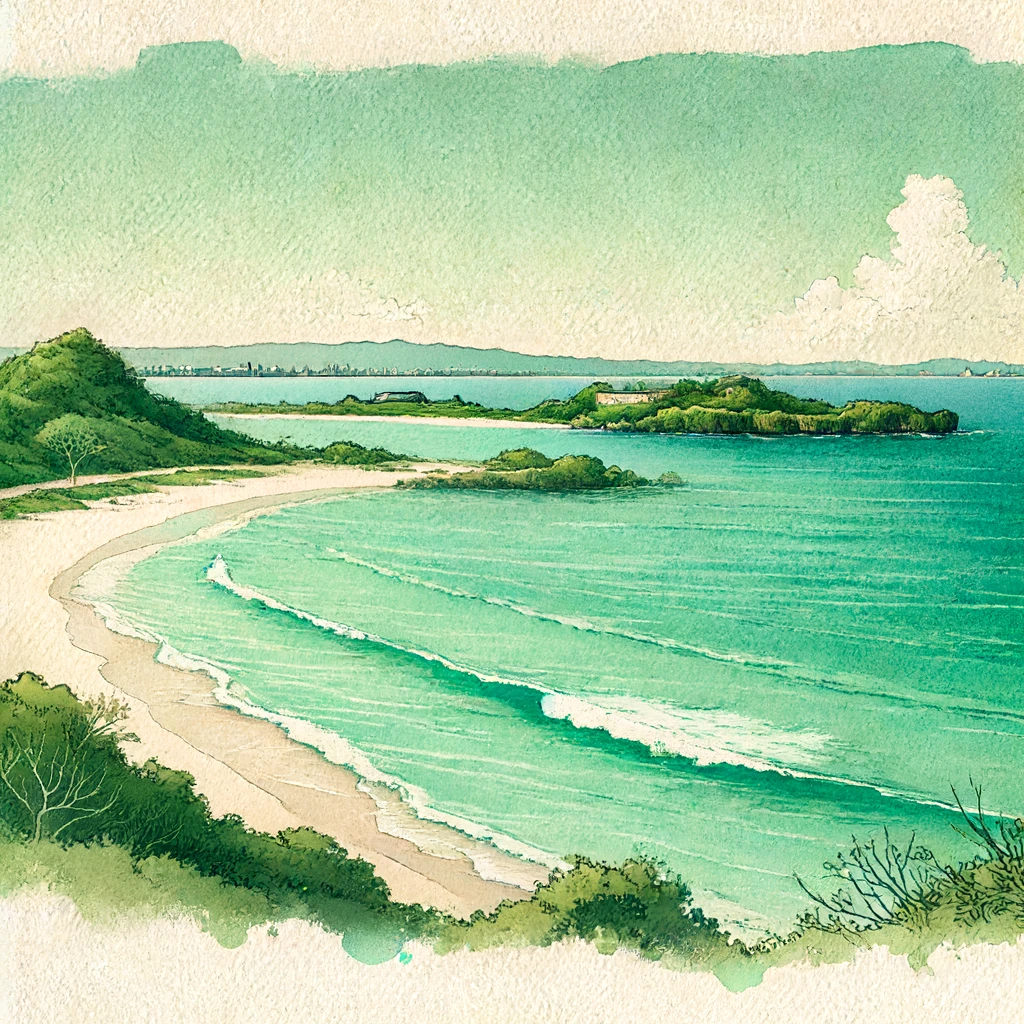
The sea of Okinawa never fails to captivate us. The beautiful emerald green sea, the white sandy beaches, and the gentle sea breeze. But did you know that behind this tranquil scenery lies a deep reverence for nature and a profound spirituality that our ancestors have carefully preserved?
This time, I would like to explore the taboos associated with the ancient Okinawan tradition of “Mizunuhii” (Water Day). Mizunuhii is a special day dedicated to the water deity, Mizunu-kami. On this day, various taboos related to water are observed, and people renew their mindset to live in harmony with nature.
Swimming, playing in the water, drawing water from wells, and doing laundry are all prohibited on this day. These restrictions may seem strict, but they embody the understanding of the dual nature of water, the wisdom of coexisting with water, and the way of life that adheres to natural laws, values deeply cherished by the people of Okinawa.
It is said that misfortunes will occur if these taboos are violated, but this is not just a threat. The stories passed down through generations are proof that our ancestors faced nature and lived with its power.
In modern society, awareness of the taboos of Mizunuhii is changing. However, it is precisely because of this that it is important to grasp the messages these taboos convey. The conservation of water, harmony with nature, and a humble way of life. The values that our ancestors cherished are needed now more than ever.
Through the taboos of Mizunuhii, why not touch the rich spiritual world of Okinawa? By embracing nature and listening to the wisdom of our ancestors, our own way of life will surely become richer. Now is the time to learn from Okinawan traditions and build a better future. Let’s step into the world of Mizunuhii together.
- What is Mizunuhii?
- Taboos of Mizunuhii
- Agricultural Taboos
- Effects of Violating Taboos
- The Spiritual World Reflected in Taboos
- The Impact of Mizunuhii Taboos on Modern Society
- Q&A
- Summary
What is Mizunuhii?
Among the many ancient and unique traditional events in Okinawa, one of the most mystical and intriguing is “Mizunuhii.” Mizunuhii, meaning “Water Day” in Okinawan dialect, refers to a special day held from May to June in the old lunar calendar. This day is cherished by the people of Okinawa as an important day to honor the water deity, Mizunu-kami.
Mizunuhii involves various water-related taboos, which are observed to express gratitude for the blessings of water and to maintain harmony with nature. In this article, let’s explore the meaning and origins of Mizunuhii and the differences between regions to delve into the spiritual world of the Okinawan people.
The Meaning and Origin of Mizunuhii
The word Mizunuhii means “Water Day” in Okinawan dialect. But why is this day considered special? To understand this, we need to look into the etymology of Mizunuhii and learn about Mizunu-kami, the water deity.
The Etymology of “Water Day”
“Mizu” in Mizunuhii corresponds to “water” in Japanese. “Nu” means “of,” and “Hii” represents “day.” Thus, Mizunuhii literally means “Water Day.”
This day is regarded as special because water is the source of life and an indispensable element for agriculture. The people of Okinawa have always appreciated the blessings of water and maintained a heart that cherishes it. Mizunuhii is a day to express such gratitude towards water.
About Mizunu-kami (Water Deity)
Mizunuhii is deeply connected with Mizunu-kami, the water deity. Mizunu-kami is believed to control water, bring rain, manage river flows, and support the growth of crops.
The people of Okinawa have revered Mizunu-kami and performed various rituals and prayers on Mizunuhii to seek its protection. Mizunu-kami is considered a powerful entity that, while bringing the blessings of water, can also be fearsome at times.
Schedule and Regional Differences of Mizunuhii
Mizunuhii is held from May to June in the old lunar calendar, but the specific dates and the details of the taboos vary by region. Here, let’s look at the differences between the lunar and solar calendars, the differences in schedules between Okinawa’s main island and remote islands, and the variations in taboos across regions.
Differences Between Lunar and Solar Calendars
Mizunuhii is based on the lunar calendar (lunisolar calendar). The lunar calendar, based on the phases of the moon, has played a crucial role in determining the schedules of agricultural work and festivals.
In contrast, the modern solar calendar (Gregorian calendar) is now in use, causing a discrepancy between the two calendars. Therefore, the dates of Mizunuhii need to be adjusted to align with the solar calendar. In the solar calendar, Mizunuhii is often held from June to July.
Differences in Schedule Between Okinawa Main Island and Remote Islands
The schedule of Mizunuhii differs slightly between Okinawa’s main island and the remote islands. In the northern part of the main island, Mizunuhii is held on the Ox Day of the 5th month in the lunar calendar, while in the southern part, it is typically held on the Ox Day of the 6th month.
In the remote islands, the schedule reflects regional characteristics even more. For example, on Miyako Island, Mizunuhii is held on the Ox Day of the 6th month in the lunar calendar, while in the Yaeyama Islands, it is held on the Ox Day between the 5th and 6th months, showcasing the unique schedules of each island.
Regional Differences in Taboos
While the taboos of Mizunuhii primarily revolve around water, there are differences in the details of the taboos depending on the region. For example, in one region, doing laundry is prohibited, while in another, it might be allowed.
Similarly, taboos related to agricultural work also vary according to the local farming practices. In regions where rice paddies dominate, the entry and exit of water to the fields are prohibited, whereas in areas focused on dry farming, such taboos may not exist.
In this way, Mizunuhii has developed uniquely, reflecting the natural environment and lifestyle of each region in Okinawa. Next time, we will delve into the specifics of the taboos of Mizunuhii with concrete examples. Stay tuned!
Taboos of Mizunuhii
Last time, we explored the meaning, origins, and regional differences of Mizunuhii. This time, let’s take a closer look at the most important aspect of Mizunuhii: the taboos.
Mizunuhii has various prohibitions centered around water, as well as restrictions on agricultural work and daily life. These taboos reflect the spirituality of the Okinawan people, who revere the water deity, Mizunu-kami, and cherish water.
Observing these taboos is considered a form of wisdom inherited from ancestors and an essential practice for maintaining harmony with nature. So, what specific taboos exist? Let’s examine them one by one.
Water-Related Taboos
The most significant taboos of Mizunuhii are those related to water. Water is the source of life and a sacred entity governed by Mizunu-kami. Therefore, polluting or wasting water is strictly forbidden.
Prohibition on Swimming and Playing in Water
On Mizunuhii, swimming and playing in the sea, rivers, or ponds are prohibited. This is because Mizunu-kami is believed to reside in the water.
Making noise or polluting the water is considered an act that angers Mizunu-kami. Additionally, there are safety concerns, as dangerous creatures might be present in the water, reinforcing the need to avoid water activities.
Prohibition on Drawing Water from Wells
Drawing water from wells is also prohibited on Mizunuhii. Although wells are essential for accessing groundwater, using well water is forbidden on this day.
This is because drawing water from wells is thought to disturb Mizunu-kami. Instead, it is recommended to use water drawn the day before Mizunuhii.
Prohibition on Laundry and Washing Hair
Doing laundry and washing hair are also prohibited on Mizunuhii. All activities that involve using water are avoided, especially laundry, which is seen as an act of polluting water.
Washing hair is also considered a waste of water, so it is advised to avoid these activities. People should cleanse themselves more thoroughly than usual the day before Mizunuhii and minimize water use on the day itself.
Agricultural Taboos
The lives of the Okinawan people are closely connected to agriculture. Therefore, Mizunuhii also includes taboos related to agricultural work.
Prohibition on Watering Fields
On Mizunuhii, watering fields or draining water from them is forbidden. This is because such actions are believed to disturb the water deity.
In rice paddies, water management is a crucial task, but during Mizunuhii, watering and draining must be avoided. It is important to complete necessary water management before Mizunuhii.
Reasons for Agricultural Work Taboos
All agricultural work in fields is prohibited during Mizunuhii. This is not only because agricultural work involves using water but also because it impacts the growth of crops.
Mizunu-kami is believed to support the growth of crops. Therefore
, during Mizunuhii, it is essential to let the crops rest and receive the blessings of Mizunu-kami.
Other Taboos
In addition to water and agricultural work, Mizunuhii includes various other taboos. These taboos might vary by region, but they generally reflect acts of revering the water deity and maintaining harmony with nature.
Prohibition on Making Loud Noises
Making loud noises is prohibited on Mizunuhii. This is because loud noises are believed to startle or anger the water deity.
Especially near water bodies like seas and rivers, making loud noises is strictly forbidden, and people are expected to spend the day quietly.
Prohibition on House Repairs and Construction
House repairs and construction are also to be avoided on Mizunuhii. This is not only because such activities involve using water but also because they disturb the water deity.
During Mizunuhii, it is important to spend the day quietly at home and minimize activities that involve using water.
Region-Specific Taboos
Mizunuhii’s taboos can vary by region. For example, in some areas, entering the mountains is prohibited during Mizunuhii. This is based on the belief that disturbing the mountain’s water sources should be avoided.
In coastal regions, there might be unique taboos related to the sea. All these taboos reflect wisdom aimed at revering the water deity and maintaining harmony with nature.
The taboos of Mizunuhii are insightful for us even today. The importance of valuing water and living in harmony with nature remains unchanged. It is perhaps now more crucial than ever to apply the wisdom inherited from our ancestors to modern life.
Effects of Violating Taboos
Previously, we explored the taboos of Mizunuhii in detail. This time, we will look into the effects of violating these taboos.
The taboos of Mizunuhii were established to honor the water deity and live in harmony with nature. However, it has long been believed that various misfortunes occur if these taboos are not observed. Many ancient traditions recount unfortunate events resulting from the violation of taboos.
Even today, incidents attributed to ignoring taboos sometimes make headlines. What can we learn from these stories? Let’s think about it together.
Examples of Taboos Violations in Tradition
Okinawa has many traditions that illustrate the effects of violating Mizunuhii taboos. These stories highlight the importance of taboos and convey the wisdom of our ancestors.
The Story of the Dried-Up Wells
In one village, a person ignored the Mizunuhii taboo and drew water from a well. As a result, all the wells in the village dried up that year.
The villagers believed that the violation of the taboo was the cause and vowed never to break the Mizunuhii taboos again. This tradition teaches us that water is an essential resource for life, and to protect it, we must follow the wisdom passed down from our ancestors.
The Story of the Drowned Person
There is also a tradition about a person who ignored the Mizunuhii taboo and swam in the sea, only to drown. Mizunuhii is considered a time when the sea deity is agitated, making it dangerous to enter the sea.
This story shows that we should not underestimate the dangers of nature. The wisdom of our ancestors includes lessons learned from long experience.
Taboos Violations in Other Regions
Different regions of Okinawa have their own traditions related to Mizunuhii taboos violations. For example, in one area, it is said that a person who entered the mountains during Mizunuhii angered the mountain deity and fell ill.
These traditions are deeply connected to the natural environment and beliefs of each region. Our ancestors left us wisdom in the form of these traditions to help us coexist with nature.
Modern Tales of Taboos Violations
The taboos of Mizunuhii are still strongly observed in modern times. However, with changing times, fewer people observe these taboos, leading to violations. Here, we look at some modern stories of taboos violations.
The Story of the Missing Child
Recently, there was a story about a child who went missing while playing in the sea on Mizunuhii. Fortunately, the child was found safe a few days later, but the elders said, “It’s because the Mizunuhii taboos were broken.”
This incident reminds us of the importance of considering the meaning of taboos. It makes us realize the importance of respecting nature and listening to the wisdom of our ancestors.
The Story of the Poor Harvest
A farmer who drained water from his fields during Mizunuhii experienced a significant reduction in that year’s harvest. People around him said, “You angered Mizunu-kami.”
Growing crops relies on the power of nature. It may be essential for us to apply the wisdom of coexisting with nature, which our ancestors cherished, in modern times.
Effects of Taboos Violations in Modern Society
The taboos of Mizunuhii are not mere superstitions. Living in harmony with nature and valuing water is crucial in modern society.
Ignoring these taboos could lead to the depletion of water resources and an increase in natural disasters. Each of us is called upon to learn from the wisdom of our ancestors and practice a way of life that coexists with nature.
The stories of Mizunuhii taboos violations teach us many lessons. Respecting nature and valuing the wisdom of our ancestors may be the secret to the coexistence with nature that the people of Okinawa have cultivated over the years.
Next time, we will delve deeper into the spiritual world of Okinawa as seen through the taboos. Let’s listen to the thoughts of our ancestors embedded in Mizunuhii taboos.
The Spiritual World Reflected in Taboos
The taboos of Mizunuhii are not just old customs. They reflect a unique spiritual world that the people of Okinawa have built over the years.
By unraveling the thoughts of our ancestors embedded in the taboos of Mizunuhii, we can touch upon the values and worldview cherished by the people of Okinawa. The awe and respect for water, harmony with nature, faith in ancestors and deities—the spirituality revealed through these taboos offers many insights for us living in modern times.
Here, we will explore the spiritual world reflected in the taboos of Mizunuhii from various perspectives. Listening to the wisdom of ancient people will provide an opportunity to reflect on our own way of life.
Fear and Respect for Water
For the people of Okinawa, water is a special entity. Many of the taboos of Mizunuhii are related to water, reflecting a deep awe and respect for it.
The Dual Nature of Water (Source of Life and Threat)
Water is the source of life but also a threat to human life at times. Droughts, floods, and tsunamis are real threats that the people of Okinawa have faced.
On the other hand, water nurtures crops and brings blessings to people. The rituals for rain performed in various places are expressions of gratitude for the blessings of water and the desire to harness its power.
The taboos of Mizunuhii are the wisdom of our ancestors, who deeply understood the dual nature of water and sought to live in harmony with it.
The Wisdom of Coexisting with Water
The people of Okinawa have cultivated wisdom not to control water but to coexist with it. The taboos of Mizunuhii teach us to use water sparingly and to cherish it.
Rules of conduct, such as not polluting rivers or the sea and valuing well water, are born from the wisdom of coexisting with water. Our ancestors continuously held a heart of gratitude for the blessings of water and respected it.
Harmony Between Nature and Humans
In the spiritual world of Okinawa, humans are considered part of nature, and living in harmony with nature is essential. The taboos of Mizunuhii reflect this view of nature.
Living According to Natural Law
During Mizunuhii, actions that align with the rhythms of nature are required. Refraining from farm work and not making loud noises are to avoid disrupting the natural rhythm.
Our ancestors cherished a way of life that did not defy the natural order but stayed close to it. This mindset was necessary for humans, as part of nature, to harmonize with the environment.
The Importance of Coexisting with Nature
The taboos of Mizunuhii teach us the importance of coexisting with nature. Our ancestors learned from experience that disrupting nature eventually affects human society.
In modern society, coexistence with nature is often overlooked, but the taboos of Mizunuhii remind us of the importance of living hand in hand with nature.
Faith in Ancestors and Deities
In Okinawa’s spiritual world, it is believed that ancestors and deities watch over and guide people’s lives. The taboos of Mizunuhii are deeply imbued with this sense of faith.
Taboos as Acts of Maintaining Connection with Ancestors
Observing the taboos of Mizunuhii is also about preserving important cultural practices inherited from ancestors. The act of observing taboos itself is a practice of maintaining connection with ancestors.
Having a heart that respects ancestors and continuously upholding their teachings is part of the identity of the people of Okinawa.
Respect for Deities and Prayers for Their Protection
Mizunuhii involves deep faith in deities, including the water deity Mizunu-kami. Observing taboos is an expression of respect for the deities and a prayer for their protection.
Valuing the connection with deities and living in harmony with nature may have brought people peace of mind.
The spiritual world reflected in the taboos of Mizunuhii is formed by intertwining elements such as fear and respect for water, harmony with nature, and faith in ancestors and deities. It is a crystallization of the wisdom that the people of Okinawa have cultivated over a long history.
We modern people have much to learn from the taboos of Mizunuhii. Passing on the values cherished by our ancestors and applying them in modern society may be what is demanded of us living in this era.
Next time, we will consider the impact of Mizunuhii taboos on modern society. We will explore the questions raised by these taboos, such as the inheritance and change of tradition and their implications for contemporary society.
The Impact of Mizunuhii Taboos on Modern Society
The taboos of Mizunuhii have long been deeply rooted in the lives of the people of Okinawa. However, as society changes over time, the awareness of taboos is also transforming.
Yet, the lessons conveyed by the taboos of Mizunuhii may be more necessary in today’s society. The importance of water, harmony with nature, respect for ancestors—these values suggested by the taboos can serve as crucial guidelines for us
living in the present.
Here, we will explore the impact of Mizunuhii taboos on modern society from the perspectives of tradition inheritance and change, as well as their implications for contemporary society. Learning from the past and connecting it to the future may be what is required of us.
Inheritance and Change of Tradition
Tradition changes over time. The taboos of Mizunuhii are no exception. In modern society, awareness and practice of taboos are evolving.
The Transformation of Taboos in Modern Society
In the past, Mizunuhii taboos were strictly observed, but nowadays, there are more people who are unaware of or disregard these taboos. Changes in lifestyle and diverse values may make it challenging to practice these taboos.
However, it is crucial not to lose sight of the essential meaning of taboos. It is necessary to grasp the messages these taboos have been trying to convey, rather than being bound by their formal practice.
Inheritance of the Spirit of Valuing Water
The most important lesson from the taboos of Mizunuhii may be to have a heart that values water. In modern society, the importance of water tends to be overlooked, but our lives cannot function without it.
Efforts to conserve water and maintain water quality are practices that embody the spirit conveyed by the taboos of Mizunuhii. Learning from the wisdom of our ancestors and passing on the spirit of valuing water to future generations may be our mission.
Lessons from Taboos and Implications for Modern Society
The taboos of Mizunuhii are rich in implications for various problems faced by modern society. Lessons to be learned from taboos include water conservation, harmony with nature, and humble living.
The Importance of Water and the Need for Its Conservation
Water is the source of life and an indispensable resource that supports our lives. However, issues like water pollution and scarcity are becoming increasingly severe.
The taboos of Mizunuhii highlight the importance of recognizing the significance of water and living in a way that values it. Each person must be concerned about water conservation and take action.
The Importance of Harmony with Nature
Modern society is losing harmony with nature. Environmental destruction and climate change are just a few of the significant impacts our lifestyles have on nature.
The taboos of Mizunuhii teach us the importance of living close to nature. Learning the wisdom of coexisting with nature is indispensable for building a sustainable society.
Respect for Ancestors and Deities and Humble Living
In modern society, individualism is rampant, and traditional values are being lost. However, valuing the culture and wisdom inherited from ancestors is essential for shaping our identity.
The taboos of Mizunuhii show the importance of respecting ancestors and deities. Having a humble heart and believing in unseen forces may become the guiding principles of our lives.
The impact of Mizunuhii taboos on modern society can be seen through the lenses of tradition inheritance and change, and their implications for contemporary society. It is essential to discern the fundamental meaning of taboos rather than being bound by their formal practice.
Valuing water, harmonizing with nature, and living humbly. The lessons from the taboos of Mizunuhii are needed by us living in the present. Learning from the wisdom of our ancestors and building a better future is our mission.
Learning about the taboos of Mizunuhii provides an opportunity not only to understand the culture and spirituality of Okinawa but also to reflect on our own way of life. The questions raised by the taboos of Mizunuhii are questions posed to each of us.
This concludes our exploration of the “Taboos of Mizunuhii (Water Day).” By touching the rich culture and traditions of Okinawa, we can gain further insights. Listening to the wisdom of our ancestors and applying it in the present is a journey we will continue.
Q&A
What is Mizunuhii?
Mizunuhii is a term in Okinawan dialect meaning “Water Day,” referring to a special day observed from May to June in the old lunar calendar. This day has long been cherished by the people of Okinawa as an important day to honor the water deity, Mizunu-kami.
What are the taboos of Mizunuhii?
Mizunuhii has various taboos primarily related to water, as well as prohibitions concerning agricultural work and daily life. For example, swimming and playing in the water, drawing water from wells, and doing laundry are prohibited. Additionally, it is advised to avoid activities such as managing water in fields and making loud noises.
What are the believed consequences of violating the taboos?
Violating the taboos is believed to bring about various misfortunes. Traditional stories include tales of villages where wells dried up or people drowned after ignoring the taboos. Even in modern times, incidents thought to result from ignoring these taboos occasionally make headlines.
What does the spiritual world of Okinawa reflected in Mizunuhii taboos look like?
The taboos of Mizunuhii reflect the values and worldview cherished by the people of Okinawa, such as fear and respect for water, harmony with nature, and faith in ancestors and deities. They embody an understanding of the dual nature of water, wisdom of coexisting with it, living in accordance with natural laws, and maintaining connections with ancestors through taboos.
How do the taboos of Mizunuhii impact modern society?
The taboos of Mizunuhii offer valuable lessons for addressing various modern societal issues. These include water conservation, harmony with nature, and humble living. It is essential to discern the fundamental meanings behind these taboos and apply their lessons to contemporary society, rather than merely focusing on traditional practices.
Summary
The “Taboos of Mizunuhii (Water Day)” is an ancient and unique traditional event in Okinawa dedicated to honoring the water deity, Mizunu-kami. Mizunuhii involves various taboos, primarily related to water, along with prohibitions concerning agricultural work and daily life. Observing these taboos is considered crucial for expressing gratitude for the blessings of water and maintaining harmony with nature.
Violating these taboos is believed to bring about misfortunes, as evidenced by traditional stories of villages where wells dried up and people who drowned. These stories highlight the importance of taboos and convey the wisdom of our ancestors.
The spiritual world reflected in the taboos of Mizunuhii intertwines fear and respect for water, harmony with nature, and faith in ancestors and deities. Understanding the dual nature of water, wisdom of coexisting with it, living according to natural laws, and maintaining connections with ancestors are all values and worldviews cherished by the people of Okinawa.
In modern society, awareness and practice of Mizunuhii taboos are evolving. However, it is vital to grasp the messages these taboos have conveyed. There are many lessons to be learned from the taboos, such as water conservation, harmony with nature, and humble living. It is essential to discern the fundamental meanings behind these taboos and apply them to contemporary society.
Learning about the taboos of Mizunuhii not only helps us understand Okinawan culture and spirituality but also provides an opportunity to reflect on our own way of life. Learning from the wisdom of our ancestors and building a better future is our mission in this era.


コメント