
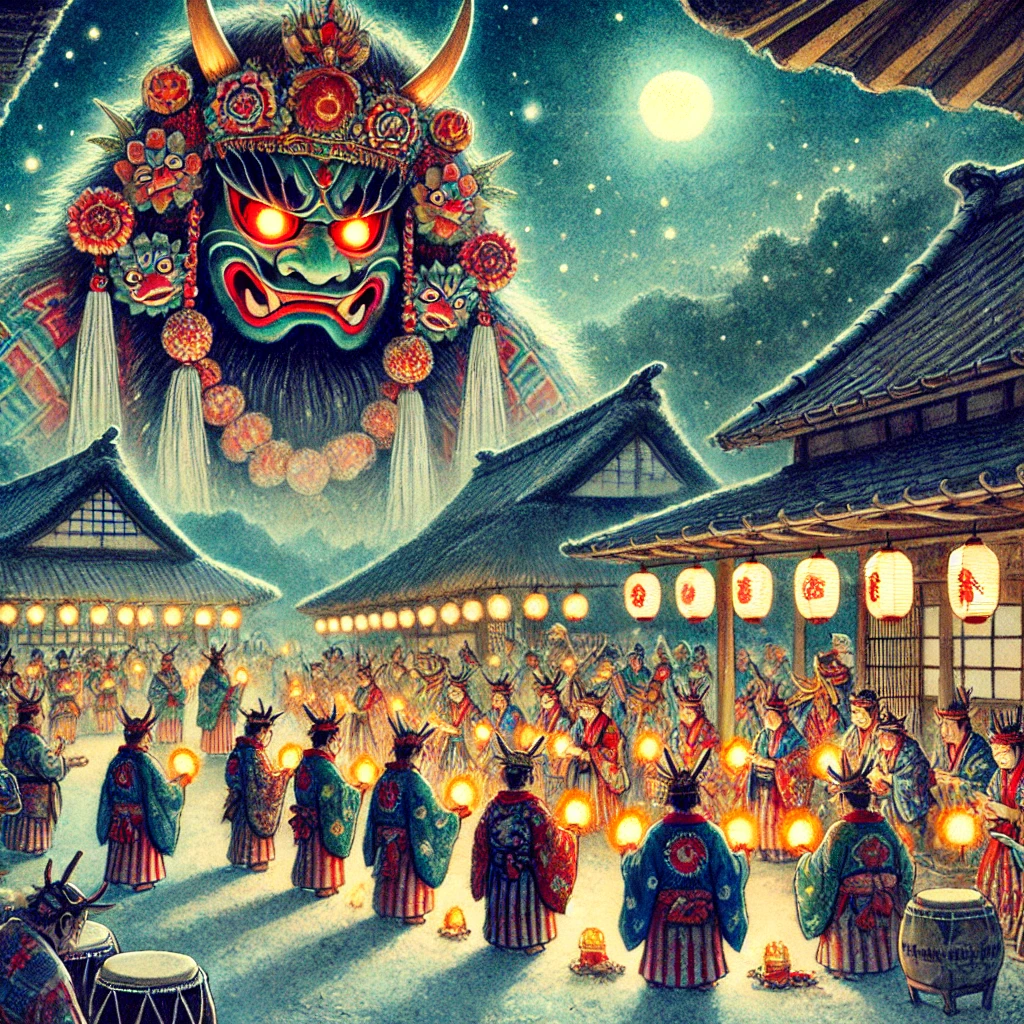
Okinawa has a mystical traditional event known as “Kamidari.” This ritual is believed to involve the gods patrolling the village, watching over the lives of the people, and praying for the village’s peace and prosperity. However, Kamidari also has a terrifying aspect.
There are stories passed down through generations about witnessing the enormous figure of a god in the middle of the night or about people who disrespected the gods suddenly collapsing or developing a high fever. The reason Okinawans feel fear towards Kamidari lies in their deep reverence and awe for the gods’ power.
On the other hand, Kamidari has a significant impact on Okinawa’s spiritual world. It forms the relationship between gods and humans, fosters respect for nature, and ensures the inheritance of traditions. Kamidari is a crucial part of Okinawa’s culture and spirituality. It is a valuable cultural heritage handed down from ancestors and must be carefully preserved to protect Okinawa’s identity.
In this blog post, I will delve into the meaning and purpose of Kamidari, the terrifying experiences associated with it, and its influence on Okinawa’s spiritual world. Through the unique atmosphere of Kamidari, which blends sanctity and fear, you will feel the depth of Okinawa’s rich culture and spirituality.
You will be drawn into a mystical world where the power of the gods and the faith of the people intertwine. By understanding the special significance of Kamidari, you will deepen your appreciation of Okinawa’s traditional culture. Let’s dive together into the world of Kamidari!
- What is Kamidari?
- The Meaning and Purpose of Kamidari
- The Period and Implementation of Kamidari
- Fearful Experiences Associated with Kamidari
- Sightings of the Gods
- Incidents of Angering the Gods
- Experiences of Feeling the Gods’ Power
- Reasons Okinawans Feel Fear Towards Kamidari
- Impact of Kamidari on Okinawa’s Spiritual World
- The Relationship Between Gods and Humans
- Respect for Nature
- Inheritance and Protection of Tradition
- Conclusion
- Q&A
- Conclusion
What is Kamidari?
The Meaning and Purpose of Kamidari
The Gods’ Patrol of the Village
Kamidari, a traditional event in Okinawa, means the gods patrol the village. This ritual is believed to involve the village guardian gods walking around the village, watching over the lives of the villagers. Kamidari is a vital event for praying for the village’s peace and prosperity.
The Guardian Gods Watching Over the Villagers
In Kamidari, the village guardian gods are believed to closely watch over the villagers’ lives. The gods wish for each villager’s health and happiness, staying close to their daily lives. This divine protection allows the villagers to live in peace.
The Gods’ Involvement in the Villagers’ Lives
It is believed that through Kamidari, the gods directly intervene in the villagers’ lives. For example, the gods are thought to help fulfill wishes for abundant crops, successful fishing, family health, and fertility. The gods share in both the joys and sorrows of the villagers.
Prayers for Peace and Prosperity
One of Kamidari’s purposes is to pray for the village’s peace and prosperity. It is believed that the gods bring happiness and abundance to the village by patrolling it. The villagers offer prayers to the gods, wishing for bountiful harvests, health, and family safety. Kamidari is a crucial opportunity for the villagers to communicate their wishes to the gods.
Wishes for Abundant Harvests, Health, and Family Safety
During Kamidari, villagers pray to the gods for abundant harvests, family health, and household safety. For villagers living in Okinawa’s harsh natural environment, having these wishes fulfilled is of utmost importance. By offering heartfelt prayers to the gods, the villagers believe their wishes will come true.
An Opportunity to Communicate the Villagers’ Wishes to the Gods
Kamidari is a precious opportunity for the villagers to directly communicate their various daily wishes to the gods. Usually, prayers are offered individually, but during Kamidari, the entire village’s wishes are conveyed to the gods. Through this special occasion, the villagers deepen their bond with the gods.
A Ritual for Purging Evil Spirits
Kamidari also has the significance of purging evil spirits. It is believed that by patrolling the village, the gods expel bad spirits and misfortunes. The villagers wish for the removal of negative elements such as illness, misfortune, and conflict through the gods’ power. Kamidari is an essential ritual for purifying the village and inviting good fortune.
The Purpose of Expelling Bad Spirits and Misfortunes
Kamidari aims to expel the bad spirits and misfortunes accumulated in the village. The negative energy generated in the villagers’ daily lives is purified and removed by the gods’ power. This purification allows the entire village to be cleansed, enabling the villagers to start their daily lives afresh.
The Purification of the Village and the Invitation of Good Fortune
Through Kamidari, the village is purified, and good fortune is believed to be invited. As the gods patrol the village, they bring blessings, and a bright hope dwells in the hearts of the people. Kamidari is a crucial ritual for inviting the gods’ blessings into the villagers’ lives.
The Period and Implementation of Kamidari
Conducted from July to August of the Lunar Calendar
Kamidari is primarily conducted from July to August of the lunar calendar. This period is crucial as it precedes the harvest of crops and coincides with the Obon period when the spirits of ancestors are welcomed. By conducting Kamidari, the villagers pray for abundant harvests and the ancestors’ protection.
An Important Period Before the Harvest of Crops
The period from July to August of the lunar calendar is crucial for Okinawa’s farming villages, as it precedes the harvest of crops. By conducting Kamidari during this period, the villagers pray to the gods for abundant crops. They sincerely wish for the gods’ power to bring about a rich harvest.
The Relationship with the Obon Period for Welcoming Ancestors’ Spirits
The period from July to August of the lunar calendar, when Kamidari is conducted, overlaps with the Obon period for welcoming ancestors’ spirits. In Okinawa, there is a custom of welcoming and paying respects to the spirits of ancestors during the Obon period. Through Kamidari, respecting and seeking the protection of the ancestors’ spirits holds significant meaning for the villagers.
Gods Wearing Masks and Costumes
During Kamidari, people dressed as gods wear masks and costumes and parade around the village. The masks represent the gods and come in various forms, including lions, demons, and humans. The costumes, modeled after the gods’ attire, are characterized by vibrant colors and unique patterns. By wearing these masks and costumes, people embody the gods as they patrol the village.
Diverse Masks Representing the Gods
The masks used in Kamidari represent the gods and come in many forms. A lion mask represents the gods’ bravery and strength, while a demon mask symbolizes the gods’ power to repel evil spirits. There are also masks in human form, signifying the gods’ transformation into human figures. These masks express the diverse nature and roles of the gods.
Vibrant Costumes Mimicking the Gods’ Attire
Those who play the gods in Kamidari wear vibrant costumes mimicking the gods’ attire. The costumes, characterized by vivid colors and unique patterns, express the gods’ sanctity and dignity. By wearing these costumes, people come closer to embodying the gods, borrowing their power to patrol the village. The costumes play an essential role in leaving a strong impression of the gods on the villagers.
Offerings and Dedications by the Villagers
During Kamidari, villagers make offerings to the gods. The offerings typically include food items such as rice, sake, and fruits. These offerings express gratitude and prayers to the gods. Additionally, villagers sometimes perform songs and dances to dedicate to the gods.
Food Offerings to the Gods
During Kamidari, villagers primarily offer food items to the gods. Rice and sake are important offerings representing gratitude to the gods. Offering fruits and vegetables also carries the wish for a bountiful harvest. These offerings play a crucial role in deepening the bond between the gods and the villagers.
Dedication of Songs and Dances to the Gods
Villagers sometimes perform songs and dances to dedicate to the gods. Sacred songs praising the gods and powerful dances expressing the gods’ strength demonstrate the villagers’ sincerity and respect. These dedications deepen the spiritual connection between the gods and the villagers, making Kamidari more meaningful.
Ceremonial Songs and Dances
Kamidari is both a sacred ritual and a celebratory occasion for the villagers. As the gods patrol the village, celebratory songs and dances are performed. Villagers sing and dance to the sounds of traditional instruments such as drums and the sanshin. These songs and dances express the villagers’ feelings of welcoming the gods and praying for the village’s peace and prosperity.
Traditional Songs and Dances to Welcome the Gods
The songs and dances performed during Kamidari are essential for welcoming and showing respect to the gods. The songs often feature spirited shouts announcing the arrival of the gods and lyrics praising their power. The dances often imitate the gods’ forms or express their strength. These traditional songs and dances are vital elements that enhance the atmosphere of Kamidari.
Expressions of the Villagers’ Wishes for Peace and Prosperity
The songs and dances performed during Kamidari reflect the villagers’ earnest wishes for peace and prosperity. Powerful singing voices wishing for a bountiful harvest and graceful dances praying for family safety express the villagers’ deepest desires. The songs and dances dedicated to the gods are the villagers’ prayers, conveyed to the
gods through Kamidari.
Fearful Experiences Associated with Kamidari
Sightings of the Gods
Nighttime Sightings of Enormous Gods
There are stories of people witnessing the figures of gods during the night in the Kamidari period. In one village, a man walking outside at night saw the enormous figure of a god. This god, many times larger than a human, was said to float above the village. The man was so terrified that he froze on the spot.
The Enormous Figure of a God Floating Above the Village
The god witnessed at night was said to have an enormous figure floating above the village. This figure, so large it surpassed human imagination, covered the entire village like a cloud. The man who saw it was overwhelmed by the unbelievable sight, losing his words. This enormous figure might signify the gods’ greatness and power.
The Witness’s Terrifying Experience
The man who saw the god’s figure was so terrified that he couldn’t move. Overwhelmed by the god’s presence, he felt his own insignificance. Even after witnessing the god, he trembled with fear for some time. This experience might be a unique one only those who directly encounter the gods can understand.
Depictions of Burning Red Eyes
Some witnesses of the gods’ figures have testified that the gods’ eyes were burning red. These red eyes might represent the gods’ anger or dignity. The glowing red eyes in the dark also contribute to people’s fear.
Red Eyes Representing the Gods’ Anger and Dignity
The depiction of the gods’ burning red eyes may express their anger and dignity. The color red evokes passion and anger, symbolizing the gods’ intense emotions. Additionally, red eyes serve as a symbol of the gods’ power and authority, signifying emotions and strength beyond human comprehension.
The Impressive Fear Elicited by the Red Eyes
The red eyes of the gods floating in the dark evoke a strong sense of fear in people. The glowing red eyes, like flames, seem to express the gods’ intense emotions. Additionally, the red eyes, reminiscent of blood, symbolize danger and death. This impression instills deep awe and reminds people of the gods’ presence.
Incidents of Angering the Gods
Disrespectful Acts Towards the Gods
During Kamidari, showing respect to the gods is crucial. However, some people still perform disrespectful acts towards the gods. In one village, a young man watching the gods’ procession made mocking remarks and suddenly collapsed on the spot.
Mocking Remarks Towards the Gods
One form of disrespectful act towards the gods is making mocking remarks. Making light of the gods’ existence or doubting their power is considered blasphemous. Additionally, mocking the gods’ appearance or ridiculing sacred rituals is also a significant insult to the gods. Such acts are believed to be likely to incur the gods’ wrath.
The Sudden Collapse of Those Who Disrespect the Gods
The story of the young man who mocked the gods and collapsed on the spot shows the terrifying power of the gods’ anger. Disrespectful acts towards the gods are thought to be immediately punished. The young man’s body might have been affected by the gods’ anger, leading to his collapse. This incident strongly impressed upon people the importance of respecting the gods.
Sudden Fainting and High Fever
Those who perform disrespectful acts towards the gods might suddenly faint or develop a high fever. This is interpreted as the result of incurring the gods’ wrath. The villagers are taught the importance of respecting the gods and avoiding disrespectful acts.
Fainting as a Result of Incurring the Gods’ Wrath
Sudden fainting by those who disrespect the gods is considered a result of incurring the gods’ wrath. The energy of the gods’ anger might be so powerful that it moves the human body and takes away consciousness. Fainting illustrates the terrifying power of the gods’ anger and reinforces the importance of respecting the gods.
High Fever Caused by the Gods’ Wrath
The high fever experienced by those who disrespect the gods is also thought to be caused by the gods’ anger. High fever, a symptom of internal disturbance, is seen as an illness brought about by the gods’ anger. This fever serves as a warning to those who forget their reverence for the gods, illustrating the terrifying power of the gods.
Interpretations of Punishments from the Gods’ Wrath
Fainting and high fever are interpreted as punishments from the gods’ wrath. Disrespectful acts towards the gods are seen as threats to the village’s peace and prosperity. The villagers are taught to act cautiously and respect the gods to avoid incurring their wrath.
Divine Punishment for Disrespectful Acts
Disrespectful acts towards the gods are believed to attract divine punishment. Sudden fainting and high fever are interpreted as admonishments from the gods and punishments for disrespectful acts. This punishment demonstrates the gods’ authority and teaches the importance of respecting the gods.
Lessons on the Importance of Reverence for the Gods
Punishment from the gods’ wrath serves as a lesson on the importance of reverence for the gods. By respecting and fearing the gods, people can avoid the gods’ anger. Additionally, reverence for the gods is the foundation for maintaining the village’s peace and prosperity. Punishment from the gods’ wrath imparts this crucial lesson to the people.
Experiences of Feeling the Gods’ Power
A Village Suffering from Drought
One year, the village suffered from a long drought before Kamidari took place. The crops did not grow, and the villagers lacked food. They performed rain-making rituals and prayed to the gods, but rain did not come.
Crop Damage from a Prolonged Drought
The crop damage from the drought posed a severe threat to the villagers’ lives. The prolonged absence of rain caused the crops to wither, drastically reducing the harvest. The villagers struggled to secure food, facing hunger. This situation was a critical crisis that threatened the village’s survival.
Rain-Making Rituals and Prayers to the Gods
The villagers, suffering from the drought, performed rain-making rituals and prayed to the gods. In these rituals, the village elders led the prayers, asking the gods to bring rain. Each villager also offered heartfelt prayers to the gods. However, despite their efforts, the rain did not come, and the villagers’ anxiety grew daily.
Sudden Rain After the Gods’ Procession
In such circumstances, the day of Kamidari arrived. After the gods patrolled the village, the sky suddenly darkened, and heavy rain began to fall. The drought-stricken village received the blessing of rain. The villagers believed the rain was brought by the gods’ power.
Sudden Weather Change After Kamidari
After Kamidari, the village experienced a sudden weather change. The long sunny sky suddenly darkened, and rain clouds gathered. This sudden change seemed to be brought about by the gods’ arrival. The villagers felt that this weather change was a manifestation of the gods’ power.
The Blessing of Rain That Relieved the Drought
The rain that began to fall after Kamidari was a blessing for the drought-stricken village. The long-awaited rain finally arrived. The heavy rain gave life-giving water to the withered crops, bringing new hope to the village. The villagers were grateful for this rain, believing it was a gift from the gods.
Interpretation as a Manifestation of the Gods’ Power
The occurrence of rain after Kamidari during the drought was interpreted as a manifestation of the gods’ power. The villagers believed the gods saw the village’s suffering and brought rain to save them. Such events strengthened the villagers’ faith in the gods and their power.
The Gods’ Perception of the Village’s Suffering
The villagers believed the gods perceived the village’s suffering and helped them. The gods did not overlook the village’s hardship from the prolonged drought. The gods responded to the villagers’ prayers and brought rain to save the village. This event was seen as proof of the strong bond between the gods and the villagers.
Strengthening Faith in the Gods’ Power
The rain after Kamidari strengthened the villagers’ faith in the gods’ power. The villagers directly felt the gods’ power and realized their greatness. Additionally, the fulfillment of their long prayers deepened their faith in the gods. This event reaffirmed Kamidari’s sanctity and importance, reinforcing the villagers’ reverence for the gods.
Reasons Okinawans Feel Fear Towards Kamidari
Reverence for the Gods
Viewing the Gods as Entities to Be Respected and Feared
Okinawans have long viewed the gods as entities to be respected and feared. The gods are considered beings with power beyond human capabilities and controllers of natural threats. Therefore, people hold deep reverence for the gods.
The Gods as Beings Beyond Human Power
Okinawans recognize the gods as beings beyond human power. The gods possess forces beyond human understanding and are considered great beings that move the world. Humans are powerless before the gods’ power and are expected to follow their will. Such a perception instills
deep reverence for the gods.
The Gods’ Power Over Natural Threats
The gods are considered controllers of natural threats. Natural disasters such as storms, tsunamis, and droughts are sometimes interpreted as expressions of the gods’ anger or warnings. Additionally, blessings such as bountiful harvests and successful fishing are also believed to be brought by the gods’ power. The gods’ control over nature instills awe in people.
The Awe of Witnessing the Gods’ Figures
Seeing the gods’ figures during Kamidari evokes a sense of awe. Witnessing the gods’ figures, usually unseen, makes people feel the gods’ presence more strongly. Additionally, seeing the gods’ figures directly is considered a sacred taboo.
Awe of Witnessing Usually Unseen Gods’ Figures
Seeing the gods’ usually unseen figures instills a strong sense of awe in people. The gods’ figures, mysterious and beyond human imagination, overwhelm people with their presence. Additionally, witnessing the gods’ figures provides a direct experience of their power. Such experiences deepen reverence for the gods.
Taboo of Directly Seeing the Gods’ Figures
Among Okinawans, there is a belief that directly seeing the gods’ figures is taboo. The gods’ figures are considered so sacred and exalted that they should not be seen by human eyes. Breaking this taboo is feared to incur the gods’ wrath. Therefore, people avoid seeing the gods’ figures directly and approach the gods with a sense of awe.
Fear of the Gods’ Power
Stories of the Gods’ Power in Traditions
Okinawan traditions are filled with stories illustrating the gods’ power. For example, stories of the sea becoming rough and massive tsunamis occurring when the gods are angry. The gods are also believed to have the power to heal illnesses and bless people with children. Such power of the gods instills both fear and respect in people.
The Gods’ Power to Cause Natural Phenomena
Many stories of the gods’ power involve causing natural phenomena. Stories of storms and rough seas caused by the gods’ anger illustrate the terrifying power of the gods. Additionally, droughts and floods are also believed to be brought by the gods’ power. Such power to control natural phenomena instills awe in people.
The Gods’ Power to Heal Illnesses and Grant Fertility
Some stories in traditions depict the gods’ power to heal illnesses and grant fertility. Stories of people miraculously recovering from illnesses after praying to the gods demonstrate the gods’ remarkable power. Additionally, stories of childless couples praying to the gods and being blessed with children are also passed down. Such power of the gods instills hope and reverence in people.
Fear of Defying the Gods’ Power
Defying the gods’ power is believed to bring great misfortune. It is thought that those who incur the gods’ wrath will suffer from illnesses or misfortunes. Therefore, people fear the gods’ power and avoid defying them.
Concerns About Misfortune Due to the Gods’ Anger
Defying the gods’ power is believed to incur the gods’ wrath and invite misfortune. Acts of rebellion against the gods or blasphemy are considered actions that incur the gods’ anger. The fear that the gods’ anger might bring illnesses, misfortunes, and natural disasters is ingrained in people’s hearts.
Attitudes of Avoiding Defiance Against the Gods
Out of fear of the gods’ power, people avoid defying the gods. It is considered important to follow the gods’ will and respect them. People are mindful of their actions in daily life, avoiding behavior that might defy the gods. Such attitudes reflect the awe towards the gods’ power and are seen as wisdom for maintaining a good relationship with the gods.
Frightening Stories Passed Down Through Generations
Generational Transmission of Fearful Experiences
Stories of frightening experiences related to Kamidari have been passed down through generations. These stories are shared among the villagers and from ancestors to descendants. They play a role in conveying the mystery and terror of Kamidari.
Experiences Passed Down from Ancestors to Descendants
Frightening experiences are passed down from ancestors to descendants. Stories told by parents and grandparents to children ensure the terror of Kamidari is inherited by the next generation. Such experiences are cherished and passed down as family treasures.
Sharing Frightening Experiences Among Villagers
Frightening experiences are widely shared among villagers. Strange occurrences during Kamidari and experiences of feeling the gods’ power are discussed among villagers. Sharing such experiences enhances the villagers’ awareness of Kamidari and strengthens their reverence for the gods.
The Role of Traditions in Fostering Fear
Frightening experiences play a role in fostering fear towards Kamidari. Especially children, who hear these stories from a young age, develop a sense of awe towards Kamidari. Traditions are an essential means of conveying the sanctity and terror of Kamidari to the next generation.
Instilling Fear from Early Childhood
Children are instilled with fear by hearing frightening stories about Kamidari from an early age. Stories told by parents and grandparents leave a strong impression on children, fostering a sense of awe towards Kamidari. Such fear persists into adulthood and forms the foundation for Kamidari’s sanctity.
Tradition of Conveying Kamidari’s Sanctity and Terror
Traditions play a crucial role in conveying Kamidari’s sanctity and terror to the next generation. Through frightening stories, Kamidari is shown to be not just an event but a sacred ritual. Stories of the gods’ power and the fate of those who defy them cultivate reverence for the gods. Traditions are essential for preserving and inheriting the spirituality of Kamidari.
Impact of Kamidari on Okinawa’s Spiritual World
The Relationship Between Gods and Humans
Strengthening the Bond with the Gods Through Kamidari
Kamidari is an essential opportunity to strengthen the bond between the gods and humans. The gods patrolling the village and watching over people’s lives make people feel a close relationship with the gods. Additionally, offering prayers and dedicating offerings deepen the bond between the gods and people.
The Intimate Relationship Through the Gods’ Patrol of the Village
The gods’ patrol of the village is significant in building an intimate relationship between the gods and humans. By descending directly into the villagers’ living space, the gods make their presence more tangible. This sense of the gods watching over each villager’s life fosters a deep connection with the gods.
Deepening the Bond Through Prayers and Offerings
During Kamidari, people offer prayers and dedicate offerings to the gods. Through prayers, people convey their wishes to the gods and seek their protection. Offerings also express gratitude to the gods. These acts of prayer and dedication strengthen the bond between people and the gods, enhancing their relationship.
Maintaining and Strengthening the Relationship Through Rituals
Kamidari plays a role in maintaining and strengthening the relationship between the gods and humans. This regular ritual ensures that the connection between the gods and people is preserved. Additionally, through Kamidari, people can express their gratitude and prayers to the gods.
Maintaining the Connection Through Regular Rituals
Kamidari is a regular ritual conducted at fixed times each year. This regularity maintains the continuous connection between the gods and people. Such regular rituals are crucial for preserving the relationship between the gods and humans. Through Kamidari, people feel the gods’ presence and reaffirm their connection.
Expressing Gratitude and Prayers
Kamidari is also a significant opportunity for people to express their gratitude and prayers to the gods. It allows people to directly convey their feelings of gratitude experienced in daily life to the gods. Additionally, by praying for their wishes, people feel a stronger bond with the gods. Kamidari is essential for strengthening the relationship between the gods and humans.
Respect for Nature
A Worldview That Sees Nature’s Power as the Gods’ Power
Okinawans hold a worldview that perceives the power of nature as the power of the gods. Natural features like mountains, seas, and rivers are considered the dwelling places of the gods, with the gods’ power residing within them. This worldview is reflected in Kamidari as well.
The Presence of Gods in Nature
Okinawans believe that gods reside in nature. Each natural element, such as mountains and seas, is home to specific gods. The beauty and grandeur of nature are seen as expressions of the gods’ power. People feel the presence of gods within nature, inseparable from their natural surroundings.
Reflection of Nature Worship in Kamidari
Kamidari heavily reflects elements of nature worship. As the gods patrol the village, they pass through natural landscapes. By traversing mountain paths and walking along the coast, the gods become one with nature. Additionally, offerings during Kamidari often include agricultural products, reflecting nature’s blessings. Kamidari thus expresses the deep connection between nature and the gods.
Fostering Respect for Nature
Kamidari helps people foster respect for nature. By considering the gods to dwell within nature, people treat nature with care and seek to live in harmony with it. Kamidari is also an opportunity
to express gratitude towards nature.
Fostering an Attitude of Valuing Nature
Kamidari plays a significant role in fostering an attitude of valuing nature. By seeing the gods within nature, people treat nature as sacred. Polluting or destroying nature is seen as an act of blasphemy against the gods. Such an awareness fosters a mindset of valuing nature.
Expressing Gratitude to Nature
Kamidari is also an opportunity to express gratitude towards nature. People are grateful for nature’s blessings and consider them gifts from the gods. By offering nature’s bounty during Kamidari, people express their gratitude to the gods. Such expressions of gratitude are essential for building a harmonious relationship with nature.
The Importance of Living in Harmony with Nature
Kamidari teaches the importance of living in harmony with nature. By considering the gods to reside within nature, people respect nature and are grateful for its blessings. Additionally, accepting the natural threats as the gods’ power teaches the importance of living in harmony with nature.
The Importance of Respecting Nature
Kamidari teaches the importance of respecting nature. Nature is the dwelling place of the gods, with their power residing within it. Respecting nature is crucial for building a harmonious relationship with it. Kamidari plays a significant role in fostering such an attitude.
Learning the Wisdom of Coexisting with Nature
Kamidari is an opportunity to learn the wisdom of coexisting with nature. By being grateful for nature’s blessings and accepting its threats, people learn to live in harmony with nature. Through Kamidari, people realize the importance of living with nature rather than against it. Such wisdom is a valuable part of the knowledge Okinawans have cultivated over a long history.
Inheritance and Protection of Tradition
Inheritance of Okinawa’s Traditional Culture
Kamidari plays a significant role in inheriting Okinawa’s traditional culture. This ritual is an essential part of the culture passed down from ancestors. Through Kamidari, people learn the wisdom and faith of their ancestors and pass them on to the next generation.
Kamidari as an Inherited Culture from Ancestors
Kamidari is a valuable culture inherited from ancestors. Okinawans have long interacted with the gods through Kamidari, learning how to live in harmony with nature. Such wisdom and faith of ancestors are preserved in the form of Kamidari today. Kamidari is a crucial event forming the core of Okinawa’s culture.
The Role of Passing Culture to the Next Generation
Kamidari plays a crucial role in passing Okinawa’s traditional culture to the next generation. By participating in Kamidari, children learn the meaning and importance of this ritual. Additionally, adults convey their experiences and knowledge to children, ensuring the inheritance of Kamidari’s spirituality. Thus, Kamidari is a cultural treasure passed down through generations.
Inheritance of Wisdom and Values from Ancestors
Kamidari embodies the wisdom and values inherited from ancestors. Respect for the gods, living in harmony with nature, and wishes for village peace and prosperity are essential values passed down from ancestors. These values are transmitted to the next generation through Kamidari.
Ancestors’ Wisdom and Values in Kamidari
Kamidari is filled with the wisdom and values cultivated by ancestors over a long history. Respecting the gods and living in harmony with nature are ways of life practiced and preserved by ancestors. Additionally, the wish for village peace and prosperity is a value cherished by ancestors. These wisdom and values are preserved in the form of Kamidari today.
Passing Wisdom and Values to the Next Generation
Kamidari plays a role in passing the wisdom and values inherited from ancestors to the next generation. Children participate in Kamidari and learn the importance of respecting the gods and living in harmony with nature. Additionally, the experiences and teachings of adults deeply impress children, forming the foundation for inheriting the wisdom and values of ancestors. Thus, Kamidari is a key to passing Okinawa’s spiritual culture across generations.
Cultural Inheritance to the Next Generation
Kamidari is an essential means of passing Okinawa’s culture to the next generation. By participating in Kamidari, children learn the meaning and importance of this ritual. Additionally, adults convey their knowledge to children, fulfilling their responsibility to preserve this culture.
Children’s Participation and Learning in Kamidari
Children learn the meaning and importance of Kamidari by participating from a young age. By experiencing how to offer to the gods and the rituals’ manners, children feel the spirituality of Kamidari firsthand. Additionally, by observing adults’ actions, they understand the thoughts embedded in Kamidari. Such experiences lay the foundation for children to become bearers of Kamidari.
Transmitting Knowledge of Kamidari from Adults to Children
Adults fulfill their responsibility to preserve Kamidari’s culture by transmitting their knowledge and experiences to children. They teach children about the rituals’ meaning, origins, and ancestral stories. Additionally, by sharing their experiences, they convey the sanctity and terror of Kamidari to children. This transmission of knowledge is essential for children to deeply understand Kamidari’s spirituality and inherit this culture.
Conclusion
The Importance of Kamidari
Kamidari is an extremely important event in Okinawa’s spiritual world. It embodies key elements of Okinawan culture, such as interaction with the gods, harmony with nature, and inheritance of traditions. Additionally, it is a sacred ritual for conveying the villagers’ wishes for peace and prosperity to the gods. Thus, Kamidari is a cornerstone of Okinawans’ hearts and a symbol of their spiritual culture.
A Central Event in Okinawa’s Spiritual World
Kamidari is a central event in Okinawa’s spiritual world. It embodies Okinawans’ beliefs and worldviews, such as interaction with the gods and harmony with nature. Additionally, it is a venue for expressing the wisdom and values inherited from ancestors. Thus, Kamidari is the core of Okinawa’s spiritual culture and the foundation of people’s hearts.
A Ritual for Praying for the Village’s Peace and Prosperity
Kamidari is a sacred ritual for praying for the village’s peace and prosperity. Offering prayers to the gods and wishing for the village’s well-being is a crucial role of Kamidari. Additionally, it is a venue for conveying the villagers’ various wishes to the gods. Thus, Kamidari is an important ritual for connecting the villagers’ thoughts with the gods.
The Background of Fearful Experiences: Reverence and Awe for the Gods
The background of fearful experiences related to Kamidari lies in reverence and awe for the gods. The awe of the gods’ existence and fear of their power are crucial elements supporting Kamidari’s sanctity. Additionally, these feelings are essential for expressing respect for the gods. Fearful experiences are an important aspect of Kamidari, illustrating the relationship between the gods and humans.
Deep Awe for the Gods’ Existence and Power
The background of fearful experiences related to Kamidari includes deep awe for the gods’ existence. The gods are beings beyond human understanding, and even seeing their figures is considered awe-inspiring. Additionally, fear of the gods’ power is a significant element of fearful experiences. The fear of misfortunes brought by the gods’ anger is deeply ingrained in people’s hearts.
The Unique Atmosphere Created by Reverence and Fear for the Gods
Reverence and fear for the gods create Kamidari’s unique atmosphere. The blend of sanctity and terror enhances Kamidari’s mystery. Additionally, reverence and fear for the gods influence people’s actions. The careful behavior and offerings to the gods reflect the awe towards them. Such an atmosphere embodies Kamidari’s spirituality.
The Impact of Kamidari on Okinawa’s Culture and Spirituality
Kamidari significantly impacts Okinawa’s culture and spirituality. It forms the relationship between the gods and humans, fosters respect for nature, and ensures the inheritance of traditions. These elements form the foundation of Okinawa’s spiritual culture. Additionally, through Kamidari, Okinawans confirm and strengthen their identity. Thus, Kamidari is a cornerstone of Okinawa’s culture and spirituality.
Formation and Maintenance of the Relationship Between Gods and Humans
Kamidari plays a crucial role in forming and maintaining the relationship between the gods and humans. Interaction with the gods and deepening bonds through prayers and offerings are the foundation for building an intimate relationship with the gods. Additionally, Kamidari’s regularity is essential for continuously preserving this relationship. Thus, Kamidari functions as the key to the relationship between the gods and humans.
Fostering Respect and Harmony with Nature
Kamidari significantly fosters respect and harmony with nature. Perceiving the gods within nature and learning the importance of living in harmony with it form the foundation of Okinawans’ natural worldview. Additionally, the gratitude expressed towards nature during Kamidari supports the spirit of harmony with nature. Thus, Kamidari greatly contributes to forming Okinawa’s natural worldview and spirituality.
Inheritance and Transmission of Traditional Culture
Kamidari is essential for inheriting and transmitting Okinawa’s traditional culture. It embodies the wisdom and values inherited from ancestors, making it a cultural treasure. Additionally, by participating in Kamidari and learning from adults, children ensure the culture’s transmission across generations. Thus, Kamidari holds the key to the inheritance and
development of Okinawa’s traditional culture.
Kamidari as a Symbol of Inheritance and Protection of Tradition
Kamidari symbolizes the inheritance and protection of Okinawa’s tradition. It is a valuable cultural heritage inherited from ancestors and a sacred ritual embodying Okinawa’s spirituality and worldview. Preserving Kamidari and passing it on to the next generation is crucial for protecting Okinawa’s culture and identity. Thus, Kamidari holds significant meaning as a symbol of inheritance and protection of tradition.
A Valuable Cultural Heritage Inherited from Ancestors
Kamidari is a valuable cultural heritage inherited from ancestors. The wisdom and thoughts of past generations are preserved in Kamidari, cultivated and protected over a long history. Additionally, Kamidari ensures that the faith and values of ancestors are passed down to the present. Thus, Kamidari forms the core of Okinawa’s culture and is an irreplaceable heritage.
A Sacred Ritual Embodying Okinawa’s Spirituality and Worldview
Kamidari is a sacred ritual embodying Okinawa’s spirituality and worldview. It encompasses elements essential to Okinawans’ hearts, such as faith in the gods, harmony with nature, and inheritance of traditions. Additionally, Kamidari expresses and reaffirms Okinawa’s unique worldview and values. Thus, Kamidari forms the core of Okinawa’s spiritual culture.
Kamidari is essential for understanding Okinawa’s culture and spirituality. The unique atmosphere blending sanctity and terror, the formation of the relationship between the gods and humans, the fostering of respect for nature, and the inheritance of traditions are all roles played by Kamidari. Additionally, the fearful experiences related to Kamidari illustrate the depth of Okinawa’s spiritual world, created by reverence and fear for the gods. By carefully preserving Kamidari and passing it on to the next generation, we have the responsibility to connect Okinawa’s rich culture and spirituality to the future. Kamidari is a symbol of Okinawa’s identity and an irreplaceable cultural heritage.
Q&A
What is Kamidari?
Kamidari is a sacred ritual performed in the villages of Okinawa, where it is believed that the gods patrol the village, watching over the lives of the people. This ritual is conducted to pray for the village’s peace and prosperity and to ward off evil spirits.
What kind of terrifying experiences are associated with Kamidari?
Terrifying experiences related to Kamidari include stories of witnessing the enormous figure of a god at night and incidents where people who acted disrespectfully towards the gods suddenly collapsed or developed a high fever. Additionally, there are accounts of villages suffering from drought where rain fell after Kamidari, interpreted as a manifestation of the gods’ power.
Why do the people of Okinawa feel fear towards Kamidari?
The fear towards Kamidari among the people of Okinawa stems from their deep reverence for the gods, fear of the gods’ power, and the terrifying stories passed down through generations. The gods are considered beings beyond human understanding, and even seeing their figures is regarded as awe-inspiring. The fear of misfortunes brought about by the gods’ anger is also deeply ingrained in the hearts of the people.
What impact does Kamidari have on Okinawa’s spiritual world?
Kamidari supports the foundational elements of Okinawa’s spiritual culture, including the formation of relationships between gods and humans, fostering respect for nature, and the inheritance of traditions. Through Kamidari, the people of Okinawa affirm and strengthen their identity. Thus, Kamidari is a crucial aspect of Okinawa’s culture and spirituality.
Why is it important to preserve and pass on Kamidari?
Preserving and passing on Kamidari is crucial for connecting Okinawa’s rich culture and spirituality to the future. Kamidari is a valuable cultural heritage inherited from ancestors and a sacred ritual embodying Okinawa’s spirituality and worldview. By preserving and transmitting Kamidari, the identity of Okinawa is also protected.
Conclusion
This blog post provides a detailed explanation of Kamidari, a traditional event in Okinawa, covering its meaning, purpose, terrifying experiences, and its impact on the spiritual world of the Okinawan people.
Kamidari is a sacred ritual believed to involve the gods patrolling the village and watching over the lives of the people. This event aims to pray for the village’s peace and prosperity and to ward off evil spirits. Terrifying experiences associated with Kamidari include stories of witnessing the enormous figure of a god at night and incidents where people who acted disrespectfully towards the gods suffered misfortunes.
The reasons why the people of Okinawa feel fear towards Kamidari include their deep reverence for the gods, fear of the gods’ power, and the terrifying stories passed down through generations. On the other hand, Kamidari has a significant impact on Okinawa’s spiritual world, supporting the formation of relationships between gods and humans, fostering respect for nature, and the inheritance of traditions. It is a crucial aspect of Okinawa’s culture and spirituality.
Preserving and passing on Kamidari is essential for connecting Okinawa’s rich culture and spirituality to the future. This blog post will serve as a valuable resource to help readers understand the significance and importance of Kamidari and deepen their appreciation of Okinawa’s traditional culture.


コメント