
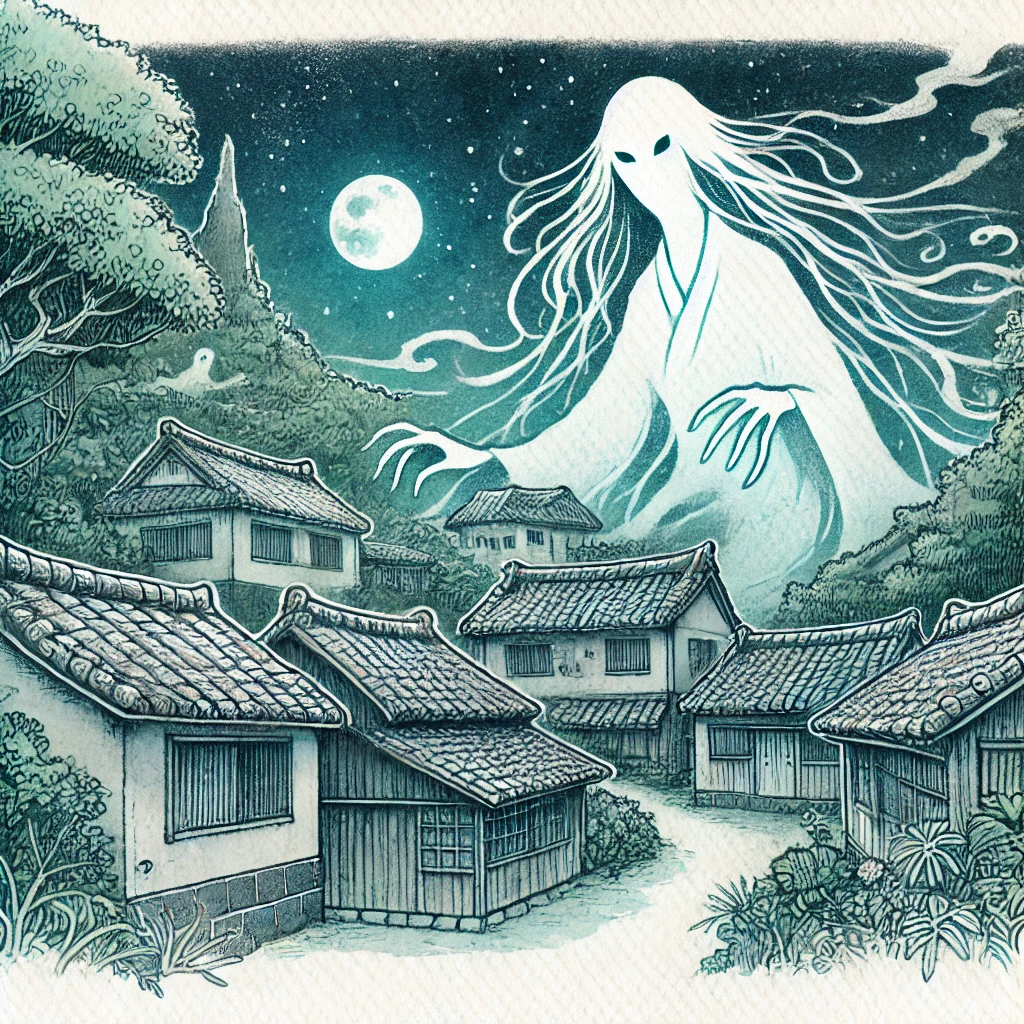
Okinawa’s Nightly Terrifying Folklore: “Haraushi”
The folklore of “Haraushi” (払子) is a chilling tale that has been passed down through the generations in Okinawa. This entity, said to be possessed by the souls of the deceased, is more than just a ghost story; it reflects the deep spiritual world and views on life and death of the Okinawan people.
The origins of the Haraushi legend are ancient, rooted in the worship of nature and ancestors. Incomprehensible incidents that occurred in places like Gushikami Village and Itoman City are known as real-life examples that illustrate the threat of Haraushi, leaving an indelible mark on people’s memories to this day.
However, Haraushi is not merely a figure of fear but also a respected entity embodying the souls of ancestors. For the people of Okinawa, Haraushi represents a reverence for and fear of the spirits of the dead, and it symbolizes a crucial connection to their ancestors.
Even in modern society, the Haraushi legend contributes to the preservation and development of Okinawan culture and attracts attention as a tourist resource. Moreover, there are many lessons to be learned from Haraushi about the sanctity of life and the respect for ancestors.
In this article, we will delve into the truth behind the Haraushi legend and explore the spiritual world and views on life and death in Okinawa. By uncovering the cultural significance hidden within Haraushi, you can experience the rich traditions and wisdom of Okinawa.
Let’s embark on a journey to explore the profound worldview behind the age-old ghost story of Haraushi. The journey to the essence of Okinawan culture begins now.
- What is Haraushi (払子)?
- Ghost Stories and Legends of Haraushi
- The Significance of Haraushi for the People of Okinawa
- Exploring the Spiritual World of Okinawa through Haraushi
- The Influence of Haraushi Legends
- Conclusion
- Q&A
- Conclusion
What is Haraushi (払子)?
Overview of Haraushi
Definition of Haraushi
Haraushi (払子) is a spiritual entity passed down through ancient Okinawan folklore, believed to be inhabited by the souls of the deceased. Haraushi can appear in various forms, including human, animal, or inanimate objects. While feared, it is also revered as an embodiment of ancestral spirits.
The term “Haraushi” combines “harau,” meaning “to dispel,” and “shi,” meaning “child.” This reflects the belief that Haraushi appears before people to dispel something.
Characteristics of Haraushi
Haraushi is generally considered to have the following characteristics:
- Possessed by the souls of the deceased
- Can take various forms such as human, animal, or object
- Instills fear in people
- Also an object of respect for ancestral spirits
- Deeply connected to traditional Okinawan beliefs
Haraushi is a deeply rooted entity in the lives of Okinawans, passed down through a long history. While the legends vary by region, they consistently associate Haraushi with the souls of the deceased.
Sometimes, Haraushi is believed to bring misfortune, but it also plays a role in comforting ancestral spirits and wishing for the safety of families and communities. Thus, Haraushi occupies an essential part of the spiritual world of the Okinawan people, symbolizing both fear and respect.
Origins and History of Haraushi
Origins of Haraushi Belief
The origins of the Haraushi belief date back to ancient Okinawa. Animistic nature worship and ancestor worship were prevalent, with a belief that spirits resided in all things. Within these beliefs, the souls of the deceased were also seen as influential in the present world.
In ancient Okinawa, it was believed that the souls of the deceased protected families and communities. However, some souls, unable to find peace, would wander the earth as Haraushi. This belief evolved over time, influenced by various religions and cultures, including Buddhism, Taoism, and shamanism, leading to the development of rituals and ceremonies related to Haraushi.
Evolution of Haraushi Legends
Haraushi legends have changed over time. Initially, they were passed down orally, leading to regional variations. However, in modern times, these legends have been documented, leading to wider sharing and preservation.
Since the 1960s, many books and articles about Haraushi have been published, and it has been featured in television and film. Thus, Haraushi remains an important part of Okinawan culture, continuing to draw attention as a key element in understanding the spiritual world of Okinawa.
Understanding the origins and history of Haraushi is crucial for a deep appreciation of Okinawan culture and beliefs. The Haraushi belief reflects the Okinawan view of life and death and offers lessons relevant to modern society. Tracing the evolution of Haraushi legends helps us understand how Okinawan culture has been preserved and developed.
Ghost Stories and Legends of Haraushi
The Gushikami Village Incident
Overview of the Incident
The Haraushi-related incident in Gushikami Village during the 1960s attracted significant attention. In this incident, a family experienced a series of mysterious deaths, leading villagers to suspect the involvement of Haraushi.
The incident began with the sudden death of the eldest son, followed by the deaths of the second and third sons. The family felt these deaths were not natural and suspected a spiritual cause.
The villagers believed that Haraushi had possessed the family, leading them to consult a priest to perform rituals to dispel Haraushi. However, strange occurrences continued even after the rituals.
Background and Impact of the Incident
The Gushikami Village incident shocked Okinawan society. It was rooted in traditional beliefs and customs, with the idea that the spirits of the deceased could protect or harm the living.
In Okinawa, it was believed that the souls of the deceased remained in the world for a period and could influence the living. The incident highlighted the deep connection between these traditional beliefs and the concept of Haraushi.
The incident had a broad impact on Okinawan society, garnering significant media coverage and raising awareness of Haraushi. It also led to a renewed interest in traditional beliefs and customs.
The Gushikami Village incident illustrated the terror of the Haraushi legend and the profound spiritual world of Okinawa. It prompts us to reflect on our own connections to ancestors and the deceased in the modern world.
The Itoman City Incident
Overview of the Incident
The Haraushi-related incident in Itoman City during the 1970s involved a woman who was said to be possessed by Haraushi, causing harm to her family.
The incident began with a quarrel between the woman and her husband, after which she started exhibiting strange behaviors and became violent towards her family. The family suspected possession by Haraushi and consulted a priest.
Despite rituals performed to dispel Haraushi, the woman’s abnormal behavior persisted, eventually leading to her hospitalization.
Background and Impact of the Incident
The Itoman City incident became widely known, reviving interest in Haraushi. The background of the incident involved traditional beliefs and gender roles in Okinawan society.
In Okinawa, it was believed that women were more susceptible to possession by Haraushi when faced with domestic issues, reflecting gender stereotypes about emotional and mental stability.
The incident had a significant impact, leading to extensive media coverage and increasing fear of Haraushi. It also sparked discussions on traditional beliefs and gender roles in Okinawan society.
The Itoman City incident highlighted the terror of the Haraushi legend and drew attention to gender issues within Okinawan society. It encourages us to consider gender-based stereotypes and discrimination in modern society.
Other Legends
Legend from Nago City
In Nago City, there is an intriguing legend about Haraushi. According to this legend, a man possessed by Haraushi caused harm to his family.
The man, who had failed in his work and was deeply depressed, began exhibiting strange behaviors and became violent towards his family. The family suspected Haraushi possession and consulted a priest.
The priest performed rituals to dispel Haraushi, and the man’s abnormal behavior subsided. This legend indicates that Haraushi can possess men as well.
Legend from Ishigaki Island
Ishigaki Island also has legends related to Haraushi. In one story, a woman possessed by Haraushi caused harm to her family.
The woman, grieving deeply after the death of her husband, began exhibiting strange behaviors and became violent towards her family. The family suspected Haraushi possession and consulted a priest.
Despite rituals to dispel Haraushi, the woman’s abnormal behavior persisted, and she was eventually hospitalized. This legend suggests that Haraushi is more likely to possess those experiencing deep sorrow.
Legends from Nago City and Ishigaki Island show that Haraushi can possess both men and women who are emotionally unstable. These legends remind us of the importance of mental health in modern society.
The Significance of Haraushi for the People of Okinawa
Reverence and Respect for the Souls of the Dead
Belief in the Souls of the Dead
The people of Okinawa have long held a reverence and fear for the souls of the dead, believing that they influence the living world.
In Okinawa, it is believed that when someone dies, their soul remains in the world for a certain period, protecting the family and community. Therefore, honoring and making offerings to the souls of the dead is of utmost importance.
However, some souls, unable to find peace, wander the earth as
Haraushi, bringing harm to the living.
Fear of Haraushi
Because Haraushi is seen as a manifestation of the souls of the dead, Okinawans have harbored a deep-seated fear of it. Possession by Haraushi is believed to cause mental instability and harm to family members.
To avoid Haraushi, Okinawans adhere to various customs, such as avoiding walking alone at night, steering clear of cemeteries, and not calling out the names of the dead carelessly.
Rituals and ceremonies are also performed to dispel Haraushi, with priests reciting prayers and offering sacrifices to protect the living from its influence.
The fear of Haraushi continues to be deeply ingrained in the hearts of Okinawans, reflecting a respect for and fear of the souls of the dead.
Connection with Ancestor Worship
Ancestor Worship in Okinawa
Ancestor worship has been an integral part of Okinawan culture. The souls of ancestors are believed to protect descendants and bring prosperity to the family. Thus, Okinawans have always placed great importance on honoring and caring for the souls of their ancestors.
Ancestor worship is often practiced within the family, with altars set up to enshrine the spirits of ancestors. Offerings are made daily, and special ceremonies are conducted during significant occasions like the Bon Festival and New Year.
Ancestor worship strengthens family bonds, fostering a sense of unity and mutual support.
Relationship Between Haraushi and Ancestor Worship
The belief in Haraushi is closely linked to ancestor worship. Since Haraushi is seen as the embodiment of ancestral spirits, Okinawans have sought to honor their ancestors to prevent them from becoming Haraushi.
By making offerings and prayers, the souls of ancestors are believed to find peace and not become Haraushi. Rituals to dispel Haraushi often include elements to appease the souls of ancestors, aiming to transform Haraushi back into a protective spirit.
Thus, the belief in Haraushi and ancestor worship are intertwined, with Okinawans honoring their ancestors to protect themselves from Haraushi.
The Role of Haraushi in Modern Society
Preservation of Haraushi Legends
In modern Okinawan society, the preservation of Haraushi legends is becoming increasingly challenging due to urbanization and the breakdown of traditional family structures. Moreover, with the advancement of science, more people view Haraushi as mere superstition.
However, efforts to preserve these legends continue. Families and communities still pass down stories of Haraushi, and schools are incorporating these legends into their curricula.
Haraushi legends are essential for understanding Okinawan history and culture. By learning about the spiritual world cherished by their ancestors, modern Okinawans can gain a deeper understanding of life and death.
Haraushi and Its Relationship with Modern Society
In contemporary society, Haraushi legends are being reinterpreted. Stories of Haraushi have found their way into literature, manga, and anime, offering a modern perspective on these ancient beliefs.
Haraushi legends are also gaining attention as tourist attractions, with tours to places associated with Haraushi and the sale of related goods. These initiatives help raise awareness of Haraushi legends.
However, it is important to approach the commercialization of Haraushi legends with caution, respecting its profound cultural significance.
The role of Haraushi in modern society is multifaceted. It remains a traditional spiritual belief while also serving as a cultural expression. Understanding the deep meaning of Haraushi legends is essential as we navigate their place in contemporary life.
Exploring the Spiritual World of Okinawa through Haraushi
Views on Life and Death and the Concept of the Soul
Okinawa’s Views on Life and Death
The people of Okinawa possess a unique perspective on life and death. Rather than fearing death, they accept it as a natural part of life.
In Okinawa, it is believed that after death, people continue to exist as souls. These souls remain in the living world for a certain period before joining the souls of their ancestors. As a result, the people of Okinawa tend to view death not with sorrow, but as a new journey.
Moreover, Okinawan beliefs hold that life and death are continuous. There is a notion that life is received from ancestors and then passed on to descendants. This belief strengthens the bonds within families and communities.
The Concept of the Soul and Haraushi
In the Okinawan view of life and death, the concept of the soul holds a significant place. Okinawans believe that the soul is an entity independent of the physical body. When a person dies, their soul leaves the body and remains in the living world.
Haraushi is deeply connected to this concept of the soul. Haraushi is believed to be an entity possessed by the souls of the deceased, wandering the living world.
The people of Okinawa have long feared that souls unable to find peace would become Haraushi. Therefore, they have performed various rituals and customs to honor and soothe the souls of the deceased, helping them find peace.
There are also rituals aimed at calming souls that have become Haraushi. These rituals not only aim to dispel Haraushi but also to help the souls find peace.
Thus, the belief in Haraushi is closely linked to Okinawan views on life, death, and the soul. Through Haraushi, one can glimpse an aspect of the spiritual world of the Okinawan people.
Nature Worship and Spirit Beliefs
Nature Worship in Okinawa
Nature worship has long been practiced in Okinawa. The people believe that gods reside in elements of nature such as mountains, forests, and the sea.
Particularly, forests are considered sacred, with “Utaki,” or sacred groves, scattered throughout the region. These Utaki are places where village guardian gods are enshrined, and various rituals are performed.
The sea is also worshipped as a source of abundance. Rituals to pray for safe fishing and bountiful catches are held on beaches across Okinawa.
Okinawan nature worship is based on the idea of coexistence between humans and nature. While enjoying nature’s blessings, people also respect and cherish it.
Spirit Beliefs and Haraushi
Okinawan nature worship is closely connected with spirit beliefs. It is believed that various spirits inhabit elements of nature.
For instance, the forest is said to be home to the “Kijimuna,” a type of fairy that takes the form of a child and plays tricks on people. The sea is believed to be connected to “Nirai Kanai,” an ideal world and a place where the souls of the dead embark on a journey, linking the present world with the otherworld.
Haraushi belief is related to these spirit beliefs. While Haraushi is an entity possessed by the souls of the dead, it is also considered a spiritual entity existing in nature.
The people of Okinawa have feared Haraushi but have also accepted it as part of nature. Rituals to dispel Haraushi often include elements that draw on the power of nature.
Thus, the belief in Haraushi is deeply intertwined with Okinawan nature worship and spirit beliefs. Through Haraushi, one can understand the relationship between the people of Okinawa and nature.
Community Consciousness and Connection with Ancestors
Community Consciousness in Okinawa
Okinawa has long had a strong sense of community, emphasizing family and village bonds. This sense of community has been nurtured through history as people survived by helping each other in a harsh natural environment.
Okinawa’s community consciousness is embodied in the spirit of mutual assistance known as “Yuimaru.” Yuimaru refers to the cooperative efforts and rituals carried out by family, friends, and neighbors.
For example, large tasks like farming and house building are often done with the help of the entire village. It is also common for relatives and neighbors to assist with important life events such as weddings and funerals.
This spirit of Yuimaru has played a crucial role in strengthening the bonds among the people of Okinawa and enhancing the sense of unity within the community.
Connection with Ancestors and Haraushi
Okinawa’s sense of community has always emphasized the connection with ancestors. Okinawans believe that the souls of ancestors protect their descendants, and they have always valued the respect for their ancestors.
The belief in Haraushi reflects this connection with ancestors. Haraushi is seen as an entity possessed by the souls of the deceased, and ancestral souls are also believed to potentially become Haraushi.
While fearing Haraushi, Okinawans also hold a deep respect for the souls of their ancestors. Rituals to dispel Haraushi include elements aimed at calming the souls of ancestors.
Moreover, some Haraushi legends depict family bonds. Stories are told of ancestral souls that have become Haraushi guiding or protecting their descendants.
Thus, the belief in Haraushi reflects Okinawa’s sense of community and connection with ancestors. Through Haraushi, one can understand the forms of bonds cherished by the people of Okinawa.
The Influence of Haraushi Legends
Inheritance and Development of Okinawan Culture
The Cultural Value of Haraushi Legends
Haraushi legends are indispensable for understanding Okinawan culture. The belief in Haraushi reflects the views on life and death and the worldview of the Okinawan people, offering insights into the spirituality of their ancestors.
These legends also encapsulate the history and societal changes in Okinawa. Although Haraushi stories have evolved over time, these changes reveal the lifestyle and shifting values of the Okinawan people.
Moreover, Haraushi legends have influenced Okinawan literature and performing arts. Stories and plays featuring Haraushi have moved and inspired the hearts of the people.
Thus, Haraushi legends form an important part of Okinawan culture. Learning about these legends leads to a deeper understanding of the richness and depth of Okinawan culture.
Inheritance and Development of Haraushi Legends
Efforts are being made in modern society to preserve and develop Haraushi legends. Passing on these legends to future generations is crucial for preserving and nurturing Okinawan culture.
In schools, for example, there are initiatives to incorporate Haraushi legends into the curriculum. Teaching children about Haraushi legends deepens their understanding of Okinawan culture and fosters a love for their homeland.
Communities also engage in activities to pass down Haraushi legends. Organizations such as senior citizens’ clubs and children’s groups play a central role in sharing these stories.
Additionally, there are efforts to express Haraushi legends in modern forms. Novels, manga, and animations based on Haraushi convey the appeal of these legends to younger generations.
Through such efforts, Haraushi legends are expected to be preserved and developed in ways that suit the new era. We hope that Haraushi legends will continue to support the future of Okinawan culture.
Haraushi as a Tourist Resource
Tourism Utilizing Haraushi
Recently, Haraushi legends have gained attention as a tourist resource in Okinawa. Tours exploring places associated with Haraushi and merchandise featuring Haraushi motifs are being developed.
For example, tours visiting villages with Haraushi legends and hearing stories from locals have become popular. Tourists can deeply immerse themselves in the world of the legends by seeing the places where the stories unfolded.
Merchandise such as T-shirts and keychains featuring Haraushi designs also attract tourists and help spread awareness of Haraushi legends.
Tourism utilizing Haraushi is expected to become a new means of conveying the appeal of Okinawa. By experiencing the world of Haraushi legends, tourists can appreciate the depth of Okinawan culture.
Challenges and Potential of Haraushi Tourism
While tourism utilizing Haraushi holds great potential, there are also challenges.
The biggest challenge is to preserve the essence of Haraushi legends. Haraushi is a revered entity for the people of Okinawa, and its commercialization must be approached cautiously. Overemphasizing the fear and horror of Haraushi to attract tourists is also problematic.
It is also important to consider the lives of the people in the regions where Haraushi legends are preserved. Increased tourism should not disturb the tranquility of these areas or damage the sites of the legends.
Addressing these challenges while exploring the potential of Haraushi tourism is crucial. It is necessary to find ways to utilize Haraushi legends in tourism while respecting their essence and adapting them to modern society.
For example, collaborating with local people who pass down Haraushi legends to organize tours that convey the appeal of these stories is one approach. Hosting art events based on Haraushi legends, expressing the worldview of the legends with a contemporary sensibility, is another.
Haraushi tourism holds new possibilities for conveying the charm of Okinawan culture. With creativity and respect for the essence of the legends, Haraushi tourism is expected to become a new pillar of Okinawan tourism.
Lessons from Haraushi
The Sanctity of Life
Haraushi legends make us think about the sanctity of life. As entities
possessed by the souls of the deceased, Haraushi exists on the boundary between life and death.
Many Haraushi legends depict both the strength and fragility of human life. While those possessed by Haraushi exhibit strong vitality, there is also the danger of being overwhelmed by Haraushi’s power.
These legends teach the value of life. They convey that human life is precious and should not be taken lightly.
In modern society, the sanctity of life is often forgotten. In the pursuit of efficiency and profit, human life can sometimes be undervalued. Haraushi legends remind us of the importance of valuing life.
Respect for Ancestors
Haraushi legends also teach the importance of respecting ancestors. The belief in Haraushi is deeply connected to ancestor worship.
The people of Okinawa have always valued and respected the souls of their ancestors, wishing for the happiness of their descendants. This respect is reflected in rituals to dispel Haraushi, which often include elements aimed at calming ancestral souls.
In modern society, the respect for ancestors is fading. The rise of nuclear families has weakened family bonds. However, respecting ancestors enriches our hearts. By recognizing the connections of life we have inherited, we can find meaning in living.
Haraushi legends convey the importance of respecting ancestors. From these legends, we can learn to cherish family bonds and our connection with ancestors.
The lessons from Haraushi legends offer many insights for those of us living in modern society. The messages of valuing life and respecting ancestors continue to shine across time.
Conclusion
The Importance of the Haraushi Legends
Understanding Okinawan Culture
The Haraushi legends are indispensable for understanding Okinawan culture. The belief in Haraushi reflects the views on life and death, as well as the worldview of the Okinawan people, providing insights into the spirituality of their ancestors.
These legends also encapsulate the history and societal changes in Okinawa. By examining the changes in stories related to Haraushi, we can discern shifts in the lifestyles and values of the Okinawan people.
Learning about the Haraushi legends leads to a deeper understanding of the richness and depth of Okinawan culture. The Haraushi legends are a crucial pillar supporting Okinawan culture.
Messages for Modern Society
The Haraushi legends convey numerous messages to those of us living in modern society.
The lessons of the sanctity of life and the importance of respecting ancestors remind us of what modern society often lacks. In our pursuit of efficiency and profit, we tend to overlook what truly matters. The Haraushi legends serve as a warning to contemporary society.
Additionally, the Haraushi legends offer new values to modern society. By expressing these legends through contemporary sensibilities, we can experience new emotions and discoveries.
The Haraushi legends are not merely relics of the past. They continue to convey vital messages to those of us living today, making them a living culture.
Keys to Understanding the Spiritual World of Okinawa
The Role of Haraushi Legends
The Haraushi legends are crucial for understanding the spiritual world of Okinawa.
The belief in Haraushi is deeply connected to core aspects of Okinawan spirituality, including views on life and death, the concept of the soul, nature worship, spirit beliefs, and community consciousness. By unraveling the Haraushi legends, we can glimpse the worldview at the heart of the Okinawan people.
These legends also help us trace the evolution of Okinawan spirituality. By examining how the Haraushi legends have changed over time, we can uncover the shifts in the spiritual lives of the Okinawan people.
The Haraushi legends are the key to unlocking the spiritual world of Okinawa. Preserving and studying these legends brings us closer to the essence of Okinawan culture.
Future Research Topics
There are still many aspects of the Haraushi legends that remain unexplained, offering great potential for future research.
For example, the origins and historical development of the belief in Haraushi are not yet fully understood. Researching ancient texts and archaeological sites is necessary to elucidate the formation process of the Haraushi belief.
Additionally, detailed studies on regional differences in Haraushi legends are needed. Each region of Okinawa has its own unique Haraushi legends, but the differences and commonalities among them have not been fully analyzed.
Furthermore, there is potential for research on the relationship between the Haraushi legends and other cultures. Comparative studies could reveal connections between the belief in Haraushi and cultures from mainland Japan and East Asia, leading to new discoveries.
Research on the Haraushi legends will greatly contribute to the understanding of Okinawan culture. We look forward to new insights being revealed by researchers fascinated by the depth of the Haraushi legends.
The Haraushi legends are essential for understanding Okinawan culture and spirituality. These age-old legends continue to provide valuable insights for those of us living in the present.
The worldview woven by the Haraushi legends stirs our hearts, bringing new discoveries and emotional experiences. Preserving and passing on these legends to future generations is crucial for safeguarding and nurturing Okinawan culture.
We hope more people will come to know the charm and potential of the Haraushi legends. May the Haraushi legends serve as a bridge, conveying the richness of Okinawan culture to many.
Q&A
What is Haraushi?
Haraushi is a spiritual entity from ancient Okinawan folklore, believed to be possessed by the souls of the deceased. While it instills fear in people, it is also an object of respect as it represents the souls of ancestors.
What are the origins of the Haraushi belief?
The origins of the Haraushi belief are thought to be linked to ancient Okinawan nature worship and ancestor worship. It was believed that the souls of the deceased protected their descendants, but those unable to find peace would become Haraushi and wander the living world.
What does Haraushi represent to the people of Okinawa?
For the people of Okinawa, Haraushi is both a feared and respected entity. It embodies fear and respect for the souls of the dead and reflects ancestor worship. Understanding Haraushi is crucial to understanding the spiritual world of Okinawa.
How does the Haraushi legend impact modern society?
The Haraushi legend contributes to the preservation and development of Okinawan culture. It is also being utilized as a tourism resource to promote the unique appeal of Okinawa. Moreover, the Haraushi legend teaches lessons about the sanctity of life and the importance of respecting ancestors, which are relevant to modern society.
What are the future research challenges regarding the Haraushi legend?
Future research on the Haraushi legend should focus on exploring its origins, historical development, regional differences, and connections with other cultures. By uncovering the depth of the Haraushi legend, a deeper understanding of Okinawan culture can be achieved.
Conclusion
The “Haraushi Ghost Stories” are a unique aspect of Okinawa’s ancient traditions and rituals. Haraushi, a spiritual entity believed to be possessed by the souls of the deceased, is both feared and closely linked to ancestor worship. The origins of the Haraushi belief are connected to ancient nature worship and ancestor worship, reflecting the views on life and death and the spiritual world of the Okinawan people. The ghost stories and legends associated with Haraushi, such as those based on incidents in Gushikami Village and Itoman City, are deeply rooted in the hearts of Okinawans.
Even in contemporary society, the Haraushi legend contributes to the preservation and development of Okinawan culture and is gaining attention as a tourism resource. Additionally, the Haraushi legend imparts lessons on the sanctity of life and the importance of respecting ancestors, offering valuable insights for modern society. Future research on the origins, historical development, regional differences, and connections with other cultures of the Haraushi legend is highly anticipated. The Haraushi legend is an indispensable part of understanding Okinawa’s rich culture and spirituality.
The worldview woven by the Haraushi legends stirs our hearts, bringing new discoveries and emotional experiences. Preserving and passing on these legends to future generations is crucial for safeguarding and nurturing Okinawan culture. We hope more people will come to know the charm and potential of the Haraushi legends. May the Haraushi legends serve as a bridge, conveying the richness of Okinawan culture to many.


コメント