
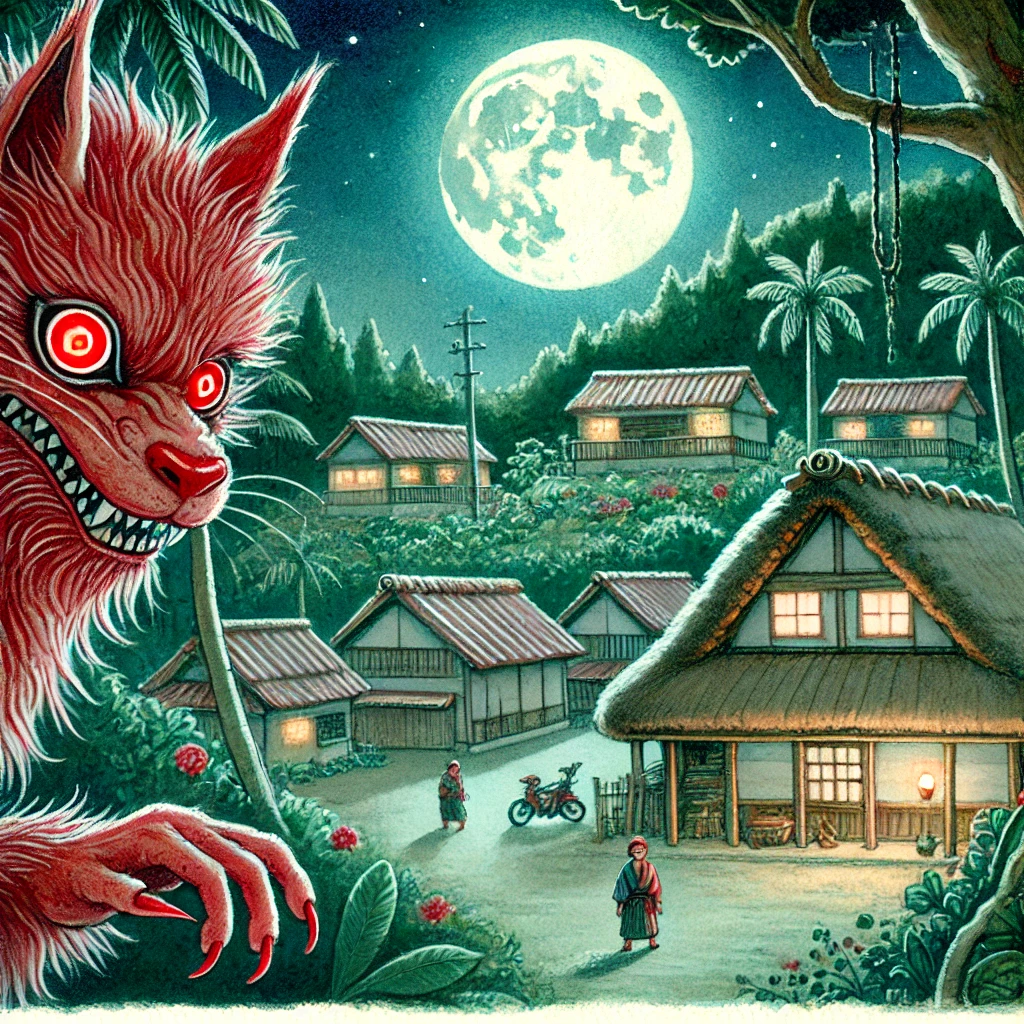
Okinawa has long been home to mysterious and captivating legends. Among these, the legend of the “Akamata” stands out as particularly famous. Akamata is a supernatural being said to drink human blood and appears as a red-furred dog or cat, and sometimes even in human form. The Akamata, which is believed to emerge at night and attack people, has a deep-rooted presence in the minds of the people of Okinawa.
However, the legend of Akamata is not merely a tale of terror. It reflects the spiritual world, culture, and the intricate relationship between nature and humans unique to Okinawa. Akamata, being an unknown entity that defies scientific explanation, instills an instinctive fear in people. Simultaneously, the Okinawan perspective on nature and ancestor worship contribute to the reverence and fear surrounding Akamata.
Furthermore, the legend of Akamata is not confined to Okinawa’s main island but also extends to other islands like Miyako and Ishigaki, with variations in the stories depending on the region. This diversity highlights the rich cultural tapestry of Okinawa.
In the 1980s, a series of incidents involving livestock attacks in Gushikami Village were attributed to Akamata, solidifying its presence in contemporary consciousness. Such incidents demonstrate that the legend of Akamata continues to live on in the hearts of people today.
The Akamata legend holds significant importance even in modern society. It teaches us about the relationship between nature and humans and fosters respect for the unseen world. Additionally, it is vital for understanding Okinawan traditional beliefs and regional diversity. There are also expectations for its potential as a tourist attraction, its educational use, and its preservation and transmission as cultural heritage.
In this article, we will delve into the fear and allure of the Akamata legend and its contemporary relevance. Exploring the truth behind Akamata is essential to understanding the spiritual world of Okinawa.
What is Akamata?
Okinawa has long been home to mysterious legends, among which the “Akamata” legend is particularly famous. Akamata is a supernatural being said to drink human blood and is deeply rooted in the minds of Okinawan people. In this article, we will explore the origins, characteristics, and modern significance of Akamata.
The Legend of Akamata
The Origins of Akamata
The origins of Akamata are unclear, but several theories exist. One theory suggests that Akamata was one of the deities worshipped by the indigenous people of ancient Okinawa. Another theory posits that Akamata is a manifestation of human negative emotions and desires. In any case, Akamata is deeply connected to the spiritual world of the Okinawan people.
The Spread of the Legend
The legend of Akamata is widespread throughout Okinawa. Particularly in the northern regions and remote islands, there are numerous reports of Akamata sightings. Additionally, Akamata appears in Okinawan literature and performing arts, making it a well-known and beloved figure. The Akamata legend is an essential element for understanding Okinawa’s culture and history.
Characteristics of Akamata
Appearance
The appearance of Akamata varies by region, but it is generally depicted as a large red dog or cat and sometimes even in human form. Its distinctive features include a body covered in red fur, glowing red eyes, and sharp teeth. This eerie appearance is enough to instill fear in people.
Abilities
Akamata is said to possess supernatural abilities, most famously the ability to drink human blood. By drinking human blood, Akamata is believed to gain the person’s knowledge and abilities. Akamata is also said to have the ability to change its form and speak human language.
Appearance Time and Place
Akamata is believed to appear mainly at night, especially on full moon nights, when people are advised to stay indoors. It usually appears in remote places or deep forests, but it can also appear in human settlements, making caution necessary.
Stories and Incidents Related to Akamata
The Gushikami Village Incident
Details of the Incident
In the 1980s, a series of livestock attacks attributed to Akamata occurred in Gushikami Village, Okinawa. Villagers reported hearing eerie screams at night, and bloodstains were found in the livestock pens. This incident is known as an important event that supports the existence of Akamata.
Testimonies of the Villagers
At the time of the incident, villagers were convinced of Akamata’s existence. One villager testified, “I saw a large creature with red eyes in the middle of the night.” Another said, “Akamata is gaining strength by drinking the blood of livestock.” These testimonies show that the legend of Akamata remains strong in modern times.
Impact of the Incident
The Gushikami Village incident attracted significant attention. Media coverage of the incident made Akamata’s existence known nationwide. The incident also inspired the production of movies and novels featuring Akamata. The Gushikami Village incident played a crucial role in conveying the Akamata legend to the present day.
Legends in Other Regions
Legends in the Northern Region
Numerous legends about Akamata remain in the northern regions of Okinawa. For example, in Nago City, there is a legend that Akamata kidnaps human children. In Kunigami Village, it is said that if Akamata drinks human blood, the person will fall ill. These legends in the northern region highlight the fearsome nature of Akamata.
Legends in the Central Region
In the central region of Okinawa, there are also legends about Akamata. In Okinawa City, it is said that Akamata can transform into a human and deceive people. In Uruma City, it is believed that if Akamata drinks human blood, the person will die. These legends in the central region reflect the fear and reverence for Akamata.
Legends in the Southern Region
In the southern region of Okinawa, Akamata is said to be related to the guardian deity known as “Shisa.” In Nanjo City, it is believed that Akamata borrows the power of Shisa to protect people from evil spirits. In Itoman City, it is said that Akamata transforms into Shisa to watch over the village. These legends in the southern region suggest that Akamata is not always a malevolent entity.
Legends in Remote Islands
In Okinawa’s remote islands, unique legends about Akamata remain. For example, in Miyako Island, Akamata is identified with a yokai called “Maya.” Maya is feared for stealing human souls. In Ishigaki Island, Akamata is believed to be related to a monster called “Busa,” which transforms into a human and deceives people. The legends in the remote islands highlight the diversity of the Akamata legend.
Reasons Why Akamata is Fearful
Instinctive Human Fear
Fear of the Unknown
Humans are instinctively fearful of the unknown. Akamata, with its incomprehensible appearance and abilities, instills fear in people. The enduring nature of the Akamata legend may be rooted in this primal fear of the unknown.
Fear of the Inexplicable
Akamata defies scientific explanation. Humans tend to fear things they cannot understand. The supernatural abilities of Akamata surpass human comprehension, amplifying the fear it evokes.
Okinawa’s Unique Spiritual World
Close Relationship with Nature
The people of Okinawa have long lived in close relationship with nature. Nature can be both a threat and a vital support for their lives. Akamata may symbolize this intricate relationship between nature and humans.
Belief in Supernatural Entities
In Okinawa, there are spiritual practitioners known as “Yuta.” Yuta listen to people’s worries and resolve them using supernatural powers. Akamata, like Yuta, is a supernatural entity that people fear. Belief in Akamata reflects a part of Okinawa’s spiritual world.
Ancestor Worship and Akamata
Ancestor worship is prevalent in Okinawa, where people believe that ancestral spirits watch over the living. Akamata is also believed to be related to these ancestral spirits. Fearing Akamata may be an expression of reverence for ancestors.
Contemporary Significance of the Akamata Legend
Understanding Culture and Spirituality
The Relationship Between Nature and Humans
The Akamata legend prompts reflection on the relationship between nature and humans. In modern society, connections with nature can become tenuous, but the Akamata legend teaches the importance of coexisting with nature. It suggests that respecting and harmonizing with nature leads to human happiness.
Reverence for the Unseen World
The Akamata legend fosters reverence for the unseen world. While science has uncovered many mysteries, the Akamata legend reminds us that there are still realms beyond human understanding. It calls for humility and respect towards the unseen.
Okinawa’s Uniqueness and Diversity
Preserving Traditional Beliefs
The Akamata legend plays a role in preserving Okinawa’s traditional beliefs. In modern society, traditional beliefs are fading, but the Akamata legend is a vital part of Okinawa’s spiritual heritage that must be passed down to future generations. Preserving the Akamata legend helps protect Okinawa’s culture.
<h
4>Regional Variations in Legends
The Akamata legend varies by region, showcasing Okinawa’s diversity. Okinawa consists of many islands, each with its unique culture and traditions. The diversity of the Akamata legend highlights the cultural richness of Okinawa.
Lessons from the Akamata Legend
The Importance of Coexisting with Nature
The Akamata legend teaches the importance of coexisting with nature. Akamata is part of nature, and humans are also part of nature. Respecting and harmonizing with nature leads to human happiness. The Akamata legend appeals to us to value our relationship with nature.
Respecting and Passing Down Traditions
The Akamata legend emphasizes the importance of respecting and passing down traditions. Okinawa’s culture and traditions have been carefully preserved and transmitted by ancestors. The Akamata legend is one of these traditions. Respecting traditions and passing them down to the next generation helps protect Okinawa’s culture. The Akamata legend suggests the importance of these values.
Utilizing the Akamata Legend in Modern Society
Potential as a Tourist Attraction
The Akamata legend is also attracting attention as a tourist resource in Okinawa. The mysterious Akamata legend draws many tourists. Organizing tours and events themed around the Akamata legend can showcase Okinawa’s charm. The Akamata legend can contribute to promoting tourism in Okinawa.
Use in Educational Settings
The Akamata legend can be utilized in educational settings. It can teach children about Okinawa’s culture and history through the legend of Akamata. Additionally, the Akamata legend conveys important values such as coexistence with nature and respect for traditions. The Akamata legend enriches Okinawa’s education.
Protection and Transmission as Cultural Heritage
The Akamata legend is an important cultural heritage of Okinawa. Protecting and transmitting the Akamata legend to future generations is crucial. This requires recording and researching the Akamata legend. Additionally, training storytellers to pass down the Akamata legend is an important task. Protecting and transmitting the Akamata legend as cultural heritage helps preserve Okinawa’s culture.
The Akamata legend is essential for understanding the spiritual world of Okinawa. Akamata symbolizes human negative emotions and desires, as well as being part of nature. The Akamata legend prompts reflection on the relationship between nature and humans.
In modern society, scientific advancements have explained many mysteries. However, the Akamata legend teaches that there are still realms beyond human understanding. It speaks to the importance of humility and respect towards the unseen.
Understanding Okinawa’s culture and history requires the Akamata legend. The legend offers insights into the spirituality and values of Okinawan people. Additionally, the Akamata legend attracts many to Okinawa as a tourist resource.
Passing down the Akamata legend to future generations helps protect Okinawa’s culture. By sharing the legend, we can convey the spirituality and values of Okinawa. It is important for each of us to understand the significance of the Akamata legend and share its charm.
The Akamata legend is a treasure of Okinawa. Protecting and transmitting this mysterious legend to future generations is our mission. We hope that the Akamata legend will continue to enrich Okinawa’s culture and captivate people’s hearts for years to come.
Q&A
What is Akamata?
Akamata is a legendary creature in Okinawan folklore, said to drink human blood. It is described as appearing as a red-haired dog or cat, and sometimes even in human form. Akamata is believed to emerge at night and attack people.
In which regions of Okinawa is the legend of Akamata known?
The legend of Akamata is known not only on the main island of Okinawa but also on remote islands like Miyako and Ishigaki. The name and details of the Akamata legend vary by region.
What happened in the Gushikami Village incident in the 1980s?
In the 1980s, a series of livestock attacks attributed to Akamata occurred in Gushikami Village, Okinawa. Villagers reported hearing eerie screams at night, and bloodstains were found in the livestock pens. This incident is regarded as an important event supporting the existence of Akamata.
Why is Akamata considered frightening?
Akamata is considered frightening due to a combination of instinctive human fear and the unique spiritual world of Okinawa. As an unknown entity that defies scientific explanation, Akamata instills fear in people. Additionally, the Okinawan beliefs in the close relationship between nature and humans, as well as the reverence for supernatural beings, contribute to the strong fear of Akamata.
What is the contemporary significance of the Akamata legend?
The Akamata legend teaches us about the relationship between nature and humans and fosters respect for the unseen world. It also plays a vital role in understanding Okinawan traditional beliefs and regional diversity. Moreover, the Akamata legend has potential as a tourist attraction, can be used in educational settings, and is important for the preservation and transmission of cultural heritage.
Summary
The legend of “Akamata” is a mystical tale that has been passed down in Okinawa for generations. Akamata, said to drink human blood, appears as a red-haired dog or cat, and sometimes even in human form, emerging at night to attack people. This legend is known not only on the main island of Okinawa but also on remote islands, with regional variations in the details. In the 1980s, a series of livestock attacks in Gushikami Village were attributed to Akamata, cementing its presence in contemporary folklore.
The fear of Akamata stems from its unknown nature and the unique spiritual world of Okinawa. However, the Akamata legend holds significant relevance even in modern society. It teaches us about the relationship between nature and humans and instills respect for the unseen world. The legend is also crucial for understanding Okinawan traditional beliefs and regional diversity. Additionally, the Akamata legend has potential as a tourist attraction, can be utilized in educational settings, and is important for the preservation and transmission of cultural heritage.
The Akamata legend is a key to understanding the spiritual world of Okinawa. It is our mission to protect and pass down this mystical legend to future generations.


コメント