
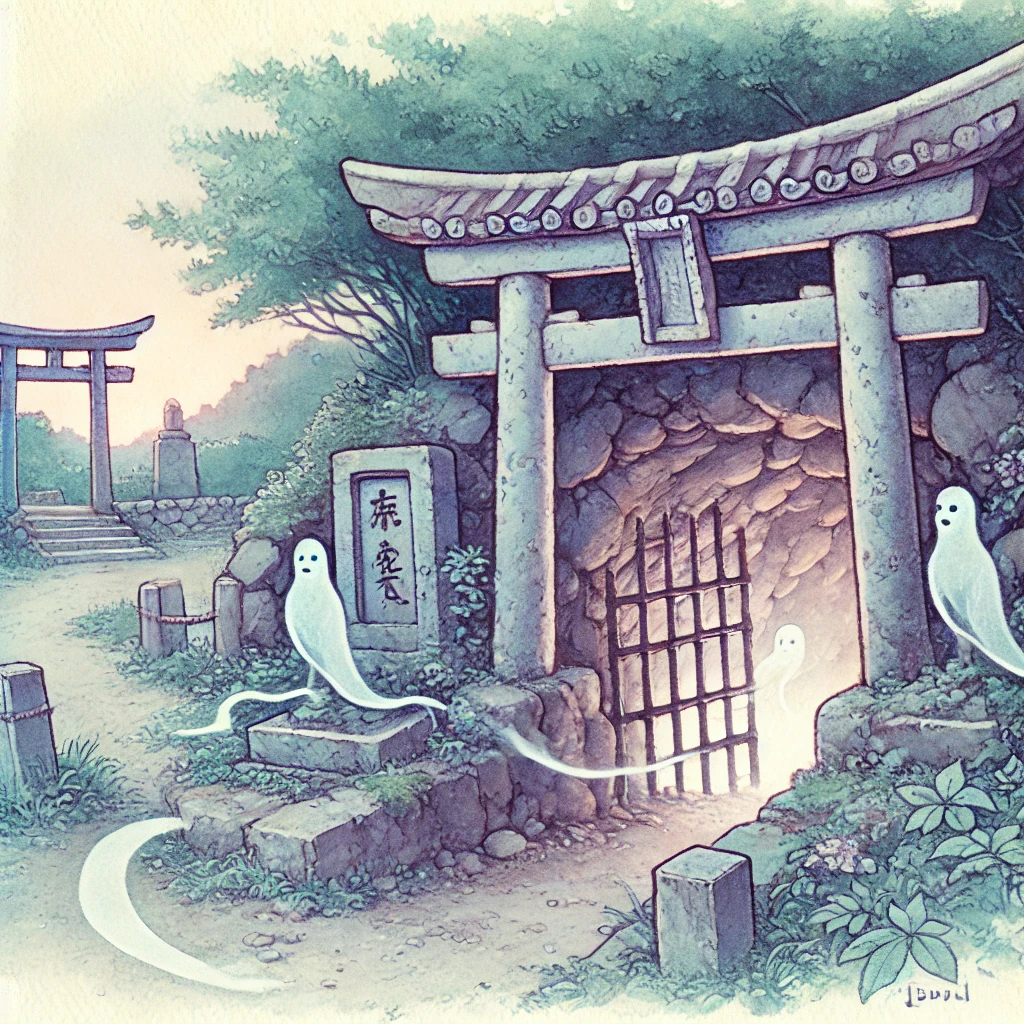
In Okinawa, there are unique tombs called “Nabaka” with distinctive structures. These tombs feature cave-like chambers underground and an entrance gate known as “Hinpun.” The ghost legends associated with these mysterious tombs are not just ghost stories but reflect the deep spiritual world of the Okinawan people.
It is believed that ghosts appear because the ancestors are not properly worshipped. For Okinawans, ancestral spirits are close and personal entities, and neglecting to honor them is thought to bring misfortune. The blurred boundary between the living world and the spirit world also fosters the creation of ghost legends.
The fear of Nabaka ghosts stems from a deep-seated reverence for the dead and the supernatural power attributed to ghosts. However, within this fear lies the faith, values, and inner emotions of the Okinawan people. To truly understand Okinawan folklore, one must look beyond the surface customs and rituals to the spiritual world behind them. The ghost legends of Nabaka offer valuable insights into this spiritual world.
This article delves into the ghost legends of Nabaka, exploring the unique worldview of the Okinawan people through their veneration of ancestors, fear of the dead, and the coexistence of the living and the spirit worlds. We will also explore the traditional belief systems that form the backdrop of these legends. The ghost legends of Nabaka can provide modern society with meaningful lessons, reminding us of the importance of respecting our ancestors, cherishing our homeland, and honoring the unseen world. Let’s delve into the world of Nabaka ghost legends and uncover the cries of the Okinawan people’s souls.
- What is Nabaka?
- The Ghost Legends of Nabaka
- The Spiritual World of the Okinawan People
- Reasons for Fearing Nabaka Ghosts
- Conclusion
- Q&A
- Summary: “Understanding the Spiritual World of Okinawa through Nabaka Ghost Legends”
What is Nabaka?
The Traditional Tomb System of Okinawa
Characteristics of Okinawa’s Tomb System
The tomb system in Okinawa is vastly different from that of mainland Japan, featuring its own unique characteristics. In Okinawa, tombs are managed by blood-related groups called “Monchu” rather than by individual families. Monchu consists of several generations of relatives who jointly establish and maintain the tombs. This Monchu system reflects Okinawa’s traditional social structure, based on ancestor worship and mutual aid. Okinawan tombs are seen not just as places to house remains but as sacred spaces to honor ancestral spirits.
Differences from the Mainland
The tomb system in Okinawa is distinctly different from that of mainland Japan. On the mainland, tombs are typically built and maintained by nuclear families, focusing on direct ancestors. In contrast, Okinawa’s Monchu system involves broader blood-related groups managing the tombs. Additionally, while mainland tombs are usually above ground, traditional Okinawan tombs, especially Nabaka, feature cave-like chambers underground. Moreover, tomb visits in Okinawa occur frequently throughout the year during events such as Bon, New Year, and Shimi (spring and autumn festivals), unlike the few annual visits typical on the mainland. These differences reflect Okinawa’s unique history, culture, and belief systems.
Features and Structure of Nabaka
Underground Cave-like Chambers
Nabaka is a traditional tomb style prevalent in the Naha area of Okinawa. Its most notable feature is the underground cave-like chamber known as “Tābō.” This chamber is spacious with a high ceiling and shelves to house remains and altars for ancestor worship. The structure not only suits Okinawa’s climate but also serves as a revered space for ancestral spirits.
The Significance of Hinpun (Gate)
The entrance of Nabaka features a gate called “Hinpun,” made of stone piles or pillars, marking the boundary between the living and the spirit world. It symbolizes the threshold between these realms and is considered a sacred guardian, protecting visitors and enhancing their connection with ancestors.
Shelves Inside the Tomb Chamber
Inside the Nabaka tomb chamber, shelves known as “Ushiro” are built to house the remains, usually stored in urns and placed in chronological order, with newer remains in the front. This arrangement reflects the belief that ancestors guide and watch over their descendants. The tomb also features altars for offerings, deepening the bond between the living and their ancestors.
The Ghost Legends of Nabaka
Reasons for Ghost Appearances
Insufficient Ancestral Worship
Okinawans place great importance on ancestral worship. However, modern lifestyle changes and diverse values often lead to neglect in this area. One legend says that ancestral spirits, angered by insufficient worship, appear as ghosts. This highlights the importance of respecting and honoring ancestors, as their spirits may wander and cause disturbances if not properly appeased.
Neglect of Tomb Visits
Tomb visits are a crucial part of Okinawan culture, with frequent visits during events like Bon, New Year, and Shimi. Yet, busy modern lives often result in neglecting these visits. Legends warn that neglecting tomb visits angers ancestral spirits, who then appear as ghosts, emphasizing the significance of maintaining these traditions.
Prominent Ghost Legends
Sounds from Within the Tomb
Voices and Moaning
A well-known legend involves hearing voices or moaning from within the Nabaka tomb at night. These eerie sounds are believed to be the spirits trying to communicate or express their discontent. This serves as a warning of the thinning bond between ancestors and their descendants.
The Spirits’ Plea
These sounds are interpreted as the spirits’ plea for attention, possibly due to neglect in worship or improper tomb visits. Listening to these sounds and understanding the spirits’ messages is considered vital for maintaining the ancestral bond and ensuring the well-being of the descendants.
Being Dragged by Ghosts
The Danger of Walking Alone
Another terrifying legend involves individuals walking alone near Nabaka at night, being attacked and dragged into the tomb by ghosts. This story underscores the importance of not acting alone and maintaining strong communal bonds, reflecting the Okinawan belief in mutual support.
The Importance of Tomb Visits
This legend also stresses the importance of regular tomb visits. Neglecting these visits can anger the spirits, leading to such terrifying encounters. It serves as a reminder to honor and respect the ancestors through consistent tomb visits.
Other Ghost Stories
Ghosts as Guides
Some legends describe ghosts helping lost individuals at night near Nabaka, guiding them gently. This reflects the belief that ancestral spirits watch over and aid their descendants, emphasizing the importance of respecting and maintaining a bond with them.
Cursing Descendants
Conversely, there are stories of ghosts cursing descendants who neglect ancestral worship or tomb visits, bringing misfortune or illness. This serves as a stern reminder to uphold the traditions of honoring and worshipping ancestors, highlighting the deep cultural significance of these practices.
The Spiritual World of the Okinawan People
Ancestral Worship and Views on Life and Death
The Custom of Honoring Ancestral Spirits
Okinawans have a strong tradition of honoring ancestral spirits, believed to watch over and guide their descendants. Regular rituals and daily practices, such as offering at home altars and displaying ancestral photos, reinforce this bond, underscoring the importance of ancestral reverence in Okinawan life.
The Coexistence of the Living World and the Spirit World
Okinawans hold a unique view that the living and spirit worlds coexist, deeply influencing their spiritual beliefs. Ancestral spirits are seen as integral to daily life, with spiritual practitioners like “Yuta” communicating with them, further cementing this interconnected worldview.
The Role of Yuta (Spiritual Mediums)
The Role and Abilities of Yuta
Yuta, spiritual mediums in Okinawa, serve as vital links between the living and the spirit world, offering guidance, healing, and purification through their innate abilities. Their role is deeply rooted in tradition, and they are essential in maintaining the spiritual health of the community.
Spiritual Support for the People
Yuta provide emotional and spiritual support, offering solace and guidance during troubled times. Their ability to communicate with spirits helps resolve issues, bringing peace and clarity to those seeking their help. They play a crucial role in upholding the spiritual well-being of the Okinawan people.
Views on the Afterlife
The Concept of Nirai Kanai (Other World)
Okinawans believe in an ideal otherworld called “Nirai Kanai,” a paradise across the sea where spirits reside. This concept serves as a spiritual refuge, helping people cope with life’s hardships and reflecting the interconnectedness of the living and spirit worlds.
Belief in the Afterlife
Okinawans hold a strong belief in the afterlife, viewing death as a transition to another existence where one reunites with ancestors. This belief promotes moral living and provides comfort, reinforcing the view that death is not an end but a new beginning.
Reasons for Fearing Nabaka Ghosts
Fear of Engagement with the Dead
Taboo of Death
Traditionally, the people of Okinawa have viewed death as a taboo. Death is considered impure and something to be avoided. Consequently, any involvement with the deceased is seen as something to be avoided. For example, during funerals, it is customary to avoid direct contact with the body and refrain from mentioning the deceased’s name. Burial sites and funeral homes are considered places of impurity, and people are advised to stay away from them as much as possible. This taboo surrounding death reflects a deep-seated fear of engagement with the dead. The fear of Nabaka ghosts may be related to this taboo, as ghosts are considered to be the impure spirits of the dead, making their presence inherently frightening.
Fear of Spiritual Entities
The people of Okinawa hold a deep-seated fear of spiritual entities. Ancestral spirits are believed to protect and guide their descendants, but they can also bring curses if they are not properly venerated. Failing to honor and worship ancestral spirits is thought to bring misfortune. Similarly, the guardian spirits, like “Hinpun-gami,” are believed to bring blessings but can also bring disaster if angered. Thus, Okinawans have a dual sense of reverence and fear towards spiritual entities. The fear of Nabaka ghosts is influenced by this fear of spiritual beings. Ghosts, being spirits of the dead, are inherently objects of fear, and their appearance is believed to bring harm, which heightens the sense of terror.
The Blurred Boundary Between the Living World and the Spirit World
Coexistence of the Living and the Dead
Okinawans have a unique worldview that sees the living world and the spirit world as coexisting. They believe these two worlds are not separate but are closely interconnected. In this worldview, the living coexist with the spirits of the dead. This belief is reflected in the ghost legends of Nabaka. Nabaka is a resting place for the dead but also a place where ghosts appear, indicating the coexistence of the living and the dead. This blurred boundary between the living and the spirit world makes the presence of ghosts feel more immediate and terrifying.
The Ambiguous Boundary Due to Nabaka’s Structure
The structure of Nabaka itself contributes to the ambiguous boundary between the living world and the spirit world. Nabaka features underground cave-like chambers, considered an entrance to the world of the dead. Additionally, the gate called “Hinpun” at the entrance of Nabaka symbolizes this boundary, further blurring it. Passing through Hinpun signifies a transition from the living world to the spirit world. This structural ambiguity makes Nabaka a place where ghosts are more likely to appear, making their presence more palpable and frightening.
Fear of the Powers of Ghosts
Supernatural Abilities of Ghosts
In the legends of Nabaka, ghosts are believed to possess supernatural abilities. For example, ghosts are said to read minds and predict the future. They are also believed to possess people and control their actions. These supernatural abilities instill fear because ghosts are seen as beings beyond human control and understanding. The mysterious nature of these abilities amplifies the fear, as ghosts are perceived as entities with incomprehensible powers. The fear of these supernatural abilities is one of the reasons why Nabaka ghosts are particularly frightening.
Potential for Curses from Ghosts
According to Nabaka legends, ghosts can curse individuals. If the ancestral spirits are not properly venerated or tomb visits are neglected, the spirits become angry and appear as ghosts to curse their descendants. These curses manifest as illnesses, misfortune, or disasters. The potential for curses from ghosts heightens people’s fear, as ghosts are seen as uncontrollable entities whose wrath is unavoidable. The belief that one’s own actions could provoke these curses adds a layer of self-reproach, deepening the fear. The possibility of being cursed by ghosts is another significant reason why Nabaka ghosts are feared.
Conclusion
Significance of Nabaka Ghost Legends
Reflection of Okinawa’s Spiritual World
The ghost legends of Nabaka reflect the spiritual world of the Okinawan people. These legends are deeply rooted in traditional beliefs such as ancestor worship, fear of the dead, and the coexistence of the living and the spirit world. They also express the fears and anxieties that lie in people’s hearts. The fear of death, the reverence for spiritual beings, and the guilt over one’s actions are emotions deeply embedded in these ghost stories. Thus, the ghost legends of Nabaka provide important clues for understanding the spiritual world of the Okinawan people, offering a glimpse into their beliefs, values, and emotional landscape.
Expression of Traditional Belief Systems
The ghost legends of Nabaka can be seen as an expression of Okinawa’s traditional belief systems, which are intricately woven with animism, ancestor worship, and shamanism. For example, the belief that ghosts appear due to insufficient ancestral worship stems from the concept of ancestor veneration. Similarly, the motif of people possessed by ghosts seeking help from a Yuta (shaman) reflects shamanistic influences. These ghost legends embody the traditional belief systems of Okinawa, providing important insights into their spiritual practices and worldview.
Importance of Understanding Okinawan Folklore
Focus on the Spiritual World
To truly understand Okinawan folklore, it is essential to focus on the spiritual world of the Okinawan people. Their worldview is characterized by the coexistence of the living and the spirit world, with ancestral spirits being an integral part of daily life. This unique perspective significantly influences their beliefs, values, and behaviors. Therefore, merely observing the superficial customs and rituals is not enough; one must delve into the underlying spiritual world. The ghost legends of Nabaka are crucial in this regard, as they vividly reflect the beliefs, values, and emotions of the Okinawan people, allowing a deeper understanding of their spiritual world.
Understanding the Meanings Behind Legends and Customs
Understanding Okinawan folklore requires deciphering the meanings behind legends and customs. These are not merely forms of entertainment or ritualistic actions but are deeply imbued with the beliefs, values, and worldview of the Okinawan people. For instance, the ghost legends of Nabaka, which speak of ghosts appearing due to neglected ancestral worship, highlight the importance of ancestor veneration and respect for the dead. Similarly, the belief that neglecting tomb visits can bring about ghostly retribution underscores the value placed on maintaining these traditions. By interpreting these underlying meanings, one can gain a profound insight into the spiritual world of the Okinawan people.
The ghost legends of Nabaka serve as an important key to understanding Okinawan folklore. They vividly reflect the spiritual world of the Okinawan people, offering a glimpse into their beliefs, values, and emotional landscape. However, understanding these legends superficially is not enough. By deciphering the meanings behind them, one can gain a deeper insight into the spiritual world of the Okinawan people. Through the ghost legends of Nabaka, we can appreciate the depth and richness of Okinawan folklore.
Okinawan folklore, supported by a unique spiritual world, is a deep and rich culture. The ghost legends of Nabaka provide a valuable glimpse into this culture. By contemplating the beliefs, values, and emotions of the Okinawan people through these ghost stories, we can touch the essence of Okinawan folklore. This folklore also offers many insights for those of us living in modern society. Respect for ancestors, cherishing one’s homeland, reverence for the unseen world, and living in harmony with nature are values nurtured by Okinawan folklore and may be particularly needed in our times. Reflecting on the depth and richness of Okinawan folklore and its contemporary significance through the ghost legends of Nabaka can be a profoundly meaningful endeavor.
Q&A
What are the distinctive features of Nabaka?
Nabaka tombs feature an underground cave-like chamber and an entrance gate called “Hinpun.” This unique structure blurs the boundary between the living world and the spirit world, contributing to the creation of ghost legends.
Why do Okinawan people fear ghosts?
Okinawan people fear ghosts due to their deep reverence for the dead, the ambiguous boundary between the living and the spirit worlds, and the supernatural powers attributed to ghosts. Additionally, the possibility of being cursed by ghosts also heightens this fear.
What are the characteristics of the Okinawan spiritual world?
The Okinawan spiritual world is characterized by the coexistence of the living and the spirit worlds, with ancestral spirits being an integral part of daily life. This worldview reflects traditional belief systems such as animism, ancestor worship, and shamanism.
What is the significance of the Nabaka ghost legends?
The Nabaka ghost legends reflect the spiritual world of the Okinawan people, offering insights into their beliefs, values, and emotional landscape. These legends also embody traditional belief systems and highlight the depth and richness of Okinawan folklore.
What is important for understanding Okinawan folklore?
To understand Okinawan folklore, it is crucial to look beyond surface customs and rituals and focus on the underlying spiritual world. Interpreting the meanings behind legends and customs can provide deeper insights into the beliefs, values, and worldview of the Okinawan people.
Summary: “Understanding the Spiritual World of Okinawa through Nabaka Ghost Legends”
In Okinawa, there are uniquely structured tombs called Nabaka, which are associated with various ghost legends. These legends are not just mere ghost stories but important cultural heritage reflecting the spiritual world of the Okinawan people. The fear of Nabaka ghosts stems from reverence for the dead, the blurred boundary between the living and spirit worlds, and the fear of supernatural powers.
The Okinawan spiritual world is based on the coexistence of the living and the spirit worlds, with ancestral spirits playing a significant role. This worldview is deeply rooted in traditional belief systems such as animism, ancestor worship, and shamanism. The ghost legends of Nabaka provide crucial insights into the beliefs, values, and emotions of the Okinawan people.
To truly understand Okinawan folklore, it is essential to look beyond surface customs and rituals and focus on the underlying spiritual world. Interpreting the meanings behind legends and customs can offer a deeper understanding of the Okinawan people’s beliefs, values, and worldview. Reflecting on the depth and richness of Okinawan folklore and its contemporary significance through the ghost legends of Nabaka can be a profoundly meaningful endeavor. The spirituality of Okinawa offers many valuable insights for those of us living in the modern world.

コメント