
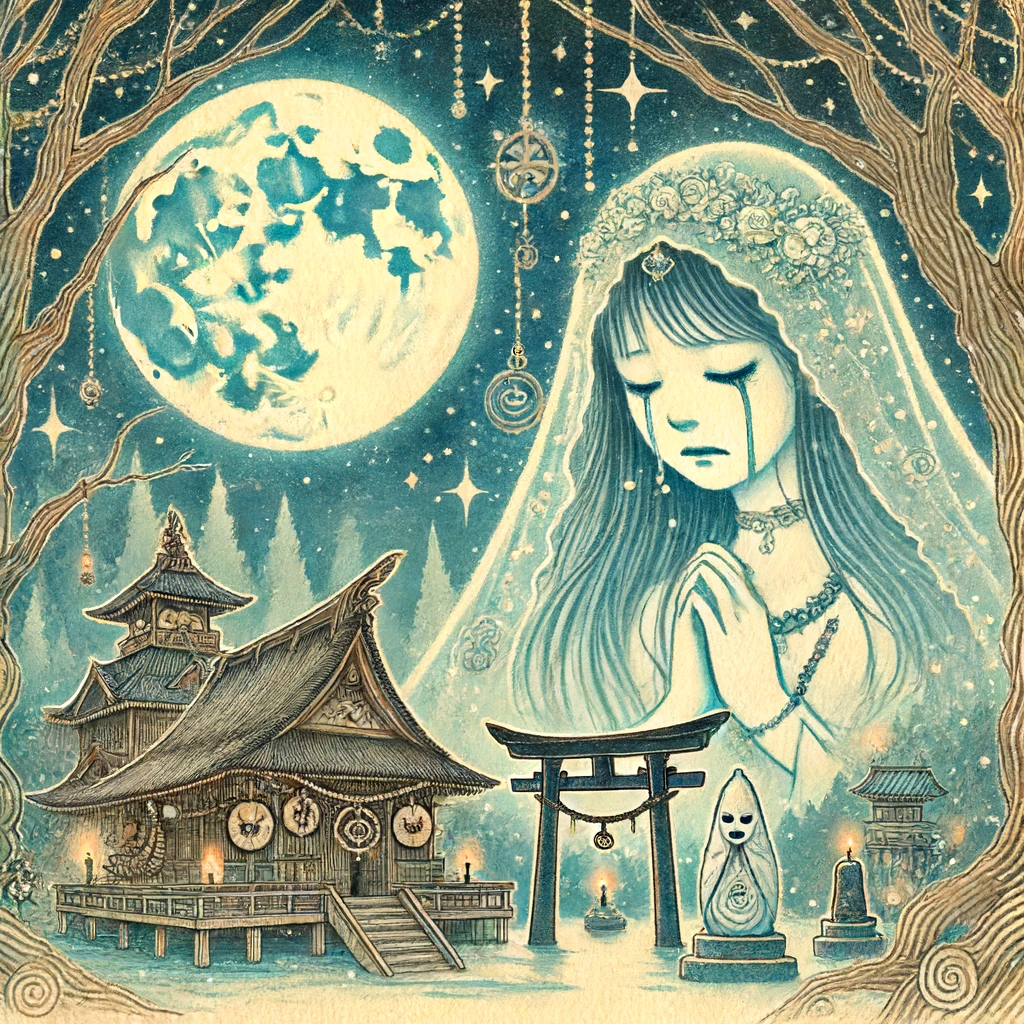
Are you familiar with the legend of “Hatatii’s Cry” passed down through the land of Okinawa? This story is more than just a ghost tale. It is a microcosm of the unique spiritual world that the people of Okinawa have cherished for generations, encompassing ancestor worship, nature worship, and the practices of yuta (spiritual mediums) and their rituals.
The essence of fear in the story of Hatatii lies in the reverence for unseen spiritual beings and the blurred boundary between the physical world and the spiritual realm. Okinawans, in their daily lives, are conscious of spiritual beings, sometimes fearing their influence but also believing in the protection of their ancestors and offering prayers to the gods of nature.
The existence of yuta is also indispensable when discussing Okinawa’s spiritual world. These spiritual mediums are believed to communicate with the spirit world and influence people’s destinies. Rituals of curses and purification are among their essential roles.
Furthermore, numerous inexplicable phenomena have been reported at sacred sites in Okinawa. Encounters with apparitions, mysterious lights, and spiritual beings highlight the mystical nature of Okinawan spirituality.
Hatatii’s cry still echoes through Okinawan villages, drawing us into the depths of Okinawan spirituality. The reverence and prayers cultivated in coexistence with the invisible world reflect a world view filled with mystery. This world view reminds us of the importance of life and harmony with nature.
So, let us embark on a journey into Okinawan spirituality, guided by Hatatii’s cry. This journey may stir your heart and change your perception of the world.
【Story】The Cry of Hatatii – Legend of the Spirit of a Woman Protecting the Village
Long ago, in a certain village in Okinawa, there lived a beautiful woman named Hatatii. Hatatii was kind, brave, and deeply loved by the villagers. However, tragedy struck her. One day, evil men appeared in the village and began looting. Hatatii fought desperately but was killed by the men. The villagers were deeply saddened by her untimely death.
A few days later, something strange happened. At night, Hatatii’s cry could be heard from various parts of the village. Initially, people were frightened, but they soon realized that her cry was protecting the village. Her spirit continued to watch over and protect the village from enemies, just as she did in life. Her cry became a powerful barrier that repelled intruders.
Since then, Hatatii’s spirit has been revered as the village’s guardian deity, and the villagers have come to express gratitude and respect for her. It is said that even now, her cry echoes through the village at night.
Ancestor Worship and Spiritual Beings
In Okinawan culture, ancestor worship holds a very important place. Honoring and offering prayers to the spirits of ancestors are central to the spiritual life of Okinawans. This practice is based on the belief that the physical world and the spirit world are closely intertwined, significantly influencing daily life.
The Culture of Honoring Ancestors
Okinawans value the culture of honoring their ancestors, which is expressed through rituals such as Bon festivals, ancestral memorial services, and household altars and ancestral tablets.
Bon Festivals and Ancestral Memorial Services
In Okinawa, two Bon festivals are held: the Old Bon (Gusō) based on the lunar calendar and the New Bon (Shinbon) based on the solar calendar. The Old Bon is held from July 13 to 15 of the lunar calendar, and the New Bon from August 13 to 15 of the solar calendar. During this period, ancestors’ spirits are welcomed and honored with feasts and visits to ancestral graves, reaffirming the bond with ancestors and strengthening family ties.
Household Altars and Ancestral Tablets
Every Okinawan household has an altar and ancestral tablets. The altar is a sacred place where ancestors’ spirits are enshrined. Daily offerings of incense and food are made. The ancestral tablets, believed to house the spirits of ancestors, are placed on the altar. Through these practices, families maintain their bond with ancestors and seek their protection.
The Close Relationship Between the Physical World and the Spirit World
Okinawans believe that the physical world and the spirit world are closely connected. Ancestors’ spirits are thought to have a significant influence on the daily lives of their descendants.
The Protection and Wrath of Ancestors’ Spirits
Ancestors’ spirits are believed to protect and guide their descendants. However, if ancestors are not properly honored or if taboos are violated, their wrath is feared. This wrath is believed to cause illness or misfortune, prompting Okinawans to respect their ancestors and observe taboos.
The Influence of Spiritual Beings in Daily Life
In Okinawa, spiritual beings are acknowledged in various aspects of daily life. For example, when building a house, a ritual to seek permission from the land god is performed. Important life events, such as weddings and funerals, also involve honoring gods and ancestors. Thus, Okinawans live in harmony with spiritual beings in their daily lives.
Yuta and the World of Magic
In Okinawa, yuta (spiritual mediums) play an important role. Yuta are believed to communicate with the spirit world and influence people’s destinies. They shape the unique magical world view of Okinawa.
The Role and Influence of Yuta
Yuta have a significant role in Okinawan society. Through communication with spirits, they are believed to solve people’s problems and concerns.
Communicating with Spirits and Conveying Oracles
Yuta are believed to communicate with ancestral spirits and gods, conveying their oracles. People consult yuta to understand their ancestors’ wishes and to get spiritual explanations for illnesses and solutions.
Healing and Purification Rituals
Yuta are also known for traditional healing practices. They identify the spiritual causes of illnesses and perform purification rituals. These rituals cleanse the body of negative spiritual energies believed to cause illness.
The Magical World View and Daily Life
The magical world view in Okinawa is deeply embedded in daily life. Practices such as curses and purifications, as well as protective charms and shisa (lion-dog statues), are seen in various aspects of daily life.
Customs of Cursing and Purification
In Okinawa, there are customs of casting and removing curses. Curses are believed to bring misfortune or illness to the target. Purification rituals, on the other hand, remove curses and evil spirits, often used in resolving personal conflicts and treating illnesses.
Protective Charms and Shisa
Okinawans use protective charms and shisa to ward off evil spirits. Charms obtained from shrines or yuta are worn for protection. Shisa, unique lion-dog statues placed at house entrances, are believed to prevent evil spirits from entering. These magical elements are integral to daily life.
Nature Worship and Sacred Sites
Nature worship holds a significant place in Okinawa’s spiritual world. Natural objects like forests, seas, and rocks are believed to house spirits and are revered as sacred sites.
Spirits Residing in Natural Objects
Okinawans believe that spirits reside in natural objects, especially forests and seas, which are thought to possess powerful spiritual energies.
Forest Sanctuaries and Tree Spirit Worship
Okinawan forests contain numerous sacred sites where tree spirits are believed to reside. These tree spirits are considered guardians of the forest who listen to prayers and grant wishes. People pray at these sites seeking the protection of tree spirits.
Sea Gods and the Spiritual Significance of Water
The sea gods of Okinawa are revered, believed to ensure safety and bountiful catches. Water, seen as having purifying power, is used in cleansing rituals. Sea and river water are thought to cleanse physical and spiritual impurities, providing spiritual energy.
The Role of Sacred Sites
Okinawa has numerous sacred sites serving as spiritual focal points and anchors for people’s faith.
The Roles of Haisho and Utaki
Haisho (worship places) and utaki (sacred groves) are representative sacred sites in Okinawa. Haisho, found in every village, are places to enshrine gods and ancestors’ spirits. Utaki are sacred forests believed to house village guardian gods. People pray at these sites seeking blessings from gods and ancestors.
Prayers and Rituals at Sacred Sites
Various prayers and rituals are performed at sacred sites. For instance, the annual “Paantu” ritual at utaki gives thanks to guardian gods and wishes for bountiful harvests and health. During life’s milestones, prayers are offered at haisho seeking protection and blessings. These sacred sites play crucial roles in the spiritual lives of people.
Reasons for Feeling Fear
The fear in Hatatii’s story stems from reverence for the power of spirits and the blurred boundary between the physical and spirit worlds. Okinawans, always aware of unseen spiritual beings, feel their presence as a constant source of threat.
Reverence for the Power of Spirits
Okinawans respect and fear the power of spirits. Although unseen, spirits are believed to significantly influence people’s destinies.
Fear of Unseen Beings
The very invisibility of spirits makes them objects of fear. People feel their presence but cannot see them, amplifying the fear of these unseen entities.
Fear of Spirit Anger and Wrath
Okinawans fear the anger and wrath
of spirits. Disrespecting ancestors or violating taboos is believed to incur their wrath, resulting in illness or misfortune. This constant threat of retribution keeps people in a state of fear.
The Blurred Boundary Between the Physical and Spirit Worlds
In Okinawa’s spiritual world, the boundary between the physical and spirit worlds is blurred. Spiritual beings deeply influence daily life, making their impact unavoidable.
The Pervasive Influence of Spiritual Beings in Daily Life
Okinawans acknowledge spiritual beings in all aspects of daily life. Prayers to the land god when building houses, and rituals during weddings and funerals, reflect the deep integration of spiritual influences in daily life. This pervasive influence blurs the boundary between the physical and spirit worlds.
The Coexistence of the Living and the Dead
In Okinawa’s spiritual world, the worlds of the living and the dead coexist. Ancestors’ spirits deeply influence the daily lives of their descendants, their presence felt but unseen. This coexistence blurs the boundary between the physical and spirit worlds, creating fear.
Real Incidents and Legends
Supporting the fear in Hatatii’s story, there are reports of actual curses by yuta and inexplicable events at sacred sites in Okinawa. These incidents illustrate the deep connection between Okinawa’s spiritual world and reality.
Cases of Curses by Yuta
Numerous cases of curses by yuta are reported in Okinawa. Curses are believed to bring misfortune or illness to the target, sometimes causing severe harm.
Examples and Impact of Curses
Examples of yuta’s curses include reports of illnesses, accidents, and job losses. Those cursed suffer from mysterious illnesses or sudden accidents. The impact of curses can cause severe physical and mental damage to victims.
Methods of Breaking Curses and Purification
Curses can be broken through rituals performed by the cursing yuta or another yuta. Purification rituals, conducted at shrines or by yuta, remove curses and evil spirits. However, severe curse effects may be difficult to entirely remove.
Inexplicable Events at Sacred Sites
Inexplicable events are reported at sacred sites in Okinawa. These events, seen as evidence of spiritual beings, are passed down through stories.
Reports of Paranormal Phenomena at Sacred Sites
Reports of paranormal phenomena at sacred sites include apparitions, voices, and mysterious lights. For example, sightings of divine lights at utaki at night and hearing ancestral voices at haisho are common. These phenomena instill fear and awe in people, signaling the presence of spiritual beings.
Encounters with Spiritual Beings at Sacred Sites
Stories of encounters with spiritual beings at sacred sites are also passed down. For instance, sightings of guardian gods at utaki and face-to-face meetings with ancestral spirits at haisho are common. These encounters suggest that sacred sites are homes to spiritual beings and highlight the possibility of direct interactions between humans and spirits.
These reports of inexplicable events and encounters with spiritual beings at sacred sites illustrate the deep connection between Okinawa’s spiritual world and reality. They not only validate the world view underlying Hatatii’s story but also amplify its fear.
To Okinawans, Hatatii’s story is not merely a legend but a tale rooted in real fear. Within the unique spiritual world view woven from ancestor worship, yuta practices, and nature worship, Hatatii’s story lives on as a real fear.
The reverence for spiritual beings and the blurred boundary between the physical and spirit worlds are deeply ingrained in the hearts of Okinawans. Hatatii’s story skillfully captures this mindset, evoking fear and deeply impressing upon people’s hearts.
At the same time, Hatatii’s story also conveys the mystery and depth of Okinawa’s spiritual world. Through this story, the rich spirituality of Okinawa and the wisdom of coexistence with the invisible world are passed down to the next generation.
The fact that Hatatii’s story continues to be told today is a testament to the enduring vitality of Okinawa’s spiritual world in the modern era. This story reflects the state of Okinawans’ hearts, and its fear tells the depth of Okinawan spirituality.
Hatatii’s cry still echoes through the village tonight. Her voice continues to convey the mystery and fear of Okinawa’s spiritual world, stirring people’s hearts. By listening to her voice, we can feel the presence of the unseen world and cultivate a sense of reverence.
Hatatii’s story is an entryway into Okinawa’s spiritual world. By delving into the depths of Okinawan spirituality through this story, we can encounter a new world view. This world view will remind us of the mystery of life and the importance of harmony with nature in our modern lives.
Guided by Hatatii’s cry, why not embark on a journey into Okinawa’s spiritual world? This journey will stir your heart and change your perception of the world. Beyond the fear in Hatatii’s story lies a new encounter with spirituality.
Q&A
Why do Okinawans place such importance on ancestor worship?
Okinawans believe that the spirits of their ancestors have a significant influence on their daily lives. By honoring and offering prayers to their ancestors, they believe they can receive their protection.
What is a yuta?
A yuta is a traditional spiritual medium in Okinawa. They are believed to communicate with the spirit world, convey oracles, explain illnesses from a spiritual perspective, and perform rituals to remove curses and evil spirits.
Tell us about nature worship in Okinawa.
In Okinawa, natural objects like forests, seas, and rocks are believed to house spirits. Sacred sites such as utaki (sacred groves) and haisho (worship places) are where these nature gods are enshrined and worshiped by the people.
Why is Hatatii’s story considered scary?
The fear in Hatatii’s story comes from the reverence for unseen spiritual beings and the blurred boundary between the physical and spirit worlds. Okinawans, feeling the influence of spirits in their daily lives, experience this fear deeply.
What kind of inexplicable events occur at sacred sites?
Reports from sacred sites in Okinawa include apparitions, mysterious lights, and encounters with spiritual beings. These events suggest the presence of spiritual beings at these sites, instilling awe and fear in the people.
Summary
“The Cry of Hatatii – Legend of the Spirit of a Woman Protecting the Village” is a key story for exploring Okinawa’s spiritual world. Behind this story lies Okinawa’s unique world view, including ancestor worship, yuta practices, and nature worship.
Okinawans live with constant awareness of unseen spiritual beings, with a blurred boundary between the physical and spirit worlds. The fear evoked by Hatatii’s story is rooted in this blurred boundary and reverence for the power of spirits.
Cases of yuta curses and inexplicable events at sacred sites illustrate the deep connection between Okinawa’s spiritual world and reality.
Hatatii’s story conveys the mystery and depth of Okinawan spirituality, continuing to be told even today. This story stands at the entrance of Okinawa’s spiritual world. Through it, we can explore the depths of Okinawan spirituality and encounter a new world view. This world view reminds us of the mystery of life and the importance of harmony with nature in modern society.
Guided by Hatatii’s cry, why not embark on a journey into Okinawa’s spiritual world? This journey will stir your heart and change your perception of the world, leading to a new encounter with spirituality.


コメント