
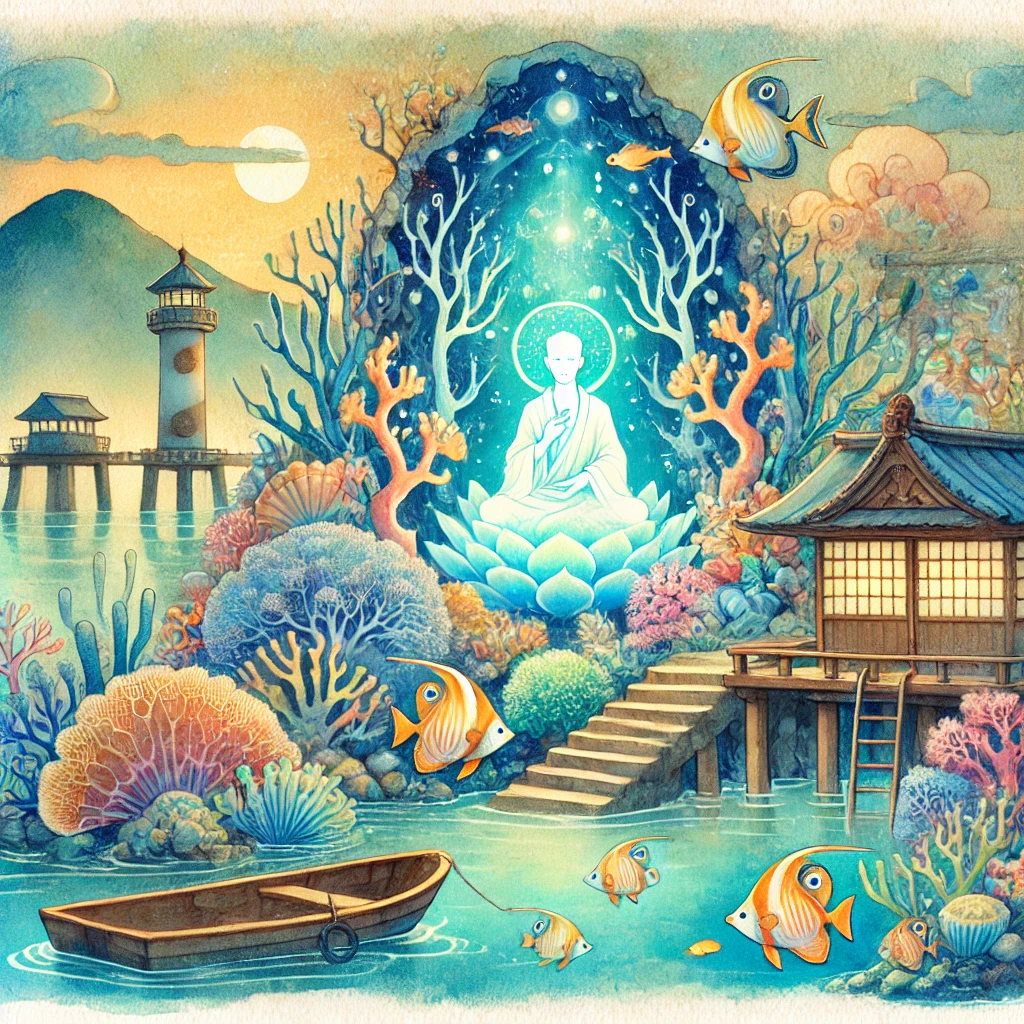
In today’s fast-paced society, driven by convenience and efficiency, are we not losing sight of what truly matters? The ancient Okinawan tale of “Itoman’s Sea God” poses this very question to our modern hearts.
In this sacred place, believed to be home to the guardian deity of the sea, the people never forget to show respect and gratitude towards nature and the gods. The wisdom embedded in this story teaches us that living in harmony with nature is the key to building a sustainable society.
However, as globalization progresses, such important teachings are being lost. We are facing numerous challenges, including environmental destruction and mental health issues.
Now is the time to listen to the story of “Itoman’s Sea God.” By learning from the spiritual world of Okinawa and inheriting its traditional culture, we can build a new society. This article explores the lessons conveyed by the tale of “Itoman’s Sea God” and its insights into modern society. Here, you may find the secrets to living harmoniously and richly with nature. Let us together contemplate the path we should take.
- Itoman’s Sea God – The Sacred Abode of the Sea Guardian
- Reverence and Respect for Nature
- Coexistence with the Gods
- The Importance of Tradition
- Insights for Modern Society
- In Conclusion
- Q&A
- Conclusion
Itoman’s Sea God – The Sacred Abode of the Sea Guardian
Long ago, in the region of Itoman in Okinawa, fishermen lived and made their livelihood by catching fish from the sea every day. One day, they encountered a storm, and many of their companions were swallowed by the sea. After the storm had passed, the surviving fishermen discovered a mysterious light at the bottom of the sea.
Following the light, they dove into the depths and found a beautiful underwater palace. Inside the palace lived a beautiful sea deity. The sea deity spoke to the fishermen.
“I am the guardian deity of the sea. For many years, I have watched over these waters. However, in recent times, people have been polluting the sea and overfishing. If this continues, the marine ecosystem will collapse, and we won’t be able to leave a beautiful sea for future generations.”
The fishermen deeply reflected on the deity’s words and vowed to cherish the sea. From then on, they paid their respects to the sea deity and refrained from overfishing.
Returning to their village, the fishermen shared the tale of the sea deity with the villagers. The villagers began to hold a festival to honor the sea deity. This festival continues to this day, with the people of Itoman expressing their gratitude for the blessings of the sea and remembering to cherish it.
This story embodies the respect and awe that the people of Okinawa hold for the sea. The sea, at times, takes lives, but it also provides bountiful blessings. The people of Okinawa understand the importance of living in harmony with the sea.
Reverence and Respect for Nature
The Dual Nature of the Sea
The Bountiful Sea
For the people of Okinawa, the sea is an indispensable part of life. The abundant sea brings various blessings. Seafood is a staple on their dining tables, and sea salt is used for seasoning. Additionally, the beautiful beaches play a vital role in tourism. Okinawa’s culture and economy are closely intertwined with the sea.
However, the sea can also be a threat. Natural disasters like typhoons and tsunamis threaten the lives of Okinawans. Marine accidents are not uncommon. While being grateful for the blessings of the sea, one must not forget its potential dangers.
The Threatening Sea
Okinawa, situated in the path of typhoons, suffers significant damage almost every year. Strong winds and high waves destroy buildings and devastate crops. Tsunamis are another major threat. The Meiwa tsunami of 1771 claimed many lives.
Marine accidents continue to occur. Sudden weather changes and strong currents present numerous dangers. Fishermen venture into the sea, risking their lives. Understanding the threats of the sea is crucial for contemplating coexistence with it.
Human Helplessness Against Nature
The Threat of Natural Disasters
Natural disasters are beyond human control. Typhoons, tsunamis, earthquakes – in the face of nature’s power, humans are utterly helpless. The people of Okinawa must live while facing these natural disasters.
While preparing for natural disasters is important, complete prevention is impossible. Recognizing and respecting the power of nature is essential. The awe of nature forms the foundation of the spiritual world of Okinawans.
The Limits of Human Technology
Despite remarkable advancements in science and technology, they are limited against nature’s power. We cannot alter the course of a typhoon or stop a tsunami. Humans are a part of nature and must live in accordance with it.
The people of Okinawa understand the importance of coexisting with nature. Instead of conquering nature, it is crucial to live alongside it, following its principles.
The Necessity of Coexistence with Nature
A Life Respecting Nature
Coexistence with nature is essential for the people of Okinawa. They live with respect for nature and gratitude for its blessings. For example, fishermen thank the sea deity and avoid overfishing. Farmers grow crops according to natural cycles.
A lifestyle respecting nature forms the basis of Okinawan culture. Without coexistence with nature, Okinawan culture cannot exist.
Sustainable Resource Use
Nature’s blessings are not inexhaustible. Sustainable resource use is crucial. Overfishing and environmental destruction deplete nature’s blessings. The people of Okinawa must cherish nature’s gifts and pass them on to the next generation.
Sustainable resource use is a vital aspect of coexistence with nature. Appreciating and valuing nature is essential.
Coexistence with the Gods
Gratitude and Prayers to the Gods
Gratitude for Nature’s Blessings
The people of Okinawa never forget to show gratitude for nature’s blessings. They view the abundant seafood and beautiful nature as gifts from the gods. Before going fishing, they always offer prayers of thanks to the sea deity and wish for a good catch.
During harvest, they offer prayers of gratitude to the field gods. Nature’s blessings are considered to be due to the gods’ protection.
Prayers and Rituals for the Gods
Okinawans value offering prayers to the gods. Every home has a shrine where daily prayers are offered. Special prayers are performed during life milestones.
Prayers serve as a means of communicating with the gods. Through prayers, they convey their thoughts to the gods and receive messages in return. This deepens their bond with the gods.
Living in Reverence of the Gods
The Presence of the Gods in Daily Life
For the people of Okinawa, the gods are an integral part of daily life. Every home has a kamidana (household altar), and they honor the gods in their daily lives. Ishiganto (stone guardians) are placed by the roadside, and passersby offer prayers to them.
The gods watch over and guide their lives. Honoring the gods is a fundamental practice for Okinawans.
Worship of the Gods During Festivals and Events
Okinawa has many festivals and events, most of which aim to honor and thank the gods. For instance, the Haari (dragon boat races) held on the 4th day of the 5th lunar month is a festival to thank the sea gods and pray for abundant catches.
These festivals and events center on worshiping the gods. The decorations, dances, and music are meant to please the gods. Through these festivals, they reaffirm and deepen their bond with the gods.
The Relationship Between the Gods and Humans
Messages from the Gods
Okinawans cherish messages from the gods. They interpret dreams, natural phenomena, and animal behaviors as messages from the gods. For example, the appearance of a particular bird near a home is considered a good omen.
These messages from the gods serve as guides for their lives. Living according to the gods’ will is believed to lead to a happy life.
The Gods’ Response to Human Actions
Okinawans believe their actions affect the gods. Good deeds make the gods happy, bringing blessings. Conversely, bad deeds anger the gods, causing calamities.
The relationship between human actions and the gods’ responses is closely connected. Therefore, Okinawans are always mindful of the gods and strive to do good deeds.
The Importance of Tradition
Lessons Embedded in Stories
The Importance of Coexisting with Nature
Many Okinawan stories emphasize the importance of coexisting with nature. For example, the tale of “Itoman’s Sea God” teaches the significance of caring for the sea. In the story, the sea deity admonishes humans for polluting the sea and urges them to cherish it.
These stories serve as crucial means of conveying the importance of coexistence with nature to the next generation.
The Importance of Reverence for the Gods
Many Okinawan stories emphasize the importance of reverence for the gods. Honoring the gods is considered a key element of a happy life. In the stories, those who honor the gods receive blessings, while those who don’t face misfortunes.
Reverence for the gods forms the foundation of Okinawan spirituality. Through stories, this importance is passed down to future generations.
The Wisdom of the Ancestors Hidden in Stories
Okinawan stories encapsulate the wisdom of the ancestors. These stories contain various lessons on life and nature’s principles. For instance, they include knowledge on farming techniques and fishing methods that are useful for daily life.
The wisdom of the ancestors, cultivated over many years
, is invaluable. Through stories, this wisdom is passed down to the next generation.
Passing Down to the Next Generation
Oral Tradition of Storytelling
In Okinawa, stories have been primarily passed down through oral tradition. From grandparents to parents, and parents to children, the stories have been told and retold. Oral tradition breathes life into the stories. The expressions, tone of voice of the storyteller, and reactions of the listeners are elements that can only be conveyed through live words.
Oral tradition is a crucial pillar supporting Okinawan culture.
Passing Down Culture and Values
Stories are also an essential means of passing down culture and values. They are filled with the values cherished by the people of Okinawa. For example, the story of “Itoman’s Sea God” depicts the heart of cherishing nature and honoring the gods.
Through stories, the culture and values of Okinawa are passed down to the next generation.
The Contemporary Significance of Tradition
In modern society, the inheritance of traditional culture is at risk. Globalization and urbanization are leading to the loss of traditional culture. However, traditional culture forms the foundation of our identity and must not be lost.
The contemporary significance of tradition lies in understanding our roots and establishing our identity. By learning the wisdom and values of our ancestors through stories, we can reflect on our way of life.
The Role of Tradition
Formation of Identity
Tradition plays a crucial role in forming our identity. By learning about the way of life and values of our ancestors through stories, we can understand our roots. Knowing where we come from and what we value is essential for establishing our identity.
Tradition teaches us what makes us unique.
Strengthening Community Bonds
Tradition also strengthens community bonds. Sharing stories fosters a sense of unity among community members. Additionally, practicing traditions through festivals and events deepens the community’s ties.
Tradition is a vital pillar supporting the community.
Fostering Environmental Awareness
Tradition also fosters environmental awareness. Many stories emphasize the importance of coexisting with nature. Through these stories, we can learn the heart of cherishing nature.
In modern society, environmental issues are becoming increasingly severe. Tradition teaches us the importance of coexisting with nature. Through tradition, we need to enhance our environmental awareness.
Insights for Modern Society
Challenges of Coexisting with Nature
The Current State of Environmental Destruction
In modern society, environmental destruction is a serious issue. Prioritizing economic development has led to the sacrifice of nature. Deforestation and marine pollution are just a few examples of ongoing environmental destruction.
Okinawa is also facing environmental destruction. The beautiful coral reefs are disappearing, and marine ecosystems are being disrupted. Now more than ever, we need to rethink our coexistence with nature.
Okinawan traditional culture is rich with wisdom on coexisting with nature. By applying this wisdom to modern society, we can achieve sustainable development. We need to re-recognize the importance of learning from traditional culture.
The Importance of Spirituality
The Lack of Spirituality in Modern Society
In modern society, the pursuit of material wealth has led to the loss of spirituality. The focus on efficiency and profit has resulted in neglecting the richness of the heart. Consequently, people have become exhausted and suffer from mental health issues.
Okinawan traditional culture has always valued spirituality. Gratitude towards the gods and reverence for nature are inseparable from Okinawan culture. Modern society needs to re-recognize the importance of spirituality.
Ways to Regain Spirituality
To regain spirituality, it is essential to learn from traditional culture. We need to restore our respect for the gods and gratitude for nature. Additionally, incorporating practices such as prayer and meditation, which calm the mind, can be effective.
In pursuing convenience and efficiency, modern society has lost sight of important values. Learning from the wisdom of traditional culture and regaining spirituality is essential for the future of our society.
The Inheritance of Traditional Culture
The Current State and Challenges of Traditional Culture
In modern society, the inheritance of traditional culture is at risk. The spread of homogenized culture through globalization is leading to the loss of regional traditions. Moreover, the aging population and declining birth rates are resulting in a lack of successors for traditional culture.
Okinawa also faces challenges in inheriting traditional culture. The younger generation’s migration to urban areas has led to a shortage of people to pass on traditions. Additionally, there is a risk of traditional culture being transformed by tourism.
The Significance and Methods of Inheriting Traditional Culture
Inheriting traditional culture is essential for preserving our identity. In an era of globalization, understanding our roots is more important than ever. By inheriting traditional culture, we can maintain our uniqueness.
Education is crucial for inheriting traditional culture. It should be integrated into school curricula, and the community should work together to pass it on through festivals and events. It is important to convey the significance of traditional culture to children.
In Conclusion
Characteristics of Okinawa’s Spiritual World
Okinawa’s spiritual world is based on coexistence with nature and gratitude towards the gods. Respect for nature and reverence for the gods underpin the lives of Okinawans. Through tradition, the wisdom and values of their ancestors have been passed down.
Okinawa’s spiritual world offers many insights to modern society. It teaches the importance of coexistence with nature and the significance of spirituality, values that modern society is losing.
Lessons for Modern Society
Modern society, in its pursuit of material wealth, has lost sight of important values. The focus on efficiency and profit has resulted in environmental destruction and mental health issues.
Okinawa’s spiritual world serves as a warning to modern society. It emphasizes the need to re-recognize the importance of coexistence with nature and spirituality and to aim for a sustainable society. By learning from Okinawa’s traditional culture, we can build a new society.
The Importance of Inheriting Traditional Culture
Traditional culture is the foundation of our identity and must not be lost. In an era of globalization, understanding our roots is more important than ever. By inheriting traditional culture, we can maintain our uniqueness.
Education is crucial for inheriting traditional culture. It should be integrated into school curricula, and the community should work together to pass it on through festivals and events. It is important to convey the significance of traditional culture to children.
The story of “Itoman’s Sea God” symbolizes Okinawa’s spiritual world. It encapsulates the values cherished by the Okinawan people, such as coexistence with nature and gratitude towards the gods. Through this story, we can understand the depth of Okinawa’s spiritual world.
Modern society has much to learn from Okinawa’s spiritual world. By inheriting traditional culture and re-recognizing the importance of coexistence with nature and spirituality, we can build a new society. The story of “Itoman’s Sea God” serves as a reminder and warning to modern society.
Q&A
What lessons does the story of “Itoman’s Sea God” convey?
The story of “Itoman’s Sea God” teaches the importance of coexisting with nature and gratitude towards the gods. It emphasizes the need to cherish the sea and appreciate its blessings.
What are the characteristics of Okinawa’s spiritual world?
Okinawa’s spiritual world is based on coexistence with nature and gratitude towards the gods. Respect for nature and reverence for the gods underpin the lives of Okinawans.
What should modern society learn from Okinawa’s spiritual world?
Modern society, in its pursuit of material wealth, has lost sight of the importance of coexistence with nature and spirituality. Okinawa’s spiritual world teaches the need to re-recognize these values.
What is the significance of inheriting traditional culture?
Traditional culture is the foundation of our identity and helps us understand our roots. In an era of globalization, inheriting traditional culture is essential for maintaining our uniqueness.
What is necessary for inheriting traditional culture?
Education is crucial for inheriting traditional culture. It should be integrated into school curricula, and the community should work together to pass it on through festivals and events. Conveying the significance of traditional culture to children is important.
Conclusion
“Itoman’s Sea God – The Sacred Abode of the Sea Guardian” symbolizes Okinawa’s spiritual world. This story teaches the importance of coexistence with nature and gratitude towards the gods. The lives of Okinawans are rooted in respect for nature and reverence for the gods.
However, modern society, in its pursuit of material wealth, has lost sight of the importance of coexistence with nature and spirituality. This has led to environmental destruction and mental health issues.
Okinawa’s spiritual world serves as a warning to modern society. It emphasizes the need to re-recognize the importance of coexistence with nature and spirituality and to aim for a sustainable society.
Inheriting traditional culture is also crucial. Traditional culture forms the foundation of our identity and helps us understand our roots. Education and community efforts are essential for passing on traditional culture to future generations.
Through the story of “Itoman’s Sea God,” we can understand the depth of Okinawa’s spiritual world. It offers hints for solving the problems faced by modern society. Learning from Okinawa’s spiritual world and building a new society is what we are called to do.


コメント