
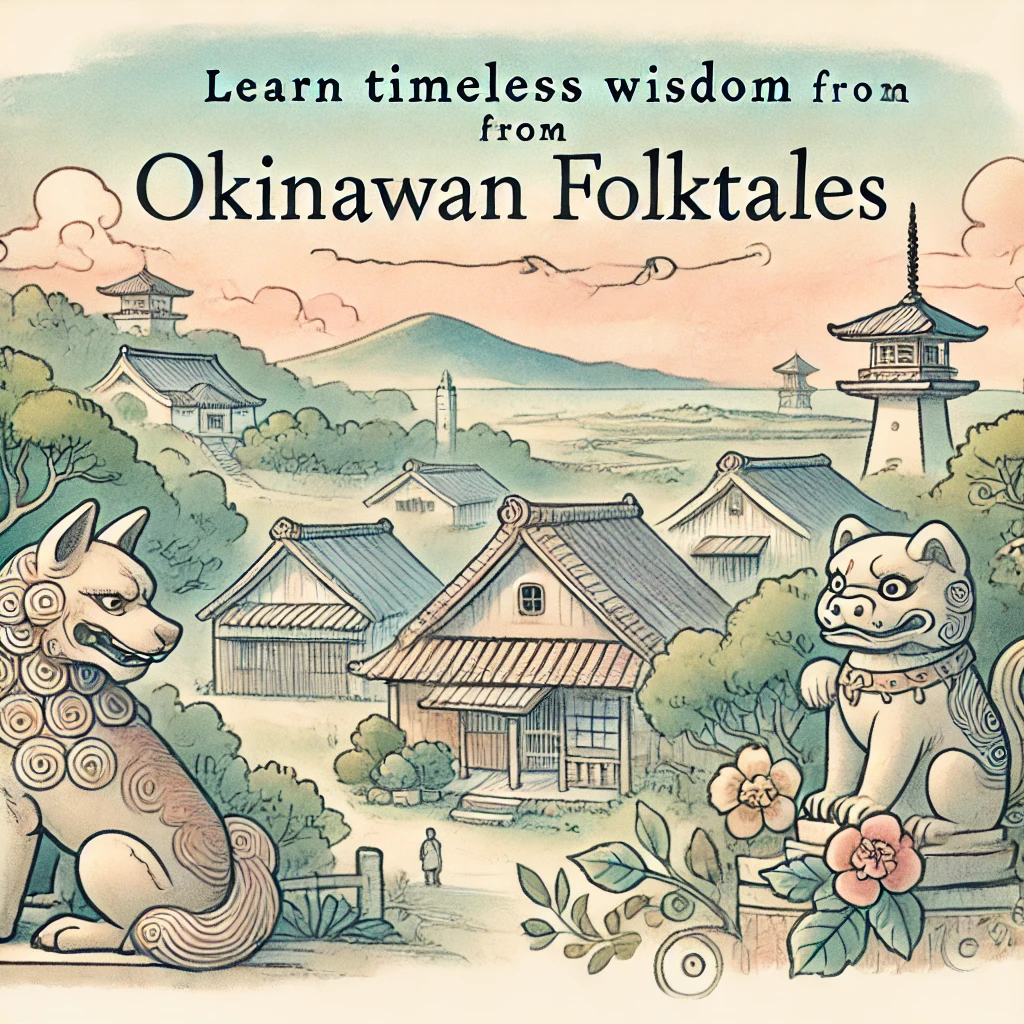
Do you know about the old tales of Okinawa? Blessed with beautiful seas and rich nature, Okinawa has a unique culture nurtured over a long history. Among them, the old tales passed down through generations are filled with wisdom that we, living in the modern age, should learn from.
For example, have you heard of the word “Yuimaru”? This Okinawan dialect term means “mutual assistance” or “helping each other.” The people of Okinawa, who have lived in a harsh natural environment, have developed strong bonds through the practice of working together and helping each other. This concept reminds us of the importance of connections and mutual support, which is often lost in contemporary society.
Another important concept that symbolizes Okinawan culture is the term “Ichariba Chodee.” This phrase means “once we meet, we are brothers,” reflecting the value Okinawans place on encounters. Cherishing each meeting as a once-in-a-lifetime experience and overcoming the sorrow of parting with strength—this philosophy of “Ichariba Chodee” teaches us the truth of life, especially in these turbulent times.
Moreover, the worldview of “Niraikanai” provides insights into the Okinawan view of life and death. “Niraikanai” is believed to be an ideal land where the souls of the deceased gather, a beautiful and peaceful world different from the present one. This belief is deeply connected with ancestor worship and harmony with nature, signifying the continuity of life.
We also cannot overlook the presence of “Shisa,” the guardian statues that protect Okinawan homes and villages. These lion-like figures, with their fierce expressions, are more than mere objects. The legends of Shisa protecting villages from calamities have been a spiritual support for the people of Okinawa. The respect and gratitude towards the gods embodied in Shisa are important values that we, living in the modern world, should not forget.
In this way, Okinawan old tales and their lessons are filled with universal values that resonate with modern society. Learning from the wisdom of our predecessors and applying it in the contemporary context might be our mission in this era.
If you are interested in Okinawan culture and history, please read this article. You will find various lessons relevant to today hidden in the old tales handed down from ancient times. By integrating the wisdom cultivated by the predecessors of Okinawa into our lives, we can build a richer life and society.
- Introduction
- Representative Old Tales of Okinawa
- The Spiritual World of Okinawan People
- Traditional Events and Folktales in Okinawa
- The Significance of Okinawan Folktales and Lessons in Modern Society
- Conclusion
- Q&A
- Summary
Introduction
The Importance of Okinawan Old Tales and Lessons
Reflection of History and Culture
Societal Conditions During the Ryukyu Kingdom
Okinawan old tales vividly reflect the societal conditions of the Ryukyu Kingdom era. During that time, Okinawa prospered through trade with China and mainland Japan, while commoners lived diligently amid harsh natural environments and a class-based society. These tales skillfully incorporate such historical backgrounds, conveying the wisdom and lessons of our ancestors to us living today.
The Ryukyu Kingdom existed from the 15th to the 19th century, maintaining tributary relations with the Ming dynasty of China while also establishing ties with the Satsuma domain of Japan. During this period, Okinawa flourished as a trade hub in East Asia, developing a unique culture. However, the lives of commoners were far from easy under the harsh natural environment and the class system.
Old tales vividly reflect the societal conditions of the Ryukyu Kingdom era. For example, the story of “Habutorigwa” depicts commoners’ wisdom to survive in a harsh natural environment. The story of “Taanmi and Akamata” conveys the importance of cooperation, reflecting the reality of commoners who had to help each other to survive in a class-based society.
Okinawan old tales are not mere entertainment but the crystallization of wisdom and lessons cultivated by our ancestors to survive in harsh environments. By listening to these old tales, we can gain hints for a richer life, learning from the wisdom of our predecessors.
Commoners’ Lives and Values
Okinawan old tales vividly depict the lives and values of commoners during the Ryukyu Kingdom era. Commoners lived diligently, helping each other under harsh natural environments and a class system. These tales reflect the daily lives, views on life, and ethics of commoners, containing many universal lessons relevant today.
For example, the story of the origin of “Shisa” reflects the simple faith of commoners. Shisa has been revered as a guardian deity protecting homes and villages. For commoners living in harsh natural environments, Shisa was a mental support and a symbol of gratitude.
The spirit of cooperation seen in the story of “Taanmi and Akamata” reflects the wisdom of commoners’ lives. Under the class system, commoners had to help each other to survive. The importance of cooperation is a value born from their daily lives.
The philosophy of “Ichariba Chodee” reflects commoners’ views on life. Cherishing the fleeting encounters in life and having a flexible mindset to accept changes were perhaps the wisdom of commoners to survive harsh realities.
Okinawan old tales convey universal lessons by vividly depicting commoners’ lives and values. Learning from the wisdom of our predecessors through these tales can lead us to a richer life. Listening to old tales is not only about understanding Okinawan culture and history but also about reflecting on our own way of life.
Passing Down Wisdom Across Generations
Features of Oral Tradition
Okinawan old tales are characterized by their oral tradition. Oral tradition refers to a culture transmitted directly from storyteller to listener rather than through writing. Okinawan old tales have been passed down through generations in this manner, with the stories changing slightly with each era and storyteller while preserving their essence.
The major feature of oral tradition is direct communication between the storyteller and the listener. The storyteller adjusts the content and manner of the story based on the listener’s reactions. The listener, through interaction with the storyteller, directly experiences the worldview of the story. This bidirectional communication makes old tales come alive.
Moreover, in oral tradition, stories change according to the times and regions while being passed down. Old tales are not fixed but constantly gain new interpretations through the creative endeavors of storytellers and listeners. This flexibility and creativity are significant attractions of oral tradition.
Okinawan old tales possess these features of oral tradition. Through direct communication between storytellers and listeners, the worldviews of the stories have been vividly conveyed. While changing with the times and regions, they have preserved their essence. Okinawan old tales are the crystallization of wisdom passed down across generations through oral tradition.
Educational Role
Okinawan old tales have not been mere entertainment but have played an important educational role. These tales are condensed with values, ethics, and life wisdom that our ancestors cherished. Through these tales, children can learn the wisdom of living and the importance of human relationships.
For example, the story of “Habutorigwa” teaches the importance of courage and wisdom. The protagonist overcomes difficult situations with courage to face the fearsome habu and cleverness. This story conveys to children the importance of facing difficulties with courage and using wisdom.
The story of “Taanmi and Akamata” teaches the importance of cooperation. The protagonists overcome difficulties by helping each other. This story tells children that even problems that cannot be solved alone can be overcome through cooperation.
The story of the origin of “Shisa” teaches respect and gratitude towards gods. Shisa has been revered as a guardian deity protecting homes and villages. This story conveys to children the importance of awe and gratitude towards nature and gods.
Okinawan old tales have played such an educational role. Through these tales, children can learn the wisdom of living and the importance of human relationships. Even in contemporary society, the educational value of old tales has not been lost. In fact, in an era where information is abundant and human relationships tend to be tenuous, the wisdom and values conveyed by old tales are perhaps more important than ever.
Understanding Okinawa’s Unique Culture and Spirituality
Geographical and Historical Background
Influence of Island Environment
To understand Okinawa’s culture and spirituality, it is crucial to know its geographical and historical background. Firstly, Okinawa is characterized by its island environment. On small islands surrounded by the sea, it is necessary to use limited resources effectively and live in harmony with nature. This environment has given Okinawans unique values and worldviews.
For example, the worldview of “Niraikanai” is deeply connected with the island environment. Niraikanai is believed to be an ideal land beyond the sea where the souls of the deceased gather. For the people of Okinawa, surrounded by the sea, the sea was an indispensable part of daily life and an entrance to a mystical world.
The spirit of “Yuimaru” can also be said to have originated from the island environment. Sharing limited resources and helping each other were essential for survival on small islands. “Yuimaru” expresses this spirit of cooperation and mutual assistance.
Moreover, many Okinawan old tales are themed around the sea. Events like the “Hari” festival and the “Dragon Palace Legend” reflect deep connections with the sea. For Okinawans living in an island environment, the sea was both a source of livelihood and an object of awe.
Thus, Okinawan culture and spirituality are closely related to the geographical characteristics of the island environment. The environment surrounded by the sea has given Okinawans unique values and worldviews, nurturing a rich culture. Understanding Okinawan culture requires this perspective of the island environment.
Interaction with Foreign Cultures
To understand Okinawan culture and spirituality, the perspective of interaction with foreign cultures is also essential. Historically, Okinawa prospered as a trade hub in East Asia, developing
a unique culture through exchanges with China, Japan, and Southeast Asian countries. Encounters with foreign cultures enriched Okinawan culture and played an important role in shaping Okinawa’s unique identity.
For example, “Eisa” has developed as Okinawa’s unique Bon dance while being influenced by Chinese culture. Elements of the Chinese “lion dance” were incorporated into Eisa, evolving into a dance with a unique atmosphere through fusion with Okinawan culture.
The origin of “Shisa” also reflects interaction with foreign cultures. Shisa is said to have its roots in the Chinese “lion,” which was accepted as a guardian deity by the people of Okinawa, who built a unique faith around it.
The philosophy of “Ichariba Chodee” reflects the influence of East Asian transience. The idea that everything is transient and that one should accept change without attachment is influenced by Buddhism and Taoism. However, Okinawans elevated this into their own wisdom of life, developing it into a unique philosophy.
Thus, Okinawan culture and spirituality have developed richly through interaction with foreign cultures. Encounters with foreign cultures brought new elements to Okinawan culture, playing an important role in shaping Okinawa’s unique identity. Understanding Okinawan culture requires remembering this perspective of interaction with foreign cultures.
Comparison with Other Regions
Differences with Mainland Japan
To understand Okinawan culture and spirituality, comparing it with other regions of Japan, especially the mainland, is essential. Okinawa has its unique history and culture different from the mainland, and knowing these differences highlights the characteristics of Okinawan culture.
For example, Okinawa’s spirit of “Yuimaru” is often compared with the mainland’s culture of “Yui.” Both express the spirit of mutual assistance, but “Yuimaru” refers to more daily, life-centered cooperative relationships, while “Yui” often refers to cooperation for specific purposes or tasks. This difference might reflect the differences between Okinawa’s island environment and the mainland’s rural environment.
The worldview of “Niraikanai” also has unique features compared to the mainland’s concepts of the “afterlife” or “Pure Land.” “Niraikanai” is an ideal land where the souls of the deceased gather, emphasizing continuity with the present world and interaction with ancestors’ spirits. In contrast, the mainland’s “afterlife” or “Pure Land” is often depicted as a world separate from the present one. This difference might reflect the strength of ancestor worship in Okinawa and the differences in Buddhist views of life and death in the mainland.
Moreover, Okinawa’s “Shisa” faith is often compared with the mainland’s “Komainu” faith. Both are lion statues that guard buildings and places, but “Shisa” is more commonly placed at gates and roofs of homes, while “Komainu” is mainly placed at the entrances of shrines and temples. This difference indicates that Okinawan faith is more closely tied to homes and villages, while mainland faith is more connected with institutionalized religion.
Thus, Okinawan culture and spirituality have unique features different from the mainland. Knowing these differences is essential for understanding the individuality of Okinawan culture. At the same time, comparing with the mainland also demonstrates the diversity of Japanese culture. There are various variations in Japanese culture depending on the region. Knowing the cultural differences between Okinawa and the mainland is an opportunity to reassess the richness of Japanese culture.
Similarities with East Asian Countries
To understand Okinawan culture and spirituality, comparing it with East Asian countries is also essential. Historically, Okinawa has been influenced by China, Korea, and Southeast Asian countries through exchanges, showing many similarities in Okinawan culture.
For example, Okinawan “Eisa” shows similarities with the Chinese “lion dance.” Both share the feature of lions dancing vigorously to the sound of drums and gongs. Eisa also has influences from the Chinese “Ullambana” (Ghost Festival), a tradition of offering prayers to ancestors’ spirits during the Bon festival, which is common to both Okinawa and China.
The faith in “Shisa” also shows similarities with the Chinese “lion” faith. Shisa is said to have its roots in the Chinese lion, with its role of warding off evil and bringing good fortune being common to both cultures. Additionally, similarities with Korea’s “Haetae” (stone lions) have also been pointed out.
The philosophy of “Ichariba Chodee” shows underlying commonalities with East Asian transience. The idea that everything is transient and one should accept change without attachment is seen in both Chinese Taoism and Korean Buddhism. Okinawans elevated this into their own philosophy of life, creating a unique belief system.
Thus, Okinawan culture and spirituality show many similarities with East Asian countries, resulting from historical exchanges and positioning Okinawa as a member of the East Asian cultural sphere. These similarities also highlight the universality of culture. Although cultures may seem different at first glance, there are many common elements upon closer inspection. Understanding the cultural similarities between Okinawa and East Asian countries is an opportunity to grasp both the diversity and universality of culture.
Representative Old Tales of Okinawa
The Story of “Habutorigwa”
Summary of the Story
Characters and Setting
“Habutorigwa” is one of Okinawa’s representative old tales. This story depicts the confrontation between a brave young man and a fearsome habu (venomous snake) that he must defeat. The setting is the islands of Okinawa.
The protagonist is a courageous and quick-witted young man. He is asked by the villagers to eliminate the fearsome habu. The habu, a threat to the villagers, is depicted as a formidable opponent with a large body and venomous bite.
Besides the protagonist and the habu, the villagers also appear in the story. They are portrayed as being terrified of the habu but full of hope for the young man’s success.
The setting of “Habutorigwa” is deeply connected with Okinawa’s nature. The subtropical islands are home to various flora and fauna, including the habu. This story reflects Okinawa’s natural environment and the lives of the people within it.
Story Development
The story of “Habutorigwa” begins with the young man being asked by the villagers to rid them of the habu. He decides to confront the fearsome habu and starts preparing.
The young man studies the habits of the habu, learning that it hides in the shade during the day to avoid the sun and comes out at night to hunt for food. He decides to ambush the habu at night.
He places a straw doll on the outskirts of the village. At night, the habu approaches the doll. The young man sets the doll on fire, and the habu, startled by the fire, retreats.
Repeating this strategy, the young man successfully drives the habu away from the village. The villagers are grateful for his courage and wisdom, celebrating him as a hero.
From this story, the importance of courage and wisdom is conveyed. The young man not only has the courage to face the fearsome habu but also uses his knowledge of its habits and the clever use of a straw doll to drive it away. This tale teaches the value of facing difficulties with courage and solving problems with wisdom.
Lesson: The Importance of Courage and Wisdom
Facing Difficulties with Courage
Overcoming Fear
One of the important lessons from the story of “Habutorigwa” is the importance of having the courage to face difficulties. The young man decides to confront the fearsome habu, a task that required overcoming his fear.
Fear is a natural emotion that everyone experiences when faced with the unknown or dangerous. However, being controlled by fear can prevent any action. The key is to overcome fear and act with courage.
The young man in the story faces his fear of the habu and stands up for the villagers. This demonstrates the strength to confront and overcome one’s fears. Overcoming fear is the first step in tackling difficult situations.
A Sense of Duty and Responsibility
Supporting the courage to face difficulties is a sense of duty and responsibility. The young man, asked by the villagers to eliminate the habu, feels a sense of duty. He realizes that the villagers cannot live in peace unless he deals with the habu, and this sense of responsibility gives him courage.
A sense of duty and responsibility clarifies the purpose of one’s actions. Knowing that one’s actions benefit others can empower one to face difficult situations.
The young man overcomes his fear for the safety of the villagers. This story also demonstrates the power of duty and responsibility.
Facing difficulties with courage arises from overcoming fear and having a sense of duty and responsibility. The story of “Habutorigwa” teaches the importance of such courage. We, living in the modern world, can also take this lesson to heart and face our challenges with courage.
Using Wisdom Resourcefully
Judgment Ability
Another important lesson from the story of “Habutorigwa” is the importance of using wisdom resourcefully. The young man not only bravely faces the habu but also accurately judges the situation and uses his wisdom to defeat the habu.
Judgment ability is the power to quickly assess the situation and choose the best course of action. The young man studies the habits of the habu, learning that it is active at night. Based on this knowledge, he devises a plan to ambush the habu at night, demonstrating his judgment ability.
Judgment ability is the first step in overcoming difficult situations. Without accurately assessing the situation, effective action cannot be taken. Like the young man, it is important to cultivate the ability to judge situations.
<h
6>The Importance of Creativity
The young man also demonstrates creativity. His strategy of using a straw doll to lure the habu and setting it on fire to startle the snake is a result of his creative thinking. This approach shows his willingness to think outside the box and solve problems innovatively.
Creativity is the wisdom to maximize effect with limited resources. The young man effectively uses a straw doll and fire, common items, to drive away the habu. This is an excellent example of creativity.
Creativity is a powerful tool for overcoming difficult situations. When faced with problems that cannot be solved using existing methods, a new approach is required. It is important to demonstrate creativity, just like the young man in the story.
Resourceful wisdom comes from judgment ability and creativity. The story of “Habutorigwa” teaches the importance of such wisdom. We, living in the modern world, should also take this lesson to heart and cultivate our wisdom.
The Story of “Taanmi and Akamata”
Summary of the Story
Characters and Setting
“Taanmi and Akamata” is one of Okinawa’s representative old tales. This story depicts the adventures and friendship of two protagonists, Taanmi and Akamata, set in the islands of Okinawa.
Taanmi and Akamata are close friends. Taanmi is strong and brave, while Akamata is wise and calm. Together, they face various challenges by leveraging each other’s strengths.
Various characters, including villagers and spirits, also appear in the story, adding color to the tale.
The setting of “Taanmi and Akamata” reflects Okinawa’s nature and culture. The subtropical islands serve as the backdrop for the protagonists’ adventures, and traditional Okinawan beliefs and customs are woven into the story.
Story Development
The story of “Taanmi and Akamata” begins with the two protagonists embarking on an adventure to solve the challenges posed by the villagers.
The first challenge is to solve the village’s water shortage. Taanmi and Akamata use their combined wisdom to bring water from a spring to the village successfully.
The next challenge is to defeat a spirit that threatens the village. Taanmi uses his strength to confront the spirit, but struggles to win. Akamata then uses his wisdom to discover the spirit’s weakness. By working together, they defeat the spirit.
During their adventure, their friendship is tested, but Taanmi and Akamata overcome difficulties by trusting and helping each other.
In the end, they return to the village and report their success. The villagers praise their efforts and express their gratitude.
From this story, the importance of cooperation and the beauty of friendship are conveyed. Taanmi and Akamata achieve what neither could do alone by combining their strengths. This tale teaches the spirit of mutual assistance and the strength of friendship.
Lesson: The Spirit of Cooperation and Mutual Assistance
The Limits of Individual Power
The Pitfalls of Self-Centeredness
One of the important lessons from the story of “Taanmi and Akamata” is the limits of individual power. In the story, Taanmi tries to defeat the spirit on his own but fails.
This is an example of the pitfalls of self-centered thinking. Attempting to solve everything alone can sometimes make problem-solving difficult. It fails to recognize the limits of one’s power and refuses to seek others’ help.
Self-centeredness can be an obstacle to building cooperative relationships. Overestimating one’s abilities and not listening to others’ opinions make it difficult to maintain harmony with those around.
The Need for Collaboration with Others
Taanmi fails to defeat the spirit because he tried to fight alone. The situation improves when Akamata discovers the spirit’s weakness, showing the need for collaboration with others.
When faced with complex problems, individual power alone may not be enough. What is needed then is collaboration with others. By combining strengths and complementing weaknesses, difficult situations can be overcome.
The story of Taanmi and Akamata demonstrates that they could only overcome difficulties through cooperation. This teaches the importance of collaboration with others.
Individual power has its limits. Avoiding self-centered thinking and valuing collaboration with others is essential. The story of “Taanmi and Akamata” might be teaching us this lesson.
The Importance of Cooperation
Achieving Common Goals
Another important lesson from the story of “Taanmi and Akamata” is the importance of cooperation. In the story, the two protagonists work together to solve the challenges posed by the villagers, such as the water shortage and spirit threat—goals that could not be achieved alone.
Achieving common goals requires cooperation. Even small individual efforts can create a significant impact when combined. Taanmi and Akamata achieved difficult goals by leveraging each other’s strengths and compensating for each other’s weaknesses.
Cooperation creates results beyond individual capabilities. Gathering diverse perspectives and ideas leads to better solutions. The story of “Taanmi and Akamata” teaches the beauty of such cooperation.
Building Mutual Relationships
Cooperation creates mutual relationships. Mutual relationships are those in which both parties benefit from helping each other. In the story of “Taanmi and Akamata,” the protagonists help each other, overcoming challenges and bringing peace to the village.
Mutual relationships are not about imposing benefits unilaterally. They are built by fulfilling each other’s roles and leveraging each other’s strengths. Taanmi provides strength, and Akamata provides wisdom, creating a mutual relationship.
Mutual relationships are significant from a long-term perspective. Having relationships where people can help each other allows them to overcome difficulties. The story of “Taanmi and Akamata” teaches the importance of such mutual relationships.
The spirit of cooperation leads to achieving common goals and building mutual relationships. The story of “Taanmi and Akamata” teaches the importance of such cooperation. We, living in the modern world, should also take this lesson to heart and value cooperation with those around us.
The Story of the Origin of “Shisa”
Summary of the Story
Characters and Setting
“The Origin of Shisa” is one of Okinawa’s representative old tales. This story explains the origin of the Shisa faith in Okinawa, set in the islands of Okinawa.
The main characters are a young man from a village, his mother, and a guardian lion that protects the village. The young man is kind and brave, his mother is a caring figure, and the lion is depicted as a sacred guardian.
The setting is deeply connected to Okinawan traditional faith. In Okinawa, lions have long been revered as guardian deities protecting homes and villages. This story explains the origin of the Shisa faith.
Story Development
The story of “The Origin of Shisa” begins with a legend passed down in a village where a lion statue has long guarded the village.
One day, a great calamity strikes the village. The villagers pray to the lion for help. The lion statue comes to life and protects the village from the calamity.
The villagers are grateful to the lion and start to revere the statue. However, over the years, they lose their faith.
Calamity strikes the village again. The villagers pray to the lion statue, but it no longer moves.
A young man decides to become the lion himself. Wearing a lion mask, he runs through the village, and miraculously, the calamity subsides.
The villagers are moved by the young man’s bravery and faith and start to revere the lion as a guardian deity again. The mask the young man wore becomes known as “Shisa.”
This story conveys the importance of faith and gratitude towards the gods. The villagers lose their faith and face calamity again. However, through the young man’s bravery and faith, they regain the protection of the lion. This story teaches the importance of respecting and being grateful to the gods.
Lesson: Faith and Gratitude Towards Guardian Deities
Respect for the Gods
The Philosophy of Nature Worship
One important lesson from the story of “The Origin of Shisa” is the importance of respect for the gods. Initially, the villagers respect the lion as a guardian deity, but over the years, they lose their faith.
This reflects the importance of the philosophy of nature worship. In Okinawan culture, nature has been revered as sacred. Mountains, seas, plants, and animals are all considered to be inhabited by gods.
Respecting nature and being grateful for its blessings is essential for maintaining harmony with the environment. The philosophy of living in coexistence with nature, rather than conquering it, is insightful for addressing modern environmental issues.
Coexistence with the Gods
The story of “The Origin of Shisa” also teaches the importance of coexistence with the gods. The guardian lion connects the human world and the world of gods. Respecting the lion and being grateful for its protection represents coexistence with the gods.
Coexistence with the gods means living in harmony with nature. By respecting nature as sacred, humans can live in a balanced way with the environment.
In modern society, the philosophy of coexistence with the gods is often lost. The pursuit of efficiency and profit can lead to environmental destruction and the desecration of sacred things. The story of “The Origin of Shisa” might be a warning to modern society.
Respect for the gods leads to the philosophy of nature worship and coexistence with the gods. The story of “The Origin of Shisa” teaches the importance of such respect. We, living in the modern world, should also remember this lesson and respect nature and sacred things.
Gratitude for Blessings</h 5>
The Protection of Guardian Deities
Another important lesson from the story of “The Origin of Shisa” is the importance of gratitude for blessings. In the story, the villagers are protected from calamity by the lion’s blessings. The young man saves the village by wearing a lion mask, reminding the villagers of the lion’s importance.
This shows the importance of being grateful for the protection of guardian deities. In Okinawan culture, Shisa and other guardian deities are believed to watch over people’s lives, protecting homes and villages from calamity and bringing happiness.
The blessings of guardian deities are not visible, but it is important to remember and be grateful for these unseen blessings. Keeping in mind that our peaceful lives are thanks to the protection of guardian deities deepens our bond with them.
Ways to Express Gratitude
While it is important to feel grateful, how to express that gratitude is also crucial. In the story, the villagers express their gratitude by revering the lion statue.
The ways to express gratitude vary by culture and era. Offering prayers, making offerings, and verbally expressing gratitude are all important.
Expressing gratitude in tangible ways strengthens our bond with the source of blessings. By expressing gratitude, we demonstrate our awareness and appreciation of the benefits we receive.
The story of “The Origin of Shisa” teaches the importance of continually expressing gratitude. There are various ways for us to express gratitude in modern society. Holding gratitude in our hearts and showing it through words and actions enriches our lives.
The Spiritual World of Okinawan People
The Spirit of “Yuimaaru”
Mutual Assistance and Cooperation
The Tradition of Collaborative Work
To understand the spiritual world of the Okinawan people, the concept of “Yuimaaru” is essential. “Yuimaaru” represents mutual assistance and cooperation, deeply ingrained in the daily lives of Okinawan people.
The spirit of “Yuimaaru” is vividly reflected in the tradition of collaborative work. In Okinawa, cooperative efforts in agriculture and house-building have been practiced for generations. These activities, known as “Yui,” involve villagers working together to complete tasks.
For example, during agricultural activities, tasks like planting and harvesting rice are divided among everyone. Similarly, when building houses, villagers help by transporting
materials and assisting with construction. These collaborative efforts not only enhance efficiency but also strengthen the bonds within the village.
The Importance of Helping Each Other
The spirit of “Yuimaaru” also teaches the importance of helping each other. In Okinawa’s harsh natural environment, people have survived by supporting one another. During disasters such as typhoons and droughts, villagers have overcome difficulties through mutual support.
Moreover, the spirit of “Yuimaaru” is evident in life events such as weddings and funerals. During significant events, the community comes together to help with preparations and support. This tradition of mutual assistance has created a culture where individual issues are shared and addressed collectively.
The lesson of “Yuimaaru” is that no one can live alone; mutual support is essential. Challenges that are insurmountable alone can be overcome through cooperation. This spirit of mutual assistance is perhaps even more necessary in modern society.
The Importance of Yuimaaru in Modern Society
Strengthening Community Ties
The spirit of “Yuimaaru” holds significant meaning in modern society, particularly in maintaining community ties. In contemporary times, individualism is on the rise, and connections with local communities are weakening. However, community solidarity becomes crucial during disasters and crises. By valuing the spirit of “Yuimaaru” and fostering supportive relationships within the community, the strength of the community during emergencies is enhanced.
In an aging society, the importance of supportive communities increases. Watching over and assisting elderly people living alone is a practice rooted in the spirit of “Yuimaaru,” and such communities are indispensable in the future.
Application to Social Welfare
The spirit of “Yuimaaru” has potential applications in social welfare. The concept of mutual assistance can complement public welfare services, leading to community-driven welfare activities.
In communities where people help and support each other, welfare activities based on the spirit of “Yuimaaru” can meet detailed needs that government services alone may not address. Furthermore, when community members actively engage in welfare activities, the community’s cohesion strengthens.
The spirit of “Yuimaaru” teaches the importance of mutual assistance and cooperation, representing the wisdom Okinawan people have cultivated over a long history. In modern society, reevaluating and applying the spirit of “Yuimaaru” in community building and social welfare is essential.
The Worldview of “Niraikanai”
The Ideal Land of the Dead
Belief in the Afterlife
Another essential concept for understanding the spiritual world of Okinawan people is “Niraikanai.” “Niraikanai” refers to the ideal land where the souls of the dead gather. Okinawan people have long believed in “Niraikanai” as the afterlife.
“Niraikanai” is considered a beautiful and peaceful world, different from the present world, where the souls of the dead can live in tranquility. The belief in “Niraikanai” has fostered a perspective on life and death that sees death not as something to fear but as a journey to a desired world.
For Okinawan people, death is not an end but a transition to a new world. Therefore, they can mourn the dead while also celebrating their journey.
Description of the Ideal Land
What is “Niraikanai” like? It is a world blessed with beautiful nature and peace. Clear waters flow, lush forests spread, and there is no illness or conflict. The souls of the dead can spend their days in serenity.
In “Niraikanai,” it is also believed that family and friends who were separated in this life can reunite. The promise of reuniting with loved ones in “Niraikanai” helps ease the sorrow of parting.
The description of “Niraikanai” may be an idealized version of the present world. A peaceful and prosperous world, happiness with loved ones—these are projections of people’s desires extended from this life.
The worldview of “Niraikanai” provides hope to overcome the hardships and sorrows of this world, serving as a source of spiritual support for Okinawan people.
Ancestor Worship and Views on Life and Death
Respect and Gratitude for Ancestors
The worldview of “Niraikanai” is deeply connected with Okinawan ancestor worship. Okinawan people believe that the souls of their ancestors live in “Niraikanai,” and they have shown respect and gratitude towards these souls.
For instance, during the Okinawan Obon festival known as “Unke,” the souls of ancestors are welcomed home and honored. Offerings are made, and meals are shared with the spirits. Through such practices, respect and gratitude for ancestors are expressed.
Additionally, during important life events, reports and blessings are sought from ancestors. At weddings, housewarming ceremonies, and other significant milestones, joy is shared with the spirits of ancestors. These practices reflect the spiritual nature of Okinawan people, valuing the connection between ancestors and descendants.
Acceptance of the Cycle of Life and Death
The worldview of “Niraikanai” also involves accepting the cycle of life and death. It is believed that the souls living in “Niraikanai” will be reborn and return to the present world.
Death is not an eternal farewell but a transitional point in the cycle of life and death. Thus, Okinawan people accept death as a natural progression rather than something to fear.
The belief in rebirth also underscores the importance of actions in this life. Good deeds in the present life lead to better reincarnations. This concept of cause and effect encourages moral living.
The worldview of “Niraikanai” is intertwined with ancestor worship and views on life and death. Respect and gratitude for ancestors, acceptance of the cycle of life and death—these are crucial elements shaping the spiritual world of Okinawan people. Understanding these views can provide insights into the meaning of life and death in modern times.
The Philosophy of “Ichariba Chodee”
The Importance of Meetings and Partings
The Mystery of Connections
Another term that represents the spiritual world of Okinawan people is “Ichariba Chodee.” “Ichariba Chodee” means “once we meet, we are brothers,” teaching the importance of meetings and partings.
At the core of the “Ichariba Chodee” philosophy is the realization of the mystery of connections. We build irreplaceable relationships through accidental encounters—friends, lovers, mentors—all add color to our lives.
However, these encounters are often products of chance rather than necessity. We meet because we happened to be in the same place. Recognizing the mystery of these connections is the starting point of the “Ichariba Chodee” philosophy.
Valuing Encounters
Understanding the mystery of connections makes us appreciate the importance of encounters. The “Ichariba Chodee” philosophy nurtures the mindset to value such encounters.
Cherishing those we meet as irreplaceable, enjoying each moment with the spirit of “once-in-a-lifetime” encounters—this attitude enriches our lives.
Additionally, the philosophy of “Ichariba Chodee” teaches us about the sorrow of parting. Every encounter inevitably leads to parting. However, this makes each moment precious. The sadness of parting reaffirms the importance of encounters.
The philosophy of “Ichariba Chodee” teaches us the importance of both encounters and partings. Appreciating irreplaceable encounters, valuing each moment, and understanding the significance of parting—this attitude can make our lives more meaningful.
Acceptance of Life’s Flow and Change
Understanding Impermanence
The philosophy of “Ichariba Chodee” is also deeply connected with accepting life’s flow and change. Okinawan people have embraced the concept of impermanence, accepting life’s transitions.
Impermanence means that everything constantly changes, and nothing is eternal. Okinawan people have seen this impermanence in nature’s workings—flowers bloom and eventually fall, waves come and go. They have mirrored these natural changes in their views on life.
Life, too, follows the law of impermanence. Encounters are followed by partings, joy by sorrow. Accepting these changes as natural is a life perspective based on impermanence.
Flexibility to Adapt to Change
Understanding impermanence fosters flexibility in adapting to change. The philosophy of “Ichariba Chodee” suggests a flexible mindset to embrace change.
Life is a series of changes, often marked by unexpected events. In such times, it is crucial to accept change and adapt flexibly. The “Ichariba Chodee” philosophy teaches the importance of such adaptability.
Through repeated encounters and partings, we accumulate experiences that become wisdom to adapt to change. The “Ichariba Chodee” philosophy underscores the importance of using this wisdom to navigate life flexibly.
Accepting life’s flow and change is another valuable lesson from the “Ichariba Chodee” philosophy. Understanding impermanence and developing flexibility are wisdom Okinawan people have cultivated over a long history, teaching us how to live life resiliently.
Traditional Events and Folktales in Okinawa
The Connection Between “Eisa” and Folktales
Eisa as a Bon Dance
Origin and History of the Dance
Among Okinawa’s traditional events, “Eisa” is particularly famous. Eisa is a representative Bon dance of Okinawa, serving to comfort the spirits of ancestors. Its origins and history are deeply
connected with Okinawan folktales.
There are various theories about the origin of Eisa, but one prominent theory suggests it was influenced by China. It is believed that the Bon festival “Zhongyuan” from China influenced the development of Eisa into a unique Okinawan dance. The drums and costumes used in Eisa also show Chinese cultural influences.
Additionally, Eisa is said to be closely related to the royal events of the Okinawan kingdom. Dances performed at royal events gradually spread among the common people, evolving into Eisa. It is a dance that represents a fusion of royal and folk cultures unique to Okinawa.
Regional Characteristics
Eisa is performed throughout Okinawa, with unique characteristics in different regions. The lyrics, dance moves, and costumes vary from one region to another.
For example, in the northern part of Okinawa’s main island, the dance is characterized by powerful drumbeats and dynamic movements. In contrast, the southern region features more graceful and gentle dances. Even on remote islands like Miyako and Yaeyama, unique forms of Eisa have been preserved.
These regional differences reflect the history and culture of each area. Through Eisa, people express their emotions and traditions. The diversity of Eisa showcases its depth and richness.
The Role of Comforting Ancestors’ Souls
Significance as a Bon Event
Eisa holds significance as a Bon event that comforts the souls of ancestors. Okinawan Bon, known as “Unke,” includes Eisa as one of its central activities.
During Unke, it is believed that the spirits of ancestors return home. Eisa is performed to welcome and entertain these spirits. The powerful drumbeats are said to awaken the spirits of ancestors.
Moreover, the young people performing Eisa serve as mediums for the spirits, feeling a connection with their ancestors through the dance. Eisa symbolizes the spiritual bond between ancestors and descendants.
Respect for the Dead in Folktales
The underlying respect for the dead in Eisa is also evident in Okinawan folktales. Many folktales depict the souls of the dead as sacred entities.
For example, folktales reflecting the worldview of “Niraikanai” describe the serene life of souls in an ideal land. Additionally, stories featuring “Yurei” (ghosts) often portray them as watching over their descendants with care.
These folktales reveal the emotions behind customs that honor and comfort the dead. Eisa, too, is an event expressing respect for the deceased. The connection between folktales and Eisa reflects Okinawan perspectives on life and death.
Eisa is a Bon event that comforts the souls of ancestors, playing an essential role in Okinawan culture. Its origins and history, along with regional characteristics, highlight the diversity of Okinawan culture. The respect for the dead underlying Eisa is also a recurring theme in Okinawan folktales. Exploring the connection between Eisa and folktales offers deeper insights into the spiritual world of Okinawan people.
The Connection Between “Haaree” and Folktales
An Event Praying for Abundant Harvests and Safety
Gratitude and Prayers to the Sea
Among Okinawa’s traditional events, “Haaree” stands out for its deep connection with the sea. Haaree is a festival praying for abundant harvests and safe voyages, reflecting Okinawan maritime beliefs.
During Haaree, boats are taken out to sea, and prayers and gratitude are offered to the sea gods. The event expresses gratitude for the bountiful gifts of the sea and hopes for continued abundance. Additionally, praying for the safety of voyages is a crucial purpose of Haaree.
Such customs of Haaree reflect the emotions of Okinawan people who live by the sea. The sea, while providing blessings, can also pose threats. Gratitude and prayers to the sea gods express the faith of Okinawan people who navigate this dual relationship with the sea.
Reflection of Fishing Village Culture
Haaree also symbolizes Okinawan fishing village culture. Fishing has long been a vital industry in Okinawa, and Haaree is closely tied to the lives of fishing village people.
The origins of Haaree are said to be rooted in fishermen’s customs of praying for safe voyages and abundant catches. Over time, it became a community-wide event, with villagers collectively offering prayers to the sea gods.
Haaree represents the unity of fishing village people. Preparations and festivities are carried out cooperatively, strengthening village bonds. Haaree may have served as the spiritual foundation supporting fishing village culture.
Connection with Dragon Palace Legends
Belief in the Sea Gods
The maritime faith underlying Haaree is also vividly reflected in Okinawan folktales, particularly in dragon palace legends.
Dragon palace legends, stories set in the mythical underwater palace of the dragon king, are numerous in Okinawan folklore. These legends speak of sea gods residing in the dragon palace, sometimes influencing the human world. Various dragon palace stories have been passed down in Okinawa.
Such legends illustrate the faith in sea gods, reflecting gratitude for the sea’s blessings and fear of its threats. Haaree, too, is based on this faith in sea gods.
Wisdom of Coexisting with the Sea in Folktales
Okinawan folktales, including dragon palace legends, contain wisdom about coexisting with the sea, often depicting connections between humans and sea gods.
For example, the story of “Umihiki” tells of a human woman marrying a sea god, bringing abundant blessings. Another story, “Izaihō,” recounts overcoming difficulties with the help of sea gods.
These folktales teach the importance of coexisting with the sea. They emphasize gratitude for the sea’s blessings, reverence for its threats, and the wisdom to navigate this relationship. Haaree embodies this wisdom of coexisting with the sea.
Haaree is a traditional event reflecting Okinawan maritime faith and fishing village culture. Praying for abundant harvests and safe voyages is a heartfelt wish of Okinawan people living by the sea. The faith in sea gods underlying Haaree is also found in Okinawan folktales, including dragon palace legends. Exploring the connection between Haaree and folktales reveals the depth of the relationship between Okinawan people and the sea.
The Significance of Okinawan Folktales and Lessons in Modern Society
Inheritance and Development of Traditional Culture
The Importance of Passing Down to the Next Generation
Efforts in School Education
To pass down Okinawan folktales and lessons to the next generation, the role of school education is crucial. Introducing Okinawan folktales in language and social studies classes in elementary and junior high schools provides children with opportunities to engage with their cultural heritage. Utilizing integrated study periods to conduct exploratory learning on folktales is also effective. Through active learning, children can understand the meaning and value of folktales and their relevance to modern society, fostering a sense of inheritance of Okinawan spirituality.
Oral Tradition within Families
Alongside school education, oral tradition within families is also indispensable. The practice of passing down folktales from parents to children and grandparents to grandchildren has long supported Okinawan culture. Telling folktales during family gatherings naturally teaches children about Okinawan values and strengthens family bonds. In modern times, with the rise of nuclear families, opportunities for such oral traditions are decreasing. Therefore, conscious efforts to pass down folktales within families are necessary.
Modern Interpretation and Application
Applying Lessons to Modern Society
To apply Okinawan folktales and lessons to modern society, it is essential to reinterpret their values in a contemporary context. For instance, the spirit of mutual assistance embodied in “Yuimaaru” provides insightful perspectives on community support. By integrating government welfare services with community-based mutual aid, more livable communities can be created. Exploring the modern applications of “Yuimaaru” is necessary for addressing current societal challenges.
Exploring New Expression Methods
For the preservation of traditional culture, it is also necessary to adapt its expression methods to the times. Making folktales accessible to modern children in familiar forms is crucial for the creative inheritance of culture. For example, creating animations, picture books, and comics based on folktales can be effective. Additionally, developing interactive programs using digital technology can offer engaging experiences. Embracing new expression methods while preserving traditions is essential for passing down Okinawan folktales and lessons to the future.
The Importance of Learning Okinawan Spirituality
Building Human Relationships
Applying the Spirit of Mutual Assistance
Okinawan folktales and lessons teach the importance of human connections. The spirit of mutual assistance seen in “Yuimaaru” offers valuable insights into modern human relationships. Considering not just oneself but also those around, helping each other in times of need, and sharing joy—these practices of “Yuimaaru” can be applied in family, friendships, and community relationships. This wisdom is essential for building human connections in today’s society.
Recognizing the Importance of Cooperation
As the story of “Taanmi and Akamata” illustrates, individual power has its limits. Achieving goals requires cooperation with others. Recognizing the importance of cooperation, where individual abilities are maximized while also leveraging the strengths of others, is crucial in modern society. Okinawan folktales convey this value of cooperation through relatable stories.
Wisdom of Coexisting with Nature
Modern Significance of Nature Worship Philosophy
The philosophy of nature
worship reflected in the story of “The Origin of Shisa” provides significant insights into contemporary environmental issues. Respecting nature as sacred and living in harmony with it are values that should be revisited in an era of environmental crises. Viewing nature not as an object of conquest but with reverence can guide us toward a path of coexistence. This is the modern significance of Okinawan nature worship philosophy.
Application to Environmental Protection
The natural perspectives conveyed in Okinawan folktales can be applied to environmental protection efforts. For example, using the worldview of “Niraikanai” to teach children the importance of preserving beautiful natural environments can be effective in environmental education. Integrating the respect for nature embodied in “Shisa” into local environmental conservation activities can also be beneficial. Applying folktale lessons to modern environmental efforts offers hints for building a sustainable society.
Maintaining Local Identity in a Global Society
Respecting Cultural Diversity
Reevaluating the Value of Regional Culture
In an increasingly globalized world, valuing the cultural individuality of regions is crucial for the future. Okinawan folktales and lessons, representing the unique culture of Okinawa, are invaluable heritage. Reassessing and taking pride in this value is essential for maintaining Okinawan identity in a global society. Recognizing the value of regional culture is increasingly important in a homogenizing modern society.
Demonstrating Uniqueness in Global Exchanges
After reassessing the value of Okinawan culture, it is essential to showcase its uniqueness in global exchanges. Demonstrating Okinawan values and worldviews, like the spirit of “Ichariba Chodee,” on the global stage can enhance Okinawan cultural presence. For example, applying the mutual assistance concept of “Yuimaaru” in international cooperation can be a way to share Okinawan wisdom with the world. Connecting with the world while cherishing Okinawan identity is key to exploring the potential of Okinawan culture in the global era.
Promoting and Exchanging Okinawan Culture
Information Dissemination Domestically and Internationally
To maintain local identity in a global society, actively promoting Okinawan culture is essential. Utilizing the internet to widely share Okinawan folktales and lessons both domestically and internationally is effective. Strategic efforts like spreading information through social media and multilingual dissemination are needed. Collaborating with mass media is also important. Featuring Okinawan culture on television, newspapers, and magazines can reach a broader audience.
Hosting Cultural Exchange Events
Alongside information dissemination, hosting cultural exchange events is crucial. Inviting people from within and outside the country to experience Okinawan culture firsthand deepens mutual understanding. Organizing storytelling events themed around Okinawan folktales or traditional performances like Eisa can be effective. Additionally, planning exchange events with other regions or countries can be an exciting initiative. Such intercultural encounters highlight Okinawan culture’s individuality and foster new attractions.
In modern society, Okinawan folktales and lessons hold immense significance. Inheritance and development of traditional culture, learning Okinawan spirituality, and maintaining identity in a global society are all vital aspects. These folktales and lessons offer valuable insights for addressing contemporary challenges. Learning from ancestral wisdom and applying it to modern life while passing it on to future generations is our important mission. Embracing Okinawan cultural heritage with pride and affection can provide hints for pioneering a new era.
Conclusion
The Values Conveyed by Okinawan Folktales and Lessons
Community Spirit and Mutual Assistance
One of the most important values conveyed by Okinawan folktales and lessons is the spirit of community and mutual assistance. As symbolized by “Yuimaaru,” Okinawan people have learned the importance of helping each other throughout their history.
Surviving in a harsh natural environment meant that individual efforts had their limits. Overcoming difficulties was possible by working together and supporting each other. The story of “Taanmi and Akamata” also emphasizes the importance of cooperation, a recurring theme in Okinawan folktales.
In modern society, individualistic values are prevalent, and the sense of community is often lost. Therefore, the spirit of mutual assistance conveyed by Okinawan folktales and lessons is a value that should be re-evaluated. Acting with consideration for those around us, not just ourselves, is essential for building a better society.
Harmony with Nature and Views on Life and Death
Another crucial value conveyed by Okinawan folktales and lessons is harmony with nature and views on life and death. The nature worship philosophy in “The Origin of Shisa” offers deep insights into the relationship between humans and nature.
Instead of seeing nature as an object of conquest, it should be approached with reverence. This attitude is particularly significant in contemporary times when environmental issues are escalating. Harmony with nature is essential for the sustainable development of human society. Okinawan folktales and lessons convey the importance of this perspective.
Moreover, the worldview of “Niraikanai” reflects an insightful view on life and death. Instead of fearing death, it is seen as part of the continuum of life. This perspective encourages us to live life fully and appreciate our connections with loved ones. Okinawan folktales and lessons provide guidance on how to live meaningfully.
Community spirit and mutual assistance, harmony with nature, and insightful views on life and death are universal values conveyed by Okinawan folktales and lessons. They remind us of important aspects often lost in modern society, highlighting the significance of these stories and teachings.
The Need for Understanding and Preserving Okinawan Culture
Establishing Identity
After recognizing the value of Okinawan folktales and lessons, the next important step is understanding and preserving Okinawan culture. Establishing local identity is crucial in a globalized modern society.
Understanding cultural roots is essential for establishing identity. Okinawan folktales and lessons provide key insights into this understanding. Learning from ancestral wisdom and comprehending the essence of Okinawan culture allows Okinawan people to reaffirm their identity.
Furthermore, establishing identity is vital for Okinawan people to live with pride. Cultural pride enables proactive participation in a global society. Okinawan folktales and lessons play a significant role in fostering this cultural confidence.
Creating a Society that Embraces Diversity
Understanding and preserving Okinawan culture also contribute to creating a society that embraces diversity. Recognizing the unique value of each regional culture is essential for building a future society.
The philosophy of “Ichariba Chodee” exemplifies Okinawa’s openness to diversity. Valuing encounters and accepting differences are attitudes that offer valuable insights for living in a multicultural world.
Reinterpreting and practicing the values conveyed by Okinawan folktales and lessons in modern society can help build a society that embraces diversity. This creates a society where individuality is respected, and mutual understanding is fostered.
Understanding and preserving Okinawan culture contribute to establishing identity and embracing diversity. This process holds significant meaning for people worldwide, as it enriches the global community. The values conveyed by Okinawan folktales and lessons serve as invaluable guides for creating a richer world.
The values of community spirit, mutual assistance, harmony with nature, and insightful views on life and death conveyed by Okinawan folktales and lessons should be applied to modern life. Understanding and preserving Okinawan culture can establish identity and create a society that embraces diversity. This mission is crucial for navigating the challenges of modern times.
Okinawan folktales and lessons are the crystallized wisdom of a long history. Learning from this wisdom and applying it to modern life while passing it to future generations is our important mission. Preserving the cultural light inherited from our ancestors and passing it on to the next generation reveals the contemporary significance of Okinawan folktales and lessons.
Q&A
What does the term “Yuimaaru” represent?
“Yuimaaru” represents mutual assistance and cooperation, deeply rooted in Okinawan people’s lives. Through practices of collaborative work and mutual help, community bonds are strengthened, and difficulties are overcome.
What does the philosophy of “Ichariba Chodee” teach us?
The philosophy of “Ichariba Chodee” teaches the importance of meetings and partings, and the acceptance of life’s flow and change. It encourages appreciating encounters, valuing each moment, and developing the strength to overcome partings, making life more meaningful.
What is the worldview of “Niraikanai”?
“Niraikanai” refers to the ideal land where the souls of the dead gather, believed to be a beautiful and peaceful world. This worldview is deeply connected with Okinawan ancestor worship and views on life and death, representing the continuity of life.
What is the significance of “Shisa” in Okinawan culture?
“Shisa” are guardian lion statues that protect Okinawan homes and villages, deeply tied to traditional beliefs. The story of “The Origin of Shisa” teaches the importance of respect and gratitude towards the gods, with Shisa serving as a spiritual support for Okinawan people.
How can Okinawan folktales and lessons be applied to modern society?
Applying Okinawan folktales and lessons to modern society involves reinterpreting their values in contemporary contexts. The spirit of mutual assistance, for example, can inform community support practices, while views on nature and life can offer insights into environmental and ethical issues. These universal values should be integrated into modern life.
Summary
Okinawan folktales and lessons represent the crystallized wisdom of Okinawan people, developed over a long history. They convey universal values such as mutual assistance, harmony with nature, and insightful views on life and death, relevant in modern society.
The guardian spirit embodied by “Shisa” has long
served as a spiritual support for Okinawan people. In a globalizing world, the significance of traditional Okinawan culture is being re-evaluated.
We need to learn from Okinawan folktales and lessons, reinterpreting and practicing these values in contemporary contexts. This involves integrating ancestral wisdom into modern life and passing it on to future generations, preserving Okinawan cultural heritage with pride and affection, and finding hints for pioneering a new era.
By appreciating the wisdom conveyed by Okinawan folktales and lessons and applying it to our lives, we can create a richer and more meaningful life and society. This mission of preserving and nurturing Okinawan cultural heritage is vital for the present and future.


コメント