
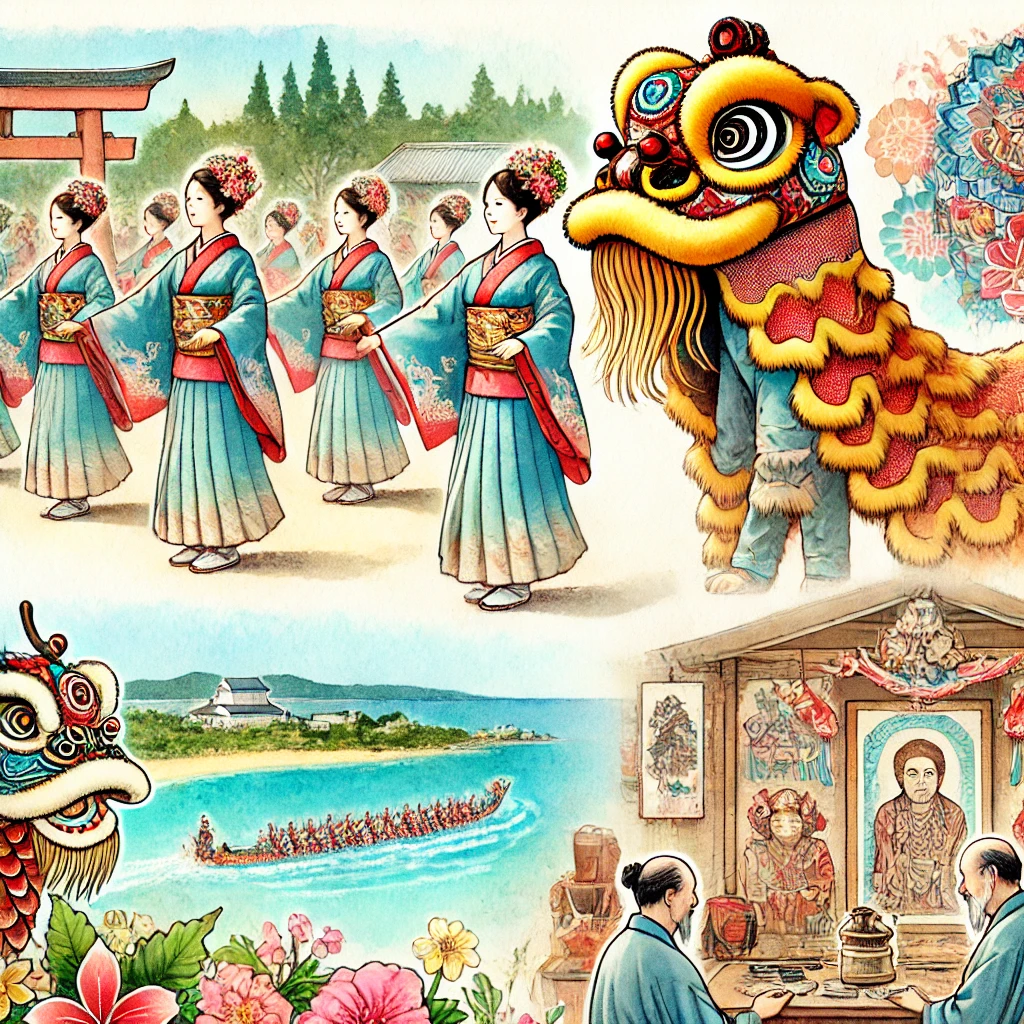
When you think of Okinawa, many people probably imagine beautiful beaches and delicious food. However, the real charm of Okinawa lies in its rich history, culture, and the spirit of its people. One of the most special aspects that encapsulates the soul of Okinawa is its traditional festivals.
These festivals, based on the lunar calendar, often reflect a strong influence from Chinese culture and have evolved uniquely over time. There are numerous festivals unique to Okinawa, such as Eisa and Seinen Eisa, which are deeply embedded in the local culture. Each festival carries the spirit of ancestor worship, gratitude towards nature, and prayers for a bountiful harvest, playing a crucial role in strengthening community bonds.
Even today, traditional festivals hold significant meaning in terms of cultural preservation, regional revitalization, and tourism promotion. They are essential in showcasing the allure of Okinawa to people both domestically and internationally. Through these festivals, many people come to experience and be captivated by Okinawa’s culture and spirit.
However, preserving and passing down these traditional festivals to future generations is a responsibility we all share. In an era of globalization, understanding our roots and establishing our identity is incredibly important. Festivals serve as a cornerstone for this endeavor.
Protecting the traditions built by our ancestors with love while adapting them to new times is perhaps the greatest thing we can do to connect Okinawa’s culture to the future.
Okinawa’s traditional festivals are indeed the “essence of Okinawa’s soul.” They are irreplaceable treasures handed down through the ages. We must continue to cherish their brilliance and pass them on to future generations. The resonant sound of drums and the joyful scenes of festivals will undoubtedly leave an unforgettable impression on anyone who experiences them. We invite you to immerse yourself in Okinawa’s traditional festivals and feel their charm firsthand.
- Introduction
- Representative Traditional Festivals of Okinawa
- Background of Rooted Traditional Festivals
- Anecdotes and Traditions of Traditional Festivals
- Anecdotes from Lunar Calendar Events and Festivals
- Other Festival-Related Legends
- The Significance of Traditional Festivals in Modern Times
- Conclusion
- Q&A
- Summary
Introduction
About Okinawa’s Unique Culture and Traditional Festivals
Geographical and Historical Background
Okinawa Prefecture, comprised of islands in the southwest of Japan, has nurtured its own unique culture and traditions. Its history dates back to the Ryukyu Kingdom era. Through interactions with China and mainland Japan, the Ryukyu Kingdom developed a distinctive culture. This geographical and historical background has greatly influenced Okinawa’s traditional festivals.
Blessed with a warm climate and beautiful nature, Okinawa has a well-developed agricultural culture, which is reflected in its festivals. Additionally, through trade with China and Southeast Asia, Okinawa has absorbed various cultural influences, leading to a diversity of festivals.
Okinawa’s traditional festivals have been cultivated within this geographical and historical context.
Diversity and Characteristics of Festivals
Okinawa’s traditional festivals are incredibly diverse. They range from events and festivals based on the lunar calendar to unique festivals like Eisa and tug-of-war (Tsunahiki). Each festival has its own significance and origin, reflecting Okinawa’s culture and spirit.
Some notable characteristics of Okinawa’s festivals include:
- Many festivals are based on the lunar calendar.
- Ancestor worship and respect for the deceased are emphasized.
- Agricultural culture praying for abundant harvests is reflected.
- Emphasis on community unity and bonds.
- Influence from Chinese culture.
- Drums and dances are essential elements.
These characteristics define the uniqueness of Okinawa’s traditional festivals.
Purpose and Structure of This Article
Introduction to Traditional Festivals
This article introduces representative traditional festivals of Okinawa. For lunar calendar events and festivals, we will cover the Lunar New Year (Sonin), Qingming Festival (Shimi), Dragon Boat Festival (Hari), and Okinawan Obon (Ukwii and Napi). Additionally, we will introduce other traditional festivals such as Eisa, tug-of-war (Tsunahiki), and Seinen Eisa.
We will provide detailed explanations of each festival, including dates, duration, main events and customs, origins, and significance. By understanding the specific aspects and meanings behind these festivals, readers will gain a deeper appreciation of Okinawan traditional culture.
Explanation of the Background of Festival Roots
We will explain the background of why traditional festivals have taken root in Okinawa. This includes the history and cultural influences, particularly from the Ryukyu Kingdom era and Chinese culture. We will also discuss the spiritual aspects embedded in the festivals, such as ancestor worship, views on life and death, prayers for abundant harvests, and the importance of community unity and bonds.
By understanding these backgrounds, readers will gain a deeper understanding of why Okinawa’s traditional festivals have taken root and their meanings and significance.
Sharing Anecdotes and Traditions Related to Festivals
We will introduce anecdotes and traditions related to traditional festivals. For lunar calendar events and festivals, we will cover the origins and significance of Sonin, Shimi and the custom of grave visits, Hari and the wish for children’s healthy growth, and Ukwii and Napi and ancestor worship. Additionally, for other festivals, we will explain the origins of Eisa and the warrior dance, the custom of wishing for village peace with Tsunahiki, and the significance of Seinen Eisa in community unity.
These anecdotes and traditions are important clues to understanding the meanings and origins of the festivals. By touching on the wisdom and thoughts of the ancestors, readers will deepen their understanding of the spiritual world of Okinawa.
The Significance of Traditional Festivals in Modern Times
We will consider the significance of traditional festivals in modern times. From three perspectives—cultural preservation and education for future generations, revitalization of local communities, and value as a tourism resource—we will discuss the importance of traditional festivals.
Traditional festivals are indispensable for preserving Okinawa’s culture and passing it on to future generations. They also play a role in strengthening and revitalizing community bonds. Furthermore, they hold high value as tourism resources and play an important role in promoting Okinawa’s charm.
By understanding these modern significances, the importance of traditional festivals becomes even clearer.
Representative Traditional Festivals of Okinawa
Lunar Calendar Events and Festivals
Lunar New Year (Sonin)
Dates and Duration
Lunar New Year (Sonin) is a representative Okinawan festival held from January 1st to 3rd of the lunar calendar. It is an important event celebrating the start of a new year, where family and relatives gather to enjoy festive meals and offer gratitude and prayers to the gods.
Sonin originated from the Chinese Lunar New Year customs and merged with Okinawan culture. Using the lunar calendar allows for celebrations that align with seasonal changes and the agricultural cycle.
Main Events and Customs
During the Sonin period, various events take place in each household. Families clean their homes thoroughly and decorate them with New Year decorations like kadomatsu and shimenawa. On New Year’s Day, families gather to eat osechi (traditional New Year dishes) and offer gratitude and prayers to the gods. Visiting relatives and exchanging New Year greetings is also an important custom.
Children receive New Year’s gifts (otoshidama) from adults and are delighted. Lion dances and drum performances add to the festive atmosphere.
Sonin deepens family bonds and strengthens community ties. It is an important event filled with gratitude towards ancestors and prayers for the new year.
Qingming Festival (Shimi)
Dates and Significance
Qingming Festival (Shimi) is an ancestor festival held around March 3rd of the lunar calendar. Originating from the Chinese Qingming Festival, it has fused with Okinawan customs. Shimi is an important event for honoring and expressing gratitude to the spirits of ancestors.
This period marks the arrival of warm spring, and people take a break from farming to visit the graves of their ancestors. It embodies gratitude towards ancestors and prayers for a bountiful harvest.
Grave Visits and Festive Meals
The central event of Shimi is visiting the graves of ancestors. Families visit cemeteries together, clean the tombstones, and offer flowers and food. It is a time to reaffirm the connection with ancestors and express gratitude.
After the grave visits, families enjoy festive meals. Representative dishes for Shimi include jimaami (wheat flour dumplings) and chiragaa (tempura). These occasions are cherished as times for ancestor worship and family togetherness.
Shimi is a beloved event in Okinawa, emphasizing the spirit of ancestor worship and deepening family bonds.
Dragon Boat Festival (Hari)
Dates and Origins
Dragon Boat Festival (Hari) is held on May 5th of the lunar calendar to celebrate the health and growth of boys. Originating from the Chinese Dragon Boat Festival, it has merged with Okinawan customs.
The name Hari comes from “hare no hi,” meaning a day of celebration. It is an important event wishing for bountiful harvests and the healthy growth of children.
Dragon Boat Races and Their Meaning
The highlight of Hari is the dragon boat races. Teams of men paddle vigorously to the rhythm of drums in impressive dragon boats. These races are held across Okinawa, attracting many spectators.
The origin of the dragon boat races lies in the commemoration of the Chinese poet Qu Yuan. In Okinawa, it has taken on the significance of praying for good catches and bountiful harvests. The festival also embodies parents’ wishes for their boys’ health and growth.
Traditional foods like rice dumplings (chimaki) and kashiwa mochi are indispensable for Hari. Families celebrate their children’s growth while cherishing family togetherness.
Okinawan Obon (Ukwii and Napi)
Dates and Duration
Okinawan Obon is held from
July 13th to 15th of the lunar calendar. Ukwii means “welcoming,” and it involves welcoming the spirits of ancestors on the 13th. Napi means “sending,” and it involves sending off the spirits on the 15th.
During this period, it is believed that the spirits of ancestors return home, making it a significant time for families to be together and express gratitude and offerings to their ancestors.
Ancestor Worship and Eisa
During Ukwii and Napi, each household conducts ancestor worship. They offer food and incense at the family altar to welcome the spirits of their ancestors. They also visit graves, clean the burial sites, and express gratitude.
In the evenings during this period, Eisa (a type of Bon dance) is performed in various places. People of all ages form circles and dance to the rhythm of drums. This dance comforts the spirits of ancestors and includes prayers for a bountiful harvest.
Ukwii and Napi are essential events that emphasize the spirit of ancestor worship and deepen family bonds, cherished by many Okinawans even today.
Other Traditional Festivals
Eisa
Origins and History
Eisa is a representative Okinawan Bon dance and an important event to comfort the spirits of ancestors. It is said to have originated from the Chinese Nabu dance. It was introduced during the Ryukyu Kingdom era and developed uniquely in Okinawa.
Originally performed in July according to the lunar calendar, Eisa is now often held in August. Different regions have their own unique styles of Eisa.
Characteristics of Drums and Dance
The main features of Eisa are the sound of drums and dynamic dance movements. Traditional instruments such as the sanshin (three-stringed lute), drums, and gongs are used, creating a rhythmic musical performance.
Dancers wear colorful costumes and dance energetically, with unique hand and foot movements. Sometimes they also shout rhythmic chants.
Eisa symbolizes the spirit of ancestor worship and community unity. It is a beloved tradition that continues to be passed down and cherished by many people today.
Tug-of-War (Tsunahiki)
Timing and Purpose
Tug-of-War (Tsunahiki) is a traditional Okinawan sport and festival held in August according to the lunar calendar. It is imbued with prayers for abundant harvests and exorcism of evil spirits, playing a vital role in strengthening community bonds.
Tsunahiki often involves village-wide competitions, with the winning village believed to be blessed with a good harvest. The tug-of-war strengthens village unity and solidarity.
Competitive Format Between Villages
Tsunahiki is conducted in a competitive format between villages. A large rope is used, with many men pulling from both sides. Women and children often participate as cheerleaders.
A flag or marker is placed in the center of the rope, and the goal is to pull it into the opponent’s territory to win. The competition is lively, with intense cheering and enthusiastic participation.
Tsunahiki is a total village effort, testing the unity and determination to win. It remains a cherished traditional festival celebrated in many regions today.
Seinen Eisa
History and Current Status
Seinen Eisa is a unique Okinawan Eisa that developed after World War II. Youth groups formed Eisa teams, performing dances at regional festivals and events. It features a more modern style distinct from traditional Eisa.
Today, Seinen Eisa has become a summer tradition in Okinawa. Not only youth but people of all ages participate in these groups, fostering intergenerational exchanges.
Community Unity and Heritage
Seinen Eisa plays a vital role in strengthening community unity. Youth groups, along with community members, work together to practice and perform. This fosters intergenerational exchanges and enhances community bonds.
Seinen Eisa also contributes to cultural preservation. By incorporating traditional Eisa elements with modern adaptations, it conveys the charm of Eisa to younger generations.
Seinen Eisa represents a fusion of Okinawa’s traditional and modern cultures, playing a crucial role in regional revitalization and cultural inheritance.
Background of Rooted Traditional Festivals
Okinawa’s History and Cultural Influences
Influence of the Ryukyu Kingdom Era
Formation of Unique Culture and Customs
The background of rooted traditional festivals in Okinawa is greatly influenced by the Ryukyu Kingdom era. The Ryukyu Kingdom was an independent state from the 14th to 19th centuries, nurturing unique cultures and customs.
The Ryukyu Kingdom, through trade with China, Japan, and Southeast Asia, absorbed diverse cultural influences. However, it did not merely adopt these influences but incorporated Okinawan interpretations and innovations to create new cultures.
Festivals also evolved, influenced by Chinese and Japanese elements, while adapting to Okinawa’s environment and spirituality. Lunar calendar events, ancestor worship, and prayers for abundant harvests became ingrained in unique ways in Okinawa.
Exchange and Influence with China
During the Ryukyu Kingdom era, Okinawa had active exchanges with China. Many cultural and customary practices were introduced from China, significantly influencing the formation of Okinawan culture.
Festivals reflect strong Chinese influences. The Lunar New Year (Sonin), Qingming Festival (Shimi), and Dragon Boat Festival (Hari) are examples of Chinese events adapted to Okinawan customs.
The origin of Eisa, believed to stem from the Chinese Nabu dance, also showcases Chinese cultural impact. By integrating Chinese culture with Okinawan interpretations, new forms of festivals emerged.
Influence of Chinese Culture
Impact on Festivals
Okinawan festivals bear strong influences from Chinese culture. Many elements, such as lunar calendar events, ancestor worship, and prayers for abundant harvests, originated from China.
For example, the Lunar New Year (Sonin) is based on the Chinese Spring Festival. Customs like decorating with kadomatsu and shimenawa also have Chinese origins.
The Qingming Festival (Shimi) derives from the Chinese Qingming Festival, where visiting ancestral graves and offering food are significant customs influenced by China.
The Dragon Boat Festival (Hari), originating from the Chinese Dragon Boat Festival, includes dragon boat races and rice dumplings (chimaki), reflecting Chinese cultural adaptations.
Influence on Beliefs and Customs
Chinese culture significantly influenced Okinawan beliefs and customs, especially in ancestor worship, views on life and death, and annual events.
Okinawans developed customs of respecting and valuing ancestral spirits. Bon rituals (Ukwii and Napi) and grave visit customs have Chinese roots.
Additionally, using the lunar calendar, an influence from China, has been essential in Okinawa. Lunar-based annual events have evolved uniquely within Okinawa’s environment and spirituality.
Chinese culture laid the foundation for Okinawan beliefs and customs, providing a fertile ground for rooted traditional festivals. Okinawans embraced Chinese culture while adding their interpretations and innovations, fostering unique beliefs and customs.
Spirituality Embedded in Okinawan Festivals
Ancestor Worship and Views on Life and Death
The Importance of Connection with Ancestors
Okinawan traditional festivals strongly reflect the spirituality of ancestor worship. Okinawans cherish the connection with their ancestors, fostering customs of respecting ancestral spirits.
During Bon rituals (Ukwii and Napi), they welcome the spirits of ancestors home and offer prayers. Ancestors are believed to watch over their descendants’ happiness. Reaffirming this connection and expressing gratitude is crucial for Okinawans.
The Qingming Festival (Shimi) involves visiting ancestral graves. Cleaning the burial sites and offering food strengthens the bond with ancestors.
For Okinawans, ancestors are close and revered, always accompanying them in life.
Respect and Offerings to the Deceased
Okinawans have cultivated customs of respecting and valuing the deceased. Offering prayers and showing respect to the spirits of the deceased form the core of Okinawan spirituality.
During Bon rituals (Ukwii and Napi), they also honor lonely spirits and perform water child memorial services. Respecting and offering prayers to all deceased is essential.
A custom called “tamashii-nuki” (soul withdrawal) exists, where they call back the spirits of the deceased and offer prayers. This strengthens the bond between the living and the dead.
For Okinawans, death is not the end but a journey to a new world. By respecting and offering prayers to the deceased, they eternally connect the bonds between the living and the dead.
Agricultural Culture Praying for Abundant Harvests
Gratitude and Prayers for Nature
Okinawan traditional festivals reflect the spirituality of agricultural culture, praying for abundant harvests. Okinawa, blessed with a warm climate, has a prosperous agricultural region. People have cultivated customs of appreciating nature’s blessings and praying for abundant harvests.
During the Lunar New Year (Sonin), they pray for bountiful harvests. They offer gratitude to the gods and pray for a prosperous new year.
The Dragon Boat Festival (Hari) also involves prayers for abundant harvests. Dragon boat races symbolize prayers for good catches and bountiful harvests.
Okinawans value living in harmony with nature and expressing gratitude for nature’s blessings. Through festivals, they convey gratitude and prayers for nature.
Meaning of Celebrating Abundance
Okinawan traditional festivals embody the meaning of celebrating abundance. A bountiful harvest is vital for people’s livelihoods. Through festivals, they celebrate and express gratitude for abundance.
During the Lunar New Year (Sonin), they celebrate abundant harvests. Families and relatives gather to enjoy festive meals and share the joy of abundance.
The Qingming Festival (Shimi) also reflects gratitude for abundant harvests. They visit ancestral graves and offer gratitude for the blessings of abundance.
Okinawans have cherished the joy and gratitude of abundant harvests. Festivals serve as an expression of this joy and gratitude.
Community Unity and Bonds
Cooperative Spirit through Collaborative Work
Okinawan traditional festivals emphasize the meaning of community unity and bonds. Festival preparations and execution involve the cooperation of local people. Through collaborative work, community bonds are strengthened.
Tug-of-War (Tsunahiki) is a total village effort. Everyone from adults to children joins in pulling the rope together. Collaborative work enhances village unity.
Seinen Eisa also involves the cooperation of community members for practice and performance. Intergenerational exchanges occur, strengthening community bonds.
Okinawans understand the importance of cooperation. Through festivals, they cultivate the spirit of cooperation and deepen community bonds.
Intergenerational Exchanges through Festivals
Okinawan traditional festivals play a crucial role in promoting intergenerational exchanges. Festival preparations and execution involve people of all ages, fostering intergenerational exchanges and enhancing community bonds.
During Bon rituals (Ukwii and Napi), families cherish the time spent together. From children to the elderly, everyone participates in ancestor worship and reaffirms family bonds.
Seinen Eisa also fosters intergenerational exchanges. Not only youth but children and the elderly participate in practices. Through Eisa, intergenerational bonds are nurtured.
Okinawans have cultivated the spirit of valuing intergenerational exchanges. Festivals embody this spirit. By deepening intergenerational bonds, community unity is enhanced.
Anecdotes and Traditions of Traditional Festivals
Anecdotes from Lunar Calendar Events and Festivals
The Origins and Importance of Sonin
Gratitude and Prayers to the Gods
The Lunar New Year (Sonin) is one of the most important festivals for the people of Okinawa. While its origins can be traced back to the Chinese Spring Festival, it has evolved to include unique meanings specific to Okinawa.
Sonin is seen as a time to express gratitude to the gods and offer prayers. At the beginning of the new year, people give thanks to the gods and pray for a bountiful harvest, good health, and happiness.
In each household, offerings are prepared for the gods, and prayers are made for a safe and prosperous year. These practices reflect the deep faith of the Okinawan people and their respect for the divine.
Family Bonding and Unity
Sonin is also a crucial opportunity for family bonding and unity. During the New Year period, families gather together and spend more time with one another.
Sharing New Year’s dishes, visiting relatives and friends to exchange greetings are important customs that help reaffirm family and kinship bonds.
For children, receiving New Year’s gifts (otoshidama) is a delightful experience. Through Sonin, family ties are strengthened, and intergenerational exchanges are fostered.
Shimi and the Custom of Grave Visits
The Importance of Ancestor Worship
The Qingming Festival (Shimi) underscores the importance of ancestor worship. For the people of Okinawa, respecting and honoring their ancestors is a duty that cannot be overlooked.
During the Shimi period, families gather to visit their ancestors’ graves. Cleaning the resting places and offering flowers and food are expressions of gratitude and respect towards their ancestors.
Grave visits during Shimi help reaffirm the bonds with ancestors and underscore the importance of preserving these connections. Ancestor worship lies at the heart of Okinawan spirituality.
Cleaning Graves and Preparing Festive Meals
The customs of Shimi include cleaning graves and preparing festive meals. Families work together to clean and tidy the gravesites of their ancestors.
On Shimi day, families also share festive meals. Traditional dishes such as jimaami (wheat flour dumplings) and chiragaa (tempura) are commonly served.
Eating these meals together not only serves as an offering to the ancestors but also provides a time for family bonding. The customs of Shimi are vital in nurturing respect for ancestors and strengthening family ties.
Hari and the Wish for Children’s Healthy Growth
Prayers for Abundant Harvests and Children’s Health
The Dragon Boat Festival (Hari) is an event that combines prayers for abundant harvests and the health of children. Hari includes elements of agricultural rituals held during the rice planting season and celebrations of children’s growth.
The dragon boat races, a hallmark of Hari, strongly signify prayers for bountiful harvests. The dragon is revered as a deity controlling water and symbolizes fertility. By rowing dragon boats, people pray to the dragon deity for a good harvest.
During Hari, traditional foods like kashiwamochi and chimaki, which are associated with wishes for children’s health and growth, are prepared. The festival embodies prayers for children’s well-being and robust growth.
Hari is a festival that embodies wishes for both agricultural prosperity and child rearing.
The Majestic Scene of Dragon Boat Races
During Hari, dragon boat races are held across various regions. Men ride on majestic dragon boats, rowing vigorously to the beat of drums.
The dragon boat races are battles of village pride. Each village showcases its prized dragon boat, engaging in fierce competition. Spectators cheer for their village’s boat, hoping for victory.
The sight of dragon boat races is a highlight of Hari, blending the valiant efforts of the rowers with the enthusiastic spirit of the spectators, creating a yearly spectacle.
Ukwii and Napi and Ancestor Worship
The Event of Welcoming Ancestors’ Spirits
Ukwii and Napi (Obon) are events for welcoming and honoring the spirits of ancestors. Ukwii means “welcoming,” and Napi means “sending.”
On Ukwii day, the spirits of ancestors are welcomed into homes. Offerings are made at the family altar, incense is burned, and the spirits are welcomed. It is believed that the spirits of ancestors return to visit their descendants.
On Napi day, the spirits of ancestors are sent back. Offerings are made again, incense is burned, and the spirits are seen off. The spirits return to the afterlife, blessing their descendants with happiness.
Ukwii and Napi are important events for reaffirming bonds with ancestors, welcoming their spirits wholeheartedly, and expressing gratitude.
The Dedication of Eisa and Family Gatherings
During Ukwii and Napi, Eisa performances are dedicated across various regions. People of all ages perform dances to the rhythm of drums. Eisa is a dance that comforts the spirits of ancestors and is an essential element of the Bon rituals.
The period of Ukwii and Napi is also a time for family gatherings. Relatives come together, share festive meals, and reminisce about the memories of ancestors, strengthening family bonds.
The dedication of Eisa and family gatherings are vital components of Ukwii and Napi, underscoring respect for ancestors and reaffirming family ties.
Other Festival-Related Legends
The Origins of Eisa and the Dance of Warriors
The Chinese Origin Theory and Origin Legends
There are several theories about the origins of Eisa. One prominent theory is that it originated from China. It is believed that Eisa derived from the Chinese Nabu dance, which was performed to exorcise evil spirits.
There are also several legends regarding the origin of Eisa. One legend tells of a descendant of a Chinese king who danced to cheer up his ailing mother, marking the beginning of Eisa.
These origins suggest a deep connection with Chinese culture. Eisa’s history showcases how foreign cultural elements were integrated and uniquely developed in Okinawa.
The Dance of Warriors and Valiant Performances
Eisa includes elements of the warrior’s dance. The sight of men drumming and dancing vigorously is reminiscent of the bravery of warriors.
It is said that during the Ryukyu Kingdom era, warriors performed Eisa. They would dance to the beat of drums to build morale before battle.
Even today, the essence of the warrior’s dance remains in Eisa. The valiant performances of men are one of the captivating aspects of Eisa.
Tug-of-War and the Custom of Wishing for Village Peace
Prayers for Abundant Harvests and Exorcising Evil Spirits
Tug-of-War carries the meanings of prayers for abundant harvests and exorcising evil spirits. It has long been believed that winning a tug-of-war would bring prosperity to the village.
Tug-of-War also serves to exorcise evil spirits. By pulling the rope, the accumulated negative energies in the village are driven away. It functions as a purification ritual for the village.
Tug-of-War is a long-standing tradition for wishing for the village’s peace and prosperity. It is a cherished event imbued with the hopes of the people.
A Symbol of Village Unity and Cohesion
Tug-of-War symbolizes the unity and cohesion of a village. Preparations and execution of the tug-of-war are carried out by the entire village. Everyone, regardless of age or gender, joins forces to pull the rope.
During the tug-of-war, the entire village comes together. Cheers and support are exchanged, deepening the bonds among villagers. It is an event that showcases the village’s solidarity.
Through Tug-of-War, a sense of unity is fostered. The collective effort and support strengthen the connections among the villagers.
Seinen Eisa and Regional Unity
The Formation and Activities of Youth Groups
Seinen Eisa is a unique form of Eisa that developed after World War II. Youth groups in various regions formed Seinen Eisa teams.
These youth groups consist of local young people. Through Eisa practice, youth interactions flourish. Additionally, youth groups actively participate in regional events, contributing to community revitalization.
Seinen Eisa symbolizes the unity of youth groups. The sight of young people uniting their hearts and dedicating themselves to Eisa is a source of regional pride.
Passing on Tradition Across Generations
Seinen Eisa also plays a role in passing on traditions across generations. Members of the youth groups inherit Eisa skills from their seniors and pass them on to their juniors.
Performances of Seinen Eisa serve as a significant stimulus for children. Witnessing the valiant performances, children develop an interest in Eisa and become familiar with traditional culture.
Seinen Eisa helps foster the next generation of cultural bearers. Through intergenerational exchanges, the skills and spirit of Eisa are passed down.
The Significance of Traditional Festivals in Modern Times
Cultural Preservation and Education for Future Generations
Preservation and Transmission of Traditional Culture
In modern times, traditional festivals play a crucial role in cultural preservation. Through festivals, the traditional culture built by ancestors is preserved and passed on to the next generation.
The preparations and execution of festivals involve many traditional techniques. For example, making Eisa drums and costumes or building dragon boats require advanced skills. These skills are passed down through festivals.
Additionally, the origins,
meanings, and rituals of festivals have been orally transmitted. By participating in festivals, children naturally acquire this knowledge.
Festivals are like living textbooks of traditional culture, preserving and transmitting this heritage to the next generation.
Cultural Education for Children
Traditional festivals also serve as important venues for cultural education for children. By participating in festivals, children come into contact with Okinawa’s traditional culture and learn its value.
Children actively participate in festival preparations and execution, acquiring skills and knowledge under the guidance of adults. These experiences nurture their cultural sensibilities.
Learning about the origins and meanings of festivals deepens children’s understanding of Okinawa’s history and spirituality. By touching on the wisdom and thoughts of ancestors, children come to appreciate the richness of Okinawan culture.
Traditional festivals offer children precious opportunities to feel and experience Okinawan culture firsthand, thus providing cultural education for the next generation.
Revitalization of Local Communities
Strengthening Resident Interaction and Bonds
Traditional festivals greatly contribute to the revitalization of local communities. Through festival preparations and execution, interactions among residents increase, and bonds are strengthened.
Preparing for festivals involves the entire community. Regardless of age or gender, everyone works together to make preparations. Such collaborative efforts create interactions among residents who might not usually interact.
On the day of the festival, residents gather in one place. People who seldom see each other strengthen their bonds through the festivities. In the joyous atmosphere, the ties among residents grow stronger.
Traditional festivals provide essential opportunities to enhance community cohesion. Through festivals, resident bonds deepen, fostering a sense of unity in the region.
Impact on the Local Economy
Traditional festivals also contribute to the local economy. Festivals attract numerous tourists, bringing economic benefits to local businesses and accommodations.
Local products are often used in festival preparations. For instance, local textiles are used in making Eisa costumes. Festivals promote local industries.
Moreover, by showcasing regional attractions through festivals, migration to the area increases. Festivals have multifaceted effects on community revitalization and economic stimulation.
Value as a Tourism Resource
Promotion of Cultural Tourism
Traditional festivals hold high value as tourism resources, promoting cultural tourism centered on experiencing Okinawan culture.
Festivals offer precious opportunities to experience Okinawa’s traditional culture. Tourists are captivated by Eisa performances and the excitement of dragon boat races. Interacting with locals also provides insights into Okinawan lifestyles and spirituality.
Traditional festivals play a vital role in showcasing Okinawan cultural attractions, providing tourists with memorable and eye-opening experiences, thus fostering repeat visitors.
Boosting Okinawa’s Appeal and Recognition
Traditional festivals significantly contribute to promoting Okinawa’s appeal both domestically and internationally. Media coverage of festivals spreads awareness of Okinawa’s cultural and natural beauty.
Moreover, sharing festival information through social media increases interest in Okinawa. Festivals enhance Okinawa’s recognition, drawing more tourists and expanding business opportunities.
By widely showcasing Okinawa’s appeal, traditional festivals support the island’s development. They are invaluable resources for Okinawa’s growth and prosperity.
Conclusion
The Charm of Okinawan Traditional Festivals
Reflection of History and Culture
Okinawan traditional festivals reflect the island’s rich history and culture. They showcase the unique culture nurtured through interactions with China, Japan, and Southeast Asia.
Festivals embody traditions from the Ryukyu Kingdom era and the spirituality of ancestor worship and nature reverence. They are essential for understanding Okinawa’s history and culture.
Uniqueness and Diversity
Okinawan traditional festivals possess distinctiveness not found in other regions. There are numerous unique festivals such as Eisa, dragon boat races, and tug-of-war.
Additionally, the forms and content of festivals vary by region, reflecting local climates, histories, and beliefs. This diversity highlights the unique cultural heritage of Okinawan festivals.
Understanding Okinawa’s Spiritual World Through Festivals
Ancestor Worship and Gratitude to Nature
Okinawan traditional festivals deeply reflect the spirituality of ancestor worship and gratitude to nature. Respecting ancestors and appreciating nature’s blessings are core elements of the Okinawan worldview.
Through festivals, one can touch upon the bonds with ancestors and the wish for coexistence with nature inherent in the hearts of Okinawans. Festivals provide key insights into understanding Okinawa’s spiritual world.
Community Unity and Bonds
Okinawan traditional festivals emphasize the importance of community unity and bonds. Preparations and execution deepen interactions and create a sense of togetherness.
Generational exchanges are also vibrant. From children to the elderly, everyone unites to create the festival. Festivals serve as venues for reaffirming and strengthening community bonds.
Okinawan festivals convey the spirit of valuing human connections above all else.
The Importance of Preserving and Passing Down Traditional Culture
Establishing Cultural Identity
Preserving and passing down Okinawan traditional festivals is crucial for establishing cultural identity. Festivals embody Okinawa’s history, culture, and spirituality, providing a sense of roots and pride.
Valuing traditional festivals is essential for maintaining and developing Okinawan uniqueness. Establishing cultural identity is foundational for Okinawa’s future.
Responsibility and Mission to Future Generations
Preserving traditional festivals for future generations is our responsibility and mission. It is essential to pass on the culture built by our ancestors to the next generation.
Through festivals, children can experience Okinawan culture, history, and spirituality, which will be deeply ingrained in their hearts, driving cultural preservation.
We have a duty to protect and pass down festivals. Fulfilling this mission ensures that Okinawan culture continues to thrive.
Traditional festivals are the embodiment of Okinawa’s history, culture, and spirituality, and they are the sources of its charm. Passing down their brilliance to future generations is our wish and pride as lovers of Okinawan culture.
Okinawan traditional festivals are rich reflections of history and culture, embodying Okinawa’s spiritual world. They play vital roles in cultural preservation, community revitalization, and tourism promotion.
Preserving and passing down these festivals is essential for establishing Okinawa’s cultural identity and sharing its charm with the world. We have the responsibility and mission to connect this precious cultural heritage to the future. By protecting traditions while evolving them for new times, Okinawan traditional festivals will continue to captivate many people.
References:
- Makoto Arakaki, Kenichiro Maeda, Susumu Asato (Eds.), “Festivals of Okinawa” (Border Ink, 2021)
- Okinawa Prefecture Department of Culture, Tourism and Sports, “Festivals and Events of Okinawa” (Okinawa Prefecture, 2020)
- Eikichi Hateruma, “Rituals and Ceremonies of the Ryukyu Kingdom” (Yoshikawa Kobunkan, 2019)
- Kazumi Takanashi, “Islands of Festivals and Performing Arts: Okinawa” (Heibonsha Shinsho, 2018)
- Ichiro Tomiyama, “Okinawa’s Festivals: Celebratory Spaces Woven with History and Culture” (Chuko Shinsho, 2017)
Q&A
Which festival most prominently reflects the spirit of ancestor worship among Okinawa’s traditional festivals?
Okinawan Obon (Ukwii and Napi) is the festival that most prominently reflects the spirit of ancestor worship, as it involves welcoming and honoring the spirits of ancestors.
How has Seinen Eisa developed and evolved to the present day?
Seinen Eisa developed after World War II, centered around youth groups. It combines traditional Eisa elements with modern styles. Today, Seinen Eisa groups exist throughout Okinawa, symbolizing community unity and youthful vitality, and it remains popular.
How do Okinawan traditional festivals impact the local economy?
Traditional festivals attract numerous tourists, providing economic benefits to local businesses and accommodations. They often involve local products, promoting local industries. Festivals also enhance regional appeal, leading to increased tourism and migration, thus revitalizing the local economy.
Why is it important to preserve and pass down Okinawan traditional festivals?
Preserving and passing down traditional festivals is crucial for establishing Okinawa’s cultural identity. Festivals embody Okinawa’s history and spirituality, providing a foundation for identity. It is our responsibility to pass on the culture to future generations, ensuring its continued vibrancy.
How would you describe the charm of Okinawan traditional festivals in one phrase?
Okinawan traditional festivals are the “crystallization of Okinawa’s soul,” embodying the island’s history, culture, spirituality, and community spirit.
Summary
Okinawan traditional festivals are rich sources of the island’s charm, embodying its history, culture, and spirituality. Lunar calendar events and festivals show strong Chinese cultural influences, while unique festivals like Eisa have developed distinctly. These festivals reflect Okinawan values of ancestor worship, gratitude to nature, and community bonds.
In modern times, traditional festivals play vital roles in cultural preservation, community revitalization, and tourism promotion. As tourism resources, they promote cultural tourism and boost Okinawa’s appeal both domestically and internationally.
Most importantly, preserving and passing down these festivals is essential for establishing Okinawa’s cultural identity and connecting it to future generations. Protecting traditions while evolving them for new times is our responsibility and mission.
Okinawan traditional festivals are truly “crystallizations of Okinawa’s soul.” By ensuring their continued brilliance and passing them down to the future, we honor and preserve the essence of Okinawan culture.


コメント