
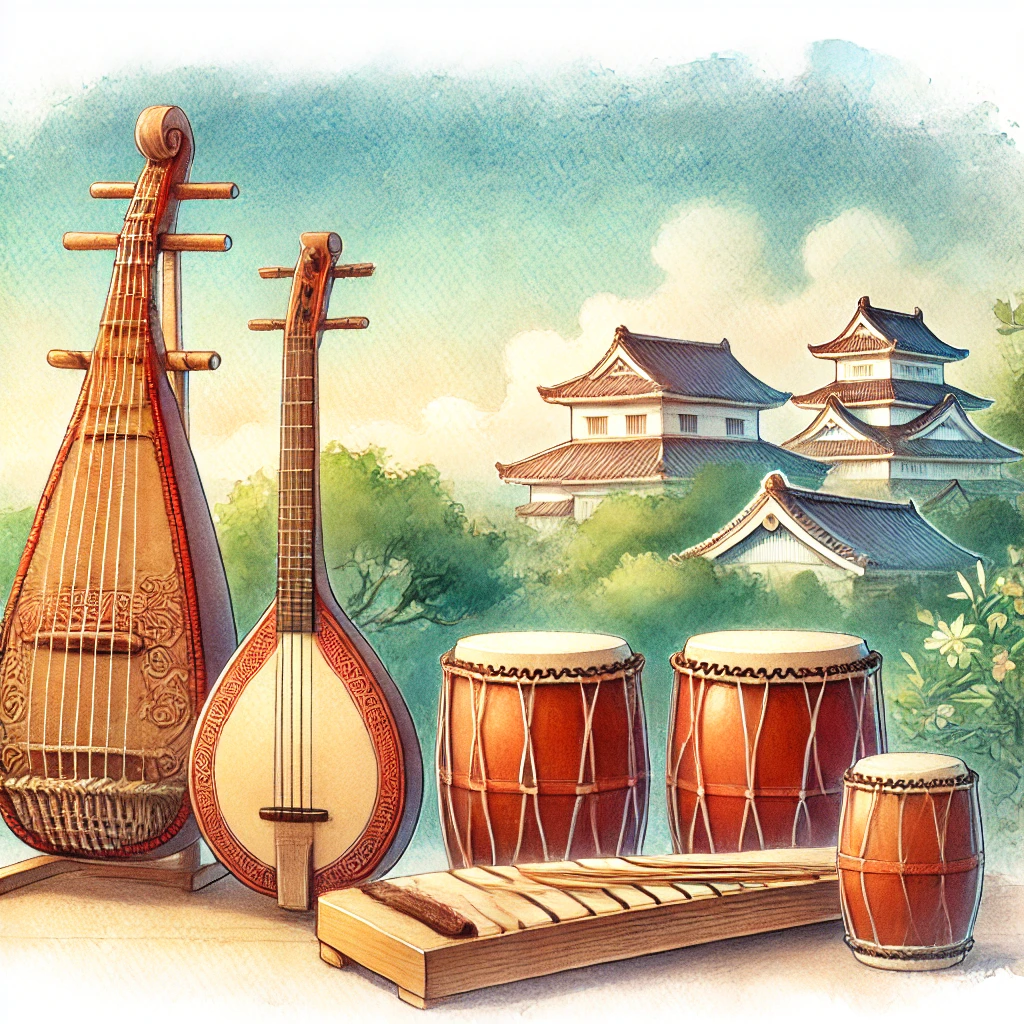
Music possesses the power to stir the heart and soothe the soul. Among various genres, Okinawan traditional music uniquely reflects the rich history, culture, and spirituality deeply rooted in the land.
The delicate tones of the sanshin, the harmonious blend of vocals and sanshin, and the robust rhythm of drums create a musical tapestry that speaks directly to the listener’s heart, evoking profound emotions.
The charm of Okinawan music lies in its ancient traditions. Cultivated within the royal court and deeply connected to festivals and rituals, this music has evolved as an essential cultural activity in people’s lives. It has also served as a means of communication with the gods and ancestors, playing a vital role in prayers and memorial services.
Additionally, in classical performing arts, such as the representative form of Kumiodori, music holds a significant position. The integration of orchestral music, chorus, and solo singing enriches the narrative and is indispensable as an accompaniment to the dance.
However, the allure of Okinawan music extends beyond tradition. In contemporary times, it has merged with genres like pop and rock, creating new forms of expression. Efforts to share Okinawan music domestically and internationally have increased, fostering exchanges with musicians worldwide.
Today, Okinawan music is advancing into a new era, balancing tradition and innovation.
This article delves into the traditional instruments and playing methods of Okinawan music, uncovering the sources of its charm. By meticulously exploring the historical and cultural background and its connection to spirituality, we aim to present an accessible introduction to the profound world of Okinawan music.
Readers will feel as if they are standing on Okinawan soil, experiencing the power and beauty of its music.
Let’s step together into the world of Okinawan music and feel its enchantment.
- The History and Characteristics of Okinawan Music
- Representative Traditional Instruments of Okinawa
- Traditional Music Performance Methods and Features
- Connections Between Okinawan Music and Spirituality
- Inheritance and Development of Okinawan Music in Modern Times
- Okinawan Music is Amazing!
- Q&A
- Summary
The History and Characteristics of Okinawan Music
The Music Culture of the Ryukyu Kingdom Era
Influence from Interaction with China
The history of Okinawan music was significantly influenced by interactions with China during the Ryukyu Kingdom era. At that time, the Ryukyu Kingdom had a tributary relationship with China, and many cultural elements were introduced from China. In music, Chinese instruments and playing styles were adopted, forming Okinawa’s unique musical culture. Notably, traditional Okinawan instruments like the sanshin and Ryukyu koto originated from Chinese instruments. Additionally, the scales and melodies brought from China have contributed to the distinctive sound of Okinawan music.
Development of Music in the Royal Court
During the Ryukyu Kingdom era, the royal court actively promoted music as an important cultural aspect. Musicians served exclusively at the court, performing at ceremonies and banquets. The court hosted musical events, inviting excellent musicians to perform, thus fostering the growth of music. Due to this support, Okinawan music became sophisticated and artistically advanced. Particularly, the classical music known as Kumiodori, performed in the royal court, symbolizes this development and remains a significant part of Okinawan music today.
Influences from China and Mainland Japan
The Introduction and Transformation of Chinese Instruments
Chinese instruments, which greatly influenced Okinawan music, have undergone unique transformations in Okinawa. The sanshin, originating from the Chinese sanxian, evolved in Okinawa with changes in the body material, shape, and the number of strings, developing into an instrument with a distinctive sound. Similarly, the Ryukyu koto, based on the Chinese guzheng, features differences in the number of strings and tuning methods, leading to Okinawa’s unique playing styles. These instruments, adapted to Okinawa’s climate and musical sensibilities, have become central to Okinawan music.
Changes in Music Under Satsuma Clan Rule
After the Satsuma clan invaded the Ryukyu Kingdom in 1609, Okinawan music began to receive influences from mainland Japan. The Satsuma clan introduced performing arts like Noh and Kabuki, which were incorporated into Okinawan music and dance. This led to the creation of forms like Kumiodori, incorporating elements of Noh, and Rufarai, influenced by Kabuki, enhancing the diversity of Okinawan music. The popularity of shamisen music during Satsuma rule also impacted Okinawan sanshin music, contributing to new musical developments.
The Development of Okinawa’s Unique Music Style
Geographical and Cultural Background
Okinawa’s unique geographical and cultural background has significantly shaped its music style. As a subtropical region with a warm and humid climate, Okinawa’s natural conditions influenced the melodies and rhythms of its music. Surrounded by the sea, Okinawa has developed a culture deeply connected to the ocean, reflected in song lyrics and musical expressions that mimic the sound of waves. Additionally, Okinawa’s unique beliefs and festivals have greatly impacted the development of its music, embedding a profound spirituality in the musical tradition.
Interaction and Fusion with Other Regions
Okinawan music has established its distinct style through interactions and fusion with other regions. Historically, Okinawa engaged in trade and cultural exchanges with Southeast Asia and the Korean Peninsula, incorporating musical elements from these regions into Okinawan music. In the 20th century, American culture also influenced Okinawan music, especially during the post-World War II US military administration. Jazz and rock music merged with traditional Okinawan music, creating a unique contemporary style. This exchange and fusion with other regions have contributed to the diversity and uniqueness of Okinawan music.
Representative Traditional Instruments of Okinawa
Sanshin
Structure and Materials of the Sanshin
The sanshin, a traditional Okinawan string instrument, symbolizes Okinawan music with its unique sound. It consists of three parts: the body, neck, and strings. The body is a round box covered with snake skin, primarily from habu or aodaisho snakes, significantly affecting the instrument’s tone. The neck, extending from the body, is made of wood, and the strings are stretched from the top of the body to the neck’s end. Traditionally, the strings were made from silk or hemp, but modern sanshin often use nylon strings called tetron.
Tuning Methods of the Sanshin
The sanshin’s tuning varies depending on the scale and type of song but generally involves three strings. The thickest string is called the “first string,” the middle string the “second string,” and the thinnest the “third string.” The standard tuning, known as “honchōshi,” tunes the first string to C, the second string to F, and the third string to C one octave higher. Other tunings, such as “ikichōshi” and “inaguchōshi,” are chosen based on the song’s mood and the performer’s preference. A tuning device called “itomaki” is used to adjust the string tension and pitch, allowing skilled performers to create beautiful tones.
Ryukyu Koto
Features and History of the Ryukyu Koto
The Ryukyu koto, another traditional Okinawan string instrument, originates from the Chinese guzheng. It features 13 strings and components called bridges placed under the strings for tuning adjustments. The koto’s delicate and elegant sound reflects the influence of Chinese music. The Ryukyu koto’s history dates back to the 15th century, introduced through cultural exchanges with China during the Ryukyu Kingdom’s tributary relationship. Initially used in royal court music, the instrument’s sophisticated techniques developed over time, becoming an essential part of Okinawan music, from classical to contemporary genres.
Types of Koto Music and Playing Styles
Ryukyu koto performances include various types of pieces and styles. Classical koto music comprises instrumental pieces called “gakkyoku” and vocal pieces called “kakyoku.” Gakkyoku, often imported from China, feature elegant melodies, while kakyoku combine traditional Okinawan songs with koto accompaniment. The performance styles are categorized into solo and ensemble performances, with the latter often involving other instruments like sanshin, flute, and drums, creating a rich musical experience. Contemporary performances explore new expressions, collaborating with genres like jazz and pop, expanding the possibilities of Ryukyu koto.
Taiko (Drum)
Types and Uses of Taiko
In Okinawan traditional music, taiko (drums) play an indispensable role. Various taiko types differ in size, shape, and usage. The “paranku” is a large drum with cowhide on both sides, used primarily in lunar calendar festivals and ceremonies, known for its powerful sound that enhances the festive atmosphere. The “chandara” is a medium-sized drum with goatskin on one side, often accompanying folk and classical music, producing a delicate tone that harmonizes with other instruments. Other types include the general “taiko” and the small “shime-daiko,” each serving different musical contexts, contributing to the dynamic and expressive quality of Okinawan music.
Origins and Playing Techniques of Eisa Drums
Eisa drums are crucial in the traditional folk performance of Eisa, performed during the lunar calendar’s Bon festival to honor ancestral spirits. Originating from Chinese drums, Eisa drums are large, with a diameter of about 60 cm, often made from the himekozo plant’s trunk, making them lightweight and durable. The unique playing style involves the performer carrying the drum on the waist, supporting it with one hand while striking it with the other. The rhythm patterns and techniques like the rapid “kamachi” and the stick’s flicking motion called “hane” create dynamic performances, synchronizing with dancers to enhance the festive spirit.
Eisa
drums play a vital role in community identity, with each region showcasing unique drum sizes, decorations, and rhythms, reflecting local characteristics. Eisa has become a well-known summer tradition in Okinawa, attracting many tourists, and the powerful sound and dynamic performances of Eisa drums epitomize the charm of Okinawan traditional arts.
Traditional Music Performance Methods and Features
Uta Sanshin
History and Characteristics of Uta Sanshin
Uta sanshin, a prominent form of Okinawan traditional music, involves singing accompanied by sanshin. Developed around the 18th century, this style evolved as sanshin playing and singing became popular among commoners. The distinctive feature of uta sanshin is the harmony between the vocal expression and sanshin melody, creating a powerful emotional impact. Singers convey their feelings through lyrics, while the sanshin’s melody complements these emotions. Improvisation is also key in uta sanshin, with performers adjusting melodies and rhythms to match their sentiments, giving each performance a unique expression.
The playing technique involves the rhythmic “kachāshī” and the ornamental “sukui,” enhancing the expressive depth of uta sanshin. Famous uta sanshin songs like “Asadoya Yunta,” which depicts the poignant emotions of a woman in love, showcase the beauty of Okinawan classical music. This song, along with other well-known pieces like “Tinsagu nu Hana” and “Hatoma Bushi,” represents the richness of uta sanshin, passed down by renowned singers and still cherished today.
Classical Music (Kumiodori)
Types and Performance Forms of Classical Music
Okinawan classical music, exemplified by the Kumiodori theatrical form, combines singing, instrumental music, and dance into a comprehensive art form. Established in the early 18th century, Kumiodori features narratives accompanied by orchestral music, chorus, and solo singing, creating a grand musical experience. The orchestral ensemble, including sanshin, Ryukyu koto, kokyu, flute, and drums, produces layered sounds that depict scenes and emotions. Male chorus groups called “jinami” explain the narrative and express the characters’ inner voices, while solo singing adds depth to the characters’ emotions.
Other forms of classical music include “Zatsudori,” a form derived from Kumiodori focusing on instrumental music and dance, and “Kageki,” a combination of singing and drama that developed in modern times. These forms, along with koto music ranging from classical to contemporary pieces, support the rich tradition of Okinawan performing arts.
Differences Between Court and Folk Music
Okinawan classical music can be categorized into “court music,” developed in the royal court, and “folk music,” cultivated among the common people. Court music, influenced by Chinese classical music, is sophisticated and ceremonious, represented by genres like “gakubu,” which combines orchestral music and elegant dance. Court music involves strict rules for instrument arrangement and performance techniques, reflecting the authority and dignity of the royal court.
In contrast, folk music is more spontaneous and improvisational, reflecting the lives and emotions of common people. “Minyo,” or folk songs, celebrate various aspects of life, from celebrations to labor, with sanshin accompaniment emphasizing simple melodies and rhythms. The playing techniques in folk music, such as the rhythmic “kachāshī,” highlight the lively and expressive nature of the genre.
While court and folk music have distinct roots and characteristics, they have influenced each other over time, contributing to the diversity of Okinawan music. The refined elegance of court music and the free-spirited expression of folk music have together enriched Okinawa’s musical heritage.
The Role of Music in Kumiodori
History and Features of Kumiodori
Kumiodori, created in the early 18th century, is a classical Okinawan theatre form blending drama, music, and dance, established by the sanshin master Tamagusuku Chōkun. Influenced by Japanese Noh and Kabuki and Chinese drama, Kumiodori incorporates unique Okinawan narratives and aesthetics. The stories often depict historical figures and events, showcasing values like loyalty and idealized relationships, with music, dance, and acting intricately woven to enhance the narrative.
The Importance of Music in Kumiodori
In Kumiodori, music is essential for narrative progression and emotional expression. The music, comprising orchestral, choral, and solo elements, adapts to the scene and character emotions, using instruments like the sanshin, Ryukyu koto, kokyu, flute, and drums to create appropriate atmospheres. Choruses called “jiutai” serve as narrators, explaining scenes and conveying inner thoughts, while solo performances by main characters express deep emotions, supported by the orchestra’s dynamic accompaniment.
Music is also crucial for dance, synchronizing with movements to enhance the performance’s expressiveness. Ensemble performances combine music, dance, and acting, creating a compelling total art form, still cherished and performed in Okinawa today.
Connections Between Okinawan Music and Spirituality
The Role of Music in Festivals and Rituals
Music in Lunar Calendar Festivals
In Okinawa, various lunar calendar festivals incorporate music essential for expressing gratitude and prayers. For instance, the Bon festival, known as “Eisa,” honors ancestral spirits with performances involving drums, sanshin, and flutes. The powerful drumbeats and dynamic dances are believed to entertain the spirits and strengthen community bonds. Similarly, the “Ukui” festival in September celebrates harvest with musical offerings, expressing joy and gratitude.
Music in these festivals serves as a medium for connecting people with gods and ancestors, reflecting Okinawan spirituality. It’s an integral part of rituals, helping people express their reverence and appreciation for nature and the divine.
Music in Life Rituals
Music is also vital in life rituals, marking significant milestones like birth, coming of age, marriage, and funerals. In weddings, the sanshin performance called “kachāshī” celebrates the couple’s new journey, spreading joy and unity. In funerals, the song “Misenuto Barama” mourns the deceased, comforting the bereaved and honoring the departed soul.
Through music, these rituals deepen their meanings, helping people acknowledge life’s transitions and reinforcing community bonds. Music in life rituals reflects the spiritual essence of Okinawan culture, emphasizing gratitude and reverence for life’s journey.
Ancestor Worship and Prayer Culture Through Music
The Tradition of Utaki Rituals
In Okinawa, music is a crucial part of ancestor worship, especially in “Utaki” rituals, where priestesses (Noro) offer prayers to ancestral spirits. Noro sing “Otaka Bē,” songs with distinct melodies and intonations, communicating with the spirits and honoring their deeds. The sanshin’s music also plays a vital role, creating a sacred atmosphere believed to comfort the spirits.
These rituals, preserving ancient traditions, form the spiritual foundation of Okinawan culture, with music as a key medium for connecting with ancestors and expressing prayers.
The Connection Between Music and the Spiritual World
Okinawan music functions as a bridge between the physical and spiritual worlds. It’s believed to possess spiritual power, enabling communication with gods and ancestors. “Yuta” shamans use sanshin music to convey divine messages, entering a trance-like state and singing the gods’ will. Similarly, Noro priestesses use songs to interact with deities, playing a crucial role in spiritual practices.
This belief highlights the unique spiritual aspect of Okinawan culture, where music is a vital tool for maintaining connections with the spiritual realm, reflecting the deep-seated spirituality in Okinawan traditions.
The Connection Between Okinawan Music and Nature
The Musicality Born from the Natural Environment
Okinawan music is closely tied to its natural environment, with the subtropical climate influencing its melodies and rhythms. The unique “Ryukyu scale,” differing from mainland Japan’s scales, embodies Okinawa’s natural beauty and cultural sensibilities. The sanshin’s soft, delicate sound reflects the gentle climate, evoking harmony with nature.
Okinawan music represents the values of living in harmony with nature, a core aspect of Okinawan spirituality. The music’s melodies and rhythms express the beauty and strength of nature, embodying the islanders’ respect and coexistence with their environment.
The World of Lyrics Inspired by Nature
Nature-themed lyrics are prevalent in Okinawan music, depicting the beauty of the sea, sky, flowers, and birds, reflecting the islanders’ love and reverence for nature. Songs like “Tinsagu nu Hana” praise the celestial cherry blossoms, symbolizing the sacred and expressing respect for nature. “Umi no Koe” describes the sea’s beauty and the gratitude for its blessings, portraying the coexistence between humans and nature.
These lyrics highlight Okinawan spirituality, where nature is an integral part of life. Through music, the beauty of nature is celebrated, and the quest for harmony with the natural world is pursued, making Okinawan music a valuable cultural treasure.
Inheritance and Development of Okinawan Music in Modern Times
Preservation and Education of Traditional Music
Documentation and Research of Traditional Music
To pass Okinawan traditional music on to future generations, it is crucial to document and research it thoroughly. Much of traditional music has been transmitted orally, resulting in a lack of written records. Therefore, efforts to document and research traditional music are essential.
Recently, initiatives have been undertaken to record and archive performances of traditional music through audio and video recordings. Additionally, the process of transcribing traditional music into written notation is progressing, making systematic documentation possible. These records serve not only for preservation but also as valuable research materials. Analyzing recorded sound sources and musical scores can reveal the characteristics and evolution of traditional music, providing new insights.
Moreover, researching the historical background and social significance of traditional music is also important. Understanding the cultural context in which traditional music was born and developed allows for a deeper appreciation of its intrinsic value. Documentation and research of traditional music are indispensable for uncovering the overall picture of Okinawan musical culture.
Education of Traditional Music to Younger Generations
To ensure the continuation of traditional music, educating younger generations is vital. However, many young people today have fewer opportunities to encounter traditional music. Therefore, it is necessary to provide opportunities to experience traditional music in various settings, such as school education and community cultural activities.
In school education, incorporating traditional music into music classes can be effective. Allowing students to handle traditional instruments and perform traditional music can foster familiarity and appreciation for traditional music. Additionally, organizing concerts and workshops in the community can provide young people with opportunities to engage with traditional music.
Furthermore, nurturing individuals who will carry on the tradition is essential. Excellent instructors are indispensable for passing on the techniques and knowledge of traditional music to future generations. Support for institutions that train traditional music instructors and organizations dedicated to preserving traditional music is necessary. Efforts to develop young performers who will carry the torch of traditional music are also crucial. Providing platforms for young musicians to showcase their talents and nurture their skills is key to the preservation of traditional music.
Fusion with Contemporary Music and Exploration of New Expressions
Examples of Fusion with Pop Music
Okinawan traditional music has expanded its expressive possibilities through fusion with contemporary music, particularly pop music. Integrating the sound of traditional instruments like the sanshin into pop music and rearranging traditional melodies to fit modern styles have created new and captivating expressions of Okinawan music.
For instance, pop groups such as “BEGIN” and “Kariyushi 58” have incorporated the sound of the sanshin into their songs, gaining significant popularity. Their music retains the traditional Okinawan atmosphere while appealing to contemporary sensibilities. Additionally, the “Shima Uta” series, which reinterprets traditional songs in a pop style, has also garnered attention. By expressing traditional lyrics and melodies with modern musical elements, a new appeal of Okinawan music is being created.
The fusion with pop music not only opens up new possibilities for traditional music but also serves as a means to broadly disseminate the charm of Okinawan music. By presenting traditional music in forms that resonate with contemporary audiences, more people are introduced to the beauty of Okinawan music. This fusion is a significant endeavor for the future of Okinawan music.
Collaboration with Jazz and Rock
Okinawan traditional music actively engages with other genres, such as jazz and rock. The collaboration between traditional instruments and jazz or rock instruments creates new musical possibilities. For example, the combination of sanshin with guitar, piano, and drums illustrates the potential for blending traditional music with jazz and rock.
Okinawan jazz musician Claudia Oshiro has established a unique style by merging the improvisational nature of jazz with elements of Okinawan traditional music. Her music explores Okinawan melodies and rhythms within a jazz framework, opening new musical horizons. These collaborations demonstrate the expansive potential of Okinawan music.
Fusing traditional music with jazz and rock not only creates new musical styles but also serves as a cultural exchange platform. Through music, Okinawan culture and the cultures of jazz and rock interact, influencing each other and generating new cultural values. This collaboration exemplifies a form of cultural exchange in today’s globalized society.
Promotion and Exchange of Okinawan Music Domestically and Internationally
Participation in Music Festivals Domestically and Internationally
Okinawan traditional music is widely promoted through participation in music festivals both in Japan and abroad. Domestically, it is showcased at major events like the “Okinawa International Film Festival” and the “NAHA Marathon,” which promote Okinawan culture nationwide.
Internationally, Okinawan musicians actively participate in world-renowned music expos like the “World Music Expo (WOMEX)” and “South by Southwest (SXSW),” promoting the charm of Okinawan music worldwide. Performances at these festivals play a crucial role in raising the international recognition of Okinawan music.
Participation in international music festivals not only promotes Okinawan music but also fosters exchanges with musicians from other countries and regions. These interactions at music festivals lead to collaborative performances and new musical exchanges, opening new possibilities for Okinawan music and enhancing its presence on the global music scene.
Collaboration with Musicians Worldwide
Okinawan musicians actively collaborate with musicians worldwide, exploring new musical possibilities and spreading the appeal of Okinawan music globally. For example, Okinawan guitarist Reichi Nakai collaborates with musicians from various countries, experimenting with fusions of Okinawan music, rock, and blues.
The traditional music group “Yui Maru” collaborates with the Irish traditional music group “The Chieftains,” exploring the commonalities and differences between the two countries’ traditional music. These collaborations highlight the potential of Okinawan music to create new musical expressions.
Collaborations with musicians worldwide serve as a form of cultural exchange through music. Musicians from different cultural backgrounds meet and exchange musical ideas, creating new cultural values. Such cultural exchange is increasingly important in our globalized society, and the collaboration between Okinawan music and world music is an attempt to respect cultural diversity while generating new musical values.
Okinawan Music is Amazing!
Uniqueness and Charm of Okinawan Music
Reflection of History and Culture
Okinawan music vividly reflects the history and culture of Okinawa. From the Ryukyu Kingdom era, it has incorporated influences from China and mainland Japan while emphasizing Okinawa’s unique individuality. Traditional instruments like the sanshin, distinctive scales, rhythms, and lyrics encapsulate the essence of Okinawan history and culture.
Furthermore, the deep connection to festivals, rituals, and prayer culture is a significant characteristic of Okinawan music. Music has existed not merely as entertainment but as a cultural activity closely intertwined with people’s lives and beliefs. Through singing, dancing, and performing, people have communicated with gods and ancestors, reaffirming community bonds. Okinawan music is thus a reflection of the region’s history and culture, deeply rooted in the land.
Diversity and Richness of Expression
Another charm of Okinawan music is its diversity and richness of expression. It encompasses various genres, from classical music to folk songs, each with its unique appeal. The use of a variety of instruments, including the sanshin, Ryukyu koto, and drums, produces a rich and expressive sound.
The seamless integration of singing and instrumental music, as exemplified by uta sanshin, is a significant feature of Okinawan music. The harmony between the song’s melody and the sanshin’s sound directly appeals to listeners’ hearts. The emphasis on improvisation also enhances the music’s diversity and expressive richness.
Moreover, Okinawan music actively fuses with contemporary genres like pop, rock, and jazz, exploring new forms of expression. These collaborations create new ways to convey the appeal of Okinawan music. Thus, Okinawan music combines diversity and expressive richness, offering a profound musical experience.
The Role of Traditional Music in Okinawan Culture
Formation of Identity
Okinawan traditional music plays a crucial role in shaping Okinawan identity. As a cultural activity embodying the history, culture, and spirituality of Okinawa, it is indispensable to the people of Okinawa.
The long-standing musical traditions instill pride and confidence in Okinawans, serving as a cornerstone of their identity. Traditional music performed during festivals and rituals fosters a sense of community and strengthens the bonds among Okinawans. The lyrics, reflecting the Okinawan worldview and appreciation of nature, significantly contribute to forming their identity.
Traditional music also serves as a means to showcase Okinawan cultural identity to the world. Participation in domestic and international music festivals and collaborations with global musicians help disseminate the charm of Okinawan traditional music. Sharing Okinawan music’s appeal with the world also provides an opportunity to re-evaluate its cultural value.
Intergenerational Inheritance and Development
Okinawan traditional music has been inherited and developed across generations. Oral transmission through teacher-student relationships has ensured the passage of musical skills and spirit to the next generation. Additionally, family and community practices have naturally fostered an environment where children become familiar with music.
Currently, education and promotion activities by schools and public institutions are also active. Support from cultural administrations and the training of traditional music instructors are among the various efforts to pass on traditional music to the next generation, forming an essential foundation for its preservation and development.
Modern young musicians are bringing fresh vitality to traditional music. By integrating traditional music with contemporary genres like pop and rock, they expand the possibilities of traditional music. Collaborations with global musicians also open new avenues for the development of traditional music. Thus, Okinawan traditional music continues to evolve through intergenerational inheritance and development.
The Future of Okinawa’s Musical Heritage</ h3>
Balancing Preservation and Innovation
To ensure the continuity of Okinawan traditional music, balancing preservation and innovation is crucial. Preserving the techniques and spirit of traditional music and passing them on to the next generation is essential for cultural inheritance. This requires meticulous efforts in documentation, research, and education.
At the same time, innovation is necessary to keep traditional music alive in the contemporary world. Rediscovering the value of traditional music in modern society and exploring new forms of expression will enable traditional music to thrive. Fusions with genres like pop and rock and collaborations with other styles are important endeavors to broaden the potential of traditional music.
Achieving this balance between preservation and innovation is not easy. However, valuing the essence of tradition while adapting flexibly to contemporary times is perhaps the key to maintaining the vitality of traditional music. Both preservation and innovation are indispensable for passing Okinawan traditional music on to the future.
The Global Potential of Okinawan Music
Okinawan traditional music, with its unique and diverse characteristics and rich expressiveness, is a cultural heritage to be proud of globally. The distinct musicality centered around the sanshin, along with the seamless integration of singing and dancing, has the power to captivate music enthusiasts worldwide. Participation in domestic and international music festivals and collaborations with global musicians steadily spread the charm of Okinawan music worldwide.
The potential of Okinawan music extends beyond musical aspects. Cultural exchange through music deepens mutual understanding among people from different cultural backgrounds, contributing to the realization of a peaceful world. Music transcends language barriers, connecting people’s hearts. By enchanting the world with its unique charm, Okinawan music promotes understanding of cultural diversity.
Additionally, Okinawan music can convey the region’s rich natural beauty and culture to the world. The lyrics praising Okinawa’s beautiful sea and sky have the power to broadcast the island’s allure globally. By sharing Okinawa’s culture and values through music, greater understanding of the region can be fostered.
Thus, Okinawan traditional music holds significant potential beyond being a mere musical heritage. By spreading its unique charm and serving as a bridge for cultural exchange, Okinawan music can contribute to the world. It is essential for each of us to recognize its value and strive for its preservation and development.
Okinawan music, nurtured through a long history, is a precious cultural heritage. It is our important responsibility to connect the music cherished by our predecessors to the future.
First, it is crucial to understand the value of Okinawan music. Recognizing that Okinawan music is not merely entertainment but a cultural activity embodying Okinawa’s history, culture, and spirituality is necessary. We must listen to the intentions embedded in the music and grasp their meaning.
Efforts to ensure the future inheritance of Okinawan music are also essential. Practices in homes and communities, education on traditional music in schools, and various initiatives at multiple levels are crucial. Training traditional music instructors and enhancing documentation and research are also critical foundations for inheritance.
Simultaneously, innovation is necessary to keep Okinawan music alive in the contemporary world. Collaborations with modern music genres like pop to extract new charm from Okinawan music are significant endeavors. Creating new expressions while valuing classical elements will make Okinawan music resonate with more people.
Promoting Okinawan music to the world is another crucial task. Participation in domestic and international music festivals and collaborations with global musicians are necessary to widely convey the charm of Okinawan music. By captivating people worldwide, Okinawan music can foster understanding of cultural diversity and contribute to a peaceful world.
Okinawan music is a priceless treasure for the people of Okinawa. Recognizing its value, preserving it, and passing it on to the future is our vital mission. Balancing preservation and innovation while pursuing the potential of Okinawan music is essential.
Believing in the power of Okinawan music and striving for its inheritance and development will enrich Okinawan culture. Let us illuminate the future of Okinawan music, a cultural heritage we are proud of.
Through the extensive examination of Okinawan traditional instruments and playing methods, historical background, cultural significance, and the challenges of inheritance and development in modern times, we hope to convey the depth and charm of Okinawan music.
Okinawan music, deeply rooted in the land, is not only a unique cultural heritage but also something to be proud of globally. It is essential for each of us to recognize its value, protect it, and pass it on to the future.
By preserving tradition while embracing new expressions, Okinawan music can continue to captivate many and shine globally.
Welcome to the profound world of Okinawan music, where a priceless emotional experience awaits.
Q&A
What are the characteristics of Okinawan music?
The characteristics of Okinawan music include unique instruments like the sanshin and Ryukyu koto, distinctive scales and rhythms, the fusion of singing and instruments exemplified by uta sanshin, and a performance style emphasizing improvisation.
How is Okinawan traditional music connected to festivals and rituals?
Okinawan traditional music has developed as an essential element of festivals and rituals throughout its long history. It serves as a means of communication with gods and ancestors, playing vital roles in prayers, blessings, and memorials.
What role does music play in Kumiodori?
In Kumiodori, music is essential for the narrative progression and emotional expression of characters. The orchestral music, chorus, and solo singing work together to create a complete experience, enhancing the storytelling and dance accompaniment.
What trends are observed in the contemporary Okinawan music scene?
In the contemporary Okinawan music scene, there is a focus on preserving and inheriting traditional music while actively merging it with other genres like pop, rock, and jazz. Additionally, participation in domestic and international music festivals and collaborations with global musicians are increasing.
What is important for the future inheritance of Okinawan traditional music?
Balancing preservation and innovation is crucial for the future inheritance of Okinawan traditional music. It is essential to preserve and pass on traditional techniques and spirit while exploring new expressions to keep the music relevant in contemporary society.
Summary
The traditional instruments and playing methods of Okinawan music create an enchanting musical world that vividly reflects Okinawa’s history, culture, and spirituality. Unique instruments like the sanshin and Ryukyu koto, distinctive scales and rhythms, and the seamless integration of singing and instruments characterize Okinawan music.
Nurtured within the royal court and deeply connected to festivals and rituals, Okinawan traditional music has developed as an essential cultural activity in people’s lives. It has served as a means of communication with gods and ancestors, playing significant roles in prayers and memorial services.
In classical performing arts like Kumiodori, music holds a crucial position. The orchestral music, chorus, and solo singing together enhance the narrative and are indispensable as dance accompaniment.
In modern times, efforts focus on preserving and inheriting traditional music while actively merging it with other genres like pop, rock, and jazz. The promotion of Okinawan music both domestically and internationally is increasing, fostering exchanges with global musicians.
However, the key to passing Okinawan traditional music on to the future lies in balancing preservation and innovation. It is crucial to preserve the techniques and spirit of traditional music while exploring new expressions that resonate with contemporary audiences.
Recognizing the value of Okinawan music and striving for its inheritance and development is essential. By preserving tradition and embracing new challenges, Okinawan music will continue to captivate many and shine globally.
Embrace the profound world of Okinawan music with heightened senses, and you will undoubtedly encounter an irreplaceable emotional experience.


コメント