
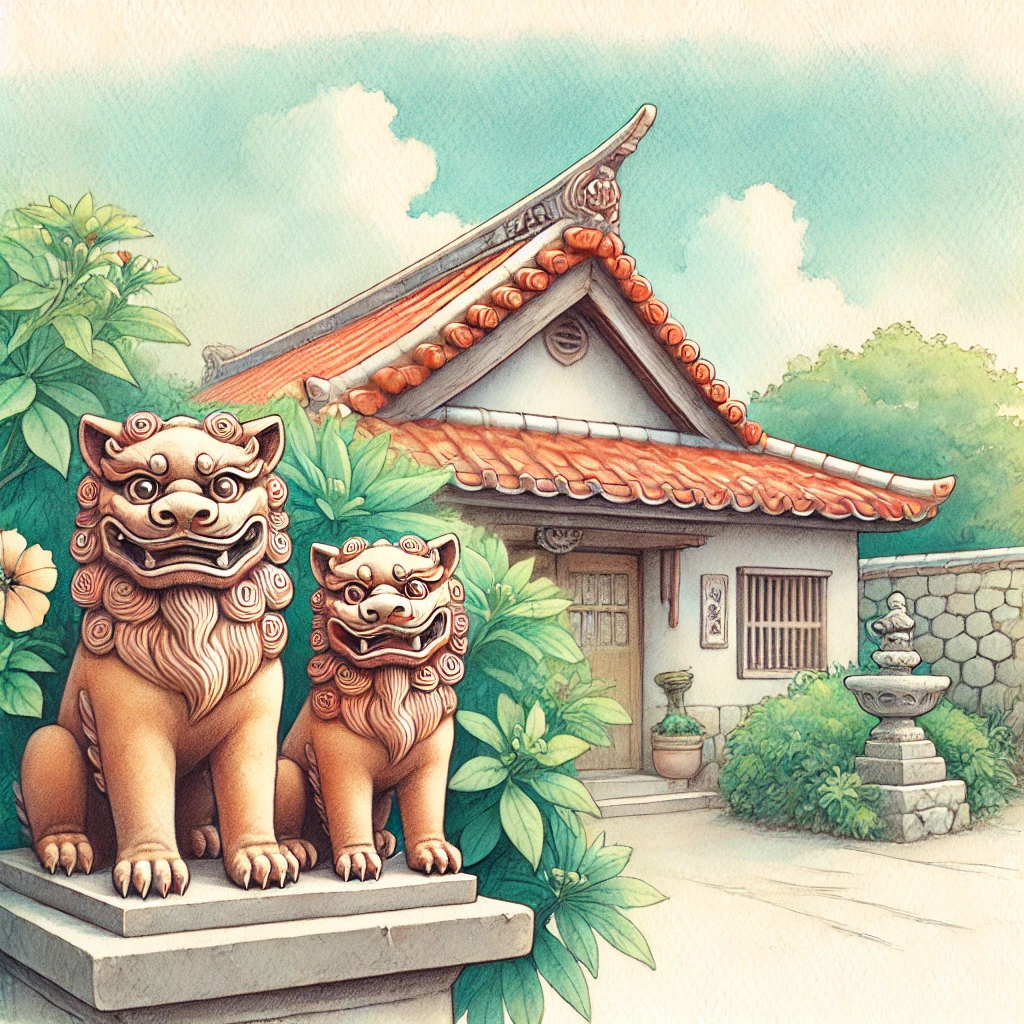
When traveling in Okinawa, one of the most iconic sights you will undoubtedly encounter is the charmingly expressive “Shisa.” These guardian figures can be seen at airports, hotels, souvenir shops, and on the roofs and doorways of local homes. But what exactly is a Shisa?
Shisa are not merely decorative ornaments. They are revered as protective deities that have been cherished by the people of Okinawa for centuries. The origins of Shisa are said to trace back to the Chinese “Shi” (lion), which was brought to Okinawa through trade and later evolved into a unique form over time.
The male Shisa, with its mouth open, is believed to ward off evil spirits, while the female Shisa, with its mouth closed, invites good fortune. This dual role reflects the wishes and spiritual beliefs of the Okinawan people. As symbols of nature worship, Shisa embody the Okinawan spirit of living in harmony with nature.
Even in modern Okinawa, Shisa are beloved as household protectors. Additionally, Shisa-themed souvenirs are popular among tourists as memorable items that offer a glimpse into Okinawan culture. However, Shisa are more than just souvenirs or decorative pieces. They convey essential life lessons about valuing family, coexisting with nature, and desiring peace and happiness. These lessons remain relevant in contemporary society.
Would you like to explore the profound allure hidden behind the adorable appearance of Shisa, which has been a guardian deity for the people of Okinawa for ages? This article delves into the history, meaning, and contemporary significance of Shisa from various perspectives.
What is a Shisa?
Origins and Legends of Shisa
Development from the Chinese “Shi”
The Shisa of Okinawa is said to originate from the Chinese “Shi.” In China, lions have long been revered as auspicious creatures, serving as talismans and guardians. As trade between Okinawa and China flourished, lion statues were introduced to Okinawa and gradually evolved into a distinct form unique to the region.
Initially, lion statues in Okinawa served the same protective function as their Chinese counterparts, acting as household guardians. Over time, however, the people of Okinawa added their own interpretations, creating the new guardian deity known as Shisa. Thus, Shisa are a product of the fusion between Chinese and Okinawan cultures, deeply intertwined with Okinawa’s history.
The Birth of Unique Okinawan Design and Significance
As Shisa evolved from the Chinese lion statues, they began to acquire distinct Okinawan design and meaning. Characterized by large eyes, sharp teeth, and wide-open mouths, Shisa are designed to intimidate and ward off evil spirits. Additionally, there is a distinction between male and female Shisa, each with its own role: the male Shisa, with an open mouth, devours evil spirits, while the female Shisa, with a closed mouth, keeps good spirits inside the home. This male-female pairing represents the balance of yin and yang, reflecting the worldview of the Okinawan people.
In this way, Shisa are not just guardian statues but cultural symbols infused with the spirituality and values of the Okinawan people.
Characteristics and Types of Shisa
Differences Between Male and Female Shisa
There are two types of Shisa: male and female. The male Shisa, with its mouth open, is believed to devour evil spirits, while the female Shisa, with its mouth closed, is said to invite good spirits into the home. This male-female combination is not merely decorative but represents the balance of yin and yang. By placing both male and female Shisa together, Okinawans hope to maintain harmony and wish for peace and prosperity in their homes. It is believed that the powerful presence of the male Shisa combined with the gentle nature of the female Shisa creates a stronger protective force.
Diversity in Materials and Colors
Shisa have been made from various materials over the years. Traditionally, stone, pottery, and plaster have been used, each chosen for its particular qualities. Stone Shisa are durable and can protect homes for many years. Pottery Shisa are vibrant and beautiful, serving as important decorative elements in homes.
Shisa also come in a variety of colors, each carrying different meanings. Red Shisa are thought to have strong protective powers, while blue Shisa are believed to safeguard peace and safety. This diversity in materials and colors reflects the creativity and aesthetic sense of the Okinawan people. Shisa are not just guardians but also important decorative elements that enhance the beauty of homes and evoke the unique atmosphere of Okinawa.
The Meaning and Role of Shisa
Shisa as Talismans and Guardians
Protecting Homes from Evil Spirits and Disasters
Okinawan Shisa play a crucial role in protecting homes from evil spirits and disasters. The sharp eyes and teeth of Shisa are designed to intimidate and repel malevolent spirits. The open mouth of the male Shisa is said to consume evil, preventing it from entering the home.
Okinawans place Shisa at the entrances and roofs of their homes to keep evil spirits and disasters at bay. Shisa serve as guardians of the home, ensuring the safety and peace of the family.
Bringing Good Fortune and Prosperity
In addition to warding off evil, Shisa are believed to bring good fortune and prosperity. The female Shisa, with its mouth closed, is thought to invite good spirits into the home, bringing happiness and prosperity.
Shisa are also known as symbols of commercial success. Placing Shisa at the entrance of a store is believed to bring good business and prosperity. Shisa are indispensable to the lives of Okinawans, deeply rooted in their daily lives.
Shisa as “Gatekeepers” of Homes and Villages
Shisa at Home Entrances and Roofs
Shisa are often placed at the entrances and roofs of homes. At the entrance, Shisa serve as “gatekeepers,” warding off evil spirits and preventing them from entering the home.
Placed on the roof, Shisa have a broader view, protecting the entire house from above. These rooftop Shisa are trusted guardians, ensuring the safety and peace of the home.
Large Shisa at Village Entrances
Shisa are not only placed at homes but also at village entrances. These village entrance Shisa are larger and more imposing than those at homes, serving as “gatekeepers” for the entire village.
The large Shisa at the village entrance prevent evil spirits and disasters from entering the village and ensure the safety and peace of the villagers. They also symbolize the village’s prosperity and development. For Okinawans, Shisa are essential guardians of both family and village.
Legends and Stories About Shisa
The Legend of “Shisa Kuden”
The Story of Shisa Protecting a Village from Evil Spirits
One of the well-known legends in Okinawa is “Shisa Kuden.” According to the legend, long ago, a village was plagued by an evil spirit. The villagers were tormented and desperately sought a way to drive the spirit away, but nothing seemed to work.
One day, a Shisa at a certain house suddenly opened its mouth and devoured the evil spirit, bringing peace to the village. The villagers, grateful for the Shisa’s power, began to cherish Shisa as their guardian deity.
The Background and Meaning of the Legend
The legend of “Shisa Kuden” highlights the significance of Shisa to the Okinawan people. In the legend, Shisa is portrayed as a reliable guardian deity that saves the village from crisis.
This legend reflects the spiritual beliefs of the Okinawan people, who have long believed in the presence of gods in nature and coexisted with them. Shisa, linked with this nature worship, serves as a protective deity.
The legend demonstrates that Shisa are not merely ornamental figures but spiritual protectors and sources of comfort for the Okinawan people.
Real-Life Incidents Involving Shisa
Shisa Protecting Homes from Fires
In Okinawa, there are actual incidents where Shisa have protected homes. For instance, during a house fire, a Shisa on the roof is said to have cracked and fallen, stopping the fire. This incident illustrates that Shisa are believed to possess real protective powers.
Okinawans have long placed their faith in Shisa as guardians, and Shisa have responded to these expectations.
Other True Stories About Shisa
There are other true stories involving Shisa in Okinawa. For example, there is a story of a Shisa scaring away a thief. When the thief tried to break into a house, the Shisa suddenly roared, causing the thief to flee in fear, leaving the house unharmed.
Another story tells of a Shisa curing a family member’s illness. When a family member fell ill, prayers were offered to the Shisa, and the illness was said to have been cured.
These real-life stories demonstrate that Shisa are deeply integrated into the lives of Okinawans, serving as reliable protectors of homes and families.
Shisa and the Spiritual World of Okinawa
Nature Worship and Shisa
The Relationship Between Okinawan Nature Views and Shisa
The people of Okinawa have long embraced the philosophy of nature worship. They believe that gods reside in nature, inhabiting forests, seas, rivers, and other natural elements. Okinawans have lived in harmony with
these gods.
Shisa are closely connected with this nature worship philosophy. They are not only protectors of homes and villages but also symbols of the gods in nature. Through Shisa, Okinawans seek to harness nature’s power and live in harmony with it.
Respect for Nature Embedded in Shisa
Shisa embody a deep respect for nature. They protect homes not merely through their own power but by drawing on the strength of nature. Therefore, Shisa are considered a part of nature and in harmony with it.
Okinawans express gratitude to nature through Shisa, striving to coexist with it. Shisa serve as a crucial link between the Okinawan people and nature.
The Wishes of Okinawans Embedded in Shisa
The Desire to Protect Family and Village
Shisa represent the strong desire of Okinawans to protect their families and villages. For Okinawans, family and village are the most precious entities. Shisa are trusted guardians that protect these invaluable entities.
Shisa placed at the entrances and roofs of homes are guardians of the family. Large Shisa at village entrances protect the entire village. Embedded in Shisa is the love and affection of the Okinawan people for their families and villages.
Prayers for Peace and Prosperity
Shisa also embody prayers for peace and prosperity. Through Shisa, Okinawans have long prayed for the peace and prosperity of their homes and villages. Shisa are believed to hear these prayers and bring happiness to homes and villages.
The actions of the male Shisa devouring evil and the female Shisa inviting good spirits represent these prayers for peace and prosperity. Okinawans have built peaceful and prosperous lives alongside Shisa.
The Role of Shisa in Modern Times
Shisa as Tourist Souvenirs
The Popularity and Diversity of Shisa Goods
In modern Okinawa, Shisa are extremely popular as tourist souvenirs. Shisa-themed goods are widely available at souvenir shops and airport stores. These include Shisa figurines, keychains, T-shirts, and more, all beloved by tourists.
While maintaining traditional designs, modern Shisa goods also incorporate contemporary elements. Vibrant colors and unique designs make Shisa goods especially popular among younger generations. Shisa serve as iconic souvenirs that encapsulate the rich cultural heritage of Okinawa.
Experiencing Shisa Making in Tourist Areas
In Okinawa, visitors can experience making their own Shisa at certain tourist facilities. Tourists can participate in Shisa painting and crafting activities, creating their own unique Shisa while gaining deeper insight into Okinawan culture.
Shisa-making experiences are enjoyable activities for all ages, from children to adults. Making Shisa together as a family deepens the memories of an Okinawan trip. These experiences offer valuable opportunities to learn about Okinawa’s traditional culture in a hands-on manner.
Shisa as Symbols of Okinawan Culture
The Presence of Shisa in Modern Okinawan Homes
Even in modern times, many Okinawan households still display Shisa. As symbols of Okinawan traditional culture, Shisa are treasured and continue to protect the safety and happiness of families from their positions at entrances and on roofs.
Moreover, modern Shisa serve as interior decorations. In addition to traditional designs, modern Shisa with contemporary styles are also available, blending seamlessly into various home settings. Shisa uphold Okinawan traditions while integrating into modern lifestyles.
Shisa as Ambassadors of Okinawan Culture to the World
Shisa also play a role in sharing Okinawan culture with the world. Shisa goods sold at airports and tourist spots are popular among tourists from around the globe, helping to spread the charm of Okinawa internationally.
Additionally, Shisa can be seen at Okinawan restaurants and other establishments overseas, symbolizing Okinawan culture. Shisa are becoming increasingly recognized worldwide as icons of Okinawan tradition, acting as cultural ambassadors that connect Okinawa to the world.
Conclusion: The Heart of Okinawa as Taught by Shisa
Learning the Spirituality of Okinawa from Shisa
Shisa are vital symbols that represent the spirituality of the Okinawan people. From Shisa, we can learn many important lessons.
As guardians of families and villages, Shisa have brought security and peace to the lives of Okinawans. Through Shisa, we can learn the importance of cherishing family and community.
Additionally, Shisa are deeply connected to the philosophy of nature worship. Through Shisa, we can learn the significance of respecting nature and living in harmony with it.
The Significance and Importance of Shisa in Modern Society
In contemporary society, the significance and importance of Shisa remain unchanged. Shisa are symbols of Okinawan traditional culture, conveying the heart of Okinawa.
Modern society often prioritizes convenience and efficiency at the expense of spiritual richness. In such times, the spirituality and nature views embodied by Shisa convey essential messages to us.
Shisa teach us the importance of family and community bonds, the wisdom of coexisting with nature, and the desire for peace and prosperity. Through Shisa, we can also appreciate the depth and richness of Okinawan traditional culture.
For us living in the modern world, Shisa are not just ornaments. They are essential entities that convey the heart of Okinawa. By living with Shisa, we can build a more spiritually fulfilling life.
While cherishing the heart of Okinawa as taught by Shisa, it is our responsibility to continue preserving and promoting Okinawan traditional culture. Together with Shisa, let’s pass on the heart of Okinawa to future generations.
Q&A
What are the origins of Shisa?
Shisa are said to originate from the Chinese “Shi” (lion). Lion statues brought from China to Okinawa evolved over time into the distinct form known as Shisa.
What is the difference between male and female Shisa?
The male Shisa, with its mouth open, devours evil spirits, while the female Shisa, with its mouth closed, invites good spirits into the home. This combination represents the balance of yin and yang.
What is the legend of “Shisa Kuden”?
“Shisa Kuden” is a legend about a Shisa that protected a village from an evil spirit. The Shisa devoured the evil spirit, bringing peace to the village. This legend highlights the role of Shisa as guardian deities.
What role do Shisa play in modern Okinawan households?
In modern Okinawan households, Shisa continue to be cherished as guardians. They protect the safety and happiness of families and symbolize Okinawan traditional culture.
What lessons can we learn from Shisa about the heart of Okinawa?
Shisa teach us the importance of cherishing family and community, coexisting with nature, and desiring peace and prosperity. The spirituality embodied by Shisa holds significant meaning for us in modern society.
Conclusion
The guardian deity Shisa of Okinawa originated from the Chinese lion and evolved into a unique form over time. The male Shisa devours evil spirits, while the female Shisa invites good spirits, representing the balance of yin and yang.
Shisa are associated with legends like “Shisa Kuden,” in which they act as protectors of villages. There are also real-life stories of Shisa protecting homes from fires.
Shisa are deeply connected to Okinawa’s nature worship philosophy, symbolizing the harmony between humans and nature. They continue to be cherished as guardians in modern Okinawan households, representing traditional culture.
Shisa-themed souvenirs are popular, offering tourists a way to experience Okinawan culture. Shisa-making experiences provide valuable hands-on learning opportunities.
Shisa teach us the importance of family, community, and nature, and embody the spiritual values of Okinawa. In modern society, Shisa play a vital role as cultural ambassadors, sharing the heart of Okinawa with the world.
Shisa are not just tourist items but embody the history, culture, and spirituality of Okinawa. By valuing the lessons from Shisa, we can preserve and promote Okinawan traditional culture for future generations.


コメント