
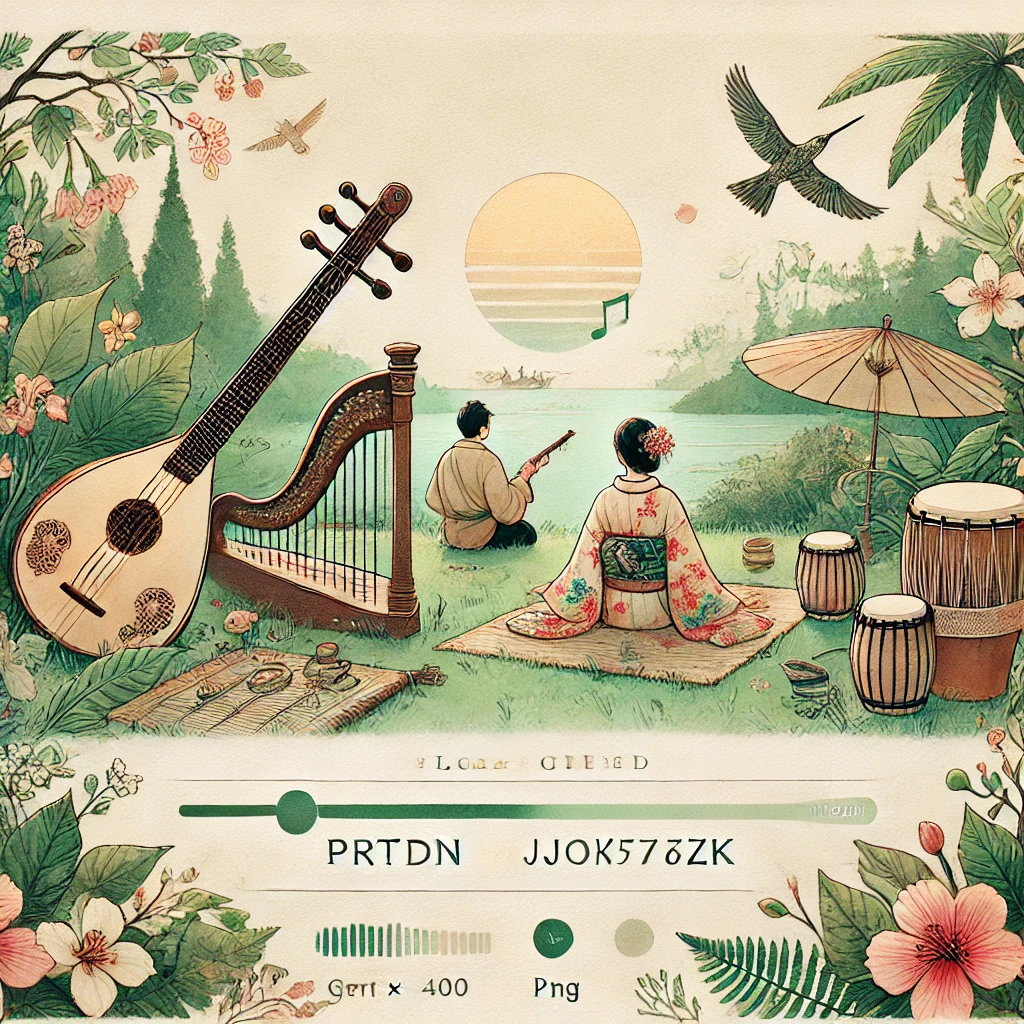
Okinawan folk music, or “minyo,” is a rich musical heritage that encapsulates the heart and soul of Okinawa. These songs, passed down through generations, reflect deep sentiments of gratitude for the beautiful nature, yearning for loved ones, the horrors of war, and the longing for peace.
When you listen to the song “Asadoya Yunta,” you cannot help but feel the Okinawan aesthetic appreciation for beauty and reverence for the sacred. The lyrics of “Tinsagu nu Hana” express the tender emotions of a woman in love and the rich natural beauty of Okinawa.
- Overview of Okinawan Folk Music
- Sentiments Embedded in Okinawan Folk Music
- Representative Okinawan Folk Songs and Their Meanings
- Okinawan Folk Music and Its Cultural Significance
- Learning About Okinawa’s Spiritual World Through Folk Music
- In Conclusion
Overview of Okinawan Folk Music
History and Development of Okinawan Folk Music
Folk Songs of the Ancient Era
The origins of Okinawan folk music can be traced back to the ancient Ryukyu Kingdom. These early songs were primarily passed down orally and were sung during ceremonies, rituals, and agricultural work. Representative folk songs from this era include “Asadoya Yunta” and “Tinsagu nu Hana.” The lyrics of these songs reflect the natural environment, local customs, and daily lives of the people, making them beloved even today.
These ancient songs often featured simple melodies and repetitive phrases, with relatively short lyrics. However, they still conveyed the thoughts and wishes of the Okinawan people, expressing gratitude to ancestors and gods, longing for loved ones, and reverence for nature. These songs have been handed down through generations, preserving the spiritual essence of Okinawa.
Changes in Folk Music from the Early Modern to Modern Period
From the Ryukyu Kingdom period to modern times, Okinawan folk music underwent significant changes. The introduction and spread of the sanshin (a traditional three-stringed instrument) had a profound impact on the development of folk music. The accompaniment of the sanshin made the melodies more complex and refined, and the lyrics became longer. Interaction with the court music of the Ryukyu Kingdom, known as “classical music,” also contributed to the development of folk music.
In the early modern period, folk music became popular as entertainment for the common people. Dance songs such as “Marubou Bushi” and “Heiser Bushi” emerged and were sung at celebrations and parties. Additionally, songs like “Yamatoguchi Bushi,” created through interactions with mainland Japan, appeared. In the modern era, Okinawan folk music entered a new phase. After World War II, under U.S. military occupation, folk music became a means of expressing Okinawan identity.
The Role of Okinawan Folk Music in Modern Times
In contemporary Okinawa, folk music holds an important cultural position. It is included in school curriculums, giving children many opportunities to become familiar with folk music from an early age. There are also many organizations and individuals dedicated to preserving and promoting folk music.
Recently, there have been frequent collaborations between Okinawan folk music and modern music genres. New forms of folk music incorporating elements of pop, rock, and hip-hop have gained popularity among younger generations. These efforts are expanding the possibilities of Okinawan folk music and creating new appeal.
Okinawan folk music is not just a relic of the past but a living culture that continues to evolve. The rich expression inherited from ancestors, combined with modern sensibilities, allows Okinawan folk music to shine with new brilliance. Engaging with Okinawan folk music helps us learn from ancestral wisdom, reassess the present, and connect to the future.
Characteristics and Types of Okinawan Folk Music
Musical Scales and Singing Techniques
One of the major characteristics of Okinawan folk music is its unique scales and singing techniques. The scales used in Okinawan folk music are primarily pentatonic, known as “minyo scale.” This differs from the musical scales of mainland Japan, creating a distinct sense of beauty and melancholy. Additionally, the “yonanuki scale,” a four-note scale, is also used, giving a simpler and more rustic impression.
In terms of singing techniques, Okinawan folk music features distinctive elements such as “kobushi,” or ornamental tones, which add unique expressions to the melodies. The “yuri” or tremolo effect, which creates a wavering sound, adeptly conveys emotional fluctuations. These singing techniques are closely linked to the performance techniques of the sanshin, contributing significantly to the charm of Okinawan folk music.
Linguistic Features of the Lyrics
The lyrics of Okinawan folk songs are often written in the unique Okinawan language known as “Uchinaaguchi.” Uchinaaguchi has a distinct vocabulary and grammar, different from standard Japanese, providing a unique expressive power. For instance, everyday greetings like “haisai” (hello) and “nifee debiru” (thank you) to deeper expressions like “chim don don” (heart to heart) and “mabui” (soul) are commonly found.
Additionally, Okinawan folk song lyrics frequently employ figurative expressions and wordplay. For example, in the lyrics of “Tinsagu nu Hana,” the “tinsagu” plant, believed to connect heaven and earth, also symbolizes a lover. This clever use of natural objects and everyday items to express profound emotions is a notable feature of Okinawan folk song lyrics.
Main Types of Okinawan Folk Songs
Okinawan folk songs can be broadly divided into “koyou” (ancient songs) and “shin minyou” (new folk songs) that emerged after the early modern period. Representative ancient songs include “Asadoya Yunta” and “Tinsagu nu Hana,” as well as “Kushiima Bushi” and “Hatoma Bushi.” These songs, with their historical roles in ceremonies, rituals, and agricultural work, strongly reflect Okinawan traditional culture.
New folk songs, such as “Sukurabushi” and “Juli Uma,” are dance songs sung at parties, and “Senaga Bushi” and “Sawee Bushi,” created post-war, represent modern Okinawa culture. These new folk songs are more accessible and reflect the evolving culture of Okinawa.
Regional folk songs also uniquely characterize Okinawan folk music. For example, the Yaeyama Islands are known for “Kuroshima Kuduchi” and “Iriomote Kuduchi,” while the Miyako Islands are famous for “Zendaiko Bushi” and “Sunayama Bushi.” These regionally distinctive songs reflect the local nature, environment, and history, showcasing the diversity of Okinawan folk music.
Understanding the diversity of Okinawan folk music, from ancient songs to new folk songs, is essential for a deeper appreciation of Okinawan culture. By recognizing the shared characteristics of these songs, such as unique musical scales, singing techniques, and lyrics in Uchinaaguchi, we can approach the essence of Okinawan folk music.
Sentiments Embedded in Okinawan Folk Music
Okinawan folk music is not merely entertainment; it is a voice of the Okinawan people and an expression of the spirituality nurtured over a long history. The lyrics encapsulate a love for Okinawa’s beautiful nature, gratitude and prayers to ancestors and gods, and deep emotions towards loved ones and family.
Affection for Okinawa’s Nature and Environment
Songs Celebrating the Beauty of the Sea, Sky, and Islands
Okinawa is blessed with some of the most beautiful natural landscapes in Japan. The emerald-green sea, blue sky, white sandy beaches, and vibrant flowers have captivated the hearts of Okinawan people for centuries.
Many Okinawan folk songs celebrate this natural beauty. For instance, the song “Umi no Koe” praises the beauty of the northern Okinawan sea with the lyrics, “Yanbaru no umihara ya aoao to shitoru yo” (The sea of Yanbaru is so blue).
Another example is “Kagiyadefu,” which describes the beauty of islands floating in the sea with the lyrics, “Agai shimajima ya ukandeiru” (Ah, the islands are floating). In “Shima Uta,” the yearning for the blue sky is expressed with “Agai sora no shita de kokoro harebare” (Under the blue sky, my heart is clear).
These lyrics reveal the deep affection Okinawan people have for their beautiful natural surroundings. The sea, sky, and islands are not just scenery but a source of joy and a spiritual anchor for the people.
Okinawan folk music has played a crucial role in singing about and passing down the love for this beautiful nature. Through these songs, the Okinawan people have expressed their gratitude for nature and conveyed its importance to future generations.
Lyrics Reflecting the Changing Seasons
Okinawa, with its subtropical climate, experiences subtle seasonal changes. However, the different seasons bring changes in rainfall patterns and the blooming of various plants, which are closely tied to the lives of the Okinawan people.
Many folk song lyrics reflect these seasonal transitions. For example, “Tinsagu nu Hana” sings about the arrival of spring with “Tinsagu nu hana ya sakiyanse haru no nohara ni” (Tinsagu flowers bloom in the spring field).
“Tancha Me Bushi” describes the summer sun’s brightness with “Tancha me nu hana ya natsu no hi nu mabushisa” (Tancha me flowers under the dazzling summer sun).
“Basho Fu no Uta” includes the autumn season’s imagery with “Aki no nanakusa ni basho fu sarasu” (Drying basho cloths in the autumn seven herbs).
These lyrics illustrate the Okinawan people’s sensitivity to the natural world and their joy and contemplation of seasonal changes. Songs about the changing seasons reflect the close relationship between Okinawan people and nature.
The affection for Okin
awa’s natural beauty and the changing seasons are significant motifs in Okinawan folk music. These songs tell the story of the deep connection between the Okinawan people and nature, a crucial aspect of understanding Okinawan culture and spirituality.
Gratitude and Prayers to Ancestors and Gods
The Relationship Between Ancestral Worship and Folk Songs
In Okinawa, the practice of ancestral worship is deeply rooted. Respecting and thanking the spirits of ancestors has been an important tradition and a spiritual foundation for the Okinawan people. This idea is prominently reflected in Okinawan folk songs.
For example, “Asadoya Yunta” contains the lyrics, “Uya no shima kara ya mamori yukui misore” (Let us protect the heart passed down from our ancestors). This reflects the resolve to inherit and protect the teachings of ancestors.
In “Tinsagu nu Hana,” the lyrics “Oya no to ya tsugi yuku sono kokoro tsugi yuku” (We inherit the door from our parents, and also their hearts) express the importance of preserving the lineage and heart passed down from parents.
“Shichibu Shinu Kuwata” includes the lyrics, “Senzou-sama no uyafujimamoriyabiran” (We are protected by the blessings of our ancestors). This lyric indicates a belief that the spirits of ancestors watch over and protect their descendants.
These lyrics reflect the deep gratitude towards ancestors and the strong desire to carry on their teachings. For the Okinawan people, connecting with their ancestors has been a way to reaffirm their identity.
Ancestral worship is a core aspect of Okinawan identity, and folk songs play a significant role in expressing and passing down this gratitude. Singing these songs is a crucial act of preserving Okinawa’s spiritual culture and passing it on to future generations.
Lyrics Expressing Prayers to the Gods
In Okinawan belief, it is thought that gods reside in nature. Sacred places in nature, such as forests, seas, and springs, are known as “utaki” or “shinugu” and have been carefully protected. Many folk songs include lyrics that express prayers to these sacred places and the gods residing there.
In “Shinugu Kuwata,” the lyrics “Shinugu mizu nomi ba kokoro kiyomaru” (Drinking the water of Shinugu purifies the heart) highlight the belief that drinking from a sacred spring purifies the heart.
In “Ushideekui no Uta,” the lyrics “Ogami utaki ni kyou no hi nu inori” (Prayers at the utaki today) depict the act of praying to the gods at an utaki.
In “Kudaka Jima Bushi,” the lyrics “Mamori no kami ya Kudaka no kami” (The protecting god is the god of Kudaka) express faith in the gods of Kudaka Island.
These lyrics show the Okinawan people’s sense of the divine presence in nature and their desire for the gods’ protection. Prayers to the gods have been a spiritual support and a source of strength for overcoming hardships.
Okinawan folk songs that include prayers to the gods reflect the worldview of coexistence between nature and humans in Okinawa. Reverence for nature and gratitude for its blessings are essential aspects of the wisdom and spirituality of the Okinawan people.
Gratitude and prayers to ancestors and gods are crucial themes in Okinawan folk music. These songs are precious cultural heritage that reflect the spiritual world of the Okinawan people. Listening to the emotions embedded in these songs can be a first step in understanding the heart of Okinawa.
Expressions of Love for Loved Ones and Family
Folk Songs About Love and Marriage
Many Okinawan folk songs revolve around themes of love and marriage. Songs that express the tender emotions of lovers have been cherished by people for generations.
For instance, “Tinsagu nu Hana” is a poignant love song in which a woman laments the separation from her lover, comparing her feelings to the tinsagu flower. The lyrics “Tinsagu nu hana ya sakiyanse wakare no michi ni” (Tinsagu flowers bloom on the path of separation) vividly depict the woman’s heartache.
Another example is “Basho Fu no Uta,” which sings of a woman weaving basho cloth while dreaming of her upcoming marriage. The lyrics “Basho fu oru ya otome nari yomegu hi chikashi” (The maiden weaves basho cloth, her wedding day approaches) convey the excitement of a young woman awaiting her wedding day.
Songs about love and marriage have resonated with people across ages by capturing universal human emotions. These songs also offer insights into the views on love and marriage held by the Okinawan people.
Folk Songs Celebrating Family Bonds
Okinawan folk music includes many songs celebrating family bonds and the joys of raising children. In Okinawa, the extended family system is deeply rooted, and strong family ties are valued. This cultural background has given rise to folk songs that celebrate family.
For example, “Warabi Uta” is a lullaby passed down through generations. The lyrics “Heiwa na shima ya koya mamoru nukunuku komori uta ya utaiyabin” (Peaceful island, protecting children, singing a warm lullaby) express the parental love for children.
Another song, “Obaa no Kuchibue,” sings of a grandmother’s love for her grandchildren. The lyrics “Kuchibue fukuna yo obaa no kuchibue mago ya machikoi asobi ni koi” (Don’t whistle, grandma’s whistle, grandchildren come and play) are filled with the grandmother’s longing and tenderness.
Songs celebrating family bonds have provided an opportunity for the Okinawan people to reaffirm the importance of family and gain emotional support. Even in modern society, the significance of family ties remains unchanged. Embracing the sentiments in these folk songs can help nurture the spirit of cherishing family.
The sentiments embedded in Okinawan folk music encompass affection for Okinawa’s nature, gratitude and prayers to ancestors and gods, and love for family and loved ones. These sentiments reflect the spirituality and values of the Okinawan people and are essential to understanding Okinawa’s heart.
Understanding the sentiments in folk songs also deepens one’s appreciation of Okinawan culture and history. Engaging with the wisdom and sensibilities of the ancestors through folk songs can enrich our lives. Okinawan folk music is a treasure trove of learning and inspiration.
Representative Okinawan Folk Songs and Their Meanings
The Lyrics and Meaning of “Asadoya Yunta”
Interpretation and Background of the Lyrics
“Asadoya Yunta” is one of the most famous Okinawan folk songs, sung for generations. This song portrays the scene of Asadoya, a priestess, dressed as a beautiful woman dancing.
The lyrics begin with “Asadoya yunta ga soroi yunta” (Asadoya yunta, beautifully dressed), describing the appearance of Asadoya dressed in beautiful attire. The term “yunta” refers to her elegant costume.
The following lyrics, “Shuri no ooama o soroi odorereba” (When she dances dressed as a noblewoman of Shuri), depict Asadoya dressed as a noblewoman from Shuri Castle. In Okinawa, priestesses often performed dances in the guise of gods during ceremonies.
In the latter part of the lyrics, “Soroi no kagami ni utsuru sugata wa mikazuki yoru no utsukushisa” (Her reflection in the mirror is as beautiful as the crescent moon night), Asadoya’s beauty is praised. Her beauty, likened to the night of the crescent moon, must have been divine.
“Asadoya Yunta” celebrates the sacred dance of a priestess and reflects the Okinawan aesthetic appreciation for beauty. Today, this song is often sung at weddings and celebrations, beloved by many.
The Values Conveyed by the Folk Song
One of the values conveyed by “Asadoya Yunta” is the appreciation of beauty. The lyrics praising Asadoya’s beauty reveal the Okinawan people’s deep admiration for beauty.
The song also conveys reverence for the sacred. Asadoya, depicted as a god-serving priestess, reflects the Okinawan people’s respect and awe for gods and nature.
Furthermore, “Asadoya Yunta” expresses the joy of moving people through performing arts. The image of a priestess dancing beautifully symbolizes the power of performing arts.
In this way, “Asadoya Yunta” condenses the values cherished by the Okinawan people, such as beauty, sanctity, and the power of performing arts. Singing this song passes these values on to the next generation.
“Asadoya Yunta” continues to be loved for its beautiful melody and lyrics, as well as the Okinawan spirit embedded in it that resonates with people across ages. We should also learn to value beauty and sanctity through this song.
The Lyrics and Meaning of “Tinsagu nu Hana”
The Content and Interpretation of the Lyrics
“Tinsagu nu Hana” is a poignant love song about a woman’s sorrow over parting with her lover, compared to the tinsagu flower. “Tinsagu” is a plant native to Okinawa that blooms with small white flowers.
The lyrics “Tinsagu nu hana ya sakiyanse wakare no michi ni” (Tinsagu flowers bloom on the path of separation) express the woman’s wish for the tinsagu flowers not to bloom on the path of parting. The flowers symbolize separation.
The subsequent lyrics, “Oshiku mo oshi ya wakareru koto nanoka nanoyoru ya naki nurashi” (Sorrowful and sorrow
ful, parting for seven days and nights), describe the woman’s grief and tears over parting with her lover. The phrase “seven days and nights” signifies crying for a long time, reflecting the depth of her sorrow.
The final lyrics, “Itsu no hi ni nate mata ichabira” (When will we meet again?), express the woman’s longing for reunion. The uncertainty and loneliness of not knowing when they will meet again are conveyed in this song.
“Tinsagu nu Hana” beautifully expresses a woman’s tender emotions through the metaphor of the tinsagu flower. The use of nature to express feelings adds a poetic quality unique to Okinawan folk music.
The Expression of Okinawan Natural Beauty and Emotions
“Tinsagu nu Hana” conveys the beauty of Okinawa’s nature and the delicate emotions of its people. The tinsagu flower, deeply rooted in Okinawa’s environment, symbolizes purity and beauty.
By singing about the tinsagu flower as a symbol of separation, this song illustrates the close relationship between nature and human emotions in Okinawan culture. For the Okinawan people, nature is not just a backdrop but a mirror of their joys and sorrows.
The lyrics of “Tinsagu nu Hana” also offer a glimpse into the Okinawan people’s views on love and life. While lamenting the separation from her lover, the woman continues to hope for reunion, reflecting the strength of her love. At the same time, there is a sense of acceptance that separation is also a part of life.
By embedding these complex emotions in beautiful lyrics, “Tinsagu nu Hana” captures the nuances of the Okinawan people’s hearts. Through this song, we can imagine the lives of Okinawan people, living in harmony with nature and cherishing their loved ones.
“Tinsagu nu Hana” is a poignant love song that intertwines the natural beauty of Okinawa with human emotions. Understanding the sentiments in this song helps us appreciate Okinawan culture and values. At the same time, the universal theme of longing in this song resonates with us in modern times.
The Lyrics and Meaning of “Basho Fu”
The Content and Interpretation of the Lyrics
“Basho Fu” is a folk song about women weaving traditional basho cloth in Okinawa. Basho cloth, made from banana plant fibers, has long been an essential part of Okinawan life.
The song begins with “Basho fu ya oriteiru wake” (Weaving basho cloth). The following lyrics, “Koishute koishute oriteiru wake” (Weaving basho cloth with love), describe a woman weaving the cloth while thinking of her lover.
The lyrics “Toshigoro ya mou toshigoro ya” (It’s the age, the age) indicate that the woman is of marriageable age. The lyrics “Itsu nareba wanu tomo ni nareru yara” (When will I be with my partner?) express the woman’s longing for marriage.
In the end, the lyrics “Oru ame no furu naka o tomo nya konu” (Weaving in the rain, my partner does not come) describe the woman’s sadness as she waits for her partner in the rain. The image of a woman weaving basho cloth while harboring feelings of love highlights the resilience and strength of Okinawan women.
“Basho Fu” uses the imagery of weaving to convey love, marriage hopes, and the emotional strength of women, deeply tied to Okinawan cultural and lifestyle elements.
Songs Celebrating Traditional Crafts and Women’s Roles
“Basho Fu” highlights the importance of traditional crafts like basho cloth and the women who sustain these traditions. Basho cloth has long supported the clothing needs of Okinawan people, requiring advanced skills and patience to produce.
For Okinawan women, weaving basho cloth was not merely a job but a means of self-expression. The lyrics of “Basho Fu” illustrate how women intertwined their work with their emotions, reflecting their love and hopes for marriage. Weaving basho cloth was deeply connected to their life’s purpose and joy.
The song also offers insights into Okinawan family structures and gender roles. The lyrics depict a woman who longs for marriage while working as a craftswoman, reflecting the typical life path of Okinawan women, balancing traditional crafts with familial aspirations.
“Basho Fu” effectively captures the Okinawan culture and social structures through the lens of traditional crafts and women’s lives. Singing this song honors the wisdom and skills of ancestors, celebrating the strength and beauty of Okinawan women.
Through “Basho Fu,” we can learn about the resilience and dedication of Okinawan women, appreciating how they lived their lives with purpose and joy. Their perseverance and love, reflected in their work, offer valuable lessons for us today.
“Basho Fu” is a song that elegantly portrays Okinawan traditional crafts and the lives of women, capturing the cultural essence and providing modern relevance. The emotions and values embedded in this song resonate with us, offering insights into work, love, and life’s purpose.
“Songs like “Asadoya Yunta,” “Tinsagu nu Hana,” and “Basho Fu” are iconic examples of Okinawan folk music. Exploring the lyrics and meanings of these songs is crucial for understanding Okinawan culture, history, and values. At the same time, these songs, which address universal themes such as beauty, love, and dedication, continue to resonate with modern listeners.
Okinawan folk music is a rich heritage that conveys the heart of Okinawa through its songs. By cherishing and passing down these songs, we connect with the spirit of Okinawa and learn valuable lessons for our own lives.
Okinawan Folk Music and Its Cultural Significance
The Role of Folk Music in Festivals and Ceremonies
The Importance of Folk Music in Harvest Festivals and Celebrations
Since ancient times, Okinawa has cherished festivals to pray for abundant harvests and bountiful catches from the sea. During these festivals, folk music has played an essential role.
For example, during the harvest festival, songs known as “hoen no uta” (songs of abundance) are sung. These songs express gratitude to the gods and wish for a bountiful harvest. The lyrics “Ho-raisa ho-raisa kotoshi no awatsuki ya nariyabira” (Ho-raisa ho-raisa, may this year’s millet harvest be plentiful) simply convey the hope for a good harvest.
During the rice-planting season, songs such as “taue uta” (rice-planting song) and “inekari uta” (rice-harvesting song) are sung. These songs describe the agricultural process and express gratitude for a bountiful harvest. The lyrics “Taue shichi mi-ma kashi ippe-mani ueyunu ie” (Planting rice, looking around, planting together) reflect the joy and fulfillment of working together.
These songs are not just entertainment but serve to enhance the sacred atmosphere of the festivals and elevate the people’s prayers. As an indispensable part of the festivities, folk music has deeply intertwined with Okinawan beliefs and customs.
The Role of Folk Music in Life Ceremonies (Weddings, Funerals, etc.)
In Okinawa, folk music has also played a vital role in life ceremonies such as weddings and funerals. Folk songs appropriate for these occasions have been sung to deepen the significance of the ceremonies.
At weddings, songs like “medetaku bushi” (congratulatory song) and “choju no uta” (song of longevity) are often sung. “Medetaku bushi” celebrates the new couple’s journey, with lyrics like “Waka fuufu ya shimawatari chukunashi ya” (Young couple, may happiness spread across the island). This song reflects the warm wishes for the couple’s new beginning.
In funerals, “nenbutsu uta” (prayer song) is sometimes sung. These songs pray for the deceased’s peace, with lyrics like “Namu Amida Butsu gokuraku sabira Namu Amida Butsu joubutsu sabira” (Namu Amida Butsu, may they reach paradise, Namu Amida Butsu, may they attain enlightenment). This reflects the prayerful thoughts and hopes for the afterlife.
These life ceremony songs are chosen to suit the occasion and, through their performance, unify the attendees’ feelings and create a sacred and solemn atmosphere.
The existence of folk songs in life ceremonies highlights how Okinawan people have used these songs to impart meaning to significant life events. Sharing joy and sorrow through folk songs has strengthened community bonds and fueled the continuity of traditions.
Understanding the role of folk music in festivals and ceremonies is essential for comprehending traditional Okinawan beliefs and views on life. Folk music is not merely an art form but a cultural heritage deeply rooted in the lives and spirituality of the Okinawan people. Through these songs, we can reflect on the significance of life’s milestones and the value of community in contemporary society.
Okinawan Folk Music Conveying History and Legends
Folk Songs Depicting Events from the Ryukyu Kingdom Era
Some Okinawan folk songs recount events from the Ryukyu Kingdom era, providing valuable insights into the society, culture, and historical events of the time.
For example, “Chuudou Fuu” (Hero of Loyalty) is a folk song about Chuudou Daifu, a hero during the reign of King Sho Shin. The lyrics “Chuudou Fuu ya higashi no kaze ya fuki yuru ho kakebune no haree ho yori” (Chuudou Fuu, the east wind is blowing, the sail of the ship in the sunny weather) metaphorically describe Chuudou Daifu’s heroic figure using a sailing ship.
Another example is “Nakagusuku Bushi,” which tells the history of Nakagus
uku Castle. The lyrics “Nakagusuku no Gusuku ya takane ni suwaru takane ni suwarutei shiho wo terasu” (Nakagusuku Castle sits high on the peak, shining over the four directions) convey the castle’s majesty and the authority of the ruler residing there.
Such folk songs not only reflect the emotions and values of the people at the time but also serve as historical records. Learning history through folk songs provides living knowledge beyond textbooks.
Folk Songs with Prayers for Peace and Messages Against War
Okinawa has endured numerous wars throughout history, especially the Battle of Okinawa during World War II, which left deep scars. Folk songs expressing the horrors of war and the wish for peace are numerous.
One representative song is “Himeyuri no Tou,” a song in memory of the female students mobilized as nursing staff who perished during the Battle of Okinawa. The lyrics “Kuyashaya uramii wa ariyase nu ikusa no tame ni ya itoma nashi” (I’m sad, but I don’t hold a grudge, it was for the war, there was no choice) quietly convey the tragedy of war.
Another song, “Heiwa no Uta” (Song of Peace), contains the lyrics “Heiwa nu tane ya makiyukushi ga hitosuji nawade wa ikanukoto ya” (Let’s plant the seeds of peace, it’s not easy, but we must). This song speaks to the difficulty of achieving peace and the importance of continuing efforts towards it.
The mission to convey the memory of war and the longing for peace through folk songs has been significant for the Okinawan people. These songs serve as a means to remember the tragedies of war and continue advocating for the importance of peace.
Understanding the historical events and legends conveyed by Okinawan folk songs is crucial for comprehending the journey of the Okinawan people. These songs, narrating historical events and war memories, represent the soul of the Okinawan people.
From these songs, we can learn the importance of not letting history fade and continuing to advocate for peace. The feelings of the ancestors embedded in these songs guide us to build a peaceful world.
Inheritance and Development of Okinawan Folk Music in Modern Society
Education and Transmission of Folk Music to the Next Generation
Passing on Okinawan folk music to the next generation is vital for preserving and developing Okinawan culture. Efforts are being made in schools and communities to teach children folk music.
In schools, Okinawan folk music is sometimes included in music classes. Children have the opportunity to learn the singing styles and playing techniques of the sanshin, fostering familiarity with traditional Okinawan music. Cultural festivals at schools also provide platforms for performing folk music.
In communities, folk music classes are held at public halls and cultural centers. People of all ages gather to learn folk music, sharing it across generations and strengthening community bonds.
Specialized music schools offering professional instruction in folk music also exist. These schools nurture future bearers of folk music through rigorous training.
Education and transmission of folk music are indispensable for connecting Okinawan culture to the future. Children exposed to folk music can appreciate its charm, ensuring the continuity of Okinawan traditions.
Fusion with Contemporary Music and New Expressions
Recently, Okinawan folk music has merged with contemporary music, expanding its expressive possibilities. Efforts to reinterpret traditional music with modern sensibilities have brought fresh perspectives to Okinawan music.
For example, “Islandwide Music Festival,” blending folk music with rock and pop, has gained popularity among younger generations. The combination of sanshin with electric guitar and drums amplifies the vibrancy of folk music.
The genre of “rap folk music” integrates traditional folk song lyrics with modern messages, aiming to convey the appeal of folk music to new audiences.
These endeavors broaden the scope of folk music and bridge traditional Okinawan culture with modern society. By expressing old songs in new forms, folk music retains its relevance in contemporary times.
The inheritance and development of Okinawan folk music in modern society balance tradition and innovation. Respecting the essence of inherited folk songs while adapting to new expressions allows Okinawan folk music to continue thriving.
We should value both preserving traditions and embracing new challenges. From the efforts to inherit and develop Okinawan folk music, we can learn the wisdom of connecting culture to the future.
Learning About Okinawa’s Spiritual World Through Folk Music
The Importance of Coexisting with Nature
The Spirit of Revering Nature
Many Okinawan folk songs celebrate the beauty of nature. The sea, sky, flowers, and trees of Okinawa are vividly depicted in these songs.
For example, “Tinsagu nu Hana” repeatedly mentions “tinsagu blooms,” reflecting the beauty of tinsagu flowers heralding the arrival of spring in Okinawa.
“Basho Fu no Uta” includes “In the garden weaving basho cloth, the birds sing,” portraying a woman weaving while listening to birdsong. This image reflects the Okinawan way of life in harmony with nature.
These expressions of admiration and reverence for nature illustrate the deep spiritual connection Okinawan people have with their natural surroundings. Nature is not merely a backdrop but a cherished partner in life.
A Foundation for Sustainable Society
The deep reverence for nature among the Okinawan people holds significant implications for building a sustainable society. Living in harmony with nature and appreciating its blessings are essential for protecting the environment and ensuring a sustainable future.
Okinawan folk music conveys this perspective on nature, passing down the spiritual essence of Okinawa. “Shima no Uta” includes the lyrics, “We protect the island,” emphasizing the responsibility of inhabitants to preserve their beautiful island.
Similarly, “Tane no Uta” describes the joy of planting seeds and harvesting crops with lyrics like “Planting seeds, the sweet potatoes bloom,” highlighting the cycle of nature and the gratitude for its bounty.
The perspective on nature conveyed by Okinawan folk music provides valuable insights into addressing contemporary environmental issues. Coexisting with nature and building a sustainable society are lessons we can learn from these songs.
The reverence for nature embedded in Okinawan folk music is the core of Okinawan spirituality. Embracing this spirit in our daily lives is crucial for preserving Okinawa’s beautiful nature and building a prosperous future.
The natural world, as celebrated in folk music, teaches us the importance of living in harmony with nature. We should learn from the wisdom of the Okinawan people and strive for a lifestyle that respects and cherishes the natural world.
Respect and Gratitude Towards Ancestors
Valuing Ancestral Wisdom and Teachings
Okinawan folk music embodies the respect and gratitude for the wisdom and teachings inherited from ancestors. In Okinawa, ancestral worship is deeply ingrained, and the ways and values of ancestors have provided guidance for modern lives.
For example, “Juuban Kuduchi” (The Ten Songs) includes the lyrics “Engrave the teachings of ancestors in your heart,” emphasizing the importance of adhering to ancestral wisdom.
“Souma Bushi” contains the lyrics “Cherish and pass down the old tales,” reflecting the practice of preserving and passing down ancestral wisdom through generations.
This respect for ancestors is a crucial mindset for us today. Understanding and valuing the culture and values created by our ancestors enables the continued vitality and development of traditions.
Pride and Responsibility Towards Inherited Traditions
Passing down Okinawan folk music signifies pride and responsibility towards inherited traditions. Preserving the culture nurtured through history and transmitting it to future generations is a vital mission for contemporary people.
The folk song “Itoman Bushi” (Itoman Song) contains the lyrics “Proud of Itoman’s culture, passing it down to the next generation,” reflecting the pride in regional culture and the commitment to transmit it to the future.
“Kagiyadefu” includes the lyrics “Preserving and passing down the island’s culture,” underscoring the responsibility entrusted by ancestors to preserve and transmit cultural heritage.
Inheriting traditions is not merely about preserving old practices. It involves adapting to new expressions while retaining the core values. The efforts to inherit and develop Okinawan folk music exemplify this balance of pride and responsibility.
We should also recognize the value of inherited culture and take pride in it. Acknowledging the responsibility to transmit this culture to future generations is crucial for sustaining and developing traditions.
The respect and gratitude for ancestors conveyed by Okinawan folk music provide essential spiritual nourishment. Learning from ancestral wisdom and valuing inherited traditions ensure that Okinawan culture continues to thrive into the future.
Okinawa’s Heart Cherishing Love and Peace
The Spirit of Yuimaaru and the Importance of Mutual Support
Since ancient times, the people of Okinawa have cherished the spirit of “Yuimaaru,” meaning mutual support. Yuimaaru involves helping each other with tasks, celebrations, and more, fostering a strong sense of community.
This spirit is reflected in Okinawan folk songs. For example, “Yuimaaru no Uta” (Song of Yuimaaru) contains the lyrics “Big tasks that cannot be done alone can be accomplished together,” illustrating the value of mutual support in Okinawan society.
The song “Haarii no Uta” (Song of Haarii), associated with the traditional dragon boat festival, includes the lyrics “Win or lose, shake hands with a smile,” emphasizing the importance of camaraderie and mutual respect in communal activities.
The spirit of Yuimaaru remains significant in contemporary society. Mutual support and cooperation are vital for fostering a strong and resilient community, reflecting the wisdom of the Okinawan people.
The Tragedy of War and the Strong Desire for Peace
Okinawa has endured numerous wars, particularly the devastating Battle of Okinawa during World War II
. Folk songs expressing the horrors of war and the longing for peace are abundant.
The song “Himeyuri no Tou” commemorates the female students who perished during the Battle of Okinawa. The lyrics “Kuyashaya kuchiwasaya naze ikusa no atarashi ga” (It’s sad, why did the war happen?) express the deep sorrow and futility of war.
“Heiwa no Uta” (Song of Peace) contains the lyrics “Let’s plant the seeds of peace, let’s make the flowers of peace bloom,” emphasizing the importance of continuous efforts to achieve peace.
For the Okinawan people, the memories of war are an enduring pain, making the desire for peace even more profound. Embedding these sentiments in folk songs allows the message of peace to be conveyed across generations.
The heart of Okinawa, cherishing love and peace, provides essential lessons for us today. Embracing the spirit of Yuimaaru, learning from the tragedies of war, and striving for peace are crucial for building a better world. Okinawan folk music serves as a guide for these values.
In Conclusion
Okinawan Folk Music as a Reflection of Okinawa’s Soul and Spirituality
Okinawan folk music beautifully encapsulates the history, culture, views on nature, and life perspectives of Okinawa. The songs embody the joy and sorrow of the people, their reverence for nature, the horrors of war, and the desire for peace, bringing forth a rich tapestry of emotions and values.
Engaging with Okinawan folk music allows us to connect with the soul of Okinawa, providing invaluable insights for modern living. By learning from the wisdom and values embedded in these songs, we can re-evaluate our own lives.
Moreover, the spirituality conveyed through Okinawan folk music transcends the region, offering universal significance. Messages of coexistence with nature, mutual support, and the pursuit of peace resonate with people worldwide.
Okinawan folk music is a precious cultural heritage, representing the crystallized soul of Okinawa and a shared treasure of humanity. Recognizing its value and transmitting it to the future is our collective responsibility.
Exploring the Depths of Okinawan Culture Through Folk Music
Learning about Okinawan folk music is the first step to understanding the depths of Okinawan culture. The emotions and values expressed in the lyrics, the unique singing techniques and instruments, all deeply connect with Okinawan cultural background.
Historical events recounted in folk songs provide a glimpse into the journey of the Okinawan people. Songs celebrating nature reveal Okinawa’s rich natural perspectives. Songs sung at festivals and ceremonies offer insights into traditional beliefs and customs.
In this way, Okinawan folk music serves as a mirror reflecting various aspects of Okinawan culture. By closely examining these songs, we can approach the essence of Okinawan culture.
Understanding the depths of Okinawan culture also involves recognizing our cultural roots. For those living in Japan, Okinawa represents a unique culture within the larger context of Japanese diversity.
Exploring Okinawan folk music not only deepens our understanding of Okinawan culture but also helps us reflect on our identity as Japanese. This experience fosters respect and understanding for other cultures as well.
Okinawan folk music is both a cultural heritage conveying the soul of Okinawa and an entry point for learning about the depths of Okinawan culture. By listening to and interpreting these songs, we connect with the heart of Okinawa and gain insights into our own lives and the world around us.
Delving into the world of Okinawan folk music reveals the richness of Okinawan culture and broadens and deepens our perspectives. Please step into the vast treasure trove of Okinawan folk music, and you will surely discover new insights and emotional experiences.
The above is a comprehensive exploration of Okinawan traditional culture and folk music lyrics under the theme of “Okinawan Folk Music and the Meaning of Its Lyrics.” By understanding the history, characteristics, embedded sentiments, traditions, and spirituality, we have conveyed the depth and charm of Okinawan folk music.
Through this article, we hope readers are inspired to explore Okinawan folk music further. The journey to understanding the heart of Okinawa begins with listening to its folk music. Dive into the world of Okinawan folk music, and you will undoubtedly find a song that resonates deeply with your heart.


コメント