
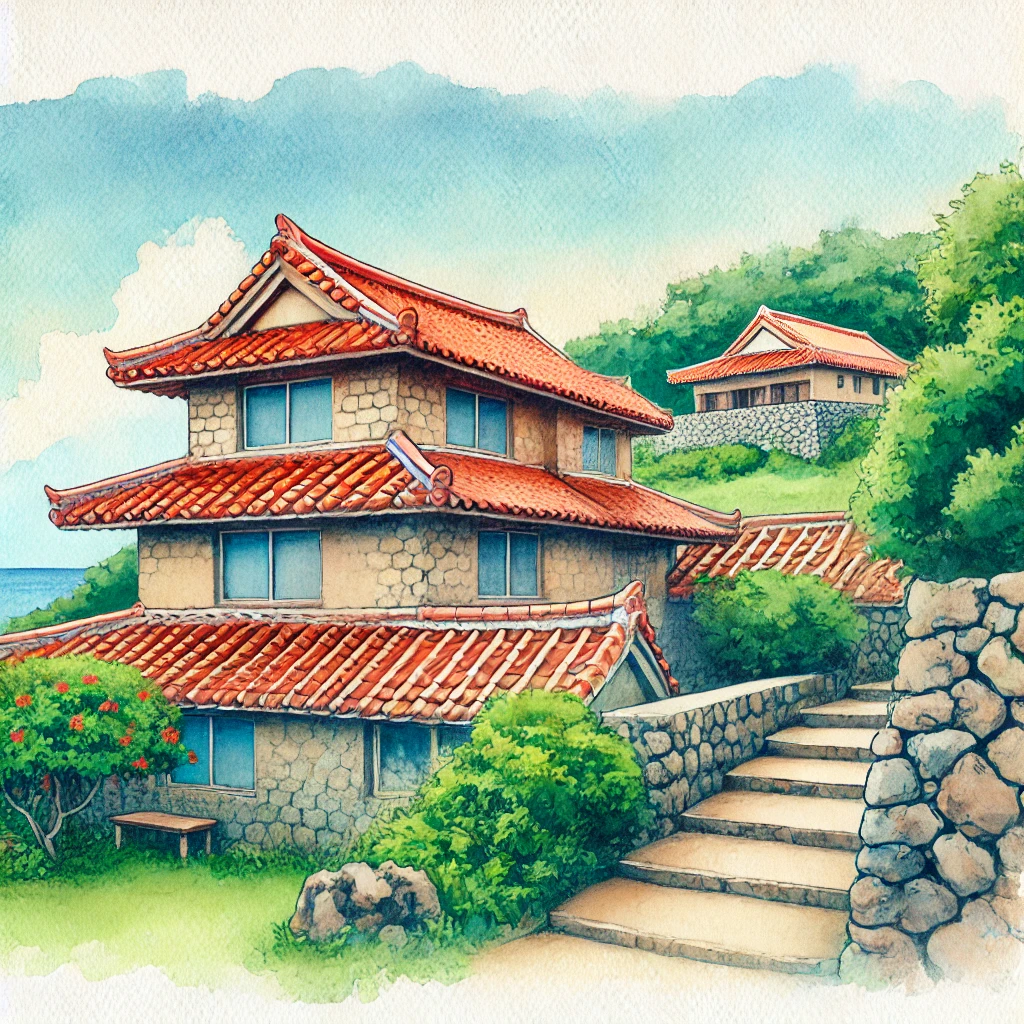
Okinawan traditional architecture is not merely old buildings. It is a cultural heritage that encapsulates the history, natural environment, and spirituality of Okinawan people.
At first glance, the red-tiled roofs, stone walls, and wooden structures may seem simple, but they are packed with the wisdom and ingenuity of our ancestors. They have created architectural styles that combine beauty and strength while adapting to the harsh natural environment.
Moreover, Okinawan traditional architecture deeply reflects the worldview of its people, emphasizing the importance of family and community connections, ancestor worship, and harmony with nature. These buildings are not just physical structures but spiritual sanctuaries for those who live within them.
However, in modern times, such traditional architecture is gradually disappearing. This is why we must rediscover its value, protect it, and pass it on to future generations.
In fact, the concepts of “coexistence with nature” and “sustainability” inherent in Okinawan traditional architecture provide significant insights into contemporary environmental issues. Efforts to learn from tradition and create new value are now beginning in various places.
This article delves into the unique culture and values fostered by Okinawan traditional architecture and explores its significance in the modern era. Let’s take a closer look at the world of our ancestors’ wisdom and spirituality that lies beyond the red tiles and stone walls.
You will surely discover the unknown charm and potential of Okinawa.
- The Historical Background of Okinawan Architecture
- Wooden Red-Tiled Roof Architecture
- Utilization of Stone Walls and Coral Limestone
- Takakura (Raised Storehouses) and Well-Ventilated Designs
- The Spirituality Embedded in Okinawan Architecture
- Okinawan Traditional Architecture Passed Down to the Present
- In Conclusion
- Q&A
- Summary
The Historical Background of Okinawan Architecture
Okinawan traditional architecture is known for its unique styles and techniques. These buildings are deeply rooted in Okinawa’s history, culture, and climate. Let’s explore the historical background of Okinawan architecture in detail.
Architectural Styles During the Ryukyu Kingdom Era
The traditional architectural style of Okinawa was established during the Ryukyu Kingdom era. The architecture of this period can be broadly divided into palace structures for the royal and noble residences and commoners’ houses.
Features and Representative Buildings of Palace Structures
Palace structures, influenced by Chinese palace architecture, developed their unique Okinawan style. They feature red-tiled roofs, wooden frameworks, stone walls, and coral limestone foundations. Notable examples include Shuri Castle, Tamaudun, and Sonohyan-utaki Ishimon.
Shuri Castle, the royal castle of the Ryukyu Kingdom, is composed of multiple buildings centered around the main hall. The contrast of the red-tiled roof and white walls conveys the dignity and splendor of the kingdom. Sonohyan-utaki Ishimon, a stone gate at the entrance of the most sacred site in the Ryukyu Kingdom, is adorned with intricate stonework and carvings.
Characteristics and Layout of Commoners’ Houses
Commoners’ houses are typically single-story wooden buildings with red-tiled roofs. The layout consists of the main house (omoya), bedroom (faa), and kitchen (chanoma). The main house served as a family gathering place, with earthen or wooden floors and an irori (hearth) at the center of daily life.
Commoners’ houses vary by region. For example, in northern Okinawa, high-floored storage buildings called takakura are built near the main house. In the Yaeyama Islands, colorful houses combine red-tiled roofs with white plaster walls.
Influences from China and Mainland Japan
Okinawan traditional architecture was influenced by both China and mainland Japan, reflecting the active trade and cultural exchanges conducted by the Ryukyu Kingdom.
Influences from Chinese Architecture
Chinese architectural influences are particularly evident in palace structures. Elements such as red-tiled roofs, pillar and beam combinations, carvings, and decorations incorporate aspects of Chinese palace architecture. The main hall of Shuri Castle, modeled after Chinese palaces, symbolizes the authority of the Chinese emperor.
Additionally, building placements based on Feng Shui principles and guardian statues called shisa, which are believed to ward off evil spirits, are also influenced by Chinese architecture. Shisa statues are placed on roofs and gates of castles, sacred sites, and residences to protect against evil spirits.
Influences from Mainland Japan and Fused Styles
From mainland Japan, woodworking techniques were introduced. Okinawan wooden architecture, while incorporating Japanese carpentry techniques, evolved to suit Okinawa’s climate and environment.
For example, wood selection and combination, pillar and beam structures, and the use of joinery techniques demonstrate the influence of Japanese woodworking. Concurrently, Okinawan elements such as red-tiled roofs and stone walls were integrated, resulting in a fused architectural style.
These exchanges between Japanese and Okinawan architectural techniques became more active after the Satsuma Domain’s control over the Ryukyu Kingdom. The Satsuma Domain sent carpenters for the reconstruction of Shuri Castle and the construction of sacred sites, facilitating the dissemination of techniques.
Development of Architecture Adapted to Climate and Environment
Okinawan traditional architecture developed to adapt to the subtropical climate and environment. In Okinawa, where high temperatures, humidity, and typhoon damage are common, durability and ventilation are essential in buildings.
Measures Against Typhoons and High Temperatures and Humidity
Red-tiled roofs were used as a measure against typhoons. The heavy red tiles withstand strong winds and prevent rainwater from entering. Wooden buildings feature carefully crafted joints to enhance strength.
To counter high temperatures and humidity, emphasis was placed on ventilation and deep eaves. Multiple openings allow airflow to control indoor temperature and humidity. Deep eaves block direct sunlight and prevent rainwater intrusion.
Structural Design for Earthquake Resistance
Okinawa is also prone to earthquakes, necessitating earthquake-resistant traditional architecture. Stone walls and coral limestone foundations were used to enhance building stability.
Stone walls stabilize by their weight and absorb earthquake shocks. In wooden parts, inserting wooden pegs (komisen) into pillar and beam joints strengthens the structure.
In this way, Okinawan traditional architecture has adapted to harsh conditions through various ingenious methods. The combination of red tiles, stone walls, and woodworking techniques creates a unique architectural style.
By exploring the historical background of Okinawan architecture, we can appreciate the depth of its styles and the wisdom of our ancestors. We must continue to pass on this tradition to future generations.
Wooden Red-Tiled Roof Architecture
When thinking of Okinawan traditional architecture, wooden red-tiled roof buildings are likely the first to come to mind. The contrast of the red-tiled roof and white walls creates a beautiful and essential presence in Okinawan landscapes. Let’s explore the features and charm of these wooden red-tiled roof buildings in detail.
Characteristics and Manufacturing of Red Tiles
The defining feature of wooden red-tiled roof architecture is undoubtedly the red tiles. Okinawan red tiles are known for their distinctive color and solidity. How are these red tiles made?
Materials and Shapes of Red Tiles
Okinawan red tiles are primarily made from a type of clay called shimajiri maji. This high-quality clay, sourced from the Shimajiri region in southern Okinawa Island, gives the tiles their unique reddish hue. The use of this clay ensures that Okinawan red tiles have their distinctive color.
The shapes of red tiles are generally of two types: “kabusegawara” (overlapping tiles) and “hiragawara” (flat tiles). Kabusegawara are semi-cylindrical tiles placed on top of the roof, while hiragawara are flat tiles placed underneath to prevent rainwater from penetrating.
Traditional Red Tile Manufacturing Process and Techniques
The manufacturing of red tiles begins by mixing shimajiri maji with water to form a clay paste. This clay is then molded using wooden frames to shape the tiles. The shaped tiles are sun-dried and then fired in kilns.
Traditional climbing kilns, built on slopes, were used for firing the tiles. The flames ascend from the bottom to the top, with the tiles fired at over 1000 degrees Celsius for several days to attain their strength and durability.
Each fired tile is inspected by craftsmen to ensure there are no issues with color or shape and to check for cracks or chips. Only high-quality tiles are selected for use in roofing.
Structure and Features of Wooden Architecture
Wooden red-tiled roof buildings feature not only the red-tiled roofs but also distinctive wooden frameworks. Okinawan wooden architecture, while incorporating techniques from mainland Japan, has developed uniquely.
Details and Durability of Wood Joinery Structures
Okinawan wooden architecture uses a unique structure called “Ryukyu joinery.” This structure, combining pillars and beams, is known for its durability against typhoons and earthquakes.
Wooden pegs called komisen are inserted into the joints of pillars and beams, securing them firmly and enhancing structural strength. The base of the pillars is anchored to stone walls or coral limestone foundations, increasing the overall stability of the building.
Arrangement and Ornamental Features of Pillars and Beams
In Ryukyu joinery, the arrangement of pillars and beams shows ingenuity. Pillars are placed not only at the four corners of the building but also in the center to create spacious areas.
Pillars and beams may also be adorned with carvings and decorations influenced by Chinese architecture, enhancing the building’s beauty. A typical example is the “kizami” carvings on the upper parts of pillars.
Wood Selection and Transmission of Construction Techniques
Wooden red-tiled roof architecture relies on the selection of high-quality wood and the transmission of superior construction techniques. Okinawan wooden architecture has been supported by forest resources and the craftsmanship of artisans.
Representative Woods Used in Construction and Their Characteristics
Key woods used in Okinawan wooden architecture include ifi
(yew), iju (chinquapin), and saki-shima suou (padauk). These woods are known for their durability, strength, and resistance to moisture.
Ifi is one of the most important woods for pillars and beams due to its slow growth and high density, providing strength and durability. Iju, used for pillars and floorboards, is known for its beautiful grain. Saki-shima suou, unique to Okinawa, is often used for foundations and bases due to its resistance to water.
Transmission and Inheritance of Construction Techniques by Carpentry Craftsmen
Okinawan wooden red-tiled roof architecture has been sustained by skilled carpentry craftsmen known as “sabakunushi.” Their techniques have been passed down through generations.
Sabakunushi are involved in all construction processes, from wood selection to processing and assembly. They must have an eye for selecting the best materials, precise processing skills, and knowledge of structural techniques.
These techniques have been passed down orally and through practice from master to apprentice. Although transmitting these skills has become more challenging, efforts by craftsmen to preserve the tradition ensure its continuation today.
Wooden red-tiled roof architecture has adapted to Okinawa’s climate, integrating influences from China and mainland Japan while developing uniquely. The beauty of the red tiles, the robustness of the wood joinery, and the craftsmanship skills combine to create a distinct architectural style.
Preserving this traditional architecture and passing it on to future generations is our responsibility. We must cherish the red tile colors, the warmth of the wood, and the wisdom of our ancestors.
Utilization of Stone Walls and Coral Limestone
While wooden red-tiled roof houses are famous in Okinawan traditional architecture, the foundation also features significant elements: stone walls and coral limestone. These materials are essential to Okinawan architecture, creating unique landscapes. Let’s explore the utilization of stone walls and coral limestone in detail.
Construction Methods and Uses of Stone Walls
Walking through Okinawan villages, you will see stone walls everywhere. They are not just at the foundation of houses but also along roads and around fields, serving important functions beyond mere aesthetics.
Types and Features of Stone Wall Construction
There are two main types of stone wall construction: “nozura-zumi” (random stone piling) and “kirishi-zumi” (cut stone piling). Nozura-zumi uses natural stones piled up without shaping, common in Okinawan houses. It requires skilled techniques to fit the stones snugly without gaps.
Kirishi-zumi involves cutting stones into rectangular shapes before piling them. This method creates a more precise finish, often used for castle walls and sacred sites. The stone walls of Shuri Castle are prime examples of kirishi-zumi.
Uses and Wind/Water Resistance of Stone Walls
The primary use of stone walls is to reinforce building foundations. Directly placing pillars on the ground can lead to rapid decay in wooden structures. Building stone walls as foundations protects the pillars from moisture, enhancing the building’s durability.
Stone walls also offer excellent wind and water resistance. Okinawa is a typhoon-prone region, facing strong winds and saltwater spray from the sea. Stone walls act as barriers against these elements, protecting houses and fields.
Furthermore, stone walls help prevent landslides. In the hilly terrain of Okinawa, heavy rains can cause landslides. Stone walls built on slopes prevent soil erosion, safeguarding the villages.
Extraction and Processing of Coral Limestone
Another indispensable material in Okinawan architecture is coral limestone. This stone, formed from uplifted coral reefs, is extracted and used as a building material throughout Okinawa.
Sources and Extraction Methods of Coral Limestone
Coral limestone is extracted from areas like Itoman City and Yaese Town in southern Okinawa Island, as well as Miyako and Ishigaki Islands. These regions have extensive raised coral reef plateaus, providing high-quality coral limestone.
There are two main extraction methods: cutting exposed coral limestone from the surface and digging out underground limestone layers. Both methods involve hard labor and require skilled techniques.
Extracted coral limestone is not only used as a building material but also as a raw material for lime. Lime, made by firing coral limestone, is used for wall coatings, plaster, and fertilizer for sugar cane fields.
Stone Processing Techniques and Tools
Processed coral limestone is used in construction. Techniques include cutting the stone and smoothing its surface.
To cut the stone, iron wedges called “yamato” and hammers called “chin-chin” are used. Yamato wedges are placed and struck with chin-chin hammers to split the stone. This requires a keen eye for the stone’s properties and precise force control.
To smooth the surface, chisel-like tools called “tsuku” are used. Various types of tsuku are used depending on the task. By chiseling the surface, a smooth finish is achieved.
Architectural Beauty from Combining Stone Walls and Coral Limestone
Stone walls and coral limestone, each with unique features, are combined in Okinawan architecture to create stronger and more beautiful structures.
Arrangement and Design of Stone Walls and Coral Limestone
In traditional Okinawan architecture, stone walls form the foundation, and coral limestone builds the walls above. This combination enhances both structural strength and aesthetic appeal.
For example, Shuri Castle’s walls feature kirishi-zumi stone walls at the base and cut coral limestone above. The contrast between the heavy stone walls and the white coral limestone creates a unique landscape. In village houses, the natural texture of nozura-zumi stone walls and coral limestone blends harmoniously, creating a warm atmosphere.
Scenic Features and Aesthetic Value of Buildings
Buildings using stone walls and coral limestone are indispensable to Okinawan landscapes. As you walk through villages, you will see these structures everywhere. The scenery of blue skies, blue seas, green nature, and white coral limestone buildings symbolizes Okinawa.
Moreover, the aesthetic value of stone walls and coral limestone buildings is highly regarded. The simple stone texture and delicate appearance of coral limestone create unique beauty. Recent efforts to utilize this traditional architectural style in modern settings promote Okinawan landscapes.
Stone walls and coral limestone have adapted to Okinawa’s climate and environment, offering functions like wind and water resistance and landslide prevention. They also create unique landscapes and symbolize Okinawan culture. Preserving and passing on this architectural style, which embodies the wisdom and techniques of our ancestors, is our duty.
Takakura (Raised Storehouses) and Well-Ventilated Designs
Okinawan traditional architecture incorporates various adaptations to the subtropical climate. Prominent examples include takakura (raised storehouses) and well-ventilated designs. Takakura is a unique raised storehouse in Okinawa, and well-ventilated designs are essential for mitigating heat and humidity. Let’s explore takakura and well-ventilated designs in detail.
Structure and Uses of Takakura
Takakura is a raised storehouse found in northern Okinawa, Miyako, and Yaeyama Islands. Its unique structure and use for storing preserved foods make it a noteworthy aspect of Okinawan traditional architecture.
Basic Structure and Features of Takakura
Takakura’s basic structure consists of round or square wooden beams forming a raised floor. The floor is elevated over a meter above the ground, creating a distinctive feature. The floor is made of bamboo or wooden boards, and the roof is typically thatched.
The pillars of takakura are placed on “houki,” stone bases that prevent moisture damage. “Shirami,” disc-shaped stones on top of the houki, prevent rodents from entering.
Measures for Storing Food and Tools
Takakura was primarily used to store preserved foods like sweet potatoes, taro, squash, and grains. The raised floor allows for continuous airflow, preventing moisture buildup and enabling long-term storage of preserved foods.
Takakura also features openings for easy access to stored food. These openings, known as “agaribana,” are usually top-hinged for easy lifting and closing.
In addition to food storage, takakura was used to store farming and fishing tools. The floor’s ventilation protected these tools from moisture damage.
Ventilation and Lighting Considerations in Layout
Okinawan traditional houses incorporate designs for ventilation and lighting to mitigate heat and humidity, creating comfortable living spaces.
Arrangement of Openings and Control of Airflow
Okinawan houses feature multiple openings, such as windows and doors, on both the windward and leeward sides to facilitate airflow. Fresh air enters from the windward side, passes through the interior, and exits from the leeward side.
“Funahaji,” sliding storm shutters, are installed at these openings. They can be adjusted according to wind strength, allowing for control of airflow while protecting against strong winds.
Some houses have “tohna,” central atriums that extend to the roof, creating an upward airflow that expels hot air.
Measures to Incorporate Light and Their Effects
Okinawan houses are designed to incorporate natural light, with many openings allowing daylight to illuminate the interior, reducing the need for artificial lighting during the day.
Traditional thatched roofs also allow some light to filter through, brightening the space beneath.
Incorporating light helps maintain brightness and prevents heat buildup by blocking direct sunlight while allowing appropriate light into the space.
Wisdom in Adaptation to the Natural Environment
Okinawan traditional architecture embodies various strategies for adapting to the natural environment, including takakura and well-ventilated designs, as well as site selection and layout to harmonize with nature.
Site Selection and Layout Strategies
In Okinawan villages
, site selection for houses considers wind direction and sunlight. Locations with good airflow and sunlight are chosen, and buildings are arranged to maintain these conditions.
The overall village layout also includes strategies to ensure airflow, known as “hinpun,” which are pathways ensuring village-wide ventilation.
Design Approaches Harmonizing with Surroundings
Okinawan traditional architecture also incorporates design approaches to harmonize with the surrounding environment. For example, roof shapes may be designed to blend with the surrounding landscape, and material selection often considers harmony with nature.
“Fukugi” windbreaks are often planted around houses, providing protection from strong winds and shading during summer.
Takakura and well-ventilated designs represent the ingenuity in adapting to Okinawa’s climate. Our ancestors created comfortable living spaces by harmonizing with nature. Adapting this wisdom to modern practices and exploring sustainable architectural approaches is crucial for us today.
The Spirituality Embedded in Okinawan Architecture
Okinawan traditional architecture is more than just physical structures. It deeply reflects the spirituality and worldview of the Okinawan people. The design emphasizes family and community bonds, ancestor worship, and a philosophy of harmony with nature. This time, let’s delve into the spirituality embedded in Okinawan architecture.
Space Design Emphasizing Family and Community Bonds
Okinawan traditional houses incorporate space design that values family and community bonds. These designs are filled with wisdom that nurtures family gatherings and community connections.
Arrangement and Utilization of Tatami Rooms and Gardens
In Okinawan houses, tatami rooms and gardens are considered important spaces. Tatami rooms are not only used as guest rooms but also as places for family gatherings. They often feature an alcove and may house a Buddhist altar or a Shinto shrine. During significant ceremonies, the tatami room serves as the venue for rituals.
Gardens also play a crucial role as spaces for family and community interaction. Known as “naa,” these gardens are typically located adjacent to the tatami room or kitchen. The naa serves as a space for family gatherings and is also a venue for local events and celebrations, fostering community interaction.
Thus, tatami rooms and gardens are vital spaces that cultivate family and community bonds. They reflect the spirituality of the Okinawan people, who value human connections.
Roles of Spaces Adapted to Local Events and Festivals
Okinawan houses also include spaces adapted for local events and festivals. For example, “hinpun,” which are wind paths, play an important role during village events. These small pathways connect houses within the village, and during events, people visit each house via these paths.
Additionally, elevated spaces called “ashiage” are deeply connected to festivals. Located at the front of the main house, ashiage resemble porches and are believed to welcome gods during festivals. While they serve as shaded rest areas in daily life, they transform into sacred spaces during festivals.
Thus, Okinawan houses are designed with spaces to accommodate local events and festivals. This reflects the spirituality of Okinawan people who cherish community and ritual participation.
The Relationship Between Ancestor Worship and Architecture
In Okinawa, the custom of ancestor worship is deeply rooted and reflected in the architecture. Houses are not merely living spaces but also places to honor ancestors.
Placement and Significance of Buddhist Altars and Worship Spaces
Buddhist altars and worship spaces occupy important positions in Okinawan houses. The Buddhist altar, where ancestral tablets are enshrined, is a space for ancestor worship. Unique to Okinawa, these altars, known as “butsudan,” are wooden boxes with decorative front panels designed to welcome ancestral spirits.
Outside the house, there are worship spaces called “tootoomee,” where ancestral spirits and household guardian deities, known as “hinkan,” are venerated. These spaces are often located in the northeast corner of the house, believed to be the direction from which ancestral spirits visit.
Buddhist altars and worship spaces are not merely altars but significant spaces to feel connected to ancestors. They embody the spirituality of Okinawan people who honor and seek the protection of their ancestors.
The Relationship Between Ancestor Worship and Architectural Space
The custom of ancestor worship influences architectural space design. For instance, some houses have “hinpusi,” pathways for gods, from the entrance to the Buddhist altar or worship space, believed to be the path ancestral spirits take into the house.
Additionally, temporary altars called “toogura” are set up in the house during the Bon festival to welcome ancestral spirits, where offerings are made.
Thus, ancestor worship traditions impact architectural space design. The spirituality of valuing connections with ancestors is expressed through architecture in Okinawa.
An Architectural Philosophy in Harmony with Nature
Okinawan traditional architecture embodies a philosophy of living in harmony with nature. The wisdom of appreciating and coexisting with nature is evident throughout the architecture.
Utilization of Natural Materials and Reflection of Nature View
In Okinawan traditional architecture, natural materials are actively utilized. Wood, stone, sand, and coral limestone from the local environment are used as building materials. This reflects the wisdom of appreciating and coexisting with nature.
Architectural design also reflects the Okinawan view of nature. For example, the space under the house, known as “neenushichi,” is considered a sacred space where earth deities reside, and keeping this space clean is believed to ensure household prosperity.
Thus, Okinawan traditional architecture embodies the spirituality of respecting and coexisting with nature. The use of natural materials and reflection of nature views express this spirituality.
Placement Plans Emphasizing Harmony with the Landscape
In Okinawan villages, placement plans emphasizing harmony with the landscape are adopted. Houses are oriented considering wind direction and sunlight. The roof shape is sometimes designed to blend with the surrounding mountains.
The overall village layout also considers environmental harmony, with houses spaced out to ensure wind paths and take advantage of natural benefits.
Thus, Okinawan traditional architecture emphasizes harmony with the landscape, reflecting the spirituality of coexisting with and appreciating nature.
Okinawan traditional architecture embodies various forms of spirituality, such as space design that values family and community bonds, ancestor worship customs, and a philosophy of harmony with nature. These spiritual elements are expressed through architecture, supporting the hearts of Okinawan people.
In modern society, incorporating such spirituality into architecture provides important insights for building a sustainable society. Learning from and applying the spirituality embedded in Okinawan traditional architecture is crucial for us.
Okinawan Traditional Architecture Passed Down to the Present
Okinawan traditional architecture is the crystallization of wisdom and techniques cultivated over a long history. However, it is also a fact that traditional architecture is gradually disappearing with changing times. Amidst this, various efforts are being made to pass down Okinawan traditional architecture to the present. Let’s take a closer look at the traditional architecture of Okinawa that is being passed down to the present.
Efforts to Preserve and Revitalize Traditional Architecture
Preserving and revitalizing traditional architecture is essential to protect Okinawan traditional buildings. By repairing deteriorated buildings and adapting them to modern life, traditional architecture can be passed on to the future.
The Current State of Cultural Property Designation and Protection
Some Okinawan traditional buildings are designated as cultural properties by the national, prefectural, or municipal governments. Being designated as cultural properties acknowledges their value and promotes their protection and restoration.
For example, in Okinawa Prefecture, important buildings are designated as prefectural cultural properties under the “Okinawa Prefecture Cultural Property Protection Ordinance.” Prefectural cultural properties include notable structures such as Shuri Castle, Nakamura House, and Tamaudun. These buildings are preserved and managed appropriately to be passed down to future generations.
However, many traditional buildings not designated as cultural properties also exist. Protecting and passing down these buildings requires efforts from not only the government but also local residents and private organizations.
Examples and Significance of Restoration and Revitalization Projects
Recently, restoration and revitalization projects for traditional architecture have been advancing in various parts of Okinawa. These projects often involve cooperation among government bodies, private organizations, and local residents.
For example, the “Tsuboya Pottery Museum” in Naha City is a case where traditional townhouses in the Tsuboya district were restored and repurposed as a museum. The red-tiled roofs and wooden structures characteristic of townhouses are preserved while incorporating modern facilities, adapting historical buildings to new uses.
In Taketomi Island, a project is underway to restore traditional red-tiled roof houses. Local residents take the lead in restoring and revitalizing old houses. Restored houses serve as guesthouses and experiential facilities, conveying the charm of traditional architecture to many people.
Such restoration and revitalization projects are crucial efforts to pass down traditional architecture to the future. By adapting buildings to modern life while preserving their essence, the charm of traditional architecture can be conveyed to many people.
Application of Traditional Techniques to Modern Architecture
Techniques used in Okinawan traditional architecture can be applied to modern architecture. By incorporating traditional techniques into modern architecture, the distinctive architectural culture of Okinawa can be preserved.
Modern Interpretation of Traditional Techniques and Materials
Modern interpretation of traditional techniques and materials expands the possibilities of new architecture. For example, incorporating traditional wood joinery techniques into modern structural calculations can design buildings with excellent seismic resistance and durability.
Furthermore, Okinawan-specific materials such as Ryukyu limestone and coral limestone can be modernly reinterpreted. Utilizing the properties of traditional materials while incorporating new processing techniques allows them to be reinterpreted as materials suitable for modern architecture.
Examples of Modern Architecture Incorporating Elements of Traditional Architecture
Recently, there has been an increase in modern architecture in Okinawa incorporating elements of traditional architecture. These attempts to blend tradition and modernity aim to create landscapes unique to Okinawa.
For example, the “Okinawa Prefectural Museum and Art Museum” in Naha City is modern architecture modeled after traditional red-tiled roofs. The curved roof reminiscent of red tiles creates an impressive exterior evoking traditional Okinawan architecture. The interior spaces also incorporate elements of traditional architecture, providing an experience of Okinawan culture.
Additionally, traditional architectural elements are incorporated into various buildings such as hotels and commercial facilities. By modernly arranging red-tiled roofs, stone walls, and wooden structures, buildings that blend into the regional landscape are created.
Incorporating traditional architectural elements into modern architecture is an important effort to preserve and pass on the unique landscape of Okinawa. By blending tradition and modernity, a new architectural culture of Okinawa is being created.
Universal Value and Potential of Okin awan Traditional Architecture
Okinawan traditional architecture holds not only historical value but also various possibilities in modern society. It is essential to reevaluate the universal value of traditional architecture and apply it to modern contexts.
Significance of Traditional Architecture from the Perspective of Sustainability
Okinawan traditional architecture embodies wisdom for living in harmony with nature. By adapting to the regional climate and environment and utilizing natural materials, low-impact architecture has been realized.
For example, incorporating raised storehouses and underfloor spaces allows natural ventilation, reducing humidity and heat. Using natural materials for roofs and walls enhances building durability while minimizing environmental impact during construction.
Such wisdom from traditional architecture provides significant insights into sustainable architecture in modern contexts. The approach of coexisting with and respecting nature is a universal value to learn from traditional architecture.
Role of Traditional Architecture as a Symbol of Regional Identity
Okinawan traditional architecture symbolizes regional identity. Elements such as red-tiled roofs, stone walls, and wooden structures tell the story of regional history and culture.
Preserving and passing down traditional architecture is connected to preserving regional identity. It fosters regional pride and is essential for passing it down to future generations.
Furthermore, traditional architecture has potential as a tourism resource. The unique landscape of Okinawa can attract many tourists. Promoting town development that utilizes traditional architecture can also contribute to regional revitalization.
Okinawan traditional architecture holds various possibilities even in modern contexts. Recognizing its historical value and its significance from sustainability and regional identity perspectives, the importance of traditional architecture is being reassessed. Conveying the charm of traditional architecture to many people and passing its value to the future is our role in modern times.
We hope that Okinawan traditional architecture will continue to be passed down and open up new possibilities in the future.
In Conclusion
So far, we have explored Okinawan traditional architecture from various angles, from its historical background to the present day. Understanding the unique architectural styles nurtured in Okinawa, such as red-tiled roofs, stone walls, and wooden structures, and their distinctive charm has deepened.
Reflecting on the value and potential of Okinawan traditional architecture, we realize that there is much to learn. Here, we will examine in detail the unique culture and values fostered by Okinawan traditional architecture and the significance and importance of inheriting traditional architecture in modern society.
The Unique Culture and Values Fostered by Okinawan Traditional Architecture
Okinawan traditional architecture is more than just buildings. It is a cultural crystallization of the natural environment, history, lifestyle, and spirituality of the Okinawan people.
The History and Natural Environment Reflected in Architecture
Okinawan traditional architecture reflects the region’s history and natural environment. The red-tiled roofs developed from Chinese techniques adapted uniquely in Okinawa, telling the story of trade during the Ryukyu Kingdom era. The use of stone walls and coral limestone demonstrates wisdom in adapting to the islands’ terrain and climate.
Designs emphasizing ventilation, such as raised storehouses and underfloor spaces, reflect adaptations to the subtropical climate. In typhoon-prone Okinawa, structures are built to withstand strong winds, leading to the development of advanced wood joinery techniques.
Thus, Okinawan traditional architecture reflects the region’s history and natural environment. The wisdom and techniques cultivated by ancestors are valuable legacies to be passed down to future generations.
The Spirituality and Aesthetic Sensibility Fostered Through Architecture
Okinawan traditional architecture embodies the spirituality and aesthetic sensibility of the Okinawan people.
For example, house designs reflect the value of family and community connections. Tatami rooms and gardens have been cherished as gathering and interaction spaces. Buddhist altars and worship spaces signify the custom of ancestor worship and symbolize family bonds.
Furthermore, the use of natural materials and designs harmonizing with the surrounding environment reflect the Okinawan people’s respect for and coexistence with nature. The texture of red tiles and the warmth of wood express Okinawan aesthetic sensibility.
Thus, Okinawan traditional architecture embodies the spirituality and aesthetic sensibility of the Okinawan people. Invisible values are expressed in the form of architecture. Through traditional architecture, we can touch on the way of life of the Okinawan people.
The Significance and Importance of Inheriting Okinawan Architecture in Modern Society
In modern society, the significance of Okinawan traditional architecture is considerable. Recognizing its historical value, sustainability, and regional identity is crucial.
The Need for Inheriting and Developing Traditional Architecture
To pass down Okinawan traditional architecture to the future, an approach that encompasses preservation and utilization is necessary. Properly preserving and restoring historical buildings and adapting them to modern life is essential.
Additionally, applying traditional techniques and materials to modern architecture is important. Blending tradition and modernity allows us to create new architectural cultures while preserving the distinctiveness of Okinawa.
Inheriting and developing traditional architecture is not just about preserving the old. It involves creating new values by learning from tradition.
Universal Value and Potential of Okinawan Traditional Architecture
The value of Okinawan traditional architecture extends beyond regional characteristics, holding universal significance. The wisdom embedded in traditional architecture offers insights into contemporary challenges like environmental issues and preserving regional individuality.
For example, the use of natural materials and ventilation-focused designs provide essential clues for sustainable architecture. In an era of globalization, the approach of valuing regional individuality in traditional architecture suggests a possibility for resisting uniformity.
Moreover, traditional architecture has potential as a tourism resource. The unique Okinawan landscape can attract many tourists. Promoting town development that utilizes traditional architecture can contribute to regional revitalization.
Thus, the value of Okinawan traditional architecture holds various possibilities in modern society. Conveying its charm to many people and utilizing its value is our role in modern times.
We hope this exploration has deepened your understanding of Okinawan traditional architecture, from historical background to modern significance. The unique architectural styles nurtured in Okinawa, such as red-tiled roofs, stone walls, and wooden structures, and the wisdom and spirituality embedded within are valuable legacies.
Okinawan traditional architecture is not merely a historical heritage. It encapsulates values like coexistence with nature, sustainability, and respect for regional identity, which modern society should learn from. We need to rediscover its charm and pass its value to the future.
By blending tradition and modernity, fostering an architectural culture unique to Okinawa, we can pass down Okinawa’s rich history and culture to the next generation and proudly share Okinawa’s charm with the world.
We hope many people will come to know the depth and potential of Okinawan traditional architecture. This article serves as an invitation to explore the fascinating world of Okinawan traditional architecture. We hope you find new discoveries and inspiration.
Q&A
What are the characteristics of “wooden red-tiled roofs,” a traditional architectural style in Okinawa?
Wooden red-tiled roofs feature red-tiled roofs and wooden structures. The red tiles are highly durable, and the wooden structure’s strength comes from the combination of pillars and beams. This architectural style adapts well to Okinawa’s climate and environment.
What is coral limestone used in Okinawan traditional architecture?
Coral limestone is a type of limestone formed from uplifted coral reefs. It is extracted from various parts of Okinawa and used as building material and for lime production. It is a distinctive material with unique texture and durability, characteristic of Okinawan construction.
What is a “takakura”?
A takakura is a traditional raised storehouse in Okinawa. It is mainly used for storing crops and tools, utilizing the underfloor space for ventilation to prevent food deterioration due to humidity. It is a wisdom embodiment adapting to Okinawa’s climate.
What kind of spirituality is embedded in Okinawan traditional architecture?
Okinawan traditional architecture reflects various spiritualities, such as space design emphasizing family and community bonds, customs of ancestor worship, and a philosophy of harmony with nature. Through architecture, you can understand the worldview and values of the Okinawan people.
What is the significance of Okinawan traditional architecture in modern society?
Okinawan traditional architecture offers insights into contemporary challenges like environmental issues through its coexistence with nature and sustainability. It also suggests possibilities for resisting uniformity by valuing regional individuality. Recognizing and utilizing the value of traditional architecture in modern contexts is crucial.
Summary
Okinawan traditional architecture is characterized by unique styles such as red-tiled roofs, stone walls, and wooden structures. These styles have developed by adapting to the subtropical climate and utilizing natural materials, embodying the wisdom of ancestors. The architecture also reflects the spirituality of Okinawan people, valuing family bonds, ancestor worship, and harmony with nature.
Passing down traditional architecture to the present involves preserving its historical value while incorporating sustainability and regional identity. Blending tradition and modernity fosters new architectural cultures and conveys Okinawa’s rich history and culture to future generations and the world.
We hope this exploration has provided a deep understanding of Okinawan traditional architecture. Please visit and experience its charm firsthand. You will surely find new discoveries and inspiration.


コメント