
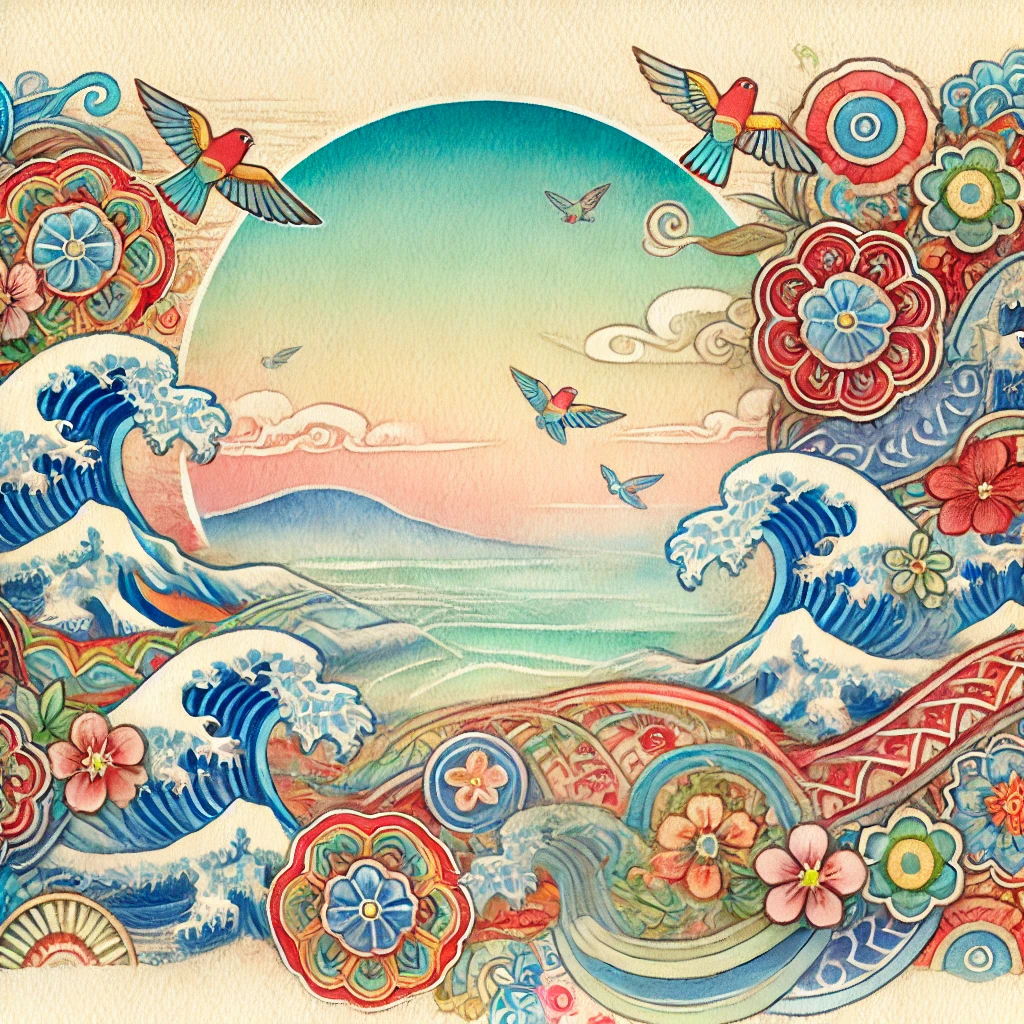
Okinawa is known for its beautiful sea and sky, its rich natural environment, and its unique culture. Attracting numerous visitors each year, this island is also home to traditional crafts that have been passed down through generations. One such craft is “Bingata,” distinguished by its vivid colors and intricate patterns.
Bingata is more than just a collection of dyeing techniques and designs. Each piece embodies Okinawa’s history and the wishes of its people. The patterns reflect a reverence for nature and prayers for the prosperity of future generations. The creation of Bingata requires not only advanced skills but also the dedicated effort of artisans.
This blog will explore the origins of Bingata, its history from past to present, the techniques involved in its creation, the meanings behind its patterns, and its preservation and development in modern times. By delving into Bingata, we will embark on a journey to understand Okinawa’s culture and spirituality. As you read, you’ll find yourself enchanted by the depth and beauty of Bingata. When you touch a piece of Bingata, you will inevitably feel the spirit of Okinawa and the sentiments of its people.
Experience the world of Bingata through this blog. Discover the proud tradition of Okinawa and the passion of its people today. Would you like to connect with the heart of Okinawa through Bingata?
- What is Bingata?
- The History of Bingata
- The Bingata Production Process
- Bingata Patterns and Their Meanings
- Bingata and Okinawa’s Spiritual World
- Inheritance and Development of Bingata in the Modern Era
- Summary
- Q&A
- Summary
What is Bingata?
Definition of Bingata
Bingata as a Dyeing Technique
Bingata is one of the traditional dyeing techniques from Okinawa. It is a type of stencil dyeing, known for its unique colors and patterns. Bingata reflects the landscape and culture of Okinawa and is highly regarded both domestically and internationally.
Development since the Ryukyu Kingdom Era
The history of Bingata dates back to the 15th century during the Ryukyu Kingdom era. At that time, Bingata was used for the clothing of royalty and nobility, symbolizing power and wealth. The technique evolved along with the rise and fall of the kingdom, developing a distinct aesthetic.
Characteristics of Bingata
Vivid Colors
The most striking feature of Bingata is its vivid colors. The hues of red, blue, yellow, and green are reminiscent of Okinawa’s natural beauty. These colors are derived from natural dyes, which provide a depth and warmth not found in chemical dyes.
Intricate Patterns
Bingata patterns range from plants and animals to geometric designs. Each pattern has its meaning, expressing good fortune and respect for nature. Hand-dyed using stencils, Bingata is renowned for its delicate and intricate beauty.
Use of Natural Dyes
The dyes used in Bingata are primarily natural, extracted from Okinawa’s plants and soil. Examples include indigo (ai), fukugi (yellow ochre), and akane (madder). Natural dyeing is environmentally friendly and maintains its beauty for many years.
Silk and Cotton Fabrics
Bingata is made primarily from silk and cotton. High-quality silk provides a glossy, elegant appearance, while cotton offers a rustic, warm texture. The choice of material significantly influences the expression of Bingata.
Applications in Clothing and Accessories
Bingata is used in a variety of items, from kimonos and other clothing to bags, wallets, and tablecloths. It is particularly essential for Ryukyu dance costumes, where the vibrant Bingata outfits enhance the performance’s beauty. Today, Bingata motifs are also popular in modern items like T-shirts and scarves.
The charm of Bingata lies not only in its beauty but also in the wisdom and sentiments of the Okinawan people embedded in each piece. Hand-dyed with care, Bingata conveys the spirit of Okinawa.
When visiting Okinawa, be sure to visit a Bingata workshop. Watching artisans meticulously create Bingata using traditional techniques is a moving experience. Wearing Bingata allows you to feel Okinawa’s history and culture.
Bingata is a proud traditional craft of Okinawa and a cultural heritage to be shared with the world. I hope this article will spark your interest in Bingata.
A search for “Okinawa Bingata” will lead you to detailed information about Bingata’s history, production process, and where to buy it. Delve deeper into the world of Bingata and enhance your Okinawa trip with this cultural treasure.
The History of Bingata
Origins of Bingata
Theories on Its Origins
There are several theories about the origins of Bingata. One theory suggests it was introduced from China in the 15th century, while another claims it came from mainland Japan in the 8th century. The most widely accepted theory is that it was brought from Southeast Asia around the 14th century when Okinawa had active trade with the region, spreading dyeing techniques through these exchanges.
Oldest Bingata Records
The earliest records of Bingata date back to 1546 when Chinese envoys visited Ryukyu and noted the beautiful dyed garments worn by the people. This evidence supports the existence of Bingata. Additionally, Bingata attire appears in records from the 1609 Satsuma invasion of Ryukyu.
Influence from China
Introduction of Chinese Dyeing Techniques
Bingata was significantly influenced by Chinese dyeing techniques, especially during the Ming and Qing dynasties when dyeing technology advanced. Techniques such as indigo and red dyeing were introduced to Ryukyu through trade.
Fusion with Chinese Culture
While Bingata’s foundation lies in Chinese techniques, it developed uniquely by integrating with Okinawan culture. For example, Chinese auspicious patterns in Bingata were adapted to reflect Okinawan nature and beliefs, acquiring new meanings.
Bingata During the Ryukyu Kingdom
Royalty and Aristocracy Garments
During the Ryukyu Kingdom era, Bingata was used for the clothing of royalty and aristocracy, symbolizing status and wealth. Wearing Bingata garments displayed their power and prosperity.
Technological Advancement
Under royal patronage, Bingata techniques flourished. Dye artisans in the royal court focused on creating new patterns and colors, learning the latest techniques from Chinese dyeing experts to enhance Bingata’s beauty.
Bingata in Modern Times
Spread to the Common People
After the Ryukyu Kingdom fell, Bingata became accessible to the general populace. Once a luxury item, it became more common, and Okinawan migrants spread Bingata techniques throughout Japan during the Meiji period.
Industry Growth and Decline
From the Taisho era to early Showa period, Bingata thrived as an industry centered in Naha, with many workshops mass-producing Bingata. However, World War II severely impacted the industry. Post-war, the rise of chemical dyes and declining interest in traditional attire led to reduced demand for Bingata.
Since the 1970s, the value of traditional crafts has been re-evaluated, leading to Bingata’s resurgence. Artisans’ passion and government support have ensured Bingata’s survival to this day.
Reflecting on Bingata’s history reveals the creativity and adaptability of Okinawa’s people. They preserved their unique aesthetic while incorporating foreign techniques, ensuring the continuation of Bingata.
Bingata’s history mirrors that of Okinawa itself, from royal splendor to wartime hardship, and into the modern era. Its enduring beauty continues to captivate visitors, embodying the spirit of Okinawa.
When you encounter Bingata during your Okinawa trip, appreciate its historical depth and beauty. Watching traditional techniques up close offers a precious experience, deepening your understanding of Okinawa’s history and culture.
Bingata is a treasure of Okinawa and a cultural heritage of global significance. It is our duty to spread its value. I hope this article has piqued your interest in Bingata.
Search for “Okinawa Bingata history” to find more detailed information. Explore its profound world, and you’ll uncover new discoveries and inspirations. Add Bingata to your Okinawan journey.
The Bingata Production Process
Bingata, renowned for its beauty and unique texture, requires much effort and time to create. Here, we’ll delve into the detailed process of making Bingata.
Creating the Sketch
Design Conception
The Bingata production begins with design conception. Artisans base their designs on traditional patterns, adding new arrangements or creating original motifs. This stage sets the overall image of the Bingata piece, requiring not only artistic sense but also a deep understanding of Okinawa’s nature and culture.
Drawing the Sketch
Once the design is decided, the next step is sketching. The sketch is a detailed diagram of the Bingata pattern, serving as a crucial guide for stencil making. Artisans carefully draw the sketch on Japanese paper with pencils. This task demands high drawing skills and concentration. Once completed, the sketch moves on to stencil creation.
Applying the Paste
Mixing the Paste
After the stencil is ready, the next step is applying the paste. The paste is essential in Bingata dyeing to protect areas of the fabric from the dye. It is made by mixing rice flour, water, and sometimes indigo. The mixture relies heavily on the artisan’s experience and intuition, requiring skillful mastery.
Paste Application Technique
With the paste prepared, the stencil is placed on
the fabric, and the paste is applied. This step, called “paste application,” is crucial in Bingata production. The artisan uses a brush to meticulously apply the paste over the stencil. Adjusting pressure, speed, and angle, the paste must be evenly applied, demonstrating the precision and delicacy of handwork.
Dyeing
Mixing the Dye
With the paste applied, the dyeing process begins. The dyes used in Bingata come primarily from plants and minerals. Common examples include indigo (ai), madder (akane), and yellow ochre (oudo). These natural materials create rich and warm hues. Mixing the dyes requires extensive experience and knowledge.
Dyeing Procedure
The dyeing process involves soaking the fabric in dye, allowing it to absorb, then drying it for the dye to set. This is repeated multiple times to deepen the color. The dyeing conditions, such as temperature, humidity, and dye concentration, play a critical role, relying on the artisan’s expertise.
Finishing
Removing the Paste
After dyeing, the paste is removed by washing the fabric in water, revealing the clear outlines of the patterns. Inadequate removal can blur the designs, making this step crucial.
Drying and Softening
The fabric is then dried, typically air-dried, but sometimes using dryers depending on the weather. After drying, the fabric is softened to provide a comfortable texture.
These are the main steps in Bingata production. The beauty of Bingata stems from the artisans’ high skills, deep knowledge, and the warmth of handcrafting. Creating a single piece of Bingata involves considerable effort and time.
If you have the chance to visit a Bingata workshop during your Okinawa trip, watch the production process closely. Seeing artisans skillfully crafting Bingata with traditional techniques is inspiring and will deepen your appreciation for Bingata.
Trying your hand at making Bingata is also recommended. Using the materials and tools to perform paste application and dyeing will give you a firsthand understanding of Bingata’s depth. The joy of holding your own completed Bingata is incomparable.
Bingata embodies the tradition and spirit of Okinawa. Understanding its production process is crucial to fully appreciating its beauty. I hope this article has given you a glimpse into the depth of Bingata creation.
Searching for “Okinawa Bingata production process” will yield more detailed information. Watching production videos can offer an immersive experience, like being in the workshop yourself. Why not delve deeper into the charm of Bingata?
Bingata Patterns and Their Meanings
Understanding the beauty of Bingata requires an appreciation of its patterns. These patterns are not mere decorations but carry deep meanings and the wishes of Okinawan people. Let’s explore the representative patterns and their significance.
Traditional Patterns
Plant Patterns
The most common Bingata patterns are plant motifs, including camellias, cherry blossoms, chrysanthemums, plums, and lotuses. These flowers symbolize beauty and elegance. Camellias, in particular, are the prefectural flower of Okinawa and one of the most popular Bingata motifs, representing sacredness and nobility.
Animal Patterns
Next to plant patterns, animal motifs such as dragons, phoenixes, cranes, and butterflies are prevalent. Dragons symbolize strength and bravery, phoenixes peace and happiness, cranes longevity and loyalty, and butterflies beauty and freedom. These animal patterns are not just decorations but reflect the aspirations and ideals of the people.
Geometric Patterns
In addition to plants and animals, geometric patterns are significant in Bingata. Common motifs include waves, spirals, and sugarcane. Waves represent Okinawa’s geography surrounded by the sea, spirals symbolize eternal life and development, and sugarcane, an important industry in Okinawa, signifies abundance and prosperity. These geometric patterns, while simple, carry powerful messages.
Symbolic Meanings of Patterns
Symbols of Good Fortune
Many Bingata patterns symbolize good fortune. For example, pine, bamboo, and plum patterns represent longevity, prosperity, and happiness. The tortoiseshell pattern symbolizes longevity and health, often used in celebratory garments. These patterns embody the people’s wishes for happiness.
Expression of Nature Worship
Okinawans have long revered and respected nature, a sentiment reflected in Bingata patterns. Celestial motifs like the sun, moon, and stars express the mysteries and power of nature, while motifs of mountains, seas, and rivers show gratitude for nature’s blessings.
Modern Bingata Patterns
Continuation of Traditional Patterns
In modern Bingata, traditional patterns are carefully preserved. Artisans maintain these patterns while reinterpreting them with a contemporary sensibility, breathing new life into them. The continuation of traditional patterns is crucial for passing Okinawa’s culture and history to future generations.
Modern Arrangements
Modern Bingata also features many traditional patterns with contemporary twists. For example, traditional floral motifs might be combined with abstract elements or geometric patterns, creating new expressions. These modern arrangements expand Bingata’s possibilities and generate new charm.
Bingata patterns are not just decorations but reflections of Okinawan people’s hearts. Knowing the meanings behind each pattern deepens your appreciation of Bingata’s beauty.
When encountering Bingata patterns on your Okinawa trip, imagine their meanings. You might find messages that resonate even today in these age-old patterns.
Bingata patterns also influence modern design significantly, appearing in fashion and interior products. Enjoy the fusion of tradition and modernity in the new world of Bingata patterns.
Bingata patterns are invaluable treasures, encapsulating Okinawa’s culture, history, and people’s thoughts. Touching on this profound world enhances your appreciation of Okinawa’s charm. I hope this article has conveyed some of Bingata’s pattern beauty.
A search for “Okinawa Bingata patterns” will provide more information on the meanings, origins, and design examples of various patterns. Explore Bingata patterns and discover new insights and inspirations. Bring the spirit of Okinawa into your journey.
Bingata and Okinawa’s Spiritual World
Bingata is not just a dyeing technique with beautiful patterns. It embodies the deep spirituality of the Okinawan people. Here, we’ll delve into the relationship between Bingata and Okinawa’s spiritual world.
Wishes Embodied in Bingata
Prayers for Happiness
Many Bingata patterns represent wishes for happiness. For example, pine, bamboo, and plum patterns symbolize longevity, prosperity, and happiness, while tortoiseshell patterns symbolize health and longevity, often used in celebratory garments. Incorporating these patterns into Bingata expresses people’s wishes for their happiness and that of their families and communities.
Prayers for Descendant Prosperity
For Okinawans, the prosperity of descendants has always been a crucial wish. Bingata patterns reflect this wish, such as cranes symbolizing continued descendants and butterflies symbolizing abundant offspring. Wearing Bingata expressed these prayers for descendant prosperity.
Relationship with Festivals
Bingata as Festival Attire
Bingata always features in Okinawan festivals, especially in important ceremonies adorned with vibrant Bingata garments. For example, during the “Ryukyu Kingdom Festival Shuri,” participants dressed as royalty and nobility parade in beautiful Bingata attire, playing a crucial role in sacred rituals.
Festival-related Bingata Patterns
Many Bingata patterns have deep connections with festivals. For example, the “Protective Amulet of Waves” pattern is linked to sea safety and abundant fish catch festivals, while the “Yaeyama Star” pattern originates from harvest festivals. These patterns are intertwined with festivals, expressing people’s prayers and wishes.
Legends Surrounding Bingata
Miyahira Hatsuko, the “God of Bingata”
The most famous figure in Bingata history is Miyahira Hatsuko, known as the “God of Bingata.” Miyahira Hatsuko is a legendary figure who reportedly mastered Bingata techniques overnight. Her extraordinary talent and passion are still remembered, demonstrating that Bingata possesses sacred power.
Folktales Associated with Bingata
Various folktales surround Bingata. For example, wearing Bingata is believed to protect against evil spirits, and giving Bingata is said to wish for the recipient’s happiness. These folktales indicate how deeply Bingata is rooted in people’s lives.
Bingata mirrors the spirituality of the Okinawan people. Each piece of Bingata contains prayers, wishes, and traditional values, allowing us to touch the depth of Okinawan hearts.
When encountering Bingata during your Okinawa trip, feel the spirituality behind it. Each Bingata piece, meticulously crafted by artisans, embodies the soul of Okinawa. Its beauty and warmth will surely touch your heart.
Understanding the meanings behind Bingata’s patterns and colors enhances your appreciation of Okinawan culture and history. Each pattern and color encapsulates the wisdom and sentiments of the predecessors.
Bingata is an irreplaceable cultural heritage embodying Okinawa’s spiritual world. Spreading its value widely is our duty. I hope this article has helped you feel the connection between Bingata and Okinawa’s spirituality.
A search for “Okinawa Bingata spirituality” will provide more detailed information on the prayers, wishes, and legends embedded in Bingata. Explore this profound world and experience the essence of Okinawan heart.
Bingata is not just a beautiful dyeing art. It is a sacred mirror reflecting the soul of the Okinawan people. Experience
its profound beauty firsthand, and your Okinawa journey will be even more memorable.
Inheritance and Development of Bingata in the Modern Era
Bingata has long been cherished and preserved as a traditional craft by the people of Okinawa. However, the environment surrounding Bingata has significantly changed in modern society. Let’s take a closer look at how Bingata is being inherited and developed today.
Preservation and Inheritance of Bingata
Passing Down Traditional Techniques
The greatest charm of Bingata lies in its traditional techniques that have been handed down from previous generations. The dyeing and pattern-making methods are the culmination of the artisans’ wisdom cultivated over a long history. However, in today’s world, there is a shortage of successors to carry on these techniques. Education and support for the younger generation are essential to preserving these traditional skills. Bingata workshops across Okinawa are focusing on training apprentices. Additionally, there are initiatives within school education to convey the allure of Bingata.
Efforts in Successor Training
Okinawa Prefecture is actively working on training the next generation of Bingata artisans. For instance, the “Okinawa Prefecture Craft Promotion Center” conducts training programs for various traditional crafts, including Bingata. The “Naha City Traditional Arts and Crafts Center” also holds Bingata experience classes and exhibitions to promote its appeal to the younger generation. These efforts play a crucial role in the preservation and inheritance of Bingata.
Bingata as Contemporary Art
Bingata Works by Contemporary Artists
In recent years, more contemporary artists have turned their attention to Bingata. They use traditional Bingata techniques while introducing new expressions through a modern sensibility. For example, contemporary artist Kohei Nawa has created large-scale installations inspired by Bingata patterns. Fashion designer Tina Tamashiro proposes modern fashion incorporating Bingata. Such activities by contemporary artists significantly expand Bingata’s possibilities.
Bingata in Fashion
Bingata has also garnered attention in the modern fashion world. Designs incorporating traditional Bingata patterns and colors are being introduced by fashion brands both domestically and internationally. For instance, “SHISEIDO” released a makeup collection inspired by Bingata, which gained significant attention. “UNIQLO” has also sold T-shirts with Bingata patterns, popular among the younger generation. Incorporating Bingata into contemporary fashion helps convey its charm to a broader audience.
The Future of Bingata
Potential of Bingata
Bingata holds immense potential beyond just being a traditional craft. Its beauty and unique texture can be applied in various fields. In interior design, for example, Bingata patterns can be used in wallpapers and fabrics to create warm, Okinawan-style spaces. Bingata-based accessories are also popular as gift items. The potential of Bingata is limitless, depending on our creativity.
Promotion and Dissemination of Bingata
Promotion and dissemination are vital for the future of Bingata. Various initiatives are needed to introduce Bingata’s charm to more people. Organizing exhibitions and workshops provides opportunities for direct interaction with Bingata. Additionally, promoting Bingata through media is important. Utilizing television, magazines, and the internet to widely communicate Bingata’s history, production process, and contemporary efforts is essential.
Moreover, it is crucial for the government, businesses, and local communities to collaborate in promoting Bingata. For example, Okinawa Prefecture has established “Bingata Day,” hosting Bingata-related events every November. Local chambers of commerce are also working on developing regional brands utilizing Bingata. These efforts significantly contribute to the inheritance and development of Bingata.
Bingata is a cultural heritage that Okinawa is proud of, offering us various possibilities. It is our mission to pass its value to the next generation and connect it to new creations.
When you visit Okinawa, check out any Bingata-related events or facilities. Witnessing the artisans who preserve tradition and create new expressions is truly inspiring. Also, pay attention to contemporary art and fashion incorporating Bingata. You may encounter unique expressions where old traditions blend with new sensibilities.
Bingata is an invaluable treasure that connects Okinawa’s past, present, and future. It is our important role to share its charm with as many people as possible. I hope this article has helped you feel the contemporary appeal of Bingata.
Searching for “Okinawa Bingata modern” will provide you with the latest trends surrounding Bingata and works by contemporary artists. Explore the new possibilities of Bingata. You’ll surely encounter surprises and inspirations from the fusion of Okinawa’s traditions and the modern era.
Bingata is not just an artifact of the past. It is a living art that offers us endless inspiration today. Let’s explore its creativity and potential together. Your trip to Okinawa will become even more memorable.
Summary
This blog has explored the history, characteristics, production process, meanings of patterns, and the inheritance and development of Bingata in modern times. Here, let’s reflect on why Bingata has become a deeply rooted cultural element in Okinawa, the spirituality of the Okinawan people revealed through Bingata, and the appeal and importance of Bingata.
Reasons Why Bingata Became a Unique Culture in Okinawa
Geographical and Historical Background
The development of Bingata as a unique Okinawan culture is significantly influenced by Okinawa’s geographical and historical characteristics. Okinawa has flourished through trade with China and Southeast Asia for centuries, becoming a place where various cultures intermingled. Dyeing techniques were transmitted through these exchanges and adapted to Okinawa’s climate and aesthetic sense, leading to Bingata’s unique development. During the Ryukyu Kingdom era, Bingata was treasured as the attire of royalty and nobility, nurturing high-level techniques. This historical background laid the foundation for Bingata to become deeply rooted in Okinawan culture.
Connection to Okinawa’s Nature and Faith
Another reason Bingata is deeply embedded in Okinawan culture is its close connection to Okinawa’s nature and faith. The patterns in Bingata reflect the beautiful nature of Okinawa and the people’s reverence for nature. Motifs like waves, water, flowers, and birds not only represent the abundant nature of Okinawa but also convey respect and gratitude towards nature. Moreover, Bingata is closely tied to festivals and is indispensable as festival attire. Thus, Bingata is more than just a fabric; it symbolizes the spiritual bond connecting Okinawa’s nature and faith.
Spirituality of the Okinawan People Seen Through Bingata
Reverence for Nature
One aspect of the Okinawan people’s spirituality that can be seen in Bingata’s patterns and colors is their reverence for nature. Okinawans have long regarded nature as sacred and have developed wisdom to coexist with it. The natural motifs in Bingata reflect this view of nature. Moreover, the use of natural dyes in Bingata shows the Okinawan people’s values of appreciating and harmonizing with nature.
Aesthetic Sense and Love for Decoration
Bingata also reveals the high aesthetic sense and love for decoration of the Okinawan people. The vivid colors and delicate, ornate patterns in Bingata demonstrate their appreciation for beauty. The development of Bingata as attire also shows the Okinawan culture’s emphasis on expressing beauty through clothing. This aesthetic sense and love for decoration may have been cultivated by the Okinawan people living in a harsh natural environment.
Appeal and Importance of Bingata
Value as Traditional Culture
As seen so far, Bingata reflects Okinawa’s history and spirituality, making it an invaluable traditional culture. Bingata, with its wisdom and techniques accumulated by previous generations, is not just a beautiful fabric but a symbol of Okinawa’s soul. Recognizing its value and passing it on to the next generation is our responsibility. Preserving and passing on Bingata is equivalent to protecting Okinawa’s culture.
Symbol of Okinawan Identity
Bingata also symbolizes Okinawan identity. Nurtured since the Ryukyu Kingdom era and enduring through wartime, Bingata has always been close to the Okinawan people. The prayers and wishes embedded in Bingata have been a source of support and hope for the Okinawan people. Even today, Bingata remains a pride of Okinawa and a symbol of its identity. Valuing Bingata is akin to valuing the heart of Okinawa.
Exploring the history and characteristics of Bingata means understanding the region of Okinawa and touching the souls of its people. Each piece of Bingata has unfathomable depth and timeless beauty.
If this article has sparked your interest in Bingata, I encourage you to visit Okinawa. The harmony of the beautiful sea, blue sky, and vivid Bingata colors will surely move your heart. Visiting workshops and observing the artisans’ work up close will allow you to feel the passion and prayers embedded in each piece of Bingata.
After enjoying Bingata’s beauty, share its value with others. Posting on social media or giving Bingata accessories as gifts are good ways to spread its charm. By sharing Bingata’s appeal, we can protect this Okinawan treasure and pass it on to future generations.
Bingata is not just a relic of the past. It is a vibrant art that offers us the heart of Okinawa and hope for life. I hope to share its infinite potential and beauty with as many people as possible.
A search for “Okinawa Bingata” will surely provide useful information. I hope your encounter with Bingata will enrich your life.
Bingata, the crystallization of Okinawan spirit, awaits you with its beauty and depth. Please experience it with your own eyes and heart. New discoveries and emotions are surely waiting for
you.
Q&A
Where is the origin of Bingata believed to be?
The most widely accepted theory is that Bingata originated from Southeast Asia around the 14th century.
What meanings are embedded in Bingata patterns?
Bingata patterns symbolize auspiciousness and nature worship, reflecting the wishes and thoughts of the Okinawan people. For example, pine, bamboo, and plum patterns represent longevity, prosperity, and happiness.
What efforts are being made for the inheritance and development of Bingata in the modern era?
Efforts include passing down traditional techniques, training successors, new expressions by contemporary artists, and incorporation into fashion.
Why did Bingata become a unique culture in Okinawa?
The development of Bingata as a unique Okinawan culture is due to Okinawa’s geographical and historical background, as well as its close connection to nature and faith.
What aspects of the Okinawan people’s spirituality can be seen through Bingata?
Through Bingata, one can see the Okinawan people’s reverence for nature and their high aesthetic sense and love for decoration.
Summary
In this blog titled “The History and Characteristics of Okinawa’s Traditional Fabric Bingata,” we have detailed the history, characteristics, production process, meanings of patterns, and the inheritance and development of Bingata in modern times. Bingata has developed as a unique culture in Okinawa due to its geographical and historical background and its connection to nature and faith. The patterns symbolize auspiciousness and nature worship, reflecting the wishes and thoughts of the Okinawan people. Bingata reveals the Okinawan people’s reverence for nature and their high aesthetic sense and love for decoration. In the modern era, efforts are being made to pass down traditional techniques, train successors, introduce new expressions by contemporary artists, and incorporate Bingata into fashion. This blog will help you deeply understand the history and characteristics of Bingata, and the culture and spirituality of Okinawa.


コメント