
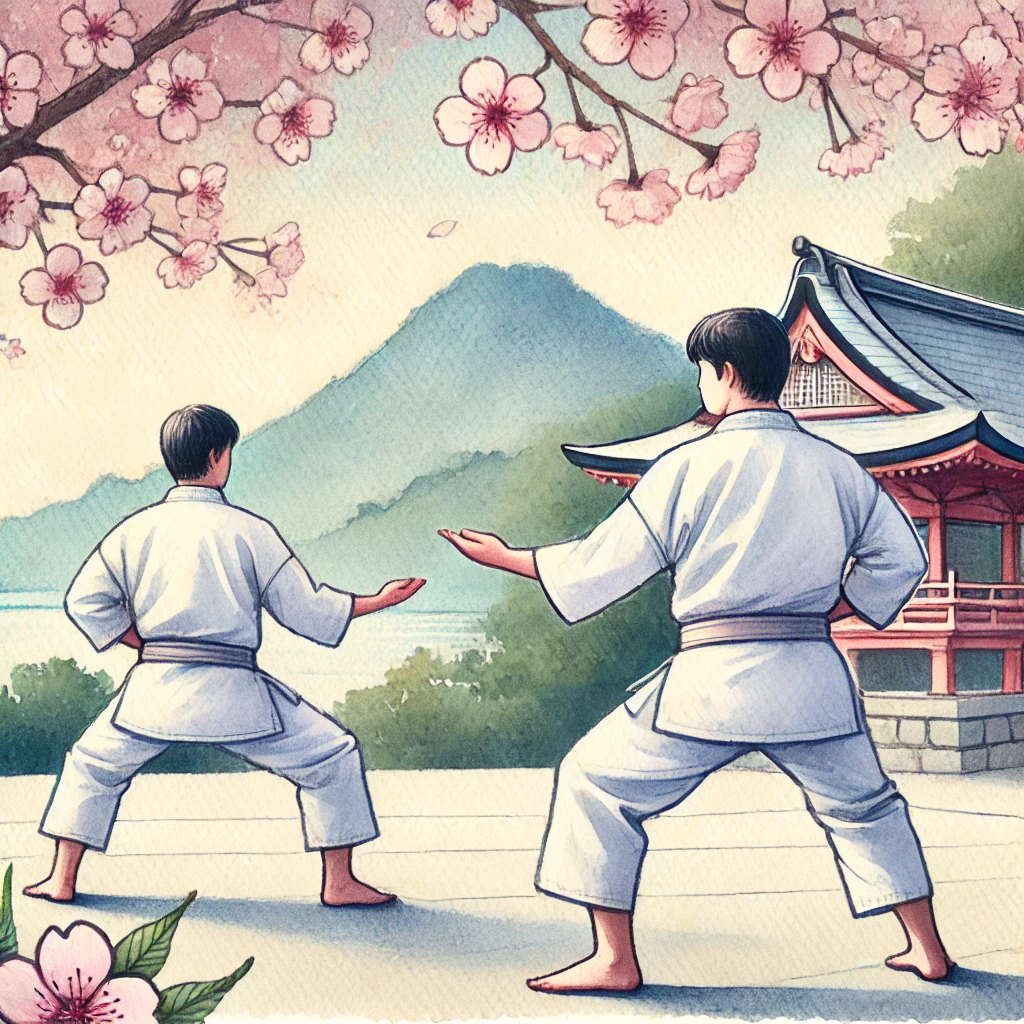
- Karate: More Than Just a Martial Art
- What is Karate?
- Origins and Development of Karate
- The History of Okinawa and Karate
- Karate Training and Mindset
- The Value of Karate in Modern Society
- Legends and Anecdotes of Okinawan Karate
- The Global Expansion of Okinawan Karate
- Conclusion</ h2> Okinawan karate is a comprehensive martial art that embodies Okinawa’s history, culture, and spirituality. Its appeal lies not only in its technical depth but also in its reflection of the Okinawan way of life and values.
- Q&A
- Summary
Karate: More Than Just a Martial Art
“Karate is more than just a martial art.” This is a sentiment echoed by many who have been captivated by the art of karate. As a traditional martial art from Okinawa, karate combines refined techniques with profound spirituality, honed over a long history. Its origins lie in the fusion of Chinese martial arts and Okinawa’s indigenous martial practices, evolving alongside the people of Okinawa from the era of the Ryukyu Kingdom to the present day.
Karate developed as a means of self-defense for unarmed citizens, giving rise to various styles while evolving into a martial art that incorporates advanced techniques and deep spiritual values. In the 20th century, karate spread to the Japanese mainland and abroad, becoming a beloved martial art worldwide. However, the true allure of karate lies not only in its technical depth. Karate embodies the spirit of Okinawa, and through its practice, one can learn about Okinawan spirituality, philosophy, and life wisdom. In modern society, karate holds significant value as a means of self-defense, sport, and character development. It plays a crucial role in youth education, teaching the importance of focus, perseverance, and discipline.
This article explores the history, culture, and spirituality of karate, unveiling its value and appeal in contemporary society. We invite you into the world of karate, where Okinawa’s tradition and spirit live on. Experience the multifaceted aspects of karate and appreciate its profound depths. Let’s embark on a journey into the charm of karate.
What is Karate?
Okinawa’s traditional martial art, karate, is now known globally as a sport and a means of self-defense. However, the true charm of karate lies in its deep history and spirituality rooted in Okinawan culture. Here, we will explain the definition, characteristics, and major styles of karate in detail.
Definition and Characteristics of Karate
The word “karate” is composed of two kanji characters: “kara” (empty) and “te” (hand). “Kara” means “empty” or “void,” and “te” literally means “hand.” Thus, karate translates to “empty hand,” signifying a martial art that uses no weapons, relying solely on hand techniques.
Origin and Meaning of Karate
The origin of the term “karate” has several theories, but the most prevalent one is that it evolved from “唐手” (Tang hand), referring to hand techniques from China, later becoming “karate” in the Japanese writing system. This suggests that the origins of karate lie in Chinese martial arts. The term “karate” also implies a spiritual aspect of approaching training with an empty mind. This aspect will be explained in more detail later.
Fundamental Principles of Karate
The fundamental principles of karate are summarized in three aspects: self-defense, training, and health. Self-defense is about acquiring the skills to protect oneself and loved ones. Training involves both physical and mental development, refining one’s character. Health refers to achieving overall well-being through karate practice. These principles are deeply connected to the values cherished by the people of Okinawa, who developed karate as a means of self-defense in the face of harsh natural environments and historical circumstances.
Types and Styles of Karate
Karate can be broadly divided into two main categories: Okinawan traditional karate and modern karate. Okinawan traditional karate has been passed down through generations in Okinawa, while modern karate evolved into new styles based on traditional practices.
Main Styles of Okinawan Traditional Karate
The main styles of Okinawan traditional karate include Shuri-te, Naha-te, and Tomari-te, named after the regions where they developed: Shuri, Naha, and Tomari, respectively. Shuri-te includes styles like Goju-ryu and Shorin-ryu. Naha-te features styles such as Uechi-ryu and Ryuei-ryu. Tomari-te includes styles like Matsumura Seito-ryu. While each style has its own unique techniques and forms (kata), they share common fundamental principles and spirituality.
Main Styles of Modern Karate
Modern karate, developed from traditional Okinawan karate, includes styles like Shotokan, Shito-ryu, Wado-ryu, and Goju-ryu. Shotokan, founded by Gichin Funakoshi, played a significant role in popularizing karate in Japan. Shito-ryu, founded by Kenwa Mabuni, contributed to the development of competitive karate. Wado-ryu, founded by Hironori Otsuka, serves as a bridge between traditional and modern karate. Goju-ryu, founded by Chojun Miyagi, continues the techniques of traditional Okinawan karate while evolving in its own way. Modern karate emphasizes both the techniques and the sport aspect, attracting practitioners worldwide.
Summary
Karate, deeply intertwined with Okinawan traditional culture, embodies the fundamental principles of self-defense, training, and health. There are two main categories: Okinawan traditional karate and modern karate, each with its unique styles. The allure of karate lies not only in its technical aspects but also in its spirituality and historical background. In the next installment, we will delve into the origins and development of karate.
Origins and Development of Karate
Karate, deeply rooted in Okinawan culture, has a history that traces back to interactions with China. Here, we will explore the origins and development of karate in detail.
The Encounter between Chinese Martial Arts and Okinawa
To understand the origins of karate, one must first grasp the historical relationship between China and Okinawa.
History of Interactions with China
Okinawa has long had a close relationship with China. In the 14th century, the Ryukyu Kingdom was established, fostering active tributary trade with China, leading to the exchange of people and culture. It is believed that martial arts from Fujian province, such as White Crane and Five Ancestors, were introduced to Okinawa through these exchanges.
Influence of Chinese Martial Arts
Chinese martial arts, brought to Okinawa, merged with local martial practices, resulting in the unique development of karate. The influence of Chinese martial arts extended not only to karate’s techniques but also to its training methods and spirituality. For instance, many of the kata (forms) in karate, such as Pinan and Kusanku, are based on Chinese martial arts forms. Additionally, concepts like “ki” (energy) and “shin” (mind) from Chinese philosophy are evident in karate training.
Development of Karate during the Ryukyu Kingdom Era
The Ryukyu Kingdom era (1429-1879) was a crucial period for the development of karate. During this time, karate was refined and systematized by the warriors serving the royal government.
Secrecy and Advancement of Karate
During the Ryukyu Kingdom era, karate was a secret martial art passed down among the warriors, due to the ban on weapons imposed by the Satsuma clan, which ruled over Okinawa. The warriors honed their skills in secret, developing sophisticated techniques and forms through mutual competition and refinement.
Famous Karate Masters and Their Contributions
Many distinguished karate masters emerged during the Ryukyu Kingdom era, contributing significantly to its development. For example, Sakugawa, known as the “father of karate,” introduced martial arts learned in China to Okinawa, laying the foundation of karate. Matsumura Soken, founder of Shorin-ryu, merged Chinese martial arts with Okinawan techniques, establishing his own style. Other notable masters include Kanryo Higaonna and Anko Itosu, who, through their training and teaching, greatly advanced karate.
Transition of Karate from the Meiji Era Onwards
In 1879, Okinawa became a prefecture of Japan, marking the end of the Ryukyu Kingdom and a significant turning point for karate.
Public Exposure and Popularization of Karate
During the Meiji era, karate gradually became public. In 1901, a karate club was established at Okinawa’s Prefectural First Junior High School (now Shuri High School), introducing karate to students. In 1922, Chojun Miyagi opened the first public karate dojo in Okinawa, making karate accessible to the general public, leading to its spread.
Spread of Karate to Mainland Japan
Karate was introduced to mainland Japan in the 1920s by pioneers like Gichin Funakoshi, who promoted karate among university students, later founding Shotokan-ryu. Other Okinawan masters, like Kenwa Mabuni and Chojun Miyagi, also brought karate to the mainland, establishing dojos and contributing to karate’s integration into Japanese society. This laid the groundwork for karate’s global dissemination.
Summary
The origins of karate lie in the encounter between Chinese martial arts and Okinawan practices. Through historical interactions with China and significant development during the Ryukyu Kingdom era, karate evolved into a distinct martial art. With the end of the kingdom, karate gradually became public and spread to mainland Japan, aided by numerous dedicated masters. In the next installment, we will explore the relationship between Okinawa’s history and karate.
The History of Okinawa and Karate
Karate is deeply intertwined with the history and culture of Okinawa. Here, we delve into the history of the Ryukyu Kingdom, its culture, and its relationship with karate.
The History and Culture of the Ryukyu Kingdom
To understand the development of karate, one must first
comprehend the history and culture of the Ryukyu Kingdom.
The Establishment and Development of the Ryukyu Kingdom
The Ryukyu Kingdom was founded in 1429 by Sho Hashi. Located between China and Japan, the kingdom flourished through trade with both nations, particularly through tributary trade with China. The kingdom, under the Sho dynasty, reached its peak during the reign of King Sho Shin (1477-1526), marked by the construction of Shuri Castle and significant cultural development.
Unique Culture and Customs of Okinawa
The Ryukyu Kingdom developed a unique culture influenced by both China and Japan. For example, bingata (a dyeing technique) and sanshin (a stringed instrument) are distinctive aspects of Okinawan culture. Additionally, the kingdom’s samurai class, known as “samurei,” were trained in martial arts, responsible for the kingdom’s defense and law enforcement.
The Relationship between Unarmed Okinawans and Karate
The development of karate was influenced by the unique historical circumstances of Okinawa.
The Weapons Ban and the Development of Karate
In 1609, the Satsuma clan imposed a ban on weapons in Okinawa to prevent rebellion. As a result, Okinawans, deprived of their weapons, honed their unarmed combat skills, leading to the development of karate as a “martial art of the weaponless.”
Karate as a Means of Self-Defense for the People
Under the weapons ban, karate spread among the populace. Given the poor public safety and prevalence of banditry, people needed to protect themselves and their families, leading to the development of village-based karate for communal defense and inter-village disputes.
The Spiritual Influence of Karate on Okinawa
Karate, more than a martial art, significantly influenced the spirituality of Okinawans.
Karate and the Samurai Spirit of Okinawa
Karate embodies the “bushido spirit,” emphasizing loyalty, courage, and etiquette. Okinawan samurai adopted this spirit through karate training, viewing it not just as a technique but as a way of life.
Karate Training and Character Formation
Karate training, involving rigorous practice, nurtures both physical and mental strength. Through repeated practice of kata (forms), practitioners develop focus, discipline, and mental resilience, contributing to their overall character formation.
Summary
Karate, deeply rooted in Okinawan history and culture, developed through the influence of the Ryukyu Kingdom and the subsequent weapons ban. It served as a means of self-defense and embodied the samurai spirit, significantly shaping the character of its practitioners. In the next installment, we will explore the training and mindset of karate.
Karate Training and Mindset
Karate is not merely a martial art; it is a path of training that hones both body and mind. Here, we will detail the methods and principles of karate training and the teachings of renowned karate masters.
Basic Techniques and Forms in Karate
Karate training begins with the practice of basic techniques and kata (forms).
Basic Movements and Techniques in Karate
Karate’s basic movements include stances, postures, and movement techniques, forming the foundation for mastering karate skills. For example, “shizentai” (natural stance) and “rakusei” (relaxed posture) are fundamental stances. Karate techniques include punches, kicks, blocks, and throws, which are mastered through repeated practice of these basic movements.
The Significance and Types of Kata
Kata are sequences of movements combining various techniques in a set order, crucial for both technical mastery and spiritual training in karate. Karate features numerous kata, varying by style, with notable examples like “Pinan,” “Naihanchi,” and “Kusanku,” each with its own meaning and historical significance. Kata practice emphasizes precise movements, breathing techniques, and developing mental focus against imaginary opponents.
The Spirituality and Mindset in Karate
In karate training, spirituality and mindset are as important as technical proficiency.
The Spiritual Aspect of Karate-Do
Karate-do emphasizes principles such as “karate ni sente nashi” (there is no first attack in karate), highlighting karate as a path of respect and peace rather than aggression. Practitioners cultivate humility, compassion, and courage through their training.
The Mindset and Ethics in Karate Training
Karate training demands the right mindset and ethics. Practitioners must show respect to their teachers and peers, learning with humility and dedication. The use of karate techniques is strictly for self-defense, and practitioners are expected to maintain pride and self-discipline in their daily lives.
Teachings of Renowned Karate Masters
Throughout history, many distinguished karate masters have contributed to the art’s development, imparting valuable teachings.
Great Masters of Okinawan Karate and Their Philosophy
Masters like Matsumura Soken, Gichin Funakoshi, and Kenwa Mabuni emphasized not only the technical but also the spiritual aspects of karate. Matsumura stated that “karate is a path of human formation,” highlighting its role in character development. Funakoshi taught that “karate-do is the way of emptying oneself,” underscoring the importance of humility and mindfulness.
Modern Karate Masters and Their Messages
Modern karate masters continue to uphold traditional teachings while adapting to contemporary society. Masutatsu Oyama, founder of Kyokushin karate, emphasized relentless effort with his motto, “effort does not lie.” Hironori Otsuka, founder of Wado-ryu, stressed karate as a way of life, stating, “karate is life itself,” emphasizing the broader life lessons learned through karate training.
Summary
Karate training involves mastering basic techniques and kata, developing both physical and mental strength. The practice demands a mindset of humility, courage, and compassion, guided by ethical principles. The teachings of historical and modern masters highlight the importance of spirituality in karate. In the next installment, we will examine the value of karate in contemporary society.
The Value of Karate in Modern Society
Karate, a traditional martial art nurtured in Okinawa, holds significant value in contemporary society. Here, we will explore the various benefits karate offers to modern individuals.
Karate as a Means of Self-Defense
Modern society is fraught with dangers, making karate an effective means of self-defense.
The Need for Self-Defense in Modern Society
With the rise in crime and violence, protecting oneself and one’s family has become a critical concern. Women, children, and the elderly are particularly vulnerable. Learning self-defense techniques is crucial in such situations, and karate provides reliable skills for protection in emergencies.
Application of Karate Techniques in Self-Defense
Karate includes techniques for avoiding and deflecting attacks, as well as counterattacks. These techniques are practiced in realistic scenarios, making them effective in real-life situations. The agility, quick reflexes, and explosive power developed through karate training are invaluable in self-defense. However, karate techniques should be used as a last resort, with practitioners maintaining a mindset of avoiding danger and acting cautiously.
Karate as a Sport
Karate has gained significant attention as a competitive sport, particularly after its inclusion in the 2020 Tokyo Olympics.
Development of Competitive Karate
Competitive karate, derived from traditional practices, involves matches governed by rules where speed, accuracy, and power of techniques are evaluated. It includes “kumite” (sparring) and “kata” (forms) events. Kumite involves direct combat with an opponent, scoring points through techniques, while kata showcases the execution of predetermined sequences, judged on technical precision and artistic expression. The development of competitive karate has made it a popular sport, attracting many enthusiasts.
Karate as an Olympic Sport
The inclusion of karate in the 2020 Tokyo Olympics marked a significant milestone, increasing its global recognition. The Olympic platform showcased karate’s appeal to a wider audience, with athletes from various countries demonstrating the art’s competitive spirit. This exposure has furthered the development of competitive karate and inspired many young people to take up the sport.
Karate as a Tool for Character Development and Education
Karate is more than a martial art or sport; it serves as a valuable tool for character development and education.
Character Building through Karate Training
Karate training involves rigorous practice, instilling perseverance, self-control, and etiquette in practitioners. The emphasis on continuous effort and humility fosters strong mental resilience and ethical behavior, benefiting various aspects of daily life and work.
The Role of Karate in Youth Education
Karate plays a crucial role in youth education, promoting discipline, cooperation, and respect. Through challenging practice, children learn the importance of perseverance and self-discipline, aiding their overall development. Karate training helps improve concentration, physical fitness, and mental strength, contributing to better academic performance and personal growth. Karate significantly impacts youth development, enhancing their physical and mental well-being.
Summary
In modern society, karate holds immense value in self-defense, sports, and character development. Karate techniques provide effective self-defense, while competitive karate has become a popular sport. The rigorous training in karate fosters strong mental and ethical qualities, significantly contributing to youth education. Understanding karate’s diverse values, we hope more people will appreciate and engage with the art. In the next installment, we will delve into the legends and anecdotes related to
Okinawan karate.
Legends and Anecdotes of Okinawan Karate
Okinawan karate is steeped in numerous legends and anecdotes that have been nurtured over its long history. These stories not only convey the charm of karate but also reflect Okinawan culture and spirituality. Here, we introduce some of the most famous legends and anecdotes.
The Legendary Karate Master: Matsumura Soken
Matsumura Soken is a legendary karate master who left a significant mark on the history of Okinawan karate. Stories about him continue to be passed down among karate practitioners.
The Life of Matsumura Soken
Matsumura Soken was born in Shuri, Okinawa, in 1809. Showing a talent for karate from a young age, he quickly earned the title of “Master of Tode.” Matsumura fused Chinese martial arts with Okinawan traditional martial arts, establishing his unique style of karate. His style later became known as “Shorin-ryu.” Matsumura also served as a military official in the Ryukyu Kingdom, dedicating his life to the spread of karate until he passed away in 1896 at the age of 88.
Legends of Matsumura Soken
Many legends surround Matsumura Soken, with the most famous being the “Battle with the Bull.” One day, while walking, Matsumura encountered a large bull charging at him. He deftly evaded the bull and, with remarkable skill, grabbed its horns and threw it. This story highlights Matsumura’s extraordinary physical abilities and technical prowess, as well as his courage and decisiveness. Numerous other legends about Matsumura Soken illustrate his dedication to karate and his exceptional character, enhancing the depth and allure of karate.
The Battle of Tomari and Karate
One of the most famous instances where karate was used in actual combat in Okinawan history is the “Battle of Tomari.” This battle is a symbolic event demonstrating the practicality of karate.
Overview of the Battle of Tomari
The Battle of Tomari occurred in 1867 during a time when Okinawa was under the control of the Satsuma Domain. Some samurai resisted the Satsuma rule, leading to a confrontation in the Tomari region. Despite being at a disadvantage, the anti-Satsuma samurai were aided by karate masters, who played a crucial role in the conflict.
The Role of Karate in the Battle of Tomari
Karate masters among the anti-Satsuma samurai used their skills to defeat the Satsuma warriors. Notably, the “Tomoe-te” technique, which involves evading an opponent’s attack while counterattacking simultaneously, proved highly effective. The Battle of Tomari demonstrated karate’s effectiveness in real combat and highlighted its importance as a means of self-defense for unarmed people. This battle stands as a testament to the practical value of karate in Okinawan history.
Other Legends Related to Karate
Besides Matsumura Soken and the Battle of Tomari, Okinawan karate is rich with legends and anecdotes that reflect its depth and appeal, as well as Okinawan culture and spirituality.
Stories of Legendary Karate Masters
Okinawan karate history is filled with legendary masters such as Kenwa Mabuni, known as the “God of Karate,” and Anko Itosu, the “Prodigy of Karate.” These masters, with their remarkable abilities and techniques, have left behind many legends. For instance, Kenwa Mabuni is said to have defeated a bull with his bare hands, and Anko Itosu reportedly caught a flying weapon with his hands. While these stories may exaggerate their abilities, they also illustrate the ultimate dedication and spirit of karate practitioners.
Folktales and Anecdotes about Karate
Okinawa also has many folktales and anecdotes related to karate. For example, the story of “Karate and the Serpent” showcases the ingenuity and techniques of karate. In this tale, a karate master cleverly defeats a giant serpent, highlighting the importance of wisdom and strategy in karate. Other stories, like “The Karate Master and the Thieves,” depict karate practitioners as protectors of the weak, demonstrating their high ethical standards and sense of justice. These folktales and anecdotes convey the spirituality and ethics of karate and reflect the values and worldview of the Okinawan people. Through these stories, one can appreciate the depth and appeal of karate.
Summary
Okinawan karate is rich with legends and anecdotes, such as those about Matsumura Soken and the Battle of Tomari. These stories convey the practicality, depth, and charm of karate while also reflecting Okinawan culture and spirituality. The remarkable abilities of legendary karate masters and the various folktales and anecdotes illustrate the dedication and high ethical standards of karate practitioners. Through these legends and anecdotes, we hope you can feel the true charm of karate. In the next section, we will explore the spread of Okinawan karate worldwide.
The Global Expansion of Okinawan Karate
Born in Okinawa, karate has become a globally cherished martial art. Here, we will delve into the process of karate’s spread worldwide, the achievements of Okinawan karate practitioners in international tournaments, and the future of Okinawan karate.
The Spread of Karate Overseas
The global spread of Okinawan karate began in the early 20th century when Okinawan karate masters traveled to the Japanese mainland and overseas to share their art.
The International Spread of Karate
Karate was introduced to the Japanese mainland in 1922 by Gichin Funakoshi, who established the Shotokan-ryu style and played a pivotal role in its spread. Similarly, Kenwa Mabuni taught karate in Japan and Taiwan, contributing to its organization by founding the Japan Karate Association. Post-World War II, American servicemen stationed in Okinawa became interested in karate and brought it back to the United States, sparking a karate boom in the 1950s. This spread continued to Europe and Asia, with dojo opening worldwide and the number of karate enthusiasts steadily increasing.
The Reception and Development of Karate Overseas
While Okinawan karate was directly transmitted overseas, some regions developed unique styles. In the United States, for example, “American Karate” evolved, adapting Okinawan techniques to suit American physique and culture. In Brazil, “Brazilian Karate” emerged, blending karate with Brazilian Jiu-Jitsu to create a unique technical system. These adaptations and developments demonstrate the versatility and broad appeal of Okinawan karate in different cultural contexts.
The Achievements of Okinawan Karate Practitioners in International Competitions
As karate spread internationally, Okinawan karate practitioners have shown remarkable achievements in international tournaments. Here, we highlight the World Karate Championships and the Okinawan world champions.
The History of the World Karate Championships
The World Karate Championships, first held in 1970, is a prestigious event where karate practitioners from around the world compete. The tournament includes “kumite” (sparring) and “kata” (forms) events, with participants showcasing their skills and techniques. This tournament has significantly contributed to the international development of karate, fostering exchanges and mutual enhancement among practitioners worldwide. The performances at these championships inspire many and set benchmarks for excellence in karate.
Okinawan World Champions
Okinawan karate practitioners have won numerous titles at the World Karate Championships, showcasing the strength and beauty of Okinawan karate. For example, at the first tournament, Yuji Higa won the kumite event, and Chojun Miyagi triumphed in kata at the second tournament, demonstrating the prowess of Okinawan karate. In recent years, Ryo Kiyuna has won consecutive kumite titles, underscoring the enduring strength of Okinawan karate. These champions not only represent Okinawan karate but also inspire pride and interest in karate among Okinawans.
The Future of Okinawan Karate
Okinawan karate is poised to continue its global spread and further development. At the same time, preserving and passing down traditional karate to future generations remains a crucial task.
The Preservation and Development of Traditional Karate
While Okinawan karate expands worldwide, efforts to preserve traditional karate and pass it on to future generations are equally important. Numerous traditional dojo in Okinawa maintain ancient forms and techniques, instilling karate’s spirituality and philosophy through rigorous training. Facilities such as the Okinawa Karate Kaikan and the Karate Comprehensive Research Institute are dedicated to preserving and passing down traditional karate, collecting valuable materials, and training future instructors. Balancing the preservation of traditional karate with its evolution to meet contemporary needs is the mission of those carrying forward Okinawan karate.
The Potential for International Exchange through Karate
Okinawan karate also holds significant potential as a tool for international exchange. Karate transcends language barriers, enabling communication through shared practice. In Okinawa, international exchange through karate is thriving, with practitioners from around the world visiting Okinawan dojo for training. Okinawan karate practitioners also visit overseas dojo, deepening mutual understanding and cooperation. Such exchanges contribute to global peace, fostering relationships that transcend national and cultural differences. Okinawan karate has the potential to serve as a bridge connecting people worldwide.
Summary
Okinawan karate began spreading globally in the early 20th century, with enthusiasts now found worldwide. While some regions developed unique styles, traditional Okinawan karate continues to thrive and inspire. Okinawan karate practitioners have made significant achievements in international tournaments, showcasing the art’s strength and beauty. The future of Okinawan karate lies in preserving its traditions while embracing global expansion and fostering international exchanges. Okinawan karate holds unlimited potential for the future.
Conclusion</ h2> Okinawan karate is a comprehensive martial art that embodies Okinawa’s history, culture, and spirituality. Its appeal lies not only in its technical depth but also in its reflection of the Okinawan way of life and values.
Karate as Okinawa’s Traditional Culture
Karate is inseparable from Okinawa’s traditional culture. Its development is deeply intertwined with Okinawa’s history, evolving alongside the people from the Ryukyu Kingdom era to the present day.
The Inseparable Relationship between Karate and Okinawan Culture
Karate has been nurtured within Okinawa’s history, culture, and natural environment. During the Ryukyu Kingdom era, it was refined by the samurai class for defense and law enforcement. Under Satsuma rule, it developed as a means of self-defense for the unarmed populace. Karate’s techniques and spirituality reflect Okinawan life and values. Many kata are inspired by Okinawan nature, environment, and beliefs. For example, the kata “Kushanku” depicts the life of a Chinese righteous hero, embodying values like justice and courage. Styles like Uechi-ryu and Goju-ryu developed in Okinawa, preserving techniques and spirituality rooted in local culture.
Learning Okinawan History and Spirit through Karate
Studying karate’s techniques and spirituality also deepens understanding of Okinawan history and spirit. Some kata are based on historical events or figures, like “Mura nu Kuyama Kushanku,” which portrays the life of Okinawan warrior Gosamaru, emphasizing patriotism and loyalty. Through karate training, practitioners learn values like “one corner shines,” embodying the samurai spirit of striving for excellence. The famous phrase “karate ni sente nashi” (no first attack in karate) signifies karate as a peaceful martial art, reflecting Okinawan love for peace. Thus, karate offers profound insights into Okinawan history and spirituality.
Learning Okinawan Spirituality through Karate
Karate embodies Okinawan spirituality, offering valuable life wisdom through its practice. The teachings of karate can serve as a guide in modern life.
Life Wisdom Taught by Karate Training
Karate training involves rigorous practice that cultivates perseverance, self-discipline, and humility. The training, though physically and mentally demanding, fosters growth. The perseverance and self-discipline developed through training are invaluable in daily life and work. Karate also teaches the concept of “zanshin” (remaining mind), emphasizing continuous effort and readiness for the next challenge. These lessons from karate training provide profound wisdom for navigating modern life, enabling a richer and more fulfilling existence.
The Value of Karate as the Embodiment of Okinawan Spirit
Karate embodies Okinawan spirit, teaching values cherished by the Okinawan people. For instance, “ichariba chode” (once we meet, we are brothers) reflects Okinawan warmth and inclusiveness, experienced through karate training. The idea that “karate is a martial art of peace” emphasizes karate’s role in promoting peace. Through karate training, practitioners learn the importance of peace. Karate, therefore, represents the Okinawan spirit, offering wisdom and values that are significant in our globalized world.
Conclusion
Okinawan karate is a comprehensive martial art that encapsulates Okinawa’s history, culture, and spirituality. Its techniques and spirituality reflect the lives and values of the Okinawan people. Studying karate deepens understanding of Okinawa, offering valuable life wisdom. The teachings of karate, embodying Okinawan spirit, suggest values essential in our globalized world. Okinawan karate, cherished worldwide, is a treasure both locally and globally. Preserving and passing down this tradition is our role today. We hope to share the diverse appeal of karate and pass on its value to future generations. The allure of karate is endless, encompassing technical depth, spirituality, philosophy, and the Okinawan heart. We hope this article conveys the charm of karate, inviting you to explore Okinawan culture and spirituality through its practice.
Q&A
What are the origins of Okinawan karate?
The origins of Okinawan karate lie in the fusion of Chinese martial arts with Okinawan traditional martial arts, particularly influenced by techniques from the Fujian province of China.
What factors contributed to the development of Okinawan karate?
The development of Okinawan karate was influenced by the need for self-defense among unarmed Okinawans, especially during the Satsuma rule when weapons were banned.
How did karate spread worldwide?
Karate spread worldwide in the early 20th century when Okinawan karate masters traveled to the Japanese mainland and overseas to teach. Post-World War II, American servicemen stationed in Okinawa brought karate back to the United States, contributing significantly to its global spread.
What is the value of karate in modern society?
In modern society, karate is valued not only for self-defense but also as a sport and a means of character development. It plays a significant role in youth education, teaching focus, perseverance, and discipline.
How is karate connected to Okinawan culture?
Karate is deeply connected to Okinawan history, culture, and spirituality. Its techniques and spirituality reflect the lives and values of the Okinawan people, making the study of karate an exploration of Okinawan heart and spirit.
Summary
Okinawan karate, a traditional martial art, embodies Okinawa’s history, culture, and spirituality. Developed as a means of self-defense for unarmed people, it evolved into a martial art with advanced techniques and deep spirituality. In the 20th century, karate spread to the Japanese mainland and worldwide, becoming a globally cherished martial art. In modern society, karate holds significant value as a means of self-defense, sport, and character development, playing a crucial role in youth education by teaching focus, perseverance, and discipline. Karate, embodying the Okinawan spirit, offers valuable life wisdom and suggests values essential in our globalized world. Preserving and passing down this tradition is our role today, ensuring that the diverse appeal and profound value of karate continue to inspire future generations.

コメント