
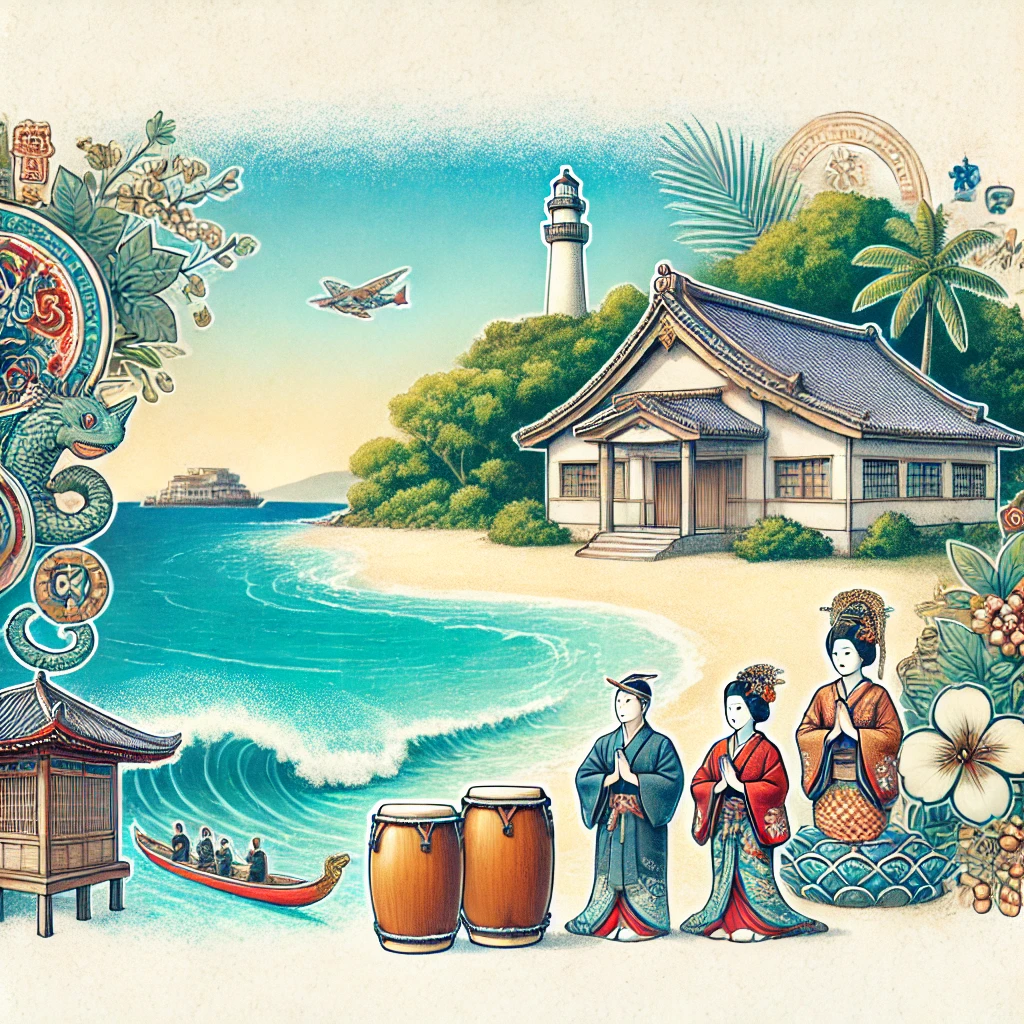
What comes to mind when you hear the word “Okinawa”? Blue seas, white sandy beaches, beautiful sunsets? Okinawa is renowned as one of Japan’s top resort destinations, but its true charm lies beyond its status as a glamorous tourist spot. The real allure of Okinawa is found in its rich traditional culture, nurtured over a long history, and the spirit of the people who sustain it.
This blog delves into the theme of “Recreating the Old Life of Okinawa,” exploring the traditional culture, spiritual world, and folklore of Okinawa. The self-sufficient lifestyle centered around agriculture, the spirit of mutual aid called Yui-maru, the presence of female priestesses known as Noro who pray for the village’s peace, and the Yuta who serve as spiritual anchors for the people. The meanings behind traditional events like Eisa and Hari, and the values embedded in words like Izaiho and Mabui, which emphasize the importance of life.
These aspects remind us of the precious things modern society is losing. In a world that prioritizes efficiency and profit, Okinawa’s heart, which cherishes nature, mutual help, and respect for life, offers significant insights for our way of living.
While Okinawa’s traditional culture is gaining attention as a tourist resource, it is crucial to understand and preserve its intrinsic value rather than merely consuming it as a spectacle. As globalization progresses, protecting and passing on Okinawa’s unique identity to the next generation is a mission entrusted to each of us.
Through this blog, I hope you can feel the depth of Okinawa’s spirit. Although it’s a virtual experience, by re-experiencing the old life of Okinawa, we modern-day people have much to learn. Let’s embark on a journey to explore the heart of Okinawa together.
- The Old Life of Okinawa
- Unique Traditional Events in Okinawa
- The Spiritual World of Okinawa
- Okinawa’s Folklore and Legends
- Okinawan Spirit in Modern Times
- Q&A
- Summary
The Old Life of Okinawa
A Self-Sufficient Life Centered on Agriculture
In the old days, life in Okinawa revolved around agriculture and self-sufficiency. Unlike today, where a variety of foods and daily necessities line store shelves, people grew their crops and made what they needed by hand.
Sugarcane Cultivation and Brown Sugar Production
Sugarcane is a representative crop of Okinawa. Cultivated throughout the prefecture, harvested sugarcane is essential for making brown sugar. The production of brown sugar is a testament to Okinawa’s traditional wisdom and skills. The juice extracted from sugarcane is boiled in large pots and stirred meticulously. When it reaches the right consistency, it is poured into molds and left to harden. This brown sugar becomes a crucial ingredient in Okinawan cuisine, used in sweets and various dishes.
Island Tofu and Traditional Vegetable Cultivation
A staple of Okinawan cuisine is island tofu, made from local soybeans using traditional methods. Boiling and mashing soybeans, adding nigari, and setting the mixture hasn’t changed over the years. Island tofu is used in stews, soups, stir-fries, and other dishes, supporting Okinawa’s food culture.
Various native vegetables, such as bitter melon, island shallots, mustard greens, and sponge gourds, are also cultivated. These vegetables, adapted to Okinawa’s climate, are cherished by farmers and are integral to the Okinawan diet.
Traditional Livestock Raising in Okinawa
Livestock farming, particularly pig rearing, has significantly influenced Okinawan food culture. Pigs are raised, and every part, from ears to internal organs, is utilized in cooking, creating unique flavors. Goats, another traditional livestock, provide milk and meat even in harsh environments. Goat soup is a well-known Okinawan dish believed to have nourishing properties.
In this way, the old life in Okinawa, centered on agriculture and livestock farming, utilized limited resources to the fullest, building a rich food culture through ingenuity and effort.
The Spirit of Mutual Aid Called Yui-maru
Another vital element supporting the old life in Okinawa is the spirit of mutual aid known as “Yui-maru.” This term, combining “yui” (tie) and “maru” (rotate), symbolizes the spirit of helping one another.
Labor Exchange in Village Communities
In the past, village communities were the basic social units. Villagers practiced Yui-maru in various situations like farming, house building, and tool repairs. During planting and harvesting seasons, villagers worked together in a custom called “yui,” where they took turns helping each other, improving work efficiency.
The spirit of Yui-maru was a wisdom to overcome significant tasks that could not be accomplished by individual efforts. Through the harsh natural environment, Okinawans learned and practiced the importance of mutual help.
Practicing Yui-maru in Ceremonies and Events
Yui-maru was also practiced during life events like weddings and funerals. These significant village events required cooperation. Women prepared food and decorated venues, while men set up tents and transported equipment. This cooperation ensured that large ceremonies proceeded smoothly.
The spirit of Yui-maru has deepened the bonds among Okinawans, helping them overcome various hardships, including wars and natural disasters. Despite claims that Yui-maru’s spirit is fading in modern society, learning from the old Okinawan way of life highlights its enduring importance. Working together can indeed open the way forward.
The old life in Okinawa, sustained by a self-sufficient lifestyle and the spirit of mutual aid, fostered a rich culture through wisdom, ingenuity, and mutual help. There are many lessons modern-day people can learn from this way of life. Learning from the wisdom of our predecessors and living harmoniously with nature, while valuing the spirit of helping one another, provides valuable hints for our future.
Understanding the old life in Okinawa is a first step to deeply appreciating its charm. By touching on self-sufficiency and the spirit of Yui-maru, you can feel the depth of Okinawan culture. Applying this wisdom to modern life can lead to a more fulfilling and enriched life. May the old life of Okinawa move your heart and bring new insights.
Unique Traditional Events in Okinawa
Okinawa has many unique traditional events cultivated over its long history. These events are deeply intertwined with the lives of Okinawans and are precious cultural heritage passed down from ancestors. Knowing these traditional events is essential for a deeper understanding of Okinawa’s charm. Here, we will introduce representative traditional events of Okinawa, explore their meanings and origins, and see how they are passed down in modern times.
Old Calendar Events and the Spirit of Prayer
Many of Okinawa’s traditional events are based on the old lunar-solar calendar. The old calendar emphasizes a lifestyle rhythm aligned with the natural cycle, based on the phases of the moon. Okinawans have lived by this calendar, aligning their farming and fishing activities with the changing seasons.
Tanabata Festival and Its Origins
Okinawa’s Tanabata Festival, held on the 7th day of the 7th month of the old calendar, celebrates the once-a-year reunion of the weaving princess Orihime and the cowherd Hikoboshi, based on Chinese legend. A unique custom in Okinawa’s Tanabata Festival is that children visit houses and place paper flags, called “Tinsagu flags,” at the gates, praying for family safety and a good harvest.
The Significance and Origins of Folk Weaving
Held on the 15th day of the 8th month of the old calendar, Folk Weaving, also known as “Folk Weaving Day,” involves creating new winnowing baskets used for sorting grains. This day is filled with gratitude for the harvest and prayers for the next year’s bountiful yield.
Family and relatives gather to weave baskets from reed or sugarcane leaves, which are then offered at sacred places. Through this event, Okinawans express their gratitude for nature’s blessings and hope for future bounties. Folk Weaving symbolizes Okinawa’s agricultural lifestyle and prayerful heart.
Eisa and the Festival of Plenty
Eisa, a summer tradition in Okinawa, is a Bon dance performed in the 8th month of the old calendar, offering prayers for a good harvest and ancestor worship. With powerful drum rhythms, dancers in vibrant costumes perform energetic dances.
The History and Regional Variations of Eisa
Eisa’s origins are varied, but it is believed to have evolved from Bon dances introduced from China. Eisa originated in the Chatan region of northern Okinawa Island but is now performed throughout Okinawa, with each area having its unique dances, costumes, and music.
For example, the Eisa of Haebaru Town in the south features graceful dances by women, while the Eisa of Nago City in the north showcases powerful dances by men. These regional differences reflect the individuality of each community.
The Relationship Between the Harvest Festival and Shisa Dance
The Harvest Festival, held on the 15th day of the 8th month of the old calendar, is one of Okinawa’s representative festivals, expressing gratitude for the harvest and prayers for future abundance. Offerings of grains and the performance of the Shisa Dance, a local lion dance, mark the festivities.
The Shisa Dance, derived from the Chinese lion dance, is believed to ward off evil spirits and bring good fortune. The powerful dance, accompanied by drums, is a symbol of Okinawa’s agricultural culture and religious beliefs. Today, the Shisa Dance is performed at various Harvest Festivals, continuing Okinawa’s traditional practices.
Hari (Dragon Boat Races) and Village Solidarity
Hari, held on the 4th day of the 5th month of the old calendar,
involves dragon boat races to pray for safe fishing and bountiful catches.
The Origins and Legends of Hari
Hari traces its origins to the Chinese Dragon Boat Festival. Legends associated with Hari include stories of a young man from a village lost in a storm and ending up in the Dragon Palace. Falling in love with the dragon king’s daughter, he forgets his home. Villagers built dragon boats to search for him, which is believed to be the origin of Hari.
The Pride and Unity Embodied in Hari
Hari, primarily conducted by village fishermen, requires teamwork and physical strength to row large dragon boats. Young men practice for months, rowing with all their might on the event day.
Hari embodies village pride and unity, with each village showcasing its dragon boat’s performance. Winning the Hari race is a village honor, strengthening community bonds and perpetuating the spirit of abundant fishing.
Today, Hari is a major tourist attraction in Okinawa, with festivals in Naha City, Ishigaki Island, and other locations drawing many visitors. Preserving the traditional significance of Hari while adapting it to modern times is noteworthy.
Okinawa’s traditional events, nurtured within a lifestyle based on the old calendar, are closely linked to agriculture, fishing, and faith. Events like the Tanabata Festival, Folk Weaving, Eisa, the Harvest Festival, and Hari embody the prayerful hearts and gratitude of Okinawans towards nature.
Understanding these traditional events is a key to comprehending Okinawa’s culture and history. By touching on the wisdom and prayerful heart of the ancestors, modern-day people can find a way to reevaluate their lives.
While Okinawa’s traditional events have significant tourist appeal, understanding their meanings and origins allows visitors to appreciate and connect with Okinawan culture more deeply.
Preserving and passing on Okinawa’s traditional events is an essential mission for us. By adapting the wisdom and prayerful hearts of the ancestors to modern times, we can ensure that Okinawa’s traditional events continue to captivate people and deepen their understanding of Okinawan culture.
The Spiritual World of Okinawa
To explore Okinawa’s traditional culture, understanding the spiritual world of its people is essential. Okinawa has a unique worldview, harmonizing gods, humans, and nature, deeply influencing its lifestyle and faith. Here, we will delve into the core elements of Okinawa’s spiritual world, including the Noro (female priestesses) and Yuta (spiritual mediums), as well as ancestor worship customs. Understanding the spiritual world of Okinawa is a crucial key to knowing the depth of its culture and history.
The Presence of Female Priestesses Called Noro
In Okinawa’s spiritual world, a noteworthy presence is the female priestesses known as “Noro.” Noro played a vital role in connecting gods and humans.
The Role and Social Status of Noro
Noro communicated the will of the village guardian deities, such as Amamikiyo and Sinugunashi, performing rituals and prayers for the village’s peace and bountiful harvests. Noro held the highest social status among women, revered as sacred beings.
To become a Noro, one needed to belong to a specific lineage and undergo rigorous training from a young age. As sacred intermediaries conveying divine words, Noro were deeply trusted by villagers.
The Sacred Site Known as Sefa Utaki
Noro performed rituals at “Sefa Utaki,” the village’s most sacred forest. Only Noro could enter Sefa Utaki, where they prayed to the gods for the village’s peace. Important decisions were made based on divine will received at Sefa Utaki, symbolizing the spiritual center of Okinawa.
Today, Sefa Utaki remains a sacred site, attracting visitors with its divine atmosphere, offering a glimpse into Okinawa’s spiritual world.
The Role of Spiritual Mediums Called Yuta
Another essential element in Okinawa’s spiritual world is the Yuta, spiritual mediums believed to communicate with ancestral spirits and gods.
Yuta’s Spirit Summoning and Spiritual Advice
Yuta performed “spirit summoning,” calling upon ancestral spirits to provide advice on clients’ troubles and issues. They also offered spiritual insights into the causes of illnesses and guidance in life. Many sought Yuta for comfort from ancestral messages, relying on them as spiritual anchors.
The Relationship Between Yuta and Modern Medicine
Recently, the relationship between Yuta and modern medicine has gained attention. While different from medical treatment, Yuta’s spiritual advice is considered effective for emotional and mental issues. In some medical facilities, Yuta’s spiritual care is integrated into patient care, bridging traditional spiritual practices and modern society.
Despite the mysterious aspects beyond scientific explanation, Yuta has been a spiritual support for Okinawans, demonstrating the depth of Okinawa’s spiritual world.
Ancestor Worship and Family Bonds
A crucial aspect of Okinawa’s spiritual world is the custom of ancestor worship. Okinawans believe ancestral spirits watch over and guide their families.
The Custom of Ancestor Worship and Family Altars
Every Okinawan household has a family altar housing ancestral tablets, receiving offerings during meals. Special offerings are made during Obon and New Year to welcome ancestral spirits.
Ancestor worship deepens family bonds, sharing the reverence for ancestors uniting the family. Ancestral teachings and values are passed down to children and grandchildren.
The Unique Obon Tradition “Unke” and Family Bonds
“Unke,” Okinawa’s unique Obon event, takes place in the 7th month of the old calendar, welcoming ancestral spirits home for several days. Families prepare offerings, decorate altars, and visit graves together, strengthening family ties through these preparations. On the final day, a ceremony called “Ukui” sends the spirits back, symbolizing gratitude and reaffirming family bonds.
Okinawa’s ancestor worship customs have fostered family unity and respect for ancestral values. Even in modern society, maintaining reverence for ancestors strengthens family bonds and nurtures a sense of continuity.
Okinawa’s spiritual world, shaped by figures like Noro and Yuta, and customs like ancestor worship, reflects a unique worldview where gods, humans, and nature coexist harmoniously. This worldview offers significant insights for modern living, emphasizing the need for spiritual anchors, respect for the mysterious, and the importance of family bonds.
Understanding Okinawa’s spiritual world deepens our appreciation of its culture and history, offering opportunities to reflect on our own ways of life. Exploring sacred sites like Sefa Utaki or experiencing spirit summoning by Yuta can provide profound insights into Okinawa’s spiritual depth.
The spiritual world of Okinawa, a testament to its people’s wisdom cultivated over centuries, is an essential part of their cultural heritage. Preserving and passing on this worldview is a significant mission, ensuring it continues to captivate and support people.
Okinawa’s Folklore and Legends
The journey to explore Okinawan culture deepens by understanding its folklore and legends, reflecting the lives and values of its people. Here, we will look at traditions like the hunting chant “Izaiho” and the concept of “Mabui,” symbolizing the sanctity of life. Engaging with these traditions brings us closer to the roots of Okinawan culture.
The Traditional Hunting Chant “Izaiho”
One fascinating tradition is the hunting chant “Izaiho,” used during wild boar hunts in Okinawa’s mountainous regions.
The Origins and Tradition of Izaiho
The origins of Izaiho are varied, but it has long been part of Okinawa’s mountainous regions. More than a chant, Izaiho is considered a prayer for hunting success, addressing mountain gods for safety and success. It also had a practical purpose, startling boars during hunts.
Izaiho embodies the wisdom and rituals of Okinawa’s hunting culture, passed down through generations.
Hunting Culture and Harmony with Nature
Okinawa’s hunting culture, exemplified by Izaiho, reflects wisdom about living in harmony with nature. Okinawans hunted only what was needed, respecting nature’s blessings. Meat and hides were used fully, maximizing nature’s gifts.
This approach offers valuable lessons for modern society, emphasizing sustainable resource use and respect for nature’s bounty.
Izaiho symbolizes the depth of Okinawa’s hunting culture, blending prayers to mountain gods with a deep understanding of nature.
The Concept of “Mabui” and the Sanctity of Life
A vital concept in Okinawan folklore is “Mabui,” representing life itself and embodying respect for all living beings.
The Origin and Meaning of Mabui
Mabui’s origin is believed to come from “mabui” or “true life,” indicating the essence of living. Okinawans believe that all beings, visible and invisible, possess Mabui, treating it as a sacred force.
Mabui and Okinawa’s View of Nature
Mabui reflects Okinawa’s holistic view of nature, where humans and nature are inseparable. The saying “Nuchi du Takara” (Life is a treasure) exemplifies this value, emphasizing the importance of life.
Modern society can learn from Mabui, understanding the sanctity of life and the need to live harmoniously with nature.
Mabui is a core concept in Okinawan culture, highlighting the value of life and harmony with nature.
Okinawan folklore and legends, with wisdom and values from ancestors, provide significant insights for modern life. Understanding traditions like Izaiho and Mabui helps us grasp the depth of Okinawan culture and its teachings.
Knowing and preserving these traditions is crucial, reflecting on their meanings and applying their lessons to modern challenges. Visiting Okinawa
offers opportunities to engage with living folklore through local stories, festivals, and community interactions, deepening our appreciation of its culture.
Okinawa’s folklore and legends, representing centuries of wisdom, are essential to its cultural heritage. Understanding and integrating their values into modern life is vital for a sustainable future.
These stories are also valuable from an SEO perspective, attracting people interested in Okinawan culture. Using keywords like “Izaiho,” “Mabui,” “Ichariba Chode,” and “Utsugumi” can boost blog traffic, drawing readers interested in these themes.
Incorporating visual elements and storytelling enhances the quality of blog content, making it engaging and insightful. Effective SEO strategies, combined with rich cultural content, can attract a wide audience, fostering deeper connections with Okinawan culture.
Okinawan Spirit in Modern Times
Okinawa’s traditional culture and spirit hold significant relevance in modern society. Amidst globalization and diverse value systems, Okinawa’s timeless values offer important insights. This section explores the continuity and evolution of Okinawan spirit through traditional event preservation and lessons from past lifestyles.
Preservation and Evolution of Traditional Events
Okinawan traditional events have evolved over time while maintaining their core significance. Modern Okinawa continues to uphold many of these events, serving as vital cultural anchors.
The Evolution and Preservation of Eisa
Eisa is a prominent example of a traditional event that has adapted to modern times. Initially centered around local youth groups, Eisa now includes participants of all ages, enhancing community engagement.
Eisa has also become a significant tourist attraction, with festivals drawing large crowds. While serving as a cultural and economic catalyst, Eisa retains its original purpose of ancestor worship and harvest prayers.
The evolution of Eisa exemplifies the balance between tradition and contemporary relevance, preserving its essence while adapting to new contexts.
The Challenges and Potential of Event Tourism
Tourism has highlighted many Okinawan traditional events. While this brings visibility and economic benefits, there is a risk of diminishing their intrinsic meaning. It is essential to preserve the authenticity of these events, educating visitors about their historical and cultural significance.
Tourism revenue should also support the preservation and transmission of traditional culture, ensuring that the benefits extend to cultural custodians.
Lessons from Okinawa’s Past Lifestyle
Okinawa’s historical lifestyle offers valuable lessons for contemporary society, highlighting the importance of sustainable living, mutual aid, and respect for life.
Sustainable Lifestyle in Harmony with Nature
Okinawa’s self-sufficient lifestyle, based on agriculture and resourcefulness, exemplifies sustainability. Respecting nature’s gifts and minimizing waste were integral to daily life.
Modern society faces environmental challenges due to overconsumption. Learning from Okinawa’s past, we can adopt sustainable practices and live harmoniously with nature.
The Importance of Mutual Aid and Community
The spirit of mutual aid, embodied in Yui-maru and Ichariba Chode, was fundamental to Okinawan life. This community-centric approach prioritized collective well-being over individual gain.
In an increasingly individualistic society, the lessons of mutual aid and community support from Okinawa are invaluable. Emphasizing these values can foster stronger, more resilient communities.
Identity Formation Through Traditional Culture
Okinawa’s traditional culture forms the basis of its identity. Amidst globalization, reconnecting with these cultural roots helps reaffirm Okinawa’s unique values and spiritual heritage.
Traditional culture provides inner strength, fostering resilience and adaptability in a globalized world. Preserving and passing on these cultural values to future generations is vital.
The modern relevance of Okinawan spirit lies in the preservation and adaptation of traditional events and the lessons drawn from historical lifestyles. Embracing Okinawan values of sustainability, mutual aid, and identity can guide us towards a better future.
Engaging with Okinawan culture through festivals, community interactions, and cultural experiences can deepen our understanding and appreciation of its spirit. These experiences offer profound insights into living harmoniously with nature and valuing community bonds.
Okinawa’s enduring spirit offers valuable guidance for modern life, emphasizing the importance of cultural preservation, sustainable living, and mutual aid. Learning from Okinawa’s rich heritage can inspire us to build a more resilient and harmonious future.
Q&A
What is “Yui-maru,” which played an essential role in Okinawa’s old lifestyle?
“Yui-maru” refers to the spirit of mutual aid in Okinawa, where villagers cooperated and helped each other. Examples include community efforts in farming and house building, showcasing the importance of collective support.
Who are the “Noro” in Okinawa’s spiritual world?
“Noro” are female priestesses in Okinawa, acting as intermediaries between gods and people. They perform rituals and prayers for village peace and abundant harvests, reflecting the matriarchal aspects of Okinawan society.
What is the significance of the traditional event “Hari” in Okinawa?
“Hari” involves dragon boat races held on the 4th day of the 5th month of the old calendar, praying for safe fishing and abundant catches. Hari strengthens village solidarity and pride, symbolizing community unity and prosperity.
What does “Mabui,” representing the sanctity of life, mean in Okinawan folklore?
“Mabui” in Okinawan terms represents life itself, embodying respect for all living beings. Okinawans believe that Mabui exists in humans, animals, plants, and even invisible entities, highlighting the sacredness of life.
What is the significance of traditional culture in modern Okinawan society?
In modern Okinawan society, traditional culture forms the basis of identity. Amidst globalization, reconnecting with cultural roots reaffirms Okinawa’s unique values and spiritual heritage, providing inner strength and resilience.
Summary
This blog, themed “Recreating the Old Life of Okinawa,” explores the traditional culture, spiritual world, and folklore of Okinawa. It delves into the self-sufficient lifestyle centered on agriculture, the spirit of mutual aid embodied in Yui-maru, the roles of Noro and Yuta in the spiritual realm, and traditional events like Eisa and Hari. It also examines the meanings behind words like Izaiho and Mabui, emphasizing the importance of life. Furthermore, it considers the relevance of traditional culture in modern society, advocating for sustainable living, mutual aid, and identity preservation. The journey to explore Okinawa’s spirit is an ongoing theme, emphasizing the importance of learning from and preserving Okinawa’s cultural heritage for the future.


コメント