
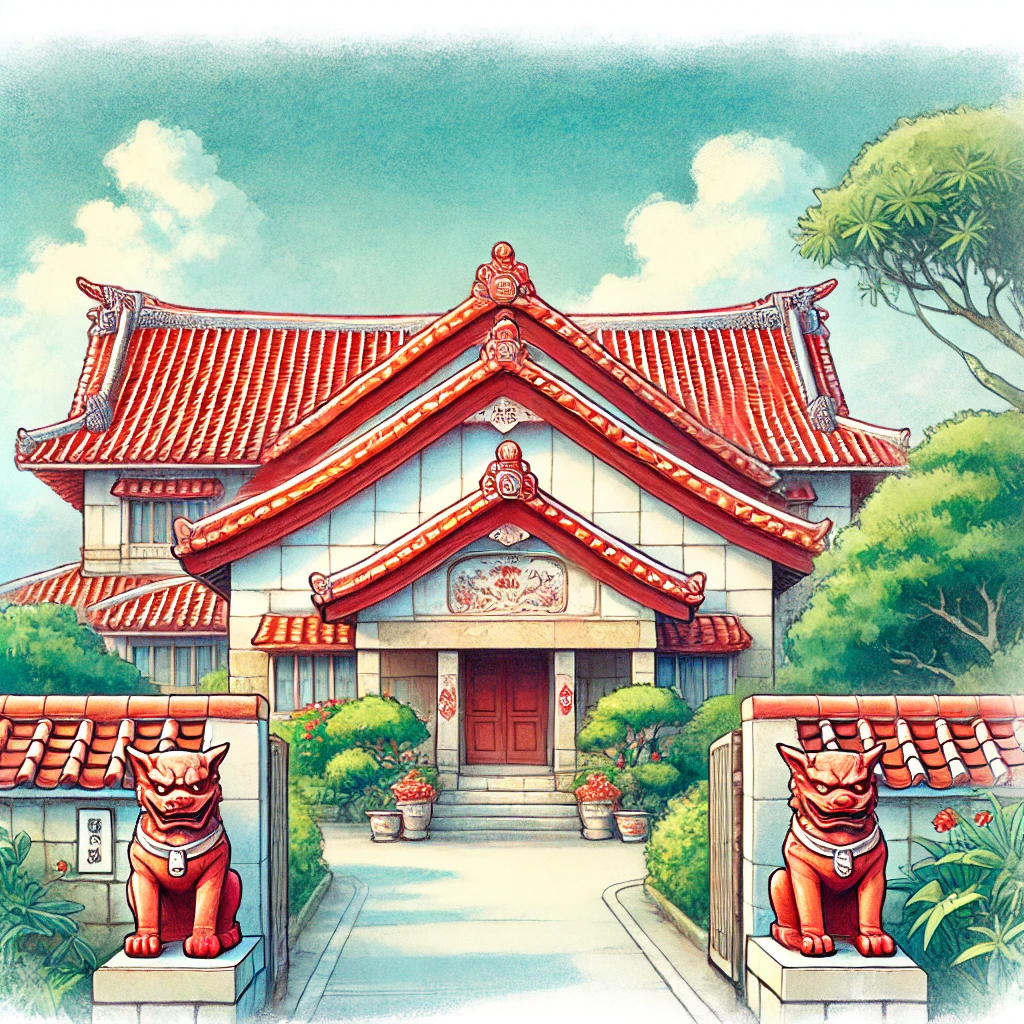
When you visit Okinawa, have you ever noticed the beautiful old houses with red roofs? These are known as “Aka-gawara no Ie,” or “red-tiled houses,” a traditional form of Okinawan architecture. These houses are a testament to the wisdom of the ancestors who adapted to the harsh natural environment of Okinawa and cultivated a unique culture. The red roof tiles, white walls, and guardian shisa statues at the entrances create an iconic Okinawan scene that has captivated many.
However, the red-tiled houses are more than just aesthetically pleasing structures. Their design and construction techniques reflect a deep understanding and adaptation to Okinawa’s climate and natural conditions. Additionally, these houses are closely tied to Okinawan spiritual practices, including feng shui and ancestor worship. Through these houses, we can connect with Okinawa’s culture, history, and the wisdom of the people who lived there.
In recent years, red-tiled houses have gained attention as tourist attractions. Restored old houses are now used as accommodations and cafes, and villages with rows of these houses have become popular scenic spots, showcasing a new charm of Okinawa. However, they also face several challenges, such as the destruction caused by war and natural disasters, the aging of craftsmen and a lack of successors, and the restoration and maintenance of aging houses. The situation surrounding these houses is far from optimistic.
To pass down the red-tiled houses to future generations, it is essential for each of us to understand and cooperate. Efforts to pass on the skills of craftsmen to the next generation, support for restoration and maintenance, and the dissemination of the cultural value of red-tiled houses are all needed from various angles.
This article provides an in-depth look at the charm and history of red-tiled houses, as well as the current challenges they face. Whether you are interested in Okinawa’s traditional culture and history, have visited red-tiled houses during your trip to Okinawa, or are concerned with the preservation of Okinawan culture, this article will explore the profound world of these houses.
- What Are Red-Tiled Houses?
- History of Red-Tiled Houses
- Structure and Features of Red-Tiled Houses
- Red-Tiled Houses and Okinawa’s Climate
- Red-Tiled Houses and Okinawan Spirituality
- Modern Significance of Red-Tiled Houses
- Summary
- Q&A
- Summary
What Are Red-Tiled Houses?
Definition of Red-Tiled Houses
What Are Red Tiles?
Red-tiled houses, as the name suggests, refer to houses roofed with red tiles. These unique tiles are made using a special method to withstand Okinawa’s strong sunlight and hot, humid climate. Red tiles have been used as a building material suited to Okinawa’s environment for a long time.
Basic Features of Red-Tiled Houses
Red-tiled houses are often built within grounds surrounded by stone walls or stone pavements, featuring distinctive red roof tiles and white walls. At the entrance, you will find shisa statues, which are lion-like creatures believed to ward off evil spirits. These houses embody traditional Okinawan architectural style and serve as symbols of the region’s identity.
External Characteristics of Red-Tiled Houses
Red Roof Tiles
The most striking feature of red-tiled houses is their red roof tiles. This red color is produced by using a unique Okinawan clay and firing it at high temperatures. The red roofs contrast beautifully with the blue sky and green nature of Okinawa, giving the houses a unique charm.
Harmony with Stone Walls and Pavements
Red-tiled houses are often surrounded by stone walls and stone pavements made from Ryukyu limestone found in Okinawa, creating harmony with the house itself. These stone structures also serve to protect the house from natural disasters like typhoons.
The Presence of Shisa
Shisa statues are placed on the roofs or at the entrances of red-tiled houses. Believed to protect against evil spirits, shisa are essential elements of Okinawan homes, serving as guardians of the house.
History of Red-Tiled Houses
Origin of Red Tiles
Influence from China
It is believed that the use of red tiles came from China. During the Ryukyu Kingdom period, Okinawa had extensive trade with China, through which construction techniques and culture were introduced, including the use of red tiles.
Use of Red Tiles during the Ryukyu Kingdom Period
During the Ryukyu Kingdom period, red tiles were primarily used for the residences of royalty and aristocrats. Buildings such as Shurijo Castle featured red tiles, symbolizing power and wealth. The use of red tiles gradually spread to commoners’ homes over time.
Development of Red-Tiled Houses
Spread of Red-Tiled Houses in the Early Modern Period
From the 18th to the 19th century, red-tiled houses became widely popular in Okinawa due to economic development and improved living standards. The durability and resistance of red tiles to natural disasters like typhoons made them a valuable building material suited to Okinawa’s climate.
Emergence and Skill Development of Red Tile Craftsmen
With the spread of red tiles, craftsmen specializing in their production emerged. These craftsmen passed down their skills through generations, improving the quality of red tiles. They carefully selected clay, shaped, and fired the tiles to create beautiful and durable products.
Current State of Red-Tiled Houses
Loss of Red-Tiled Houses due to War
During World War II, Okinawa suffered intense combat, resulting in the destruction of many red-tiled houses. Although reconstruction efforts were made post-war, the number of red-tiled houses significantly decreased compared to pre-war times.
Restoration and Preservation Movements
Since the 1970s, there has been a renewed appreciation of the cultural value of red-tiled houses in Okinawa, leading to active restoration and preservation efforts. Both governmental and community initiatives have been working towards the revival of these houses, focusing also on the training and succession of red tile craftsmen’s skills.
Structure and Features of Red-Tiled Houses
Roof Structure of Red-Tiled Houses
Red Tile Roofing Techniques
The roofs of red-tiled houses are constructed using special techniques. Initially, a wooden framework is built, upon which the red tiles are meticulously layered to create a seamless, beautiful roof. This technique requires years of experience and skilled craftsmanship.
Roof Shapes and Types
Red-tiled houses feature various roof shapes, such as the hip-and-gable roof, which slopes in four directions, ideal for withstanding strong winds. The pyramid-shaped hipped roof is another common design.
Layout and Features of Red-Tiled Houses
Hinpun: The Central Courtyard
Many red-tiled houses include a central courtyard called a “hinpun,” which provides light and ventilation. The hinpun also serves as a space for family gatherings, showcasing a distinctive feature of Okinawan house design.
Open Space Layout
Red-tiled houses are characterized by their open layout. Rooms are often separated by sliding doors or screens, allowing for good air circulation and a bright atmosphere. Additionally, spaces like verandas and tatami rooms connect the interior with the exterior.
Features of Wooden Construction
Red-tiled houses are primarily wooden structures, with pillars and beams often made from fukugi wood, known for its durability and resistance to moisture, making it an ideal building material for Okinawa’s climate.
Building Materials of Red-Tiled Houses
Use of Ryukyu Limestone
Ryukyu limestone, a coral limestone found throughout Okinawa, is often used for the foundations and walls of red-tiled houses. This stone is lightweight and easy to work with, making it a popular construction material.
Use of Fukugi Wood
Pillars and beams in red-tiled houses are frequently made from fukugi wood, a native evergreen tree. Fukugi wood is prized for its strength and durability, as well as its resistance to moisture and decay, making it an essential material in Okinawan architecture.
Red-Tiled Houses and Okinawa’s Climate
Adaptation to Okinawa’s Climate
Measures Against Strong Sunlight and Humidity
Okinawa, with its subtropical climate, experiences strong sunlight and high humidity throughout the year. Red-tiled houses are designed to cope with these conditions. The red tiles reflect sunlight, helping to keep the interior cool, while deep eaves reduce the direct impact of sunlight on the walls.
Ensuring Ventilation and Natural Light
The design of red-tiled houses includes features to ensure good ventilation and natural light. The hinpun, as mentioned earlier, helps ventilate the house by bringing in fresh air. Verandas, sliding doors, and screens allow air to circulate freely and let natural light brighten the interior.
Disaster Preparedness
Typhoon Resistance
Okinawa frequently faces typhoons, with strong winds and heavy rain. Red-tiled houses are built to withstand such natural disasters. The weight of the red tiles prevents them from being blown away easily, and the roof’s design helps to distribute wind force.
Stone Walls for Wind and Sand Protection
Stone walls often surround red-tiled houses, providing windbreaks and protecting the house from sand carried by the wind. These walls are a crucial element in adapting red-tiled houses to Okinawa’s natural conditions.
Red-Tiled Houses and Okinawan Spirituality
Feng Shui and Red-Tiled Houses</h3 >
Feng Shui in House Orientation and Layout
The construction of red-tiled houses often reflects feng shui principles. The orientation and layout of the house are designed to align with favorable directions and configurations. For example, facing the house south and positioning hills or mountains behind the property are believed to enhance the house’s fortune and bring health and prosperity to the family.
Feng Shui Role of Shisa
Shisa statues, placed on roofs and at entrances, also have feng shui significance. They are believed to ward off evil spirits and bring good fortune to the household. As guardians of the home, shisa are key elements in maintaining the feng shui balance.
Ancestor Worship and Red-Tiled Houses
The Presence of Altars and Graves
Ancestor worship is a deeply rooted practice in Okinawa, reflected in the red-tiled houses. Many homes have altars where ancestral tablets are enshrined, and family graves are often located nearby. These elements underscore the importance of ancestral connections in Okinawan spirituality.
Spaces for Gratitude and Prayer
Red-tiled houses are not just living spaces but also places for expressing gratitude and prayer to ancestors. Daily offerings are made at the altars, and special offerings are made during New Year and Obon festivals, bringing the family together to remember and honor their ancestors. These practices highlight the spiritual significance of red-tiled houses in Okinawan culture.
Legends and Traditions Surrounding Red-Tiled Houses
Legends of Shisa on the Roof
There are various legends associated with the shisa statues on the roofs of red-tiled houses. In one story, a shisa defeated an evil dragon. Another legend tells that shisa walk around the roof at night to protect the family. These legends reflect the deep cultural integration of shisa as guardians.
Rituals and Customs in House Construction
Building a traditional house involves various rituals and customs. For example, before construction begins, a groundbreaking ceremony is held to pray for the safety of the construction and the prosperity of the house. The topping-out ceremony celebrates the progress of the construction and honors the efforts of the craftsmen. These rituals imbue the building process with spiritual significance.
Modern Significance of Red-Tiled Houses
Cultural Value of Red-Tiled Houses
Architecture that Embodies Okinawa’s Traditional Culture
Red-tiled houses embody the traditional culture of Okinawa through their architecture. The use of red tiles, wooden construction, and feng shui principles all reflect elements rooted in Okinawa’s history and natural environment. These houses offer a glimpse into the rich cultural heritage of Okinawa.
Symbols of Regional Identity
Red-tiled houses are also symbols of Okinawa’s regional identity. The contrast between red roofs and white walls, along with the presence of shisa, strongly evokes the essence of Okinawa. These houses are vital components of Okinawa’s distinctive landscape.
Tourism Potential of Red-Tiled Houses
Creating Tourist Attractions with Red-Tiled Houses
In recent years, red-tiled houses have gained attention as tourist attractions. Restored old houses are now used as accommodations and cafes, and the scenic beauty of villages with rows of these houses has become a new draw for visitors. Utilizing the charm of red-tiled houses has opened up new possibilities for tourism in Okinawa.
Organizing Themed Tours
Themed tours focused on red-tiled houses have also been organized. These tours offer opportunities to learn about the history and features of red-tiled houses and to observe the work of craftsmen up close. Through these tours, visitors can gain a deeper appreciation of Okinawa’s traditional culture.
Importance of Preserving and Passing Down Red-Tiled Houses
Training Craftsmen and Passing Down Skills
To ensure the future of red-tiled houses, it is crucial to train new craftsmen and pass down their skills. Currently, the aging of craftsmen and the lack of successors are significant issues in Okinawa. Efforts are needed to pass on these valuable skills to the next generation.
Support for Restoration and Maintenance
Many red-tiled houses have been lost due to war and natural disasters, and those that remain often face issues of aging. Support for restoration and maintenance is necessary to preserve these houses. Assistance from government and private organizations, as well as technical and financial support for homeowners, are essential.
Summary
Value of Red-Tiled Houses as Part of Okinawa’s Traditional Culture
Red-tiled houses reflect various elements of Okinawa’s climate, history, and spirituality. Through these houses, we can appreciate Okinawa’s rich traditional culture. Moreover, red-tiled houses serve as symbolic representations of Okinawa’s regional identity.
Need for Efforts to Pass Down Red-Tiled Houses to the Future
However, red-tiled houses currently face numerous challenges, such as losses from war and natural disasters, the aging of craftsmen and lack of successors, and issues with the restoration and maintenance of aging houses. Comprehensive efforts, including the training of craftsmen, the passing down of skills, and support for restoration and maintenance, are necessary to preserve these houses for the future.
Red-tiled houses are valuable architectural heritage that embodies Okinawa’s traditional culture. Preserving and passing down this beautiful and enchanting architectural style is our responsibility. Through efforts to preserve and pass down red-tiled houses, we aim to connect Okinawa’s rich cultural heritage to the future.
Q&A
Why are the roof tiles of red-tiled houses red?
The red color of the tiles is produced by using a unique Okinawan clay and firing it at high temperatures.
What is the role of shisa statues on the roofs and gates of red-tiled houses?
Shisa statues are believed to ward off evil spirits and bring good fortune to the household, serving as protectors and guardians of the home.
What is the main type of wood used in the construction of red-tiled houses?
The pillars and beams of red-tiled houses are often made from fukugi wood, a durable and moisture-resistant evergreen tree native to Okinawa.
What challenges do red-tiled houses currently face?
Red-tiled houses face challenges such as losses due to war and natural disasters, the aging of craftsmen and a lack of successors, and issues with the restoration and maintenance of aging houses.
Why have red-tiled houses gained attention as tourist attractions?
The charm of red-tiled houses has been rediscovered through the use of restored old houses as accommodations and cafes, and the scenic beauty of villages with rows of these houses, leading to increased tourism interest.
Summary
Red-tiled houses, traditional dwellings of Okinawa, are roofed with red tiles. These houses are built within grounds often surrounded by stone walls or pavements, featuring red roof tiles and white walls. The use of red tiles came from China, and during the Ryukyu Kingdom period, they were primarily used for royal and noble residences. By the early modern period, they had spread to commoners’ homes. These houses are wooden structures, often using fukugi wood and Ryukyu limestone. They are closely tied to Okinawan spiritual practices such as feng shui and ancestor worship. Currently, the cultural value of red-tiled houses is being reevaluated, and they are gaining attention as tourist attractions, but they also face challenges like the aging of craftsmen and a lack of successors, and issues with restoration and maintenance. Comprehensive efforts, including the training of craftsmen, the passing down of skills, and support for restoration and maintenance, are needed to preserve these houses for the future.


コメント