
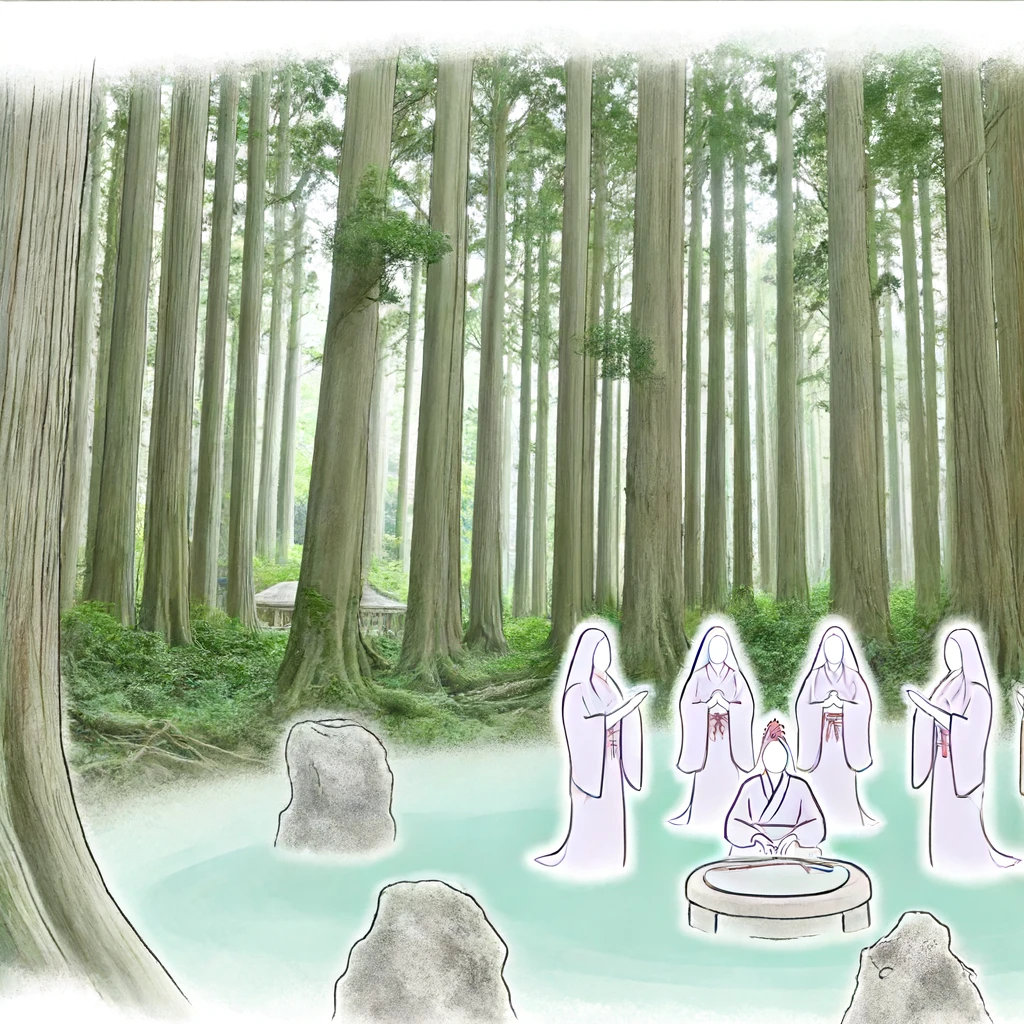
Amid Okinawa’s rich natural landscapes, there lies an ancient traditional belief known as Utaki worship. It is a faith rooted in the belief that gods reside in nature—within forests, rivers, and seas—and these sacred sites, called Utaki, have long been places of reverence. These Utaki often house sacred trees and waters, where people offer prayers and seek communion with the divine.
In Utaki worship, women priests known as Noro play a crucial role. Respected as conduits for the gods’ words, they communicate divine messages to the people and serve as guardians of their communities. This matrilineal tradition has significantly elevated the societal status of women in Okinawa.
Utaki worship deeply influences the Okinawan worldview, emphasizing a symbiotic relationship with nature and gratitude for its bounties. This belief system, which recognizes and respects women’s spiritual power, offers insights into achieving gender equality in modern society.
However, contemporary challenges such as urbanization and diverse value systems threaten the continuation of Utaki worship. Younger generations are increasingly detached from this tradition, and environmental degradation of sacred sites is worsening. It is our responsibility to rediscover the value of Utaki worship and integrate it into modern life.
Utaki worship is the spiritual wellspring of Okinawa, an irreplaceable heritage. Its views on nature and reverence for women’s power can guide us in addressing current environmental and gender issues. By preserving and passing on Utaki worship to future generations, we can sustain Okinawa’s rich spiritual legacy.
Let’s embark on a journey to explore the mystical world of Utaki, attuning ourselves to the voices of the forest gods and guided by the Noro priestesses. Discover the hidden power and potential of Utaki worship through your own experience.
- What is Utaki Worship?
- History of Utaki Worship
- Practices of Utaki Worship
- Reasons for the Deep Rooting of Utaki Worship in Okinawan Culture
- Legends and Events Related to Utaki Worship
- Conclusion
- Q&A
- Summary
What is Utaki Worship?
Definition and Origins of Utaki
Etymology and Meaning of Utaki
In traditional Okinawan belief, an Utaki is a sacred site where gods are believed to reside. The term “Utaki” originates from the words “御嶽 (otake)” or “御嶽 (utaki),” meaning “a high place where gods descend.” The people of Okinawa have always felt the presence of gods in nature and have revered these natural deities. Utaki serve as places of communion with these gods and are central to the people’s prayers.
Origins and History of Utaki Worship
The origins of Utaki worship trace back to ancient Okinawa. From prehistoric times, the people of Okinawa practiced nature worship, believing that gods inhabited natural objects such as mountains, forests, rivers, and seas. During the Gusuku era (around the 12th to 15th centuries), Utaki worship further developed, increasing the number of sacred sites. In the Ryukyu Kingdom era (15th to 19th centuries), Utaki worship became the kingdom’s official religion, with female priests called Noro playing pivotal roles. Even today, Utaki worship remains a spiritual pillar for the people of Okinawa.
Characteristics of Utaki Worship
Nature Worship and Sacred Site Reverence
The most prominent characteristic of Utaki worship is nature worship and sacred site reverence. Okinawans perceive the presence of gods in nature, honor them, and offer prayers with gratitude. Utaki symbolize this nature worship and are cherished as sacred spaces. Scattered throughout Okinawa, these Utaki are deeply connected to local history, culture, and natural environments, serving as spiritual anchors for the communities.
Women-Led Religious System
Another significant aspect of Utaki worship is its women-led religious system. Rituals and ceremonies at Utaki are primarily conducted by female priests known as Noro. Noro receive messages from the gods and relay them to the people, playing an essential role in the community. This women-led system, tied to Okinawa’s matrilineal traditions, elevates women’s social status and highlights their spiritual power, marking a distinctive feature of Okinawan culture.
Communion with Gods and Prayer Centers
Utaki serve as centers for communion with gods and prayer. Okinawans visit these sacred sites to express gratitude to the gods and to pray for their wishes. It is common to seek divine protection at Utaki during various life events, such as praying for a bountiful harvest or family health and happiness. Utaki are intertwined with daily life, providing spiritual support to the community.
The Relationship Between Okinawan Views on Nature and Utaki Worship
Okinawa’s Natural Environment and Utaki Distribution
Okinawa, blessed with a subtropical climate, boasts a rich natural environment with lush forests, clear waters, and beautiful seas. Utaki are intricately linked to this natural environment and are often located in sacred forests, rocks, rivers, and springs. For instance, the “Kubagaya” in the northern Okinawan village of Ogimi is known for its sacred space surrounded by large trees, while “Pinaisara Falls” on Iriomote Island is revered as a sacred site where gods reside. Utaki integrate with Okinawa’s natural environment, shaping a unique faith culture.
Philosophy of Coexistence with Nature
Utaki worship is based on a philosophy of coexistence with nature. Okinawans have viewed nature not just as a resource but as a divine blessing. Valuing and living harmoniously with nature has been the foundation of their lifestyle. Utaki worship reflects this philosophy, considering humans as part of nature and coexisting with gods. This philosophy of coexistence with nature remains significant in modern society, providing guidelines for achieving sustainable development.
Sacred Forests and Holy Spaces
Utaki are special places as sacred forests and holy spaces. Okinawans respect the forests as the dwelling places of gods and preserve their sanctity. The forests of Utaki are distinguished from everyday living spaces as sacred areas where special prayers and rituals are performed, allowing people to sense the presence of gods and experience spiritual purification. The existence of these sacred forests signifies the deep connection between Okinawan views on nature and Utaki worship, emphasizing the importance of nature conservation.
History of Utaki Worship
Transitions of Faith from Ancient Times
Traces of Prehistoric Utaki Worship
The origins of Utaki worship date back to Okinawa’s prehistoric era. Archaeological excavations have revealed traces of Utaki worship from shell mounds and ruins. For example, at the Itokazu Castle site in southern Okinawa, altars and offerings have been discovered, indicating that ancient people practiced nature worship. Additionally, traces of prayers from prehistoric people have been found in caves and rock shelters across the region. These findings demonstrate the continuity of Utaki worship from ancient times, revealing the deep history of Okinawa’s spiritual culture.
Development of Utaki Worship in the Gusuku Era
During the Gusuku era (around the 12th to 15th centuries), Utaki worship developed and became more systematic. Gusuku were fortresses built across Okinawa, playing central roles in the society of the time. Utaki were often established near these Gusuku, strengthening the connection between the ruling class and Utaki worship. The presence of female priests, or Noro, became prominent, emphasizing the importance of women in Utaki worship. This era’s Utaki worship was inherited and further developed during the subsequent Ryukyu Kingdom period.
Utaki Worship in the Kingdom Era
The Position of Utaki in the Ryukyu Kingdom
In the Ryukyu Kingdom era (15th to 19th centuries), Utaki worship was established as the kingdom’s official religion. Utaki were created throughout the kingdom, and national ceremonies were held. The Utaki at Shuri Castle played a central role as the kingdom’s primary sacred site. The ruling class valued Utaki worship, protecting and supporting Noro to ensure the faith’s inheritance and development. These religious policies deeply integrated Utaki worship into Okinawan society, forming the spiritual foundation for the people.
The Relationship Between the Royal Family and Utaki
The relationship between the royal family and Utaki was profoundly significant during the Ryukyu Kingdom era. The royal family protected Utaki and supported Noro to demonstrate their legitimacy. It was common for Noro to be chosen from royal family women, strengthening the bond between the royal family and Utaki worship. For example, the famous “Kikoe-Okimi” was a royal woman revered as the highest-ranking Noro. This relationship highlights the close connection between politics and religion in the Ryukyu Kingdom.
Establishment and Development of the Noro System
The Noro system was established and developed during the Ryukyu Kingdom era. Noro were responsible for receiving messages from the gods and participating in significant kingdom decisions. They were chosen from royal family women or daughters of influential village leaders and underwent rigorous training before overseeing Utaki rituals. Noro were placed throughout the kingdom to protect regional faiths, emphasizing the importance of women in Utaki worship. Today, the Noro’s presence remains essential in understanding Okinawan culture and faith.
Changes in Utaki Worship Since Modern Times
Abolition of Feudal Domains and the Influence of Shinto
With the abolition of feudal domains in 1879, Okinawa was annexed to Japan, and Okinawa Prefecture was established. During this period, the Japanese government promoted Shinto as the state religion, suppressing traditional beliefs. Utaki worship faced a temporary decline under these policies. Noro activities were restricted, and Utaki rituals were banned, threatening religious freedom. However,
Okinawans continued to protect Utaki worship in secret, preserving the faith.
Revival of Utaki Worship After the War
After World War II, Okinawa was under U.S. administration, but the revival of Utaki worship gradually took place. Following the reversion to Japan in 1972, there was a renewed interest in Okinawan traditional culture, leading to the reevaluation of Utaki worship. Utaki restoration and the revival of rituals occurred across the region, and Noro activities became more active. Today, Utaki worship is preserved as an important cultural heritage, with efforts made to pass it on to future generations.
Inheritance and Challenges of Utaki Worship in Modern Times
Even in contemporary society, Utaki worship remains a vital part of Okinawa’s spiritual culture. However, it faces various challenges, including urbanization and the detachment of younger generations. The preservation of Utaki and the inheritance of Utaki worship are recognized as crucial issues. Collaborations among governments, local communities, and religious practitioners are necessary to sustain and develop Utaki worship. Additionally, Utaki worship, with its philosophy of coexistence with nature, can contribute to environmental protection and the realization of a sustainable society. It is our responsibility to recognize the significance of Utaki worship and convey its value to future generations.
Practices of Utaki Worship
The Gods in Utaki Worship
Creator Gods Amamikiyo and Shinerikiyo
The highest deities in Utaki worship are the creator gods Amamikiyo and Shinerikiyo. Amamikiyo is the god of heaven, and Shinerikiyo is the god of earth, believed to have created the universe. They are the progenitors of all gods and the primary focus of people’s prayers. According to Okinawan creation myths, Amamikiyo and Shinerikiyo cooperated to create the world, and their descendants became various gods protecting nature and humans. Faith in these creator gods forms the foundation of Utaki worship.
Village Guardian Gods and Household Guardian Gods
In Utaki worship, village guardian gods and household guardian gods hold significant positions. Village guardian gods protect the safety and prosperity of the village and are enshrined in the village’s Utaki. For example, “Muto Utaki” in Shioya, northern Okinawa, is known as a sacred site dedicated to the village guardian god Muto. On the other hand, household guardian gods protect each family and are enshrined in small Utaki within homes or gardens. These gods ensure the family’s health and happiness, serving as spiritual anchors in daily life. Faith in these guardian gods demonstrates Utaki worship’s deep connection with everyday life.
Ancestor Gods and Nature Gods
Ancestor gods and nature gods are also crucial in Utaki worship. Ancestor gods represent the spirits of family ancestors, enshrined alongside household guardian gods. Okinawans believe that ancestor spirits protect and guide their descendants. Ancestor veneration is a key element of Utaki worship. Nature gods, on the other hand, inhabit natural objects such as mountains, forests, rivers, and seas. For instance, “Mountain Gods” and “Water Gods” are revered, with gratitude for natural blessings and efforts to live in harmony with nature being essential. Faith in these ancestor and nature gods highlights Utaki worship’s deep connection with family and nature.
Rituals and Festivals in Utaki Worship
Lunar Calendar Events and Utaki Worship
In Utaki worship, events based on the lunar calendar hold significant importance. The lunar calendar, which follows the phases of the moon, has long regulated the rhythms of life, including farming, fishing, and festivals. Rituals and festivals in Utaki worship are often conducted on specific lunar calendar days, closely tied to seasonal changes. For example, the 4th day of the first lunar month, known as “Yukkanuhi,” is a significant day for praying for happiness throughout the year. Special rituals are held at Utaki on this day, with people offering gratitude and prayers to the gods. These lunar calendar events demonstrate the close connection between Utaki worship and Okinawan traditional life.
Prayers and Rituals by Noro Priestesses
Rituals and festivals in Utaki worship are primarily conducted by Noro priestesses. Noro listen to the gods’ words and convey people’s wishes to them. At Utaki, Noro perform special prayers, offering gifts to the gods. They also conduct rituals for village safety, bountiful harvests, and family health. These rituals involve Noro speaking to the gods and receiving their messages. Noro’s prayers and rituals play a crucial role in connecting gods and people, forming the core practice of Utaki worship.
Pilgrimages to Sacred Sites and Prayer Requests
Pilgrimages to sacred sites and prayer requests are also important practices in Utaki worship. People visit significant Utaki to express gratitude and prayers to the gods. Visitors quiet their minds at Utaki, seeking divine protection. For special wishes, they may consult with Noro and request specific prayers. Pilgrimages and prayer requests are common in various life situations, forming an integral part of Utaki worship and providing spiritual support.
The Role of Noro (Priestesses)
Selection and Inheritance of Noro
Noro play the most crucial role in Utaki worship. They are priestesses serving the gods, responsible for hearing and conveying divine messages. The selection of Noro follows strict criteria, often through divine revelations or dreams, emphasizing their spiritual qualities. Noro status is usually hereditary, passed from mother to daughter. Becoming a Noro involves long training periods to learn how to communicate with the gods. This selection and inheritance process is vital for preserving the sacred traditions of Utaki worship and passing them to future generations.
Responsibilities and Authority of Noro
Noro, as the highest-ranking priests in Utaki worship, have various responsibilities. Their primary duty is to conduct prayers and rituals at Utaki, offering gifts to the gods and receiving their messages. Noro also perform rituals for village safety, bountiful harvests, and family health. They interpret the gods’ words and communicate them to the people, playing a crucial role in important decisions. Noro’s responsibilities are indispensable in Utaki worship, and they hold significant authority within the community.
Relationship Between Noro and Village Communities
Noro are closely connected with village communities. They serve as guardians of the village, providing spiritual support. Noro conduct rituals for the village’s safety and prosperity, offer advice to villagers, and uphold village traditions and customs. Villagers deeply trust and respect Noro, who, in turn, are supported by the community in their activities. Villagers assist with managing Utaki and preparing for rituals, highlighting the strong ties between Noro and village communities, and emphasizing Utaki worship’s deep integration with local society.
Reasons for the Deep Rooting of Utaki Worship in Okinawan Culture
Okinawan Lifestyle Coexisting with Nature
Agricultural Culture and Utaki Worship
Traditional Okinawan lifestyle is fundamentally based on coexistence with nature, especially evident in agricultural culture deeply tied to Utaki worship. Okinawans consider abundant harvests as blessings from the gods and express gratitude at Utaki. Special rituals by Noro during planting and harvest seasons involve prayers for bountiful yields. Throughout various stages of agricultural work, visiting Utaki to seek divine protection is customary. This connection between agricultural culture and Utaki worship shows the importance of gratitude and harmony with nature in Okinawan life.
Marine Culture and Utaki Worship
Surrounded by the sea, Okinawa’s marine culture is also closely linked to Utaki worship. Okinawans express gratitude for the sea’s blessings and worship sea gods. Fishermen perform special rituals at Utaki to pray for abundant catches. Utaki dedicated to sea-related gods exist across the region, where people pray for maritime safety and prosperity. For instance, “Warimi Utaki” in Itoman City, southern Okinawa, is renowned as a sacred site dedicated to sea gods. This connection between marine culture and Utaki worship demonstrates Okinawans’ coexistence with and gratitude for the sea.
Feng Shui Philosophy and Utaki Locations
Feng Shui philosophy significantly influences the locations of Utaki. Originating from China, Feng Shui emphasizes the relationship between environment and humans, greatly impacting Okinawan spatial concepts. Many Utaki are situated according to Feng Shui principles, often in places like mountain tops, near rivers, or facing the sea, believed to harness natural energy and the gods’ power. This relationship between Feng Shui and Utaki locations underscores Okinawans’ emphasis on harmony with nature.
Women’s Social Status and Utaki Worship
Matrilineal Society and Utaki Worship
Okinawa, traditionally a matrilineal society, is known for the high social status of women. In such societies, family lineage and inheritance are centered around women, who play crucial roles in family and community life. This social background has significantly influenced Utaki worship, where female priests called Noro play essential roles, communicating with the gods. Noro’s involvement highlights women’s importance in Okinawan culture and the deep connection between matrilineal traditions and Utaki worship.
The Role and Authority of Female Priests
In Utaki worship, Noro, as female priests, hold critical roles. They connect gods and people, respected as guardians of the village. Noro conduct prayers and rituals at Utaki, receive divine messages, and offer advice to villagers.
Their status is often hereditary, passed from mother to daughter, involving long training periods. Noro’s role and authority underscore women’s significance in Utaki worship and are a defining feature of Okinawan traditional culture.
Faith in Women’s Spiritual Power
Utaki worship emphasizes faith in women’s spiritual power. In Okinawan traditional worldview, women are considered sacred beings with special spiritual abilities, reflected in the Noro’s role. Noro are believed to receive and convey messages from the gods, with women’s spiritual power seen as vital to family and community well-being. This belief underscores the deep connection between Utaki worship and women’s societal roles in Okinawa.
Historical Background and the Inheritance of Utaki Worship
Religious Policies of the Ryukyu Kingdom and Utaki Worship
During the Ryukyu Kingdom era (15th to 19th centuries), Utaki worship was established as the kingdom’s official religion, closely tied to royal authority. The Ryukyu Kingdom emphasized Utaki worship, protecting and supporting Noro to ensure faith’s inheritance and development. The highest-ranking Noro, “Kikoe-Okimi,” chosen from royal family women, played a crucial role in legitimizing royal authority. The establishment of Utaki across the kingdom and the conduct of national rituals reinforced Utaki worship’s deep integration into Okinawan society.
Fusion and Transformation with Foreign Cultures
Throughout Okinawan history, Utaki worship has incorporated new elements and transformed through interactions with foreign cultures, particularly from China and mainland Japan. Elements of Taoism and Buddhism were integrated into Utaki worship, influencing rituals and ceremonies. Additionally, Shinto’s impact from mainland Japan led to unique developments in Utaki worship. This fusion and transformation process demonstrates Utaki worship’s adaptability over time, maintaining Okinawa’s cultural identity.
Modernization and the Inheritance of Utaki Worship
Utaki worship faced significant changes during modernization, especially after World War II’s rapid social transformations. Despite the loss of traditional lifestyles and values, Okinawans have continued to preserve Utaki worship, passing it on to future generations. Family and community-based faith practices persist, with Noro roles inherited. Collaborative efforts among governments, communities, and religious practitioners ensure Utaki preservation and ritual continuation. These efforts are crucial for safeguarding Okinawa’s spiritual culture and transmitting it to future generations.
Legends and Events Related to Utaki Worship
Legends of Sacred Places Believed to House Gods
Origins and Myths of Sacred Sites
Utaki worship is rich in legends and myths explaining the origins of sacred sites, conveying the gods’ power and the people’s faith. For instance, the origin story of “Yabugayama” in Nago City, northern Okinawa, tells of a goddess appearing from the sea and settling on a rock. The myth of “Sefa Utaki” describes the descent of the heavenly god Amamikiyo, who chose this place as sacred. These stories illustrate the sanctity of Utaki and Okinawa’s rich oral traditions.
Legends of Sacred Trees and Holy Waters
Many Utaki feature legends about sacred trees and holy waters, believed to house gods. Sacred trees, considered divine, are revered for their species, age, and shape. For example, the fig tree species “Gajumaru” is well-known as a sacred tree, cherished at various Utaki. Holy waters, seen as pure, are worshipped, with visitors drinking or taking them home for blessings. These legends reflect Utaki worship’s nature worship aspect and the sacredness of these sites.
Strange Tales and Miraculous Stories of Sacred Sites
Utaki are associated with strange tales and miraculous stories showcasing the gods’ mysterious powers. Strange tales depict the gods’ supernatural abilities, such as the appearance of a giant snake on the shrine roof at “Sefa Utaki,” conveying divine will. Miraculous stories narrate how the gods’ power healed illnesses or granted wishes. These tales enhance Utaki worship’s mystique and strengthen the people’s faith.
Historical Events Related to Utaki Worship
The Rebellion of Noro Priests in the Shō Shin Period
One significant historical event related to Utaki worship is the “Onari-Gami Rebellion” in the 1470s, where the highest-ranking Noro, Onari-Gami, rebelled against royal authority during the Shō Shin period. Dissatisfied with the royal government’s policies, she led the rebellion, asserting that they contradicted the gods’ will. This rebellion highlights the tension between royal authority and Utaki worship, demonstrating Noro’s significant political influence. Although the rebellion was suppressed, it remains a crucial event in understanding the relationship between Utaki worship and royal authority.
The Destruction of Major Utaki in Yaeyama Island
The “Destruction of Major Utaki in Yaeyama Island” in 1879, during modernization, exemplifies the challenges Utaki worship faced. Under Japanese government orders, major Utaki were destroyed, as Utaki worship was deemed superstitious and a hindrance to modernization. This destruction deeply impacted the local people, threatening their faith. However, they continued to protect Utaki worship in secret, eventually rebuilding them. This event underscores the difficulties Utaki worship faced during modernization and the people’s strong will to preserve their faith.
Destruction and Restoration of Utaki during the Battle of Okinawa
Many Utaki were destroyed during the Battle of Okinawa in World War II. The intense fighting caused significant damage to these sacred sites. Post-war, Okinawans worked to restore the destroyed Utaki, symbolizing the recovery of Okinawa’s spiritual culture. The restoration of Utaki also reinforced the desire for peace, providing spiritual support to the people. This history of destruction and restoration highlights Utaki worship’s resilience and the Okinawan people’s spiritual strength.
Inheritance and Challenges of Utaki Worship in Modern Times
Urbanization and Utaki Preservation
Urbanization poses significant challenges to Utaki preservation in modern society. Urban development has led to the loss of sacred sites and environmental degradation. Additionally, urbanization alters traditional communities, making Utaki worship inheritance difficult. Collaborative efforts among governments, local communities, and religious practitioners are needed to preserve Utaki. This involves not only physical protection but also educating younger generations and adapting Utaki worship to contemporary society.
Youth Disengagement from Utaki Worship and Inheritance Crisis
Modern society sees a growing disengagement of youth from Utaki worship, endangering its inheritance. Urbanization and diverse values lead younger generations to distance themselves from this tradition. Changes in traditional lifestyles also contribute to the decline of daily Utaki worship practices. Addressing this inheritance crisis requires educating and providing experiential opportunities for youth, conveying the value of Utaki worship. Adapting Utaki worship to modern contexts through innovative practices is also necessary.
Reevaluation of Utaki Worship and Cultural Heritage
Recently, Utaki worship has been reevaluated, leading to its protection as cultural heritage. Recognized as embodying Okinawa’s history, culture, and natural environment, Utaki is now seen as a valuable heritage. Governments, research institutions, and communities collaborate on Utaki research, preservation, and utilization. Increasing Utaki designated as UNESCO World Heritage sites and national cultural properties reflects this reevaluation. This movement plays a crucial role in preserving Utaki worship and communicating Okinawa’s cultural value.
Conclusion
The Impact of Utaki Worship on Okinawa’s Spiritual World
Formation of the Philosophy of Coexistence with Nature
Utaki worship has significantly influenced Okinawans’ views on nature and the world. Revering nature as sacred, Utaki worship emphasizes coexistence with nature. Belief in gods inhabiting natural objects and gratitude for nature’s blessings have been central to Okinawan life. This philosophy of coexistence with nature forms the foundation of traditional Okinawan lifestyles and values, providing guidelines for sustainable development in modern society.
Enhancement of Women’s Status and Social Roles
Utaki worship has significantly enhanced women’s status and social roles in Okinawa. Emphasizing women’s spiritual power, Utaki worship has elevated the societal position of female priests, or Noro, who play vital roles in the community. This matrilineal tradition, connected with Utaki worship, has been pivotal in enhancing women’s social status. These aspects of women’s status and roles are distinctive features of Okinawan culture, offering insights into achieving gender equality in contemporary society.
Development of Unique Okinawan Religious Culture
Utaki worship has contributed greatly to the development of Okinawa’s unique religious culture. Based on ancient nature worship, Utaki worship has evolved uniquely over time, especially during the Ryukyu Kingdom era, integrating with royal authority and conducting national rituals. The incorporation of foreign cultural elements demonstrates Utaki worship’s adaptability, maintaining Okinawa’s cultural identity. This unique religious culture significantly influences Okinawa’s identity and showcases global religious diversity.
The Significance and Importance of Utaki Worship in Modern Society
Utaki Worship as Okinawa’s Identity
In modern society, Utaki worship is an important cultural element representing Okinawa’s identity. Amid globalization, the value of regional uniqueness and traditional culture is being reappreciated. Utaki worship, embodying Okinawa’s history, views on nature, and worldviews, serves as a cornerstone of Okinawan identity. It also provides important clues to understanding Okinawa’s spirituality and values. Preserving and passing on Utaki worship is essential for maintaining and developing Okinawa’s identity.
Environmental Protection and Sustainable Society
Utaki worship offers crucial insights into addressing contemporary environmental and sustainability challenges. Revering nature as sacred and emphasizing coexistence, Utaki worship considers humans part of nature, advocating gratitude and harmony with nature. This perspective aligns with modern efforts toward environmental protection and sustainability. Reinterpreting and practicing Utaki worship in modern contexts can provide significant guidance in addressing global environmental crises.
Inheritance and Development of Utaki Worship for Future Generations
Inheriting and developing Utaki worship for future generations is a critical task in modern society. Youth disengagement from Utaki worship and urbanization pose challenges to its inheritance. Addressing this requires recognizing Utaki worship’s value and educating youth through experiential learning. Innovative approaches are needed to adapt and develop Utaki worship in contemporary society, including leveraging ICT and collaborating with environmental protection activities. Expanding Utaki worship’s potential through creative efforts is essential.
Utaki worship, a traditional faith supporting Okinawans’ spiritual world, has profoundly influenced their views on nature, women’s status, and religious culture. Even in modern society, it remains a key cultural element of Okinawan identity and provides insights into environmental protection and sustainability. Inheriting and developing Utaki worship is vital for preserving Okinawa’s spiritual culture and exploring new possibilities.
We have a responsibility to rediscover the value of Utaki worship inherited from our ancestors and integrate it into modern society. The philosophy of coexistence with nature and respect for women’s spirituality in Utaki worship offers crucial guidance in addressing contemporary challenges. By preserving and passing on Utaki worship to future generations, we can convey Okinawa’s rich spiritual culture to the future.
Utaki worship is the cornerstone of Okinawans’ spiritual life and a guide for living. Preserving the light of Utaki worship, cherished by our ancestors, and passing it on to the next generation is our mission. We hope Utaki worship continues to fascinate and guide many people as the source of Okinawan culture and spirituality.
Q&A
What is the role of women in Utaki worship?
In Utaki worship, female priests called Noro play a crucial role. Respected as conduits for the gods’ words, they communicate divine messages to the people and serve as guardians of their communities. This matrilineal tradition has significantly elevated the societal status of women in Okinawa.
What is the relationship between Utaki worship and nature?
Utaki worship reveres nature as sacred and emphasizes coexistence with nature. Belief in gods inhabiting natural objects and gratitude for nature’s blessings are central tenets. This perspective aligns with modern environmental protection efforts and provides guidelines for achieving sustainable development.
What are the challenges of inheriting Utaki worship in modern society?
Urbanization and diverse values lead younger generations to distance themselves from Utaki worship, threatening its inheritance. Addressing this requires education and experiential learning opportunities for youth, along with innovative practices to adapt Utaki worship to modern contexts.
What impact has Utaki worship had on Okinawan culture?
Utaki worship has significantly influenced Okinawans’ views on nature, women’s status, and religious culture. It emphasizes gratitude for nature’s blessings, the importance of women’s spiritual power, and has evolved uniquely over time, contributing to Okinawa’s cultural identity.
What are the characteristics of sacred sites in Utaki worship?
Utaki feature sacred trees and holy waters believed to house gods, revered for their species, age, and purity. Their locations often follow Feng Shui principles, chosen for their natural energy, emphasizing Utaki worship’s deep connection with nature.
Summary
Utaki worship is a traditional Okinawan faith emphasizing nature worship and women’s spiritual power. Utaki are sacred sites housing gods, with female priests called Noro playing crucial roles. Utaki worship deeply influences Okinawans’ views on nature and the world, enhancing women’s social status and contributing to the development of unique Okinawan religious culture. In modern society, urbanization and diverse values threaten Utaki worship’s inheritance, but its nature-centric philosophy provides guidance for sustainability. Preserving and developing Utaki worship is vital for safeguarding Okinawa’s spiritual culture and exploring new possibilities.


コメント