
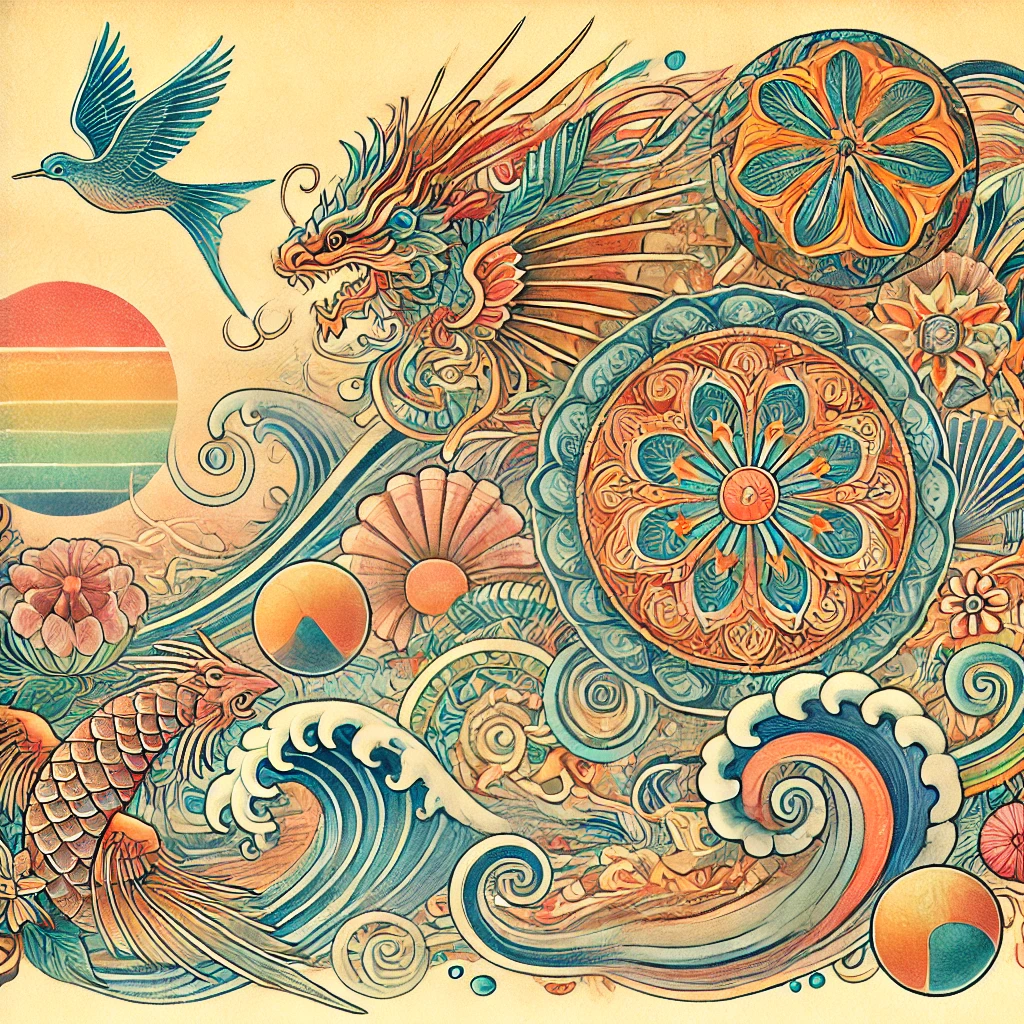
Okinawa’s beautiful seas and skies, along with its rich natural environment, nurture a unique culture that stands out with a special radiance in Japan. Among these cultural treasures, “Bingata,” with its vivid colors and intricate patterns, is recognized as a traditional craft that symbolizes the history and culture of Okinawa.
Bingata dates back to the Ryukyu Kingdom era, cherished by royals and nobles alike. Its beauty and elegance were a testament to the authority of the kingdom. Additionally, Bingata has been beloved by the common people as attire suitable for celebrations. Each piece of Bingata encapsulates elements of Okinawa’s nature, beliefs, and history. The motifs of waves, shells, and flowers reflect Okinawa’s geographic features and a deep respect for nature. The production process itself embodies Okinawan tradition and culture, with each hand-dyed piece crystallizing the artisans’ thoughts and skills.
In modern times, the continuation and innovation of traditional techniques and the development of new uses have kept Bingata popular. There are many ways to acquire Bingata, including specialty stores within Okinawa, online shops, and experiential workshops.
This blog will delve into the profound world of Bingata, providing detailed explanations of its definitions, characteristics, production process, historical background, and cultural significance. Additionally, it will introduce methods for purchasing Bingata and information on experiential workshops.
By exploring Bingata, you can immerse yourself in Okinawa’s rich traditions. The world woven by its beautiful colors and patterns is sure to move your heart. Let’s convey this charm to those around us and connect this invaluable tradition to the future.
- What is Bingata?
- The History of Bingata
- The Spirituality of Okinawa Embedded in Bingata
- Legends and Anecdotes Surrounding Bingata
- Modern Bingata Trends
- How to Purchase Bingata
- Conclusion
- Q&A
- Summary
What is Bingata?
Definition and Characteristics of Bingata
Etymology of Bingata
Bingata is a traditional dyeing technique from Okinawa Prefecture, also known as “紅型” (Bingata). As indicated by the character “紅” (beni), which means crimson, Bingata is characterized by its vivid red hues. It is a type of stencil dyeing using paper patterns, known for its unique designs and colors. This venerable technique dates back to the Ryukyu Kingdom era and is highly valued as a representative traditional craft of Okinawa. The etymology of Bingata suggests its distinctive bright red color, as indicated by the term “紅型.”
Materials and Colors of Bingata
Bingata primarily uses natural fibers such as cotton, hemp, and silk. These materials are dyed with natural dyes, resulting in unique textures and colors. The dyes are derived from Okinawan plants, shells, and mud. The vibrant red, a hallmark of Bingata, is dyed using a plant called Suo (蘇芳). In the Ryukyu Kingdom era, this red color was used in the garments of high-ranking individuals, making it a special color. Besides red, indigo, yellow, and green dyes are also used to create richly colored Bingata.
Patterns and Meanings of Bingata
Bingata patterns often depict Okinawan nature, culture, and beliefs. Common motifs include waves, shells, flowers, and birds, each imbued with meaning. For example, wave patterns represent Okinawa’s geographical features and convey gratitude for the sea’s bounty and the desire to preserve unchanging traditions amid the flow of time. Shell motifs symbolize feminine beauty and fertility, with the fan-shaped “Ougi-gai” pattern often used for celebratory occasions, signifying prosperity. Floral patterns express natural beauty and symbolize life and prosperity. In the Ryukyu Kingdom era, floral designs were even adopted for the royal family’s crest, highlighting their special significance. Bird motifs, such as cranes and peacocks, symbolize longevity, peace, freedom, and happiness, valued as auspicious symbols.
These patterns reflect Okinawans’ worldview, aesthetics, and spirituality, making Bingata not only a craft but also a window into Okinawan culture and history.
The Production Process of Bingata
Creating the Design
The production of Bingata begins with creating a design. This crucial step, determining the patterns to be dyed onto the fabric, is meticulously done by skilled artisans. Designs are drawn on thin paper, planning the arrangement, balance, and colors of the patterns. While traditional motifs form the basis, modern designs and customer preferences may also influence the final design. The design significantly impacts the subsequent step of creating stencils, requiring a balance of beauty and practicality.
Making the Stencils
Once the design is complete, the next step is making stencils. These stencils, made from triple-layered Japanese paper, serve as templates for dyeing the fabric. The process involves carving out the patterns with precision, following the lines of the design. This task demands high skill and concentration, often taking days to weeks for a single stencil, even for experienced artisans. Stencils are carefully crafted for repeated use and are valuable historical artifacts, narrating the evolution of traditional techniques.
Dyeing and Finishing
With stencils ready, the dyeing process begins by applying the stencils to the fabric and brushing on the dyes. This process, known as stencil dyeing, involves layering colors to reveal beautiful patterns. Natural dyes, often extracted from Okinawan plants and minerals, are typically used, with Suo providing the characteristic bright red. After dyeing, the fabric is naturally dried and undergoes a fixing process to ensure the colors are set. The final step involves hand-rubbing the fabric to give it a unique texture, enhancing its durability and adding a touch of artisans’ spirit passed down through generations.
Each Bingata piece, completed through such meticulous processes, is a work of art, renowned for its beauty and quality both domestically and internationally, standing as a proud representation of Okinawan traditional crafts.
The History of Bingata
Origins and Development of Bingata
Background of Bingata’s Birth
The origins of Bingata trace back to the 15th century during the Ryukyu Kingdom era. At that time, Okinawa engaged in active trade with China, Southeast Asia, and Japan, introducing various foreign cultures and technologies. Among them was the stencil dyeing technique from China, which became the prototype for Bingata. This technique, using paper stencils to apply dyes, adapted to Okinawan climate and culture, evolved into Bingata. Initially, Bingata was primarily used for royal and noble attire. The vibrant, crimson-based patterns symbolized high status and were treasured as a status symbol. Bingata also played a role in special occasions and rituals, highlighting its beauty and prestige.
Early Bingata Artisans
In its early stages, Bingata production was undertaken by specialized artisans serving the royal court. These artisans, born into families inheriting the craft, trained from a young age to master the skills. They were well-protected by the royal court, which regarded their techniques as valuable assets. The artisans constantly honed their skills to create more beautiful and refined Bingata, earning special recognition and privileges from the court. By the late 15th century, Bingata had established its distinctive style, with artisans’ skills evolving significantly, solidifying Bingata as a prominent art form adorning the Ryukyu Kingdom.
Bingata During the Ryukyu Kingdom Era
Royal Protection and Encouragement of Bingata
Bingata flourished most during the Ryukyu Kingdom era (15th-19th centuries), receiving strong protection and encouragement from the royal court. The court appointed “Bingata Magistrates” to oversee production and ensure quality. These magistrates, directly under the royal court, supervised the entire production process, striving to maintain and enhance quality. The court also supported the procurement of materials and tools, enabling artisans to work in optimal conditions. Such comprehensive protection and encouragement allowed Bingata to develop as a crucial element of royal culture, gaining high acclaim for its beauty and quality.
Ceremonial and Festive Use of Bingata
During the Ryukyu Kingdom era, Bingata was indispensable for ceremonies and festivals. A notable example is the “Crown Ship Ceremony,” where the king, having received investiture from the Chinese emperor, performed rituals at Shuri Castle, donning beautiful Bingata attire to demonstrate dignity and prestige. Bingata was also used in “Ryukyu Dance” costumes, an ancient performing art displayed at royal banquets. The graceful dances, adorned in Bingata, captivated spectators with their elegance and splendor. Additionally, “Yaeyama Jofu,” a high-quality textile from Yaeyama Islands, featured Bingata and was cherished as a tribute to the royal court, used by royals and nobles due to its beauty and rarity.
Thus, during the Ryukyu Kingdom era, Bingata was not merely part of attire but an integral element supporting national rituals and culture, symbolizing royal dignity and prestige, a legacy that continues today.
Changes in Bingata Post-Ryukyu Kingdom
Impact of Industrialization in the Meiji Era
In 1879, the Ryukyu Kingdom was annexed by Japan, creating Okinawa Prefecture, leading to significant changes in Bingata. The Meiji government aimed to modernize and promote traditional crafts, including Bingata. Efforts to industrialize Bingata involved forming artisans’ unions to standardize and streamline techniques, encouraging new dyes and tools for mass production. However, this shift impacted traditional production methods and quality, with some artisans struggling to adapt, risking the preservation of traditional techniques. The spread of chemical dyes and affordable machine-made products from the Taisho to Showa periods gradually decreased Bingata demand. The chaos of World War II further disrupted raw material supplies, leading to many artisans losing their
livelihoods, and post-war Westernization trends pushed Bingata into decline.
Post-War Bingata Revival Movements
After WWII, Okinawa faced severe economic and cultural devastation, and Bingata was no exception. However, in the 1950s, a movement to rediscover and revive Okinawan culture and traditions emerged, aiming to restore Bingata. In 1952, the “Okinawa Folk Art Association” was established to support Bingata artisans, preserving and inheriting their techniques. In 1958, the “Bingata Technique Preservation Society” was founded to safeguard traditional skills. These organizations focused on improving artisans’ skills and nurturing successors, while promoting Bingata’s charm through exhibitions and media. Gradually, from the 1960s, interest in Bingata increased, with tourists buying it as souvenirs, reviving demand. With Okinawa’s reversion to Japan in 1972, the emphasis on preserving and promoting traditional culture grew stronger.
Today, Bingata is highly valued domestically and internationally as a representative traditional craft of Okinawa. However, challenges like a shortage of successors and securing raw materials remain. To protect Bingata’s future, everyone must understand and support its value and charm.
The Spirituality of Okinawa Embedded in Bingata
Okinawa’s Worldview Emphasizing Harmony with Nature
Nature Worship Ideology and Bingata
Okinawans have long revered nature as sacred, believing that gods inhabit mountains, seas, forests, and rivers, appreciating nature’s blessings and cherishing a way of life in harmony with it. This nature worship ideology is vividly reflected in Bingata. Many Bingata patterns depict waves, shells, and flowers, not just expressing nature’s beauty but embodying Okinawans’ spirituality of living in harmony with nature. For example, wave patterns symbolize gratitude for the sea’s bounty and the willingness to embrace nature’s power. Shell patterns represent reverence for the natural forces that create marine abundance. Bingata portrays a world where nature and humans coexist harmoniously, embodying Okinawan views on nature.
Plant and Animal Motifs in Bingata
Bingata features numerous plant and animal motifs, each carrying Okinawans’ views on nature and beliefs. For instance, the “Kanhi-zakura,” a cherry blossom unique to Okinawa, symbolizes the resilience of Okinawans living in harsh natural conditions. The “Fukugi,” believed to ward off evil, also appears in Bingata patterns. Animal motifs like cranes and turtles symbolize longevity and good fortune, respectively. The “Dragon” motif, representing the water god, was used in rain-making rituals. These motifs are not mere decorations but important symbols of Okinawan nature views and beliefs, allowing us to understand the Okinawan ethos through Bingata.
Prayers and Wishes Expressed in Bingata
Meanings of Protection and Exorcism
Bingata contains many motifs imbued with meanings of protection and exorcism. Historically, Okinawans performed various prayers and rituals to ward off evil spirits and calamities. Bingata embodies these prayers and wishes. A notable motif is the “Kirin,” a mythical creature from China believed to ward off evil and bring good fortune. Another is the “Chidori” (plover), considered a divine messenger guiding people, believed to protect against evil spirits. Other motifs like snakes and lizards also hold exorcism meanings, historically revered as sacred, believed to possess protective powers.
Prayers for Family Prosperity and Safety
Bingata also includes prayers for family prosperity and safety. For Okinawans, family happiness and well-being were paramount. Bingata served as a means to manifest these wishes. The “Shochikubai” (pine, bamboo, and plum) motif, symbolizing longevity and prosperity, combines these plants to represent health and growth. The “Phoenix” motif, associated with peace and happiness, reflects prayers for family prosperity. These motifs convey Okinawans’ earnest wishes for their families, allowing us to connect with their heartfelt desires through Bingata.
The Spirit of Artisans Preserving Tradition
Artisans’ Thoughts Embodied in Bingata
The beauty and value of Bingata are sustained by the passion and skills of the artisans who create it. They do not merely produce products; they undertake the mission of preserving and passing down Okinawa’s traditions and culture. Bingata production involves intricate handwork from stencil creation to dyeing and finishing, emphasizing the warmth and uniqueness born from manual labor. Artisans take pride in preserving traditional techniques and designs, while also incorporating modern sensibilities to create Bingata suitable for the contemporary era. This passion and dedication of artisans imbue each piece of Bingata with deep meaning, allowing us to connect with the spirit of those who have preserved and passed down this art form.
Master-Apprentice Relationships and Skill Inheritance
The techniques of Bingata have been passed down through master-apprentice relationships, where learning is not just the transfer of knowledge but involves years of training, imparting both skills and spirit. In Bingata workshops, experienced artisans guide young apprentices, ensuring the inheritance of skills. Apprentices learn the essence of Bingata production by closely observing their masters, encompassing technical aspects like stencil carving and dye preparation and attitudes and mindsets toward work. This relationship also fosters personal growth, with masters and apprentices building trust through rigorous training. Such bonds are crucial for the genuine transmission of Bingata techniques. Nowadays, traditional master-apprentice relationships are complemented by school education and public training programs, yet human connections remain vital for skill inheritance. The future of Bingata relies on young artisans embracing the spirit of their predecessors and passing it on to the next generation.
Legends and Anecdotes Surrounding Bingata
The Legend of “Bingata Grandma”
The Story and Its Spread
A famous legend about the origins of Bingata in Okinawa is the story of “Bingata Grandma.” This tale has been cherished by Okinawans along with the history and techniques of Bingata. According to the legend, a long time ago, there was a poor old woman who lived by begging. One day, she found a piece of beautiful Bingata cloth and was inspired to create similar fabric herself. Although she had no money to buy cloth, she ingeniously created dyes from plants and nuts around her, gradually mastering Bingata techniques through trial and error. Her Bingata gained a reputation, leading to numerous orders, allowing her to live a prosperous life. This legend, passed down across Okinawa, conveys the charm of Bingata and has given hope to common people, demonstrating that anyone can engage in this craft.
Impact of the “Bingata Grandma” Legend
The “Bingata Grandma” legend has fostered a sense of familiarity and respect for Bingata among Okinawans, showing that Bingata is a craft developed by common people. Despite her humble status, the old woman in the legend succeeded through ingenuity and effort, conveying that Bingata is accessible to all. Her success story embodies the aspiration that hard work pays off, inspiring Okinawans and encouraging support for Bingata artisans. The legend also emphasizes that Bingata’s techniques stem from everyday life, reflecting Okinawans’ wisdom in using nature’s bounty. This story illustrates Bingata’s deep connection to Okinawan life and culture, helping us rediscover its value and charm.
The Story of Bingata Presented to the Royal Family
Process and Significance of Presentation
Bingata has long-standing ties with the royal family, most famously through its presentation to them. This event significantly elevated Bingata’s value and influenced its development. According to tradition, in the 17th century, an exceptional Bingata artisan was summoned by the royal family to create Bingata for them. The artisan produced unprecedentedly beautiful Bingata, meeting royal demands. The royal endorsement greatly enhanced Bingata’s value, making it a premium item of the highest quality. Supported by the royal family, Bingata techniques advanced significantly, aided by ample materials and stable production environments provided by the court. This event marked Bingata’s growth from a common craft to a prestigious item adored by royalty.
Bingata Treasures Preserved by the Royal Family
Some Bingata presented to the royal family have been carefully preserved to this day, holding great value as historical artifacts. For instance, Shuri Castle houses numerous Bingata garments and furnishings passed down by the royal family, including the famous “Hi-e” garments worn by royal women. These luxurious, crimson garments with intricate patterns symbolized royal authority. Additionally, some Bingata items were used in diplomacy. In the 18th century, when the Ryukyu Kingdom sent envoys to the Chinese emperor, Bingata garments and furnishings were presented as gifts, showcasing the kingdom’s cultural and technical sophistication. These preserved Bingata items narrate the significant historical and cultural role Bingata played, helping us appreciate its importance in Okinawan history.
Modern-Day Miraculous Bingata Stories
Bingata Surviving Wartime Destruction
World War II caused immense damage to Okinawa, destroying many cultural heritage items. However, miraculous stories of Bingata surviving wartime destruction offer hope and inspiration. In 1944, as the American invasion began, the Japanese military used Shuri Castle as headquarters, gathering many cultural artifacts. Amid the intense fighting, Shuri Castle burned, but post-war, Bingata garments were discovered among the ruins, remarkably intact. This discovery offered hope to war-torn Okinawans and played a crucial role in reviving Bingata techniques, using the
preserved garments as references to restore lost skills. This survival is truly a miracle in Bingata’s history.
Romantic Bingata Stories
Bingata’s miraculous stories are not limited to wartime survival; it has also played a role in love stories. An old tale tells of a young couple deeply in love but unable to be together due to family opposition. The man gifted the woman a Bingata garment, and moved by his sincere feelings, they eloped and were happily united. In modern times, stories of Bingata serving as a romantic catalyst continue. For instance, a man gifted a Bingata garment to the woman he longed for, successfully conveying his feelings and bringing them together. Bingata’s romantic charm has captivated many, demonstrating how Bingata’s heartfelt expressions can work wonders.
Modern Bingata Trends
Preserving and Innovating Traditional Techniques
Training and Activities of Young Artisans
Preserving and passing on Bingata’s tradition to future generations requires nurturing young artisans. Recently, more young people inside and outside Okinawa are passionately engaged in Bingata production. Traditionally, Bingata skills were often passed down within families, but now many young people systematically learn at craft schools. They master traditional techniques while incorporating new ideas, expanding Bingata’s possibilities. Some young artisans boldly experiment with innovative designs and colors, infusing Bingata with contemporary appeal. These young artisans’ activities bring hope for Bingata’s future, ensuring its survival and evolution through a blend of tradition and innovation.
Introducing New Techniques and Materials
Bingata’s production techniques have evolved over a long history, but modern times call for integrating new techniques and materials. For example, using chemical dyes alongside traditional natural dyes allows for more vivid and diverse colors. Utilizing synthetic fibers like polyester enhances durability and ease of care. Additionally, advanced technologies like computer-aided design and laser-cut stencils enable more efficient and precise Bingata production. However, introducing these innovations must be done carefully to preserve Bingata’s traditional qualities. Balancing tradition and innovation is crucial for Bingata’s development.
Applications and Uses of Bingata
Bingata as Fashion Items
Today, Bingata is not limited to traditional attire but is incorporated into various fashion items. Numerous garments, bags, and shoes featuring Bingata have been developed, gaining popularity both domestically and internationally. Particularly, Bingata is increasingly used in resort fashion, such as aloha shirts and dresses, evoking an Okinawan atmosphere. The vibrant colors and unique patterns create a cheerful, tropical vibe, captivating many. Modernized designs that reinterpret traditional patterns also appeal widely, creating fashion items that blend tradition with contemporary style. Incorporating Bingata into fashion spreads the charm of traditional crafts to a broader audience, allowing more people to connect with Okinawan culture and history.
Bingata in Interior Design
Bingata’s applications extend to interior design, where it decorates curtains, wallpapers, cushion covers, and more, creating an Okinawan ambiance. Bingata is also used in lighting fixtures and tableware. For instance, Bingata lampshades create a warm, inviting atmosphere, while Bingata-adorned dishes and cups add color and elegance to dining tables. Small items like smartphone cases, keychains, and book covers featuring Bingata allow people to enjoy Okinawan tradition in daily life. These interior products infuse life with color and richness, blending traditional patterns and colors seamlessly into modern living, generating new value.
Future Prospects for Bingata
Promoting Bingata Domestically and Internationally
In recent years, Bingata has garnered attention not only in Japan but also internationally. Foreign tourists fascinated by Okinawan culture often purchase Bingata as souvenirs. Bingata is also increasingly showcased at international craft events and fashion shows, gaining recognition for its uniqueness and artistic value. These domestic and international promotions present a significant opportunity to spread Bingata’s charm. By sharing Bingata’s beauty globally, people will gain a deeper understanding and appreciation of Okinawan traditional culture. Moving forward, proactive efforts to promote Bingata through exhibitions, events, and media are essential.
Sustainable Development of the Bingata Industry
Ensuring Bingata’s future sustainability as an industry poses significant challenges, requiring adaptation to modern needs while preserving tradition. Key to this is nurturing talent in various roles, from artisans to designers, planners, and marketers, through education and vocational training. Securing raw materials is another challenge, as many natural dye sources are now scarce, necessitating efforts to cultivate and protect these resources. Expanding sales channels is also crucial, leveraging online platforms and participating in international exhibitions to tap into new markets. Balancing tradition with innovation is vital, respecting historical techniques and patterns while developing contemporary designs and uses. Collaborative efforts among artisans, manufacturers, government, and research institutions are essential to address these challenges and secure Bingata’s future.
How to Purchase Bingata
Bingata Specialty Stores in Okinawa
Famous Shops in Naha
Okinawa boasts numerous Bingata specialty stores, particularly in Naha, the prefectural capital. For example, “Bingataya” in Tsuboya district is a long-established store with over 100 years of history, offering high-quality Bingata products ranging from kimonos and obi to bags and accessories, making it a popular spot for tourists. “Bingata Studio” near Makishi Public Market is another notable shop where the owner, a Bingata artisan, sells self-dyed garments and accessories and offers workshops for visitors to observe the production process up close. Other distinctive stores like “Ryukyu Bingata” and “Miyarabi Crafts” also line Naha’s streets, each offering carefully crafted Bingata by skilled artisans.
Hidden Gems in Northern Okinawa and the Islands
In addition to Naha, northern Okinawa and the islands house lesser-known yet remarkable Bingata stores cherished by locals. “Nago Ryusen” in Nago City uses locally sourced natural dyes, with the owner cultivating dye plants and meticulously crafting Bingata, showcasing nature’s bounty. On Ishigaki Island, “Yunnu Boshi,” a long-standing store with over half a century of history, offers vividly colored Bingata, drawing high praise from tourists. Each store across Okinawa presents unique Bingata, reflecting the artisans’ passion and allowing visitors to experience the depth of Okinawan culture.
Purchasing Bingata Online
Choosing Reliable Online Shops
The proliferation of the internet has increased the availability of Bingata through online shops, offering the convenience of purchasing from home. However, it is crucial to choose trustworthy shops to avoid counterfeit products. Reliable shops clearly disclose their operating entity, including company information, representative’s name, and contact details. Detailed product descriptions, including Bingata type, materials, size, and maker, along with clear, high-quality photos, are essential. Customer reviews and ratings also serve as valuable indicators of a shop’s credibility, with high-rated shops generally offering quality products and services.
Benefits and Considerations of Online Shopping
Online shopping offers the convenience of purchasing Bingata anytime, anywhere, especially beneficial for busy individuals or those unable to visit Okinawa. Online shops often have a wider range of products than physical stores, allowing for thorough comparison and selection. However, the inability to inspect items in person can lead to discrepancies in color or texture. Careful attention to size selection is also crucial, as Bingata items often include garments and accessories where size matters. Considering the pros and cons, careful selection and awareness can ensure a satisfactory online shopping experience.
Participating in Bingata Workshops
Workshops in Okinawa
Okinawa offers various workshops where participants can experience the charm of Bingata firsthand. These workshops, guided by Bingata artisans, allow participants to try their hand at dyeing. For instance, the “Ryukyu Bingata Cooperative” in Naha regularly hosts workshops where participants can create items like coasters or drawstring bags using their own dyed fabric. “Nago Ryusen” in northern Okinawa offers workshops using locally sourced natural dyes, providing an authentic experience. Even on the islands, workshops like those at “Yunnu Boshi” on Ishigaki Island allow beginners to enjoy Bingata in a relaxed setting.
Knowledge and Experience Gained from Workshops
Participating in Bingata workshops deepens understanding and appreciation of Bingata. Experiencing the dyeing process firsthand reveals the depth and difficulty of Bingata production. Workshops also offer insights into Bingata’s history and cultural background, with artisans explaining the meaning behind the patterns and colors. Creating one’s own Bingata piece provides a unique, personal connection to this traditional craft, enhancing its value beyond a mere product. These workshops offer a valuable opportunity to connect with Okinawan culture and history through Bingata, fostering a deeper understanding and appreciation.
Conclusion
The Heart of Okinawa Conveyed through Bingata
Okinawa’s History and Culture Embodied in Bingata
Bingata is not merely a dyed fabric; each piece carries the rich history and culture of Okinawa. Since the Ryukyu Kingdom era, Bingata has symbolized royal authority and been cherished by commoners for festive occasions. Its patterns reflect Okinawa’s nature, beliefs, and history, with motifs of waves, shells, and flowers embodying geographic features and respect for nature. The meticulous hand-dyeing process itself represents Okinawan tradition and culture, with artisans’ thoughts and skills crystallized in each piece.
The Modern Significance of Bingata
B
ingata, with its long history, offers valuable lessons for modern times. It emphasizes the importance of craftsmanship, reminding us of the warmth and sincerity of handmade products in an age of mechanization. Bingata underscores the value of tradition, showcasing the significance of preserving and evolving techniques and culture passed down from ancestors. It also conveys Okinawa’s worldview, highlighting the importance of harmony with nature and the reverence for prayers and wishes. Bingata, through its beautiful patterns and colors, offers modern-day insights, encouraging us to reflect on our current practices and values.
The Importance of Connecting with Okinawan Culture through Bingata
Experiencing Okinawa’s Traditional Beauty through Bingata
Bingata provides an excellent opportunity to appreciate Okinawa’s traditional beauty. Its stunning patterns and colors captivate viewers, evoking deep emotional responses. By carefully observing Bingata’s motifs, one can gain insights into Okinawa’s rich culture. Each Bingata piece, meticulously crafted by artisans, represents the artistry and warmth of human hands. Owning a Bingata item allows direct engagement with Okinawan tradition, offering a deeper understanding of its cultural significance.
Our Role in Preserving Bingata for the Future
Preserving Bingata for the future is a collective responsibility. Firstly, spreading awareness and appreciation of Bingata’s charm and value is essential. Sharing Bingata’s beauty and cultural background in one’s words can broaden understanding and interest. Supporting Bingata by purchasing and using its products helps sustain artisans’ work and traditional crafts economically. Additionally, educating children about Bingata’s appeal ensures its value is passed down to future generations. Schools and families can play a significant role in this. Collaboration among various stakeholders, including government, businesses, and NGOs, is crucial for Bingata’s protection and promotion. Through exhibitions, events, and comprehensive efforts, Bingata’s legacy can be preserved and cherished for future generations.
Thus, preserving and connecting with Bingata is a noble mission entrusted to us, ensuring this valuable tradition endures.
Thank you for reading about “The History and How to Purchase Okinawa’s Traditional Craft Bingata.” Bingata is not just a dyed fabric; it embodies Okinawa’s history, culture, and the thoughts of its people in each piece. Experience the rich traditions of Okinawa through Bingata’s beautiful patterns and colors. Spread the charm of Bingata to others, and together, let’s preserve and pass on this invaluable tradition to the future.
Q&A
What is the etymology of Bingata?
The etymology of Bingata comes from the character “紅” (beni), indicating its characteristic vivid red dyeing.
How was Bingata valued during the Ryukyu Kingdom era?
During the Ryukyu Kingdom era, Bingata was highly valued as a symbol of royal authority and was used in the highest quality garments for royalty.
How did the legend of “Bingata Grandma” influence Bingata?
The “Bingata Grandma” legend fostered familiarity and respect for Bingata, showing that it was a craft developed by common people and instilling a sense of accessibility and aspiration.
What should be considered when purchasing Bingata online?
When purchasing Bingata online, ensure the shop is reliable by checking for clear company information and detailed product descriptions. Be cautious about color and texture discrepancies and pay attention to size selection.
What can we do to connect Bingata to the future?
To connect Bingata to the future, we can increase awareness and appreciation, support artisans by purchasing and using Bingata products, educate children about its value, and collaborate with various stakeholders to protect and promote this tradition.
Summary
“The History and How to Purchase Okinawa’s Traditional Craft Bingata” provides detailed explanations about Bingata’s definitions, characteristics, production process, historical background, and cultural significance. Bingata, from the Ryukyu Kingdom era to modern times, symbolizes Okinawa’s history and culture. Each piece encapsulates elements of nature, beliefs, and history, crystallizing artisans’ thoughts and skills. Today, through preserving traditional techniques, innovation, and developing new uses, Bingata continues to be loved by many. Various methods to acquire Bingata, including specialty stores in Okinawa, online shops, and experiential workshops, are available. Connecting with Okinawa’s traditional beauty through Bingata and preserving its value for the future is a shared responsibility, enriching our understanding and appreciation of this unique craft.

コメント