
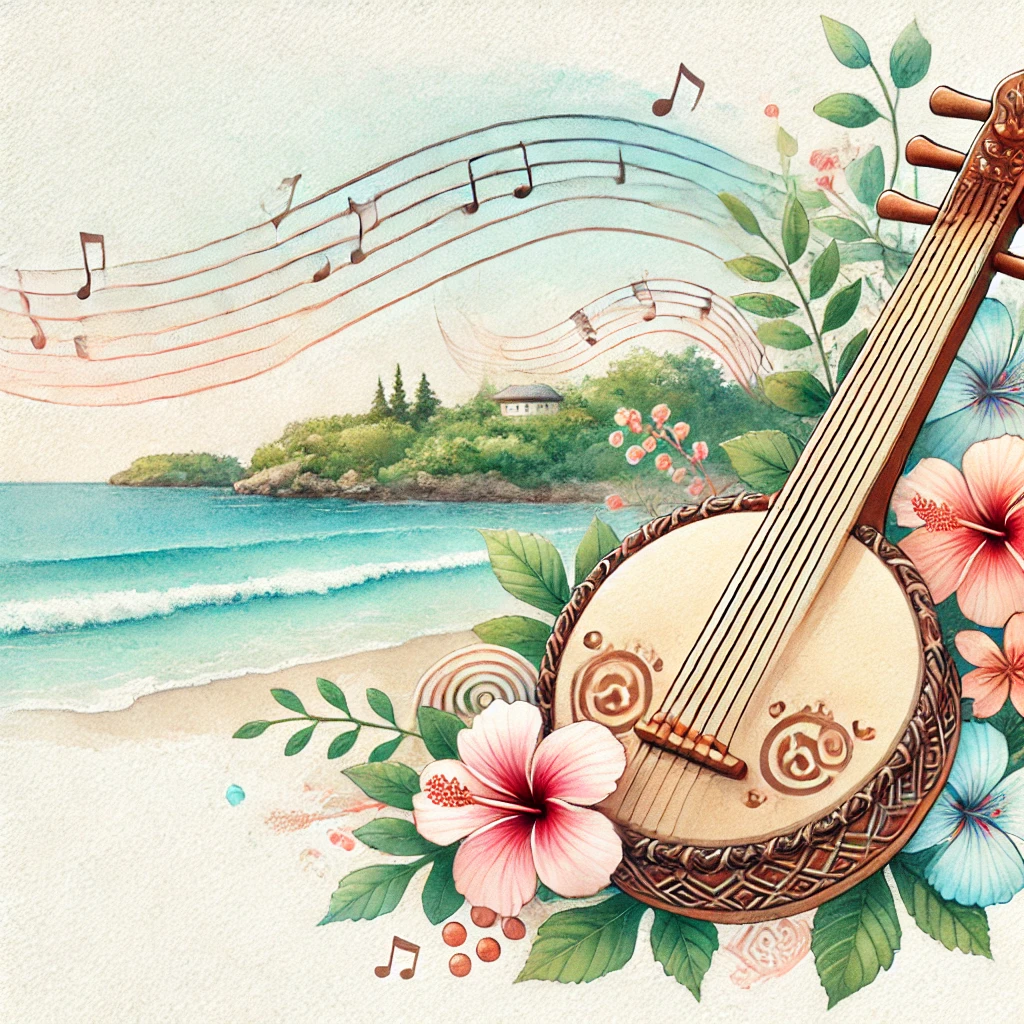
Okinawan music is deeply nurtured by the island’s beautiful sea and sky, as well as its rich natural environment. This music is known as Okinawan folk songs. The unique scales, ornamental notes, and the delicate sound of the sanshin weave melodies that instantly transport the listener to the world of Okinawa. The lyrics often express the poignant feelings of a young maiden in love or a reverence for nature. Sometimes, the tragic life of a singer like Asadoya Yunta resonates through these songs, touching the hearts of listeners.
Okinawan folk songs have been passed down from the Ryukyu Kingdom era, forming the heart and soul of Okinawan culture. These songs are closely tied to festivals and life ceremonies, accompanying the joys and sorrows of the people. They have helped the community overcome the sadness of war and have been a force for revival. This enduring love for Okinawan folk songs, cherished by people of all ages, continues to this day.
For us living in the present, Okinawan folk songs are not just nostalgic music. They are vibrant and evolving, blending traditional elements with new genres like pop and classical music. As their recognition as a form of world roots music grows, Okinawan folk songs are becoming more prominent as symbols of the unique and timeless Okinawan culture.
In this article, we will explore the musical characteristics, the feelings embedded in the lyrics, and the historical background of Okinawan folk songs. We will delve into the stories of representative songs such as “Asadoya Yunta” and “Tinsagu nu Hana.” We will also clearly explain how the Okinawan people’s view of nature and their spirituality are reflected in these folk songs. Join us as we dive into the profound world of Okinawan folk songs, where you are sure to encounter music that will leave a lasting impression on your heart.
- Overview of Okinawan Folk Songs
- The Allure of Okinawan Folk Songs
- Representative Okinawan Folk Songs
- Reasons for the Endurance of Okinawan Folk Songs
- The Transmission and Evolution of Okinawan Folk Songs in the Modern Era
- Summary
- Q&A
- Summary
Overview of Okinawan Folk Songs
What Are Okinawan Folk Songs?
Definition of Folk Songs
Okinawan folk songs are traditional songs from Okinawa Prefecture, reflecting the lives and emotions of the Okinawan people over a long history. While folk songs generally refer to music passed down through generations in specific regions, Okinawan folk songs possess distinct characteristics that set them apart from other regional folk music.
Okinawan folk songs have evolved from court music during the Ryukyu Kingdom era and have flourished within the lives of common people. By weaving the island’s nature, climate, and the joys and sorrows of its people into their lyrics and melodies, Okinawan folk songs have developed as a music that embodies the culture and spirit of Okinawa.
Characteristics of Okinawan Folk Songs
The most notable feature of Okinawan folk songs is their unique scales and melodies. Based on a pentatonic scale known as the “Ryukyu scale,” these songs often utilize chromatic ornamental notes, creating a distinctive musicality that sets them apart from other regional music.
The lyrics frequently touch on universal themes such as love and separation, often infused with humor and wit unique to Okinawan culture. The extensive use of dialect allows the sound and feel of Okinawan language to be directly reflected in the music.
The sanshin, a three-stringed instrument with silk strings, is often used for accompaniment. Its delicate tone harmonizes beautifully with the singing, producing the unique musical charm of Okinawan folk songs.
History of Okinawan Folk Songs
Origins and Development
The origins of Okinawan folk songs are said to date back as far as the 8th century. During this time, Okinawa, through trade with China and Southeast Asia, absorbed foreign cultures and music, developing its unique culture.
During the Ryukyu Kingdom period, which began in the late 13th century, court music flourished and influenced the music of common people. It is believed that the singing style accompanied by the sanshin was established during this period.
Folk Songs in the Kingdom Era
In the Ryukyu Kingdom era, while court music, known as “classical music,” was developing, folk songs were widely sung among the common people. Folk songs were even performed at royal and noble banquets, indicating an exchange between court music and popular music.
During the 18th century, the “Kumiodori,” a form of song and dance performance, became popular, giving rise to many folk songs that are still performed today. Representative songs such as “Tinsagu nu Hana” and “Asadoya Yunta” were created during this period.
Changes in Modern Times
After the Ryukyu Kingdom was annexed by Japan in 1879, Okinawan folk songs continued to evolve, influenced by mainland Japanese music. During the post-war American occupation, Western music also made an impact, leading to the emergence of Okinawan pop music.
Despite these changes, Okinawan folk songs have remained a crucial part of the local culture. Today, traditional folk songs are preserved alongside modern interpretations, ensuring that Okinawan folk music continues to be a living, evolving art form.
Characteristics of Okinawan Folk Songs
Scales and Melodies
Okinawan folk songs are based on a unique pentatonic scale known as the “Ryukyu scale,” which resembles the intervals of the do-re-mi scale but differs from the scales used on the Japanese mainland.
The melodies are characterized by the extensive use of ornamental notes. Inserting subtle, semi-tone notes between main tones creates a smooth and complex impression. The use of these ornamental notes plays a crucial role in expressing the individuality of the singer.
Content of Lyrics
The lyrics of Okinawan folk songs often reflect the nature, climate, and emotions of the people. For instance, the praise of the beautiful sea, sky, and flowers expresses a deep reverence for Okinawa’s rich natural environment. Songs about love and separation reveal the poignant emotions of men and women in love.
Humorous and witty expressions are also a characteristic of Okinawan folk song lyrics, reflecting the resilient and humorous spirit of the Okinawan people who have endured harsh natural environments and historical hardships.
Accompanying Instruments
The primary accompanying instrument for Okinawan folk songs is the sanshin, a three-stringed instrument covered with snakeskin. The delicate and rich tone of the sanshin beautifully harmonizes with the singing, creating the unique musical charm of Okinawan folk songs.
The sanshin is played using a distinctive rhythm pattern known as “kachaashii.” By pressing the silk strings with the left hand and plucking them with the right hand’s nails, intricate rhythms are created, complementing the melodies.
Recently, other instruments like drums, flutes, and shamisen have also been incorporated, expanding the expressive range of Okinawan folk songs.
The Allure of Okinawan Folk Songs
Unique Scales and Melodies
Ryukyu Scale
A key element of the musical allure of Okinawan folk songs is the “Ryukyu scale.” This pentatonic scale, resembling do-re-mi-fa-so, produces a distinctive sound that differentiates it from mainland Japanese scales.
Unlike major and minor scales, the Ryukyu scale creates a floating sense of melody. This scale, inherited from the Ryukyu Kingdom era, is deeply connected to Okinawa’s environment and culture and is essential in expressing the emotions of its people.
Use of Ornamental Notes
Ornamental notes add a characteristic flair to melodies based on the Ryukyu scale. These subtle additions between main notes create smooth, intricate melodies that are crucial in expressing the singer’s individuality.
Skilled singers manipulate these ornamental notes to create different expressions in each performance of the same song. This depth and flexibility add to the allure of Okinawan folk songs.
The Spirit of Okinawan People Reflected in the Lyrics
Reverence for Nature
Okinawan folk songs frequently include praise for the island’s beautiful nature. For example, “Tinsagu nu Hana” compares the vibrant hibiscus flower to a young woman’s beauty, while “Tanchame Bushi” depicts the clear waters flowing through lush valleys.
This reverence for nature reflects the spiritual connection of the Okinawan people to their environment. The theme of praising and being grateful for nature is a significant element in Okinawan folk songs.
Themes of Love and Separation
Many Okinawan folk songs address themes of love and separation. For example, “Asadoya Yunta” is known for its heartfelt depiction of a woman lamenting the departure of her lover. “Meikaru Bushi” portrays a woman who keeps her feelings for her distant lover hidden in her heart.
These lyrics vividly express the emotions of men and women living through love and separation, capturing the universal themes of human experience.
Humor and Wit
Okinawan folk songs are also known for their humorous and witty lyrics. Songs like “Chindami Sho” amusingly depict a wife struggling with her husband’s love for alcohol, while “Jinto te Sho” describes women chattering animatedly.
The humorous spirit in these songs reflects the resilience and playful nature of the Okinawan people, who have endured and overcome many hardships.
The Harmony of Sanshin and Vocal Melody
Structure and Playing Techniques of the Sanshin
The sanshin is indispensable in discussing the charm of Okinawan folk songs. This three-stringed instrument, covered with snakeskin, is played with a plectrum attached to the right index finger. Its delicate and resonant sound harmonizes beautifully with the singing.
The basic rhythm pattern, “kachaashii,” involves pressing the silk strings with the left hand and pl
ucking them with the right hand’s nails to produce intricate rhythms and melodies.
Skilled performers often play the sanshin in a way that complements the vocal part, creating an integrated expression of music. This combination is the lifeblood of Okinawan folk songs.
Harmony with Vocal Melody
In Okinawan folk songs, the harmony between the vocal melody and the sanshin’s tone is key to their musical allure. The vocal style is rustic yet powerful, sometimes showing a sensual and mysterious quality. The sanshin’s delicate tone supports and enhances this vocal expression, elevating it to a richer musical experience.
The seamless integration of the singer and the sanshin player, who often perform as a duo, creates the impression that a single performer is simultaneously playing and singing. This harmony, refined through years of practice, represents the essence of Okinawan folk songs.
The music produced by the combination of vocals and sanshin deeply moves the listener, offering an authentic experience of Okinawan culture and spirituality.
Representative Okinawan Folk Songs
“Asadoya Yunta”
Origin and Meaning of the Song
“Asadoya Yunta” is one of the most famous Okinawan folk songs. It tells a poignant story of a woman lamenting the departure of her lover. The title combines the name “Asadoya,” a place, with “Yunta,” a woman’s name, suggesting it is based on a real person.
Yunta waits for her lover who has gone off to war, only to learn of his death. Her sorrow and longing are vividly expressed in the lyrics, making it a beloved song deeply resonant with Okinawan people.
Analysis of the Lyrics
The lyrics of “Asadoya Yunta” are narrated from the perspective of Yunta, expressing her longing and sorrow. The phrase “Night and day, I do not sleep” illustrates her restless waiting for her lover. The song progresses through the seasons, reflecting her prolonged wait.
Ultimately, the phrase “West to the mountain, west to the mountain” suggests her realization of her lover’s death and her own spiritual journey towards the afterlife.
Every line of the lyrics captures Yunta’s poignant emotions, deeply touching the listener.
“Tinsagu nu Hana”
Origin and Meaning of the Song
“Tinsagu nu Hana” is a bright and lively Okinawan folk song that compares the beautiful hibiscus flower to a young woman’s beauty. The term “tinsagu” refers to hibiscus in the Okinawan dialect, a flower celebrated for its vibrant colors.
The song praises the beauty of the hibiscus and, by extension, the beauty of young women, making it a celebratory and joyful piece.
Analysis of the Lyrics
The lyrics of “Tinsagu nu Hana” vividly describe the beauty of the hibiscus flowers blooming by the roadside. The comparison of the flowers to a young woman’s beauty captures the lighthearted and joyful spirit of the song.
The lyrics also reflect the emotions of a maiden in love, intertwining her feelings with the natural beauty of Okinawa.
The song’s cheerful melody and lyrics celebrate both love and the natural splendor of Okinawa, creating a poetic and vibrant world unique to Okinawan folk songs.
“Bashofu no Uta”
Origin and Meaning of the Song
“Bashofu no Uta” is a folk song about women weaving bashofu, a traditional Okinawan fabric made from the fibers of the basho plant. This fabric, known for its durability and breathability, has been an essential part of Okinawan life for centuries.
The song depicts the laborious process of weaving bashofu, reflecting both the hard work and the subtle romantic feelings of the women involved in its production.
Analysis of the Lyrics
The lyrics of “Bashofu no Uta” describe a day in the life of a woman weaving bashofu. The hard labor is expressed through phrases like “from morning till night, the sound of the loom.” Despite the tough work, the lyrics reveal the woman’s romantic thoughts, indicating a blend of labor and love.
Through the depiction of weaving, the song honors the hardworking women of Okinawa, capturing both their diligence and their heartfelt emotions.
“Bashofu no Uta” serves as a tribute to the women who supported the traditional industry, offering a glimpse into their lives and feelings.
Reasons for the Endurance of Okinawan Folk Songs
Historical Background of Okinawa
Culture of the Ryukyu Kingdom Era
Understanding the deep-rooted nature of Okinawan folk songs requires looking at the cultural background of the Ryukyu Kingdom era. From the 14th to the 19th centuries, Okinawa prospered through trade with China and Southeast Asia, developing a unique culture.
During this time, court music flourished alongside folk songs, which were widely sung among the common people. The exchange between court and popular music nurtured Okinawa’s distinct musical culture.
Influence of Satsuma Domain’s Rule
In the 17th century, the Ryukyu Kingdom came under the control of the Satsuma Domain. This period brought significant changes to Okinawan culture and customs, including the promotion of sugar cane cultivation by the Satsuma rulers.
People used folk songs as a means of emotional support during the tough labor of sugar cane farming, sharing their struggles and encouraging each other through song. Folk songs became a vital emotional anchor during these challenging times.
Post-War American Occupation
After World War II, Okinawa was placed under American occupation for an extended period. During this time, while the base economy developed, there were concerns about the preservation of traditional culture.
Despite these challenges, the Okinawan people continued to cherish and sing folk songs, which came to symbolize their identity. Singing folk songs and playing the sanshin became an important way for Okinawans to express their cultural identity.
This persistence in preserving folk songs through tumultuous times has contributed to their current vibrancy and popularity.
Connection to Festivals and Ceremonies
Ancestral Worship and Folk Songs
Okinawan folk songs are deeply intertwined with festivals and ceremonies, particularly those involving ancestral worship. Ancestral worship has long been a significant aspect of Okinawan culture, with many rituals involving the adoya Yunta” serves as a mirror reflecting the deep-seated experiences of love and loss in Okinawa’s history.
“Tinsagu nu Hana” and the Queen of the Ryukyu Kingdom
The Life of the Queen
The lyrics of “Tinsagu nu Hana” are said to include references to a beautiful queen of the Ryukyu Kingdom. This queen, known for her beauty, was Empress Consort Ihin, the beloved wife of King Sho Kei during the early 18th century. Ihin was renowned for her exceptional beauty and was deeply cherished by the king.
Tragically, Ihin passed away at the young age of 18, and King Sho Kei, in his grief, is said to have composed a song comparing her to the “tinsagu” or hibiscus flower, symbolizing her beauty and fleeting life.
The Connection Between the Queen and the Folk Song
While it is not definitively established that the lyrics of “Tinsagu nu Hana” originate from the king’s lament, the comparison of “tinsagu” to a beautiful woman suggests a possible influence of Ihin’s story. The hibiscus, symbolizing beauty and transience, may indeed reflect the queen’s short but impactful life.
The legend of Empress Consort Ihin has contributed to the romantic imagery in Okinawan folk songs, emphasizing the aesthetic and emotional depth these songs possess.
“Bashofu no Uta” and the Development of the Bashofu Industry
History of Bashofu
“Bashofu no Uta” captures the tradition of weaving bashofu, a fabric made from the fibers of the basho plant. Bashofu has been integral to Okinawan life due to its durability, breathability, and suitability for the island’s climate.
The history of bashofu dates back to the 15th century, with records of it being presented to the Ryukyu court. Women primarily undertook the laborious process of weaving bashofu, which, despite its challenges, produced fabric with a unique warmth and quality.
Connection Between the Bashofu Industry and Folk Songs
During the 19th century, with the support of the Ryukyu Kingdom’s policies, the production of bashofu expanded. By the early 20th century, bashofu became a prominent Okinawan export, supported by the hard work of many women.
“Bashofu no Uta” reflects the daily life and labor of these women, highlighting their diligence and romantic aspirations amid the rigors of weaving. The song stands as a tribute to these women and their contributions to Okinawa’s cultural and economic history.
Bashofu production symbolizes Okinawa’s modernization efforts, and the song “Bashofu no Uta” encapsulates the lives and feelings of the women who were instrumental in this process.
The Transmission and Evolution of Okinawan Folk Songs in the Modern Era
Passing Folk Songs to Younger Generations
The Role of School Education
School education plays a crucial role in passing Okinawan folk songs to younger generations. Many Okinawan elementary and middle schools incorporate folk songs into their music curricula, allowing children to learn about and engage with their cultural heritage through singing and playing the sanshin.
School events such as sports festivals and cultural fairs also provide opportunities for children to perform folk songs, further embedding these traditions in their lives.
By fostering an appreciation for folk songs in the school environment, children develop a lifelong respect for and connection to Okinawan cultural heritage.
Clubs and Extracurricular Activities
In addition to formal education, extracurricular activities offer further opportunities for engagement with folk songs. Many schools have folk song clubs or circles where students can practice and deepen their skills outside regular class hours. Some of these clubs participate in regional folk song competitions, showcasing their talents and fostering a sense of pride and achievement.
Local community centers also offer folk song classes for children, providing specialized instruction and nurturing the next generation of folk song performers.
These clubs and classes are vital for inspiring a deeper interest in folk songs and cultivating future custodians of this cultural legacy.
Modern Interpretations and New Perspectives
Fusion with Pop and Rock Music
In the contemporary era, Okinawan folk songs continue to evolve through fusion with modern genres such as pop and rock. Prominent Okinawan musicians have incorporated traditional melodies and rhythms into their compositions, creating new sounds that appeal to younger audiences.
This blending of old and new not only revitalizes traditional music but also introduces it to a broader audience, ensuring its relevance and vibrancy in the modern music scene.
Collaborations with Other Genres
Okinawan folk songs also intersect with various other musical genres. Collaborations with classical music have seen folk singers perform alongside orchestras, creating rich, cross-genre experiences. Jazz and bossa nova musicians have also integrated Okinawan melodies into their repertoires, producing innovative musical hybrids.
Additionally, collaborations extend to other art forms such as theater and dance, where traditional folk songs are reimagined through contemporary staging and choreography.
These cross-genre collaborations highlight the adaptability and enduring appeal of Okinawan folk songs, expanding their expressive possibilities and audience reach.
Dissemination of Okinawan Folk Songs Domestically and Internationally
Domestic and International Performances
Okinawan folk songs are now celebrated beyond Okinawa, reaching audiences across Japan and the world. Okinawan musicians tour nationwide, sharing the beauty and emotion of their folk songs with diverse audiences. These performances are particularly popular in urban centers, where they enjoy a devoted following.
Internationally, Okinawan musicians participate in global music festivals, showcasing their rich musical heritage. Performances in Asia, Europe, and North America have introduced Okinawan folk songs to new listeners, contributing to their global recognition.
These performances play a crucial role in promoting Okinawan folk songs and celebrating their cultural significance on the world stage.
Media and Online Dissemination
The spread of Okinawan folk songs is further facilitated by various media channels. Television, radio, and online platforms feature programs and segments dedicated to Okinawan culture, bringing folk songs to a wider audience.
The internet, particularly social media and video-sharing platforms, has made Okinawan folk songs more accessible. Folk song performers and enthusiasts share their music online, reaching global audiences and creating virtual communities centered around this musical tradition.
These media efforts significantly enhance the visibility and appreciation of Okinawan folk songs, ensuring their continued relevance and appeal.
Recognition as World Roots Music
Okinawan folk songs are increasingly recognized as a valuable component of world roots music, which encompasses traditional music from various cultures. This recognition underscores the universal appeal and cultural richness of Okinawan folk songs.
Inclusion in international music festivals and scholarly discussions on world music has elevated the profile of Okinawan folk songs. Their unique scales, rhythms, and lyrical content resonate with global audiences, highlighting their contribution to the diverse tapestry of world music.
This global recognition affirms the timeless and cross-cultural significance of Okinawan folk songs, celebrating their role in the world’s musical heritage.
Summary
Revisiting the Allure of Okinawan Folk Songs
Summary of Musical Features
Throughout this exploration, we have delved into the multifaceted allure of Okinawan folk songs. Their unique musical features, such as the distinctive Ryukyu scale and the use of ornamental notes, set them apart from other regional music. These elements, deeply rooted in Okinawa’s history and environment, are the soul of Okinawan folk songs.
The harmonious blend of sanshin and vocal melodies creates a unique auditory experience, enhancing the emotional depth and cultural expression of the songs.
Summary of Lyric Content and Spirituality
The lyrical content of Okinawan folk songs is rich and varied, encompassing themes of love, separation, nature’s beauty, and humor. These lyrics reflect the deep spiritual and emotional life of the Okinawan people.
The songs express the joy and sorrow of life, celebrating nature’s beauty and human resilience. This lyrical depth, coupled with the musical complexity, makes Okinawan folk songs a profound expression of Okinawan spirituality and cultural heritage.
The Connection Between Okinawan Spirituality and Folk Songs
Relationship with Views on Nature and the World
Okinawan folk songs are deeply connected to the Okinawan people’s spirituality and views on nature. The reverence for nature and the belief in coexisting harmoniously with the natural world are recurring themes in these songs. This connection to nature reflects the Okinawan people’s spiritual relationship with their environment.
Ancestral worship and the continuation of cultural traditions through folk songs illustrate the deep spiritual values embedded in Okinawan life. Singing these songs is a way to honor and communicate with ancestors, preserving cultural identity and continuity.
Connection to Festivals and Rituals
Folk songs are integral to festivals and life rituals in Okinawa. They are sung during significant life events and community gatherings, reinforcing social bonds and cultural identity.
Festivals like Eisa, where folk songs accompany traditional dances, showcase the communal and spiritual importance of these songs. They are not merely entertainment but are woven into the fabric of Okinawan cultural and religious practices.
This integral role in rituals and festivals underscores the deep-rooted significance of folk songs in the everyday and spiritual lives of Okinawan people.
Okinawan Folk Songs as a Key to Understanding Okinawan Culture
Reflection of History and Culture in Folk Songs
Okinawan folk songs provide a valuable lens through which to understand the history and culture of Okinawa. The lyrics and melodies reflect the historical experiences, from the prosperous Ryukyu Kingdom
to the hardships under Satsuma rule and the challenges of post-war American occupation.
Songs about traditional industries like bashofu weaving offer insights into the daily lives and contributions of Okinawan women. Folk songs encapsulate the collective memory and cultural heritage of the Okinawan people, preserving stories and traditions that might otherwise be lost.
Significance of Folk Songs in Contemporary Society
In contemporary society, Okinawan folk songs continue to play a crucial role in cultural identity and community cohesion. As globalization advances, there is a growing recognition of the importance of preserving and celebrating cultural roots.
For Okinawans, folk songs are a way to reconnect with their heritage and assert their cultural identity. They also serve as a cultural ambassador, showcasing Okinawan culture to the world and fostering a deeper appreciation of its unique history and traditions.
The ongoing evolution and reinterpretation of folk songs ensure that this cultural heritage remains dynamic and relevant, embodying the spirit of a resilient and vibrant Okinawa.
Q&A
What is the characteristic scale of Okinawan folk songs called?
The characteristic scale of Okinawan folk songs is called the “Ryukyu scale.”
At what age did the protagonist of “Asadoya Yunta” die, according to the legend?
The protagonist of “Asadoya Yunta” is said to have died at the age of 18.
What is the representative accompanying instrument of Okinawan folk songs?
The representative accompanying instrument of Okinawan folk songs is the sanshin.
What does “tinsagu” refer to in the lyrics of “Tinsagu nu Hana”?
In the lyrics of “Tinsagu nu Hana,” “tinsagu” refers to the hibiscus flower.
What traditional Okinawan fabric is “Bashofu no Uta” about?
“Bashofu no Uta” is about bashofu, a traditional Okinawan fabric made from the fibers of the basho plant.
Summary
Okinawan folk songs are a rich tapestry of unique musical elements, such as distinctive scales and ornamental notes, and deeply spiritual lyrics that celebrate love, nature, and the resilient spirit of the Okinawan people. These songs, cherished from the Ryukyu Kingdom era, are intertwined with festivals and life ceremonies, providing comfort and unity through times of joy and hardship. Representative songs like “Asadoya Yunta” and “Tinsagu nu Hana” reflect Okinawa’s history and cultural narratives. Today, Okinawan folk songs continue to evolve, blending with modern genres and gaining recognition as a form of world roots music. They serve as a vital key to understanding Okinawan culture, reflecting its views on nature and spirituality, and maintaining a dynamic cultural identity through ongoing reinterpretation and innovation.


コメント