
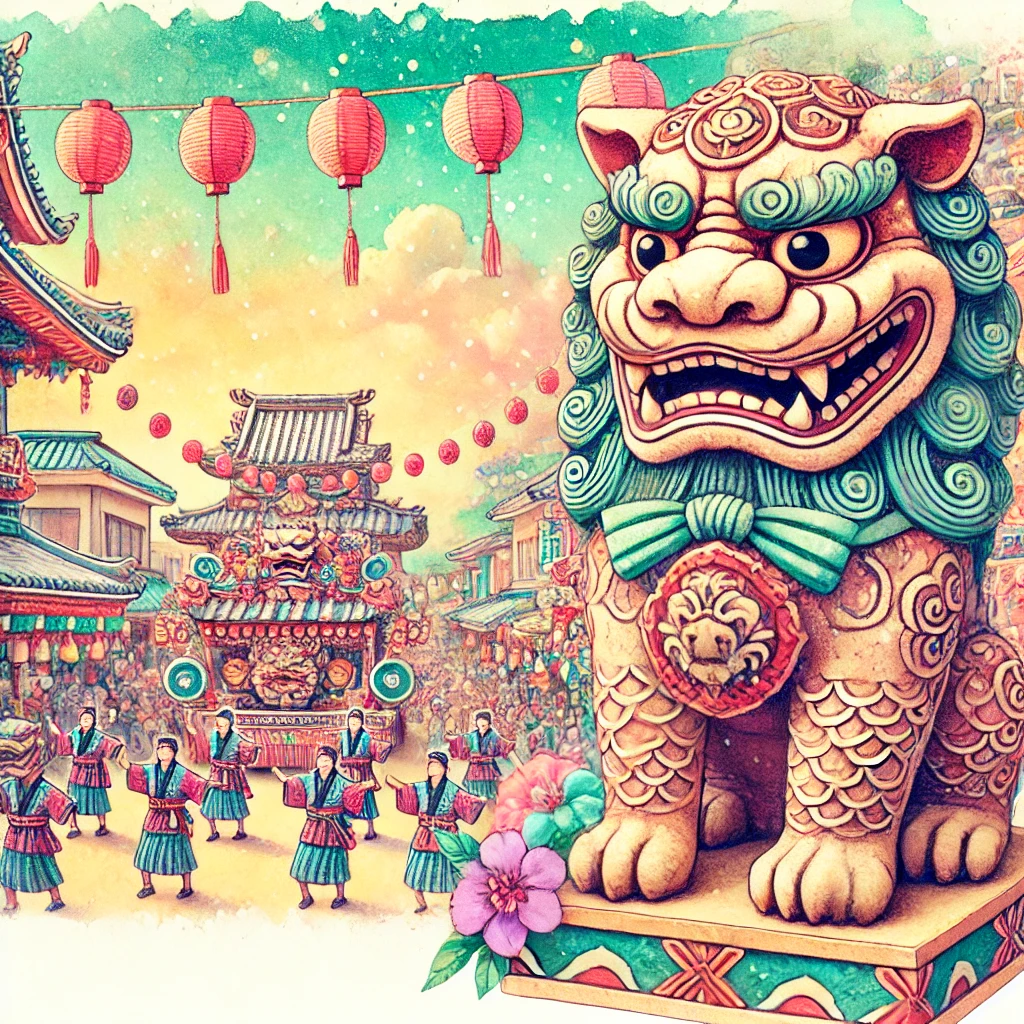
The Summer Spectacle of Okinawa: The Shisa Festival. The festival, characterized by the majestic Shisa dance, the powerful beats of the drums, and the vibrant decorations, creates an enchanting world imbued with the spirit of Okinawa.
However, the Shisa Festival is not merely a traditional event. This festival, aimed at warding off evil spirits and praying for prosperity, encapsulates the history, culture, strong bonds, and pride of the Okinawan people.
The origins of the Shisa Festival date back to the Ryukyu Kingdom hundreds of years ago. The custom of worshiping Shisa as guardian deities laid the foundation for today’s festival. Now, with events such as Shisa dedication ceremonies, Shisa dances, and Shisa tug-of-war, it continues to captivate the hearts of the Okinawan people.
For the people of Okinawa, the Shisa Festival is a precious opportunity to express gratitude to their ancestors, reaffirm family and community ties, and rediscover the beauty and pride of Okinawan culture.
In modern times, the Shisa Festival holds significance as a means of preserving traditional culture, promoting tourism, and symbolizing the uniqueness of Okinawa. Through this festival, we can learn about Okinawan history, culture, and life lessons.
In this article, we will explore the origins, content, and contemporary significance of the Shisa Festival. By immersing yourself in the world of the Shisa Festival, you will discover the allure and profound spirituality of Okinawa.
Experience the heart of Okinawa and take a moment to reflect on yourself. Now, let us embark on a journey into the festival where the soul of Okinawa resides, alongside the Shisa!
- What is the Shisa Festival?
- Origins of the Shisa Festival
- Details of the Shisa Festival
- The Spiritual World of Okinawa and the Shisa Festival
- Legends and Anecdotes of the Shisa Festival
- Modern Significance of the Shisa Festival
- Summary
- Q&A
What is the Shisa Festival?
Overview of Shisa
Definition and Characteristics of Shisa
Shisa are lion-shaped ceramic figurines that have been cherished in Okinawa for centuries, serving as talismans to protect homes and villages. These figures are believed to have evolved from Chinese guardian lion statues, adopting a unique Okinawan style. Shisa are a representative traditional craft of Okinawa, noted for their distinctive and expressive forms.
Typically, Shisa come in pairs, with the male having an open mouth and the female a closed mouth. This symbolizes the idea of inviting good spirits into the home while keeping bad spirits out. The fierce and sometimes ferocious expressions of Shisa are a testament to their role as protectors.
The Role and Significance of Shisa
For the people of Okinawa, Shisa are more than just ornaments; they are revered as guardians of homes and villages. Placed on rooftops, gates, and entrances, Shisa are believed to protect families from evil spirits and misfortune. They are also cherished as symbols of prosperity and fertility, deeply embedded in the daily lives of Okinawans.
In Okinawan culture, Shisa are seen as protective deities, embodying the wishes of people for safety and happiness. Respecting Shisa means preserving the traditions passed down from ancestors and ensuring they are handed down to the next generation. Thus, Shisa are deeply engraved in the spiritual culture of Okinawa, symbolizing protection and continuity.
History of Shisa
Origins and Development of Shisa
The origin of Shisa is thought to lie in the Chinese guardian lions known as Tang Lions. These figures have been venerated in China for their protective qualities. Through historical exchanges with China, these guardian lions were introduced to Okinawa and eventually evolved into the unique form of Shisa.
Over time, the Tang Lions adapted to Okinawan culture, developing a more rustic and charming appearance. Okinawan artisans crafted Shisa using unique techniques, leading to the formation of the distinct Shisa culture that is celebrated today.
The Connection Between Okinawa and Shisa
Shisa have a deep historical connection with Okinawa. During the Ryukyu Kingdom era, Shisa were significant as guardians of the royal family, placed on castle gates and roofs to ensure the safety and prosperity of the kingdom.
After World War II, Shisa also became symbols of Okinawa’s recovery. Many homes were destroyed during the war, and Shisa were lost. However, people began to recreate Shisa, welcoming them as protectors of their new homes. Thus, Shisa have walked alongside the people of Okinawa through their history, becoming cherished guardians.
Types of Shisa
Traditional Types of Shisa
Traditionally, there are two main types of Shisa. The first is called “Kandara,” placed on rooftops as guardians against evil spirits. The second is “Maakimon,” placed at gates and entrances to protect the home’s entryways. These Shisa serve the dual purpose of inviting good spirits and repelling bad ones.
Shisa can also vary by material, with the most common being ceramic. However, there are also Shisa made of stone, metal, and wood, each offering different textures and expressions, contributing to the diversity and charm of Shisa.
Diversity of Modern Shisa
In modern times, Shisa come in various designs beyond the traditional forms. Tourist souvenirs often feature Shisa in vibrant colors and humorous expressions. Additionally, Shisa-themed accessories and household items are popular, making Shisa a representative icon of Okinawa tourism.
On the other hand, Shisa crafted with traditional methods and high artistic value continue to be made. Artisans maintain ancestral techniques while infusing their own creativity, ensuring that Shisa remain a significant part of Okinawan culture and tradition.
Origins of the Shisa Festival
Legendary Beginnings
The Legend of Shisa Banishing Evil Spirits
One of the legendary origins of the Shisa Festival involves a tale where Shisa banished evil spirits. Long ago, a village was plagued by evil spirits, causing suffering among the villagers. They asked a potter to create Shisa, which, with its fierce expression, confronted and ultimately banished the evil spirits from the village.
From this legend, the belief in Shisa’s power to repel evil took root, leading to the custom of worshiping Shisa as protective deities and eventually evolving into the Shisa Festival.
The Legend of Shisa Protecting the Village
Another famous legend tells of Shisa protecting a village from natural disasters. Every year, the village faced severe hardships due to recurring disasters. The village elder, after receiving a divine revelation in a dream, instructed the villagers to place Shisa at the four corners of the village to ward off calamities.
Following the elder’s advice, the villagers placed Shisa as instructed, and miraculously, the disasters ceased. Grateful, the villagers began to pray to Shisa, solidifying Shisa’s role as the village’s guardian deity and forming the foundation for the Shisa Festival.
Historical Beginnings of the Festival
Origins and Historical Background
The exact origins of the Shisa Festival are unknown, but it is believed to have been a traditional event for at least several centuries. During the Ryukyu Kingdom period, the practice of worshiping Shisa as guardian deities was already in place, suggesting that the festival’s roots may trace back to this era.
Despite significant social changes, especially after Okinawa’s annexation by Japan, the Shisa Festival has been preserved by the local community. Notably, during the post-war reconstruction, the festival became a symbol of hope and resilience for the people of Okinawa.
Development and Evolution of the Festival
Today, the Shisa Festival has evolved while preserving its traditional elements. Previously, small-scale festivals were held by individual families or villages, but now, larger festivals are organized, bringing the entire community together.
The festival’s content has also diversified. In addition to traditional ceremonies and dances, events like Shisa painting workshops and Shisa-making demonstrations attract tourists. Thus, the Shisa Festival continues to evolve, balancing tradition with modern needs.
Purpose and Significance of the Festival
Banishing Evil Spirits and Ensuring Village Safety
The primary purpose of the Shisa Festival is to banish evil spirits and pray for the safety of the village. Shisa are believed to have the power to repel evil, and during the festival, various rituals are performed to invoke and strengthen this protective power.
The festival includes cleansing rituals and offerings to the Shisa, accompanied by traditional performances like lion dances, which symbolize the purging of evil and the purification of the village.
Praying for a Good Harvest and Family Safety
Another important purpose of the Shisa Festival is to pray for a good harvest and family safety. For the people of Okinawa, agricultural abundance is crucial for their livelihood, and the health and peace of the family are paramount.
During the festival, prayers for a bountiful harvest and family well-being are offered to the Shisa. Rituals for crop prosperity and dances wishing for family health and happiness are performed, with the hopes and prayers entrusted to the Shisa.
Thus, the Shisa Festival is a significant event for the people of Okinawa, embodying their prayers for protection and prosperity. Through the festival, people renew their commitment to walk alongside Shisa, preserving the traditions passed down from their ancestors.
Details of the Shisa Festival
Schedule and Locations
Timing and Duration of the Festival
The Shisa Festival is typically held on the 4th day of the 5th month of the lunar calendar, known as “Yukkanuhi,” the day of Shisa. However, the dates may vary by region, with some areas celebrating on the 8
th day of the 4th lunar month.
The duration of the festival varies by location, but it usually lasts from one to three days. The first day involves preparations like cleansing the Shisa and arranging offerings, while the second and third days are for the main festivities.
Main Venues for the Festival
The Shisa Festival is generally held at homes or village squares. At homes, Shisa placed at the entrance or on the roof are cleansed and offered prayers. In village squares, large Shisa are displayed, and villagers gather to offer prayers together.
In recent years, large-scale Shisa festivals have been held in parks and public squares, featuring traditional rituals and performances alongside tourist-friendly activities like Shisa-making demonstrations and Shisa painting workshops.
Main Events of the Festival
Shisa Dedication
Meaning and Purpose of the Dedication
Shisa dedication is one of the central events of the Shisa Festival. This ritual involves offering food and other items to the Shisa to invoke their protective powers. The purpose of the dedication is to pray for the safety and prosperity of the village and to express gratitude to the Shisa.
Offerings vary by region but typically include rice, sake, salt, and water. These offerings symbolize prayers for a bountiful harvest and household safety.
Methods and Procedures of Dedication
The procedure for Shisa dedication varies by region and family, but generally follows these steps:
- Cleansing the Shisa: The Shisa are washed with water to purify them.
- Preparing Offerings: Rice, sake, salt, water, and other items are prepared.
- Presenting the Offerings: The offerings are arranged before the Shisa, and prayers are offered.
- Praying to the Shisa: Prayers for the village’s safety and prosperity, and expressions of gratitude are made.
During the dedication, families and villagers gather together to offer heartfelt prayers to the Shisa, making it a crucial ritual for entrusting their wishes to the guardians.
Shisa Dance
Types and Features of the Dance
Various traditional dances are performed during the Shisa Festival, with the Shisa Dance being particularly famous. This vigorous dance mimics the movements of the Shisa, symbolizing the act of banishing evil spirits and protecting the village.
Dancers don Shisa masks and perform lion-like movements to the rhythm of traditional instruments such as drums and the sanshin. The dynamic performance is a powerful sight to behold.
Meaning and Origins of the Dance
The Shisa Dance is believed to depict the Shisa fighting against evil spirits. The dancers’ strong movements represent the bravery of the Shisa, while the drums’ beats mimic the roar used to intimidate evil spirits.
Additionally, the Shisa Dance serves as a prayer for a bountiful harvest and household safety, drawing the Shisa’s power into the village to ensure protection.
The origins of the Shisa Dance likely trace back to the legend of Shisa banishing evil spirits, with villagers eventually embodying this heroic act in dance form.
Shisa Tug-of-War
Meaning and Origins of the Tug-of-War
The Shisa Tug-of-War is one of the most exhilarating events of the Shisa Festival, representing the battle between Shisa and evil spirits. Participants are divided into Shisa and evil spirit sides, competing for victory.
Winning the tug-of-war symbolizes the defeat of evil spirits and securing the village’s safety. This event fosters a sense of unity and cooperation among villagers, highlighting its importance.
Methods and Rules of the Tug-of-War
The Shisa Tug-of-War is generally conducted as follows:
- Dividing Participants: Teams are formed as Shisa and evil spirit sides.
- Preparing the Rope: A thick rope with a central marker is prepared.
- Starting the Tug-of-War: Both sides pull the rope, competing for victory.
- Determining the Winner: The team that pulls the rope past a predetermined point wins.
The tug-of-war is more than a test of strength; it embodies prayers for the village’s safety and peace. The victorious Shisa side takes pride in their role as protectors, while the evil spirit side strives for victory in the next festival.
Thus, the Shisa Tug-of-War is a dynamic event symbolizing the communal effort to combat evil, fostering a renewed determination to protect the village alongside the Shisa.
Traditional Foods Related to the Festival
Special Dishes Served During the Festival
Special dishes are an essential part of the Shisa Festival. Both at home and in village squares, traditional foods are prepared and shared. One notable delicacy is “Mochi,” a rice cake shaped like Shisa.
Mochi, made from steamed and pounded rice, is a symbol of a bountiful harvest and is offered to the Shisa. Eating Mochi is believed to grant the strength and blessings of the Shisa.
Meaning and Origins of the Dishes
Each dish served during the Shisa Festival carries special meaning. For example, “Rafute,” a braised pork dish, represents the strength of pigs and symbolizes the prosperity of the village. “Sukugarasu,” a seaweed salad, is known for its association with longevity.
These dishes, made with traditional Okinawan ingredients, reflect the wisdom of ancestors. Through these foods, people express gratitude for nature’s blessings and learn from ancestral knowledge.
The foods served during the Shisa Festival are more than just sustenance; they embody the prayers and gratitude of the people. By savoring these dishes, participants reinforce their commitment to the Shisa and cherish the traditions passed down from their ancestors.
The Spiritual World of Okinawa and the Shisa Festival
Shisa and the Role of Talismans
The Protective Power of Shisa
For the people of Okinawa, Shisa are not merely decorative items but powerful talismans. Shisa are believed to protect homes and villages from evil spirits and calamities.
The protective power of Shisa is expressed through their fierce faces and robust forms. The male Shisa with an open mouth is thought to ward off evil spirits, while the female with a closed mouth traps them. The piercing eyes of Shisa are said to see through and dispel malevolent forces.
The Role of Shisa as Talismans
Shisa are placed at the entrances and on the rooftops of homes, serving as guardians. When positioned at the village gates or squares, Shisa protect the entire community.
Besides warding off evil spirits, Shisa are believed to safeguard people from disasters and illnesses. Therefore, people regularly cleanse Shisa and offer tributes to maintain their protective power.
The Shisa Festival is crucial for invoking and reinforcing the protective power of Shisa. Through the festival, people deepen their connection with Shisa and feel their guardianship more profoundly.
Shisa as Family Guardians
The Importance of Shisa in Protecting Families
For Okinawans, Shisa are cherished family protectors. Placed at the entrance or on the roof, Shisa are believed to ensure the safety and health of the family.
Especially when a child is born, prayers are offered to the Shisa for the child’s well-being. Shisa are also prayed to for swift recovery from illness or injury, becoming integral members of the family, passed down through generations.
The Bond Between Families and Shisa
The bond between families and Shisa is strengthened during the Shisa Festival. Families gather to cleanse Shisa and offer tributes, deepening their connection with the guardian figures.
The festival also serves as a time to express gratitude to ancestors through Shisa, reaffirming family ties and ancestral protection.
Thus, Shisa are invaluable as family guardians, and the Shisa Festival is vital for reinforcing the family-Shisa bond. Through the festival, people reaffirm the importance of family and renew their commitment to walk alongside Shisa.
Community Unity Through the Shisa Festival
The Festival’s Impact on Community Unity
The Shisa Festival plays a crucial role in strengthening community unity. From preparations to the day’s events, the festival fosters a sense of togetherness among community members.
The festival also serves to preserve and pass down regional traditions and culture. Through the festival, children learn about the significance of Shisa, ensuring the cultural heritage is passed on to future generations.
Intergenerational Interaction Through the Festival
The Shisa Festival facilitates intergenerational interaction. Elders pass down traditions to the younger generations, and children learn the festival’s significance from their elders. Young adults take on responsibilities in organizing the festival, ensuring the continuity of community values.
Thus, the Shisa Festival is vital for fostering community unity and intergenerational interaction. Through the festival, people feel pride in their community and commit to building a better future alongside Shisa.
Legends and Anecdotes of the Shisa Festival
The Legend of Shisa Banishing Evil Spirits
Details and Spread of the Legend
The legend of Shisa banishing evil spirits is widely told across Okinawa. Although the specifics vary by region, the core story remains the same.
In one village, evil spirits tormented the villagers until they created Shisa to banish the spirits. The Shisa’s fierce expression successfully drove the spirits away.
This legend symbolizes the protective power of Shisa, leading to their veneration as guardian deities and the birth of the Shisa Festival
.
Impact of the Legend on the Festival
The legend of Shisa banishing evil spirits is considered the origin of the Shisa Festival. Based on this legend, people began worshiping Shisa, resulting in the festival’s development.
The legend also influences the festival’s content. For example, the Shisa Dance is believed to depict Shisa fighting evil spirits.
Thus, the legend is crucial for understanding the origins and content of the Shisa Festival.
Miraculous Stories of the Shisa Festival
Details and Transmission of Miracles
The Shisa Festival includes miraculous stories, such as “Shisa Moving.” In one instance, a Shisa statue in the village square reportedly moved, opening and closing its mouth like a living creature, astonishing the villagers.
Another story tells of a Shisa shedding tears during the festival, believed to be for the well-being of the family it protected, deeply moving the household members.
Impact of Miracles on the Festival
Such miraculous stories deepen people’s faith in Shisa, reinforcing the belief that Shisa are living entities responding to their prayers.
These stories also reaffirm the festival’s significance, with people becoming more dedicated to participating in the Shisa Festival, believing in Shisa’s protective power.
Thus, these miraculous stories play an essential role in enhancing Shisa faith and reaffirming the festival’s significance.
Anecdotes of Famous Shisa Artisans
The Lives and Achievements of Artisans
Okinawa boasts renowned Shisa artisans, among whom “Zenji Miyagi” is particularly famous. Active in the early 20th century, Miyagi’s craftsmanship was revered throughout Okinawa. His Shisa figures were known for their lifelike expressions and vibrant presence.
Miyagi developed unique techniques, significantly advancing Shisa craftsmanship, making his works cherished by many.
Impact of Artisans on the Festival
Artisans like Zenji Miyagi significantly influenced the Shisa Festival. Their crafted Shisa became central to the festival, embodying the community’s prayers.
Their skills and spirit also support the festival’s traditions, as these artisans pass down their techniques and values to future generations, ensuring the festival’s continuation.
Thus, the anecdotes of famous Shisa artisans are vital for understanding the Shisa Festival’s traditions. Their craftsmanship and spirit continue to support the festival, passed down through generations.
Modern Significance of the Shisa Festival
Preserving Traditional Culture
The Festival’s Role in Protecting Tradition
The Shisa Festival plays a crucial role in preserving and passing down Okinawan traditional culture. Through the festival, the significance, origins, and crafting of Shisa are taught to children.
Traditional performing arts and cuisine are also integral to the festival, ensuring these cultural elements are preserved and passed down.
Methods of Passing Down Tradition to the Next Generation
The Shisa Festival employs various methods to pass down traditions. For example, children participate in Shisa dances and Shisa-making workshops, experiencing traditional culture firsthand.
Young people are actively involved in organizing the festival, learning its significance and ensuring its continuity.
Thus, the Shisa Festival is essential for preserving and passing down traditional culture, ensuring Okinawa’s heritage is carried forward to future generations.
Utilizing the Festival as a Tourist Attraction
Impact on Tourism
The Shisa Festival is a significant tourist attraction in Okinawa, drawing numerous visitors and boosting the local economy.
The festival is an excellent opportunity to showcase Okinawa’s charm, with traditional performances, cuisine, and Shisa-making offering a deep cultural experience to tourists.
Promoting Shisa Culture to Tourists
Tourist-oriented events at the Shisa Festival, such as Shisa-making workshops and the sale of Shisa goods, allow visitors to learn about Shisa’s significance and origins, deepening their appreciation of Okinawan culture.
Thus, the Shisa Festival holds substantial potential as a tourist attraction, promoting Okinawa’s charm to both domestic and international audiences.
Symbolizing Okinawan Uniqueness
The Unique Cultural Identity Represented by the Festival
The Shisa Festival is a vital symbol of Okinawan uniqueness. Shisa, evolved from Chinese guardian lions, represent Okinawa’s ability to adapt and develop foreign influences uniquely.
The festival also reflects Okinawa’s unique spirituality, including nature worship and ancestor veneration, highlighting the island’s distinctive cultural identity.
The Festival’s Influence on Okinawan Culture
The Shisa Festival significantly influences Okinawan culture, establishing Shisa as a cultural icon and shaping the island’s image.
The festival also plays a role in preserving and passing down traditional culture, fostering a renewed interest in Okinawan heritage.
Thus, the Shisa Festival is a symbol of Okinawan uniqueness and a crucial influence on Okinawan culture, celebrating and preserving its heritage.
Summary
The Charm of the Shisa Festival
The Unique Atmosphere and Appeal of the Festival
The Shisa Festival, with its dynamic Shisa dances, music, and vibrant decorations, creates a captivating spectacle. The festival’s ambiance and charm attract many, showcasing the warmth and unity of the Okinawan people.
The Emotional Impact and Experience of the Festival
The Shisa Festival offers participants an emotional and unique experience, allowing them to connect deeply with Okinawan culture through rituals and hands-on activities like Shisa-making.
Interacting with the local community provides a firsthand experience of Okinawan kindness and strong communal bonds, making the festival an unforgettable event.
The Importance of the Shisa Festival in Okinawan Culture
The Festival’s Role in Preserving Okinawan Culture
The Shisa Festival is essential for preserving and passing down Okinawan culture. It teaches children about Shisa’s significance and origins, ensuring the continuation of traditional practices and performing arts.
The Festival’s Impact on the Okinawan People
The Shisa Festival is a cherished event for Okinawans, providing a time to express gratitude to ancestors and reaffirm family and community ties. It instills pride and confidence in Okinawans, reinforcing their cultural heritage.
Thus, the Shisa Festival is a vital cultural event, deeply rooted in the hearts of the Okinawan people, celebrating and preserving their heritage.
Lessons Learned from the Shisa Festival
Understanding Okinawan History and Culture
The Shisa Festival offers an opportunity to learn about Okinawan history and culture, including the origins of Shisa, nature worship, and ancestor veneration, as well as traditional performing arts and cuisine.
Life Lessons from the Festival
The Shisa Festival also imparts valuable life lessons, such as the importance of dreams and goals, the spirit of mutual assistance, and the significance of community.
The Shisa Festival is a vital event representing Okinawan traditional culture, offering numerous attractions and potential. It continues to captivate modern audiences while preserving its historical and traditional essence. Experience the charm of the Shisa Festival and create unforgettable memories. The Shisa Festival is an irreplaceable cultural heritage imbued with the spirit of Okinawa.
Q&A
When did the Shisa Festival begin?
The exact origins of the Shisa Festival are unknown, but it has been a traditional event for at least several centuries. During the Ryukyu Kingdom period, the custom of worshiping Shisa as guardian deities was already in place, suggesting that the festival’s roots may trace back to this era.
What are the main events of the Shisa Festival?
The Shisa Festival features main events such as Shisa dedication, Shisa dance, and Shisa tug-of-war. Shisa dedication involves offering food to Shisa to invoke their protective powers. The Shisa dance depicts Shisa fighting evil spirits, and the Shisa tug-of-war symbolizes the battle between Shisa and evil spirits.
What legends are associated with the Shisa Festival?
The Shisa Festival is associated with legends of Shisa banishing evil spirits and protecting villages. Miraculous stories, such as Shisa moving or shedding tears during the festival, also reinforce Shisa faith and highlight the festival’s significance.
What is the modern significance of the Shisa Festival?
In modern times, the Shisa Festival plays a crucial role in preserving traditional culture, promoting tourism, and symbolizing Okinawan uniqueness. It serves as a platform for showcasing Okinawa’s charm and cultural depth, attracting visitors from around the world.
What can be learned from the Shisa Festival?
The Shisa Festival offers insights into Okinawan history and culture, including the origins of Shisa and traditional practices. It also imparts life lessons about the importance of dreams, mutual assistance, and community values. The Shisa Festival, with its rich history and vibrant traditions, continues to inspire and captivate. It is an event that embodies the spirit of Okinawa, preserving its cultural heritage and providing valuable lessons for all who participate.


コメント