
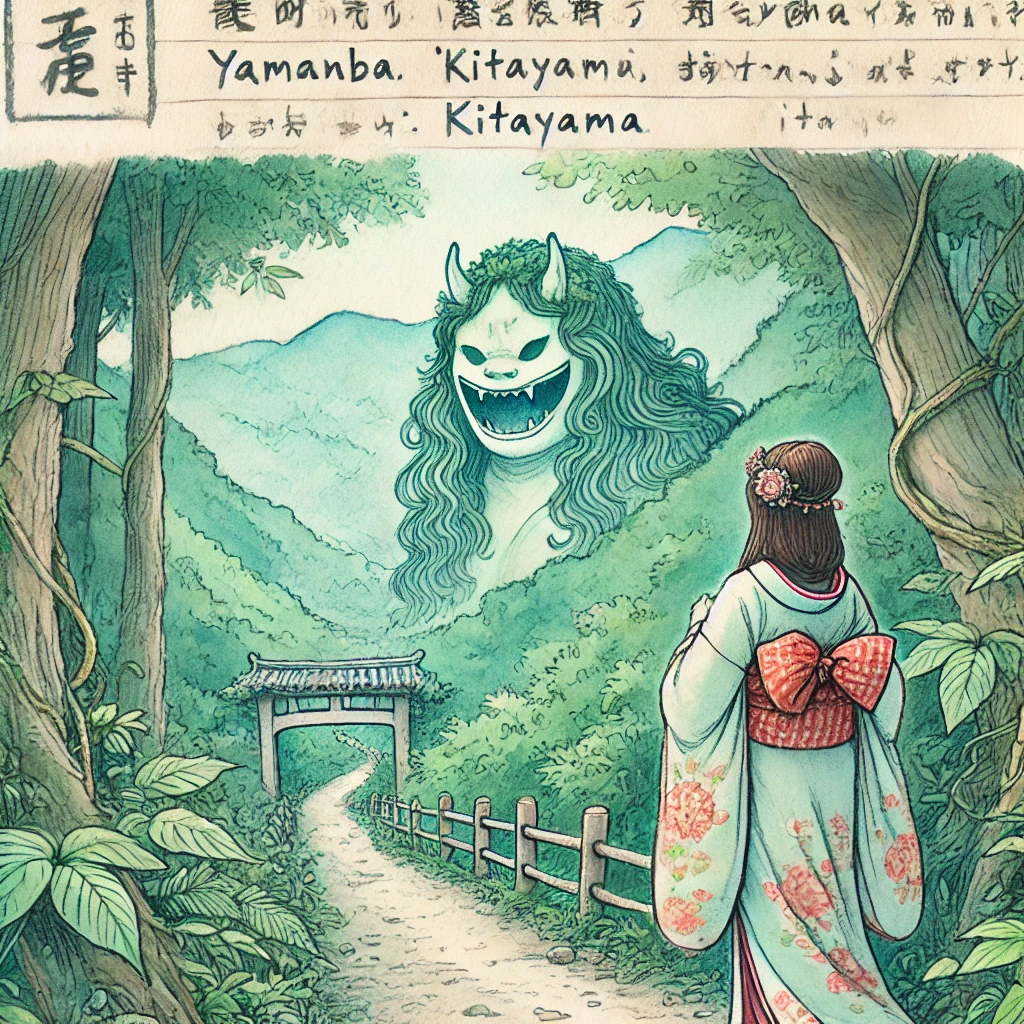
As you walk along the mountain path, you suddenly catch sight of a beautiful woman. However, upon closer inspection, you realize that she is a yōkai, a supernatural creature with a large mouth on her back. The ancient “Yamanba Legend” of the Kitayama region in Okinawa begins with such a startling scene.
Yamanba, with their combination of beauty and terror, are not just ordinary yōkai. They embody the power of nature and play a crucial role as mediators between humans and the natural world. The stories of the Yamanba from Kitayama explore universal themes such as the coexistence of humans and nature, and the contrast between outer appearances and inner qualities, through the marriage of a human man and a Yamanba.
This legend has instilled in the people of Okinawa a profound respect for nature and emphasized the importance of living in harmony with it. Additionally, it has significantly influenced arts and culture, becoming an indispensable element in shaping Okinawa’s unique worldview.
Even in modern society, there are many lessons to be learned from the Yamanba legend. The harmony with nature and respect for diversity that the legend promotes are essential values for building a sustainable society. Moreover, the wisdom in recognizing inner beauty beyond outward appearances offers us valuable insights.
The Yamanba tales of Kitayama are an irreplaceable cultural heritage that convey the essence of Okinawan spirituality and culture. In this article, we delve into the profound world of the Yamanba legend and seek the messages it holds for us today. Enjoy the unique worldview woven by nature, humans, and yōkai that is distinctly Okinawan.
Yamanba of Kitayama – The Tale of the Female Mountain Spirit
Long ago, in a remote village in the mountains of northern Okinawa, there lived a young man. He was diligent and honest, earning the trust of the villagers. One day, while gathering firewood in the mountains, he encountered a beautiful woman. She wore an elegant kimono, and her long black hair flowed in the wind. The man fell in love with her at first sight, and they soon married.
Their life together was happy, and they were blessed with children. However, one day while the man was cutting wood in the mountains, he witnessed a strange sight. His wife was washing her hair in the river, but her hair was unusually long, covering the entire stream. As he approached her, he discovered a large mouth on her back.
Terrified, the man fled back to the village and explained the situation to the villagers. The village elder began to speak, “That is a Yamanba, a female yōkai who lives in the mountains and sometimes marries human men.” The man was shocked but could not bring himself to abandon his wife and children.
Despite knowing her true identity, their life continued, but the man always felt a sense of fear and anxiety. One day, when the man was injured and unable to move, his wife wrapped him in her long hair and carried him back to the village. Touched by her kindness, he realized that, despite being a yōkai, she was a loving companion.
The couple spent their lives together, and their descendants contributed to the village’s prosperity. The Yamanba of Kitayama is still remembered as a story of love between a human and a yōkai.
Background of the Yamanba Legend
Okinawa’s Nature Worship and Mountain Deities
Okinawa’s View of Nature and Animism
Okinawa has a long-standing culture of revering nature as sacred. The islands are blessed with abundant natural beauty, and the people have believed that spirits inhabit various natural environments such as forests, seas, and rivers. This belief, known as animism, holds that even natural objects possess souls. The people of Okinawa have valued coexistence with nature and have lived their lives with gratitude for nature’s blessings.
Additionally, Okinawa is home to spiritual mediums known as “Yuta,” who are believed to communicate with spirits to solve people’s problems and worries. Yuta have a deep connection with the deities and spirits that reside in nature, guiding people by borrowing their power. This nature worship and spirit belief system have greatly influenced Okinawan culture and customs and continue to be passed down to this day.
Mountain Deities and Their Roles
In the mountains of Okinawa, various deities are believed to reside. These mountain deities have been worshipped as guardians of the forests and bringers of nature’s blessings. One notable mountain deity is the “Kijimuna,” small spirits said to live in the forests. They are believed to bring abundant harvests and support the people’s lives.
Another deity, the “Hinukan,” is the fire god thought to reside in the mountains. Hinukan is believed to prevent wildfires and provide the blessings of fire to the people. Okinawans have maintained harmony with nature by expressing gratitude and offering prayers to these mountain deities.
Mountain deities play a crucial role in Okinawa’s spiritual world. They govern the forces of nature and protect the lives of the people. This belief in mountain deities is deeply intertwined with Okinawa’s view of nature and is an essential element of the Yamanba legend.
Characteristics of Yamanba as Female Yōkai
Physical Characteristics of Yamanba
Yamanba are female yōkai that appear in Okinawan folklore and legends. They initially appear as beautiful women, but their true nature is different from humans. One distinctive feature of Yamanba is their long black hair, which is much longer than that of ordinary humans and is said to cover entire rivers at times.
Additionally, Yamanba are said to possess a large hidden mouth on their backs. This mouth is usually concealed but sometimes becomes visible. The mouth on their backs represents their yōkai nature, indicating that they are different from humans.
Yamanba’s appearance combines beauty and terror. While they possess the allure to seduce men, their true form has inhuman characteristics. These physical traits symbolize their existence on the boundary between humans and yōkai.
Supernatural Abilities of Yamanba
Yamanba are not just ordinary yōkai but beings with supernatural abilities. They can manipulate their long hair freely, sometimes using it to help humans. In the Kitayama Yamanba legend, there is an episode where a Yamanba wraps an injured man in her long hair and carries him to the village.
Moreover, Yamanba are said to communicate with forest animals, understanding their language and commanding them. This ability suggests that Yamanba have a deep connection with nature.
Furthermore, Yamanba can understand human language and integrate into human society. They transform into beautiful women to seduce human men and marry them. This ability illustrates that Yamanba can traverse between the human and yōkai worlds.
The supernatural abilities of Yamanba demonstrate that they are not just yōkai but mystical beings embodying the power of nature. These abilities add depth and allure to the Yamanba legend, captivating people’s imaginations.
Relationship Between Yamanba and Humans
The relationship between Yamanba and humans is a central theme in Yamanba legends. Yamanba are depicted as having an interest in human society, sometimes marrying human men. This suggests that Yamanba seek interaction with humans.
However, the relationship between Yamanba and humans is complex. While humans fear the supernatural abilities and yōkai nature of Yamanba, they are also attracted to their beauty and kindness. In the Kitayama Yamanba legend, the man’s internal struggle to continue living with the Yamanba despite knowing her true identity for the sake of their children is portrayed.
Furthermore, the children born between Yamanba and humans inherit characteristics of both, serving as bridges between human society and the yōkai world.
The relationship between Yamanba and humans symbolizes the coexistence of nature and humans. Yamanba are objects of awe and fear for humans while also being bringers of nature’s blessings. This duality reflects how Okinawans have historically interacted with nature and highlights the depth of the Yamanba legend.
The Significance of the Kitayama Yamanba Stories
Coexistence Between Humans and Yōkai
The Marriage of a Yamanba and a Man
In the Kitayama Yamanba stories, the marriage between a human man and a Yamanba is a crucial motif. The protagonist, a man who falls in love at first sight with a beautiful woman he meets in the mountains, soon marries her. However, when he discovers that his wife is a Yamanba, he initially feels terrified.
The notable aspect here is the man’s choice to continue living with his wife despite knowing her true identity. This signifies the man’s acceptance of the Yamanba and his decision to coexist with her. The story teaches the importance of understanding and living together, even with beings as different as humans and yōkai.
In modern society, we are also required to coexist with people who have diverse values and cultures. The Kitayama Yamanba story suggests the significance of accepting and respecting different beings, carrying a universal message that is still relevant today.
The Role of Mixed Children
In the Kitayama Yamanba stories, the children born between the Yamanba and the man are depicted as mixed beings, inheriting both human and yōkai traits. These children play a role in bridging human society and the world of yōkai.
The mixed children symbolize the coexistence of humans and yōkai, transcending differences and potentially creating new values. The story tells us that these children contributed to the village’s development, indicating their positive impact on human society.
Even in contemporary society, new values are created through the cooperation of people from diverse backgrounds. The Kitayama Yamanba story highlights the importance of diversity and the potential for growth and development that comes from embracing different beings.
The Contrast Between Appearance and Inner Qualities
The Beautiful Appearance and Hidden Identity of the Yamanba
The Kitayama Yamanba story contrasts the beautiful appearance of the Yamanba with her hidden identity as a yōkai. In the story, the Yamanba appears as a gorgeous woman dressed in an elegant kimono with long black hair. However, beneath her beautiful exterior lies the shocking feature of a large mouth on her back.
This contrast conveys the message that one should not judge others solely by their appearance. The man, initially attracted to the Yamanba’s beauty, is shocked upon discovering her true form. As the story progresses, he comes to appreciate her inner beauty.
In modern society, we often judge people based on their appearance. However, true importance lies in inner beauty, and it is crucial to develop the ability to recognize it. The Kitayama Yamanba story teaches us the importance of looking beyond the surface to understand someone’s true nature.
The Kindness and Affection of the Yamanba
The Kitayama Yamanba story poignantly depicts the kindness and affection of the Yamanba. In the story, the Yamanba shows deep love and care for her husband and children. A particularly touching scene is when she wraps her injured husband in her long hair and carries him back to the village.
This portrayal shows that, despite being a yōkai, the Yamanba possesses human-like kindness and love. Her actions illustrate that inner beauty cannot be judged by outward appearance alone.
The story underscores the importance of recognizing and respecting inner beauty. In modern society, we need to notice and cherish the kindness and love in others. The Kitayama Yamanba story celebrates inner beauty and emphasizes the importance of empathy and understanding.
The Role of Yamanba in Okinawa’s Spiritual World
Yamanba as an Object of Fear and Reverence
Fear of the Yamanba
In Okinawan folklore and tradition, Yamanba are depicted as objects of fear. With their inhuman appearance and supernatural abilities, they have instilled awe and fear in people. The large mouth on their backs symbolizes their true nature as yōkai and contributes to the fear they evoke.
The Yamanba’s behavior of seducing human men and marrying them also stirs fear. Men are attracted to their beauty but fear their true yōkai identity. This fear reflects the boundary-crossing existence of the Yamanba between humans and yōkai.
The fear of Yamanba mirrors the human fear of nature’s threats. Okinawans have felt powerless in the face of nature’s forces and have feared these threats. The Yamanba embodies these natural threats.
Respect and Reverence for the Yamanba
Conversely, Yamanba are also seen as objects of respect and reverence. They are believed to govern natural forces and bring blessings to people. The Kitayama Yamanba legend highlights episodes where Yamanba show kindness and compassion, such as helping an injured man.
Yamanba are also believed to communicate with forest animals, deepening their connection with nature. They are revered as mediators between humans and nature, promoting harmony between the two.
Okinawans have valued the importance of coexisting with nature and have respected Yamanba as symbols of natural forces. This reverence reflects the deep connection between Okinawan views of nature and the Yamanba legend.
Thus, Yamanba embody both fear and reverence, occupying a special place in Okinawa’s spiritual world. They represent the complex relationship between humans and nature.
Lessons from the Yamanba Legend
The Importance of Not Judging by Appearances
The Kitayama Yamanba story teaches the lesson of not judging others by their appearance. In the story, the man is initially attracted to the Yamanba’s beauty but is shocked upon discovering her true identity. However, he comes to appreciate her inner beauty and chooses to live with her.
The story warns of the dangers of judging others by their appearance. While people are often swayed by outward looks, true importance lies in inner beauty. The Yamanba legend emphasizes the need to recognize and respect inner qualities.
In modern society, we tend to judge people by their appearance. However, as the Kitayama Yamanba story illustrates, we should strive to see the inner beauty in others. This lesson is essential for respecting diversity and building a prejudice-free society.
The Necessity of Coexisting with Nature and Yōkai
The Kitayama Yamanba story advocates for the necessity of coexisting with nature and yōkai. In the story, the Yamanba embodies natural forces and mediates between humans and nature. The marriage between the man and the Yamanba symbolizes human-nature coexistence.
The story teaches that humans should not oppose nature but live in harmony with it. The Yamanba brings natural blessings, and humans should appreciate these gifts and live in balance with nature.
In modern society, environmental destruction is a serious issue. The Kitayama Yamanba story emphasizes the importance of coexisting with nature and urges us to respect the environment. The story’s message of coexisting with yōkai symbolizes the importance of embracing diversity and understanding different beings.
The lessons of coexistence with nature and yōkai from the Yamanba legend convey universal values that are crucial for modern society. The legend offers timeless wisdom and insights, reminding us of the importance of harmony and respect.
Real Incidents and Traditions
Yamanba Sightings in the Kitayama Region
Stories of Encounters with Yamanba in the Mountains
In the Kitayama region, numerous stories of real-life Yamanba sightings have been passed down. One man claimed to have met a beautiful woman in the mountains and spoken with her, only to later learn that she was a Yamanba, leaving him trembling with fear.
Another story tells of a man cutting wood in the mountains who saw a woman with long black hair. When he approached, she suddenly disappeared. These sightings make the Yamanba seem real and ignite people’s imaginations.
The Yamanba sightings in the Kitayama region suggest that the legends are not mere stories but based on real experiences. These accounts serve as evidence supporting the legend’s truth and bring it to life.
Experiences of People Saved by Yamanba
In the Kitayama region, there are also stories of people being saved by Yamanba. One man, injured and unable to move in the mountains, was reportedly helped by a woman with long black hair who carried him back to the village.
Another story involves a hunter lost in thick fog, who was guided home by a beautiful woman. These experiences show that Yamanba are not just a threat but can also offer help.
These stories of people saved by Yamanba corroborate the kindness and compassion depicted in the legends. They suggest that Yamanba are not only objects of fear but also beings that can coexist with humans, allowing for multifaceted interpretations of the legend.
The Social Impact of the Yamanba Legend
The Impact of the Yamanba Legend on the Local Community
In the Kitayama region, the Yamanba legend has profoundly influenced people’s lives and culture. The legend instilled in people a sense of reverence for nature and the importance of living in harmony with it. Additionally, faith in the Yamanba enriched the region’s spiritual culture and played a crucial role in forming a unique worldview.
The Yamanba legend also served as a bond uniting the local community. It has been passed down through generations, becoming a shared cultural heritage. Through the legend, people connect with the wisdom of their ancestors and foster a sense of community.
Thus, the Yaman
ba legend is not just a story but a deeply rooted cultural practice in the local community. It reflects the spirituality and values of the people in the Kitayama region and is an essential element in shaping their identity.
The Influence of the Yamanba Legend on Art and Culture
The Yamanba legend has also significantly influenced Okinawan art and culture. It has been expressed in various art forms, including painting, sculpture, and dance. In particular, the unique Okinawan performing art known as “Kumiodori” often features Yamanba as important characters.
The legend has also been a motif in literary works, where writers explore themes such as the relationship between humans and nature and the contrast between appearance and inner qualities. The Yamanba legend has provided a rich source of inspiration for artists and enriched Okinawan culture.
The influence of the Yamanba legend on art and culture speaks to the powerful universality of its themes. It encompasses fundamental human questions and has captivated people’s hearts across ages. Artists find contemporary relevance in the legend’s lessons and create new expressions through it.
Thus, the Yamanba legend has deeply permeated Okinawan art and culture, contributing to their development. It remains a cultural heritage that embodies Okinawan spirituality and continues to inspire imagination and wisdom in modern times.
The Importance of Yamanba in Okinawan Folklore
The Worldview Reflected in the Yamanba Legend
The Kitayama Yamanba story reveals the significance of Yamanba in Okinawan folklore. The legend reflects a unique Okinawan worldview where humans, nature, and yōkai are intricately intertwined.
Yamanba embody the forces of nature and serve as mediators between humans and the natural world. The legend emphasizes the importance of living in harmony with nature rather than opposing it. The contrast between the Yamanba’s beautiful appearance and hidden identity teaches the lesson of not judging by appearances.
These lessons reflect the values cherished by the Okinawan people, such as reverence for nature, empathy for others, and respect for diversity. The Yamanba legend expresses these universal themes through its narratives.
Thus, the Yamanba legend is a cultural heritage that embodies the Okinawan worldview, reflecting the spirituality and values of its people. It is a crucial medium for conveying the essence of Okinawan folklore.
Lessons from the Yamanba Legend for Modern Society
The lessons from the Kitayama Yamanba story hold universal values applicable to modern society. The legend explores themes of coexistence with nature, the contrast between appearance and inner qualities, and respect for diversity, offering profound wisdom.
In today’s world, issues such as environmental destruction, discrimination, and prejudice are becoming increasingly severe. The Yamanba legend warns us about these problems and suggests solutions. The harmony with nature and respect for diversity taught by the legend are essential values for building a sustainable society.
Additionally, the Yamanba legend emphasizes the importance of recognizing inner beauty. In modern society, we often judge people by their appearance or status, but true value lies in their inner qualities. The legend urges us to cultivate the ability to see the essence of others.
Thus, the lessons from the Kitayama Yamanba story offer universal wisdom and insights for modern society. The legend, a crystallization of ancient wisdom, remains valuable across ages. We must learn from the Yamanba legend to build a better society.
The Yamanba legend is an indispensable part of Okinawan folklore. It embodies the spirituality and worldview of Okinawa, deeply rooted in the lives and culture of its people. The legend’s teachings hold universal values that resonate with modern society, offering profound wisdom and insights.
Through the Kitayama Yamanba story, we can delve into the depths of Okinawan folklore and learn from the wisdom of our ancestors. The Yamanba legend reflects a unique Okinawan worldview, where nature, humans, and yōkai coexist. This worldview offers invaluable lessons for us living in the modern era.
Q&A
Why do Yamanba seduce human men?
Yamanba seduce human men as they seek interaction with human society. Additionally, it is believed that they need to marry human men to produce offspring.
In the Kitayama Yamanba story, why does the man continue to live with his wife even after knowing she is a Yamanba?
The man could not drive his wife away because of their children. He also came to understand that, despite being a yōkai, she was a loving presence.
What impact has the Yamanba legend had on the people of Okinawa?
The Yamanba legend has instilled in Okinawans a sense of reverence for nature and taught them the importance of living in harmony with it. The legend has also influenced arts and culture, playing a crucial role in shaping Okinawa’s unique worldview.
What lessons can we learn from the Yamanba legend?
The Yamanba legend explores universal themes such as coexistence with nature, the contrast between appearance and inner qualities, and respect for diversity. It teaches us the importance of recognizing inner beauty and respecting diversity.
What relevance does the Yamanba legend have in modern society?
The Yamanba legend’s teachings serve as a warning against issues such as environmental destruction, discrimination, and prejudice. It emphasizes the values of harmony with nature and respect for diversity, providing universal wisdom and insights for modern society.
Conclusion
The “Kitayama Yamanba” is an indispensable part of Okinawan folklore. Yamanba embodies the forces of nature and is depicted as a mediator between humans and the natural world. Through the marriage of Yamanba and a human man, the story explores themes such as the coexistence of nature and humanity and the contrast between appearance and inner qualities.
The legend has instilled in the people of Okinawa a deep reverence for nature and emphasized the importance of living in harmony with it. Additionally, it has significantly influenced arts and culture, playing a crucial role in shaping Okinawa’s unique worldview.
Even in modern society, the lessons conveyed by the Yamanba legend hold universal value. The legend sounds a warning against issues such as environmental problems, discrimination, and prejudice, advocating for values essential to building a sustainable society, such as harmony with nature and respect for diversity.
The Kitayama Yamanba story reflects a uniquely Okinawan worldview, where nature, humans, and yōkai are intricately intertwined. By learning from this legend, we can draw on the wisdom of our ancestors and bring about positive changes in contemporary society. The Yamanba legend is an irreplaceable cultural heritage that conveys the essence of Okinawan spirituality and culture.


コメント