
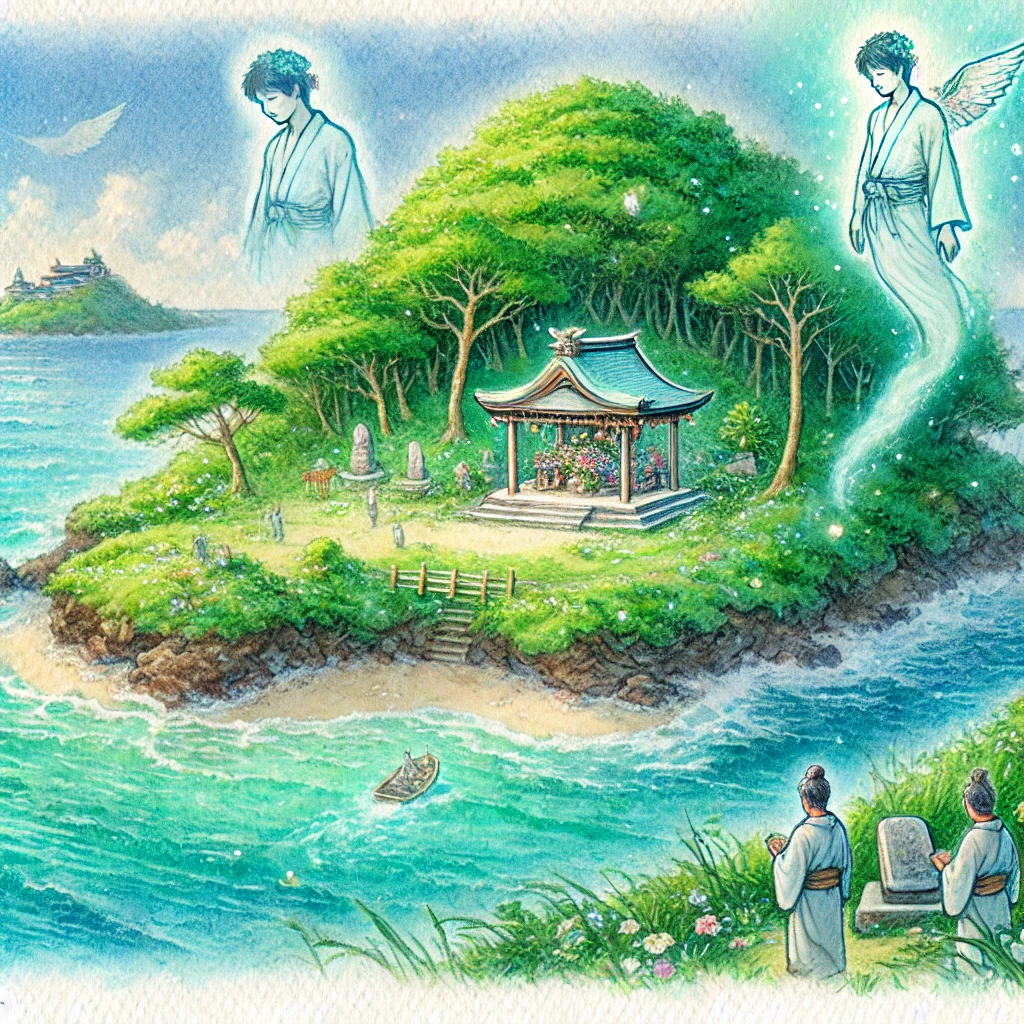
Do you know the “Legend of Nuujifaa” handed down in Okinawa? This tale is a deeply spiritual legend that depicts the death of a young man and the mysterious events that follow, reflecting the rich spiritual world of Okinawa.
The legend unfolds on a beautiful island blessed with abundant nature. The young man enjoyed peaceful days, venturing out to sea daily and reaping the island’s bounties. However, on a stormy day, he lost his life. The islanders, engulfed in deep sorrow, decided to enshrine his spirit as the island’s guardian deity.
From here, the legend takes a mysterious turn. To console the young man’s spirit, the islanders conducted heartfelt memorial services, but soon, unexpected events began to occur.
This story encapsulates various elements of Okinawa’s spiritual world, such as ancestor worship, veneration of ancestral spirits, coexistence with nature, and unique views on life and the afterlife. The legend teaches us the importance of respecting ancestors, revering nature, and honoring the deceased.
Moreover, the “Legend of Nuujifaa” offers numerous insights for us living in modern society. In a world increasingly focused on material wealth, the richness of the heart is gradually being lost. This legend sounds a warning bell to our modern hearts, challenging us to reconsider what is truly valuable.
Additionally, the legend contains universal messages about the bonds of family and community and the role of connecting the past with the future. Through the spiritual world of Okinawa, we are prompted to reflect anew on the meaning of life and the sanctity of living.
Please enjoy the profound charm of the “Legend of Nuujifaa” through this article. This story, cherished and passed down in Okinawa for generations, will awaken something within the hearts of those living in the present day.
- “Legend of Nuujifaa – The Mystery of the Sacred Site Enshrining Ancestors’ Spirits”
- Ancestor Worship and Veneration of Ancestral Spirits
- Coexistence of Humans and Nature
- Views on Life and the Afterlife
- Insights for Modern Society
- Uniqueness of Okinawa’s Spiritual World
- Universal Messages of the Legend
- Q&A
- Conclusion
“Legend of Nuujifaa – The Mystery of the Sacred Site Enshrining Ancestors’ Spirits”
On a remote island in Okinawa, there is a sacred site called Nuujifaa. This island has a mysterious legend handed down from ancient times.
Long ago, a young man lived on this island. He went out fishing daily, enjoying the bounties of the rich sea and leading a peaceful life. One day, as he went out fishing as usual, he was caught in a massive storm. Despite his desperate efforts to return to the island, he was swallowed by the raging waves and perished.
The young man’s family, grieving deeply, decided to enshrine his spirit as the island’s guardian deity. They built his grave on the highest hill of the island. Since then, the islanders have visited his grave every year on the anniversary of his death.
However, strange things began to happen. Island residents who visited the grave started to disappear one after another. A few days later, the missing people were found around the grave, all of them dead with expressions of terror.
The islanders began to believe that the young man’s spirit was furious and causing these calamities. The island elders gathered and decided to perform a ritual to calm his spirit.
The elders prepared the young man’s favorite dishes and offered them at his grave. They prayed fervently for his repose throughout the night. Strangely, by morning, the offerings had been entirely consumed.
After that, no one else went missing on the island. The islanders were relieved, believing the young man’s spirit had been appeased. However, they still cautiously visit the grave on the anniversary of his death each year.
Ancestor Worship and Veneration of Ancestral Spirits
Understanding the spiritual world of Okinawa is impossible without acknowledging the significance of ancestor worship and veneration of ancestral spirits. Okinawans believe that the spirits of deceased ancestors protect and guide their families, a belief that continues to be passed down. The “Legend of Nuujifaa” is a story that richly reflects this ancestor worship and veneration of ancestral spirits in Okinawa.
Respect for Ancestral Spirits
Customs of Enshrining Ancestral Spirits as Guardian Deities
In Okinawa, there is a custom of enshrining the spirits of deceased ancestors as family guardians. In the “Legend of Nuujifaa,” the young man’s spirit is enshrined as the island’s guardian deity. This custom reflects the heart of Okinawans who honor and cherish their ancestors’ spirits. The practice of enshrining ancestral spirits for the family’s well-being and prosperity is still observed throughout Okinawa.
Specifically, Okinawan households have altars called “butsudan,” where ancestral tablets are enshrined. Every morning, family members offer prayers of gratitude and supplication to these altars. During traditional events like the lunar New Year or Obon, special offerings are prepared, and ancestors’ spirits are welcomed home. Through these daily practices, Okinawans nurture a sense of closeness to their ancestral spirits and cultivate respect for them.
Faith in Praying for Family Prosperity and Well-being
The respect for ancestral spirits is linked to the faith in praying for family prosperity and well-being. Okinawans believe that ancestral spirits protect and guide their descendants and that it is essential to cherish ancestors to receive their blessings. In the “Legend of Nuujifaa,” the young man’s spirit becomes the island’s guardian deity, protecting the islanders. This reflects Okinawa’s belief that ancestral spirits watch over their descendants.
In practice, Okinawans report to their ancestors and seek their blessings during joyous occasions like weddings and new home celebrations. When a child is born, a ritual called “kakae iwai” is performed to entrust the child to the ancestors’ spirits. This approach, showing gratitude and seeking protection from ancestral spirits at life milestones, characterizes Okinawa’s family and religious beliefs. Respecting ancestors and appreciating their blessings is believed to lead to family prosperity and well-being.
The Importance of Offering Memorial Services to Ancestral Spirits
Rituals and Events for Ancestral Memorial Services
In Okinawa, rituals and events for ancestral memorial services are highly valued. In the “Legend of Nuujifaa,” the elders pray through the night to calm the young man’s spirit, representing an example of Okinawan ancestral memorial services. Okinawans believe that by honoring ancestral spirits, they can receive their blessings, and they offer gratitude and prayers through various rituals and events.
For instance, Obon, held on the 15th day of the seventh lunar month, is a representative ancestral memorial event in Okinawa. Families visit graves, welcome the spirits of ancestors home, and offer their favorite foods, hosting them for several days. Additionally, the “Higan” ceremonies during the equinoxes pray for ancestors’ peace. Through these annual events, Okinawans reaffirm their bonds with ancestors and recognize the importance of memorial services.
Belief in the Significance and Effect of Memorial Services
The emphasis on ancestral memorial services among Okinawans is backed by a strong belief in their significance and effect. In the “Legend of Nuujifaa,” calamities cease after the young man’s spirit is appeased through memorial services. This represents the Okinawan faith that ancestral spirits can be calmed through memorial services, bringing blessings to their descendants.
Okinawans believe that ancestral spirits find peace only when properly honored. Conversely, neglecting memorial services might result in ancestral spirits causing misfortune. Therefore, Okinawans consistently offer memorial services, respecting and expressing gratitude towards their ancestors. This belief in the significance and effect of memorial services is a vital aspect of Okinawa’s spiritual world.
This article has explored ancestor worship and veneration of ancestral spirits in Okinawa, using the “Legend of Nuujifaa” as a reference. For Okinawans, ancestral spirits are close and cherished, and honoring them is crucial for receiving their blessings. These beliefs form the core of Okinawa’s spiritual world and are filled with lessons for us today. By listening to the wisdom of our forebears and valuing the respect for ancestors, we can find inner peace and strengthen our family bonds.
Coexistence of Humans and Nature
In exploring the spiritual world of Okinawa, the theme of human-nature coexistence cannot be overlooked. Okinawans have long regarded nature as sacred and lived in gratitude for its blessings. The island setting in the “Legend of Nuujifaa” is depicted as a place rich in nature. This worldview is fundamental to Okinawa’s spiritual realm, profoundly influencing people’s lives and beliefs.
Concepts of Nature Worship
Reverence for Natural Objects
Okinawans have believed that natural objects possess sacred power and have held them in reverence. Elements of the natural world such as forests, seas, rivers, and waterfalls have been subjects of worship. In the “Legend of Nuujifaa,” the island’s highest hill is treated as a sacred site, reflecting Okinawa’s nature worship.
Specifically, Okinawa is dotted with “Utaki,” sacred sites within nature, such as hills within forests or cliffs overlooking the sea. These places have been venues for rituals praying for village peace and abundant harvests. Additionally, Okinawa’s custom of venerating large stones or ancient trees, known as “Kami Asagi,” has gathered people’s faith. Thus, Okinawans have found divinity in natural objects, holding them in awe and reverence.
Gratitude for Nature’s Blessings
Nature worship has fostered a sense of gratitude for nature’s blessings among Okinawans. They have viewed food and resources from nature as gifts from the gods. The young man in the “Legend of Nuujifaa” lives off the sea’s bounty, depicting Okinawans’ life of gratitude towards nature’s gifts.
In practice, various festivals express gratitude for
nature’s blessings throughout Okinawa. For example, the “Hari” sea god festival in the lunar June prays for abundant catches and safe voyages. In the lunar August, the “Shinugu” harvest festival offers thanks for nature’s blessings. Through these festivals, Okinawans reaffirm their connection to nature and express their gratitude. This sense of gratitude towards nature is a crucial element supporting Okinawa’s spiritual world.
Wisdom in Maintaining Harmony with Nature
Living in Harmony with Nature
Okinawans have cultivated wisdom in living harmoniously with nature. In the “Legend of Nuujifaa,” the young man lives in harmony with the island’s nature, reflecting Okinawa’s traditional wisdom of coexisting with nature.
For instance, Okinawan traditional houses with “Akagawara” red tiled roofs are designed to withstand typhoons, a natural threat. The traditional farming method, “Shimangwa,” adheres to natural principles, incorporating fallow periods to maintain the land’s fertility. This practical wisdom represents Okinawans’ efforts to live in harmony with nature.
Countermeasures Against Nature’s Threats
At times, Okinawa’s nature also poses threats. The “Legend of Nuujifaa” includes an episode where the young man perishes in a massive storm, symbolizing Okinawa’s harsh natural conditions. Okinawans have devised unique countermeasures against such natural threats.
For example, “Fuuchibaa” rituals to calm the wind are performed by village elders, praying to gods upon sensing a typhoon’s approach. Additionally, large trees like “Gajumaru” are found throughout Okinawa, protecting settlements from strong winds. Thus, Okinawans have faced nature’s threats using faith and wisdom.
This exploration of human-nature coexistence in Okinawa through the “Legend of Nuujifaa” shows that nature is an object of reverence and gratitude for Okinawans. The wisdom to maintain harmony with nature forms the foundation of Okinawa’s spiritual world. There is much we can learn from Okinawa’s view of nature. Respecting nature and living in gratitude for its blessings, Okinawans teach us the importance of these values.
Views on Life and the Afterlife
To understand Okinawa’s spiritual world, one must consider its views on life and the afterlife. Okinawans believe in an afterlife and view this world and the next as closely connected. The “Legend of Nuujifaa” richly reflects these views. The motif of the young man’s spirit causing calamities after death symbolizes Okinawa’s unique perspectives on life and death.
Faith in the Afterlife
Belief in the Immortality of the Soul
Okinawans believe that a person’s soul lives on eternally after death. In the “Legend of Nuujifaa,” the young man’s spirit is enshrined as the island’s guardian deity, reflecting the belief in the soul’s immortality.
Specifically, Okinawans believe that “Mabui” spirits of the deceased remain near their families, protecting their descendants. Additionally, “Gusoo” ancestral spirits are believed to wish for and watch over their descendants’ happiness. For Okinawans, death is not the end but a journey to a new world.
Structure and Characteristics of the Afterlife
Okinawans have developed a unique belief in the afterlife called “Niraikanai.” This otherworldly realm, distinct from the present world, is where the souls of the dead find peace. In the “Legend of Nuujifaa,” the young man’s spirit is enshrined on the island’s highest hill, perhaps symbolizing an entryway to the afterlife.
There are places across Okinawa believed to be entry points to “Niraikanai.” For example, “Okinawa Main Island’s Northern Great Sacred Grove” is known as a sanctuary where the souls of the dead gather. In “Niraikanai,” the souls reunite with ancestral spirits and live a paradisiacal life. These beliefs form the basis of Okinawa’s views on life and the afterlife.
Connections Between This World and the Afterlife
Actions in This World and Their Repercussions in the Afterlife
Okinawans believe that actions in this world affect their outcomes in the afterlife. In the “Legend of Nuujifaa,” the young man’s spirit causes calamities, possibly due to some wrongdoing in this life. Thus, Okinawans believe that good deeds in this world lead to happiness in the afterlife, while misdeeds result in suffering.
The concept of “Karma” is ingrained in Okinawa, where good deeds promise a happy afterlife, and bad deeds bring suffering. This belief guides moral conduct in this world, reflecting Okinawa’s ethical foundation.
The Influence of the Spirits of the Dead on This World
Okinawans believe that the spirits of the dead influence this world. The calamities caused by the young man’s spirit in the “Legend of Nuujifaa” reflect this belief. Ancestral spirits are seen as intervening in the events of this world, affecting the fate of their descendants.
In practice, “Yuta” mediums convey messages from ancestral spirits, providing guidance to the living. Ancestral spirits’ blessings are sought through honoring and memorial services. This relationship between the spirits of the dead and the living characterizes Okinawa’s spiritual world.
This exploration of Okinawa’s views on life and the afterlife through the “Legend of Nuujifaa” shows that for Okinawans, death is a journey to a new world. The living and the afterlife are closely connected, with the spirits of the dead influencing the living. These views form the core of Okinawa’s spiritual world, providing important insights into life and death. Learning from Okinawans’ respect and gratitude towards the dead can enrich our lives.
Insights for Modern Society
The spiritual world depicted in the “Legend of Nuujifaa” offers numerous insights for us in modern society. Re-evaluating traditional values and spirituality is essential for us today. Here, we explore the lessons from the “Legend of Nuujifaa” and their relevance to contemporary society.
Importance of Traditional Values
Preservation and Development of Traditional Culture
The “Legend of Nuujifaa” reflects Okinawa’s traditional values and worldview. In modern society, preserving and developing such traditional culture is crucial. Amid globalization, protecting regional uniqueness and passing down traditional wisdom to future generations is our responsibility.
Efforts are needed to preserve Okinawa’s traditional performing arts, crafts, and festivals. For example, “Eisa,” Okinawa’s traditional Bon dance, continues to be performed, honoring ancestral spirits. The traditional dyeing technique “Bingata” is internationally acclaimed, and efforts to pass down this craft continue. Preserving and developing traditional culture is essential to maintaining Okinawa’s spirituality.
Learning from the Wisdom of Our Ancestors
The “Legend of Nuujifaa” embodies the wisdom of our ancestors. We must humbly learn from this wisdom, as traditional values and worldviews provide guidance for life.
Okinawans have valued the spirit of mutual aid called “Yuimaru,” strengthening community bonds and overcoming difficulties. The attitude of cherishing encounters, expressed in the phrase “Ichariba Chodee,” is another piece of ancestral wisdom. Learning from such wisdom can enrich our lives. The “Legend of Nuujifaa” represents this treasure trove of ancestral wisdom.
Re-evaluating Spirituality
Warning Against Materialism
Modern society is said to be losing the richness of the heart in pursuit of material wealth. The spiritual world depicted in the “Legend of Nuujifaa” challenges this view, reminding us that material satisfaction alone does not bring true happiness.
Okinawans have valued living in harmony with nature, ancestor worship, and views on the afterlife—values beyond materialism. The “Legend of Nuujifaa” warns us against materialism and teaches us the importance of reclaiming the richness of the heart.
Ways to Cultivate Spiritual Richness
How can we cultivate spiritual richness? The spiritual world depicted in the “Legend of Nuujifaa” provides hints. Interacting with nature, honoring ancestors, and living with an eye on the afterlife are keys to enriching our hearts.
Practically, valuing time spent in nature can enrich our hearts. Spending time in mountains, seas, or forests can heal and enrich the spirit. Remembering and honoring ancestors is also crucial. Reflecting on their achievements and embracing their teachings can guide our lives. Additionally, being mindful of the afterlife can enrich our spiritual lives. Seeing our lives in the context of eternal time can help us find true happiness.
This exploration of insights for modern society from the “Legend of Nuujifaa” highlights the importance of re-evaluating traditional values and spirituality. We need to reassess the materialistic modern society and reclaim spiritual richness. The spiritual world depicted in the “Legend of Nuujifaa” can guide us. By learning from ancestral wisdom and engaging with nature and ancestors, we can discover the true meaning of life.
Uniqueness of Okinawa’s Spiritual World
The spiritual world depicted in the “Legend of Nuujifaa” has unique characteristics distinct from other regions. These traits have been cultivated by Okinawa’s history, culture, and natural environment. Here, we explore the uniqueness of Okinawa’s spiritual world through comparisons with other regions and historical backgrounds.
Comparison with Other Regions
Differences from Mainland Religious Systems
Okinawa’s spiritual world has a unique belief system distinct from Japan’s mainland. While Shinto and Buddhism are predominant in the mainland, Okinawa has developed unique beliefs such as “Niraikanai” and “Yuta.”
In mainland Shinto, the concept of numerous gods dwelling in natural objects exists, while Okinawa venerates local gods like “Kijimuna.” In mainland Buddhism, the afterlife is divided into realms like paradise and hell, but Okinawa has developed the unique “Niraikanai” afterlife. Thus, Okinawa’s spiritual world has distinct characteristics from the mainland.
Commonalities with Other Island Regions
Okinawa’s spiritual world also shares commonalities with other island regions. Islands, being unique environments surrounded by the sea, have developed their unique belief systems. Similar beliefs can be found in the Amami Islands and the Ogasawara Islands.
For example, the Amami Islands have “Noro” priestesses mediating between gods and people, similar to Okinawa’s “Yuta.” The Ogasawara Islands have sacred sites called “Muyama,” gathering people’s faith, akin to Okinawa’s “Utaki.” Thus, Okinawa’s spiritual world shares elements with other island regions.
Historical Background and Evolution
Inheritance of Ancient Beliefs
Okinawa’s spiritual world is based on beliefs handed down from ancient times. During the Gusuku era around the 12th century, “Noro” priestesses were active. The 15th-century Ryukyu Kingdom era saw the emergence of “Omoro” religious songs expressing people’s faith.
Thus, Okinawa’s spiritual world is built on ancient beliefs. The death and afterlife views depicted in the “Legend of Nuujifaa” reflect these ancient beliefs. Okinawans continue to cherish the spirituality cultivated over a long history.
Adaptation to Changes Over Time
Okinawa’s spiritual world has also adapted to historical changes. Significant turning points include the early 17th-century Satsuma Domain rule and the late 19th-century annexation by Japan.
Under Satsuma rule, Buddhism spread to Okinawa, introducing Buddhist funerals and memorial services. After Japan’s annexation, State Shinto, worshiping the emperor as the supreme deity, spread. Okinawa’s traditional beliefs fused with these new religions, developing uniquely.
For example, today’s Okinawa typically holds Buddhist-style funerals, while traditional rituals by “Yuta” mediums also continue. Festivals at shrines incorporate traditional performing arts like “Eisa.” Thus, Okinawa’s spiritual world has adapted to changes while preserving traditions.
This exploration of the uniqueness of Okinawa’s spiritual world shows its distinct belief system and historical evolution. The spiritual world depicted in the “Legend of Nuujifaa” reflects these unique beliefs and historical transitions. By understanding this unique spirituality, we can enrich our spiritual lives. The depth of Okinawa’s beliefs can offer us valuable insights into our spiritual journey.
Universal Messages of the Legend
The “Legend of Nuujifaa” reflects the spiritual world of Okinawa, but it also contains universal messages. The lessons the legend conveys resonate not only in Okinawa but also with all of us living in the modern world. Here, we explore the universal messages of the “Legend of Nuujifaa” from the perspectives of human dignity and intergenerational bonds.
Awareness of Human Dignity and Value
Reaffirming the Significance of Individual Existence
In the “Legend of Nuujifaa,” the death of the young man prompts a re-examination of the significance of individual existence. The legend makes us think about the preciousness of each life and the meaning of existence.
In modern society, the value of the individual is often overlooked. In the pursuit of efficiency and profit, individual dignity can be neglected. However, the “Legend of Nuujifaa” teaches us that every life holds irreplaceable value. The young man’s death reaffirms his significance and makes us acutely aware of the importance of life. This message offers insights to all of us living in the modern age.
Compassion and Respect for Others
Moreover, the “Legend of Nuujifaa” suggests the importance of compassion and respect for others. The legend depicts the islanders cooperating to mourn the young man’s spirit after his death. This reflects a heart that respects and cares for others’ lives.
In modern society, self-centered thinking often prevails, and consideration for others can be lost. However, the “Legend of Nuujifaa” teaches us the importance of each person standing in others’ shoes and having a compassionate heart. The islanders’ sorrow and respect for the young man’s spirit show the importance of respecting others. This message offers profound insights for all of us living in modern society.
The Importance of Intergenerational Bonds
The Importance of Family and Community Ties
The “Legend of Nuujifaa” suggests the importance of family and community ties. In the legend, the young man’s death is portrayed as a sorrow shared by the entire island, not just his family. This reflects the strong bonds of family and community.
In modern society, influenced by individualism, family and community bonds are weakening. However, the “Legend of Nuujifaa” teaches us that in difficult times, the support of family and friends is essential. The islanders coming together to mourn the young man’s death illustrates the importance of family and community bonds. This message highlights the importance of valuing family and friends for all of us living today.
Connecting the Past with the Future
Additionally, the “Legend of Nuujifaa” emphasizes the importance of connecting the past with the future. The legend depicts the young man’s spirit being enshrined as the island’s guardian deity after his death. This shows that past events continue to influence future generations.
In modern society, the connection between the past and the future is often lost. However, the “Legend of Nuujifaa” teaches us that the actions of our ancestors shape our future. The sorrowful event of the young man’s death is etched into the island’s history and passed down to future generations, illustrating the importance of connecting the past with the future. This message underscores the significance of valuing the past and linking it to the future for all of us living today.
In summary, we have explored the universal messages of the “Legend of Nuujifaa” from the perspectives of human dignity and intergenerational bonds. The legend teaches us the preciousness of each life and the importance of compassion for others. It also suggests the importance of family and community ties and the significance of connecting the past with the future. These messages resonate not only in Okinawa but also with all of us living in the modern world. By embracing the lessons of the “Legend of Nuujifaa,” we can lead richer lives, which is what is required of us.
Q&A
Can you explain the ancestor worship and veneration of ancestral spirits depicted in the “Legend of Nuujifaa”?
In the “Legend of Nuujifaa,” the young man’s spirit is enshrined as the island’s guardian deity, reflecting Okinawa’s deep-rooted practices of ancestor worship and veneration of ancestral spirits. Okinawans believe that the spirits of deceased ancestors protect and guide their families, and they hold customs that honor and cherish these spirits.
What can we learn about Okinawans’ view of nature from the legend?
The island setting in the “Legend of Nuujifaa” is depicted as a place blessed with rich nature, reflecting Okinawans’ reverence for nature as sacred and their way of life in gratitude for its blessings. The legend suggests the wisdom of living in harmony with nature that Okinawans have cherished.
Can you explain Okinawa’s views on life and the afterlife through the legend?
In the “Legend of Nuujifaa,” the motif of the young man’s spirit causing calamities after his death reflects Okinawans’ belief in the afterlife and the close connection between this world and the next. Okinawans perceive the spirits of the dead as influencing this world, believing that actions in this life are rewarded in the afterlife.
What lessons can modern society learn from the legend?
The “Legend of Nuujifaa” suggests the importance of spirituality that modern society is losing. The spiritual world depicted in the legend warns against materialism and teaches the importance of reclaiming spiritual richness. It also highlights the importance of learning from traditional values and the wisdom of our ancestors.
What are the universal messages contained in the legend?
The “Legend of Nuujifaa” teaches the preciousness of each life and the importance of compassion for others. It also suggests the importance of family and community ties and the significance of connecting the past with the future. These messages resonate not only in Okinawa but also with all of us living in the modern world. Embracing these lessons can lead us to live richer lives.
Conclusion
“The Legend of Nuujifaa – The Mystery of the Sacred Site Enshrining Ancestors’ Spirits” is a story that vividly reflects the spiritual world of Okinawa. The legend portrays values and worldviews cherished by Okinawans, such as ancestor worship, veneration of ancestral spirits, coexistence with nature, and unique views on life and the afterlife. Additionally, by touching on the historical background of the island where the legend takes place and the evolution of beliefs, the depth of Okinawa’s spiritual world is highlighted.
Living in the modern world, we can learn many lessons from the “Legend of Nuujifaa.” Reassessing the materialistic modern society and reclaiming spiritual richness is crucial. The importance of learning from traditional values and the wisdom of our ancestors. And the preciousness of each life, compassion for others, family and community bonds, and the significance of connecting the past with the future. These messages resonate not only in Okinawa but also with all of us living today.
The spiritual world depicted in the “Legend of Nuujifaa” reminds us of the essential values that modern society is losing. By embracing the lessons from the legend, we can lead richer lives, which is what is required of us. Learning from the spirituality cherished by Okinawans can bring us peace of mind and guidance for living.


コメント