
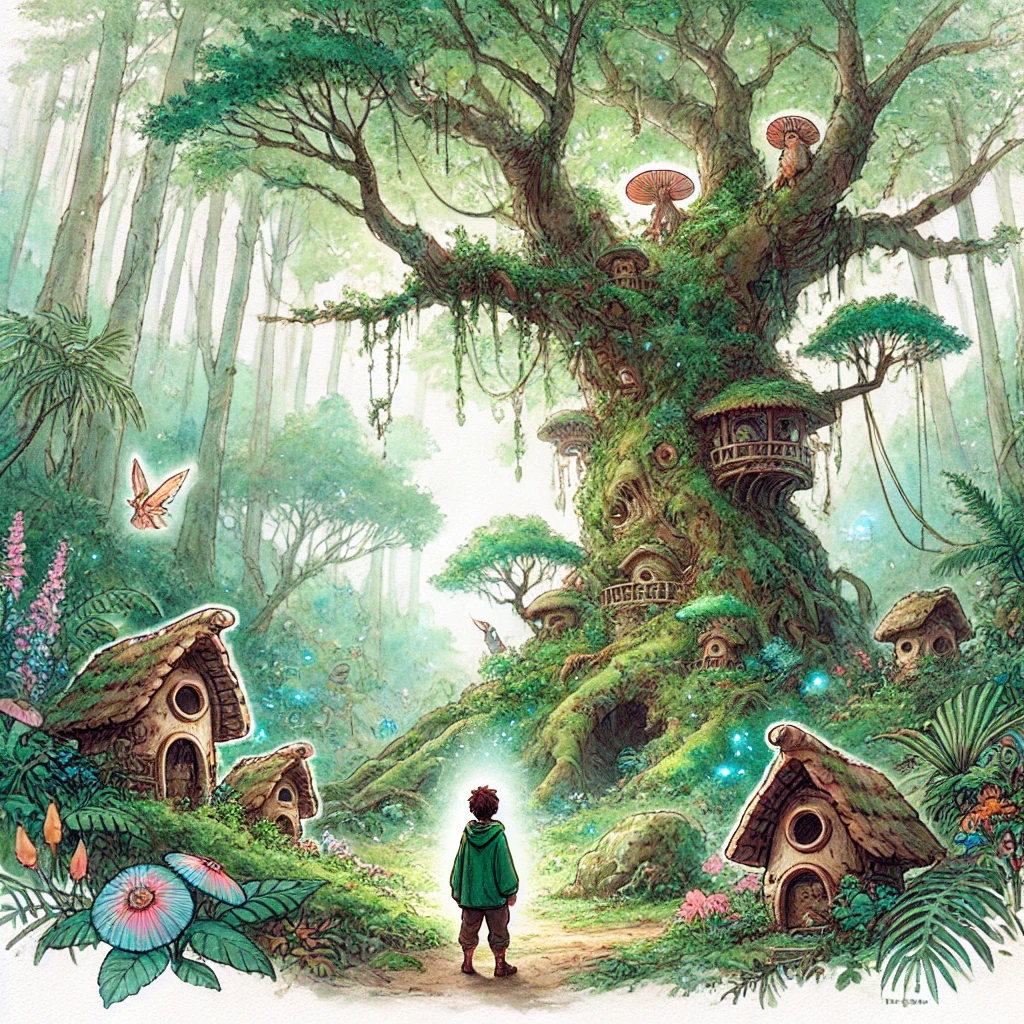
The spiritual world nurtured by the rich nature and unique history of Okinawa. One of the most symbolic expressions of this mystical worldview is the folklore known as “Kijimuna’s Forest – The Tale of the Enchanted Forest Inhabited by Little People.”
In this story, themes such as the importance of keeping promises, harmony with nature, and the continuity between the present life and the afterlife are skillfully woven through the interactions between the forest guardian, Kijimuna, and a young man. The motif of Kijimuna, a small being, represents the forces of nature beyond human understanding, while the forest symbolizes the inner world of humans.
Okinawan folklore, including “Kijimuna’s Forest,” vividly showcases the unique culture of Okinawa, which has been shaped by the island’s natural environment and historical experiences. At the same time, the universal messages embedded in these stories offer valuable insights for us living in the modern world.
The importance of living in harmony with nature, keeping promises, and looking ahead to the afterlife. The significance of respecting diversity and coexisting with others. The story of “Kijimuna’s Forest” conveys such wisdom from the past and prompts us to reconsider the challenges of modern society.
The spiritual world of Okinawa is a rich wellspring that leads us to new realizations. In this blog, we aim to share the wisdom drawn from this wellspring, using the story of “Kijimuna’s Forest” as a guide. Hidden within these age-old folktales are hints for living in the present day. Let’s open the door together to the spiritual world of Okinawa.
- Kijimuna’s Forest – The Tale of the Enchanted Forest Inhabited by Little People
- Living in Harmony with Nature
- Promises and Curses
- Okinawan Folklore and Modern Society
- The Universality of the Story of Kijimuna’s Forest
- The Depth of Okinawa’s Spiritual World
- Q&A
- Conclusion
Kijimuna’s Forest – The Tale of the Enchanted Forest Inhabited by Little People
Once upon a time, deep within the forests of Okinawa, there lived tiny little people. They were called Kijimuna and were only about 10 centimeters tall. The Kijimuna lived peacefully in the forest but disliked being seen by humans.
One day, a young man got lost in the forest. Unable to find his way out by nightfall, he exhaustedly fell asleep at the base of a large tree.
When he woke up, he witnessed a strange sight. Tiny houses stood before him, with little people bustling about. Astonished, he let out a cry. The little people, startled, quickly ran into their homes.
The young man apologized to the little people and explained that he was lost. One of the Kijimuna approached him and said, “We fear humans. Please, do not tell anyone about us.”
The young man promised, and the Kijimuna guided him out of the forest. Before parting, the Kijimuna warned, “If you break your promise, we will bring misfortune upon you.”
The young man returned home safely and kept the encounter a secret. However, as years passed, he forgot the promise and told his friends about the Kijimuna.
That night, a strong wind howled around the young man’s house, and eerie sounds were heard. Frightened, he begged the Kijimuna for forgiveness. Suddenly, the wind stopped, and silence returned.
Since then, the young man respected the Kijimuna’s existence and vowed to protect the forest’s mystery.
Living in Harmony with Nature
The Mystique of the Forest
The Presence and Role of Kijimuna
In the forests of Okinawa, there is a legend about small fairy-like beings called Kijimuna. Kijimuna are known as the guardians of the forest, playing a crucial role in maintaining harmony between nature and humans. They are said to protect the plants and animals of the forest, working to maintain the natural order. Though invisible to human eyes, the people of Okinawa strongly believe in their presence and show respect to them when entering the forest.
Kijimuna do not directly influence humans, but their existence fosters a sense of respect for nature among the Okinawan people. The legends of Kijimuna, passed down through generations, teach the importance of coexisting with nature. Furthermore, the presence of Kijimuna underscores the mystique of the forest, reminding us of the formidable power of nature that transcends human wisdom. Protecting Okinawa’s rich nature and passing it on to future generations is vital, and maintaining respect for Kijimuna is a crucial aspect of this.
The Boundary Between Humans and the Forest
The story of Kijimuna’s Forest highlights the significance of the boundary between humans and the forest. When the young man stumbles into the world of Kijimuna, the line between humans and the forest becomes blurred. This symbolizes what can happen when humans intrude into the realm of nature.
Okinawans have long regarded forests as sacred places and have respected the boundary between humans and nature. When entering the forest, they have always been conscious of being a part of nature, approaching with humility. The story of Kijimuna’s Forest hints at the dangers of crossing this boundary.
While humans are part of nature, they are also distinct from it. Maintaining harmony with nature while fulfilling uniquely human roles is essential. The story of Kijimuna’s Forest teaches us the importance of respecting the boundary between humans and the forest and maintaining a proper distance from nature. In modern society, striving for coexistence with nature and pursuing sustainable development remains a critical issue. Recognizing the boundary between humans and the forest and learning the wisdom to maintain harmony with nature is profoundly meaningful for us today.
Harmony Between Humans and Nature
Okinawa’s Values of Respecting Nature
Okinawan culture is deeply rooted in values that respect nature. The people of Okinawa have viewed nature not merely as a resource but as a vital partner with which to coexist. The story of Kijimuna’s Forest reflects these values of respecting nature.
In the story, the young man promises not to reveal the existence of the Kijimuna after wandering into their world. This underscores the importance of keeping nature’s secrets. Okinawans have always respected the mysteries of nature and have refrained from recklessly bringing them into human society. This humility, living as part of nature, is embedded in Okinawan culture.
Moreover, Okinawans have cherished a sense of gratitude for the blessings of nature. The abundant offerings of the sea and mountains are seen as gifts of nature, and rituals and prayers have been conducted as expressions of respect. In Kijimuna’s Forest, the young man is guided out of the forest safely by the Kijimuna, prompting him to vow to protect the forest’s mysteries, reflecting Okinawa’s values of gratitude and harmony with nature.
In contemporary society, holding values that respect nature is incredibly important. Amidst the outcry over the environmental crisis, pursuing coexistence with nature and building a sustainable society is imperative. Okinawa’s values of respecting nature provide significant insights for us today. Through the story of Kijimuna’s Forest, we can learn the importance of harmony with nature and put it into practice, which is key to building a better future.
Wisdom and Practices of Coexistence
Okinawan culture is rich with wisdom and practices aimed at coexisting with nature. The story of Kijimuna’s Forest is an example of the lessons provided to maintain harmony between humans and nature.
In the story, the young man learns the importance of coexistence with nature by keeping his promise to the Kijimuna. Breaking a promise is believed to invoke nature’s wrath, leading to misfortune. This suggests that human actions can impact nature. Okinawans have maintained reverence for nature, living in accordance with its principles to foster coexistence.
Additionally, Okinawa has nurtured ways of living in harmony with nature. For example, traditional farming methods like “natural farming” avoid the use of chemical fertilizers and pesticides, instead harnessing nature’s power to grow crops. This method aims to maintain soil health and ecological balance. The philosophy of harmony with nature in Kijimuna’s Forest aligns with such practices.
In today’s world, seeking harmony with nature is an urgent issue. Amid climate change and biodiversity loss, there is a pressing need for new wisdom to balance human society with nature. Okinawa’s wisdom and practices of coexistence offer hints for building a sustainable society. It is crucial to apply traditional wisdom to the modern era and advance new initiatives for harmony with nature. The story of Kijimuna’s Forest serves as a valuable guide for this purpose.
Nature Worship Ideals
Okinawa’s Animism Beliefs
Okinawan culture is rooted in the beliefs of animism, the worship of nature. Animism is the belief that spirits inhabit all elements of nature. Okinawans have believed that gods reside in forests, seas, rivers, and mountains. The story of Kijimuna’s Forest reflects these animistic beliefs.
In the story, Kijimuna are depicted as the guardians of the forest, overseeing the spirits dwelling in the flora and fauna and maintaining natural order. Okinawans have respected such nature gods, including Kijimuna, and valued harmony with them.
Moreover, in Okinawan animism, humans are also considered part of nature, returning to it after death. This belief shows a deep connection between humans and nature, fostering respect for nature. In the story, when the young man enters the world of Kijimuna, it is as if he becomes part of nature, reflecting an animistic worldview where the boundary between humans and nature blurs.
In contemporary society, while animism beliefs are fading, the value of respecting nature remains crucial. Viewing nature as a vital partner for coexistence, not merely a resource, is essential for building a sustainable society. The wisdom from Okin
awa’s animism beliefs teaches us the importance of maintaining harmony with and protecting the mysteries of nature. The story of Kijimuna’s Forest is a precious transmission of this ancient wisdom to the modern age.
The Relationship Between Nature and Gods
In Okinawa’s nature worship beliefs, the relationship between nature and gods is highly significant. The story of Kijimuna’s Forest symbolically expresses this relationship.
In the story, Kijimuna are portrayed as guardians of the forest, maintaining natural order and serving as intermediaries between humans and gods. By respecting Kijimuna, Okinawans have maintained their relationship with nature gods.
Okinawa also has many sacred sites dedicated to nature gods. For example, “Utaki,” sacred places where village guardian gods are enshrined, have been focal points for people’s prayers. These sites symbolize the bond between nature and gods and play a crucial role in maintaining harmony between humans and nature. Kijimuna’s Forest can be seen as one of these sacred sites.
The idea of respecting the relationship between nature and gods holds significant meaning in modern society. Approaching nature with reverence, not just as a resource, is vital for building a sustainable society. Protecting the mysteries of nature and passing them on to future generations is our responsibility. The story of Kijimuna’s Forest conveys Okinawa’s wisdom of respecting the relationship between nature and gods, delivering an essential message to us today.
Understanding the relationship between nature and gods and applying its lessons to modern society is key to building a better future. Okinawa’s nature worship beliefs are a valuable guide for this purpose. Through the story of Kijimuna’s Forest, we can learn the connection between nature and gods and gain the wisdom to maintain harmony with nature.
Promises and Curses
The Weight of Words
The Sanctity of Promises
In the story of Kijimuna’s Forest, the weight of words is a significant theme, particularly the sanctity of promises. In the tale, the young man promises the Kijimuna not to reveal their existence to anyone. This promise is not merely words but a sacred vow.
In Okinawan culture, promises have always held profound significance. Making a promise is essential for building trust, and once made, it must be kept. The story of Kijimuna’s Forest underscores this sanctity.
Breaking a promise is seen as an act of betrayal with severe consequences. In the story, the young man suffers the wrath of the Kijimuna after breaking his promise, illustrating the importance of keeping one’s word. Okinawan people have long valued the importance of keeping promises and respecting their sanctity.
In modern society, recognizing the weight of promises is crucial. Trust between individuals is built by keeping promises, and the order of society as a whole is maintained when each person honors their commitments. The story of Kijimuna’s Forest is a valuable lesson in the sanctity of promises, teaching us the importance of taking responsibility for our words.
Respecting the sanctity of promises deepens bonds between people and is essential for building a better society. The lessons from Kijimuna’s Forest highlight the importance of understanding the weight of promises and practicing them in our daily lives.
The Concept of Kotodama
In the story of Kijimuna’s Forest, the weight of words is expressed through the concept of “kotodama.” Kotodama is the belief that words possess spiritual power. In Okinawan culture, words are not just a means of communication but are believed to have mystical power.
The words exchanged by the young man and the Kijimuna are seen as kotodama. The promise carries a sacred power, and breaking it is an act of defiance against this power. The story of Kijimuna’s Forest illustrates the spiritual power of words.
The concept of kotodama also emphasizes the importance of choosing and using words carefully. Okinawan people have valued the careful selection of words, speaking with respect and consideration. The belief in the power of words offers significant insights into the nature of communication.
In modern society, the power of words may often be underestimated. However, words have a profound impact on people’s hearts. The concept of kotodama reminds us of the importance of valuing words and can help cultivate a respectful attitude towards communication. Thoughtfully choosing and conveying words strengthens human connections.
The story of Kijimuna’s Forest conveys the wisdom of Okinawa, emphasizing the power of kotodama. Understanding the mystical power of words and valuing them is essential for building better human relationships. We should strive to incorporate the belief in kotodama into our lives, recognizing the influence of our words.
Fear of Curses
Types and Examples of Curses
The story of Kijimuna’s Forest depicts the consequences of breaking a promise, resulting in a curse. In Okinawan culture, curses are an important concept, playing a significant role in guiding people’s actions.
Various types of curses are believed to exist in Okinawa. For instance, “Zankan” refers to curses resulting from neglecting ancestor worship, while “Gasuin” is believed to be caused by disrespecting the water gods. The curse in the story of Kijimuna’s Forest can be interpreted as the wrath of nature provoked by breaking a promise.
Curses are considered terrifying and to be avoided at all costs. People believe that curses bring about illness or misfortune, and they have taken actions to avoid them in their daily lives.
Historical examples of curses are numerous in Okinawa. For instance, “Yuta,” or spiritual mediums, are known to identify the causes of curses and provide remedies. Stories also tell of people who prayed at shrines and temples to be freed from curses.
In modern society, curses may be viewed as superstitions. However, the fear of curses has played a crucial role in guiding ethical behavior. The story of Kijimuna’s Forest not only highlights the terror of curses but also teaches wisdom in guiding behavior.
The concept of curses provides valuable insights for modern society. Avoiding actions that provoke nature’s wrath and maintaining ethical behavior are essential for building a sustainable society. We should learn from the fear of curses in Kijimuna’s Forest and acquire wisdom to maintain harmony with nature.
Behavioral Norms to Avoid Curses
The story of Kijimuna’s Forest outlines behavioral norms to avoid curses. The young man avoids a curse by keeping his promise, reflecting the wisdom cultivated by Okinawan people to avoid curses.
In Okinawa, various behavioral norms have been established to avoid curses. For instance, the spirit of mutual assistance, known as “Yui Maru,” has played an important role in avoiding curses. Helping those in need builds good relationships, preventing actions that could provoke curses.
Respecting nature is also crucial for avoiding curses. Okinawan people have refrained from actions that desecrate nature’s gods, striving to maintain harmony with nature. In Kijimuna’s Forest, the young man’s vow to protect the forest’s mystery reflects this respect for nature.
Honoring ancestors is another key aspect of avoiding curses. Regular ancestor worship is believed to secure their blessings. Respecting ancestors strengthens family bonds and prevents actions that could invite curses.
In modern society, directly applying these norms may be challenging. However, the wisdom to avoid curses offers valuable insights. Valuing human connections, respecting nature, and learning from ancestral wisdom are essential for building a better society.
The story of Kijimuna’s Forest is a precious transmission of behavioral norms to avoid curses. We should apply the wisdom learned from the story to modern life and acquire the knowledge to avoid actions that provoke curses. This will help us maintain harmony with nature and deepen human connections.
The Concept of Karma
The Relationship Between Actions and Consequences
The story of Kijimuna’s Forest reflects the concept of karma, which holds that actions inevitably lead to consequences. Good deeds bring good results, while bad deeds bring bad outcomes.
The young man’s suffering from a curse after breaking his promise epitomizes the concept of karma. Breaking a promise is a betrayal of trust with the Kijimuna, resulting in a bad outcome.
In Okinawan culture, the concept of karma is deeply ingrained. People believe that their daily actions impact future outcomes, striving to do good deeds. Virtues like “Kwatchi” (kindness) and “Yui Maru” (mutual assistance) are closely linked to this belief.
The concept of karma also influences relationships with nature. Respecting nature and maintaining harmony with it are seen as good deeds, while actions desecrating nature are avoided. The story of Kijimuna’s Forest hints at the karmic relationship with nature.
In modern society, the concept of karma is not universally shared. However, the idea that actions lead to consequences plays a crucial role in promoting ethical behavior. The concept of karma teaches the importance of taking responsibility for one’s actions.
The story of Kijimuna’s Forest is a valuable transmission of the concept of karma, emphasizing the link between actions and consequences. Applying this wisdom to modern life encourages ethical behavior, helping us build a better society.
The Continuity Between This Life and the Next
The story of Kijimuna’s Forest reflects the belief in the continuity between this life and the next. In Okinawan culture, it is believed that actions in this life affect the afterlife.
The young man’s suffering from a curse after breaking his promise suggests that actions in this life have consequences in the next. Breaking a promise is not only a bad deed in this life but also leads to negative outcomes in the afterlife.
In Okinawa, the term “Gusoo” refers to the afterlife. It is believed that good deeds in this life lead to happiness in Gusoo. People have strived to accumulate good deeds in this life, hoping for happiness in the afterlife.
Honoring ancestors is also crucial in this belief. Ancestors are seen as linking this life and the next, and honoring them ensures their blessings. Regular ancestor worship is considered a good deed in this life and contributes to happiness in the afterlife.
In modern society, belief in the continuity between this life and the next may be rare. However, the idea that actions in this life affect the afterlife plays a crucial role in promoting long-term ethical behavior.
The story of Kijimuna’s Forest conveys Okinawan wisdom about the continuity between this life and the next. Applying this wisdom to modern life encourages us to accumulate good deeds, leading to a better life and society. Recognizing the continuity between this life and the next provides a longer-term perspective for our actions.
Okinawan Folklore and Modern Society
Preservation of Folklore
The Importance of Oral Tradition
The story of Kijimuna’s Forest is part of Okinawa’s oral tradition. Oral tradition refers to culture transmitted orally rather than in writing. In Okinawa, stories, songs, and dances have been passed down orally for generations.
Oral tradition differs from written culture. While written records remain unchanged over time, orally transmitted information can change with each storyteller. Oral tradition creates direct communication between the storyteller and the listener, sharing not just information but emotions.
Historically, Okinawa’s oral tradition has played a crucial role. For instance, the records of envoys in the Ryukyu Kingdom, known as “Osappou Shiroku,” were transmitted orally. Okinawa’s unique drama, “Kumiodori,” is also based
on stories passed down orally.
Kijimuna’s Forest is part of this oral tradition. The story is deeply engraved in listeners’ hearts through direct transmission from storytellers. The story evolves with each storyteller, incorporating new interpretations.
Oral tradition remains significant in modern society. Even in a literate society, orally transmitted information has a richness that writing cannot capture. Oral tradition also strengthens community bonds, fostering intergenerational exchange and cultural preservation.
Kijimuna’s Forest is a precious example of the importance of oral tradition. Recognizing the value of storytelling and preserving oral culture is essential. This will ensure that Okinawa’s rich culture is passed on to future generations and strengthen community bonds.
Efforts to Preserve Folklore
Preserving Okinawan folklore, including Kijimuna’s Forest, requires various efforts. Folklore is at risk of being lost over time, necessitating proactive preservation measures.
Okinawa has implemented various measures to preserve folklore. The Okinawa Prefectural Cultural Property Protection Ordinance protects intangible cultural assets, including traditional arts and crafts. The Okinawa Prefectural University of Arts provides education aimed at preserving and developing traditional performing arts.
Training storytellers is crucial for preserving folklore. In Okinawa, storytellers known as “Yuntaku” have transmitted stories, songs, and dances to the next generation. Supporting and nurturing Yuntaku is essential for preserving folklore.
Recording folklore is also important. While oral tradition evolves over time, recording preserves the folklore of each era for posterity. Recent efforts include utilizing digital technology to preserve and share folklore.
Preserving the story of Kijimuna’s Forest involves actively telling the story to children and making them aware of its importance. Providing opportunities to learn about Okinawan nature, culture, and values through the story is also crucial.
Efforts to preserve folklore are vital not only for protecting Okinawan culture but also for providing valuable lessons for modern society. Applying the wisdom from folklore can help build a better society. We should cherish and nurture Okinawan folklore, including the story of Kijimuna’s Forest.
Lessons for Modern Society
Practicing Harmony with Nature
The story of Kijimuna’s Forest teaches the importance of living in harmony with nature. Through his promise to the Kijimuna, the young man learns to respect nature and maintain harmony with it. This lesson is highly relevant in modern society.
Today, environmental destruction is accelerating, leading to severe issues like global warming and biodiversity loss. In this context, practicing harmony with nature is an urgent challenge.
To practice harmony with nature, it is essential to hold a deep respect for it. As the story of Kijimuna’s Forest teaches, nature is sacred and should be approached with reverence. Viewing nature as a partner for coexistence rather than an object of control is necessary.
Practicing harmony with nature also requires concrete actions. For example, adopting an environmentally friendly lifestyle and participating in conservation activities are vital. Daily awareness and practice of harmony with nature are crucial.
Learning from traditional wisdom is also essential for practicing harmony with nature. Okinawan folklore, including Kijimuna’s Forest, is rich with insights on coexisting with nature. Applying this wisdom to modern life and exploring new ways of coexistence is necessary.
Harmony with nature is a challenge for each individual and society as a whole. The lessons from Kijimuna’s Forest emphasize the importance of practicing harmony with nature, guiding us toward a sustainable future.
Cultivating an Ethic of Keeping Promises
The story of Kijimuna’s Forest highlights the importance of keeping promises. The young man learns this lesson through the consequences of breaking his promise. This lesson is significant for cultivating an ethic of keeping promises in modern society.
In today’s world, interpersonal connections are weakening, and there is an increasing tendency not to keep promises. Breaking promises undermines trust and disrupts social order. Cultivating an ethic of keeping promises is crucial in this context.
To cultivate this ethic, recognizing the importance of promises is vital. As the story of Kijimuna’s Forest teaches, promises are sacred and must not be taken lightly. Making and keeping promises is essential for building trust.
Practicing the ethic of keeping promises in daily life is also important. Keeping even small promises is crucial for deepening trust and refining one’s character.
Education plays a significant role in cultivating this ethic. Schools should teach the importance of promises and encourage keeping them. Families should also pass on the ethic of keeping promises to their children.
The ethic of keeping promises is essential for maintaining social order and deepening connections between people. The lessons from Kijimuna’s Forest emphasize the importance of this ethic, guiding us toward a more trustworthy society.
Preservation and Development of Traditional Culture
The Significance and Continuation of Traditional Festivals
The story of Kijimuna’s Forest is part of Okinawa’s traditional culture, which includes various traditional festivals. These festivals play a significant role in conveying Okinawa’s history, culture, and values.
For example, “Eisa,” a Bon dance, is known for comforting ancestral spirits. Eisa, performed with drums, strengthens community bonds. “Haari,” a boat race, prays for a good catch and showcases fishermen’s courage and unity, expressing gratitude for the sea’s blessings.
These traditional festivals are not mere entertainment but expressions of Okinawan spirituality. Through these festivals, people express gratitude to ancestors and reverence for nature, strengthening community bonds.
Continuing traditional festivals is crucial for preserving and passing on Okinawan culture. However, in modern society, continuing these festivals is becoming challenging due to urbanization and the weakening of traditional support structures.
Recognizing the significance of traditional festivals and taking measures to support their continuation is necessary. Cooperation between government and communities is vital for supporting traditional festivals. Educating the younger generation about the importance of these festivals and nurturing successors is also essential.
Okinawan traditional culture, including the story of Kijimuna’s Forest, holds significant meaning in modern society. Recognizing the importance of traditional festivals and supporting their continuation will help pass on Okinawa’s rich culture to future generations.
Adapting Tradition to Modern Society
Okinawan traditional culture, including the story of Kijimuna’s Forest, has evolved over time. Oral tradition’s nature allows stories to change with each storyteller, incorporating new interpretations. This evolution of tradition is significant in modern society.
Modern society is rapidly changing due to globalization and technological innovation. In this context, traditional culture must also evolve to stay relevant. Adapting tradition to modern society requires a flexible attitude.
For example, Okinawa’s traditional performing art, “Kumiodori,” has evolved to include modern themes and new works. Modern production techniques have also been incorporated, making Kumiodori vibrant in contemporary society.
Utilizing digital technology is also crucial for adapting tradition to modern society. Digital archives can widely share information about traditional culture, and virtual reality (VR) can provide immersive experiences of tradition.
The story of Kijimuna’s Forest can also be adapted to modern society. Presenting the story in a contemporary manner can make it more accessible to younger generations. Connecting the story’s lessons to modern issues can also impart a universal meaning.
Adapting traditional culture to modern society not only preserves tradition but also creates new value. We hope that Okinawan traditional culture, including the story of Kijimuna’s Forest, continues to thrive vibrantly in modern society.
The Universality of the Story of Kijimuna’s Forest
Comparison with World Myths and Folklore
Common Themes in Stories of Little People
The little people in the story of Kijimuna’s Forest are akin to similar beings found in myths and folklore worldwide. Known by various names such as “little people,” “fairies,” and “dwarves,” these beings often possess mysterious powers and inhabit the natural world.
For example, Irish folklore features the “leprechaun,” a small being said to live deep in the forest and wield magical powers. In German folklore, “kobolds” are little people known to dwell in mines and guard treasures.
There are several commonalities in these tales of little people. First, they are often depicted as inhabitants of nature. Just as the Kijimuna live in the forest, leprechauns and kobolds reside in forests or mines, far from human settlements. This suggests a close association between little people and the natural world.
Secondly, these beings are typically portrayed as distinct from humans. They possess smaller bodies and magical abilities, indicating they belong to a different realm.
Additionally, little people are frequently depicted as ambivalent towards humans, capable of both helping and harming them. This duality mirrors the ambivalent nature of the forces of nature, which can be both beneficial and dangerous to humans.
The story of Kijimuna’s Forest shares these universal themes, symbolizing the relationship between humans and nature through the motif of little people. The tale embodies themes found in global myths and folklore, making it a narrative with universal resonance.
Depictions of the Relationship Between Nature and Humans
Kijimuna’s Forest is also notable for its depiction of the relationship between nature and humans. Through his promise to the Kijimuna, the young man learns the importance of harmony with nature. This theme is prevalent in myths and folklore worldwide.
In ancient Greek mythology, “nymphs” are nature spirits residing in forests, rivers, and springs, overseeing natural blessings. Similarly, in Norse mythology, the “Vanir” gods are associated with fertility and natural blessings, playing a role in maintaining harmony between humans and nature.
These myths and legends emphasize the importance of respecting and maintaining harmony with nature. They teach gratitude for nature’s blessings and the necessity of preserving it. The story of Kijimuna’s Forest carries a similar message.
Moreover, stories about the relationship between nature and humans often highlight nature’s threats. Nature, while providing blessings, is also a force to be feared. In Kijimuna’s Forest, the young man faces the wrath of nature after breaking his promise, illustrating nature’s potential dangers.
Such stories question the human way of life, emphasizing the challenge of living in harmony with nature. The story of Kijimuna’s Forest and other global myths symbolically address this universal challenge.
The relationship between nature and humans remains a crucial theme in modern society. Learning from global myths and folklore, we must explore ways to coexist with nature.
Messages Relevant to Modern Society
The Importance of Environmental Protection
The story of Kijimuna’s Forest carries messages pertinent to modern society, particularly the importance of environmental protection. Through his promise to the Kijimuna, the young man learns the significance of respecting nature and maintaining harmony with it. This message is deeply connected to the importance of environmental protection in today’s world.
Modern society faces a global environmental crisis, with issues like global warming, biodiversity loss, and deforestation. In such a context, protecting nature and the environment is an urgent task.
The story of Kijimuna’s Forest emphasizes the importance of respecting nature. It teaches that nature should be approached with reverence, not merely as a resource. This mindset is essential for advancing environmental protection.
The story also underscores the importance of maintaining harmony with nature. Humans are part of nature and must strive for coexistence. Environmental protection requires aiming for human-nature coexistence, appreciating nature’s blessings while building a sustainable society.
The story of Kijimuna’s Forest conveys a universal message about the importance of environmental protection. We must cultivate a mindset that values nature and engage in environmental protection efforts.
Respecting Diversity and Coexistence
The story of Kijimuna’s Forest also highlights the themes of respecting diversity and coexistence. The tale depicts the interaction between humans and the Kijimuna, emphasizing the importance of mutual respect.
In the story, the young man encounters the Kijimuna, discovering a world different from his own. Through their promise, the Kijimuna recognize the possibility of coexistence with humans. By acknowledging and respecting each other’s differences, they forge a new relationship.
These themes are equally relevant in modern society, where globalization has led to the coexistence of diverse cultures and values. Recognizing and respecting differences is essential in such a context.
Respecting diversity requires understanding and empathy towards different beings. Engaging in dialogue and considering others’ perspectives helps overcome differences. The story of Kijimuna’s Forest suggests ways to respect diversity and coexist.
Moreover, respecting diversity fosters the creation of new values. The encounter of different cultures and values sparks new ideas and innovation. In Kijimuna’s Forest, the meeting of humans and Kijimuna leads to a new relationship, demonstrating that respecting diversity contributes to societal development.
In modern society, respecting diversity and coexistence are essential themes. Learning from the story of Kijimuna’s Forest, we must build a society that recognizes differences and lives together.
The Depth of Okinawa’s Spiritual World
The Symbolism of the Story of Kijimuna’s Forest
The Metaphorical Significance of the Forest and Little People
The story of Kijimuna’s Forest features the symbolic motifs of the forest and little people, which hold deep metaphorical meanings.
Firstly, the forest symbolizes a mystical world distinct from human everyday life. As a primal space separated from civilization, the forest is seen as a place imbued with powers beyond human understanding. The forest in Kijimuna’s Forest is depicted as a remote, mystical place, suggesting the awe-inspiring nature of the forest.
Additionally, the forest symbolizes the human inner world. The depths of the forest can be interpreted as representing the unconscious realm. In the story, the young man faces his inner self by getting lost in the forest, indicating the forest as a symbol of a journey of self-exploration.
On the other hand, little people symbolize beings different from humans. Though small in stature, they possess magical powers, representing their mysterious nature.
Little people also symbolize the forces of nature. The Kijimuna, depicted as guardians of the forest, represent the natural order, indicating that they symbolize the power of nature.
The symbolic motifs of the forest and little people weave a narrative about the relationship between humans and nature and the exploration of the human inner world. The story of Kijimuna’s Forest expresses the depth of Okinawa’s spiritual world through these symbols.
The Worldview Conveyed by the Story
The story of Kijimuna’s Forest symbolically expresses the worldview of Okinawa, encapsulating the characteristics of Okinawa’s spiritual world.
Firstly, the story reflects the belief in nature worship. The Kijimuna, depicted as guardians of the forest, embody the natural order. The young man learns reverence for nature by experiencing its mystery, symbolizing Okinawa’s nature worship.
The story also reflects the Okinawan worldview of the continuity between this life and the next. The Kijimuna connect the present and afterlife, indicating that actions in this life affect the next.
Additionally, the story embodies the belief in ancestor worship. The Kijimuna, invoking the power of ancestors to curse the young man, reflect the belief that ancestors influence the living world.
Thus, the story of Kijimuna’s Forest symbolically expresses the characteristics of Okinawa’s spiritual world, weaving together themes of nature worship, the continuity between lives, and ancestor worship.
The story provides a crucial insight into understanding Okinawa’s worldview, revealing the depth of Okinawa’s spiritual world. This worldview offers valuable lessons for modern society, highlighting the importance of living in harmony with nature, respecting ancestors, and considering the afterlife.
Connections with Other Okinawan Folktales
Similar Stories and Common Themes
The story of Kijimuna’s Forest is connected to other Okinawan folktales, sharing common themes with them.
For example, the tale of “The Master of the Muddy River in Kin Village” features a little person who makes a promise with a human. When the human breaks the promise, the little person becomes angry and curses them, echoing the themes in Kijimuna’s Forest.
Similarly, the legend of “The Celestial Maiden of Hamahiga Island” shares themes with Kijimuna’s Forest. In this legend, a celestial maiden marries a human man but returns to heaven after he breaks his promise. This tale underscores the importance of promises and the consequences of breaking them.
These Okinawan folktales share themes such as the importance of promises, harmony with nature, and the continuity between this life and the next. These themes reflect the characteristics of Okinawa’s spiritual world.
Moreover, Okinawan folktales frequently feature beings like little people and celestial maidens, representing mysterious forces beyond human understanding. This suggests a strong reverence for beings beyond human intellect in Okinawa’s spiritual world.
The story of Kijimuna’s Forest exemplifies these characteristics, creating a unique narrative world while sharing common themes with other folktales.
Okinawan folktales, while each telling unique stories, collectively express the values and worldview of Okinawan people. Understanding the story of K
ijimuna’s Forest deepens our understanding of Okinawa’s spiritual world.
The Overall Picture of Okinawa’s Spiritual World
Okinawan folktales, including the story of Kijimuna’s Forest, reveal the overall picture of Okinawa’s spiritual world. Common themes and beliefs in these tales form the core of Okinawa’s worldview.
One key aspect of Okinawa’s spiritual world is nature worship. Folktales often depict nature as a sacred presence, emphasizing the importance of harmony with nature and adherence to its principles.
Another aspect is the strong awareness of the continuity between this life and the next. Actions in this life are believed to affect the afterlife. The story of Kijimuna’s Forest portrays this continuity through the consequences of breaking promises.
Ancestor worship is another prominent feature. Ancestors are revered as influential beings in the living world, with their worship being an essential duty. Many folktales, including Kijimuna’s Forest, depict the influence of ancestral power on the story’s events.
Thus, Okinawa’s spiritual world is shaped by beliefs in nature worship, continuity between lives, and ancestor worship, all interrelated to form Okinawa’s worldview.
The story of Kijimuna’s Forest symbolically represents this overall picture of Okinawa’s spiritual world, encapsulating shared beliefs while creating a unique narrative.
Okinawa’s spiritual world offers valuable insights for modern society, emphasizing harmony with nature, gratitude to ancestors, and considering the afterlife. Folktales like Kijimuna’s Forest provide precious clues for understanding and learning from this worldview.
The Uniqueness and Universality of Okinawan Culture
Unique Development Due to Geographic and Historical Background
Okinawan culture has developed uniquely, influenced by its geographic and historical context.
Okinawa, located at Japan’s southernmost tip, is an island region surrounded by the sea. This environment has significantly impacted its culture. Through maritime trade, Okinawa has absorbed diverse cultures while cultivating its unique traditions.
Historically, Okinawa has had unique experiences. As the Ryukyu Kingdom, it established its own culture and engaged in exchanges with China, Japan, and Southeast Asia. Later annexed by Japan and enduring fierce ground battles during World War II, Okinawa was under U.S. military rule for many years. These historical experiences have uniquely colored Okinawan culture.
The story of Kijimuna’s Forest reflects Okinawa’s geographic and historical uniqueness, embodying the worldview shaped by its island environment and external exchanges.
Okinawan culture, developed under these circumstances, has created unique traditions unlike any other. The story of Kijimuna’s Forest symbolically expresses this uniqueness.
Connections with Universal Human Values
At the same time, Okinawan culture connects with universal human values. The themes in the story of Kijimuna’s Forest are both unique to Okinawa and universally significant.
For instance, the idea of living in harmony with nature reflects Okinawan nature worship and provides crucial insights for addressing modern environmental issues. Human-nature coexistence is a global challenge.
The importance of keeping promises, emphasized in the story, reflects Okinawan spiritual beliefs and the universal value of trust in human relationships. Keeping promises is an essential ethical principle for social life.
The worldview of continuity between lives, while unique to Okinawa, also raises universal questions about the meaning of life. Considering the afterlife encourages reflection on how we live in this world.
Thus, the story of Kijimuna’s Forest expresses Okinawa’s spiritual world while connecting with universal human values. Okinawan culture, with its unique development, contains themes of universal significance.
Okinawan culture is a profound blend of regional uniqueness and universality. The story of Kijimuna’s Forest symbolically represents these qualities, offering insights into Okinawa’s spiritual world and universal human values.
In conclusion, exploring the story of Kijimuna’s Forest reveals the depth of Okinawa’s spiritual world. The story symbolically expresses Okinawa’s perspectives on nature, the afterlife, and values, highlighting the uniqueness and universality of Okinawan culture.
The story of Kijimuna’s Forest teaches many important lessons: the importance of respecting nature, keeping promises, considering the afterlife, respecting diversity, and coexisting with others. These messages are profoundly relevant for modern society.
Okinawan folklore is a precious cultural heritage nurtured over a long history. It embodies the wisdom of ancestors and conveys messages for us living today. Cherishing and learning from Okinawan folklore, including the story of Kijimuna’s Forest, is essential for our times.
Okinawa’s spiritual world is like a rich wellspring, guiding us to new insights. We should continue our life’s journey with the wisdom drawn from this wellspring, hoping that the story of Kijimuna’s Forest serves as a beacon along the way.
Q&A
What aspects of Okinawa’s spiritual world are expressed in the story of Kijimuna’s Forest?
The story of Kijimuna’s Forest symbolically expresses several key aspects of Okinawa’s spiritual world, including nature worship, the continuity between this life and the afterlife, and ancestor worship. Through themes such as the relationship between nature and humans and the importance of promises, the story conveys the unique worldview of Okinawa.
What common themes can be found in Okinawan folklore?
Common themes in Okinawan folklore include harmony with nature, the importance of promises, and the continuity between this life and the next. These themes reflect the characteristics of Okinawa’s spiritual world, expressing the values and worldview of Okinawan people through their traditional stories.
What symbolic meanings are associated with the forest and little people in the story of Kijimuna’s Forest?
The forest symbolizes a mystical world different from everyday human life and also represents the human inner world. The little people, or Kijimuna, symbolize beings different from humans and embody the forces of nature. Through these motifs, the story explores the relationship between humans and nature as well as the human inner world.
What factors have shaped the uniqueness of Okinawan culture?
The uniqueness of Okinawan culture has been shaped by its geographic characteristics as an island region and its historical experiences from the Ryukyu Kingdom era to the present. Okinawa has absorbed diverse cultures through external exchanges while cultivating its own perspectives on nature and worldview.
What lessons can modern society learn from the story of Kijimuna’s Forest?
The story of Kijimuna’s Forest offers important lessons for modern society, such as the importance of harmony with nature, the significance of keeping promises, and the respect for diversity. These lessons can help achieve a sustainable society and build trustful relationships among people.
Conclusion
The story of “Kijimuna’s Forest – The Tale of the Enchanted Forest Inhabited by Little People” symbolically expresses the spiritual world of Okinawa. It intricately weaves themes such as nature worship, the continuity between this life and the afterlife, and ancestor worship into the narrative. The motifs of the forest and little people play crucial roles in depicting the relationship between humans and nature and the human inner world, giving the story profound symbolism.
Furthermore, common themes in Okinawan folklore, including harmony with nature and the importance of promises, reflect Okinawan values and worldview. These themes serve as valuable clues for understanding Okinawa’s spiritual world.
Okinawan culture has developed uniquely due to its geographic characteristics as an island region and its distinctive historical experiences. The story of Kijimuna’s Forest symbolically represents this uniqueness.
At the same time, the story contains significant insights for modern society. Lessons about harmony with nature, the importance of keeping promises, and the respect for diversity are among the many teachings we can derive from the story. By engaging with the story of Kijimuna’s Forest, we can access the wisdom of Okinawa’s spiritual world and reflect on the challenges of modern society.
Okinawan folklore, nurtured over a long history, is a precious cultural heritage and a message from our ancestors to those of us living today. Embracing and applying the lessons from the story of Kijimuna’s Forest, we can strive to live in harmony with nature, keep our promises, and respect diversity. These values are essential for navigating the future.
The spiritual world of Okinawa is like a rich wellspring, guiding us to new insights. We should continue our journey with the wisdom drawn from this wellspring, hoping that the story of Kijimuna’s Forest serves as a beacon along the way.


コメント