
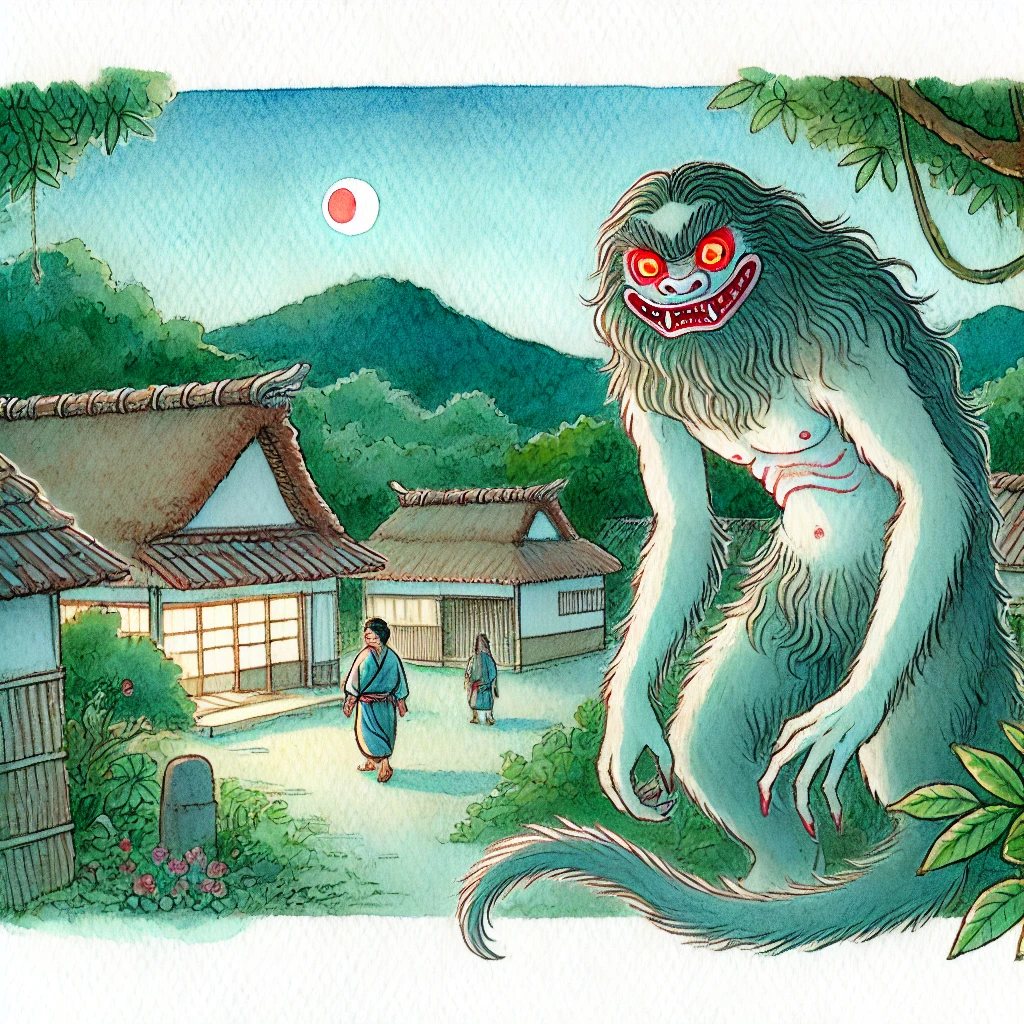
Okinawa is rich in unique culture and spirituality, which has been cultivated over its long history. One way to catch a glimpse of this heritage is through the local folklore and legends passed down across the region. Among these stories, the legend of “Mīfugā” stands out as a tale of a terrifying monster, renowned and recounted for generations.
Mīfugā is depicted as a creature that, while resembling a human, possesses beast-like characteristics. Emerging at night to terrorize people, it embodies the essence of fear itself. However, this legend is not merely a ghost story. It deeply reflects Okinawan views on nature, community, and the significance of oral tradition, highlighting the spiritual world of Okinawa.
Moreover, the legend of Mīfugā offers important messages even to us in the modern era. It teaches us the value of preserving and passing down traditional culture, the importance of community cohesion, and living in harmony with nature. The lessons from this legend are numerous and profound.
In this blog, we will explore Okinawan culture, history, and spirituality through the lens of the Mīfugā legend. From a folkloristic perspective, we will unravel the deeper meanings of the legend and consider its relevance to contemporary society. Join us on a journey to discover the allure of Okinawa and the wisdom of its ancestors.
Folktales and legends serve as mirrors reflecting the universal values rooted in our hearts and as lights illuminating the challenges of modern society. Through the legend of Mīfugā, we hope to find connections between Okinawan culture and today’s world, rediscovering the power and significance of these ancient stories.
So, let’s step into the world of the fearsome yet fascinating monster, Mīfugā, together. This journey promises discoveries and emotions as we delve into the rich culture and spirituality of Okinawa.
- The Legend of Mīfugā – The Monster That Attacked Villages
- Why the Legend of Mīfugā is So Terrifying
- The Importance of Understanding the Spiritual World of Okinawans
- Real Incidents and Folklore
- The Significance of Legends and Folktales as Cultural Heritage of Okinawa
- The Significance of the Legend of Mīfugā in Modern Society
- Q&A
- Summary of This Blog
The Legend of Mīfugā – The Monster That Attacked Villages
Once upon a time, in a certain village in Okinawa, a terrifying monster known as Mīfugā began to appear. At first glance, Mīfugā seemed to have a human form, but upon closer inspection, its body was covered in hair, its eyes glowed red, and sharp fangs protruded from its mouth.
Every night, Mīfugā would come to the village, attacking livestock and terrorizing the people. The villagers lived in constant fear of Mīfugā, retreating to their homes at dusk and daring not to venture outside. Their lives were overshadowed by an ever-present dread.
One day, however, a brave young man decided to confront Mīfugā. He lay in wait at the edge of the village before sunset, prepared to face the monster. The villagers admired his courage but could not help but worry for his safety.
As night fell, Mīfugā appeared. The young man, armed with his weapon, confronted the beast. A fierce battle ensued, with Mīfugā proving to be incredibly strong. The young man struggled, sustaining deep wounds from Mīfugā’s sharp claws and fangs.
After a long and grueling fight, the young man finally managed to defeat Mīfugā. As he stood over the fallen monster, he sighed in relief. But with its dying breath, Mīfugā issued a chilling warning:
“Defeating me is futile. My kin will come to attack this village. You will live in perpetual fear.”
True to Mīfugā’s prophecy, other monsters began to appear in the village afterward. The people were once again gripped by terror, and their fleeting peace was shattered. To this day, the legend of Mīfugā continues to be told, instilling fear in the hearts of those who hear it.
Why the Legend of Mīfugā is So Terrifying
The Monster in Human Form
One reason the legend of Mīfugā instills such deep fear in us is that the monster takes on a human form. Because it looks so much like us, we feel a certain kinship with Mīfugā. We imagine it as someone we know or even as ourselves.
However, this familiarity only heightens the horror when we realize that Mīfugā possesses beastly features: a hairy body, glowing red eyes, and sharp fangs. The more human it appears, the more its animalistic traits stand out, amplifying our fear. The shock of discovering that something so similar to us is actually a monster is overwhelming.
This duality makes us lower our guard around Mīfugā. Yet, the revelation of its true nature hits us harder than encountering an obviously non-human creature. The shock of realizing that a friend or loved one is actually a foe is immense.
Mīfugā’s beastly characteristics—red eyes that evoke predatory animals, sharp fangs that suggest a viciousness for tearing flesh, and a hairy body indicating a primal, uncivilized existence—underscore its nature as an uncontrollable, incomprehensible entity.
Despite its human guise, Mīfugā may symbolize the “beast within” each of us. In our civilized lives, we suppress our wild sides, but Mīfugā’s presence reminds us of the fear that this wildness could surface at any moment.
Mīfugā’s appearance visualizes our subconscious fears: the beastly nature hidden within humanity, fear of the unknown, and anxiety about parts of ourselves we don’t fully understand. Mīfugā masterfully evokes these emotions, drawing out the deepest fears from our hearts.
This legend makes us confront the terrifying possibility that we might become Mīfugā. The beastly and violent aspects of human nature reside within everyone. Mīfugā embodies these darker sides, forcing us to face the frightening parts of ourselves.
The Threat That Lurks at Night
The legend’s fear factor is heightened by the fact that Mīfugā appears at night. Night, ruled by darkness after the sun sets, is a time when we retreat and seek the safety of our homes. It represents a non-routine time filled with potential hidden threats.
The night-time setting of Mīfugā’s appearances taps into our primal fear of the dark. As children, we believed in ghosts coming out at night. Even as adults, many of us feel uneasy walking alone in the dark. Night obscures our vision and dulls our hearing, making us more vulnerable to unseen dangers. Mīfugā exploits this fear of the night.
This setting also symbolizes a threat to our daily lives. During the day, surrounded by family, friends, and colleagues, we feel safe. But at night, this safety is compromised. Mīfugā attacks livestock and terrifies people, infiltrating our peaceful lives as we sleep.
Night is when we are most defenseless. During the day, we remain vigilant against danger, but at night, we lower our guard. Mīfugā strikes when we least expect it, transforming our sense of security into one of constant threat.
Imagining Mīfugā’s glowing red eyes and sharp fangs emerging from the darkness heightens the fear. Its human form makes it even scarier, and the tension of not knowing when it will strike again amplifies the terror.
This night-time setting stimulates our instinctual fears: the unknown lurking in the dark, the unpredictability of attacks, and our helplessness. These age-old fears are expertly evoked by the legend of Mīfugā.
Fear That Never Ends
The terror from the legend of Mīfugā is not fleeting. Even after the brave young man defeats Mīfugā, the monster warns, “My kin will attack this village.” This suggests that the fear continues indefinitely. This aspect instills a sense of hopelessness and prolongs the fear.
Mīfugā’s threat isn’t just from a single entity but from a group. Defeating one Mīfugā only means another will appear. This endless cycle of fear prevents any sense of security. Normally, defeating a monster marks the end of a story, but in Mīfugā’s legend, the defeat only heralds new threats.
This creates a chain of fear. Eliminating one threat only to face another forces us into a perpetual state of fear. Mīfugā’s menace is everlasting, not temporary.
Moreover, the legend offers no escape from the fear. Even the brave young man couldn’t completely vanquish Mīfugā, leaving us with a sense of despair. The idea that no matter how hard we try, we can’t escape the fear, is deeply unsettling.
Mīfugā’s terror is enduring. Defeating one monster only means another will appear, keeping us in constant fear. The lack of an escape route intensifies the despair, prolonging the sense of terror.
In real life, we face various fears such as illness, accidents, crime, and natural disasters. These threats are constant. The legend of Mīfugā may symbolically represent these real-world fears.
While highlighting the difficulty of facing fear, Mīfugā’s legend also teaches the importance of courage. Even if the fear never ends, we must keep facing it. Working together with others to overcome challenges is also crucial. The legend contains messages about bravery and cooperation.
The legend’s terror is constructed from three elements: the monster in human form, the threat at night, and the fear that never ends. Mīfugā draws out our deepest fears because it looks human. Its night-time appearances tap into our fear of the dark, threatening our daily lives. The never-ending fear robs us of peace, sustaining our terror.
The legend of Mīfugā is a story that masterfully manipulates our primal fears: the fear of the unknown, the anxiety about night-time threats, and the endless cycle of terror. Yet, it also conveys the importance of facing fear with courage and working together.
The legend’s enduring relevance may be due to its accurate depiction of our deepest fears. By sharing this fear through storytelling, we may gain the courage to confront it.
The legend reflects Okinawan spirituality, emphasizing the relationship between nature and humanity, community unity, and the importance of oral traditions. Through Mīfugā’s legend, we gain insight into Okinawan culture and values.
In modern society, we face new fears with technological advancements and increasing natural disasters due to climate change. The lessons from Mīfugā’s legend can help us address these contemporary fears.
The legend encompasses universal themes like fear and courage, individual and community, and the relationship between nature and humanity. If we can learn from this legend and apply its lessons to our lives, it will remain significant in the modern world.
The legend teaches us not only to fear but to face our fears with courage, to value community unity, and to live in harmony with nature. These timeless lessons are the wisdom passed down through the legend of Mīfugā.
The legend is essential for understanding Okinawan culture and history. At the same time, it offers important messages to us today. By exploring the legend, we can reflect on fear, courage, individuality, community, and the human-nature relationship.
The questions posed by the legend challenge each of us. By embracing its lessons, we can face modern challenges with courage. This is the enduring message of Mīfugā’s legend, encouraging us to confront fear and difficulties head-on.
The Importance of Understanding the Spiritual World of Okinawans
The Coexistence of Nature and the Supernatural
Understanding the spiritual world of Okinawans necessitates grasping the concept of the coexistence of nature and the supernatural. In Okinawa, the belief in nature worship is deeply rooted, with the natural environment, such as forests, seas, and mountains, regarded as sacred. It is believed that within this natural world, there exist beings that transcend human understanding—supernatural entities.
The legend of Mīfugā embodies this coexistence of nature and the supernatural. Mīfugā, while taking on a human form, possesses beast-like characteristics, existing on the boundary between nature and humanity. This entity’s threat to the human world reflects the Okinawan reverence and fear of nature’s power.
Okinawans perceive nature not merely as a physical existence but as a spiritual presence. They believe that deities reside within nature and offer prayers to these gods. They also recognize the existence of dangerous entities within nature. Mīfugā is one such feared entity, illustrating the acknowledged dangers within the natural world.
The coexistence of nature and the supernatural forms the core of Okinawan worldviews. They believe in both the visible and invisible worlds and that these realms are intimately connected. This belief influences their relationship with nature, treating it with reverence rather than as a mere resource.
The legend of Mīfugā also suggests the importance of harmony between humans and nature. In the legend, humans confront Mīfugā but cannot completely defeat it. This indicates that it is impossible for humans to fully control nature, emphasizing the necessity of coexistence.
Okinawans have long valued living in harmony with nature, appreciating its blessings and holding a deep respect for it. The legend of Mīfugā reflects this view of nature.
In modern society, the relationship between humans and nature is significantly changing. Technological advancements have led humans to believe in their ability to control nature. However, the increase in natural disasters and climate change demonstrates human vulnerability to nature’s power. The Okinawan view of nature may provide insights into the lost wisdom of coexistence with nature.
Through the legend of Mīfugā, we can glimpse the spiritual world of Okinawans: their worldview of nature and the supernatural, their reverence for nature, and their value on living in harmony with it. These are crucial lessons for us to learn in modern society.
The coexistence of nature and the supernatural is at the heart of Okinawan spirituality. They have lived with the belief that gods and spirits reside in nature, coexisting with them. The legend of Mīfugā symbolically expresses this worldview, prompting us to reconsider the relationship between humans and nature. We need to learn from the wisdom of coexistence illustrated in the legend of Mīfugā.
The Unity of Village Communities
The legend of Mīfugā also highlights the strength of village community unity in Okinawa. In the legend, villagers band together to confront the threat of Mīfugā, reflecting the strong sense of community and mutual aid prevalent in Okinawan villages.
Okinawan villages were tightly-knit communities bound by kinship and locality. Villagers cooperated and faced challenges together with a united front. The legend of Mīfugā exemplifies this communal solidarity.
In the legend, a brave young man confronts Mīfugā alone, but his courage is bolstered by the support of the villagers. His bravery stems from the unity of the community.
Mīfugā’s threat also underscores the importance of communal unity. The legend’s warning that more monsters will come unless the community bands together conveys a message about the necessity of collective action to eliminate threats completely.
Okinawan village communities have historically overcome external threats, be they natural disasters or invasions, through solidarity. The legend of Mīfugā symbolically represents this communal resilience.
Community unity was the foundation of life for Okinawans. Villages were not just living spaces but also places where life, culture, and faith were shared. Villagers supported and helped each other, overcoming harsh natural environments and social challenges.
In modern society, the strong bonds of village communities are waning. Urbanization and the spread of individualism have weakened communal ties and the sense of community. The legend of Mīfugā reminds us of the importance of community unity.
The legend of Mīfugā teaches us about the power of community. Even if one person’s strength is weak, collective effort can overcome great difficulties. This wisdom of communal living is significant in today’s society. We need to learn the importance of living together from the legend of Mīfugā.
The legend of Mīfugā tells of the strong unity of Okinawan village communities. This unity remains important in modern society. The legend’s enduring message highlights its universal value. We must learn from the legend the power and wisdom of community and apply it to contemporary society.
The Importance of Oral Tradition
The legend of Mīfugā is an excellent example of the importance of oral tradition in Okinawa. This legend has not been written down but passed down orally, living in the memories of the Okinawan people.
In Okinawa, oral tradition has played a crucial role. Stories, songs, and dances have been handed down from generation to generation by word of mouth. Over time, these stories have evolved, with new interpretations added. The legend of Mīfugā is a product of this oral tradition.
Oral tradition is not merely entertainment; it is also a vital means of conveying community values, norms, and history. The legend of Mīfugā reflects Okinawan views on nature and community, providing important insights into their spiritual world.
Oral tradition also helps form and maintain community identity. Sharing the same stories fosters a sense of unity among community members. The legend of Mīfugā, widely shared among Okinawans, symbolizes their shared experience of fear and the courage to face it together.
In societies without written language, oral tradition was essential for passing down knowledge and experience. Stories and songs were not just words but embodied expressions. The storyteller used vocal tones and gestures to vividly bring the story to life for the audience, giving the narrative unique power.
Oral tradition also nurtured creativity and imagination within the community. Storytellers added their interpretations and expressions to the tales, and listeners expanded their imaginations. This creative process enriched the stories.
However, oral tradition is at risk of decline in modern society. The prevalence of written language and media development has made it easy to record and spread stories, reducing the importance of oral tradition.
The legend of Mīfugā reminds us of the importance of oral tradition. Its enduring transmission is not accidental but a reflection of its role in conveying the spiritual world of Okinawans and strengthening community bonds.
We need to learn from the legend of Mīfugā the importance of oral tradition and our responsibility to preserve and pass it on to future generations. Oral tradition is a source of identity and a crystallization of ancestral wisdom. Valuing it helps us understand our roots and find guidance for the future.
The legend of Mīfugā offers significant insights into the spiritual world of Okinawans. It reflects the coexistence of nature and the supernatural, the unity of village communities, and the importance of oral tradition. These messages are not just reflections of Okinawan culture but also vital lessons for us in modern society. We must learn from the rich spirituality and cultural power embodied in the legend of Mīfugā.
In the next chapter, we will explore actual events and folklore related to the legend of Mīfugā. The legend is not merely a fictional story but deeply intertwined with real occurrences. Through the legend of Mīfugā, we can delve into the deeper layers of Okinawan history and culture.
Real Incidents and Folklore
The Izaiho Legend of Kudaka Island
In Okinawa, stories similar to the legend of Mīfugā are found in various regions. One such tale is the legend of Izaiho from Kudaka Island. Izaiho is known as a terrifying monster that attacks people. Like Mīfugā, it has a human-like appearance but also possesses beast-like features.
The legend of Izaiho has been passed down among the people of Kudaka Island. According to the tale, Izaiho would appear in the village at night, attacking livestock and terrorizing the inhabitants. Its fearsome reputation led to a practice of everyone staying indoors after dark.
The Izaiho legend reflects the spiritual world of the people of Kudaka Island. Kudaka is a small island off the coast of Okinawa’s main island. In such a setting, the proximity to nature might have made its threats feel very immediate. The legend of Izaiho expresses this awe and fear of nature’s power.
Moreover, the Izaiho legend speaks to the strong sense of community on Kudaka Island. The islanders band together to face the threat posed by Izaiho, indicating the tight-knit and united nature of the village community.
Izaiho’s legend has been a significant cultural touchstone for the people of Kudaka Island, serving not only as entertainment but also as a means to convey the island’s cultural values and worldview. It acted as a mirror reflecting their spiritual world and as a medium for passing down the wisdom of their ancestors.
However, in modern times, the legend of Izaiho is fading. Changes in the islanders’ lifestyle and a growing distance from nature have diminished its relevance. This is true not just for the Izaiho legend but for much of Okinawa’s oral traditions.
The legend of Izaiho offers important insights into the history and culture of Kudaka Island. It tells how the islanders interacted with nature and lived as a community. From the Izaiho legend, we can learn about the spirituality and values of the people of Kudaka Island.
The legend of Izaiho shares themes with other Okinawan legends: the relationship between nature and humanity, the unity of communities, and the importance of oral traditions. The Izaiho legend is a crucial piece in understanding Okinawan culture and spirituality.
The legend conveys important messages about coexisting with nature, the strength of community, and the importance of cultural preservation. These are not just relics of the past but lessons that remain relevant today. We need to learn from the Izaiho legend and apply its teachings to modern society.
Like the legend of Mīfugā, the Izaiho legend provides essential insights into Okinawan culture and spirituality. The fact that these legends have been passed down through generations highlights their enduring value. We must listen to the voices of these legends and learn from them.
The Akamata Legend of Zamami Village
In Zamami Village, located in the Kerama Islands about 20 kilometers west of Okinawa’s main island, there is a legend about a monster called Akamata. Akamata is a creature with red skin, long hair, and sharp claws, combining human and beast-like features similar to Mīfugā and Izaiho.
The Akamata legend has been passed down among the villagers of Zamami. According to the tale, Akamata appeared in the village at night, attacking livestock and frightening people. The villagers were so afraid of Akamata that they stayed indoors after dark.
Zamami Village, surrounded by beautiful seas, is a small island where the proximity to nature was keenly felt. The Akamata legend expresses the awe and fear of nature’s threats in such an environment.
The legend also highlights the strong sense of community in Zamami Village. The villagers united to confront Akamata, reflecting the strong bonds and collective spirit of the village.
Akamata’s legend reflects the spiritual world of the people of Zamami Village. Themes of nature’s relationship with humanity, community unity, and the importance of oral tradition are all present in the legend. It acts as a mirror reflecting the core of Zamami Village’s culture.
However, like many other oral traditions, the Akamata legend is gradually being forgotten in modern times. Changes in lifestyle and a growing distance from nature have eroded its relevance. This phenomenon affects not just the Akamata legend but the broader oral culture of Okinawa.
The Akamata legend provides crucial insights into the history and culture of Zamami Village. It tells how the villagers interacted with nature and lived as a community. From the Akamata legend, we can learn about the spirituality and values of the people of Zamami.
The legend shares common themes with other Okinawan legends, such as the relationship between nature and humanity, community unity, and the importance of oral tradition. It is an essential piece in understanding Okinawan culture and spirituality.
The Akamata legend poses important questions about how we build our relationship with nature and maintain community unity. These are not just issues of the past but challenges we face today. We need to learn from the Akamata legend and apply its teachings to modern society.
Like the legends of Mīfugā and Izaiho, the Akamata legend provides valuable insights into Okinawan culture and spirituality. The fact that these legends have been passed down through generations highlights their universal value. We must learn from these legends and apply their lessons to contemporary society.
The Kijimunā Legend of Chatan Town
In Chatan Town, located in the central part of Okinawa’s main island, there is a legend about a small fairy called Kijimunā. Unlike Mīfugā, Izaiho, or Akamata, Kijimunā is not known to harm humans. However, its mischievous nature often surprises or inconveniences people.
Kijimunā is depicted as a child-like figure with red hair and clothes, standing about 60 centimeters tall. It is said to live mainly in forests but sometimes appears in villages.
The legend of Kijimunā has been passed down among the people of Chatan Town. According to the tale, Kijimunā sneaks into houses, stealing food and hiding objects. It is also known to help lost people and play with children.
The Kijimunā legend reflects the spiritual world of the people of Chatan Town. Chatan is relatively urban, but nature is still close, with forests and mountains nearby. The legend represents the coexistence of nature and humanity in such an environment.
Moreover, the legend reflects the human qualities of the people of Chatan. Kijimunā’s mischievous nature is tolerated, and its helpfulness is appreciated, indicating the townspeople’s spirit of mutual aid and tolerance.
The legend has played a significant role in conveying the town’s cultural values and worldview. It has acted as a mirror reflecting their spiritual world and as a medium for passing down the wisdom of their ancestors.
However, like many other oral traditions, the legend of Kijimunā is gradually being forgotten in modern times. Changes in lifestyle and a growing distance from nature have eroded its relevance. This phenomenon affects not just the Kijimunā legend but the broader oral culture of Okinawa.
The Kijimunā legend provides crucial insights into the history and culture of Chatan Town. It tells how the townspeople interacted with nature and lived as a community. From the Kijimunā legend, we can learn about the spirituality and values of the people of Chatan.
The legend of Kijimunā has distinct features from other Okinawan legends, emphasizing themes of coexistence with nature and respect for human qualities. It highlights the diversity of Okinawan culture and spirituality.
The Kijimunā legend conveys important messages about coexistence with nature and the value of human qualities. These are not just relics of the past but lessons that remain relevant today. We need to learn from the Kijimunā legend and apply its teachings to modern society.
The legend of Kijimunā, like the legends of Mīfugā, Izaiho, and Akamata, offers a unique perspective on Okinawan culture and spirituality. Despite their differences, these legends share common messages about the relationship between nature and humanity, community unity, and the importance of oral tradition.
Okinawa is rich in legends and folklore beyond Mīfugā, including tales of various monsters and spirits like Izaiho, Akamata, and Kijimunā. These stories reflect the spiritual world of Okinawans and serve as important cultural conveyances.
In modern society, these legends are at risk of being forgotten. The decline of oral tradition diminishes their significance, potentially leading to the loss of Okinawa’s cultural diversity.
We need to learn from these legends and apply their lessons to contemporary society. They are not just relics of the past but provide guidance for current challenges. The relationship between nature and humanity, community unity, and the importance of oral tradition are critical themes for modern society.
Through the legend of Mīfugā, we can touch on Okinawan culture and spirituality. Legends like Izaiho, Akamata, and Kijimunā deepen our understanding. We must learn from these legends and apply their lessons to modern society.
Legends are mirrors reflecting universal values rooted in our hearts and lights illuminating modern challenges. Listening to the voices of these legends and engraving their lessons in our hearts might be our mission in the present.
Okinawan legends and folklore are not just old stories but the soul’s cry of the Okinawan people and messages from their ancestors. We have the responsibility to respond to these cries and receive their messages. It is our duty to pass on these cries and messages to the next generation.
Preserving and passing on the legends and folklore of Okinawa, including the legend of Mīfugā, and applying their lessons to modern society might be our mission. Carrying forward the flame of these legends into the future, we must face modern society with this spirit.
Okinawan legends and folklore teach us many things: coexistence with nature, community unity, cultural preservation, and respect for human qualities. These are values that modern society is losing. Legends provide guidance for reclaiming these values.
Legends like Mīfugā, Izaiho, Akamata, and Kijimunā represent the fears and anxieties lurking in our hearts. They also symbolize the courage and wisdom to face these fears. Legends teach us how to confront fear and point to the light of hope beyond it.
Okinawan legends and folklore are the crystallization of the Okinawan people’s soul and irreplaceable cultural heritage. Learning from these stories and applying their lessons to modern society is our responsibility. We must cherish these legends, ensuring their wisdom guides us into the future.
The Significance of Legends and Folktales as Cultural Heritage of Okinawa
Expression of Cultural Diversity
Okinawan legends and folktales are essential for expressing the region’s cultural diversity. Okinawa, with its unique history and culture distinct from the mainland, reflects its distinctiveness through these stories. Legends and folktales mirror the unique cultural aspects of Okinawa.
For example, the legend of Mīfugā showcases the Okinawan perspective on nature and community. Okinawans live close to nature, often experiencing its threats firsthand. The legend of Mīfugā illustrates the awe and fear of nature’s power born from such an environment.
Similarly, the legends of Izaiho and Akamata highlight the cultural diversity of Okinawa’s islands. Comprising numerous islands, each with its own culture and traditions, Okinawa’s legends reflect this diversity.
In contrast, the legend of Kijimunā represents the human qualities of Okinawans. Known for its mischief yet also helpfulness, Kijimunā’s story suggests the Okinawan spirit of mutual aid and tolerance.
These legends and folktales have played a crucial role beyond mere entertainment; they convey Okinawa’s cultural values and perspectives. Through these stories, we gain a deeper understanding of Okinawa’s cultural diversity and its inherent value.
However, traditional culture and folktales face a crisis in modern society. The advancement of globalization threatens to erode regional cultural identities. Preserving Okinawa’s cultural diversity necessitates safeguarding and passing down these legends and folktales to future generations.
Recognizing the value of these stories is essential for preservation. They are not just old tales but integral to understanding Okinawa’s culture and history. Efforts through school education and community initiatives can help convey this value to children.
Adapting these legends and folktales to contemporary society is also crucial. Creating art, literature, or visual works based on these stories can attract modern audiences. Utilizing these legends in tourism can also boost the local economy.
Okinawan legends and folktales are irreplaceable cultural heritage that express the region’s cultural diversity and offer valuable lessons. Preserving and passing them down is a significant responsibility for us today.
Legends like Mīfugā, Izaiho, Akamata, and Kijimunā symbolically express Okinawa’s cultural diversity. Each legend reflects aspects of Okinawa’s perspective on nature, community spirit, island uniqueness, and human qualities. Through these diverse stories, we can appreciate the richness and depth of Okinawan culture.
The cultural diversity of Okinawa, nurtured over a long history, is a priceless treasure. Maintaining and passing this diversity to the next generation is our responsibility. Legends and folktales provide crucial insights for this purpose. We must learn from them and apply their lessons to modern society.
Legends and folktales resonate deeply with us because they contain universal truths passed down through generations. In a modern society that often prioritizes efficiency and rationality, these stories remind us of our humanity and what truly matters. They prompt us to reflect on our values and find guidance for our lives.
Okinawan legends and folktales, starting with the legend of Mīfugā, serve as a mirror to understand cultural diversity and reassess ourselves. Confronting the reflections in this mirror and following the paths illuminated by these stories can guide us through life with wisdom and courage.
Building Regional Identity
Okinawan legends and folktales play a crucial role in constructing regional identity. Identity is the self-awareness of who we are, and regional identity refers to the shared values, culture, and history that form the self-awareness of people living in a region.
Okinawan legends and folktales have been vital in building this regional identity. For instance, the legend of Mīfugā reflects the Okinawan perspective on nature and community spirit. By sharing this legend, Okinawans reaffirm their identity and build a sense of regional identity.
Similarly, the legends of Izaiho and Akamata express the unique characteristics of Okinawan islands. By sharing these stories, islanders reaffirm their cultural uniqueness and build their regional identity.
On the other hand, the legend of Kijimunā reflects the human qualities of Okinawans. By sharing this legend, Okinawans reaffirm their values and spirituality, contributing to regional identity.
Regional identity is essential for fostering a sense of belonging and solidarity among the inhabitants. The identity formed through legends and folktales has provided people with love and pride for their homeland and the strength to overcome difficult times.
However, in modern society, regional identity is being eroded by globalization and urbanization. People’s interests are drifting away from local communities, and traditional cultures and values are being neglected. In this context, preserving and passing down legends and folktales is crucial for maintaining regional identity.
Innovative ways to adapt legends and folktales to contemporary society are needed to maintain and strengthen regional identity. Hosting events and festivals based on legends or developing tourist attractions related to these stories can increase opportunities for people to engage with them. Incorporating regional legends and folktales into school curricula can also help instill a sense of attachment and pride in children.
Legends and folktales are not relics of the past; they are crucial for constructing regional identity in modern society. Learning from these stories about regional history, culture, and values and applying this knowledge to contemporary society is essential.
Each Okinawan island has its own unique legends and folktales. This cultural tapestry, woven from diverse stories, is the charm of Okinawa and a priceless asset. The regional identity formed through these stories binds Okinawans together and serves as a source of hope for the future.
Legends like Mīfugā, Izaiho, Akamata, and Kijimunā symbolically express Okinawa’s regional identity. Preserving and passing down these legends is crucial for the sustainable development of Okinawa’s regional society. Each of us must recognize the value of these stories and contribute to maintaining and strengthening regional identity.
Regional identity provides a foundation for people’s hearts and serves as a spiritual pillar. Legends and folktales are the cultural foundation that shapes this identity. We need to learn from these stories and act with awareness and responsibility as members of the community. By doing so, we can pass on the rich culture of Okinawa to the next generation and achieve sustainable regional development.
Okinawan legends and folktales are irreplaceable cultural heritage for constructing regional identity. Preserving and utilizing this heritage is our responsibility today and an investment in the future. With the wisdom and courage imparted by these stories, we aim to build a bright future for Okinawa.
Inheritance of History and Tradition
Okinawan legends and folktales play an important role in inheriting the region’s history and traditions. Okinawa, with its unique history, reflects this in its legends and folktales.
For example, the legend of Mīfugā tells the history of Okinawans living in harmony with nature. In the harsh natural environment of Okinawa, people have coexisted with nature. The legend of Mīfugā illustrates this history of coexistence.
Similarly, the legends of Izaiho and Akamata reflect the history of Okinawa’s islands. Comprising numerous islands, each with its own history, these legends tell the stories of these islands.
On the other hand, the legend of Kijimunā reflects the spiritual history of Okinawans. Living in harmony with nature, Okinawans have developed unique spirituality. The legend of Kijimunā tells the story of this spiritual history.
History is not just a record of past events but also the crystallization of the wisdom and experiences of the people who lived there. Legends and folktales have passed down this wisdom and experience in the form of stories. Through these stories, we learn how our ancestors lived and what they valued.
However, in modern society, traditional cultures and values are being lost. Globalization spreads uniform culture, erasing regional individuality. In this context, preserving and passing down legends and folktales is crucial for safeguarding history and tradition.
Recognizing the value of legends and folktales is the first step in passing them down to future generations. These stories are not just for entertainment but are important means of conveying the wisdom and experiences of our ancestors. Incorporating them into school curricula and encouraging their retelling in the community can help convey their importance to younger generations.
Additionally, adapting legends and folktales to contemporary society is necessary. Creating modern literature, films, or animations based on these stories can breathe new life into them. Protecting and utilizing historical heritage related to legends can also help many people appreciate their value.
History and tradition are the foundation of our identity and a guide for building the future. Legends and folktales are essential for passing down this history and tradition. We must learn from these stories and apply the wisdom of our ancestors to modern society.
The history of Okinawa, from the Ryukyu Kingdom era to the present, is marked by many hardships and glories. The culture and values nurtured in this history are the support and pride of the people living today. Legends like Mīfugā, Izaiho, Akamata, and Kijimunā encapsulate the essence of Okinawa’s history and culture.
Passing down legends and folktales is like passing a baton from our ancestors to the next generation. We have the responsibility to receive this baton and pass it on. Recognizing the value of these stories, adapting them to contemporary society, and preserving them is essential.
Knowing history is understanding our roots and establishing our identity. Legends and folktales provide valuable clues for this. We must listen to the thoughts of our ancestors embedded in these stories and engrave their lessons in our hearts. By doing so, we can connect Okinawa’s proud history and tradition to the future.
Okinawan legends and folktales are irreplaceable cultural heritage for passing down history and tradition. Preserving and passing them on is our responsibility and a beacon of hope for the future. With the wisdom and courage shown by these stories, we aim to build a bright future for Okinawa.
Potential as Tourist Resources
Okinawan legends and folktales have potential as tourist resources. With its beautiful nature and unique culture, Okinawa attracts many tourists. Legends and folktales can be a significant means of conveying Okinawa’s charm.
For example, the legend of Mīfugā tells of both the threats and beauty of Okinawan nature. Utilizing this legend can help convey the allure of Okinawan nature to tourists. Developing related sites as tourist attractions can also draw visitors.
The legends of Izaiho and Akamata also hold potential as tourist resources. These stories express the uniqueness of Okinawan islands. Utilizing these legends can convey the charm of each island to tourists.
Similarly, the legend of Kijimunā, reflecting the spirituality of Okinawans, can convey the richness of the local people’s hearts to tourists.
Tourism plays a significant role in revitalizing local economies. Utilizing legends and folktales as tourist resources can create new jobs and improve regional incomes. Increased recognition of the region’s charm through tourism can also enhance the pride and attachment of local residents.
However, caution is necessary when utilizing these stories as tourist resources. Legends and folktales are precious cultural heritage for the local people. Commercializing them indiscriminately can undermine their essence. Balancing their use as tourist resources with their preservation is essential.
Furthermore, understanding and cooperation from local people are indispensable when utilizing legends and folktales. These stories have been preserved by the local community. Their understanding and cooperation are crucial for their utilization as tourist resources.
Utilizing legends and folktales as tourist resources opens new possibilities for these stories. However, it is crucial to proceed carefully to avoid compromising their cultural value. Engaging in dialogue with local people and balancing tourism promotion with cultural preservation is necessary.
Okinawan legends and folktales have the charm to attract tourists. The terror and beauty of Mīfugā, the individuality of Izaiho and Akamata, and the charm and mystery of Kijimunā can captivate many people through tourism. This not only conveys the beauty of Okinawa’s culture to the world but also fosters cultural pride among local residents.
However, balancing tourism promotion with cultural preservation is not easy. Ensuring that local people play an active role in planning tourist events and programs is essential. Allocating part of the tourism revenue to cultural preservation activities can also create a positive cycle between tourism and culture.
Legends and folktales are Okinawa’s treasures. Sharing these treasures through tourism can convey Okinawa’s charm to a broader audience. However, preserving and passing them on to the next generation is equally important. Balancing tourism and cultural preservation can lead to the sustainable development of Okinawa.
Legends like Mīfugā, Izaiho, Akamata, and Kijimunā hold great potential as tourist resources. Utilizing these stories to convey Okinawa’s charm can contribute to regional development. However, this should be done cautiously, maintaining dialogue with local people and preserving the cultural value of these stories. Balancing tourism promotion with cultural preservation can pave the way for a bright future for Okinawa.
Okinawan legends and folktales have multiple significances, including expressing cultural diversity, building regional identity, inheriting history and tradition, and potential as tourist resources. These stories are indispensable for understanding Okinawan culture and building the future.
In modern society, inheriting traditional culture is becoming increasingly difficult. Globalization threatens to erode regional individuality. In this context, preserving and passing down legends and folktales is a significant responsibility for us today.
Recognizing the value of these stories is crucial for their preservation. Activities to promote their significance are also necessary. Incorporating them into school and social education, or organizing regional events themed around these stories, are possible initiatives.
Adapting legends and folktales to contemporary society is also required. Exploring new ways of storytelling using digital technology or creating entertainment content based on these stories can attract a broader audience.
However, it is essential not to compromise the essence of these stories. Thoughtless modernization can damage the value of traditional culture. Maintaining the original meaning and lessons of legends and folktales while adapting them to contemporary society requires a delicate balance.
Okinawan legends and folktales, starting with the legend of Mīfugā, are irreplaceable cultural heritage preserved by our ancestors. Passing them on to the future is our responsibility and the foundation for building a rich future for Okinawa.
We have much to learn from these stories: respect for nature, the importance of community bonds, the strong will to honor history and tradition. The wisdom of our ancestors can support us in modern society. With the lessons of these stories in mind, we aim to build a bright future for Okinawa.
Okinawan legends and folktales embody the heart of Okinawa. Preserving and passing on this heart to the next generation connects Okinawa’s culture and pride to the future. With the guidance of these stories, we hope to cultivate the rich culture of Okinawa.
The Significance of the Legend of Mīfugā in Modern Society
The Importance of Preserving and Passing Down Traditional Culture
In modern society, one of the significant roles of the legend of Mīfugā is to highlight the importance of preserving and passing down traditional culture. This legend is an integral part of the cultural fabric that Okinawans have woven over the centuries, reflecting the history and values of the region.
However, globalization and changes in social structures are causing traditional cultures to fade away. People’s lifestyles and values are evolving, making it challenging to maintain and pass on these cultural traditions.
In such a context, preserving the legend of Mīfugā and passing it down to future generations is crucial for maintaining Okinawa’s cultural diversity. This legend is not merely for entertainment; it serves as a mirror reflecting the spirituality and values of the Okinawan people.
To preserve and pass down traditional culture, it is essential to first recognize its value. The legend of Mīfugā is not just an old story but an indispensable part of understanding Okinawa’s culture and history. There is a need to re-evaluate the legend’s significance and communicate its importance to society.
Education plays a crucial role in passing down the legend to future generations. Integrating the legend into school curriculums and conveying its value to children is necessary. Additionally, providing opportunities for storytelling within families and communities is vital.
Furthermore, preserving and passing down the legend requires the cooperation of the community. This legend is a cultural heritage preserved by the people of the region. Efforts to safeguard and transmit the legend to future generations must involve the entire community.
Preserving and passing down traditional culture is not an overnight task. It requires a long-term perspective and persistent efforts. However, such endeavors are never in vain. Preserving traditional culture is synonymous with protecting our identity.
The legend of Mīfugā underscores the importance of preserving and passing down traditional culture in modern society. Recognizing the legend’s value, securing educational and community support, and diligently safeguarding and transmitting the legend to future generations are imperative.
Traditional culture is an invaluable heritage built by our ancestors. Preserving this heritage for the future is a responsibility of our generation. With a commitment to protecting and nurturing Okinawan traditional culture, starting with the legend of Mīfugā, we must face the challenges of modern society.
Preserving and passing down traditional culture is not an easy path. As times change, so do people’s values. Sometimes, preserving traditional culture may seem like swimming against the tide of modernity.
However, this is what makes traditional culture so valuable. The wisdom and aesthetics cultivated over a long history cannot be recreated overnight. Our mission is to inherit and pass down this heritage to the next generation.
With the importance of preserving and passing down traditional culture highlighted by the legend of Mīfugā, we must take action. The cumulative efforts of each individual can eventually lead to significant change. We aim to connect Okinawa’s rich culture to the future with hope in our hearts and by engaging with traditional culture.
Contributing to the Strengthening of Community Bonds
Another significance of the legend of Mīfugā in modern society is its potential to strengthen community bonds. This legend reflects the communal spirit and solidarity that Okinawans have built over many years.
In modern society, individualism and changes in social structures are weakening community bonds. People are increasingly focused on personal gain, and a sense of belonging to the community is diminishing.
In this situation, sharing the legend of Mīfugā can play a crucial role in strengthening community bonds. The legend serves as a cultural heritage shared by the people of the region, fostering pride and attachment to their land.
Through the legend of Mīfugā, community members can re-evaluate their culture and history, sharing common values. The process of passing down the legend creates intergenerational communication, enhancing community cohesion.
Organizing events and festivals centered around the legend of Mīfugā can further strengthen community ties. Performances and dances based on the legend, along with tours of related sites, can provide opportunities for the community to come together and enjoy the legend.
These initiatives allow community members to share pride in their culture and history, increasing their sense of belonging to the community. The legend of Mīfugā is thus a significant cultural heritage that contributes to strengthening community bonds.
Community bonds play an essential role not only culturally but also in areas such as disaster prevention, welfare, and education. The mutual support and relationships within the community form the foundation of safety and security.
The legend of Mīfugā can serve as a catalyst for strengthening these community bonds. By connecting people through the legend and fostering shared values, a more robust community can be formed.
However, strengthening community bonds is a long-term effort. It requires a sustained commitment and continuous engagement with the community. Utilizing the legend of Mīfugā while working alongside community members is essential.
Community bonds are an irreplaceable heritage nurtured by Okinawan traditional culture. Using this heritage in the present and connecting it to the future is a mission entrusted to each of us. Believing in the power of community as suggested by the legend of Mīfugā, we aim to pave the way for a brighter future for Okinawa.
The legend of Mīfugā is a significant cultural heritage that can contribute to strengthening community bonds in modern society. By sharing and utilizing the legend, community members can foster pride in their culture and history, increasing their sense of belonging to the community.
Community bonds are the foundation for building a prosperous future for Okinawa. Even if one person’s strength is weak, combining everyone’s efforts can overcome any difficulty. The legend of Mīfugā symbolizes these community ties. Guided by the path shown by the legend, we aim to cultivate the power of Okinawan communities.
Messages and Lessons for Modern Society
The legend of Mīfugā also provides essential messages and lessons for us living in modern society. It is not merely a tale from the past but offers valuable insights into contemporary issues.
Firstly, the legend of Mīfugā prompts us to reflect on the relationship between nature and humanity. In modern society, environmental destruction is a serious issue. Prioritizing economic development often leads to a loss of harmony with nature.
The legend of Mīfugā tells of a time when people coexisted with nature. Although they feared nature’s threats, they managed to live in harmony with it. This legend suggests the importance of recognizing the need for sustainable coexistence with nature in modern society.
The legend also emphasizes the importance of community solidarity. In the story, people unite to face the threat of Mīfugā. In today’s society, individualism is eroding community bonds.
However, we cannot survive alone. In times of difficulty, the presence of supportive companions is crucial. The legend of Mīfugā teaches the importance of community solidarity.
Moreover, the legend highlights the significance of courage in facing fears. The brave young man in the story confronted Mīfugā with courage. In modern society, we face various fears and anxieties.
Yet, simply being afraid changes nothing. It is essential to have the courage to face our fears. The legend of Mīfugā teaches the importance of courage.
The legend of Mīfugā imparts crucial messages to modern society: coexistence with nature, community solidarity, and the courage to face fears. These are timeless lessons we need to learn in our contemporary lives.
The lessons from the legend remain relevant in modern society. In fact, in today’s world, where efficiency and rationality often overshadow essential values, the legend reminds us of what truly matters.
By learning from the legend of Mīfugā, we can apply its lessons to contemporary society. The legend might be a message from our ancestors, urging us to address modern issues. Listening to this message and facing contemporary challenges is what is required of us.
With the lessons from the legend in mind, we should strive to coexist with nature, value community bonds, and live with the courage to face fears. This might be our mission in modern society. Guided by the wisdom of the legend of Mīfugā, we aim to move forward step by step.
The legend of Mīfugā emphasizes the importance of preserving and passing down traditional culture, contributes to strengthening community bonds, and offers valuable messages and lessons to modern society.
The legend teaches us timeless values essential for navigating modern life: coexistence with nature, community solidarity, and courage. These are universal values that remain unchanged even today.
By learning from the legend of Mīfugā, we can gain the wisdom and courage to face modern societal issues. The legend’s values guide us in living our contemporary lives.
The legend of Mīfugā is indispensable for understanding Okinawa’s culture and history and holds significant relevance in modern society. Recognizing the legend’s value and applying its lessons is what we are called to do.
Preserving the legend of Mīfugā and passing it down to the next generation, and applying its lessons to contemporary society, might be our mission. Carrying forward the flame of these legends into the future, we must face our journey with this resolve.
Okinawan legends and folktales are irreplaceable cultural heritage preserved by our ancestors. These stories, starting with the legend of Mīfugā, are not just old tales but encapsulate the spirituality, values, perspectives on nature, and history of Okinawan people.
In modern society, where the pursuit of efficiency and rationality often overshadows the richness of the heart, legends and folktales teach us the importance of living humanely. They remind us to coexist with nature, help each other, and face difficulties with courage. Such wisdom from our ancestors shines even more brightly in the modern world.
Preserving and passing down legends and folktales is our responsibility. It is not about merely reminiscing about the past but about building a better future based on the lessons from these stories. By conveying the charm and significance of legends and folktales to children, Okinawan culture will continue to thrive.
Adapting legends and folktales to contemporary society is also necessary. Exploring new storytelling methods using digital technology or creating entertainment content based on these stories can help convey their appeal to a broader audience. However, it is crucial to preserve the essence of these legends. Adapting them while maintaining their universal value is vital.
As the legend of Mīfugā shows, we are part of nature and a community. While individual strength may be limited, combining everyone’s efforts can overcome any challenge. We can apply the wisdom from these legends to modern society.
Learning from, narrating, and utilizing Okinawan legends and folktales to build the future is an endeavor to connect Okinawan culture and spirit to the future. We aim to pass on the flame of these legends to future generations, cherishing their teachings and confronting contemporary challenges.
The legend of Mīfugā mirrors the depth of Okinawan culture and offers messages to those living in modern times. Following the path shown by the legend, we believe we can overcome modern challenges and build a better future by taking each step forward, sometimes pausing to listen to the wisdom of our ancestors.
Okinawan legends and folktales are the heart of Okinawa. Reflecting on these stories when weary from modern life brings a sense of renewal. The stories cherished and preserved by our ancestors are truly the spiritual anchor of Okinawa. To maintain this anchor, it is our mission to pass on these legends to the future.
Starting with the legend of Mīfugā, Okinawan legends and folktales embody the soul of Okinawa. Preserving and passing on this soul to the future is not an easy path, but we must not let the flame of these legends, protected for generations, die out. Guided by the teachings of these legends, we will move forward with wisdom and courage, fulfilling our responsibility to honor Okinawan culture.
The legend of Mīfugā teaches us many things: respecting nature, valuing community bonds, and having the courage to face difficulties. More importantly, it teaches us to learn from our ancestors’ wisdom and build a better future. Perhaps this is the message the legend of Mīfugā is conveying to us in modern times.
With the teachings of the legends in our hearts, we wish to walk toward the future hand in hand. This spirit is always present in those who pass down the legend of Mīfugā. We pledge to cherish Okinawan legends and folktales, preserving them and passing them on to future generations.
Q&A
Why is the legend of Mīfugā considered frightening?
The legend of Mīfugā is terrifying because this creature, though human-like in appearance, possesses beastly features and emerges at night to threaten people. Moreover, the fear persists even after the creature is defeated, as it foretells ongoing terror.
How does the legend of Mīfugā reflect the spiritual world of the Okinawan people?
The legend of Mīfugā mirrors the Okinawan people’s beliefs in the coexistence of nature and the supernatural, the strong bonds within community settlements, and the significance of oral tradition.
What other monster legends exist in Okinawa besides the legend of Mīfugā?
In addition to Mīfugā, Okinawa is home to other monster legends, such as Izaihō from Kudaka Island, Akamata from Zamami Village, and Kijimunā from Chatan Town.
What significance do Okinawan legends and folktales hold in modern society?
Okinawan legends and folktales are significant in modern society as they express cultural diversity, help construct regional identities, preserve history and traditions, and offer potential as tourist attractions.
What does the legend of Mīfugā teach us in contemporary society?
The legend of Mīfugā offers vital lessons for contemporary society, emphasizing the importance of preserving and passing down traditional culture, strengthening community bonds, and highlighting the necessity of coexisting with nature, community solidarity, and having the courage to face fears.
Summary of This Blog
“The Legend of Mīfugā – The Monster That Attacks Villages” is one of Okinawa’s most notable folktales, instilling profound fear through its elements. This legend reflects the spiritual world, nature views, and communal consciousness of the Okinawan people, underscoring the importance of oral traditions. Besides the legend of Mīfugā, Okinawa boasts various other monster legends like Izaihō, Akamata, and Kijimunā, each representing the culture and values of their respective regions.
These legends and folktales hold significant relevance in modern society. They have the potential to contribute to the preservation and transmission of traditional culture, the construction of regional identities, the preservation of history and traditions, and their use as tourism resources.
Furthermore, the legend of Mīfugā conveys crucial messages to us in the modern era. The lessons of coexisting with nature, community solidarity, and the courage to face fears remain timeless and relevant today.
Preserving and passing down Okinawan legends and folktales to future generations, and applying their teachings to contemporary society, might be our calling. Learning from the wisdom of our ancestors and connecting the flames of these legends to the future is essential as we confront the challenges of modern society.
Okinawan legends and folktales are invaluable cultural heritage that our ancestors have carefully protected and passed down. Stories like the legend of Mīfugā are not just old tales but encapsulate the spirituality, values, views on nature, and history of the Okinawan people.
In a modern society that often prioritizes efficiency and rationality at the expense of emotional richness, these legends remind us of the importance of living humanely. They teach us to coexist with nature, support each other, and face difficulties with courage. This wisdom from our ancestors shines even brighter in today’s world.
Protecting and passing down these legends and folktales is our responsibility. It is not merely about reminiscing about the past but about building a better future based on the lessons from these stories. By conveying the charm and significance of these legends and folktales to children, Okinawan culture will continue to thrive.
Additionally, adapting these legends and folktales to contemporary society is necessary. Utilizing digital technology for new storytelling methods or creating entertainment content based on these stories can help convey their appeal to a broader audience. However, it is crucial to preserve the essence of these legends. While adapting them, we must maintain their universal value.
As the legend of Mīfugā shows, we are part of nature and a community. Individual strength may be limited, but combining everyone’s efforts can overcome any challenge. We can apply the wisdom from these legends to modern society.
Learning from, narrating, and utilizing Okinawan legends and folktales to build the future is an endeavor to connect Okinawan culture and spirit to the future. We aim to pass on the flame of these legends to future generations, cherishing their teachings and confronting contemporary challenges.
The legend of Mīfugā reflects the depth of Okinawan culture and offers messages to those living in modern times. Following the path shown by the legend, we believe we can overcome modern challenges and build a better future by taking each step forward, sometimes pausing to listen to the wisdom of our ancestors.
Okinawan legends and folktales are the heart of Okinawa. Reflecting on these stories when weary from modern life brings a sense of renewal. The stories cherished and preserved by our ancestors are truly the spiritual anchor of Okinawa. To maintain this anchor, it is our mission to pass on these legends to the future.
Starting with the legend of Mīfugā, Okinawan legends and folktales embody the soul of Okinawa. Preserving and passing on this soul to the future is not an easy path, but we must not let the flame of these legends, protected for generations, die out. Guided by the teachings of these legends, we will move forward with wisdom and courage, fulfilling our responsibility to honor Okinawan culture.
The legend of Mīfugā teaches us many things: respecting nature, valuing community bonds, and having the courage to face difficulties. More importantly, it teaches us to learn from our ancestors’ wisdom and build a better future. Perhaps this is the message the legend of Mīfugā is conveying to us in modern times.
With the teachings of the legends in our hearts, we wish to walk toward the future hand in hand. This spirit is always present in those who pass down the legend of Mīfugā. We pledge to cherish Okinawan legends and folktales, preserving them and passing them on to future generations.


コメント