
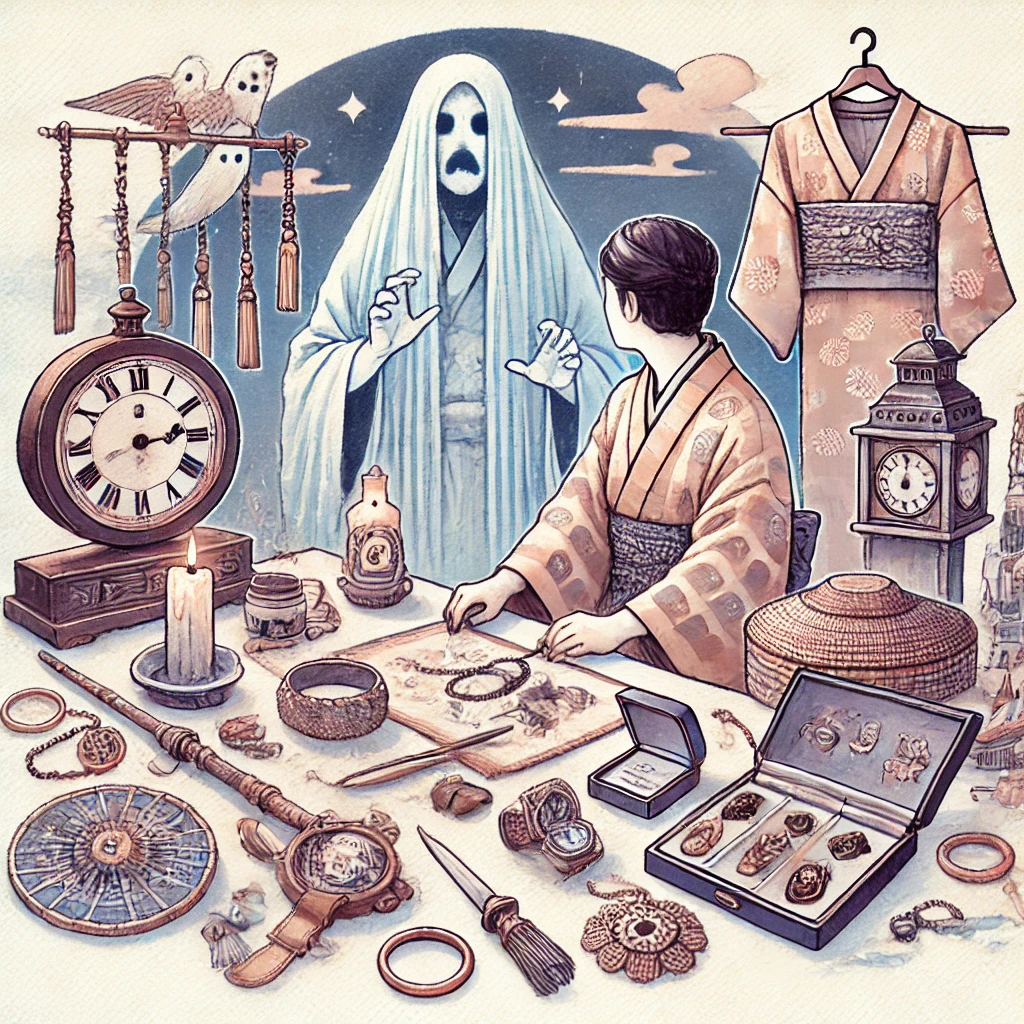
Do you know about the terrifying phenomenon that has been passed down in Okinawa? It is known as the “Curse of Guso,” where the spirits of the deceased are believed to inhabit their belongings, bringing misfortune to those who inherit them. Particularly, items imbued with the deceased’s strong resentment or grudges are said to trigger powerful Guso curses.
Amidst the sorrow of losing a loved one, cherishing their mementos is a natural act for many people. However, in Okinawan folklore, this practice can sometimes lead to dreadful consequences.
The concept of Guso curses is deeply rooted in Okinawa’s unique spiritual worldview. The blend of ancestor worship, reverence for the spirits of the dead, and a blurred boundary between the present and the afterlife creates a fertile ground for the belief in Guso curses.
There are numerous reported cases of Guso curses. People who inherit rings, watches, kimonos, and other keepsakes from the deceased often experience misfortune, illness, or supernatural occurrences. In such cases, consulting with a “Ogan-ya,” a type of shaman, for special rituals is believed to calm the Guso curse.
But is the Guso curse just a superstition? No, even in modern society, it carries significant messages. It highlights the importance of facing the sorrow of losing loved ones and the anxieties about one’s own death.
By confronting the Guso curse, we can reflect on our relationships with loved ones and reconsider the meaning and value of life. Rooted in Okinawan folklore, the Guso curse may be urging us to confront our universal human emotions.
In this blog, we will delve into the reality of the Guso curse and the unique spiritual world of Okinawa that underlies it. We’ll explore the terrifying experiences narrated by the Ogan-ya and the modern implications of the Guso curse, encouraging a deeper understanding of the emotions hidden within our hearts.
- The Guso Curse – Mysterious Tales of Cursed Objects
- The Philosophy of Ancestor Worship
- Reverence for the Spirits of the Dead
- The Ambiguous Boundary Between This World and the Afterlife
- The Existence and Role of Ogan-ya
- Actual Cases of the Guso Curse
- The Psychological Background of the Fear of the Guso Curse
- Q&A
- Conclusion of the Blog Post
The Guso Curse – Mysterious Tales of Cursed Objects
Okinawa is home to many unique customs and beliefs passed down through the ages. Among the most frightening is the phenomenon known as the “Guso curse.”
Guso, an Okinawan term meaning “afterlife” or “world beyond death,” refers to the belief that curses mainly occur through the deceased’s belongings.
Let’s introduce a family’s story. After the grandfather passed away, the family divided his possessions. The eldest son received the grandfather’s cherished watch, and the eldest daughter inherited his ring. However, after receiving these items, they began experiencing inexplicable events.
The eldest son started having nightly nightmares in which the grandfather appeared, threatening, “Return the watch.” Upon waking, he would sense the grandfather’s apparition in the room.
Similarly, the daughter experienced strange phenomena with the ring. When she wore it, she felt sharp pain in her finger, leaving deep cuts when she removed it. Additionally, mysterious accidents began occurring around her.
The family believed these events were due to the Guso curse, thinking the grandfather’s spirit was inhabiting his belongings and causing the misfortunes.
They sought help from an Ogan-ya, who suggested a “soul release” ritual. During the ceremony, the Ogan-ya communicated with the spirit inhabiting the items, persuading it to rest in peace.
After the ritual, the mysterious occurrences gradually ceased. The son’s nightmares and the daughter’s pain diminished significantly. The family believed that the Ogan-ya had successfully helped the grandfather’s spirit move on, freeing them from the Guso curse.
Such stories are not uncommon in Okinawa. The Guso curse is a real fear among the people. But why do Okinawans fear the Guso curse? In the next section, we will explore the reasons behind this fear.
The Philosophy of Ancestor Worship
For the people of Okinawa, ancestor worship is an indispensable part of their lives. They believe that by respecting and caring for the spirits of their ancestors, they ensure their own lives are protected and guided. This deep-seated belief contributes to the fear of the Guso curse.
In Okinawan traditional belief, ancestors are not merely deceased family members but revered as sacred beings. People live their daily lives seeking the protection and guidance of their ancestors’ spirits, making the act of honoring and commemorating them incredibly significant.
Ancestor worship in Okinawa has evolved over centuries, tracing back to ancient island beliefs where natural forces were revered as gods, and these gods were thought to embody the spirits of ancestors.
While the forms of ancestor worship have changed over time, the fundamental concept has remained unchanged. Today, many Okinawan households have family altars where ancestors are enshrined. Families pray daily at these altars, offering gratitude and seeking blessings.
The Role of Ancestors in Traditional Okinawan Belief
In traditional Okinawan belief, ancestors hold a crucial place. They are seen as protectors of the family, continuing to watch over their descendants after death. Hence, honoring and comforting the ancestors’ spirits is vital for the family’s peace and prosperity.
The family altars, where ancestral tablets and photographs are placed, serve as sacred spaces where the family connects with their ancestors. Every morning, family members offer prayers and incense at the altar, thanking their ancestors and praying for the family’s well-being.
Ancestors, enshrined at the altar, act as guardian deities. People believe their protection shields them from illness and misfortune while ensuring business success and family prosperity. Thus, honoring ancestors is an indispensable practice for Okinawans.
The Practice of Revering Ancestors as Sacred Beings
For Okinawans, ancestors are not just past family members but sacred entities. They believe that ancestral spirits continue to influence the living world, making it essential to respect and care for these spirits.
The reverence for ancestors is evident in daily life. Family altars are treated as holy spaces, not just places for ancestral tablets and photographs. When praying at the altar, they do so with deep reverence. The altar is always kept clean, adorned with offerings like flowers, fruits, and incense, which comfort the spirits.
Special days like the ancestor’s death anniversary, Obon, and New Year highlight this practice. On these occasions, families gather to visit ancestral graves, offering food and prayers. These acts are significant for honoring and comforting the ancestors’ spirits.
This daily reverence for ancestors also underscores the fear of the Guso curse. It reflects the belief in the power of ancestral spirits and the dread of their potential wrath.
Belief in the Protection and Blessings of Ancestors
Okinawans firmly believe in the protective and beneficial powers of their ancestors’ spirits. They view ancestors as vital links between the living and the afterlife, and this belief guides their lives.
This belief is deeply ingrained in their daily lives. Important family decisions are often made after consulting the ancestors for their blessings. For example, when a child is born, it is believed that the ancestral spirits will protect the new life, and sometimes the child is named after an ancestor.
Moreover, Okinawans believe that ancestral protection helps them through illnesses and disasters. In times of illness, they pray for ancestral intervention, and during natural disasters, they rely on ancestral spirits for protection.
Thus, the belief in the protection and blessings of ancestors plays a significant role in the lives of Okinawans, linking directly to their fear of the Guso curse. Respecting and caring for ancestral spirits is a way of acknowledging their power and fearing their potential vengeance.
The Importance of Honoring and Commemorating Ancestors
For Okinawans, honoring and commemorating ancestors is crucial for ensuring the family’s peace and prosperity. They believe that by comforting the ancestors’ spirits and seeking their blessings, they solidify the connection between the present and the afterlife.
Ancestral commemoration has a long history in Okinawan culture, reflected in various traditional events and practices. For example, during the Obon festival, families prepare special meals to welcome the returning spirits of their ancestors and keep the altar adorned with offerings.
These events are not merely formalities but vital opportunities to honor and comfort the ancestors’ spirits. Okinawans believe that the spirits return to this world during these times and thus treat them with utmost hospitality, reinforcing family ties and spiritual connections.
Events for Ancestral Commemoration: Obon and Seimei-sai
Okinawa has several events dedicated to ancestral commemoration, with Obon and Seimei-sai being the most significant. These events are vital for understanding Okinawan culture and their belief in honoring ancestors.
Obon, observed from July 13 to 15 in the lunar calendar, is believed to be a time when ancestral spirits return to the living world. Families clean their homes and prepare special dishes, ensuring the altar is continuously adorned with the ancestors’ favorite foods and offerings.
During Obon, families spend time with the spirits, sharing stories and memories to comfort them. The final day involves sending the spirits back with a ritual, simultaneously praying for their protection.
Seimei-sai, held in early April in the solar calendar, involves visiting ancestral graves, cleaning the tombstones, and offering tributes. Families gather at the gravesites, expressing gratitude and seeking guidance from the spirits.
These events serve not only to honor the spirits but also to strengthen family bonds. The acts of grave cleaning and offering preparation reinforce family cooperation and unity.
Thus, Obon and Seimei-sai are vital occasions for Okinawans to honor and commemorate their ancestors, reflecting the underlying fear of the Guso curse.
Daily Practices of Ancestor Worship and Their Significance
For Okinawans, daily ancestor worship is an integral practice. By continuously honoring and comforting the spirits, they seek their protection and blessings, deepening family bonds and providing spiritual support.
Family altars play a central role in this daily worship. Every morning,
families offer prayers and incense, expressing gratitude and seeking blessings. Offerings of the ancestors’ favorite foods and the comforting scent of incense are ever-present.
These daily practices are crucial for maintaining family unity. Praying together fosters shared gratitude and strengthens family cohesion. Recounting ancestors’ stories at the altar helps preserve family history and values.
Furthermore, ancestor worship provides spiritual support. Believing in the constant presence and protection of ancestral spirits offers comfort and courage, especially in times of difficulty.
Daily ancestor worship, thus, holds significant meaning for Okinawans, linking directly to their fear of the Guso curse. Honoring and caring for ancestral spirits is a way of acknowledging their power and dreading their potential wrath.
The philosophy of ancestor worship in Okinawa is deeply intertwined with the fear of the Guso curse. Respecting and commemorating ancestral spirits acknowledges their power and explains the fear of their potential vengeance.
The Guso curse represents the anger or grudges of ancestral spirits, underscoring the importance of respecting and honoring these spirits while highlighting the fear of their power.
To avoid the Guso curse, Okinawans dedicate themselves to comforting and honoring ancestral spirits. This practice is crucial for maintaining good relationships with these spirits, ensuring the family’s peace and prosperity.
Thus, the philosophy of ancestor worship in Okinawa is closely linked with the fear of the Guso curse. By honoring and caring for ancestral spirits, Okinawans acknowledge their power and fear their potential vengeance, striving to maintain harmonious relationships and secure family well-being.
Reverence for the Spirits of the Dead
The deep-seated fear that Okinawans have for the spirits of the dead significantly contributes to the dread of the Guso curse. They believe that these spirits can influence the living world and sometimes bring harm to the living. Therefore, comforting and honoring the spirits of the dead is an essential act to quell their anger and resentment.
In Okinawan belief, the spirits of the dead can move freely between this world and the afterlife. As a result, it is not uncommon for these spirits to interfere in the lives of the living. Particularly, spirits that carry strong grudges or obsessions are believed to bring calamities to the living.
The Guso curse is one such terrifying phenomenon, born from the grudges or obsessions of the spirits of the dead. It represents a clear example of how these spirits can cause harm to the living. Okinawans, therefore, have devised various methods of honoring and comforting the spirits to calm their anger and resentment.
The Concept of Spirits Influencing the Living
Okinawans hold a strong belief that the spirits of the dead can affect the living. They think that these spirits can interfere with the living world and influence the fate of the living. Thus, comforting and honoring these spirits is crucial for ensuring the safety and well-being of the living.
According to Okinawan belief, the spirits of the dead have a strong attachment to the living world. Especially, those who died suddenly or harbored grudges are thought to have significant influence over the living. These spirits may bring harm or disasters to the living.
The Guso curse is a terrifying example of how the spirits of the dead can affect the living. It shows how these spirits can cause harm to the living. To mitigate this influence, Okinawans have developed various methods to honor and comfort the spirits, thereby quelling their anger and resentment.
Belief in the Interference of Spirits
Okinawans believe that the spirits of the dead can interfere with the living world and influence the fate of the living. They think that these spirits can affect the daily lives of the living and sometimes bring harm. Therefore, comforting and honoring these spirits is vital to ensure the safety of the living.
According to their beliefs, the spirits of those who died suddenly or with unresolved grudges hold a strong influence over the living world. Such spirits might interfere in the daily lives of the living, causing various misfortunes.
For instance, it is believed that the spirits of the dead might appear in dreams, trying to communicate something. Additionally, these spirits might possess the living, causing illness or misfortune. Such interference from the spirits of the dead poses a significant threat to the living.
The Guso curse is a classic example of such interference. It shows how the spirits of the dead can harm the living. To avoid such calamities, Okinawans have devised various methods to comfort and honor these spirits, thereby reducing their influence.
The Necessity of Comforting and Honoring the Spirits
Okinawans feel a strong necessity to comfort and honor the spirits of the dead. They believe that these spirits can interfere with the living world and bring harm. Thus, comforting and honoring them is essential for ensuring the safety of the living.
According to their beliefs, comforting and honoring the spirits helps them find peace, reducing their attachment to the living world. This, in turn, decreases their interference with the living. Therefore, comforting and honoring the spirits is crucial for the safety of the living.
Various methods are used to comfort and honor the spirits. Offering their favorite foods and burning incense are basic ways to comfort the spirits. Additionally, chanting sutras and requesting rituals from Ogan-ya (shamans) are important methods to honor the spirits.
To avoid the Guso curse, comforting and honoring the spirits of the dead is indispensable. The curse is believed to be caused by the anger and resentment of these spirits. Thus, Okinawans take great care to respect and honor the spirits, ensuring their peace.
Belief in the Harm from the Spirits’ Resentment
Okinawans believe that the resentment and obsession of the spirits can bring harm to the living. They think that the spirits of those who died with grudges can cause misfortune for the living. Thus, calming these spirits’ resentment and obsession is crucial for the safety of the living.
According to their beliefs, people continue to have emotions even after death. Negative emotions like grudges and anger are believed to remain strongly in the spirits. Such spirits can harm the living, causing various disasters.
The Guso curse is a terrifying example of harm caused by the spirits’ resentment. Guso refers to the mementos believed to be inhabited by the ancestors’ spirits. When these mementos carry resentment, they bring misfortune to the living.
Fear of Resentful Spirits
Okinawans strongly fear the spirits who carry resentment and obsession. They believe that such spirits can possess the living, causing illness or misfortune. Therefore, calming these spirits is essential for the safety of the living.
According to their beliefs, these spirits can possess the living, causing illness or misfortune. They might also possess family members, causing discord and strife. The Guso curse exemplifies the terrifying influence of such spirits, believed to bring misfortune due to the resentment embedded in Guso.
Honoring as a Method to Calm Resentful Spirits
Okinawans practice various methods to calm the spirits’ resentment. They believe that calming these spirits is necessary to protect the living.
Various methods are employed to calm these spirits. Offering their favorite foods and burning incense are basic methods. Chanting sutras and requesting rituals from Ogan-ya are also important ways to calm the spirits.
To avoid the Guso curse, calming the spirits embedded in Guso is crucial. Okinawans take great care in handling Guso, ensuring that the spirits find peace.
If the Guso curse manifests, special rituals are conducted by Ogan-ya to calm the spirits. These rituals aim to protect the living from the spirits’ harm.
Thus, Okinawans practice various methods to calm the spirits’ resentment, ensuring the safety of the living.
The fear of the spirits of the dead is a fundamental aspect of understanding the Okinawans’ dread of the Guso curse. They fear the spirits’ interference in the living world and take great care in comforting and honoring them.
The Guso curse vividly illustrates the terror of the spirits of the dead. It shows how their resentment and obsession can harm the living. To avoid such calamities, Okinawans practice various methods to honor and calm these spirits.
The fear of the spirits is deeply rooted in Okinawan beliefs and customs, reflecting their unique worldview. Next, we will explore the ambiguous boundary between this world and the afterlife in Okinawan belief.
The Ambiguous Boundary Between This World and the Afterlife
In Okinawan belief, the boundary between this world and the afterlife is considered ambiguous. It is believed that the spirits of the dead remain in this world, interacting with the living. Thus, the spirits are both close and sometimes terrifying to the living.
The Guso curse exemplifies this ambiguity, as the spirits embedded in Guso remain in this world, affecting the living. Therefore, Okinawans practice various methods to honor and calm these spirits.
The ambiguity of the boundary between this world and the afterlife is a crucial element of the Okinawan worldview, deeply intertwined with their reverence for the spirits. Next, we will explore this ambiguity in more detail.
Continuity Between This World and the Afterlife in Okinawan Belief
In Okinawan belief, there is continuity between this world and the afterlife. It is believed that the spirits of the dead remain in this world, interacting with the living. Thus, death is not seen as an end but a new beginning.
It is believed that the spirits of the dead travel through this world, interacting with the living along the way. Therefore, Okinawans regard the spirits as close entities, deeply respecting and honoring them.
This continuity is vital for understanding the Guso curse. The spirits embedded in Guso remain in this world, affecting the living. Therefore, Okinawans practice various methods to honor and calm these spirits.
A Worldview Without a Clear Boundary Between This World and the Afterlife
In Okinawan belief, the boundary between this world and the afterlife is not clear. It is believed that the spirits of the dead remain in this world, interacting with the living. Thus, the spirits are seen as part of the living world, making this world and the afterlife continuous.
It is believed that the spirits travel through this world, sometimes influencing the living. Therefore, Okinawans regard the spirits as part of the living world, deeply respecting and honoring them.
This worldview is crucial for understanding the Guso curse. The spirits embedded in Guso move freely between this world and the afterlife, affecting the living. Therefore, Okinawans practice various methods to honor and calm these spirits.
Belief in the Connection Between the Afterlife and This World
In Okinawan belief, the afterlife and this world are closely connected. It is believed that the spirits of the dead remain in this world, interacting with the living. Thus, the spirits are seen as part of the living world, making this world and the afterlife inseparable.
It is believed that the spirits travel through this world, sometimes influencing the living. Therefore, Okinawans regard the spirits as part of the living world, deeply respecting and honoring them.
This belief is crucial for understanding the Guso curse. The spirits embedded in Guso influence this world from the afterlife. Therefore, Okinawans practice various methods to honor and calm these spirits.
<h
3>Fear of the Spirits Remaining in This World
Okinawans fear the possibility of the spirits remaining in this world. They worry that spirits that cannot find peace will stay, influencing the living. Therefore, calming and honoring these spirits is considered essential for the safety of the living.
It is believed that the spirits remain in this world until they find peace. Unsettled spirits are thought to continue affecting the living world. Therefore, Okinawans make great efforts to calm and honor these spirits.
The fear of spirits remaining in this world is crucial for understanding the Guso curse. The spirits embedded in Guso are believed to remain in this world, affecting the living. Therefore, Okinawans practice various methods to honor and calm these spirits.
The Influence of Unsettled Spirits
Okinawan belief holds that unsettled spirits exist. These spirits are thought to remain in this world, continuing to influence the living. Therefore, Okinawans fear these spirits and practice various methods to avoid their influence.
It is believed that unsettled spirits remain in this world for various reasons. For instance, those who died suddenly or with unresolved grudges are thought to remain. Spirits that are not properly honored are also believed to stay.
The influence of unsettled spirits is believed to manifest in various ways. For example, such spirits might possess the living, causing illness or misfortune. They might also cause discord within families.
The Guso curse is a phenomenon exemplifying the influence of unsettled spirits. The spirits embedded in Guso are believed to remain, affecting the living. Therefore, Okinawans practice various methods to honor and calm these spirits.
Dealing with Spirits Attached to This World
Okinawans practice various methods to calm spirits attached to this world. They believe that helping these spirits find peace is essential for the safety of the living.
Various methods are employed to deal with such spirits. Offering their favorite foods and burning incense are basic methods. Chanting sutras and requesting rituals from Ogan-ya are also important ways.
To avoid the Guso curse, calming the spirits embedded in Guso is crucial. Okinawans take great care in handling Guso, ensuring the spirits find peace.
If the Guso curse manifests, special rituals are conducted by Ogan-ya to calm the spirits. These rituals aim to protect the living from the spirits’ harm.
Thus, Okinawans practice various methods to deal with spirits attached to this world, ensuring the safety of the living.
The ambiguity of the boundary between this world and the afterlife is essential to understanding the fear of the Guso curse among Okinawans. They fear the spirits remaining in this world and influencing the living. Therefore, they take great care in calming and honoring these spirits.
The Guso curse exemplifies the phenomenon born from this ambiguity. The spirits embedded in Guso move freely between this world and the afterlife, affecting the living. Therefore, Okinawans practice various methods to honor and calm these spirits.
The ambiguous boundary between this world and the afterlife is a core element of Okinawan beliefs and customs, closely linked to their reverence for the spirits. This reverence and ambiguity underscore the importance of Ogan-ya. In the next chapter, we will explore the role and significance of Ogan-ya in more detail.
The Existence and Role of Ogan-ya
For the people of Okinawa, the existence of Ogan-ya is indispensable. These spiritual practitioners play a crucial role in calming the spirits of the dead and protecting the living. Particularly in avoiding the Guso curse, the power of the Ogan-ya is considered essential.
Ogan-ya are shamans found throughout Okinawa’s communities. They are believed to have the ability to communicate with gods, Buddhas, and the spirits of the deceased. Thus, Okinawans often seek their advice when facing various issues and troubles.
Regarding the Guso curse, the power of the Ogan-ya holds significant importance. They can perform special rituals to calm the spirits embedded in Guso items. Therefore, people troubled by the Guso curse often turn to the Ogan-ya for help.
The Role of Ogan-ya in Honoring and Helping Spirits Find Peace
Ogan-ya play a vital role in the rituals that honor and help the spirits of the dead find peace. They are believed to communicate with the spirits of the deceased. Hence, Okinawans rely on Ogan-ya to calm and help the spirits move on.
Ogan-ya employ various methods to honor and assist the spirits. They perform special prayers and offer the favorite foods of the deceased to comfort their spirits. Additionally, they conduct ceremonies to help the spirits achieve peace.
In relation to the Guso curse, the power of the Ogan-ya is crucial. They can perform special rituals to calm the spirits embedded in Guso items, thus helping those afflicted by the curse.
The History and Social Status of Ogan-ya
The history of Ogan-ya is deeply intertwined with the history of Okinawan beliefs. They have existed in various parts of Okinawa for a long time, supporting the people’s faith. Thus, Ogan-ya hold a significant position in Okinawan society.
The origins of Ogan-ya are believed to trace back to ancient shamanistic practices. In ancient Okinawa, shamans communicated with the gods on behalf of the people. Over time, these practices merged with folk beliefs, evolving into the Ogan-ya tradition.
Ogan-ya are highly respected in Okinawan society. They are believed to possess special abilities to communicate with gods and the spirits of the deceased. As such, they are spiritual guides and a source of support for the people.
Moreover, Ogan-ya play an important role in their communities. They listen to people’s problems and provide advice to solve them, thereby contributing to the peace and stability of their society.
The Meaning of Ogan-ya’s Rituals and Prayers
The rituals and prayers performed by Ogan-ya hold various meanings. These acts are not only meant to convey people’s wishes to the gods and spirits of the deceased but also to soothe and provide comfort to the people’s hearts.
Ogan-ya’s rituals and prayers are ways to communicate with the gods and the spirits. Using special words and gestures, they speak to these spiritual entities and convey their messages to the people.
Furthermore, these rituals and prayers also aim to heal and provide comfort to those troubled. Ogan-ya listen to people’s worries and pains, offering empathy and understanding. Through their rituals, they lighten the burdens on people’s hearts.
Regarding the Guso curse, the rituals and prayers of Ogan-ya are particularly significant. They communicate with the spirits embedded in Guso items, calming their anger and resentment, and performing special prayers to protect people from calamities.
Thus, the rituals and prayers of Ogan-ya are crucial acts that support the faith of Okinawan people. They provide a means of communication with spiritual entities and also serve to heal and comfort troubled hearts.
The Faith and Dependence on Ogan-ya
Okinawans deeply believe in and depend on Ogan-ya. They trust in the power of Ogan-ya and seek their counsel for various issues and troubles, making Ogan-ya indispensable in their lives.
The faith in Ogan-ya is central to Okinawan beliefs. The people believe that Ogan-ya can communicate with gods and the spirits of the deceased. Therefore, Ogan-ya are spiritual guides and a source of support for them.
Additionally, dependence on Ogan-ya holds significant meaning in the lives of Okinawans. Faced with illness, disasters, family issues, and other concerns, they seek the advice and assistance of Ogan-ya.
The Significance of Ogan-ya for Okinawans
Ogan-ya serve as spiritual anchors and guides for the people of Okinawa. They believe in and follow the words and advice of Ogan-ya, greatly influencing their lives.
Ogan-ya are spiritual guides and a source of support for Okinawans. They believe that Ogan-ya can communicate with gods and the spirits of the deceased, and thus trust their words as messages from these entities.
Furthermore, Ogan-ya guide the lives of Okinawans. When faced with illness, disasters, or family issues, they consult Ogan-ya and act according to their advice.
Thus, Ogan-ya are indispensable to the people of Okinawa, serving as both spiritual anchors and life guides. They are integral to Okinawan culture and society.
Trust in Ogan-ya and Psychological Support
Okinawans deeply trust Ogan-ya and rely on them for psychological support. They believe in the words and advice of Ogan-ya, making them a central part of their lives.
The trust in Ogan-ya reflects the people’s faith. They believe that Ogan-ya can communicate with gods and the spirits of the deceased, thus regarding their words as divine messages.
Additionally, Ogan-ya provide psychological support to the people. When troubled, Okinawans consult Ogan-ya and find comfort in their advice and encouragement.
This trust and reliance on Ogan-ya are crucial aspects of Okinawan life, especially in relation to the fear of the Guso curse. The people believe in and depend on the power of Ogan-ya to avoid the curse.
The existence and role of Ogan-ya are essential in understanding the fear of the Guso curse among Okinawans. They trust in and depend on the power of Ogan-ya to calm the spirits of the dead and avoid calamities.
The Guso curse exemplifies the significance of Ogan-ya’s existence. They can perform special prayers to calm the spirits embedded in Guso items, helping the people avoid the curse.
The existence and role of Ogan-ya are fundamental to Okinawan beliefs and customs, closely linked to their reverence for the spirits and the ambiguous boundary between this world and the afterlife. This reverence and ambiguity highlight the importance of Ogan-ya.
In the next chapter, we will explore actual cases of the Guso curse. Understanding these cases will provide crucial insights into the impact of the Guso curse on the lives of Okinawans.
Actual Cases of the Guso Curse
The Guso curse is not merely a superstition or legend for the people of Okinawa. It is a terrifying phenomenon that can indeed occur. Here, we will introduce actual cases of the Guso curse and examine their impact.
The Guso curse is primarily reported as mysterious incidents related to inherited items. People who inherit these items suddenly experience illness or misfortune, believed to be caused by the spirits of the deceased embedded in these items.
Furthermore, the Guso curse significantly affects families and individuals. It not only brings misfortune but also psychological distress. People live in fear of the Guso curse, haunted by its terror.
Reports of Mysterious Phenomena Related to Inherited Items
The Guso curse is primarily reported as mysterious phenomena related to inherited items. Those who inherit these items suddenly experience illness or misfortune, believed to be caused by the spirits of the deceased embedded in these items.
In Okinawa, there are numerous reports of mysterious phenomena related to inherited items. For example, a family who inherited an ancestral ring experienced a series of misfortunes, including illness and accidents among family members.
Another woman, after inheriting her deceased mother’s kimono, fell ill with no discernible cause. After disposing of the kimono, her health improved, suggesting the presence of the Guso curse.
Strange Occurrences Related to Inherited Keepsakes
The Guso curse often manifests in relation to inherited keepsakes, especially items that the deceased held dear or had strong emotional attachments to.
For instance, a family inherited their grandfather’s cherished watch and subsequently experienced strange occurrences. The watch would move or stop on its own, and cold drafts were felt near it.
Another man inherited his father’s sword and began experiencing inexplicable events in the room where the sword was kept, such as noises and the feeling of a presence. He also started having disturbing dreams.
Resolution of Phenomena Through Disposal or Honoring of Items
People troubled by the Guso curse often find resolution through the disposal or honoring of inherited items. This act is believed to calm the spirits embedded in these items.
For example, the woman who inherited her mother’s kimono recovered after disposing of it. A family troubled by strange occurrences related to their grandfather’s watch found peace after having the watch honored by an Ogan-ya.
Thus, the disposal or honoring of items is considered a crucial method for calming the spirits and resolving the Guso curse.
The Impact of the Guso Curse on Families and Individuals
The Guso curse has significant effects on families and individuals, bringing not only misfortune but also psychological distress. People live in fear of the curse, haunted by its terror.
Families afflicted by the Guso curse experience continuous misfortune, leading
to mental exhaustion. Illness, accidents, and financial issues arise, and the belief that these are caused by the Guso curse increases their fear.
The Guso curse also has a profound psychological impact on individuals. Sudden misfortune leads them to feel cursed, affecting their daily lives and mental well-being.
Psychological and Emotional Impact and Distress
The Guso curse imposes severe psychological and emotional impacts. People who suddenly experience misfortune often feel cursed, and this fear affects their daily lives.
For instance, a woman who inherited her aunt’s ring began experiencing mysterious phenomena, such as sudden finger pain and nightmares. She felt cursed and became mentally unstable.
Families afflicted by the Guso curse often feel despair due to continuous misfortune, especially when unexplained by medical or logical reasons, further increasing their fear.
Negative Effects on Family Relations and Social Life
The Guso curse also negatively affects family relations and social life. Continuous misfortune can strain family bonds, and those living in fear of the curse may struggle in social interactions.
For instance, families afflicted by the curse might become suspicious of each other, leading to internal conflicts. Such situations can damage family cohesion.
Fear of the curse can also affect work and education, reducing concentration and productivity. Additionally, the stigma of the curse can hinder social relationships.
Thus, the Guso curse imposes severe impacts on both families and individuals, causing not only misfortune but also psychological distress. These impacts extend to family relations and social life.
Actual cases of the Guso curse reveal its terrifying nature, embodying the belief that the spirits of the deceased embedded in items bring misfortune to the living.
These beliefs are deeply rooted in the psychology of Okinawans. The Guso curse is not merely a superstition but a reflection of their deepest fears and anxieties.
Next, we will explore the psychological background of the fear of the Guso curse, delving into the underlying factors that contribute to this belief.
The Psychological Background of the Fear of the Guso Curse
The psychological background of the fear of the Guso curse involves various factors, deeply tied to fundamental human emotions such as the sorrow of losing loved ones and the fear of death and the afterlife. Here, we will explore these psychological aspects in detail.
One psychological background is the sorrow of losing loved ones. Particularly in cases of sudden or unnatural death, the grief leaves deep emotional scars on the bereaved, fostering a fear of the Guso curse.
Another factor is the fear of death and the afterlife. Everyone harbors uncertainties about the afterlife, and this anxiety amplifies the fear of the Guso curse.
The Sorrow and Sense of Loss from Losing Loved Ones
The sorrow from losing loved ones is a significant psychological background for the fear of the Guso curse. Particularly in cases of sudden or unnatural death, the grief leaves deep emotional scars, fostering a fear of the Guso curse.
Losing loved ones is an unbearable experience for anyone, especially when death comes suddenly, making it difficult to accept. This sorrow lingers for a long time.
Additionally, the sense of loss from losing a cherished person creates a significant emotional void, leading to a fear of the Guso curse.
Psychological Trauma from the Death of a Loved One
The death of a loved one inflicts significant psychological trauma on the bereaved. Particularly in cases of sudden or unnatural death, this trauma becomes severe, fostering a fear of the Guso curse.
Psychological trauma refers to deep emotional wounds. The death of a loved one causes such trauma, lingering for a long time.
Traumatized individuals may struggle with daily life, finding it hard to recover from the grief and sense of loss. Trauma can also trigger mental health issues like depression.
The fear of the Guso curse is closely linked to such psychological trauma, as the traumatized tend to fear the spirits of the dead, leading to belief in the curse.
Longing and Guilt Towards the Deceased
Longing and guilt towards the deceased are other psychological backgrounds for the fear of the Guso curse. The bereaved cherish memories of the deceased, and these emotions foster a fear of the curse.
Longing refers to clinging to memories of the deceased, while guilt arises from feelings of not having given enough love. These emotions lead to a fear of the Guso curse.
The fear of the curse is closely linked to such longing and guilt, as the bereaved fear the spirits of the dead, fostering belief in the curse.
Anxiety and Fear of Death and the Afterlife
Anxiety and fear of death and the afterlife are significant psychological backgrounds for the fear of the Guso curse. Everyone harbors uncertainties about the afterlife, amplifying the fear of the curse.
Death is an inevitable fate for everyone, but the afterlife remains unknown, fostering anxiety.
This anxiety about death and the afterlife creates fear, leading to belief in the Guso curse.
Vague Fear of the Afterlife
A vague fear of the afterlife is a psychological background for the fear of the Guso curse. Uncertainty about the afterlife fosters fear, leading to belief in the curse.
Okinawans refer to the afterlife as “Guso,” believed to be a world different from the living realm where the spirits of the deceased reside.
The fear of the Guso curse is closely linked to this vague fear of the afterlife, as people fear the world of Guso, leading to belief in the curse.
Anxiety About One’s Own Death and Afterlife
Anxiety about one’s own death and the afterlife is another psychological background for the fear of the Guso curse. Everyone harbors uncertainties about their own death, amplifying the fear of the curse.
Death is an inevitable fate, but its nature remains unknown, fostering anxiety.
This anxiety about one’s own death and the afterlife creates fear, leading to belief in the Guso curse.
The psychological background of the fear of the Guso curse is deeply tied to fundamental human emotions. The sorrow of losing loved ones and the anxiety about death and the afterlife are universal feelings, fostering a fear of the curse.
Okinawans, facing these emotions, have long confronted the Guso curse, reflecting their deepest fears and anxieties.
Finally, let us consider what the Guso curse asks of us. It prompts us to think about death, the afterlife, and our relationships with loved ones, enriching our lives through these reflections.
The Guso curse serves as a mirror reflecting the spiritual world of Okinawans, prompting us to consider life’s meaning and value. By confronting the curse, we can reflect on ourselves and our relationships, enriching our lives.
Q&A
What is the Guso curse?
The Guso curse is a phenomenon in Okinawan folk belief where the spirits of the deceased are believed to inhabit their belongings, bringing misfortune to those who inherit them. Items imbued with the deceased’s grudges or obsessions are thought to cause a strong Guso curse.
Why do Okinawans fear the Guso curse?
The fear of the Guso curse is rooted in ancestor worship and reverence for the spirits of the dead, as well as the belief in the ambiguous boundary between this world and the afterlife. This fear is also connected to the sorrow of losing loved ones and the anxiety about death and the afterlife.
What are some cases of the Guso curse?
Cases of the Guso curse include incidents where people who inherited rings, watches, kimonos, and other keepsakes from the deceased experienced misfortune, illness, or supernatural occurrences. There are also reports of the curse being resolved through the disposal or honoring of these items.
How do people deal with the Guso curse?
When faced with the Guso curse, Okinawans consult Ogan-ya, shamans who perform special rituals to calm the spirits of the deceased embedded in the items, protecting the owners from misfortune. Disposal or honoring of the items can also help resolve the curse.
What significance does the Guso curse hold in modern society?
The Guso curse reflects the deep-seated fears and anxieties within people’s hearts, prompting them to confront the sorrow of losing loved ones and the anxiety about death and the afterlife. By facing the curse, we can reflect on our relationships and reconsider the meaning and value of life, enriching our lives through these reflections.
Conclusion of the Blog Post
“The Curse of Guso – Mysterious Tales of Cursed Objects” explores a terrifying phenomenon rooted in Okinawan folk belief. Guso refers to keepsakes believed to be inhabited by the spirits of the deceased. Particularly, items imbued with strong grudges or obsessions are thought to bring misfortune to those who inherit them.
The fear of the Guso curse among Okinawans is influenced by ancestor worship, reverence for the spirits of the dead, and a worldview where the boundary between this world and the afterlife is ambiguous. Additionally, it is connected to the sorrow of losing loved ones and the anxiety about death and the afterlife.
Examples of the Guso curse include misfortunes and supernatural occurrences that happen after inheriting keepsakes from the deceased. In such cases, consulting with Ogan-ya, shamans who perform special rituals, is believed to calm the Guso curse.
In modern society, the Guso curse reflects the deep-seated fears and anxieties within people’s hearts, prompting them to confront the sorrow of losing loved ones and the anxiety about their own mortality. By facing the Guso curse, we can reflect on our relationships and reconsider the meaning and value of life.
Through this blog post, readers can gain a deeper understanding of the depth of Okinawan folk beliefs and the contemporary significance of the Guso curse. The Guso curse is not merely a superstition but a mirror reflecting universal human emotions buried deep within our hearts.


コメント