
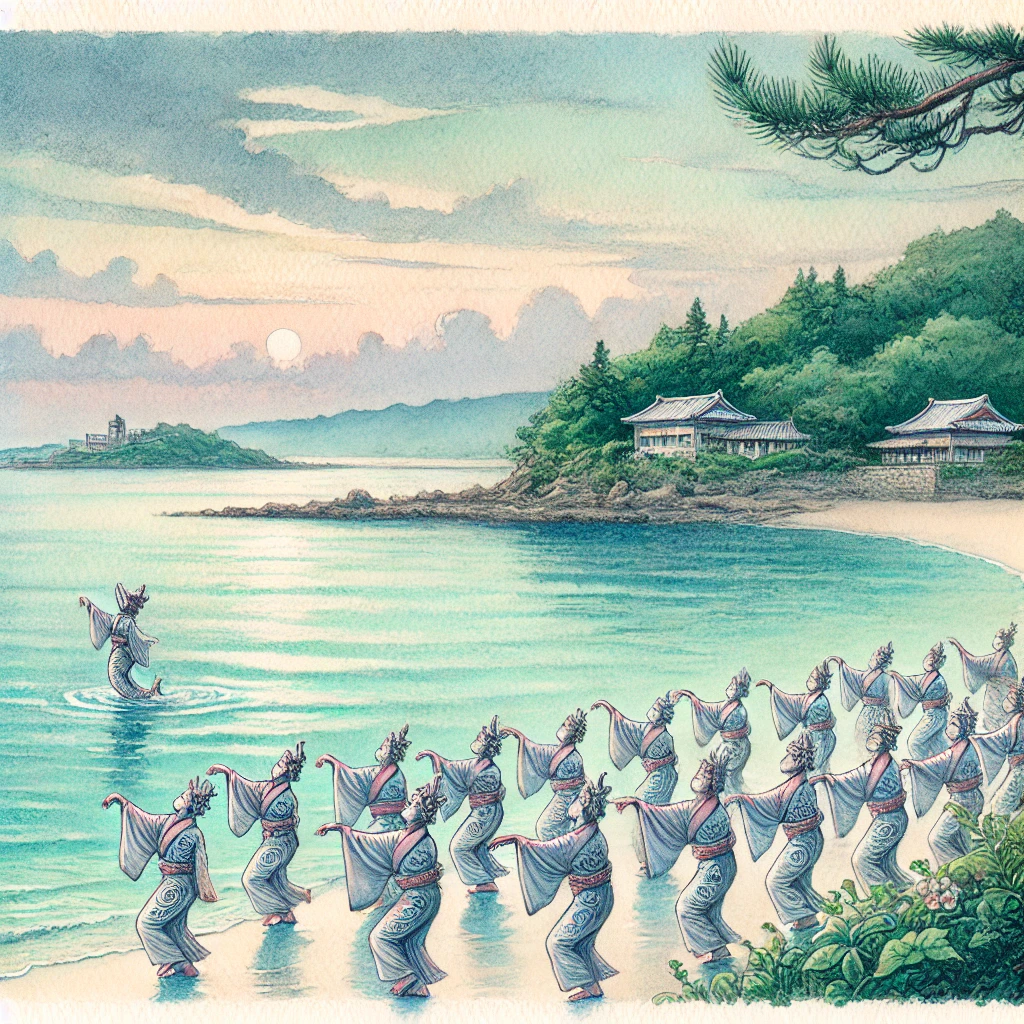
In Okinawa, there is a mystical dance that has been passed down through generations. This is the “Dance of the Gurukun” from Iheya Island. This dance, based on a legend where a beautiful maiden falls in love with the god of the sea and transforms into a fish, has been performed to console the spirits of ancestors and pray for the island’s peace and prosperity.
The “Dance of the Gurukun” is not just a traditional dance; it is a sacred act that embodies the spiritual world cherished by the people of Okinawa. This dance encapsulates deep Okinawan values and worldviews, such as ancestor worship, harmony with nature, and the cycle of life and death.
The dancers, adorned in beautiful silver costumes, perform gracefully. Their movements are said to resemble fish swimming in the sea. The gestures of the dance are imbued with gratitude and respect for the ancestors, stirring the hearts of those who watch.
Many mysterious stories and legends surround the “Dance of the Gurukun.” People who performed the dance have reported feeling as if they were swimming in the sea, while spectators have experienced a sense of purification. Tales of the spirit of the Gurukun appearing reflect the profound spirituality of the people of Okinawa.
In modern society, the significance of the “Dance of the Gurukun” is considerable. As globalization progresses, valuing regional cultures and values is essential for respecting diversity and building a rich society. The “Dance of the Gurukun” appeals to us about the importance of such regional cultures.
Furthermore, the spirituality conveyed by the “Dance of the Gurukun” might soothe the hearts of modern people and provide them with the strength to live. Feeling a connection with ancestors and valuing harmony with nature remind us of essential things we are at risk of losing.
The dedication of the people of Iheya Island to preserving and continuing the “Dance of the Gurukun” teaches us the importance of passing down traditions. Each of us is called upon to understand the significance of this sacred dance and widely share its charm.
There is much to learn from the “Dance of the Gurukun.” Listening to the wisdom of our predecessors, nurturing a heart that cherishes connections with nature and ancestors, and fulfilling our responsibility to protect and pass down traditions to future generations.
So, why not dive into the mystical world of the “Dance of the Gurukun”? Surely, you will find discoveries that will stay with you.
- The Story of “The Dance of the Gurukun – A Sacred Dance to Console Ancestral Spirits”
- Ancestor Worship and Spirit Belief
- Coexistence with Nature
- The Cycle of Life and Death
- The Inheritance of Tradition and Community Cohesion
- Actual Events and Legends
- Q&A
- Conclusion
The Story of “The Dance of the Gurukun – A Sacred Dance to Console Ancestral Spirits”
The “Dance of the Gurukun,” handed down on the remote island of Iheya in Okinawa, is a sacred dance performed to console ancestral spirits and pray for the island’s peace and prosperity. Its origins date back to ancient times.
Long ago, there was a beautiful maiden on Iheya Island. Loved by the island’s youth, she suddenly disappeared one day. The islanders searched everywhere for her, but she was nowhere to be found.
In truth, she had fallen in love with the god of the sea and had been transformed into a beautiful fish, her body shimmering like silver, almost like a jewel. The islanders began to call this fish “Gurukun.”
The maiden’s family, upon learning that she had become a fish, was heartbroken. However, one night, her spirit appeared in a dream and spoke to them.
“Beloved family, do not grieve. I live happily with the sea god. But I will never forget you. From now on, I will watch over you in the form of a Gurukun.”
The spirit of the maiden then taught her family a special dance. This dance, meant to console her spirit and pray for the island’s peace and prosperity, was named the “Dance of the Gurukun,” and the family vowed to pass it down through the generations.
Since then, the “Dance of the Gurukun” has been performed annually on a specific day on Iheya Island. This sacred dance, meant to console the maiden’s spirit and pray for the island’s peace and prosperity, has become an important traditional event for the island.
During the dance, performers wear beautiful silver costumes and move gracefully, resembling Gurukun swimming in the sea. The islanders are captivated by this beautiful dance, renewing their gratitude and respect for their ancestors.
The “Dance of the Gurukun” is a beautiful and sacred tradition that expresses the people of Iheya Island’s reverence for their ancestors and respect for nature.
Ancestor Worship and Spirit Belief
The Importance of Ancestor Worship in Okinawa
The Tradition of Revering Ancestral Spirits in Okinawa
In Okinawa, revering ancestral spirits is considered extremely important. When family members or relatives pass away, their spirits are believed to become protective guardians of the family. Therefore, Okinawan households enshrine the spirits of their ancestors in Buddhist altars, offering daily offerings and prayers. Additionally, events related to ancestor worship, such as Obon and Qingming Festival, are also valued. These practices are deeply rooted in the daily lives of the people of Okinawa, fostering a heart that respects ancestors.
Ancestor worship significantly influences Okinawan culture and values. Emphasizing family bonds and cherishing traditions inherited from ancestors are closely related to the concept of ancestor worship. Revering ancestral spirits fosters a connection between the living and the dead, leading to an understanding of the sanctity of life. The spirituality nurtured through ancestor worship continues to hold great significance in modern society.
The Impact of Ancestor Worship on Okinawan Culture
Ancestor worship greatly impacts Okinawan culture, particularly in the importance of family bonds. In Okinawa, it is believed that revering ancestral spirits strengthens family ties. It is considered a family duty to cherish and pass down traditions and values inherited from ancestors to the next generation. This mindset forms the foundation of Okinawan family life, remaining strongly ingrained even today.
Additionally, ancestor worship influences Okinawan performing arts and crafts. Traditional performances, such as Eisa and lion dances, are sometimes performed to console ancestral spirits. Traditional crafts, like textiles and pottery, often incorporate motifs related to ancestor worship. These arts and crafts are means of expressing the spirit of ancestor worship and symbolize the richness of Okinawan culture.
Gratitude and Respect for Ancestral Spirits in the Dance of the Gurukun
The Origins and Meaning of the Dance of the Gurukun
The “Dance of the Gurukun” is a sacred dance passed down on Iheya Island in Okinawa. Its origins lie in the legend of a beautiful maiden who fell in love with the sea god and became a fish. The spirit of the maiden taught her family a special dance, which was named the “Dance of the Gurukun.” This dance is performed to console the maiden’s spirit and pray for the island’s peace and prosperity.
The “Dance of the Gurukun” embodies gratitude and respect for ancestral spirits. By consoling the maiden’s spirit, the family expresses their gratitude to their ancestors. Furthermore, preserving this sacred dance, inherited from ancestors, demonstrates respect for them. Through the “Dance of the Gurukun,” the people of Iheya Island feel connected to their ancestors and hold their teachings dear.
Expressing Gratitude and Respect for Ancestors Through the Dance
In the “Dance of the Gurukun,” dancers don beautiful silver costumes and perform gracefully, resembling Gurukun swimming in the sea. Through this dance, the performers express their gratitude and respect for ancestral spirits.
The movements of the dance are imbued with feelings of gratitude towards ancestors. The graceful gestures symbolize the act of consoling ancestral spirits and expressing gratitude for their blessings. The silver costumes represent the sanctity and dignity of the ancestral spirits. By wearing these costumes, the dancers show their respect for their ancestors.
Those who witness the “Dance of the Gurukun” are reminded of the importance of gratitude and respect for ancestral spirits. This sacred dance conveys the value of traditions passed down from ancestors and nurtures the spirit of ancestor worship. For the people of Iheya Island, the “Dance of the Gurukun” is an important opportunity to reaffirm their connection to their ancestors and express their gratitude and respect.
Coexistence with Nature
Okinawa’s View of Nature – The Unity of Humans and Nature
The History of Nature Worship in Okinawa
In Okinawa, the idea of nature worship has been deeply rooted since ancient times, dating back to the Ryukyu Kingdom era. People believed that gods resided within nature, venerating mountains, forests, and the sea as sacred places. Each village had worship sites known as “Utaki,” where people offered prayers to the gods of nature.
Moreover, Okinawans have believed that spirits inhabit natural objects like trees and stones. Therefore, they have valued and lived in harmony with nature. This concept of nature worship continues to significantly influence Okinawan culture and values today.
Okinawa’s Worldview Valuing Harmony Between Humans and Nature
The distinctive feature of Okinawa’s view of nature is the emphasis on the unity of humans and nature. Okinawans consider themselves an integral part of nature. Nature is both a benefactor that provides blessings and an object of reverence.
This worldview is reflected in Okinawan daily life. For instance, when building houses, the natural terrain is utilized, and Feng Shui principles are considered important. Traditional ceremonies also include rituals that give thanks for nature’s blessings and pray for harmony with nature.
Okinawa’s worldview that values harmony between humans and nature aligns with modern concepts of sustainability. Respecting nature and seeking coexistence with it are key to protecting the global environment and building a sustainable society. There is much to learn from Okinawa’s view of nature.
Reverence for Nature in the Dance of the Gurukun
Connection with Nature in the Dance of the Gurukun
The “Dance of the Gurukun” is one of the dances that symbolize Okinawa’s view of nature. This dance is based on the legend of a beautiful maiden who falls in love with the sea god and transforms into a fish. The transformation of the maiden into a fish blurs the boundary between humans and nature, highlighting the deep connection between the two.
In the “Dance of the Gurukun,” the dancers wear silver costumes that mimic the appearance of fish and move gracefully as if swimming in the sea. This expression embodies the unity of humans and nature. The dancers become part of nature, conveying the importance of harmony with the natural world.
Expressing Reverence for Nature Through Dance
The “Dance of the Gurukun” is imbued with a deep reverence for nature. The legend of the beautiful maiden loved by the sea god reflects the mystique and power of nature. The maiden’s transformation into a fish suggests that humans are merely a part of the natural world in the face of nature’s forces.
The reverence for nature expressed through the dance is evident in the dancers’ movements. Their graceful gestures symbolize the beauty and mystery of nature. The silver costumes represent the grandeur and sanctity of nature. The dancers embody reverence for nature through their entire performance.
By witnessing the “Dance of the Gurukun,” people are reminded of nature’s greatness and renew their appreciation for it. This dance conveys the importance of harmony between humans and nature and fosters a sense of reverence for the natural world. The “Dance of the Gurukun,” which embodies Okinawa’s view of nature, continues to hold significant meaning in contemporary society.
The Cycle of Life and Death
Okinawa’s View on Life and Death – The Connection Between the Afterlife and the Present World
Traditional Views on Life and Death in Okinawa
In Okinawa, a unique view on life and death has developed, emphasizing the connection between the afterlife and the present world. It is believed that when a person dies, their soul travels to the afterlife known as “Nirai Kanai.” Nirai Kanai is thought to be a place beyond the sea where the spirits of ancestors gather.
Moreover, Okinawa holds the belief in reincarnation, where the souls of the deceased are reborn into the bodies of their children or grandchildren after a certain period. This belief signifies the connection between the dead and the living and represents the continuity of life.
Okinawa’s traditional view on life and death embodies an acceptance of death as a natural part of life, rather than something to be feared. Death is seen not as an end but as a new beginning.
Okinawa’s Spirituality Believing in the Connection Between the Afterlife and the Present World
The people of Okinawa strongly believe in the connection between the afterlife and the present world. They think that the spirits of deceased family members protect and guide the living. Therefore, there is a deeply rooted custom in Okinawa to revere the spirits of ancestors and seek their blessings.
Throughout Okinawa, there are sacred sites called “Utaki,” believed to be gathering places for ancestral spirits. People pray at these sites, feeling a connection with their ancestors.
The belief in the connection between the afterlife and the present world strengthens family bonds and nurtures a spirit that values traditions passed down from ancestors. This spirituality forms the foundation of Okinawan culture and values, continuing to be upheld in modern times.
Acceptance of the Cycle of Life and Death Expressed in the Dance of the Gurukun
The Meaning of the Cycle of Life and Death in the Dance of the Gurukun
The “Dance of the Gurukun” encompasses the acceptance of the cycle of life and death. The legend of a beautiful maiden transforming into a fish symbolizes the transition from life to death. However, the spirit of the maiden is said to have appeared in her family’s dreams and taught them a special dance, indicating that her soul remains connected with her family even after death.
In the “Dance of the Gurukun,” the dancers wear costumes that mimic fish and move as if swimming in the sea. This expression not only represents the maiden who transitioned to the sea world after death but also illustrates the natural transition from life to death.
Acceptance of Life and Death Expressed Through Dance
Through the “Dance of the Gurukun,” dancers express an acceptance of the cycle of life and death. Their graceful movements symbolize a heart that accepts death not with fear but as a natural part of life. The silver costumes signify the mystique and beauty of the afterlife.
Spectators of the dance also grasp the meaning of the cycle of life and death. The “Dance of the Gurukun” teaches the importance of accepting death as a natural flow of life. It also fosters a sense of connection with the deceased and evokes respect for ancestors.
The “Dance of the Gurukun” embodies Okinawa’s view on life and death. The acceptance of the cycle of life and death and the importance of maintaining connections with the deceased carry significant meaning in modern society. The dance conveys this spirituality, enriching the hearts of those who witness it.
The Inheritance of Tradition and Community Cohesion
The Cohesive Power of Okinawan Traditional Events
The Impact of Okinawan Traditional Events on Local Communities
Okinawa hosts numerous traditional events that significantly impact local communities. Events like Obon and Qingming Festival, which relate to ancestor worship, provide opportunities for families and relatives to gather. Traditional performing arts, such as Eisa and lion dances, involve collective efforts from community members.
These traditional events play a crucial role in strengthening community cohesion. Through the preparation and execution of these events, people collaborate and deepen their bonds. Additionally, traditional events serve to pass down local history and culture across generations.
The impact of traditional events on local communities underscores the strength of Okinawa’s communal spirit. In Okinawa, there is a deeply rooted value that prioritizes the community over the individual, and traditional events reflect this value.
Fostering Community Cohesion Through Traditional Events
Traditional events in Okinawa play a crucial role in fostering community cohesion. From the preparation stages, the people of the region cooperate with one another. For instance, during Eisa practice, people of all ages gather to practice together. During festivals, the community comes together to set up the venue and prepare food.
Through such collaborative activities, people learn the importance of helping each other. Participation in traditional events enhances the sense of belonging to the community and fosters awareness of being part of a collective.
As traditional events are passed down through generations, they further strengthen community cohesion. Children naturally learn about their local culture and values by participating in these events. Elderly members of the community share their knowledge and experiences with the younger generation, fulfilling their role as part of the community.
In this way, traditional events in Okinawa are indispensable for fostering community cohesion and preserving local culture.
The Significance and Determination to Preserve the Dance of the Gurukun
The Meaning of Passing Down the Dance of the Gurukun Through Generations
The “Dance of the Gurukun” is a traditional dance that has been carefully preserved by the people of Iheya Island. This dance is a cultural heritage passed down from ancestors, embodying the island’s history and spirituality.
The fact that the “Dance of the Gurukun” has been handed down through generations highlights the importance of tradition. Ancestors have sought to convey essential values and messages through this dance. It is the responsibility of those living today to uphold and preserve this tradition.
The preservation of the “Dance of the Gurukun” also reflects the sense of community on Iheya Island. This dance is an activity that the islanders undertake together. Through the practice and performance of the dance, people deepen their bonds and heighten their sense of belonging to the island community.
The intergenerational transmission of the “Dance of the Gurukun” signifies the importance of tradition and the determination of the islanders to preserve it. This dance is a source of pride and an invaluable cultural heritage for Iheya Island.
The Determination of Okinawans to Preserve Tradition as Seen in the Dance of the Gurukun
The preservation of the “Dance of the Gurukun” showcases the strong determination of the people of Okinawa to uphold their traditions. In a modern society where globalization is advancing, preserving traditional culture is not easy. However, the people of Iheya Island recognize the importance of continuing to protect the “Dance of the Gurukun.”
Preserving the dance requires considerable effort. It involves teaching children the movements and meanings of the dance and repeatedly practicing. It is also essential to pass down the legends and history of the dance. The people of Iheya Island spare no effort in these endeavors, striving to pass on the “Dance of the Gurukun” to future generations.
This attitude reflects the Okinawan people’s deep respect for traditional culture. In Okinawa, there is a strong emphasis on preserving the culture inherited from ancestors and passing it on to the next generation. The preservation of the “Dance of the Gurukun” embodies this value.
The determination of the people of Iheya Island to continue preserving the “Dance of the Gurukun” highlights the significance of traditional culture in contemporary society. As globalization progresses, valuing regional cultures and values is essential for respecting diversity and building a rich society. The preservation of the “Dance of the Gurukun” underscores the importance of such traditional cultures.
Actual Events and Legends
Mysterious Experiences Related to the Dance of the Gurukun
Mysterious Experiences of Participants in the Dance of the Gurukun
There are stories of people who have had mysterious experiences while participating in the “Dance of the Gurukun.” One dancer reported feeling as if their body had become light and they were swimming in the sea during the dance. Another dancer felt enveloped in light after the dance, experiencing a sense of unity with their ancestral spirits.
These experiences suggest that the “Dance of the Gurukun” is not merely a dance but a sacred act with spiritual power. The dancers might be communicating with the spirits of their ancestors or the gods of nature through the dance.
There are also stories from spectators who had mysterious experiences while watching the “Dance of the Gurukun.” One spectator felt as though they were at the bottom of the sea during the performance. Another reported feeling purified and refreshed after watching the dance.
These experiences indicate that the “Dance of the Gurukun” has a powerful impact on those who witness it. The dance may play a role in healing people’s hearts and enhancing their spirituality.
Insights into Okinawa’s Spiritual World from These Experiences
The mysterious experiences related to the “Dance of the Gurukun” highlight the characteristics of Okinawa’s spiritual world.
Firstly, these experiences indicate that the people of Okinawa feel a close connection to spiritual beings. Ancestral spirits and nature gods are not distant entities but are felt to be present in daily life, with people interacting with them regularly. The “Dance of the Gurukun” embodies this aspect of Okinawa’s spiritual world.
Furthermore, these experiences show that the people of Okinawa value the feeling of unity with nature. Sensations of swimming in the sea or being enveloped in light reflect harmony with nature. In Okinawa’s spiritual world, humans and nature are inseparable, and their harmony is of utmost importance.
Additionally, these experiences suggest that the people of Okinawa place great importance on spiritual purification. The feelings of refreshment and cleansing reported by spectators indicate that the dance has a purifying effect on the soul. In Okinawa’s spiritual world, purification of the heart is essential for spiritual growth and communication with ancestral spirits.
In this way, the mysterious experiences related to the “Dance of the Gurukun” convey the richness and depth of Okinawa’s spiritual world. These stories teach us about the values and sensibilities that the people of Okinawa have cherished.
Legends of the Appearance of the Spirit of the Gurukun
Details of the Legend of the Appearance of the Spirit of the Gurukun
On Iheya Island, there are mysterious legends related to the “Dance of the Gurukun.” One such story is about the actual appearance of the spirit of the Gurukun.
One night, an elderly woman walking along the coast saw the sea suddenly glow, and a beautiful maiden emerged from the water. The maiden smiled at the elderly woman and spoke.
“I am the spirit of the maiden who became a Gurukun. I am deeply grateful that you continue to cherish and preserve my dance. Please continue to perform the dance, praying for the peace and prosperity of the island.”
After saying this, the maiden disappeared back into the sea. The elderly woman told the islanders about this event, informing them that the spirit of the Gurukun was watching over the dance.
Another legend tells of a year when, during the “Dance of the Gurukun,” a large number of Gurukun appeared from the sea and swam around the dance. The islanders interpreted this as a blessing from the spirit of the Gurukun.
These legends suggest that the “Dance of the Gurukun” is not just a traditional dance but a sacred act imbued with spiritual power. The islanders believe that the spirit of the Gurukun watches over and blesses the dance.
The Impact of Legends on Okinawa’s Spiritual World
The legend of the appearance of the spirit of the Gurukun has a significant impact on Okinawa’s spiritual world.
Firstly, this legend strengthens the belief in spiritual beings among the people of Okinawa. The story of the spirit of the Gurukun actually appearing suggests that ancestral spirits are close to the daily lives of people. Such legends nurture a sense of respect for spiritual beings, making them a familiar presence in the lives of Okinawans.
Additionally, this legend elevates the sacredness of the “Dance of the Gurukun.” The belief that the spirit of the Gurukun watches over and blesses the dance reinforces that this is not merely a dance but a sacred act. The legend helps people re-recognize the spirituality and significance embedded in the “Dance of the Gurukun.”
Furthermore, this legend influences the Okinawan view of nature. The story of the Gurukun swimming around the dance symbolizes the deep connection between the natural and human worlds. Such legends foster a sense of reverence for nature, emphasizing the importance of harmony with the natural environment.
The legend of the appearance of the spirit of the Gurukun reveals the profoundness of Okinawa’s spiritual world. By passing down such legends, the people of Okinawa maintain their connection with ancestors and nature, enriching their spirituality. Legends like this are vital elements supporting the rich spiritual world of Okinawa.
These detailed reflections on the “Dance of the Gurukun – A Sacred Dance to Console Ancestral Spirits” highlight its importance as a cultural heritage that embodies the spiritual world of Okinawa. The dance reflects ancestral worship, views on nature, perspectives on life and death, and the significance of tradition in Okinawa. Additionally, the mysterious experiences and legends associated with the “Dance of the Gurukun” illustrate the mystique and depth of Okinawa’s spiritual world.
The “Dance of the Gurukun” holds significant meaning in modern society. In an era of globalization, valuing regional cultures and values is essential for respecting diversity and building a rich society. The “Dance of the Gurukun” reminds us of the importance of such regional cultures.
Moreover, the spirituality conveyed by the “Dance of the Gurukun” can heal modern people’s hearts and provide them with the strength to live. Feeling a connection with ancestors and valuing harmony with nature remind us of important things we are at risk of losing. The “Dance of the Gurukun” serves as a spiritual anchor in this way.
The dedication of the people of Iheya Island to preserving and continuing the “Dance of the Gurukun” teaches us the importance of passing down traditions. It is the responsibility of each one of us to pass on the culture built by our predecessors to the next generation.
By sharing the charm and significance of the “Dance of the Gurukun” with many people, we hope that this sacred dance will be preserved for a long time. We believe that the “Dance of the Gurukun” will continue to shine as a cultural heritage symbolizing Okinawa’s rich spiritual world.
Okinawa’s traditional dance, the “Dance of the Gurukun,” embodies the spiritual world of Okinawa, including ancestral worship, harmony with nature, the cycle of life and death, and the inheritance of tradition. This dance emphasizes the importance of regional culture and the significance of having a spiritual anchor in modern society.
Each of us is called upon to understand the significance of the “Dance of the Gurukun” and widely share its charm. Doing so will ensure that this sacred dance is preserved for a long time and that Okinawa’s rich spiritual world is passed down to future generations.
There is much to learn from the “Dance of the Gurukun.” Listening to the wisdom of our ancestors, nurturing a heart that values connections with nature and ancestors, and fulfilling our responsibility to protect and pass down traditions. The “Dance of the Gurukun” quietly conveys these essential messages to us.
Q&A
Please tell us about the legend that originated the “Dance of the Gurukun.”
The origin of the “Dance of the Gurukun” is based on the legend of a beautiful maiden who fell in love with the god of the sea and became a fish. The spirit of the maiden taught her family a special dance, which was named the “Dance of the Gurukun.”
Please explain in detail how the “Dance of the Gurukun” expresses Okinawa’s view of life and death.
The “Dance of the Gurukun” expresses Okinawa’s view of life and death. In Okinawa, the connection between the afterlife and the present world is emphasized, and it is believed that ancestral spirits protect their descendants. The “Dance of the Gurukun” embodies Okinawa’s spirituality, which accepts the cycle of life and death and values the connection with ancestors.
What is the significance of the “Dance of the Gurukun” in modern society?
The “Dance of the Gurukun” emphasizes the importance of regional culture and the significance of tradition in modern society. As globalization progresses, valuing regional cultures and values is essential for respecting diversity and building a rich society. Additionally, the spirituality conveyed by the “Dance of the Gurukun” can heal modern people’s hearts and provide them with the strength to live.
Please provide specific examples of the mysterious experiences related to the “Dance of the Gurukun.”
Among the dancers participating in the “Dance of the Gurukun,” some have reported feeling as if their bodies became light and they were swimming in the sea during the dance. Spectators have also experienced a sense of being at the bottom of the sea or feeling refreshed and purified after watching the dance.
Summarize the significance of the “Dance of the Gurukun” for the people of Iheya Island.
The “Dance of the Gurukun” is a sacred dance for the people of Iheya Island, embodying the island’s spiritual world, including ancestral worship, harmony with nature, and the cycle of life and death. By carefully preserving the dance, the islanders maintain their connection with ancestors and pass down traditions to future generations. The mysterious experiences and legends associated with the dance play a vital role in nurturing the islanders’ spirituality.
Conclusion
The “Dance of the Gurukun – A Sacred Dance to Console Ancestral Spirits” is a traditional dance handed down on Iheya Island in Okinawa. Based on the legend of a beautiful maiden who fell in love with the sea god and became a fish, this dance embodies Okinawa’s spiritual world, including ancestral worship, harmony with nature, and the cycle of life and death.
The “Dance of the Gurukun” expresses Okinawa’s view of life and death, reflecting the spirituality of valuing the connection between the afterlife and the present world. Additionally, the mysterious experiences and legends associated with the dance illustrate the deep spiritual world of Okinawa.
In modern society, the “Dance of the Gurukun” emphasizes the importance of regional culture and the significance of tradition. As globalization progresses, valuing such regional cultures and values is essential for respecting diversity and building a rich society.


コメント