
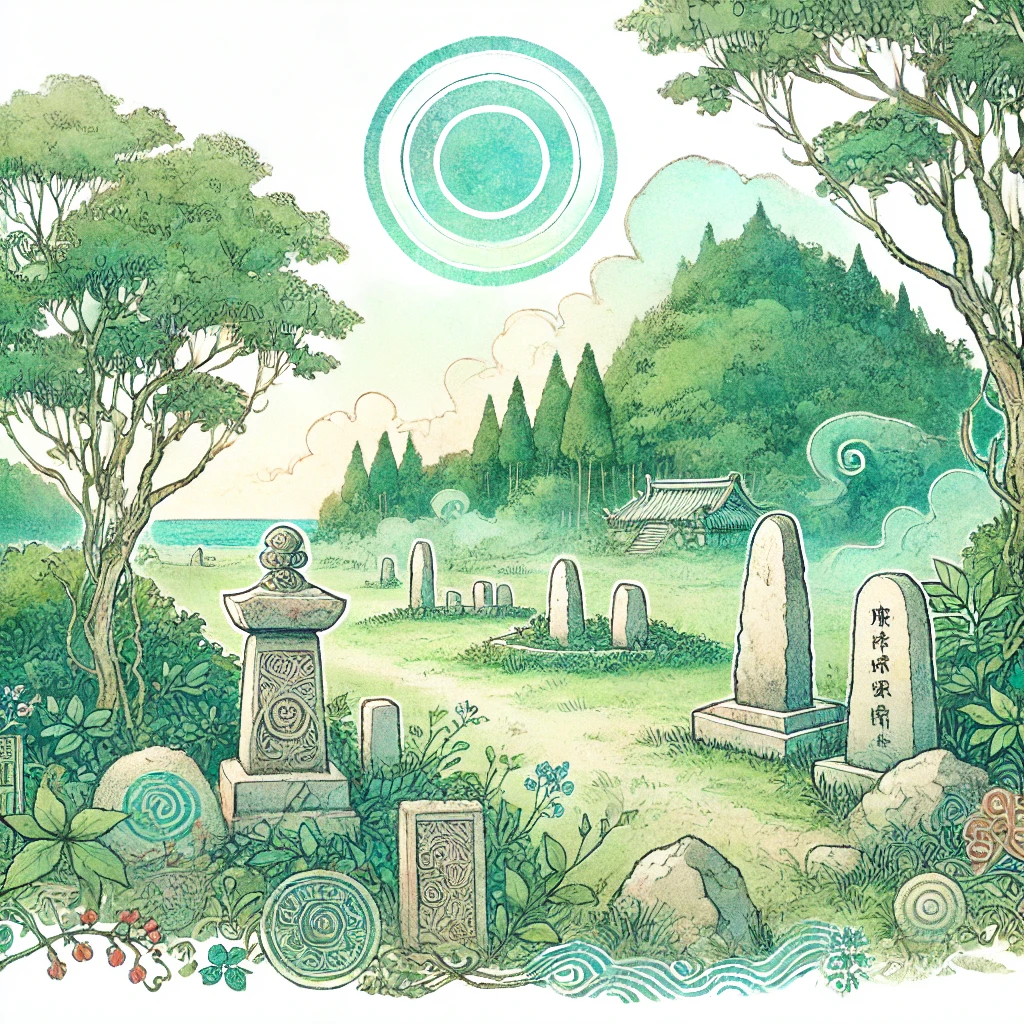
Okinawa, known for its beautiful seas, rich nature, and unique culture, attracts many visitors enchanted by its charm. Yet, there is an aspect of Okinawa that remains relatively unknown. Hidden within its ancient stories lies profound insight and a cautionary message for modern society.
Today, we delve into the legendary tale of “The Curse of Hijaa.” At first glance, it might seem like just a spooky story or a moral lesson. However, this tale has remarkably influenced contemporary Okinawan society and carries the potential to offer a new model of living to the world.
Imagine ancient folklore guiding modern ecotourism, a legendary passage used in global corporate training, or a mystical story integrating with cutting-edge AI technology for mental healthcare. Unbelievable as it may seem, these are innovative initiatives currently unfolding in Okinawa.
The story of “The Curse of Hijaa” provides unique perspectives on essential challenges faced by modern society, such as environmental protection, cultural preservation, and the pursuit of spiritual richness. Its significance extends beyond Okinawa, offering critical insights to the global community.
This article explores the impact and potential of “The Curse of Hijaa” in contemporary society. We will examine the fusion of Okinawan traditions and modern technology, the balance between spiritual culture and economic development, and the reconciliation of local identity with globalization, all illustrated with concrete examples derived from the story.
Do you believe that ancient legends can influence modern society? As you read on, you might find yourself answering “Yes.” This journey will lead to new discoveries about the potential of Okinawa and the possibilities that each of us holds.
Now, let’s embark on a fascinating journey into the world woven by the story of “The Curse of Hijaa.” By the end of this journey, you will see Okinawa and our society from a fresh perspective. This exploration of tradition and innovation, nature and technology, individuals and society will surely leave a deep impression and bring profound insights.
- The Story of “The Curse of Hijaa”
- The Curse of Hijaa: A Mirror Reflecting Okinawa’s Spiritual World
- 2. The Values of Okinawa Reflected in the Story
- A Warning to Modern Society
- The Significance of Supernatural Elements
- Belief in Unseen Forces
- Reverence for Phenomena Beyond Human Understanding
- Transformation Through Mystical Experiences
- Modern Society’s Questions Posed by the Story
- Can Science and Traditional Beliefs Coexist? The story raises the question of how to position traditional beliefs and supernatural phenomena in the context of modern society, where science and technology are highly developed. Okinawa is actively exploring this issue. For instance, the Okinawa Institute of Science and Technology (OIST) started a project called “Dialogue between Science and Faith” in 2019, comparing cutting-edge scientific research with traditional Okinawan beliefs to explore their coexistence. Additionally, the Okinawa Prefectural Museum and Art Museum held a special exhibition in 2020 called “Prayers and Science in Okinawa,” scientifically analyzing traditional rituals to objectively demonstrate their effects. For example, brainwave measurements during prayers showed that participants entered a deep state of relaxation. “The Curse of Hijaa” similarly questions the possibility of coexistence between science and traditional beliefs, prompting us to consider how to harmonize scientific and traditional worldviews. Modern Significance of Supernatural Experiences
- The Importance of “Awe” in the Digital Age
- Conclusion: Lessons from Supernatural Elements
- Healing and Rebirth in the Story
- Historical and Cultural Background of Okinawa
- Significance of the Story in Contemporary Okinawa Society
- Q&A
- Summary of This Article
The Story of “The Curse of Hijaa”
The Curse of Hijaa
Along the coast of Itoman City in southern Okinawa, there is a sacred site revered by locals for generations. Known as “Hijaa,” this place commands deep respect and awe. Hijaa, situated at the boundary where the sea meets the land, is a mystical space surrounded by giant rocks, caves, and dense trees.
Since ancient times, Hijaa has been believed to house gods, and local people regularly held festivals there, praying for bountiful harvests and safety. For fishermen, in particular, Hijaa was indispensable. Before setting out to sea, they would visit Hijaa to offer salt and sake, praying for safe voyages.
Hijaa had strict rules: defiling the sacred site, performing disrespectful acts, or entering without permission were strictly forbidden. Those who broke these rules would face terrifying retribution, according to the legend.
This story begins with the tragedy of young people who violated these rules.
In the summer of the year 2000, a group of five university students from Naha visited Hijaa. Unaware of the local legends and taboos, they saw Hijaa merely as a tourist spot during their summer trip around Okinawa Island.
The oldest in the group, Kenta, was looking for unique places that might become popular on social media. Attracted by Hijaa’s mystical atmosphere, he suggested to his friends that they test their courage there at night.
“If we do a test of courage here, we’ll definitely get some awesome footage!” Kenta exclaimed excitedly.
The others agreed, and that night they snuck into Hijaa with alcohol, snacks, and filming equipment. Under the moonlight, Hijaa exuded a sinister ambiance, starkly different from its daytime appearance.
They drank, made noise, and littered the sacred site. In their drunken state, they vandalized rocks and broke branches off sacred trees. Kenta filmed their antics with his camera.
The spirits of Hijaa watched their actions with growing anger.
As the night wore on, strange occurrences began. The wind picked up suddenly, and the trees started to rustle. A mysterious fog emerged from the sea, enveloping Hijaa.
“Hey, something feels off,” one of them said, starting to feel uneasy.
At that moment, strange shadows began to appear within the fog. They resembled human shapes but were distorted in some way. The shadows slowly approached them.
Panic-stricken, the five tried to leave Hijaa, but the fog obstructed their path, causing them to lose their way. They wandered in circles, unable to find their way out.
One by one, their friends disappeared into the fog. Kenta, the last one left, desperately tried to escape but found his feet seemingly stuck to the ground.
The next morning, local fishermen visiting Hijaa were greeted by an unbelievable sight. The five young people stood frozen like statues, their faces etched with indescribable terror.
This incident quickly spread throughout the region and became known as “The Curse of Hijaa.”
But the story doesn’t end there.
A week after the incident, the five students suddenly began to move again. They were confused and trembling with fear. During police questioning, they all recounted the same thing: in their memory, only one night had passed since they were partying at Hijaa.
Stranger still, their belongings, including cameras and smartphones, had disappeared without a trace. The videos Kenta had recorded were nowhere to be found.
It took time for the five to recover from the psychological shock. They were plagued by nightmares and insomnia. Strange changes began to manifest in their bodies.
Kenta suddenly developed the ability to communicate with sea creatures, but this ability caused him great distress. The voices of the fish constantly echoed in his mind, driving him to the brink of madness.
Misaki, one of the female students, could see the past of objects she touched. Unable to control this power, she was forced to experience the painful memories and tragedies of others.
Shota, another male student, was tormented by his shadow coming to life and acting independently of his will, often against his wishes, instilling him with fear.
The remaining two also gained mysterious abilities, neither blessings nor curses, but these powers made their daily lives extremely difficult.
With the help of doctors and psychologists, they gradually tried to return to normal life. However, their experiences left lasting scars.
This event reaffirmed the mystical power of Hijaa. Locals grew even more respectful and cautious of the sacred site, recognizing the importance of preserving it.
Fences were erected around Hijaa, and access became more restricted. Local elders began educating visitors about Hijaa’s history and sanctity, urging them to treat it with respect.
As time passed, the five young people slowly recovered. They started sharing their experiences through social media and media outlets, warning others about the importance of respecting sacred sites and coexisting with nature.
Kenta became a marine biologist, using his unique ability to protect marine ecosystems. Misaki became a psychological counselor, helping those suffering from trauma with her insights. Shota became a shadow artist, turning his coexistence with his shadow into art.
Their story, not just a tale of horror, taught the importance of respecting nature and tradition. It continued to be passed down among the people of Okinawa.
Hijaa remains a sacred site imbued with mystical power. Occasional strange phenomena are accepted as natural by the locals. Hijaa symbolizes the consequences of human arrogance and ignorance and the potential for harmony between nature and humanity.
This story is passed down through generations, deeply imprinted in the hearts of the Okinawan people. It is not merely a scary tale but a lesson on the importance of respecting nature and tradition.
The Curse of Hijaa: A Mirror Reflecting Okinawa’s Spiritual World
Let us guide you into the mystical world created by Okinawa’s rich nature and deep spirituality. Through the ancient tale of “The Curse of Hijaa,” we will explore the unique spiritual world that breathes within these islands.
This story is more than just a spooky tale. It is a treasure chest of elements deeply rooted in the Okinawan people’s views on nature, values, and even a warning to modern society.
Let’s delve deeper into the spiritual world of Okinawa reflected in the tale of “The Curse of Hijaa.”
Reverence for Nature and Awe
A profound reverence for nature is deeply ingrained in the hearts of the Okinawan people. This is a crucial element running through the core of “The Curse of Hijaa.”
Respect for Nature’s Power
Surrounded by the emerald green sea, white sandy beaches, and dense forests, Okinawa’s nature is not only a beautiful landscape that captivates tourists but also a source of awe for the Okinawan people.
The sacred site in the tale of Hijaa is depicted as a place where the power of nature is concentrated. Positioned at the boundary between sea and land, it is a mystical space surrounded by giant rocks, caves, and dense trees, where unseen great powers reside.
Since ancient times, Okinawans have been exposed to the fierce forces of nature, such as typhoons and tsunamis. Consequently, a worldview has developed that sees nature not as a target for conquest but as an entity to coexist with. The story of Hijaa strongly emphasizes the importance of this coexistence with nature.
The curse that befell the young people who acted recklessly and disrespected the sacred site symbolizes the dangers of underestimating nature’s power. In today’s world, where environmental destruction and climate change are pressing issues, the message of this story is more important than ever.
Influence of Animism
Understanding Okinawa’s spiritual world requires acknowledging the presence of animism, the belief that all elements of nature possess a soul.
In the tale of Hijaa, the spirits residing in the sacred site play a crucial role. They protect the sacred place and punish those who break its rules. This portrayal vividly reflects the animistic worldview alive in the hearts of the Okinawan people.
Even today, elements like the hinpun (a protective screen) in front of houses and the ishiganto (protective stones) seen along roadsides illustrate the Okinawan people’s belief in and coexistence with invisible spiritual forces.
The story of Hijaa serves as an important medium to convey this animistic worldview to the present. Through the story, the sensitivity to the spirituality of the natural world is passed down to the younger generations.
Mysticism at the Boundary Between Sea and Land
The location of Hijaa at the boundary between sea and land holds special significance in Okinawan belief.
Historically, Okinawans have both revered and feared the sea. It provides bountiful fish but also brings violent typhoons.
The boundary between sea and land was also seen as the threshold between this world and the other world. Nirai Kanai, a utopian realm, was believed to lie beyond the sea, from where the gods visited.
The tale of Hijaa emphasizes the mysticism of this boundary. The sacred site’s location at this boundary suggests it is a place imbued with special powers.
Even today, sacred sites along the coast are carefully protected in Okinawa. Traditional rituals, such as those at Seifa Utaki and the Izaiho on Kudaka Island, continue to be performed at coastal locations.
The story of Hijaa reminds us of the mysticism and significance of the boundary between sea and land, making us aware of its importance in contemporary life.
Concept of Sacred Sites and the Importance of Boundaries
In the story of Hijaa, the concept of sacred sites and the importance of boundaries hold significant meaning. This is not merely a setting for the story but a crucial element in understanding the spiritual world of the Okinawan people.
Hijaa as a Symbol of the Sacred and Profane Divide
Hijaa functions as an important boundary that separates the everyday world (profane) from the otherworldly realm (sacred).
In traditional Okinawan worldview, the world is divided into sacred and profane realms. The sacred realm is where gods and spirits reside, while the profane realm is where humans conduct their daily lives. Hijaa is positioned precisely at the junction of these two realms.
In the story, the problem with the young people’s actions at Hijaa is that they ignored this boundary between the sacred and the profane. This was more than just bad manners; it was a grave violation that disrupted the cosmic order.
In modern Okinawa, sacred sites called utaki are carefully protected. These sites often have restricted access or require special conduct upon entry. The story of Hijaa helps us to re-recognize the importance of respecting such sacred sites within the contemporary context.
The Significance of Crossing Boundaries
In the tale of Hijaa, the act of the youths crossing the sacred boundary carries deeper significance than mere physical intrusion.
In traditional Okinawan beliefs, crossing boundaries often signifies contact with the otherworld. This can lead to gaining new powers or wisdom, but it also entails significant risks.
In the story, the youths gain unexpected powers as a result of crossing the boundary. They acquire abilities such as communicating with sea creatures and seeing the past of objects they touch. Though these abilities seem marvelous, they also bring great suffering.
This symbolizes the dangers of entering the sacred realm unprepared. In traditional Okinawan faith, approaching sacred places requires proper preparation, mindset, and conduct. The story of Hijaa conveys the importance of this ancient wisdom in modern times.
Traditional Systems for Protecting Sacred Sites
Okinawa has long had traditional systems to protect its sacred sites.
For example, women known as noro or yuta were responsible for managing sacred sites, and specific families or communities inherited the caretaking of these sites. These systems maintained the sanctity of the sites and prevented inappropriate intrusions and actions.
In the story of Hijaa, the absence of such traditional protection systems contributes to the tragedy. The local elders’ later efforts to explain the site’s history and sanctity to visitors can be seen as a modern version of these traditional systems.
Similar efforts are made at many sacred sites in modern Okinawa. At World Heritage sites like Shuri Castle and Seifa Utaki, guides provide thorough explanations to help visitors understand the sacredness of these places.
The story of Hijaa emphasizes the importance of such efforts to protect sacred sites. It is not merely about preserving cultural assets or tourist resources but also about safeguarding the spiritual foundation of the Okinawan people.
The Concept of Curses: Embodiment of Cause and Effect
The concept of a curse in the story of Hijaa holds deeper meaning beyond mere superstition or horror. It embodies the Okinawan worldview and ethics, reflecting the principle of cause and effect.
A Warning Against Disturbing Nature’s Order
The curse of Hijaa functions as a stern warning against disturbing the natural order.
In the story, the youths cause a ruckus, drink alcohol, litter, and damage sacred trees and rocks at the sacred site. These actions are portrayed as serious offenses that disrupt the harmony of nature, going beyond mere bad manners.
In traditional Okinawan worldview, humans are part of nature and must live in harmony with it. Natural disasters like typhoons and droughts were sometimes interpreted as “curses” resulting from disturbing this harmony.
The story of Hijaa translates this traditional worldview into modern terms, highlighting the importance of environmental protection. Through the story, we learn about the dangers of disregarding nature and the importance of coexisting with the environment.
The Importance of Upholding Community Norms
The curse of Hijaa also underscores the importance of upholding community norms.
In the story, the youths act without knowing the local traditions and taboos, reflecting a disregard for the community’s wisdom and norms. As a result, they face severe punishment.
In traditional Okinawan society, upholding community norms was crucial not just for limiting individual behavior but for ensuring the harmony and safety of the entire community.
The story of Hijaa reaffirms the importance of maintaining community norms in a modern context. In the era of social media, where individual actions can have unforeseen societal impacts, the message of this story is even more relevant.
The Cycle of Curses and Purification
The story of the curse of Hijaa includes a cycle of punishment, purification, and rebirth.
In the latter part of the story, the cursed youths eventually find ways to contribute to society, turning their suffering into a path of redemption. This shows that curses are not merely punishments but also processes of purification and learning.
In traditional Okinawan faith, there is a cycle where those cursed undergo proper rituals and actions to be purified and reintegrated into the community. This signifies that even those who err are ultimately given opportunities for forgiveness and rebirth.
The story of Hijaa reinterprets this traditional cycle of purification and rebirth in a modern context. The youths’ efforts to give back to society after their ordeal represent a form of contemporary purification.
This concept of the cycle of curses and purification offers important insights for modern society. For instance, it suggests that addressing issues like environmental destruction and cultural disregard requires reflection and learning to create new values.
The story of Hijaa functions as a mirror reflecting Okinawa’s traditional spiritual world. It teaches us about the reverence for nature, the importance of sacred sites and boundaries, and the concept of curses. However, the story’s relevance extends beyond these aspects, offering significant messages to modern society.
For example, considering environmental protection, the story of Hijaa teaches us the importance of seeing nature not just as a resource or a tourist attraction but as something to be revered. In recent years, balancing environmental protection and tourism development has become a major issue in Okinawa, and this story provides a new perspective on that debate.
From the perspective of cultural inheritance, this story plays a crucial role. Many young Okinawans feel distant from traditional values and beliefs. Through modern interpretations like the story of Hijaa, they can rediscover the universal value of these traditions.
The story also prompts us to consider the importance of community. In an era where social media has amplified individual voices, community norms can sometimes be overlooked. The story of Hijaa strongly warns about the unforeseen societal impacts of individual actions.
Thus, the story of the curse of Hijaa is not just a scary tale but a key to understanding the spiritual world of Okinawa and a carrier of significant messages for contemporary society.
Let’s delve deeper into the specific questions this story raises for us.
- How can we achieve coexistence with nature?
The story of Hijaa emphasizes the importance of seeing nature as a coexisting entity rather than a target for conquest. How can we achieve coexistence with nature in our highly developed modern society? What can we learn from Okinawa’s traditional view of nature? - How should we perceive the boundary between the sacred and the profane?
In modern society, the boundary between the sacred and the profane can sometimes blur. However, the story of Hijaa helps us re-recognize this boundary’s importance. How should we position and respect the “sacred” in our daily lives? - How can we maintain community norms?
With globalization, maintaining local community norms has become challenging. The story of Hijaa emphasizes the importance of upholding community norms. How can we adapt these norms to modern society while respecting diversity? - How can we achieve learning and rebirth from mistakes?
The story of Hijaa depicts a process of purification and rebirth after being cursed. In modern society, how can individuals and organizations sincerely reflect on their mistakes and use those experiences for rebirth and contribution? - How can we apply traditional values to modern times?
The story of Hijaa reinterprets Okinawa’s traditional values in a modern context. How can we re-interpret and utilize other traditional values and beliefs in a way that is applicable to contemporary society?
The answers to these questions require each person to think and discuss based on their position and experiences. The story of the curse of Hijaa provides a valuable cultural resource that prompts such deep thought and dialogue.
Finally, let’s touch on the universal appeal of this story. While deeply rooted in Okinawan culture and history, the essential messages of the story of Hijaa—reverence for nature, the importance of community, and learning and rebirth from mistakes—resonate across cultures and regions.
This is why this story holds the potential to resonate not only with the people of Okinawa but also with people all over Japan and the world. Through this story, we can reflect on our own cultures and values and seek a richer way of life.
The story of the curse of Hijaa is a mirror reflecting Okinawa’s spiritual world and our inner worlds. How will you respond to the questions posed by this story? Within your answers, you will likely find new insights and hints for personal growth.
2. The Values of Okinawa Reflected in the Story
The traditional Okinawan story “The Curse of Hijaa” vividly portrays the deep values rooted in these islands. By unraveling this story, we can understand the ways of thinking and living that the Okinawan people have cherished. These values offer many insights for us living in contemporary society.
Let’s explore the values of Okinawa reflected in the story of “The Curse of Hijaa” in detail.
Community Norms and Individual Responsibility
One of the most striking aspects of the story of “The Curse of Hijaa” is the relationship between community norms and individual responsibility. The protagonists suffer severe punishment for ignoring community norms, reflecting the importance of community in Okinawan society and the belief that individual actions affect the entire community.
Culture of Valuing Group Harmony
In traditional Okinawan society, group harmony has been highly valued. Phrases like “Ichari-bachode” (Once we meet, we are brothers) represent the importance of connections and mutual assistance among people.
In “The Curse of Hijaa,” the protagonists prioritize personal enjoyment over local rules, highlighting the Okinawan value of placing group harmony above individual desires.
For instance, during traditional events like “Ungami” (Sea God Festival), the entire village cooperates in the preparation and execution of the festival. Each person fulfills their role, contributing to the festival’s success, reflecting the culture of valuing cooperation that underpins Okinawan society.
The Impact of Individual Actions on the Community
In “The Curse of Hijaa,” the reckless actions of a few youths affect the entire sacred site and ultimately come back to them as a curse. This reflects the Okinawan belief that individual actions significantly impact the whole community.
In traditional Okinawan villages, the spirit of mutual aid, known as “Yui-maru,” was deeply rooted. For example, when building a house, the whole village would help, and the favor would be returned later. In this system, individual actions directly contributed to the community’s harmony and prosperity.
In modern society, this concept still offers valuable insights. As social media amplifies individual voices, this story warns us of the potential unintended consequences our actions might have on society.
Purification of Sins and Reintegration into the Community
In the latter part of “The Curse of Hijaa,” the protagonists reflect on their mistakes and use their experiences to contribute to society, symbolizing a modern form of purification. This reflects the traditional Okinawan concept of “purification of sins.”
In traditional Okinawan faith, there was a process where those who committed sins underwent proper rituals and actions to be purified and reintegrated into the community. For example, the ritual called “Ugan nu Yurushi” involved offenders seeking forgiveness from the gods and expressing their repentance before the community.
This concept of purification and reintegration offers significant insights for modern society. It suggests ways for individuals and organizations to reflect sincerely on their mistakes and use those experiences to contribute positively to society. The story of Hijaa provides us with hints for achieving this.
Passing Down Wisdom Across Generations
The story of “The Curse of Hijaa” highlights the importance of passing down wisdom across generations. The tragedy encountered by the protagonists begins with their disregard for ancestral wisdom, underscoring the significance of “transmission of wisdom” in Okinawan culture.
The Importance of Oral Tradition
In Okinawa, important knowledge and lessons have long been transmitted orally. The story of “The Curse of Hijaa” itself is an example of this oral tradition.
For instance, the presence of “Yuta,” spiritual mediums in Okinawa, is closely tied to this oral tradition. Yuta listen to the voices of ancestors and convey their teachings to the living. Their words are the crystallization of intergenerational wisdom.
Moreover, traditional Okinawan songs called “Kwena” are an essential part of this oral tradition. These songs incorporate historical events and moral lessons, allowing wisdom to be passed down through generations via music.
The story of “The Curse of Hijaa” also serves to convey the importance of this oral tradition in modern times. Through the story, we learn the importance of listening to ancestral wisdom.
Respecting the Wisdom of Elders
In “The Curse of Hijaa,” the tragedy befalling the protagonists begins with their disregard for the warnings of their elders. This reflects the Okinawan cultural stance of respecting the wisdom of elders.
In traditional Okinawan society, the custom of ancestor worship, known as “Toto-me,” remains strong. This is not only about honoring deceased ancestors but also about respecting the wisdom and experiences of the elders.
For example, during the traditional event “Shimi” (Qingming Festival), families gather at ancestral graves to offer sacrifices and pay respects. This event provides younger generations an opportunity to learn about family history and traditions from their elders.
The story of “The Curse of Hijaa” warns against the dangers of disregarding the wisdom of elders in a modern context, emphasizing the importance of intergenerational dialogue.
Conveying Lessons Through Stories
The story of “The Curse of Hijaa” functions as a means of conveying lessons. By passing down this story, values such as respecting sacred sites, cherishing nature, and upholding community norms are transmitted across generations.
Okinawa has numerous folktales that begin with “Mukashi-mukashi” (Once upon a time). For example, stories like “The Friend Who Turned into a Goat” and “Zaru-watashi” are not just for entertainment but contain important moral lessons. These stories are crucial in teaching children morals and values.
The value of “passing down wisdom across generations” depicted in “The Curse of Hijaa” offers important insights for modern education.
In some Okinawan schools, “regional studies” programs invite local elders to teach traditional culture and history. Students learn firsthand the wisdom and values not found in textbooks.
The “Champuru Study” program, based on the traditional Okinawan “champuru culture” (a blend of various cultures), teaches respect for diversity and different cultures.
These educational programs apply the value of “the importance of passing down wisdom” from “The Curse of Hijaa” to the modern education system.
Conclusion: What the Story Asks of Us
The story of “The Curse of Hijaa” vividly depicts traditional Okinawan values while posing many questions to those of us living in modern times.
This story teaches us the importance of living in harmony with nature, the value of community, the need to pass down wisdom across generations, and the importance of humility and respect. At the same time, it prompts us to consider how we should apply these values to modern society.
How should we position and utilize traditional values in a rapidly changing modern society? How should we balance technological development with spirituality? How should we balance individual freedom with social responsibility?
Answering these questions requires each of us to think and discuss based on our own positions and experiences. The story of “The Curse of Hijaa” provides a valuable cultural resource that prompts such deep thought and dialogue.
Listening to traditional Okinawan stories and applying the embedded wisdom to modern times is not merely nostalgic for the past but an important endeavor for creating a better future. May the story of “The Curse of Hijaa” plant seeds of new awareness in your hearts.
The charm of Okinawa lies not only in its beautiful nature and unique culture but also in its deep spirituality and the efforts of its people to apply this to modern times. Through the story of “The Curse of Hijaa,” I hope you will explore the depth of Okinawa’s spiritual world and find new discoveries and inspirations.
A Warning to Modern Society
The traditional Okinawan story “The Curse of Hijaa” is more than just an old tale. It contains sharp warnings for modern society. Let’s delve deeper into the messages this story conveys to us today.
The Dangers of Disregarding Traditional Culture
One of the most striking aspects of “The Curse of Hijaa” is the tragedy faced by the protagonists due to their disregard for traditional culture. This symbolizes the dangers of neglecting traditional culture in modern society.
Loss of Cultural Identity
Okinawa’s traditional culture is at the core of the Okinawan people’s identity, cultivated over a long history. However, there are growing concerns that this crucial identity is being lost amid globalization and modernization.
For instance, the use of “Uchinaaguchi” (Okinawan language) is declining. A 2019 survey found that only about 15% of people use Uchinaaguchi in daily life. Language is a key element in forming cultural identity, and the decline of Uchinaaguchi poses a serious threat to the preservation of Okinawa’s cultural identity.
Moreover, the simplification or cancellation of traditional festivals and ceremonies is also a problem. For example, the once widely celebrated “Honen Festival” has been scaled down or canceled in some areas due to declining participation and the burden of preparation. These festivals and ceremonies are not just entertainment but crucial opportunities for strengthening community ties and passing down culture to future generations. Their loss leads to the weakening of Okinawa’s cultural identity.
The story of “The Curse of Hijaa” warns of the dangers of losing cultural identity. The tragedy faced by the protagonists begins with their disregard for their roots and cultural background.
Weakening of Community Cohesion
At the heart of Okinawa’s traditional culture is a strong sense of community. Phrases like “Ichari-bachode” (Once we meet, we are brothers) represent the importance of connections and mutual assistance. However, neglecting traditional culture can weaken this community cohesion.
For instance, the practice of “Yuimaaru” (mutual aid in labor), once common, has declined with urbanization and the rise of individualism. In the past, neighbors would provide free labor for house construction and farming, but such scenes are now rare.
Similarly, the mutual aid financial system called “Moai” has decreased with the spread of banks and credit cards. Moai was not just a financial system but also a way to strengthen community ties through regular gatherings. Its decline leads to the weakening of local communities.
The story of “The Curse of Hijaa” suggests the dangers of weakening community cohesion. The problems faced by the protagonists in the story could not be resolved by their individual efforts alone. Ultimately, the cooperation of local people enabled the resolution and their redemption.
Loss of Spiritual Anchors
Okinawa’s traditional culture has also served as a spiritual anchor for its people. Reverence for nature and ancestors, and belief in “Nirai Kanai” (a utopian realm) are vital elements that have supported the Okinawan people spiritually.
However, the development of science and technology and the spread of rationalism in modern society are eroding these spiritual anchors. For example, the existence of “Yuta” (spiritual mediums), once widely believed, is increasingly dismissed as superstition by the younger generation. Yuta were not just fortune-tellers but provided spiritual support by listening to people’s troubles. Disregarding their role means depriving people of a vital source of spiritual comfort.
Additionally, the deterioration of sacred sites known as “Utaki” is also a problem. Utaki are places of prayer and spiritual solace for the Okinawan people. However, due to waning faith and lack of caretakers, many Utaki have fallen into disrepair.
The story of “The Curse of Hijaa” warns of the dangers of losing spiritual anchors. The mysterious phenomena encountered by the protagonists strongly suggest the existence of unseen forces, reminding us of the mysticism that science alone cannot explain.
The Impact of Careless Actions in the Age of Social Media
In “The Curse of Hijaa,” the protagonists desecrate a sacred site to create buzz on social media, symbolizing the severe impact of careless actions in the age of social media.
The Problems of Actions Aimed at “Going Viral”
With the proliferation of social media, individuals can easily disseminate information in today’s society. However, the pursuit of “going viral” has led to an increase in thoughtless actions. This is a serious issue in Okinawa’s tourist spots.
For example, during the fire at Shuri Castle in 2019, some tourists faced criticism for posting pictures of the “burning Shuri Castle” on social media. Shuri Castle is a cultural heritage and spiritual symbol for the Okinawan people. Treating this tragic scene as merely an “unusual sight” and posting it casually deeply hurt the feelings of the Okinawan people.
There are also cases of inappropriate photography at sacred sites being posted on social media. At Seifa Utaki, a World Heritage site, tourists often trespass into restricted areas to take photos and post them online.
The story of “The Curse of Hijaa” strongly warns against the dangers of actions aimed at “going viral.” The tragedy faced by the protagonists begins with their reckless motive of creating social media buzz. This story reminds us that there are things more important than “going viral.”
The Impact of Online Outrage on Real Life
Careless actions on social media do not remain confined to the online world; they increasingly have serious repercussions in real life.
For instance, the “Goya Champuru Outrage Incident” in Okinawa in 2020 is a classic example of a social media post having significant real-world consequences. A tourist criticized the taste of Goya Champuru, a local Okinawan dish, on social media, sparking backlash from locals and escalating into a major controversy. As a result, the tourist was forced to apologize, and the incident even affected their employment.
There have also been cases where individuals posted inappropriate actions at sacred sites on social media, leading to their identification and subsequent complaints to their workplaces or schools. A moment of thoughtless behavior can have long-term impacts on a person’s life.
“The Curse of Hijaa” highlights the severe real-life consequences of online actions. In the story, the protagonists face various difficulties in the real world as a result of their inappropriate behavior at a sacred site. This sharply depicts the interconnectedness of the online and real worlds in modern society.
The Permanence of Digital Footprints
Information posted on social media never completely disappears, even if deleted. This phenomenon is known as a “digital footprint.” Once information is on the internet, it can persist indefinitely.
For example, a video of inappropriate behavior at an Okinawan beach in 2018 was re-uploaded by other users even after the original poster deleted it, continuing to attract criticism for a long time. Regardless of the original poster’s intentions, publicly shared information can take on a life of its own.
Moreover, past social media posts can become problematic during job searches or marriage prospects. There have been cases where job offers were rescinded because inappropriate photos at Okinawan sacred sites remained on social media.
“The Curse of Hijaa” sounds the alarm about the permanence of digital footprints. The story features an episode where the protagonists’ cameras and smartphones mysteriously disappear, which paradoxically suggests that digital information in the real world is not so easily erased.
The Challenges of Balancing Tourism and Local Culture
“The Curse of Hijaa” also highlights the contemporary challenge of balancing tourism with the preservation of local culture. Okinawa is one of Japan’s top tourist destinations but has also strived to protect its unique culture and traditions. The story prompts us to consider how to balance these two aspects effectively.
Issues Arising from the Commercialization of Sacred Sites
Many sacred sites in Okinawa are increasingly commercialized as tourist attractions. While this boosts the local economy, it risks losing the sites’ sanctity and original meaning.
For example, at Seifa Utaki, a World Heritage site, inappropriate behavior by tourists due to increased visitor numbers has become a problem. Tourists frequently trespass into restricted areas for photos and talk loudly in prayer spaces, causing distress to locals.
Additionally, sacred sites that were once places of local prayer are being developed into tourist spots, losing their original atmosphere and sanctity. Installing stairs, railings, and explanatory signs may improve access but can also diminish the mystical essence of these sacred places.
“The Curse of Hijaa” warns about the issues stemming from the commercialization of sacred sites. The protagonists’ tragedy begins with their perception of the sacred site as merely a tourist spot, highlighting the danger of losing the intrinsic value of such places.
Tourism that Conveys the Essence of Culture
To balance tourism with local culture, it is crucial to convey the essence of the culture. This means helping tourists understand the deeper meaning and background of the culture, rather than just offering surface-level “novelty” or “exoticism.”
For example, Shurijo Castle Park in Naha City offers guided tours that teach about the history and culture of the Ryukyu Kingdom, helping participants understand that Shurijo Castle is not just a tourist spot but a symbol of Okinawan identity.
Additionally, when tourists participate in traditional festivals, there is an increasing effort to explain the meaning and customs of the festivals in detail. For instance, at the Muuchee Festival (mochi-making event) in Kumejima, tourists can join in but are given thorough explanations of the festival’s origins, meaning, and proper conduct.
“The Curse of Hijaa” suggests the importance of tourism that conveys the essence of culture. The story’s later part, where local elders begin explaining the history and sanctity of Hijaa to visitors, exemplifies an ideal form of culturally informative tourism.
Seeking Sustainable Cultural Tourism
To maintain the coexistence of tourism and local culture in the long term, it is necessary to explore sustainable cultural tourism. This involves balancing the economic benefits of tourism with the protection and transmission of culture.
For example, at Kabira Bay in Ishigaki City, Okinawa, efforts are being made to balance environmental conservation with tourism through “eco-tourism.” By limiting the number of tourists and requiring guides, they protect the beautiful natural environment and traditional culture while offering tourists a deeper experience.
In the Yambaru region of northern Okinawa, the “Yambaru Ecotourism” project promotes tourism while preserving the area’s nature and culture. Local guides introduce the unique natural and cultural features of the region, emphasizing sustainable practices.
“The Curse of Hijaa” suggests the importance of sustainable cultural tourism. The story’s conclusion, where fences are installed around Hijaa and access is restricted, can be interpreted as an example of balancing site protection with tourism.
Questions the Story Poses to Modern Society
“The Curse of Hijaa” can be understood not just as a scary or moral story but as a sharp inquiry into modern society. Let’s delve deeper into the questions this story poses to us.
How Should We Balance Tradition and Innovation?
“The Curse of Hijaa” warns of the dangers of disregarding tradition but also questions how to balance tradition and innovation.
For instance, Ryukyu glass, a traditional craft in Okinawa, has recently incorporated modern designs and techniques to create new appeal. By preserving traditional methods while adapting to contemporary needs, the industry continues to thrive.
Similarly, traditional Okinawan karate strives to balance its aspects as an international sport and a traditional martial art. The inclusion of karate as an official sport in the 2020 Tokyo Olympics emphasized its competitive side, but its cultural and spiritual significance remains carefully preserved.
“The Curse of Hijaa” encourages us to think about balancing tradition and innovation. How can we adapt traditions to modern times while preserving their essence? This is a challenge faced by cultures worldwide.
Can Technology and Spirituality Coexist?
The story contrasts modern technology, represented by social media, with a spiritual place, symbolizing the contemporary issue of balancing technology and spirituality.
In Okinawa, efforts are being made to blend traditional culture with technology. For example, “virtual shrine visits” allow people to visit Okinawan shrines remotely, using technology to maintain traditional spirituality.
Moreover, the traditional Eisa dance festival has groups incorporating LED lights into their costumes and fusing traditional and modern music. These innovations retain the essence of tradition while appealing to younger generations.
“The Curse of Hijaa” raises questions about balancing technology and spirituality. Can technological advancement and traditional values coexist? If so, how should we balance them? These are questions we must each consider.
How to Balance Personal Freedom and Social Responsibility
The story illustrates how the protagonists’ personal enjoyment ultimately impacts society, symbolizing the modern issue of balancing personal freedom and social responsibility.
This problem is evident in Okinawa with the growth of tourism. For example, how to balance tourists’ freedom to enjoy beautiful beaches with the responsibility to protect the environment? Kadena Air Base faces the challenge of balancing the benefits of base-related economic activity with the responsibility of addressing nighttime noise pollution.
There are also efforts to balance personal freedom with social responsibility. In Miyakojima City, tourists are asked to sign the “Miyako Island Love Declaration,” pledging to respect the island’s nature and culture, setting limits on personal behavior for the greater good.
“The Curse of Hijaa” prompts us to consider how to balance personal freedom with social responsibility. How can we pursue individual fulfillment and enjoyment while considering the broader societal impact? This is a challenge for everyone in modern society.
Conclusion: Applying Lessons from the Story to Modern Society
“The Curse of Hijaa” is more than just a scary story or a moral tale. It provides insights into the various challenges modern society faces.
The dangers of disregarding traditional culture, the impact of careless actions in the age of social media, and the difficulty of balancing tourism with local culture are issues faced not only in Okinawa but around the world.
However, the story doesn’t just point out problems. It also hints at solutions, such as balancing tradition with innovation, harmonizing technology with spirituality, and balancing personal freedom with social responsibility.
We need to face the questions posed by the story earnestly and find our own answers. It’s crucial to reflect these answers in our daily lives and actions.
“The Curse of Hijaa” shows how traditional Okinawan wisdom can be applied to modern society. For example, reverence for nature can inform environmental protection efforts, the importance of community bonds can aid in community revitalization, and the transmission of wisdom across generations can inspire educational reforms.
The lesson is not to return to the past but to understand traditional values, reinterpret them in the modern context, and practice them in new ways.
Okinawa’s charm lies not only in its beautiful nature and unique culture but also in the profound insights embedded in its stories and the efforts of its people to apply these insights in contemporary times.
Reflecting on the issues raised by “The Curse of Hijaa” can lead to new understandings and steps toward a better future.
The Significance of Supernatural Elements
The supernatural elements in “The Curse of Hijaa” are not just devices to instill fear. These elements reflect the worldviews and values of the Okinawan people. Let’s delve into the meaning of these supernatural aspects of the story.
Belief in Unseen Forces
Okinawan culture has long included a belief in unseen forces. The supernatural powers in “The Curse of Hijaa” reflect this belief.
The Roles of Yuta and Noro in Modern Interpretation
In Okinawa’s traditional belief system, Yuta (shamans) and Noro (priestesses) play significant roles. Yuta offer personal consultations and divinations, while Noro conduct public rituals. They serve as bridges between the unseen world and the present, greatly influencing people’s spiritual lives.
For example, in Yomitan Village in central Okinawa, Noro still offer prayers during important festivals. In the 2019 Harvest Festival, Noro prayed for a good harvest, an event covered by local media. This shows how traditional spiritual roles are respected even today.
Modern interpretations of these traditional roles are also evolving. The Okinawa Psychological Counseling Center in Naha City reinterprets the role of Yuta from a psychological counseling perspective, applying traditional wisdom to modern mental health care. This is an innovative way to use traditional knowledge in a contemporary context.
In “The Curse of Hijaa,” characters who sense and interpret unseen forces play a role similar to that of Yuta and Noro, suggesting that Okinawa’s traditional belief system still holds significance in modern society.
Spirit Belief and Daily Life
Belief in spirits is deeply embedded in the daily lives of Okinawans. The supernatural phenomena in “The Curse of Hijaa” reflect this spirit belief.
In Okinawa, many households maintain a small altar to worship Hinukan, the kitchen deity, offering tea and water daily for the family’s safety and happiness. A 2018 survey showed that about 70% of Okinawan households have a Hinukan altar.
Additionally, the tree spirit Kijimuna, often depicted as a red-haired little figure, frequently appears in Okinawan folklore. Kijimuna is believed to inhabit banyan trees and is known for its playful but generally helpful nature. A monument to Kijimuna near Naha’s Kokusai Street is a popular tourist spot.
In “The Curse of Hijaa,” the spirits residing in the sacred site play a crucial role, reflecting the spirit beliefs deeply rooted in the daily lives of Okinawans. Through the story, we can glimpse the worldviews and attitudes toward nature of the Okinawan people.
Attitude Toward Phenomena Beyond Science
“The Curse of Hijaa” includes many phenomena that cannot be easily explained by science, reflecting how Okinawans approach unexplained occurrences.
In Okinawa, when encountering phenomena that defy scientific explanation, people tend to accept them with humility rather than dismissing them as mere superstition. For example, in the Yambaru region of northern Okinawa, the mysterious “Hinomaru” phenomenon of lights moving in the night sky is met with a blend of scientific inquiry and reverence for nature’s mysteries.
For instance, to counter the dangerous Habu jellyfish, Okinawans employ both scientific methods and traditional prayers. In the summer of 2020, Onna Village’s beaches combined the installation of state-of-the-art protective nets with prayers by local priests for safe swimming.
The supernatural phenomena in “The Curse of Hijaa” reflect this balanced attitude. While not completely dismissing scientific explanations, they also acknowledge and respect unseen forces, showing a harmonious approach to understanding phenomena.
Reverence for Phenomena Beyond Human Understanding
The supernatural phenomena in “The Curse of Hijaa” express reverence for forces beyond human comprehension. This sense of awe has played an important role in Okinawan culture and tradition.
Psychological Impact of Unexplained Experiences
The inexplicable events experienced by the protagonists in the story greatly affect their psyche, mirroring the reactions of Okinawan people to supernatural encounters.
For example, at the Peace Memorial Park in Itoman City, Okinawa, there have been occasional reports of people seeing the spirits of war victims. In a 2017 survey, about 15% of visitors reported having some kind of inexplicable experience, often resulting in profound awe and a strong desire for peace.
Additionally, it is not uncommon for participants in traditional Eisa dance practices to feel the presence of their ancestors’ spirits. During a 2019 Eisa event in Naha City, one participant suddenly began to cry, stating they felt the emotions of their ancestors, as reported in a local newspaper.
The mysterious experiences in “The Curse of Hijaa” likely draw from such real-life accounts, helping readers understand the significant psychological impact of supernatural encounters.
Nurturing Respect for Nature Through Awe
The reverence for supernatural forces depicted in “The Curse of Hijaa” also fosters a sense of respect for the natural environment, deeply intertwined with Okinawan traditional views of nature.
In Okinawa, nature has long been believed to be inhabited by gods and spirits. For example, the “Tar Falls” in Ogimi Village, northern Okinawa, is revered as a dwelling place for a water deity. This belief has helped protect the surrounding environment. In a 2018 local environmental protection activity, traditional beliefs were invoked to emphasize the importance of nature conservation.
Many beaches in Okinawa observe a simple prayer ritual before swimming or engaging in marine sports out of reverence for the “Sea Gods.” This practice, which was introduced to tourists in an event in Onna Village in the summer of 2020, serves as both a recognition of the sea’s dangers and a means to cultivate respect for nature.
The supernatural reverence in “The Curse of Hijaa” similarly emphasizes the importance of respecting nature, warning against the dangers of disregarding it and teaching the value of reverence for the natural world.
A Flexible Worldview That Embraces Mysteries
The supernatural phenomena in “The Curse of Hijaa” are not fully explained, reflecting the Okinawan approach of accepting mysteries with a flexible worldview.
In Okinawa, there is a tendency to accept the unknown rather than insist on understanding and explaining everything. For example, at “Chibichiri Gama” in central Okinawa, a site of mass suicide during wartime, many report feeling a mysterious warmth. Locals often accept this as a manifestation of the desire for peace rather than seeking a scientific explanation.
During the “Harvest Festival” in Nanjō City in 2018, participants witnessed strange phenomena, like sudden strong winds making the festival flags flap vigorously. These occurrences were taken as signs of the arrival of the gods rather than seeking scientific explanations.
The supernatural elements in “The Curse of Hijaa” reflect this flexible worldview, showing a willingness to accept and learn from mysteries rather than trying to control or fully understand everything.
Transformation Through Mystical Experiences
In “The Curse of Hijaa,” the protagonists undergo significant personal transformations through their supernatural experiences, highlighting the profound impact of mystical experiences in Okinawan culture.
Interpretation as Transpersonal Experiences
The protagonists’ experiences in the story can be interpreted as “transpersonal experiences” in psychology, which refer to experiences that transcend the usual personal consciousness and bring about deep spiritual changes.
Similar reports of transpersonal experiences are not uncommon in Okinawa. For example, the sacred site “Seifa Utaki” has long been revered, and many visitors report profound spiritual experiences. In a 2019 survey, about 20% of visitors to Seifa Utaki reported having “experiences beyond ordinary consciousness.”
There are also accounts of people entering a trance-like state while chanting the traditional Okinawan prayer “Omoro.” During a cultural heritage event in Naha City in 2018, a participant suddenly began to cry while chanting, saying they heard the voices of their ancestors. Such experiences are interpreted as deep spiritual encounters rather than mere emotional responses.
The experiences of the protagonists in “The Curse of Hijaa” can similarly be seen as transpersonal, suggesting encounters with something beyond the self.
Supernatural Phenomena as Catalysts for Spiritual Growth
In the story, the protagonists grow significantly through their supernatural experiences, reflecting the role of supernatural phenomena as catalysts for spiritual growth in Okinawan culture.
Okinawans believe that facing difficulties or supernatural experiences can lead to spiritual growth. For example, the ritual of “mizugyō” (water discipline) at “Tar Falls” involves standing under the waterfall to purify the mind and body and to experience nature’s power firsthand, fostering spiritual growth. In a 2020 survey of young participants, about 80% said the experience made them reflect on their inner selves.
There are also reports of young people feeling the presence of ancestral spirits during Eisa dance practice, leading to personal reflection and growth. During a major Eisa event in Naha City in 2019, a high school student began to cry during the dance, saying they felt their ancestors’ emotions and reconsidered their own life path.
The supernatural phenomena in “The Curse of Hijaa” serve a similar role, helping the protagonists reflect on themselves and gain deeper insights through their terrifying experiences.
The Role of Mystical Experience Participants in the Community
In “The Curse of Hijaa,” the protagonists ultimately contribute significantly to society after their supernatural experiences, reflecting the traditional Okinawan value of mystical experience participants holding special roles in the community.
In traditional Okinawan society, those who had mystical experiences often took on special roles. For example, many “Yuta” (shamans) began their path after having mystical experiences in their youth. In a 2018 survey in central Okinawa, about 70% of interviewed Yuta said they became Yuta because of mysterious experiences in their youth.
Similarly, “Noro” (female priestesses) often assumed their roles after mystical experiences. In Kunigami Village, northern Okinawa, there are still women who serve as Noro during traditional festivals, often based on childhood experiences of hearing the gods’ voices.
The transformation and social contributions of the protagonists in “The Curse of Hijaa” reflect these traditional Okinawan values, as they gain special abilities from their mystical experiences and use them to benefit society.
Modern Society’s Questions Posed by the Story
The supernatural elements in “The Curse of Hijaa” serve as sharp inquiries into modern society rather than just devices for fear and surprise.
Can Science and Traditional Beliefs Coexist? The story raises the question of how to position traditional beliefs and supernatural phenomena in the context of modern society, where science and technology are highly developed. Okinawa is actively exploring this issue. For instance, the Okinawa Institute of Science and Technology (OIST) started a project called “Dialogue between Science and Faith” in 2019, comparing cutting-edge scientific research with traditional Okinawan beliefs to explore their coexistence. Additionally, the Okinawa Prefectural Museum and Art Museum held a special exhibition in 2020 called “Prayers and Science in Okinawa,” scientifically analyzing traditional rituals to objectively demonstrate their effects. For example, brainwave measurements during prayers showed that participants entered a deep state of relaxation. “The Curse of Hijaa” similarly questions the possibility of coexistence between science and traditional beliefs, prompting us to consider how to harmonize scientific and traditional worldviews. Modern Significance of Supernatural Experiences
The story also suggests the potential significance of supernatural experiences in modern society.
In Okinawa, there are efforts to reinterpret traditional supernatural experiences in a modern context. For example, the Okinawa Spiritual Healing Center in Naha City offers new approaches combining traditional Yuta methods with psychotherapy. A 2019 survey found that about 60% of users felt they achieved mental stability.
Another initiative applies the traditional Okinawan meditation method “Uchinaanchu no Mutu” (Okinawan Spirit) to the modern stress society. A pilot introduction at a company in Naha City in 2020 showed some success in reducing employee stress and improving productivity.
“The Curse of Hijaa” raises questions about the modern significance of supernatural experiences, prompting us to reconsider the importance of spirituality and inner life in contemporary society.
The Importance of “Awe” in the Digital Age
The story also questions the importance of the sense of “awe” in a digital age where everything is visible and quantifiable.
In Okinawa, there are efforts to adapt the traditional sense of “awe” to the digital age. For example, the Okinawa Prefectural University of Arts started a project in 2020 called “Digital Art and Okinawan Spirituality,” using the latest VR technology to recreate the atmosphere of traditional sacred sites and provide modern people with experiences of “awe.”
Additionally, an Okinawan IT company developed an app called “Digital Ugam” that digitizes traditional prayer practices. A 2021 user survey found that about 70% felt the app reminded them to feel awe and gratitude in their daily lives.
“The Curse of Hijaa” similarly questions the importance of “awe” in the digital age, encouraging us to consider the significance of maintaining reverence for nature and unseen forces in a technologically advanced society.
Conclusion: Lessons from Supernatural Elements
The supernatural elements in “The Curse of Hijaa” are not merely fictional devices but reflect Okinawan worldviews and values, also serving as sharp inquiries into modern society.
Belief in unseen forces, reverence for phenomena beyond human understanding, and personal transformation through mystical experiences are deeply rooted in Okinawan tradition and provide important insights for contemporary life.
In a modern society dominated by science and rationality, how should we position such supernatural elements? Are they mere relics of the past, or do they contain universal values still relevant today?
“The Curse of Hijaa” does not provide clear answers to these questions. However, through the story, we can deeply contemplate issues like harmonizing scientific and traditional worldviews, the importance of spirituality in modern society, and the coexistence of technology and reverence.
Okinawa’s charm lies not only in its beautiful nature and unique culture but also in its stories that contain deep insights and the efforts of its people to apply these insights in contemporary times. Through the supernatural elements in “The Curse of Hijaa,” we can explore the depth of Okinawa’s spiritual world and reconsider modern society from a new perspective, leading to new discoveries and realizations.
Healing and Rebirth in the Story
“The Curse of Hijaa” may initially seem like a story about terrifying supernatural events, but it also carries a theme of healing and rebirth. This aspect is deeply connected to Okinawan culture and history, providing significant messages for us today. Let’s delve into this healing and rebirth aspect of the story.
Process of Recovery from Trauma
The story depicts the protagonists experiencing and overcoming terrifying events, symbolizing the process of recovering from trauma. Okinawan culture and history contain wisdom on recovering from such trauma.
Healing Collective Trauma
Okinawa experienced intense ground battles during World War II, resulting in significant civilian casualties and deep collective trauma. The collective experiences and recovery processes depicted in “The Curse of Hijaa” reflect this historical background.
For example, the Peace Memorial Park in Mabuni, Itoman City, holds a large-scale peace memorial ceremony on June 23, “Irei no Hi” (Okinawa Memorial Day). The 2019 ceremony saw about 5,100 participants praying for the war dead and renewing their pledge for peace. This ceremony serves as a symbolic ritual for healing collective trauma and moving towards rebirth.
The Okinawa Prefectural Museum held a special exhibition in 2020 titled “Folklore of Healing,” showcasing traditional Okinawan rituals and customs for healing the scars of war. For example, the “Uchikabi” ritual not only soothes the souls of the deceased but also heals the hearts of the living.
“The Curse of Hijaa” symbolically depicts the process of healing collective trauma. The protagonists share their experiences and support each other in recovery, reflecting the post-war process of Okinawan people healing together and regenerating.
Purification of the Heart Through Stories
Telling and listening to stories like “The Curse of Hijaa” can purify the heart, similar to the power of Okinawan folktales and traditions told in “Uchinaaguchi” (Okinawan language).
In Okinawa, “Yunumun” (storytellers) have been highly valued. At the “Yunumun Festival” in Naha City in 2018, about 500 participants listened to traditional stories, with many expressing feelings of being spiritually cleansed.
The Okinawa Prefectural University of Arts started a new initiative in 2019 called “Narrative Therapy,” using traditional Okinawan stories in psychotherapy. Many participants reported that the therapy helped them objectively re-examine their problems.
“The Curse of Hijaa” can also function as a means of purification. Through the story, listeners confront and transcend their fears and anxieties.
Importance of Community Support
The story emphasizes the crucial role of community support in overcoming challenges, reflecting the Okinawan spirit of “Yuimaru” (mutual aid).
In Okinawa, there is a strong culture of community support. For example, during a major forest fire in northern Okinawa in 2020, about 1,000 people volunteered to help affected farmers, providing significant emotional support.
Miyakojima City in Okinawa launched the “Heart Yuimaru Project” in 2019 to support isolated elderly people and young families. Participants reported feeling more connected to the community and regaining emotional stability.
The community support depicted in “The Curse of Hijaa” reflects this cultural background, reminding us of the importance of connections with others in times of hardship.
Transcending Negative Experiences to Contribute to Society
The protagonists in “The Curse of Hijaa” transform their terrifying experiences into positive forces for societal contribution, symbolizing the Okinawan strength in transcending negative experiences.
Okinawan Spirit of Turning Adversity into Strength
Okinawa’s history is marked by adversity, but its people have turned these challenges into strengths, creating new cultures and values. The transformation of the protagonists in “The Curse of Hijaa” reflects this spirit.
For example, the traditional Okinawan dyeing technique “Bingata” developed during the hardships of the 17th century when the Ryukyu Kingdom was under Satsuma domain control. At the “Bingata Exhibition” in Naha City in 2019, about 10,000 visitors admired the beauty of Bingata and the resilience of the Okinawan people.
Similarly, the traditional performing art “Kumiodori” evolved from adversity. Created in the early 18th century, inspired by Beijing opera during missions to China, the “Kumiodori 300th Anniversary Performance” in 2020 attracted about 3,000 spectators, showcasing the strength of Okinawan culture.
The transformation of the protagonists in “The Curse of Hijaa” embodies this Okinawan spirit. They acquire new abilities from their terrifying experiences and contribute to society, teaching us the power of overcoming adversity and transforming it into positive energy.
Building New Lives from Experiences
In the story, the protagonists start new lives after their supernatural experiences, reflecting how Okinawan people have opened new possibilities after historical adversities.
There are many examples of Okinawans who have built new lives from challenging experiences. For instance, Susumu Taira, who lost his parents and was injured during the Okinawa war, became a peace activist based on his experiences. His peace lectures in Naha City in 2019 inspired about 500 attendees, many of whom said they gained courage to overcome hardships.
Also, the traditional Okinawan craft “Ryukyu glass” started by recycling empty bottles from US military bases after the war. Inspired by this history, young glass artist Ginga Yamashiro started the “Recycle Art Project” in 2020, using plastic waste from Okinawan beaches to create art and raise environmental awareness.
The transformation of the protagonists in “The Curse of Hijaa” parallels these real-life examples, as they turn their terrifying experiences into new opportunities. The story teaches us the strength of transforming challenging experiences into new possibilities.
Assuming the Role of Warning Bell
The protagonists in “The Curse of Hijaa” share their experiences with society, assuming the role of warning bells, similar to how Okinawans have passed down their history of hardships and advocated for peace.
In Okinawa, war survivors actively share their experiences as storytellers, emphasizing the importance of peace to younger generations. The Okinawa Peace Memorial Museum launched the “Nuchidutakara (Life is a Treasure) Storytelling Project” in 2019, aiming to digitally archive war survivors’ testimonies for future generations. About 1,000 young people viewed the archive in its first year, many expressing a renewed appreciation for peace.
Okinawa also has active environmental advocacy. For instance, the NPO “Seeds of the Sea” started the “Sango-sha (Coral House) Project” in 2020 to teach coral cultivation techniques to the public, raising awareness about the importance of protecting Okinawa’s marine ecosystem.
The protagonists in “The Curse of Hijaa” similarly assume the role of warning bells, advocating the importance of reverence for sacred sites and coexistence with nature. The story encourages us to share our experiences and knowledge with society to create a better future.
Reaffirming the Importance of Coexistence and Harmony
The story ultimately emphasizes the importance of harmony between humans and nature and individuals and society, aligning with the traditional Okinawan worldview of “Nirai Kanai.”
Reconstructing the Relationship Between Humans and Nature
In the story, the protagonists face problems due to their disregard for nature’s power but ultimately restore harmony with it. This reflects the wisdom of coexistence with nature cultivated by Okinawans.
Okinawa has numerous initiatives emphasizing harmony between humans and nature. For example, the “Yambaru Forest People Project” in northern Okinawa began in 2020, where local children learn about forest ecosystems and participate in conservation activities. About 300 children participated in the first year, many expressing a newfound appreciation for coexistence with nature.
Efforts to revive the traditional “Fukuchigawa farming method,” which utilizes natural river flows for sustainable agriculture, are also noteworthy. A “Fukuchigawa Farming Experience Tour” held on Ishigaki Island in 2019 attracted about 100 participants from inside and outside the prefecture, who learned about harmonious agricultural practices.
“The Curse of Hijaa” similarly emphasizes the importance of reconstructing the relationship between humans and nature, reminding us of the value of respecting and coexisting with nature.
Coexistence with Different Values
In “The Curse of Hijaa,” the protagonists initially fail to understand the local values but eventually come to accept and respect them. This reflects the wisdom of coexistence with different cultures and values cultivated throughout Okinawa’s history.
Okinawa has long been a crossroads of diverse cultures due to its geographical location. For example, the “Shureimon” gate in Shuri Castle Park in Naha City displays a plaque reading “Land of Propriety,” symbolizing Okinawa’s stance of respecting different cultures and values. During the reconstruction activities following the 2019 Shuri Castle fire, this spirit of “Land of Propriety” garnered renewed attention, with about 50,000 people participating in the reconstruction support efforts.
Furthermore, Okinawa Prefecture launched the “Multicultural Coexistence Promotion Project” in 2020, which includes events for interaction between foreign residents and locals, as well as the provision of living information in multiple languages. About 2,000 people participated in various events in the first year, with many expressing that their understanding of different cultures had deepened.
The story of “The Curse of Hijaa” also emphasizes the importance of coexistence with different values. Through the story, we learn the significance of respecting and living together with different ways of thinking and cultures.
Aspiration for Balanced Development
The conclusion of “The Curse of Hijaa” depicts a state where traditional values and modern development are balanced. This reflects Okinawa’s aspiration to resolve the dilemma of “protecting tradition” and “economic development.”
Okinawa has many initiatives aimed at achieving economic development while preserving traditional culture. For example, the 2019 Okinawa International Movie Festival held in Naha City showcased many films themed around Okinawa’s traditional culture. The festival attracted about 100,000 visitors, highlighting Okinawa’s cultural appeal while also boosting the tourism industry.
Additionally, the Okinawa Institute of Science and Technology (OIST) started a “Fusion of Okinawan Traditional Knowledge and Cutting-Edge Science Project” in 2020. This project aims to apply traditional Okinawan knowledge of plant use to modern life science research. In its first year, new medicinal ingredients were discovered in traditional Okinawan herbs, leading to joint research with pharmaceutical companies.
The story of “The Curse of Hijaa” suggests the importance of balanced development. Through the story, we are prompted to think about how to create new value while preserving tradition.
Conclusion: Lessons from a Story of Healing and Rebirth
“The Curse of Hijaa” may initially seem like a story of terrifying supernatural phenomena, but its essence contains a deep message of healing and rebirth. This story, rooted in Okinawa’s history and culture, provides significant insights for us living in the present.
Recovery from trauma, transformation of negative experiences into societal contributions, and reaffirmation of the importance of coexistence and harmony—these themes represent the wisdom cultivated by the people of Okinawa over a long history and are deeply connected to the challenges of modern society.
What should we learn from this story and how should we act? Perhaps it is to believe in the power of community when facing difficulties, to have the courage to overcome painful experiences and contribute them to society, and to aim for development while seeking harmony with nature and different cultures.
The charm of Okinawa lies not only in its beautiful sea and unique culture but also in its stories that contain deep insights and the efforts of its people to apply these insights in modern times.
The healing and rebirth process depicted in “The Curse of Hijaa” is not just a distant past event or a story confined to fiction. It is a universal theme deeply related to us living in the present.
Through this story, why not reflect on your own life and the state of society from a new perspective? The insights gained from this may lead to personal growth and societal development. Let’s take the first step from this story, applying traditional Okinawan wisdom to create a better future.
Historical and Cultural Background of Okinawa
To deeply understand the story of “The Curse of Hijaa,” it is essential to know the rich history and cultural background of Okinawa. The meanings and symbolism embedded in this story are closely linked to the unique worldview and values formed over Okinawa’s long history. Let’s explore the historical and cultural background of Okinawa through the story of “The Curse of Hijaa.”
Continuity of Belief from the Ryukyu Kingdom Era
The reverence for sacred sites and belief in supernatural powers depicted in “The Curse of Hijaa” are rooted in the traditional belief systems of Okinawa that have continued since the Ryukyu Kingdom era. Understanding this continuity of belief helps us delve deeper into the story’s essence.
Origins and Development of Sacred Site Belief
The belief in sacred sites in Okinawa dates back to the Ryukyu Kingdom era and even earlier. Such sacred sites, like those appearing in “The Curse of Hijaa,” exist across Okinawa and have long been objects of people’s worship.
For example, Sefa Utaki in southern Okinawa is considered one of the most important sacred sites since the Ryukyu Kingdom era. From around the 15th century, royal rituals were conducted here, praying for the prosperity and stability of the Ryukyu Kingdom. Registered as a World Heritage site in 2000, it attracts about 400,000 tourists annually.
Similarly, Katsuren Castle Ruins in Uruma City, central Okinawa, have been considered significant sacred sites since ancient times. Built around the 14th century, this castle served as both a political center and a religiously important site. A 2021 survey revealed that about 70% of tourists visiting Katsuren Castle Ruins felt a mystical atmosphere, indicating its continued appeal as a sacred site.
The sacred sites in “The Curse of Hijaa” are likely modeled after these real sacred sites. Through the story, we are prompted to think about the depth of Okinawans’ belief in sacred sites and their modern significance.
Influence and Evolution of the Priestess System
In Okinawa’s traditional belief system, priestesses called “kaminchu” played a crucial role. The influence of this priestess system can also be seen in “The Curse of Hijaa.”
During the Ryukyu Kingdom era, a priestess organization led by the highest priestess, “Kikoe Okimi,” conducted state rituals. For example, the Sonohyan-utaki Ishimon gate near Shuri Castle was an important site where Kikoe Okimi offered prayers. Following the 2019 Shuri Castle fire, about 10,000 volunteers participated in the restoration of this stone gate, showing the dedication of many people to restoring this symbol of Okinawa’s traditional belief.
Moreover, in each region, priestesses called “noro” conducted local rituals. Even today, in Oku Village in Kunigami, northern Okinawa, a woman is chosen to play the role of “noro” during the Harvest Festival held in the eighth month of the lunar calendar. About 500 people participated in the 2020 festival, witnessing the traditional ritual.
The ability to sense supernatural powers depicted in “The Curse of Hijaa” can be interpreted as connected to this tradition of priestesses. Through the story, we are prompted to think about the depth and modern significance of Okinawa’s traditional belief system.
Fusion of Chinese Culture and Indigenous Beliefs
Okinawa’s traditional beliefs have evolved uniquely, influenced by Taoism and Confucianism from China during the Ryukyu Kingdom era. The traces of such cultural fusion can also be seen in “The Curse of Hijaa.”
For instance, the traditional Okinawan tomb style “kamekoubaka” is a product of the fusion between Chinese feng shui principles and Okinawan ancestor worship. Shikinaen in Naha City houses the Ryukyu royal family’s kamekoubaka, which attracted about 150,000 tourists in 2019. Many people witnessed the unique form of cultural fusion in Okinawa.
Additionally, the traditional Okinawan performing art “kumiodori” developed under the influence of Chinese culture. The “Kumiodori 300th Anniversary Performance” held in Naha City in 2020 attracted about 3,000 spectators, who were captivated by the unique artistry that combined Chinese and Okinawan culture.
The worldview depicted in “The Curse of Hijaa” can also be considered a product of such cultural fusion. Through the story, we are prompted to think deeply about the multilayered nature of Okinawan culture and the history of absorbing and developing unique aspects from other cultures.
War Experience and the Desire for Peace
“The Curse of Hijaa” reflects Okinawa’s tragic war experiences and the strong desire for peace born from those experiences. Understanding this background helps us grasp the multifaceted meaning of the story.
Lost Cultural Properties and Reconstruction
The Battle of Okinawa resulted not only in the loss of many lives but also in significant damage to valuable cultural properties. The reverence for sacred sites depicted in “The Curse of Hijaa” overlaps with the longing for lost cultural properties.
For example, Shuri Castle was destroyed in the Battle of Okinawa and restored in 1992, only to be tragically lost again in a 2019 fire. This event deeply shocked the people of Okinawa but also served as a catalyst for reaffirming the importance of cultural property preservation. Since the reconstruction project began in 2020, about 100,000 people have participated in fundraising and support activities.
Additionally, the Okinawa Prefectural Museum and Art Museum held a special exhibition titled “Resurrecting the Treasures of Ryukyu” in 2021. This exhibition showcased about 200 cultural properties that survived the war or were restored post-war, attracting about 50,000 visitors who experienced Okinawa’s history of cultural revival and reconstruction.
The themes of sacred site protection and the reassessment of lost cultural values in “The Curse of Hijaa” are deeply intertwined with this historical background of Okinawa. Through the story, we are prompted to consider the importance of cultural property preservation and the strong will of people striving to reclaim lost heritage.
Connection Between Peace Prayer and Sacred Site Belief
The strong desire for peace among the people of Okinawa is often expressed through traditional sacred site beliefs. The prayers at sacred sites depicted in “The Curse of Hijaa” align with such peace prayers.
For example, Peace Memorial Park in Mabuni, Itoman City, in southern Okinawa, is both a place to mourn war victims and a long-standing sacred site. On June 23 each year, a large-scale peace memorial ceremony is held here. Despite the pandemic, about 5,000 people attended the 2021 ceremony, renewing their strong commitment to peace.
Additionally, Kadena Hill near Kadena Air Base in central Okinawa is both an ancient sacred site and a place for peace prayers. Local people hold a peace prayer festival here annually. Despite the noise from the nearby base, about 300 people participated in the 2020 festival, quietly offering prayers for peace.
The prayers at sacred sites depicted in “The Curse of Hijaa” can be interpreted as aligning with these peace prayers. Through the story, we are prompted to think deeply about the strong desire for peace among the people of Okinawa and the traditional methods used to express it.
Sacred Sites as Places to Preserve War Memories
Many sacred sites in Okinawa also play a crucial role in preserving war memories. The sacred sites in “The Curse of Hijaa” can be interpreted as places with this dual meaning.
For instance, the “Himeyuri Monument” in Itoman City, southern Okinawa, is both a memorial for female students mobilized as wartime nurses and an ancient sacred site. In 2021, about 200,000 people visited, using it as a place for peace education and prayer.
Similarly, “Chibichiri Cave” in Yomitan Village, central Okinawa, where many residents took refuge and tragically committed mass suicide during the war, is also an ancient sacred site. After a vandalism incident in 2019, local youth led preservation efforts, and about 5,000 people visited in 2020 for peace education and prayer.
The sacred sites in “The Curse of Hijaa” can be interpreted as places with this dual meaning. Through the story, we are prompted to think deeply about the multilayered significance of Okinawa’s sacred sites and the sentiments embedded in them.
Exploring Cultural Identity Post-Reversion to Japan
Since reversion to Japan in 1972, Okinawa has experienced rapid modernization and “Japanization” while also seeking to reaffirm and reconstruct its cultural identity. “The Curse of Hijaa” strongly reflects this modern history of Okinawa.
Reevaluation and Revival of Traditional Culture
After reversion, traditional Okinawan culture, which was once undervalued amid the waves of modernization, has gradually been reevaluated and revival efforts have intensified. The theme of returning to traditional culture depicted in “The Curse of Hijaa” is closely connected to this background.
For instance, “Bingata,” a traditional Okinawan dyeing technique, faced a crisis of decline but has seen a resurgence in recent years. The 2019 “Okinawa International Western Bingata Contest” held in Naha City featured about 100 works from domestic and international participants, attracting about 5,000 visitors who were captivated by the innovative designs combining tradition and modernity. This initiative has been noted as a new attempt to adapt traditional culture to modern times.
Moreover, “Ryukyu Dance,” a traditional Okinawan performing art, faced the threat of decline post-reversion but has seen a revival, particularly among younger generations. The “All Okinawa Ryukyu Dance Contest,” held online in 2020, saw about 500 young dancers participate, with over 100,000 viewers watching the live stream. This event has been highly praised for its efforts to balance the preservation and innovation of traditional culture.
The theme of returning to traditional culture depicted in “The Curse of Hijaa” resonates with these contemporary movements of cultural revival in Okinawa. Through the story, we are prompted to reassess the value of traditional culture and consider ways to apply it in modern times.
Reinterpreting Tradition by the New Generation
The new generation of Okinawans, born and raised after reversion, is reinterpreting traditional culture in their own way and expressing it in new forms. The young protagonists in “The Curse of Hijaa” reflect this new generation of Okinawans.
For example, “Neo-Ryukyu,” a genre that modernizes traditional Ryukyu classical music, has been gaining attention in recent years. The 2021 “Neo-Ryukyu Festival” held in Naha City featured about 30 artists and attracted about 10,000 spectators. The innovative sound that combines traditional sanshin melodies with modern electronic music has garnered significant support, particularly among younger generations.
Additionally, “Creative Eisa,” a contemporary interpretation of the traditional Okinawan festival dance “Eisa,” is thriving. The 2019 “All-Island Eisa Festival” held in Uruma City, central Okinawa, featured about 100 groups performing both traditional and innovative pieces, attracting about 200,000 spectators who witnessed the fusion of tradition and innovation in Okinawan culture.
The young protagonists in “The Curse of Hijaa” similarly strive to respect tradition while reinterpreting and expressing it in contemporary forms. Through the story, we are prompted to consider how to balance tradition and innovation.
Cultural Outreach in the Age of Globalization
Since reversion, and particularly with the recent advancements in globalization, Okinawa faces the challenge of promoting its culture to the world. The stance of the protagonists in “The Curse of Hijaa” to convey regional culture externally reflects this contemporary issue in Okinawa.
For example, traditional Okinawan karate has garnered worldwide attention, especially after becoming an official sport at the 2020 Tokyo Olympics. The 2019 “Okinawa Karate International Tournament” held in Naha City saw participation from about 3,000 karate practitioners from 56 countries, strongly promoting Okinawa as the birthplace of karate to the world.
Additionally, Okinawan cuisine is being actively promoted globally. The 2021 “Okinawa Food Culture Festival,” held online, attracted about 50,000 participants from 20 countries, learning about traditional Okinawan cooking methods and ingredients. Especially the longevity-promoting “Okinawa soba” and “goya champuru” have gained popularity worldwide amid rising health consciousness.
The stance of the protagonists in “The Curse of Hijaa” to convey regional culture externally resonates with Okinawa’s efforts to promote its culture. Through the story, we are prompted to consider the value of regional culture in the age of globalization and the importance of conveying it to the world.
Challenges Faced by Contemporary Okinawa
“The Curse of Hijaa” is not just a ghost story or a moral tale. It symbolically depicts various challenges faced by contemporary Okinawa, based on its historical and cultural background.
Balancing Tradition and Modernization
The dilemma of development and protection of sacred sites depicted in the story symbolizes the issue of balancing “protection of tradition” and “economic development” that contemporary Okinawa faces.
For instance, in the Yambaru region of northern Okinawa, following the 2021 World Natural Heritage listing, balancing nature conservation and tourism development has become a major issue. A survey by the local NPO “Yambaru Nature Conservation Association” reported a 30% increase in tourist numbers in the first year post-listing, raising concerns about the impact on the natural environment. On the other hand, tourism is a crucial source of income for the region, making it a pressing issue to balance economic development and nature conservation.
In Naha’s Kokusai Street, new commercial facilities incorporating traditional architectural styles are being developed. “Tembusu Naha,” opened in 2020, features a design that reinterprets Ryukyu Kingdom-era architecture and attracted about 1 million visitors in its first year. However, concerns about “commercialization of tradition” have also been raised, leading to debates on how to balance tradition and modernization.
“The Curse of Hijaa” provides deep insights into the issue of balancing tradition and modernization. Through the story, we can deepen our understanding of the challenging task of achieving both economic development and cultural preservation.
Maintaining and Transforming Cultural Identity
The struggles of the protagonists in the story symbolize the issue of cultural identity faced by contemporary Okinawans, especially the younger generation.
For instance, the preservation of “Uchinaaguchi” (Okinawan language) is a significant issue. A 2020 survey by Okinawa Prefecture revealed that only about 10% of people use Uchinaaguchi daily. However, there is a growing movement among younger generations to relearn Uchinaaguchi. The 2021 “Uchinaaguchi Festival” held in Naha City attracted about 5,000 participants, reaffirming cultural identity through language.
Additionally, integrating traditional Okinawan values with modern ones is also a challenge. For example, the concept of “yui-maru” (mutual aid) is being integrated into contemporary business practices. The 2020 “Okinawa Business Innovation Forum” held in Naha City saw about 1,000 entrepreneurs and executives discuss the fusion of traditional values and modern management practices.
The struggles and growth of the protagonists in “The Curse of Hijaa” symbolize the process of maintaining and transforming cultural identity. Through the story, we are prompted to think deeply about the difficulty and potential of creating new value while preserving tradition.
Coexistence of Tourism and Local Culture
The issue of inappropriate entry into sacred sites depicted in the story symbolizes the challenge of balancing tourism and local culture faced by contemporary Okinawa.
For instance, at Sefa Utaki in southern Okinawa, the increase in tourists has made balancing the protection of the sacred site and tourism a major issue. Statistics from 2019 show it attracts about 400,000 visitors annually, but inappropriate behavior by some tourists (entering prohibited areas, loud conversations, etc.) has been a problem. In response, the local NPO “Society for the Preservation of Sefa Utaki” conducts etiquette training for tourists, striving to balance cultural protection and tourism.
Similarly, the traditional Okinawan festival dance “Eisa” faces the wave of commercialization. The 2019 “Naha Grand Eisa Festival” attracted about 100,000 tourists, significantly boosting the local economy. However, there are concerns about the dilution of its religious meaning and the shift towards showbiz. In response, local youth have started initiatives like the “Eisa Guide,” aiming to convey the festival’s original meaning to tourists while balancing cultural essence and tourism.
“The Curse of Hijaa” offers important insights into the challenge of balancing tourism and local culture. Through the story, we are prompted to think deeply about how to balance cultural commercialization and essence protection.
Conclusion: What the Story Teaches About Okinawa’s Past, Present, and Future
“The Curse of Hijaa” is not just a ghost story or a moral tale. It is a mirror reflecting the rich history and cultural background of Okinawa, and it symbolically depicts various challenges faced by contemporary Okinawa.
Understanding the historical context, such as the continuity of beliefs from the Ryukyu Kingdom era, the war experiences and desire for peace, and the exploration of cultural identity post-reversion to Japan, allows us to grasp the multilayered meaning of the story.
Furthermore, the story’s depiction of contemporary challenges in Okinawa—balancing tradition and modernization, maintaining and transforming cultural identity, and the coexistence of tourism and local culture—are not just issues for Okinawa but are universal challenges faced by many regions in the modern globalized society.
“The Curse of Hijaa” does not provide clear answers to these challenges. However, through the story, we can gain insights and opportunities for deep reflection on issues such as the balance between tradition and innovation, the nature of cultural identity, and sustainable tourism.
The charm of Okinawa lies not only in its beautiful nature and unique culture but also in its stories containing deep insights and the efforts of its people to apply these insights in modern times.
When you visit Okinawa, not only enjoy the beautiful sea and unique culture but also explore these profound stories. This will deepen your understanding of the region and provide new perspectives on your life and society. “The Curse of Hijaa” continues to live in the hearts of the Okinawan people and within us, not just as a legacy of the past but as a light illuminating the present and future.
Reflect on the lessons from the story of “The Curse of Hijaa” and apply them to your region’s challenges. The questions posed by the story are universal issues faced by many regions: balancing tradition and modernization, maintaining and transforming cultural identity, and sustainable tourism.
Understanding the historical and cultural background of Okinawa through the story of “The Curse of Hijaa” provides us with deep insights, offering wisdom to respect the past while creating the future and ways to coexist while recognizing diversity.
We hope this story enriches your trip to Okinawa, making it more meaningful and insightful. This experience may also offer new awareness and growth opportunities for your own life and community.
The rich history and culture of Okinawa, and the wisdom born from them, will illuminate our future. Through the story of “The Curse of Hijaa,” why not touch a part of that light? Surely, new possibilities within you will awaken.
Significance of the Story in Contemporary Okinawa Society
“The Curse of Hijaa” is not just a scary story or legend. This story holds significant importance in contemporary Okinawan society, influencing various aspects of people’s lives and thoughts. Let’s explore in detail how this story holds meaning and is utilized in contemporary Okinawan society.
Connection with Environmental Protection Movement
“The Curse of Hijaa” strongly advocates the reverence for nature and the importance of environmental protection. This element is deeply connected to the contemporary environmental protection movement in Okinawa.
Collaboration Between Sacred Site Protection and Environmental Protection Activities
In Okinawa, traditional sacred site protection activities closely collaborate with modern environmental protection activities. “The Curse of Hijaa” serves as the spiritual foundation for these activities.
For instance, in the Yambaru region of northern Okinawa, following the 2021 World Natural Heritage listing, traditional sacred site protection and forest conservation activities are conducted as a unified effort. The local environmental NPO “Yambaru Nature Conservation Association” launched the “Yambaru Sacred Site and Ecosystem Conservation Project” in 2022. This project involves cleaning activities at traditional sacred sites and protection activities for endangered species. In the first year, about 5,000 volunteers participated, conducting cleaning activities at ten sacred sites and protecting the habitat of the endangered Okinawa rail.
In Kadena Town, central Okinawa, sacred site protection activities near the U.S. military base are linked with regional environmental protection movements. The “Kadena Green Spiritual Project,” launched in 2023, involves cleaning activities at sacred sites, green space maintenance around the base, and afforestation to address noise issues. This project actively involves local high school and university students, raising their interest in traditional sacred sites and environmental protection awareness.
“The Curse of Hijaa” symbolically expresses the spirituality behind these activities. Through the story, people rediscover their reverence for nature and enhance their willingness to participate in environmental protection activities. In a survey of project participants, about 70% responded that traditional Okinawan stories and beliefs motivated their involvement in environmental protection activities.
Development and Challenges of Ecotourism
Stories like “The Curse of Hijaa” significantly influence the development of ecotourism in Okinawa. Stories depicting reverence for nature raise tourists’ environmental awareness and prompt them to seek more sustainable forms of tourism.
For instance, Onna Village on the west coast of Okinawa Island launched a new tourism program called “Spiritual Eco Tour” in 2022. This tour visits traditional sacred sites, listens to related stories, and participates in marine ecosystem protection activities. Elements of stories like “The Curse of Hijaa” are used as part of the tour’s storytelling, enhancing tourists’ respect for nature. A 2023 survey found that over 90% of participants felt their perspective on Okinawan nature changed, significantly contributing to environmental awareness.
However, new challenges have emerged with the development of ecotourism. For example, in Ogimi Village in northern Okinawa, the popular “Yambaru Forest Night Tour” in 2023 raised concerns about its impact on the nocturnal ecosystem. A study led by local researchers reported changes in the behavior patterns of nocturnal animals along parts of the tour route.
To address these challenges, Okinawa Prefecture began formulating “Sustainable Sacred Site Tourism Guidelines” in 2024. These guidelines will detail the use of traditional stories and environmental considerations. Stories like “The Curse of Hijaa” are crucial references for this guideline, applying their lessons to modern tourism policies.
Environmental Education Utilizing Traditional Values
Traditional stories like “The Curse of Hijaa” play a significant role in environmental education in Okinawa. The values of reverence for nature and harmony between humans and the environment embedded in these stories offer new perspectives for contemporary environmental education.
For instance, the Okinawa Prefectural Board of Education introduced a new program called “Uchinaanu Kutuba nu Chimugukuru (The Spirit of Okinawan Words)” into elementary schools’ integrated studies in 2023. This program provides opportunities to learn about environmental issues through traditional Okinawan stories. “The Curse of Hijaa” is one of the teaching materials, followed by workshops on the local natural environment. A survey conducted after the program showed that 85% of participating students felt a stronger desire to protect nature, demonstrating the effectiveness of traditional stories in raising environmental awareness.
Additionally, the Okinawa Prefectural Museum and Art Museum launched a special exhibition called “Learning Okinawa’s Nature through Stories” in 2024. This exhibition links traditional Okinawan stories, including “The Curse of Hijaa,” to contemporary environmental issues. For example, the exhibition compares photographs of sacred sites in the stories with their current state, connecting tradition with modern challenges. The exhibition attracted about 50,000 visitors in three months, especially popular among young generations, including school trips.
Through these initiatives, traditional stories like “The Curse of Hijaa” are re-evaluated as cultural resources that offer important insights for addressing contemporary environmental issues. Utilizing the lessons embedded in these stories fosters a deeper understanding and commitment to environmental protection.
Reaffirming the Importance of Cultural Heritage
“The Curse of Hijaa” serves as a catalyst for reaffirming the importance of preserving Okinawa’s traditional culture. Through this story, people have the opportunity to reconsider their roots and cultural identity.
Methods of Transmitting Traditional Culture to Younger Generations
In contemporary Okinawan society, the challenge lies in how to transmit traditional culture to younger generations. Stories like “The Curse of Hijaa” offer new approaches to this challenge.
For example, the young creators’ group “Ryukyu Digital Culture Lab” in Naha City launched the “Digital Hijaa Project” in 2023. This project produces 3DCG animations based on “The Curse of Hijaa” and publishes them on YouTube. By combining modern visual expressions with traditional stories, the project successfully attracts younger audiences. The animations have recorded over a million views in six months, particularly highly rated by viewers in their teens and twenties.
Additionally, Okinawa Prefectural University of Arts opened a new course called “Contemporary Art and Okinawan Stories” in 2024. This course involves creating contemporary art pieces based on traditional Okinawan stories like “The Curse of Hijaa.” Students learn to understand the essence of the stories and reinterpret them in contemporary forms. This course has drawn significant attention both within and outside the university, with three times more applicants than available spots in its first year.
Furthermore, the Okinawa Prefectural Board of Education plans to introduce a program called “Learning Uchinaanchu Spirit through Stories” into middle school social studies classes from 2025. This program involves reading traditional stories like “The Curse of Hijaa” and discussing their modern significance. Through these discussions, students learn about Okinawan cultural values and ethics, and consider how to apply them in contemporary society.
These initiatives demonstrate that traditional stories like “The Curse of Hijaa” are re-evaluated as cultural resources containing important lessons relevant to the present. By reinterpreting and expressing these stories in contemporary forms, interest from younger generations is captured, facilitating the transmission of traditional culture.
Reconstructing Tradition with Modern Interpretations
“The Curse of Hijaa” plays a crucial role in efforts to reinterpret and reconstruct Okinawan tradition in contemporary contexts. Through this story, people re-examine traditional values within the framework of modern society and discover new meanings.
For instance, the Okinawa Prefectural Museum launched a series of exhibitions called “Re-imagine Okinawa” in 2024. This series features works by contemporary artists who reinterpret traditional Okinawan stories like “The Curse of Hijaa.” One installation, for example, uses a giant figure of Hijaa made from plastic waste to highlight environmental issues and traditional values. This exhibition has garnered significant attention, especially among younger generations, with numerous posts on social media expressing surprise at the relevance of traditional stories to modern problems.
Moreover, the IT company “Ryukyu Tech” in Naha City developed and released the “Digital Ugwan” app in 2023. This app provides modern versions of traditional prayers and purification rituals based on stories like “The Curse of Hijaa.” Users can enter their daily stresses and worries, and the AI offers Okinawan traditional prayer words and messages from the stories. The app has surpassed 100,000 downloads in its first year, particularly well-received by users in their twenties and thirties.
Additionally, the Okinawa Prefecture Tourism Bureau plans to launch the “Spiritual Okinawa” campaign in 2025. This campaign aims to promote Okinawa as a “spiritual healing island” by reinterpreting traditional stories like “The Curse of Hijaa.” It includes meditation experiences at sacred sites and sustainable tours based on the stories. This campaign caters to the increasing demand for “spiritual travel” while promoting traditional Okinawan culture in new forms.
Through these initiatives, traditional stories like “The Curse of Hijaa” are reinterpreted in contemporary contexts, creating new value. These stories are not merely preserved as past heritage but infused with new life by connecting them to modern issues and demands.
Positioning Indigenous Culture in a Multicultural Society
“The Curse of Hijaa” provides insights into positioning Okinawa’s indigenous culture in a globalized multicultural society. Through this story, people deepen their understanding of their cultural identity and consider ways to respect diversity within society.
For instance, Okinawa International University established a new department called “Multicultural Coexistence and Okinawan Studies” in 2024. This department conducts comparative studies between Okinawan stories like “The Curse of Hijaa” and similar stories from various cultures worldwide. It analyzes universal themes such as reverence for nature and the concept of sacred sites from multiple perspectives. This initiative provides opportunities to understand both the uniqueness and universality of Okinawan culture, reconsidering its position in a global society. The first year’s enrollment exceeded the quota by over twofold, attracting many applicants from outside the prefecture and abroad.
Additionally, Naha City launched the “Okinawa Diversity Project” in 2023. This project involves Okinawa residents from various backgrounds reinterpreting traditional Okinawan stories like “The Curse of Hijaa” through their cultural lenses and creating new stories. For example, foreign artists living in Okinawa created and published a multilingual picture book based on “The Curse of Hijaa.” This initiative, which respects indigenous culture while promoting dialogue with diverse cultures, has garnered attention.
Furthermore, the Okinawa Prefecture Cultural Promotion Division plans to launch the “Ryukyu Cultural Ambassador Program” in 2025. This program trains “cultural ambassadors” to share Okinawan stories like “The Curse of Hijaa” with the world. Selected ambassadors give lectures and workshops on Okinawan culture domestically and internationally, aiming to enhance global recognition of Okinawan culture and strengthen Okinawa’s presence in the global community.
Through these initiatives, traditional stories like “The Curse of Hijaa” are re-evaluated as vital mediums for expressing Okinawan indigenous culture. These stories help Okinawans reaffirm their cultural identity while exploring ways to harmonize with a globalized society that respects diversity.
Tradition as a Source of Spiritual Richness
“The Curse of Hijaa” also serves as a source of spiritual richness in contemporary society. The values and worldview depicted in the story offer alternative ways of living and thinking in response to the dominance of materialism and efficiency in modern society.
Spiritual Culture as an Alternative to Materialism
The reverence for nature and emphasis on spiritual values depicted in “The Curse of Hijaa” provide a crucial counterpoint to modern materialistic values. Through this story, people rediscover the importance of spiritual fulfillment alongside material wealth.
For example, the “Ucchi Meditation Center” in Naha’s business district launched a program called “Hijaa Mindfulness” in 2023. This program offers meditation based on “The Curse of Hijaa.” Participants imagine scenes from the story during meditation, reflecting on harmony with nature and the sanctity of life. This program is particularly popular among business professionals, with many participants expressing that it helped them remember important things lost in their busy lives and re-prioritize their values.
Additionally, the Okinawa Economic Association began developing the “Spiritual Richness Index” in 2024. This index includes not only economic indicators like GDP but also measures based on the values depicted in stories like “The Curse of Hijaa,” such as understanding traditional culture and harmony with nature. This index is expected to serve as an important reference for Okinawan companies and government agencies when formulating policies.
Furthermore, the Okinawa Prefecture Tourism Bureau plans to launch the “Slow Okinawa” campaign in 2025. This campaign offers tourism plans that allow tourists to experience the leisurely pace of life and harmony with nature depicted in stories like “The Curse of Hijaa.” For example, it includes slow stays at sacred sites and eco-tours emphasizing interaction with locals. This campaign caters to the growing demand for “slow tourism” while utilizing traditional Okinawan values as tourism resources.
Through these initiatives, traditional stories like “The Curse of Hijaa” serve as catalysts for rediscovering the importance of spiritual richness in modern society. The values depicted in the story challenge the dominance of materialism and efficiency in contemporary society, prompting critical reflection.
Relation Between Well-being and Traditional Values
The worldview and values depicted in “The Curse of Hijaa” are closely related to the modern concept of well-being (happiness and health). Through this story, people gain new perspectives on the relationship between traditional values and contemporary well-being.
For instance, Okinawa Prefectural College of Nursing opened a new course called “Ryukyu Wellness Studies” in 2024. This course explores a new wellness concept that integrates the worldview depicted in traditional stories like “The Curse of Hijaa” with modern health science knowledge. For example, it analyzes the concept of harmony with nature in the stories alongside modern stress management theories. This course has drawn significant attention not only from healthcare professionals but also from the general public, with each open lecture receiving more applicants than available spots.
Additionally, the Okinawa Prefecture Health Promotion Division launched the “Uchinaanchu Well-being Project” in 2023. This project incorporates traditional lifestyle and values depicted in stories like “The Curse of Hijaa” into modern health promotion measures. For example, it sets walking courses visiting sacred sites and develops mindfulness apps based on the stories. Reports indicate improved mental health among participants, demonstrating the potential of integrating traditional values with contemporary well-being.
Furthermore, the IT company “Ryukyu Tech” in Naha City plans to launch a service called “AI Hijaa Therapist” in 2025. This service uses AI to provide advice on users’ worries and anxieties based on elements from stories like “The Curse of Hijaa.” For example, it suggests relaxation methods using the concept of harmony with nature from the stories to users stressed from work. This service is noted as a new form of mental healthcare that combines traditional wisdom with the latest technology.
Through these initiatives, traditional stories like “The Curse of Hijaa” provide new perspectives on the concept of well-being in modern society. The values and worldview depicted in the stories are re-evaluated as important wisdom that contributes to contemporary mental and physical health.
Proposing Okinawan Ways of Living in a Global Society
The unique worldview and values depicted in “The Curse of Hijaa” are attracting attention as a new model of living in the global society. Through this story, Okinawans rediscover their cultural characteristics and attempt to share them in a global context.
For instance, the Okinawa Prefecture Cultural Tourism Bureau has been running the “Ryukyuan Way of Life” campaign worldwide since 2024. This campaign proposes the Okinawan way of life depicted in stories like “The Curse of Hijaa”—harmony with nature, community bonds, emphasis on spirituality—as an ideal lifestyle in modern global society. Events themed “Hijaa Lifestyle” are held in major cities like New York and London, offering meditation workshops and Okinawan cooking classes to experience the Okinawan way of life. This campaign has been widely covered by international media and is noted as a new model of living in a stressful society.
Additionally, Okinawa International University plans to open an English course called “Global Ryukyuan Studies” in 2025. This course analyzes and explores the applicability of traditional Okinawan stories and values depicted in “The Curse of Hijaa” to modern society from a global perspective. For example, it examines the concept of “living in harmony with nature” in the stories as a hint for solving contemporary environmental problems. This course is expected to attract international students and become a hub for globally disseminating Okinawan traditional values.
Furthermore, the IT company “Ryukyu Tech” in Naha City launched an English version of its smartphone app “Hija Wisdom” in 2023. This app provides daily advice and meditation guides based on traditional Okinawan stories like “The Curse of Hijaa.” For example, it suggests relaxation methods using the concept of harmony with nature to stressed users. The app has gained popularity, especially among young people in Western countries, with over 1 million downloads in its first year.
Through these initiatives, traditional stories like “The Curse of Hijaa” function as mediums for proposing new models of living in the global society. Okinawan traditional values attract attention as potential solutions to various contemporary global challenges such as environmental issues, societal stress, and community disintegration.
Conclusion: Questions Raised by the Story in Contemporary Society
“The Curse of Hijaa” holds significant importance in contemporary Okinawan society beyond just being a legend or scary story. This story influences various aspects of contemporary society, including the connection with environmental protection movements, reaffirming the importance of cultural heritage, and serving as a source of spiritual richness.
However, the true value of this story lies in the profound questions it raises. Let’s consider some important questions posed by this story.
- How can we achieve coexistence with nature?
“The Curse of Hijaa” strongly emphasizes the importance of harmony between humans and nature. How should we balance economic development and environmental protection in modern society? What can we learn from Okinawa’s traditional views on nature? - How can we maintain and develop cultural identity?
In an era of globalization, how can we protect and develop Okinawa’s unique culture? How should we interpret and utilize traditional stories like “The Curse of Hijaa” in the modern era? - How should we pursue spiritual richness?
In a materialistic modern society, how can we realize the spiritual values depicted in “The Curse of Hijaa”? How can we integrate traditional values with modern concepts of well-being? - What is the role of regional culture in a global society?
How can unique Okinawan stories and values contribute to the global society? What are the significance and challenges of sharing regional culture with the world? - How can we merge technology with tradition?
How can we combine the latest technologies like AI and VR with traditional stories like “The Curse of Hijaa”? Is it possible to balance technological advancement with cultural preservation?
Answers to these questions require each individual to think and discuss based on their positions and experiences. “The Curse of Hijaa” serves as a valuable cultural resource that provides opportunities for deep thought and dialogue.
When visiting Okinawa, enjoy the beautiful sea and delicious food, but also delve into the profound world of this story. Doing so will deepen your understanding of the region and provide new perspectives on your life and society. “The Curse of Hijaa” continues to live on in the hearts of the Okinawan people and within us, not just as a legacy of the past but as a light illuminating the present and future.
Embark on a journey into the world of stories and reexamine the real world from there. Such a journey surely awaits you with new discoveries and inspiration.
Q&A
How does “The Curse of Hijaa” influence contemporary Okinawan society?
This story influences contemporary Okinawan society in various ways, including its connection with environmental protection movements, reaffirming the importance of cultural heritage, and serving as a source of spiritual richness. It is utilized in developing ecotourism, interpreting traditional culture in modern contexts, and more.
How is “The Curse of Hijaa” passed on to younger generations?
The story is conveyed to younger generations through various methods such as digital animations, apps, integration with contemporary art, and inclusion in school education. For example, the “Digital Hijaa Project” produces 3DCG animations and publishes them on YouTube.
How does “The Curse of Hijaa” influence Okinawan tourism?
The story contributes to promoting sustainable tourism and developing new forms of tourism that emphasize Okinawan spiritual culture. For instance, tourism programs like the “Spiritual Eco Tour” and the “Slow Okinawa” campaign incorporate elements of the story.
How is “The Curse of Hijaa” utilized in the global society?
The story is used as a medium to convey Okinawan traditional values in a global context. For example, the “Ryukyuan Way of Life” campaign proposes the Okinawan way of life depicted in the story to the world.
How is “The Curse of Hijaa” connected to modern well-being concepts?
The worldview and values depicted in the story are connected to modern well-being (happiness and health) concepts, leading to the development of new health promotion measures and mental healthcare. For instance, the “Uchinaanchu Well-being Project” incorporates elements of the story into health promotion strategies.
Summary of This Article
“The Curse of Hijaa” is an ancient Okinawan story, but its significance does not fade in modern society. Rather, it shines anew as a mirror reflecting the spiritual world of the Okinawan people and as a sharp question posed to contemporary society.
This article explored the various roles this story plays in contemporary Okinawan society. It influences various aspects, such as the connection with environmental protection movements, reaffirming the importance of cultural heritage, and serving as a source of spiritual richness.
Notably, this story is utilized not just as a legend or moral tale but as a cultural resource that provides insights into contemporary challenges. For example, it contributes to the development of ecotourism, the modern interpretation of traditional culture, and proposals for new models of living in a global society.
Furthermore, the story provides Okinawans with opportunities to reaffirm their cultural identity and share its value in a global context. Initiatives like the “Ryukyuan Way of Life” demonstrate how Okinawan traditional values can offer significant insights to modern global society.
However, the true value of “The Curse of Hijaa” lies in the profound questions it raises. How to balance tradition and modernization, maintain and transform cultural identity, and achieve sustainable tourism are universal challenges faced by many regions in the modern globalized society.
Through this story, we gain insights and opportunities for deep reflection on these issues, prompting us to think about creating new values while preserving tradition, the nature of cultural identity, and sustainable tourism.
The charm of Okinawa lies not only in its beautiful nature and unique culture but also in its stories containing deep insights and the efforts of its people to apply these insights in modern times.
When you visit Okinawa, not only enjoy the beautiful sea and unique culture but also explore these profound stories. This will deepen your understanding of the region and provide new perspectives on your life and society. “The Curse of Hijaa” continues to live in the hearts of the Okinawan people and within us, not just as a legacy of the past but as a light illuminating the present and future.


コメント