
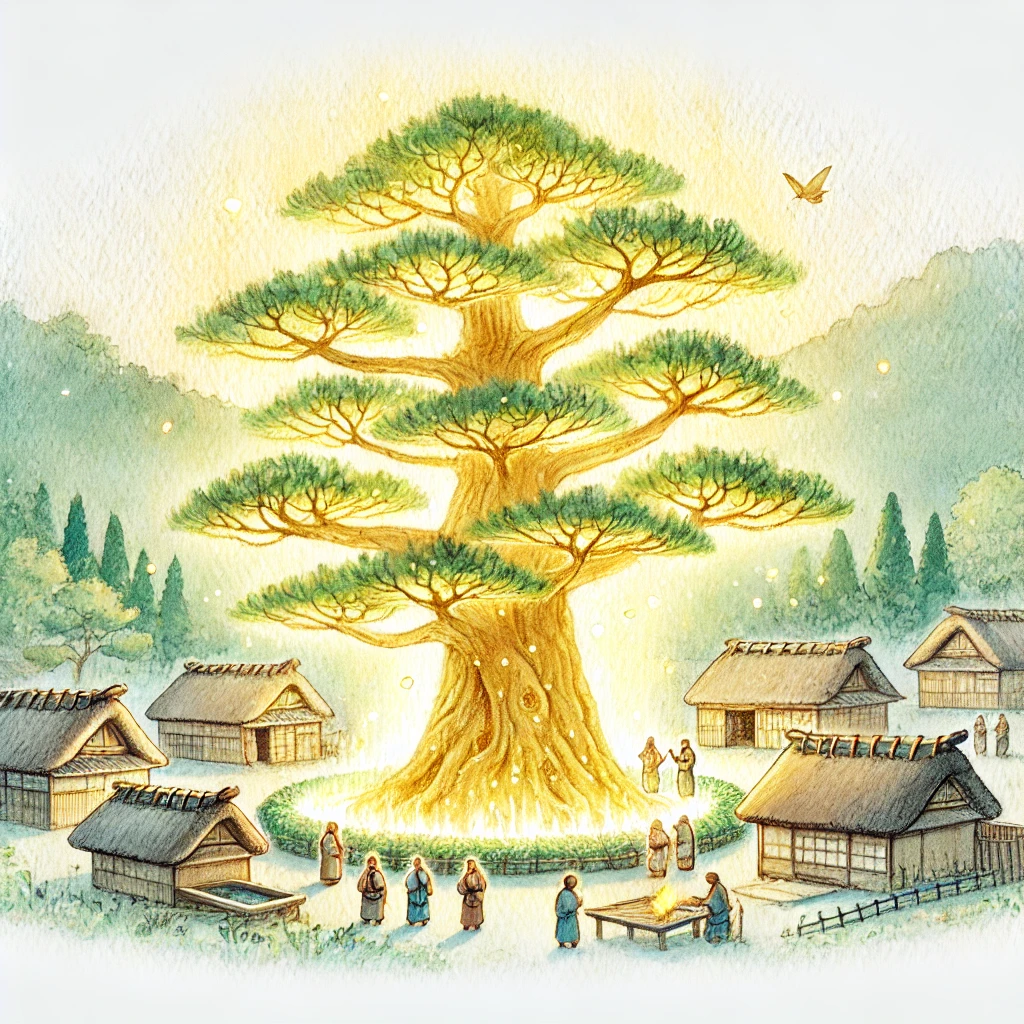
Are you familiar with the Okinawan legend of the “Curse of the Golden Pine”? At first glance, it might seem like just another scary story, but it’s much more than that. This tale encapsulates the rich culture and profound wisdom of Okinawa. In this article, we’ll delve into this fascinating story to explore the deeper charms of Okinawa.
When people think of Okinawa, they often envision beautiful beaches and unique culinary traditions. However, beneath these surface attractions lies a deep culture rooted in a long history and unique worldview. The story of the “Curse of the Golden Pine” offers a glimpse into this depth, making it a true cultural treasure.
The story centers on a couple who pray to a golden pine tree for a child, only to have their entire family turned into pine trees as a result. While it might seem like just a frightening tale, it actually encapsulates Okinawan values and perspectives, including harmony with nature, the importance of family bonds, and attitudes towards the supernatural.
The golden pine in the story symbolizes the reverence that Okinawans have for nature. It reflects the traditional Okinawan belief in living in harmony with nature rather than conquering it. This story is rich with lessons that are still relevant today, especially when considering modern environmental issues.
The family’s unity despite the curse also highlights the Okinawan value of strong family bonds. This theme of supporting each other through difficult times holds an important message even in modern society.
Moreover, the story illustrates the Okinawan attitude towards supernatural phenomena. Okinawans traditionally accept unexplainable occurrences with flexibility while also respecting modern scientific thinking. This unique worldview is evident in the tale.
The way this story has been passed down through generations, with interpretations evolving over time, mirrors the process of forming collective memory in Okinawa. The story’s ability to convey past experiences and lessons to the present and gain new meanings is a testament to the living culture of Okinawa.
The “Curse of the Golden Pine” is more than just a legend; it is a key to understanding Okinawan culture. It offers an opportunity to reflect on our own values and worldviews.
In this article, we will explore the depths of Okinawan culture through the story of the “Curse of the Golden Pine.” From coexistence with nature to family bonds, attitudes towards the supernatural, and the dynamics of memory and forgetting, we will uncover various aspects of this tale. Whether it offers new ways to enjoy visiting Okinawa or insights for living in modern society, there is surely something in this story that will resonate with you.
So, let’s dive into the world of the “Curse of the Golden Pine” together. Surprises and discoveries beyond your imagination await.
- The Curse of the Golden Pine – A Legend of an Ancient Cursed Pine Tree
- Introduction
- Reverence for Nature
- Desire and Consequences
- Community Norms and Attitudes Towards Outsiders
- The Mystery and Transformation of Life
- Oral Culture and Collective Memory
- The Concept of Curses and Hauntings
- Parent-Child Relationships and Family Bonds
- Coexistence of Humans and Nature
- Attitudes Towards the Supernatural
- Dynamics of Memory and Forgetting
- Q&A
- Summary of This Article
The Curse of the Golden Pine – A Legend of an Ancient Cursed Pine Tree
In the northern part of Okinawa Island, in the lush region known as Yanbaru, there stands a remarkable pine tree deep within the forest. Said to be several hundred years old, its trunk glows with a golden hue, earning it the local name “Golden Pine.”
Long ago, a young couple lived in this area. They were childless and spent their days visiting shrines and temples, praying for a child. One day, they heard about the Golden Pine, rumored to have a mysterious power to grant wishes.
Filled with hope, the couple ventured deep into the forest and finally reached the Golden Pine. Illuminated by the moonlight, the trunk shone like real gold. They knelt before the tree and fervently prayed for a child.
That night, an old man appeared in their dreams, saying, “Your wish will be granted, but it comes with a price.” Overjoyed, the couple agreed without considering the meaning of his words.
Soon after, the wife became pregnant. The couple was filled with joy and began preparing for the arrival of their child. On the long-awaited day of birth, a healthy baby boy was born, and their happiness seemed to peak.
However, their joy was short-lived. The child was unlike any other baby. His skin was rough like tree bark, his hair stiff like pine needles, and his body exuded the scent of pine.
Terrified, the villagers quickly spread rumors of the “Curse of the Golden Pine.” Despite the couple’s efforts to protect their child, the villagers’ fear and prejudice grew stronger each day.
Soon, the parents themselves began to show signs of transformation. Their skin turned rough like tree bark, and their hair grew stiff like pine needles. Driven by fear, they sought a way to survive.
Facing increasing persecution, the couple decided to leave the village with their child, heading for the deep forest where the Golden Pine stood.
Years later, villagers cautiously entered the forest and found three young pine trees near the Golden Pine. These trees had golden trunks, as if the couple and their child had transformed into them.
Since then, the legend of the Golden Pine’s curse has spread. It is said that while the Golden Pine might grant greedy wishes, those who make such wishes will ultimately turn into pine trees as a consequence.
The legend continues to instill fear in those who approach the forest, and on full moon nights, rumors persist of hearing a baby crying and a couple comforting it deep within the woods.
The Curse of the Golden Pine serves as a warning about human greed, the power of nature, and the consequences of human arrogance, deeply embedding itself in the hearts of the Okinawan people.
Introduction
The story of the “Curse of the Golden Pine” carries a deeper meaning than just being a scary tale. It is crucial to consider the various elements suggested by this story to understand the spiritual world of the Okinawan people.
Of particular interest is the “Golden Pine Incident” that occurred in 1985. In this event, a pine tree with a golden glow was discovered in the Yanbaru forest, accompanied by numerous strange phenomena. The local newspaper covered it extensively, and many people visited the site. However, mysterious camera malfunctions prevented any photos from being taken.
Moreover, many visitors who went to see the Golden Pine later reported falling ill or experiencing misfortune, sparking significant local discussion. This incident rekindled interest in the ancient legend of the “Curse of the Golden Pine,” ensuring its continued presence in modern conversations.
The intertwining of real events and legend lends the story greater persuasive power and deeply ingrains it in people’s hearts. Through this story, one can draw lessons about reverence for nature, restraint of desires, and the nature of community.
Reverence for Nature
Okinawa’s rich natural environment has long instilled a deep sense of awe in its people. Particularly in the Yanbaru region, ancient forests exude a mystical atmosphere, giving rise to numerous legends and folk tales. Among these, the “Curse of the Golden Pine” stands out as a captivating story that intertwines human desire and nature’s power.
This article delves into the reverence Okinawans have for nature through the “Curse of the Golden Pine.” We will explore the rich natural environment of Yanbaru, the relationship between people and nature, and the religious significance of sacred trees in Okinawa.
Yanbaru’s Rich Natural Environment and People’s Relationship with It
Yanbaru, located in northern Okinawa, is a lush region. This area’s rich natural environment has long been closely tied to people’s lives, not just for coexistence but also for a deep respect and awe for nature’s power.
The Ecosystem of Yanbaru
Yanbaru’s forests are classified as subtropical evergreen broadleaf forests, with an ecosystem considered valuable on a global scale. This area is home to many rare and endemic species, such as the Okinawa rail and the Okinawa woodpecker.
One notable feature is the diversity of trees in Yanbaru’s forest. Giant trees like the Okinawa oak and the Itajii oak dominate the landscape, with occasional pine trees that shine golden, known as the “Golden Pine.” This legendary tree is the setting for the “Curse of the Golden Pine.”
The Mystical Atmosphere of Yanbaru’s Forests
The mystical atmosphere of Yanbaru’s forests leaves a strong impression on visitors. The early morning fog shrouding the forest, the moonlit trees at night, and the occasional strange bird calls combine to create a place where the real world and the spirit world seem to intersect.
The “Curse of the Golden Pine” story likely originated in such an environment, with the extraordinary golden pine tree sparking people’s imagination and leading to legends of its supernatural power.
The History of Coexistence with Nature
The people of Yanbaru have long cultivated wisdom for coexisting with nature. This history showcases a mindset of living as part of nature rather than conquering it.
Traditional Lifestyles
The people of Yanbaru have lived by skillfully using the forest’s resources. They gathered wild plants and medicinal herbs, utilized wood, and hunted, all while ensuring sustainable use of these resources passed down through generations.
However, excessive interference with nature was strictly forbidden. For instance, cutting down certain trees without permission was considered taboo and believed to bring a curse. This belief is the backdrop for the story of the “Curse of the Golden Pine.”
The Boundary Between Nature and Humans
For the people of Yanbaru, the forest was not just a resource but also the boundary between the human world and the spirit world. They avoided entering the forest at night or on foggy days, as it was seen as an intrusion into the spirit world, reflecting their reverence for nature.
In the “Curse of the Golden Pine,” the couple’s nighttime venture deep into the forest and their subsequent mysterious experiences serve as a warning against intruding into nature’s domain.
Tree Worship as an Existence Beyond Nature’s Power
Trees in Yanbaru’s forests, especially ancient and uniquely characteristic ones, have long been revered as special entities. This reverence has developed into a belief in the spirits or gods residing in these trees.
Origins of Tree Worship in Okinawa
Okinawan tree worship dates back to the Ryukyu Kingdom and even earlier. Trees like the banyan and the Indian coral tree have been revered as sacred beings.
Sacred Trees
In Okinawa, certain trees are worshipped as village guardians. These trees often grow in sacred sites known as “Utaki,” serving as focal points of local faith.
The golden pine in the “Curse of the Golden Pine” story is depicted as one such sacred tree. Its unique appearance and mystical power reflect traditional Okinawan tree worship.
The Connection Between Trees and Spirits
In traditional Okinawan belief, spirits were thought to reside in trees. Especially ancient trees were seen as powerful beings that had accumulated strength over time. People made wishes and offered gifts to these trees.
In the “Curse of the Golden Pine,” the couple prays to the golden pine for a child, reflecting this tree worship. However, the story also portrays their wish turning into a curse, warning against exploiting nature’s power.
The Mystical Power of the Golden Pine
In the “Curse of the Golden Pine,” the golden pine is depicted not just as a rare tree but as one with supernatural powers, embodying the Okinawan reverence for nature.
The Power to Grant Wishes
The story portrays the golden pine as having the power to grant wishes, reflecting the traditional belief in spirits or gods in trees helping humans. However, the story also emphasizes that using this power comes with a cost.
This element suggests the danger of exploiting nature’s power. Using nature to fulfill human desires can disrupt the natural balance and have adverse effects on humans.
The Power to Curse
The golden pine’s power to curse, alongside granting wishes, illustrates the dual nature of nature’s power. Nature can bring blessings but is also a formidable force.
The story’s ending, where the couple and their child turn into pine trees, warns against underestimating nature’s power. It serves as a reminder that humans are part of nature and should not seek to dominate it.
Thus, the “Curse of the Golden Pine” story skillfully weaves together Yanbaru’s rich natural environment and traditional Okinawan views on nature, expressing reverence for nature. It is not just a scary story but one with meaningful messages for today’s society.
What should we learn from this story? It teaches the importance of coexisting with nature and respecting its power. In today’s world, where environmental issues are becoming severe, re-evaluating traditional views on nature is highly significant.
The “Curse of the Golden Pine” is a key to understanding Okinawa’s rich nature and culture. Through this story, we can reawaken our reverence for nature and find pathways to a sustainable future. Visit Yanbaru’s forests and experience nature’s mystery and power firsthand. You will surely gain new insights and profound understandings.
Desire and Consequences
The Okinawan legend “The Curse of the Golden Pine” provides deep insights into human desires and their consequences. Through the story of a golden pine that grants wishes and a couple who long for a child, the legend vividly illustrates the dangers of desire and the principle of cause and effect. This article explores Okinawan perspectives on desire and retribution through this legend.
The Curse as the Price of Fulfilled Wishes
The core of “The Curse of the Golden Pine” lies in the idea that fulfilling a wish comes with a curse as a price. This is not just a scary story but a deep commentary on the balance between human desires and nature’s order.
The Motif of “Fulfilled Wishes” in Folklore
Okinawan folklore often features the motif of “fulfilled wishes.” This is a common theme in folk tales and myths worldwide, but in Okinawa, the fulfillment of wishes always comes with a price.
Supernatural Entities that Grant Wishes
In Okinawan folklore, gods, spirits, or natural objects with special powers, like the Golden Pine, often grant human wishes. These entities straddle the boundary between the human world and the spiritual realm, connecting the two.
For example, the story of Hinukan, the household deity in central Okinawa, tells of a god who grants wishes. Similarly, the legend of Paantu in Miyako Island features a fearsome visiting god who listens to villagers’ wishes.
The Necessity of Sacrifice
However, these entities always require some form of sacrifice to grant wishes. In the case of the Golden Pine, the couple’s wish was fulfilled, but they were ultimately transformed into pine trees.
This concept of “sacrifice” reflects Okinawan worldview, where everything seeks to maintain balance, and gaining something always means losing something else. This is a deep understanding and respect for nature’s order.
The Concept of Sacrifice and Traditional Okinawan Values
The concept of “sacrifice” holds a significant place in traditional Okinawan values. This is not simply a straightforward law of retaliation but reflects a more complex and profound worldview.
The Importance of Harmony and Balance
In the traditional Okinawan worldview, all events are interconnected and influence each other. Therefore, any action or desire realized will inevitably lead to a change or loss elsewhere.
For example, in traditional Okinawan rituals, offerings are made to gods when praying for bountiful harvests or safety. This is not just a “thank you” but a necessary “sacrifice” for having wishes granted.
Restraint and Self-Control
The concept of “sacrifice” also serves to encourage restraint and self-control. In “The Curse of the Golden Pine,” the couple’s sincere wish was fulfilled, but it resulted in tragedy. This suggests that even pure desires can lead to negative outcomes if they disrupt nature’s order.
Traditional Okinawan teachings emphasize that excessive desires or actions against nature’s order will inevitably bring negative consequences. This teaches humility and respect for nature.
The Story’s Role in Warning Against Excessive Desire
Okinawan folk tales and legends like “The Curse of the Golden Pine” serve more than just entertainment. They function as guides for societal norms and values, directing people’s actions.
The Didactic Aspect of Folk Tales
Folk tales often contain important lessons. In the case of “The Curse of the Golden Pine,” the lessons are twofold: a warning against excessive desire and a call to revere nature’s power.
The Importance of Controlling Desire
In the story, the couple’s desire for a child leads them to seek the power of the Golden Pine. While their wish is fulfilled, the means they chose disrupted nature’s balance, leading to their tragic end.
This narrative emphasizes the importance of choosing the right means to achieve one’s desires. It warns against the notion that the ends justify the means and teaches the value of controlling one’s desires.
Reverence for Nature’s Power
The story also evokes reverence for nature’s power. The Golden Pine, while able to grant wishes, also curses those who make them, showing the dual nature of nature’s power.
Okinawans have long cultivated a culture of living in harmony with nature. This harmony is not born from arrogance but from a deep respect for nature’s power, vividly depicted in “The Curse of the Golden Pine.”
Desire and Restraint in Modern Society
The issues raised by “The Curse of the Golden Pine” are highly relevant in modern society. As technological advancements make previously impossible things possible, we are constantly confronting the issues of desire and restraint.
The Relationship Between Technology and Desire
Modern technology, like the Golden Pine, can fulfill many human desires. Medical advances can save lives that were once beyond help, and communication technology allows instant global connections.
However, the use of these technologies often raises ethical issues. For instance, genetic editing has the potential to cure severe genetic disorders but also raises concerns about ethically dubious practices like “designer babies.” This mirrors the story’s warning about the dangers of unchecked desire.
Sustainability and Restraint
Environmental issues also highlight the importance of desire and restraint. Pursuing economic development and convenience has significantly harmed the Earth’s environment, echoing the cautionary tale of the “Curse of the Golden Pine.”
Traditional Okinawan values emphasize harmony with nature. The “Curse of the Golden Pine” serves as a medium to convey these values to the present day. It eloquently teaches the importance of controlling our desires and living in harmony with nature.
“The Curse of the Golden Pine” is not just a scary story. It provides profound insights into the balance between human desires and nature’s power and the principle of cause and effect. Through this story, we can reflect on our desires and seek a harmonious way of living with nature.
If you have the opportunity to visit Okinawa, explore the Yanbaru forests and ponder the legend of the Golden Pine. There, you will find not just a tourist destination but deep life lessons. This experience will undoubtedly enrich your life.
Community Norms and Attitudes Towards Outsiders
The Okinawan legend “The Curse of the Golden Pine” goes beyond being just a scary story. It vividly depicts the traditional community norms and attitudes towards outsiders in Okinawa. This article explores the characteristics of Okinawan village society and the duality of exclusivity and inclusivity within it through this legend.
The Psychological Aspect of Village Society’s Exclusion of the Different
In the “Curse of the Golden Pine,” the cursed couple and their child are feared and eventually expelled by the villagers. This reflects the “psychological aspect of excluding the different” inherent in traditional Okinawan village society.
Traditional Village Structure in Okinawa
Traditional Okinawan villages, or “Shima,” form unique communities. Shima is not just a geographical unit but a social one with strong cohesion.
Characteristics and Functions of Shima
Shima consists of people connected by blood and geographical ties, fostering a strong spirit of mutual aid. Cooperation in farming and rituals is a key feature, exemplified by the “Yui Maru” labor exchange tradition, which supports Shima’s cohesion.
Shima also has unique festivals and rituals that strengthen community bonds, such as the “Kui Nau Gami” festival in northern Okinawa, dedicated to the Okinawa rail.
The Exclusivity of Shima
However, the strong cohesion of Shima also fosters exclusivity. Despite the famous Okinawan phrase “Ichari Ba Cho De” (once we meet, we are brothers), Shima often exhibits cautious attitudes towards outsiders.
The “Curse of the Golden Pine” reflects this exclusivity, as the transformed couple and their child are feared and expelled for deviating from the community’s “norms.”
The Concepts of “Uchi” and “Soto”
In traditional Okinawan society, the distinction between “Uchi” (inside) and “Soto” (outside) is crucial, influencing Shima’s structure and people’s behavior.
Defining “Uchi” and Its Characteristics
“Uchi” refers to one’s own community and intimate relationships. In Shima, residents are typically considered “Uchi,” fostering trust and mutual aid.
For example, in traditional Okinawan funerals, neighbors voluntarily help in a practice known as “Ti Waji,” showcasing the strong bonds within “Uchi.”
Attitudes Towards “Soto”
Conversely, “Soto” refers to outsiders, often met with caution or tension. In the “Curse of the Golden Pine,” the transformed family becomes “Soto,” no longer fitting into the community.
However, attitudes towards “Soto” are not always exclusive. For instance, the “Nirai Kanai” belief welcomes gods from across the sea, reflecting an inclusive attitude towards visitors.
The “Curse of the Golden Pine” adeptly depicts these complex “Uchi” and “Soto” dynamics. The protagonists, pushed from “Uchi” to “Soto,” ultimately transform into a new existence through unity with nature (the Golden Pine).
The Tragic Lessons of Discrimination and Prejudice
The “Curse of the Golden Pine” vividly portrays the tragedy caused by discrimination and prejudice. This story teaches the importance of overcoming community exclusivity and the problems it brings.
Historical Examples of Discrimination
Okinawa’s history reveals various forms of discrimination and prejudice, many parallels with the story’s circumstances.
Discrimination Based on Social Class
During the Ryukyu Kingdom era, a strict class system existed in Okinawa, dividing society into three classes: Samure (warriors), Hyakusho (peasants), and Senmin (outcasts), each with clear discriminatory structures.
The outcast class, including groups like “Kakuroto” and “Kerakanzha,” faced severe restrictions and discrimination, akin to the marginalized family in the “Curse of the Golden Pine.”
Discrimination Against Illness and Disability
Historically, Okinawan society also discriminated against those with Hansen’s disease or mental disabilities, often isolating them from the community without adequate treatment or support.
For instance, the “Miyako Nanseien” in Miyako Island was once an isolation facility for Hansen’s disease patients, mirroring the isolated life of the cursed family in the “Curse of the Golden Pine.”
Issues of Inclusion and Exclusion in Modern Society
The issues raised by the story of the “Curse of the Golden Pine” are profoundly relevant to modern society. In an era of globalization, various forms of exclusion and discrimination still persist, making this story a significant source of insight.
Acceptance and Challenges of Diversity
Modern Okinawan society has largely moved beyond the strict class system and overt discrimination of the past. Today, the acceptance of diversity, known as “Champuru Culture,” is recognized as one of Okinawa’s defining characteristics.
For example, on Kokusai Street in Naha, people of various nationalities mingle, and diverse cultures coexist. Additionally, the traditional Okinawan performing art of “Eisa” has evolved to include participants of all ages and genders, fostering a sense of community unity.
However, new forms of exclusion and discrimination have also emerged. The increase in migrants due to the tourism industry’s growth, for instance, sometimes leads to friction with local residents. This situation echoes the conflict between the villagers and the transformed couple in the “Curse of the Golden Pine.”
Redefining Community
In modern society, traditional concepts of community based on geographical and kinship ties are evolving. The spread of social media has enabled new communities that transcend physical distance, while traditional local communities are often seen to be in decline.
In Okinawa, the traditional concept of “Shima” (village community) is also transforming. For example, in the Koza area of Okinawa City, a unique community has formed around the U.S. military base, where people of diverse backgrounds coexist. This represents a new form of community that goes beyond the traditional “Uchi” (inside) and “Soto” (outside) dichotomy.
The “Curse of the Golden Pine” offers valuable insights into these modern societal challenges. The story’s conclusion, where the protagonists ultimately merge with nature, can be interpreted as symbolizing the need to accept diversity and seek new forms of coexistence.
The “Curse of the Golden Pine” is not just a scary story. It provides profound insights into the characteristics of traditional Okinawan communities and the issues of discrimination and inclusion. Through this story, we can reflect on the nature of our own societies and find clues for building more inclusive communities.
If you have the chance to visit Okinawa, interact with the locals and learn about their views on “Uchi” and “Soto” and their community life. You will find that the lessons conveyed by the “Curse of the Golden Pine” are still alive in modern ways. This experience will broaden your perspective and foster an appreciation for diversity.
The Mystery and Transformation of Life
The Okinawan legend “The Curse of the Golden Pine” encompasses the profound themes of the mystery and transformation of life. This story, with its surprising twist of humans turning into trees, invites us to contemplate the essence of life and the meaning of transformation. This article explores Okinawan views on life and transformation through this legend.
The Meaning of the Motif of Transformation from Human to Plant
The most striking element of “The Curse of the Golden Pine” is the transformation of humans into pine trees. This fantastic turn is not merely a fantasy but holds deep symbolism reflecting Okinawan worldviews and beliefs about life.
Transformation Themes in World Mythology
The motif of humans transforming into plants or animals is widely seen in myths and legends worldwide. It represents a universal theme of the deep connection between humans and nature.
Transformations in Greek Mythology
Greek mythology features numerous transformation stories. Famous examples include Daphne turning into a laurel tree to escape Apollo and Narcissus becoming a daffodil. These stories symbolically express the ambiguity of the boundary between humans and nature and the cycle of life.
Transformations in Japanese Mythology
Japanese folklore also has many stories of humans transforming into plants. For example, in “The Tale of the Bamboo Cutter,” Princess Kaguya returns to the moon, which can be seen as a form of transformation. In “Yoshitsune Senbonzakura,” Shizuka Gozen transforms into a cherry tree.
These transformation stories commonly suggest that the boundary between humans and nature is blurry and that both are deeply interconnected. “The Curse of the Golden Pine” expresses this universal theme within a unique Okinawan context.
Characteristics of Transformation Stories in Okinawan Folklore
Okinawan folklore is rich with unique transformation stories that reflect the local people’s views on nature and life.
The Boundary Between Humans and Animals
In Okinawan folklore, beings that blur the boundary between humans and animals frequently appear. For example, in the legend of “Mimikiri Jima,” a woman transforms into a sea turtle. Similarly, in the tale of “The Marriage of the Habu,” a snake transforms into a human to blend into human society.
These stories reflect the belief that humans and animals are fundamentally the same living beings, with differences in form being superficial. The transformation from human to plant in “The Curse of the Golden Pine” can be seen as an extension of this belief.
The Meaning of Transformation into Plants
Notably, in “The Curse of the Golden Pine,” the transformation targets are plants, specifically a certain tree. In Okinawa, there has long been a belief in the sanctity of certain trees. For example, banyan trees are revered as trees in which spirits reside.
The setting of humans transforming into pine trees suggests a fundamental unity between human and plant life. Additionally, the pine tree’s association with longevity symbolizes a longing for eternal life.
This story expresses the unique Okinawan belief that human life is continuously connected to plant life, transcending even the boundary between life and death, symbolizing a grand cycle of life.
Fear and Reverence for Entities that Transcend the Boundary Between Life and Death
The transformation from human to plant depicted in “The Curse of the Golden Pine” can be seen as a phenomenon that transcends the boundary between life and death. This supernatural transformation evokes a powerful image that inspires both fear and reverence.
Okinawan Views on Life and Death
The unique views on life and death held by Okinawans form a crucial backdrop to “The Curse of the Golden Pine.” These views are characterized by a perception of life and death as continuous rather than separate states.
Interaction with the Spiritual World
In traditional Okinawan belief, the physical world and the spiritual world are closely connected. For example, during “Obon” in the lunar month of July, it is believed that ancestral spirits return to the living world. People welcome and spend time with these spirits during this period.
The presence of “Yuta,” spiritual mediums, also characterizes Okinawan views on life and death. Yuta act as intermediaries between the physical and spiritual worlds, playing a significant role in people’s lives.
In this cultural context, the transformation from human to plant in “The Curse of the Golden Pine” holds more than just a change in form. It represents a process of crossing the boundary between life and death, transitioning into a new form of existence.
The Concept of Reincarnation
Okinawan traditional worldview includes the concept of reincarnation, the belief that life continues in a different form after death. For example, the legend of “Gardenia Flower” in northern Okinawa tells of a deceased girl reincarnating as a gardenia flower.
“The Curse of the Golden Pine” is deeply connected to this concept of reincarnation. The transformation of humans into pine trees symbolizes the idea that life’s essence endures even as its form changes.
Understanding the Boundary Between the Living World and the Otherworld
In the traditional Okinawan worldview, the boundary between the living world and the otherworld is not fixed. There is a fluid relationship between the two, with moments when they intersect.
Sacred Sites Known as “Utaki”
Okinawa has many sacred sites called “Utaki.” Utaki are special places where the living world and the otherworld intersect, revered as places where gods descend. Many Utaki feature giant trees, considered the dwelling places of gods.
For example, “Sefa Utaki” in southern Okinawa has been one of the most sacred places since the Ryukyu Kingdom era, featuring a giant kuba tree believed to house gods.
The golden pine in “The Curse of the Golden Pine” can be interpreted similarly to the trees in Utaki, serving as a medium connecting the living world and the otherworld.
Awe for Boundary Entities
Entities situated at the boundary between the living world and the otherworld often inspire awe because they are believed to possess powers beyond human understanding.
Okinawan folk beliefs feature many such boundary entities. For instance, the yokai “Kijimuna” is depicted as a being between humans and spirits. Kijimuna sometimes plays tricks on people but is also believed to bring abundant fish.
The couple and their child transformed into pine trees in “The Curse of the Golden Pine” can also be seen as such boundary entities. As beings that are both human and plant, they evoke fear and awe.
The enduring impact and continued retelling of this story can be attributed to this awe for boundary entities, reflecting a reverence for the mystery of life beyond human comprehension.
“The Curse of the Golden Pine” is more than just a scary story. It offers deep insights into the mystery and transformation of life, encapsulating Okinawan worldviews and beliefs about life and death. Through this story, we gain new perspectives on the essence of life and the relationship between humans and nature.
If you have the opportunity to visit Okinawa, explore Utaki and ancient trees. There, the mystery and transformation of life conveyed by “The Curse of the Golden Pine” continue to resonate. This experience will enrich your views on life and nature, bringing new depth to your understanding of life.
Oral Culture and Collective Memory
The Okinawan legend of the “Curse of the Golden Pine” vividly demonstrates the strength of oral culture and the importance of collective memory. The transmission of this legend across generations contains crucial insights into the formation and preservation of Okinawan cultural identity. In this article, we will delve into the characteristics of Okinawan oral culture and its role in shaping and maintaining regional identity through this legend.
The Power of Stories Passed Down Through Generations
The story of the “Curse of the Golden Pine” has been passed down among the people of Okinawa for centuries. This remarkable longevity highlights the powerful nature of oral culture.
Characteristics and Functions of Oral Culture
Oral culture refers to the practice of transmitting information and stories orally rather than through written text. Over its long history, Okinawa has developed a richly nuanced oral culture.
Sharing and Reinforcing Memories
One of the most important characteristics of oral culture is that the act of storytelling itself serves to share and reinforce the collective memory of the community. When the story of the “Curse of the Golden Pine” is told, it holds more than just entertainment value. It has a ritualistic significance, reaffirming and strengthening the community’s values and worldview.
For instance, at gatherings known as “Yūmi” held across Okinawa, traditional stories and legends are often recounted. By sharing tales like the “Curse of the Golden Pine,” participants reinforce their common cultural background and strengthen the bonds within the community.
Flexibility and Adaptability
Another crucial feature of oral culture is its flexibility and adaptability. Unlike written stories, orally transmitted tales can change subtly based on the storyteller’s circumstances and the audience. This allows the stories to adapt to changing times and remain fresh and relevant.
The story of the “Curse of the Golden Pine” has likely evolved over the centuries. For example, a tale originating in the Ryukyu Kingdom might have incorporated new elements after the annexation by Japan, and further changes during the post-war American occupation. This adaptability has helped the story endure through various historical periods.
Mechanisms of Story Transformation and Adaptation
The mechanisms by which stories transform and adapt in oral culture are fascinating. The “Curse of the Golden Pine” has survived to the present day through such mechanisms.
Collective Creative Process
In oral culture, the transmission of stories often involves a collective creative process. This means that stories are not created by a single author but are shaped over time through the interactions between storytellers and listeners.
The “Curse of the Golden Pine” likely started as a simple anecdote, gradually evolving into a richer story through the creativity of storytellers and the reactions of listeners. Specific details about the setting or the characters might have been added during this collective creative process.
Changing Interpretations Over Time
Even if the basic plot of a story remains unchanged, its interpretation and meaning can shift over time. The story of the “Curse of the Golden Pine” has likely been interpreted differently depending on the era.
For instance, what might have been originally understood as a tale emphasizing the awe of nature’s power could be interpreted in modern times as a story highlighting the importance of environmental conservation. Such shifts in meaning reflect the needs and concerns of different times.
Indeed, there has been a recent trend of using the story of the “Curse of the Golden Pine” as a tool for environmental education, emphasizing the importance of living in harmony with nature. This is a prime example of how old stories can be revitalized within a contemporary context.
The Role of Legends in Shaping Regional Identity
Legends like the “Curse of the Golden Pine” hold significance beyond being mere stories. They play a crucial role in shaping and maintaining regional identity.
Social Functions of Legends
Legends serve various social functions within a community. The story of the “Curse of the Golden Pine” has played an important role in Okinawan society.
Creating a Common Cultural Foundation
Legends provide a common cultural foundation for the people of a region. Knowing the story of the “Curse of the Golden Pine” is part of belonging to Okinawan culture.
For instance, Okinawan schools actively incorporate regional legends and folklore into their curricula. Stories like the “Curse of the Golden Pine” are often featured in language and social studies classes, helping children learn about their cultural roots and fostering a sense of belonging to their community.
Conveying Moral Lessons
Like many legends, the story of the “Curse of the Golden Pine” contains moral lessons. It serves as a medium for conveying important values, such as the dangers of unchecked desires and the need for reverence towards nature.
For example, the traditional belief in “Nirai Kanai” emphasizes the importance of valuing nature. The story of the “Curse of the Golden Pine” aligns with this belief, functioning as a tool to teach the importance of respecting nature. Many environmental education programs utilize this story to impart these values.
Challenges in Preserving and Transmitting Regional Culture
Preserving and transmitting regional culture, including legends like the “Curse of the Golden Pine,” faces various challenges in modern society.
Urbanization and Changes in Lifestyle
Rapid urbanization and changes in lifestyle make maintaining oral culture difficult. Stories that were once naturally shared within families and community gatherings now risk being lost without conscious efforts to keep them alive.
For example, traditional “Moai” groups in Okinawa, which are mutual aid organizations, provided numerous opportunities for storytelling. However, with urbanization, these traditional gatherings have declined, reducing the opportunities to share stories.
To address this challenge, Okinawa Prefecture promotes the use of “Shimakutuba” (Okinawan dialect) and trains traditional storytellers. Naha City, for instance, holds an annual “Ryukyu Arts Storytelling Festival,” encouraging the younger generation to engage with traditional storytelling.
The Impact of Globalization
The advancement of globalization poses a threat of cultural homogenization. Region-specific stories like the “Curse of the Golden Pine” face the risk of being altered under the influence of global culture.
For instance, some young people in Okinawa, influenced by Hollywood movies and anime, may feel more affinity for global pop culture than traditional stories.
To combat this, Okinawa is reinterpreting traditional stories in contemporary contexts. For example, creating modern theater and art pieces based on the “Curse of the Golden Pine,” and adapting the story into games and anime. These efforts aim to pass traditional stories to younger generations through new media.
The story of the “Curse of the Golden Pine” embodies Okinawa’s oral culture and collective memory. The transmission of this story across generations encapsulates the wisdom and creativity of the Okinawan people. Moreover, this story continues to play a crucial role in forming Okinawan identity.
If you have the opportunity to visit Okinawa, try to hear the story of the “Curse of the Golden Pine” directly from the locals. This experience will provide you with deep cultural insights beyond mere tourism. Through this story, you will touch a part of Okinawa’s rich culture and gain new perspectives. Exploring Okinawa’s oral culture will undoubtedly enrich your life and provide a valuable experience.
The Concept of Curses and Hauntings
The Okinawan legend of “The Curse of the Golden Pine” embodies the profound themes of curses and hauntings. This story vividly reflects the unique concepts Okinawan people hold about curses and hauntings. In this article, we will explore the position of curses in Okinawan folk beliefs and how these concepts have transformed in modern society through the lens of this legend.
The Role of Curses in Okinawan Folk Beliefs
Curses and hauntings hold a significant place in Okinawan folk beliefs. These concepts are not merely superstitions but are deeply rooted in people’s daily lives and worldviews.
Types and Characteristics of Curses
In Okinawan folk beliefs, various types of curses exist, which can be classified based on their nature and origin.
Natural Curses
The “Curse of the Golden Pine” is a typical example of a natural curse. Traditionally, Okinawans have revered the spiritual power residing in natural objects, especially ancient trees and large stones. It is believed that disrespecting these natural objects or cutting them down without permission could result in being cursed by their spiritual power.
For example, in the Yanbaru region of northern Okinawa, there is a giant banyan tree called “Hinpun Gajumaru.” There is a legend that harming this tree brings misfortune. This belief, like the “Curse of the Golden Pine,” stems from the reverence for the spiritual power of nature.
Man-Made Curses
On the other hand, there are curses intentionally placed by humans, usually to cause harm to others.
In Okinawa, a famous ritual known as “Uganbutuki” performed at sacred sites called “Utaki” involves cursing enemies by creating dolls representing them and driving nails into these dolls while chanting curses. This practice is similar to the “Ushi no Koku Mairi” (visiting shrines at the Hour of the Ox) in mainland Japan but contains distinct Okinawan elements.
Ancestral Hauntings
Ancestral hauntings are also a significant form of curse in Okinawan folk beliefs. It is believed that neglecting ancestor worship or treating ancestral spirits disrespectfully can bring misfortune upon descendants.
For example, in Okinawa, there is a custom called “Senko” (washing bones), and it is said that if this ritual is not properly performed, one may suffer from ancestral hauntings. The “Curse of the Golden Pine” can be interpreted as a form of ancestral haunting, where disrespect towards nature spirits (akin to ancestors) results in a curse.
Traditional Methods to Lift Curses
In Okinawan folk beliefs, various methods have been passed down to lift curses if one is believed to be cursed.
Prayers and Rituals
The most common way to lift a curse is through prayers and rituals, typically conducted by spiritual practitioners known as “Yuta” or “Noro” (priestesses).
For example, a ritual called “Ugansaa” is performed to purify and lift curses or misfortunes. In this ritual, a Yuta prays to the gods and uses purifying salt and incense to remove the curse. In cases of powerful curses like the “Curse of the Golden Pine,” such rituals might continue for several days.
Amulets and Talismans
Amulets and talismans are also used to protect against curses or to lift existing ones.
Traditional Okinawan amulets include “Mabui-gumi,” which are believed to keep the soul within the body, preventing it from being taken by a curse. Additionally, “Shisa” (lion-dog statues) are believed to ward off evil spirits and curses, commonly placed on rooftops and gates of homes.
Purification and Cleansing
Purification and cleansing with water are also crucial methods to lift curses.
In Okinawa, there is a custom called “Ukkabi,” which involves cleansing the body in the sea or rivers during the sixth and twelfth months of the lunar calendar to remove sins, impurities, and curses. For powerful curses like the “Curse of the Golden Pine,” repeated cleansing rituals are believed to gradually weaken the curse’s power.
Transformation of the Concept of Curses in Modern Society
Traditional concepts of curses, such as those in the “Curse of the Golden Pine,” have evolved in various ways in modern society. Influenced by advancements in science and globalization, the concept of curses continues to permeate people’s lives in new forms.
The Influence of Media and Modern Interpretations of Curses
Modern media plays a significant role in providing new interpretations and meanings to traditional concepts of curses.
Depiction of Curses in Pop Culture
Traditional curse stories like the “Curse of the Golden Pine” are given new life in modern pop culture. For instance, this story has inspired horror films and novels, spreading the concept of curses among younger generations.
The Okinawan horror film “Ju-On: The Grudge” (2020) reinterprets traditional curse concepts in a modern context, drawing inspiration from stories like the “Curse of the Golden Pine” while incorporating contemporary horror elements to appeal to a new audience.
Spread of Curses Through Social Media
With the rise of social media, information and rumors about curses spread rapidly. For example, posts about the “Curse of the Golden Pine” have led many people to visit the actual pine tree associated with the legend.
In 2019, a photo of a golden-glowing pine tree in northern Okinawa went viral on social media, attracting many tourists. Rumors spread that making a wish to this tree would make it come true, introducing a new form of “curse” or “blessing” in a contemporary context.
Understanding Curses Through Psychological Approaches
There are modern attempts to understand the concept of curses from a psychological perspective.
Placebo Effect and Curses
Some believe that the effects of curses can be explained in part by the placebo effect, where believing one is cursed can lead to actual physical or mental changes.
For example, individuals who believe they are cursed by the “Curse of the Golden Pine” may experience health issues or unfortunate events, which can be interpreted as the psychological impact of their belief in the curse.
Collective Psychology and Curses
The concept of curses can also be understood through the lens of collective psychology. In communities that believe in a particular curse, experiences and interpretations of that curse are shared and reinforced among members.
In one Okinawan village, stories of experiences related to the “Curse of the Golden Pine” are shared among residents, becoming a part of the village’s tradition and culture. This suggests that the concept of curses can contribute to community cohesion and cultural identity.
The story of the “Curse of the Golden Pine” reflects the deep understanding and reverence Okinawan people have for curses and hauntings. Through this story, we can glimpse Okinawa’s rich spiritual culture, its view of nature, and how these concepts have evolved in modern times.
If you have the chance to visit Okinawa, try to hear the story of the “Curse of the Golden Pine” and other curse-related legends directly from locals. You might also consider visiting the actual “golden pine” tree, but remember to respect it and refrain from touching or damaging it. This way, you can directly experience the reverence for nature that the people of Okinawa have cherished for generations.
The concepts of curses and hauntings are not merely superstitions; they are deeply rooted cultural wisdom that includes important moral teachings and lessons about living in harmony with nature. Through the story of the “Curse of the Golden Pine,” we can appreciate Okinawa’s rich spiritual culture and gain new perspectives on our world.
Parent-Child Relationships and Family Bonds
The Okinawan legend of “The Curse of the Golden Pine” delves deeply into the universal themes of parent-child relationships and family bonds. This story vividly portrays the love and sacrifice of parents for their children and the strength of family bonds under extreme circumstances. In this article, we will explore Okinawa’s traditional view of family and the transformation of family relationships in modern society through this legend.
Parental Love and Sacrifice
At the heart of the “Curse of the Golden Pine” is the desperate wish of a couple to have a child. This wish ultimately leads to a tragic outcome, yet their love for their child remains unwavering. This setting reflects the traditional Okinawan view of parent-child relationships.
Traditional Okinawan Family View
The traditional Okinawan view of family is characterized by strong kinship ties and intergenerational bonds.
The Concept of “Monchu”
In Okinawa, there is a unique concept of kinship groups called “Monchu.” A Monchu is a patrilineal kinship group sharing the same ancestors, performing joint ancestral rituals, and providing mutual support.
For example, in Yomitan Village in central Okinawa, there is a large Monchu known as “Takashiho Monchu,” which holds grand ancestral rituals every July in the lunar calendar. Such Monchu are the foundation of the strong family consciousness among Okinawan people.
In the story of the “Curse of the Golden Pine,” the strong desire to have children is closely tied to the concept of Monchu. Having children fulfills not only personal wishes but also the social significance of continuing and developing the Monchu.
The Philosophy of “Ututu-Unmaga”
Okinawa has a saying, “Ututu-Unmaga,” which means “to cherish siblings.” This philosophy emphasizes the responsibility of older siblings to care for younger ones.
This philosophy is reflected in the “Curse of the Golden Pine.” The parents’ continued protection of their child despite being cursed embodies the spirit of “Ututu-Unmaga.”
This philosophy is still alive in Okinawan society today. For example, during the traditional “Haarii” (dragon boat races), older individuals guide younger participants, passing on skills and values. This practice demonstrates the implementation of “Ututu-Unmaga” not only within families but also in the broader society.
The Motif of Parental Sacrifice
The story of the “Curse of the Golden Pine” prominently features the motif of parental sacrifice. The parents accept a curse to have a child, ultimately losing their human form. This extreme sacrifice represents the lengths parents will go to for their children.
The Spirit of “Uyafafuji”
In Okinawa, there is a concept called “Uyafafuji,” which means “to respect and care for parents and ancestors.” This concept emphasizes the attitude of children towards their parents but also implies the devotion of parents towards their children.
The story of the “Curse of the Golden Pine” can be seen as an extreme portrayal of the Uyafafuji spirit. The parents’ willingness to sacrifice even their human existence for their child dramatically expresses the depth of parental love.
In Okinawan society, parental sacrificial love is not uncommon. For example, in traditional Okinawan education, it was common for parents to live frugally to ensure their children’s education. In Naha’s bustling Kokusai Street, there once was a night school called “Moashibi,” where young people worked during the day and studied at night, often supported by their parents’ sacrifices.
Parental Sacrifice in Modern Society
Parental sacrificial love continues to manifest in various forms in modern society, particularly considering Okinawa’s economic situation.
Okinawa has one of the highest child poverty rates in Japan, yet many parents work tirelessly to support their children’s education and future. According to a survey by the Okinawa Children’s Future Conference in Naha, even families in economic hardship prioritize spending on their children’s education and extracurricular activities. This modern form of parental sacrifice echoes the themes in the “Curse of the Golden Pine.”
The story of the “Curse of the Golden Pine” continues to symbolize the depth of parental love and the spirit of sacrifice, resonating with contemporary audiences and offering new interpretations and empathy.
Choices in Extreme Situations Testing Family Bonds
The story of “The Curse of the Golden Pine” portrays a family transformed by a curse and ostracized by the villagers, depicting the strength of family bonds in extreme situations.
Social Pressure and Family Unity
Despite being ostracized by the village, the cursed family in the story chooses to stay together, symbolizing family unity against social pressure.
The Spirit of “Ichariba Chodee”
In Okinawa, “Ichariba Chodee” means “Once we meet, we are brothers,” highlighting the importance of bonds with others. This spirit is especially strong within families.
The family facing hardships together in “The Curse of the Golden Pine” embodies the spirit of “Ichariba Chodee.”
This spirit is evident in post-war Okinawa, where families and relatives helped each other rebuild their lives. “Nuchidutakara no Ie” in Shuri Kinjo Town, Naha City, is a museum that shows how families supported each other during difficult times.
Family Unity in Modern Society
Family unity remains a vital value in modern society, especially as Okinawan families face unique social issues.
For example, families divided by the U.S. military base issues strive to maintain their bonds. In the Koza area of Okinawa City, a facility supports families living inside and outside the bases, fostering family unity.
The story of “The Curse of the Golden Pine” continues to symbolize the importance of family unity, even in contemporary contexts.
Implications for Modern Family Relationships
The story of “The Curse of the Golden Pine” offers insights into modern family relationships, questioning the nature of family bonds in a time of changing family structures.
Adapting to Diverse Family Forms
Modern society sees diverse family forms, such as nuclear families, single households, and same-sex couples. The story suggests that true families are those bound by love and bonds, regardless of appearance or structure.
Diverse family forms are also increasing in Okinawa. In 2020, Naha City introduced a same-sex partnership system, and organizations like “Okinawa Single Mothers Support Center” are expanding their support for new family forms.
Redefining Family Bonds
By depicting family bonds in extreme situations, “The Curse of the Golden Pine” fundamentally questions what constitutes a family. It emphasizes that mutual care and support define a true family, not blood or form.
In modern Okinawan society, this redefinition of family bonds is evident. For example, in Ginowan City, “NPO Machinaka Research Institute Wakuwaku” brings together non-relatives to form “pseudo-families,” supporting each other. This practice reflects the story’s idea of family bonds beyond form.
The story of “The Curse of the Golden Pine” offers deep insights into the essence of family relationships, showcasing the Okinawan people’s cherished views on family and parent-child relationships. It provides an opportunity to reflect on the importance of family bonds and consider how to strengthen them in modern society.
When visiting Okinawa, take the time to hear from locals about their views on family and parent-child relationships. Visiting the “Golden Pine” and reflecting on your family and loved ones can help you directly experience the deep family bonds cherished by the people of Okinawa.
Despite changing family forms and dynamics over time, the essence of mutual care and support remains constant. “The Curse of the Golden Pine” speaks to this universal truth, encouraging us to reflect on our family relationships and find ways to strengthen our bonds.
Coexistence of Humans and Nature
The Okinawan legend of “The Curse of the Golden Pine” offers deep insights into the relationship between humans and nature. It vividly portrays the importance of living in harmony with nature rather than conquering it. This article explores Okinawa’s philosophy of coexistence with nature and how it harmonizes with modern environmental protection efforts.
Philosophy of Living with Nature, Not Conquering It
At the core of “The Curse of the Golden Pine” is a warning against human arrogance in underestimating and attempting to exploit nature’s power. This setting reflects the philosophy of coexistence with nature nurtured by the people of Okinawa over the years.
Traditional Okinawan View of Nature
The people of Okinawa have long maintained a deep reverence for nature, shaped by the geographical characteristics of island environments and unique historical and cultural backgrounds.
Belief in “Nirai Kanai”
In Okinawan traditional worldview, “Nirai Kanai” is particularly significant. Nirai Kanai is an ideal world beyond the sea, believed to bring prosperity and happiness through the gods and ancestral spirits.
For example, the “Nirai Kanai Bridge” in Itoman City, southern Okinawa, symbolizes this belief. Every year on the third day of the third month in the lunar calendar, a festival called “Hamachari” is held here to give thanks for the blessings from the sea and pray for prosperity.
The story of “The Curse of the Golden Pine” is deeply connected to the belief in Nirai Kanai. The golden pine can be seen as a place where gods from Nirai Kanai reside, and disrespecting such a sacred entity led to the curse.
Culture of “Utaki”
Okinawa has many sacred groves called “Utaki,” believed to be places where gods reside. These groves have been preserved and revered through rituals.
For example, “Chibichirigama” in Yomitan Village, central Okinawa, served as a refuge during World War II and remains a sacred Utaki. It is protected and revered for its historical and spiritual significance.
The golden pine in “The Curse of the Golden Pine” can be interpreted similarly to the trees in Utaki, as a sacred entity deserving reverence.
Sustainable Development and Traditional Values
Okinawa’s traditional view of nature aligns with the modern concept of “sustainable development.” The idea of coexisting with nature, rather than conquering it, provides valuable insights into addressing today’s environmental issues.
Spirit of “Yui Maru”
“Yui Maru” in Okinawa refers to mutual aid and applies to both human relationships and the relationship with nature. The concept of benefiting from and preserving nature encapsulates the essence of sustainable development.
For example, the Yanbaru region in northern Okinawa practices sustainable forestry, known as “Yanbaru-style forestry.” This method maintains forest ecosystems while using minimal wood, embodying the spirit of Yui Maru.
The story of “The Curse of the Golden Pine” reflects this spirit, illustrating the tragic consequences of humans attempting to exploit nature unilaterally, emphasizing the importance of a reciprocal relationship with nature.
Utilizing Traditional Knowledge
Okinawans have accumulated extensive knowledge about living in harmony with nature. This traditional knowledge offers effective solutions to modern environmental problems.
For example, the traditional Okinawan agricultural method, “planting calendar,” aligns agricultural activities with the lunar cycle, reflecting a sustainable agricultural practice. The “Naha Sora Garden” urban farm in Naha City adopts this method, blending traditional knowledge with modern urban agriculture.
The story of “The Curse of the Golden Pine” highlights the importance of traditional knowledge. Understanding and appropriately engaging with the golden pine’s power could have avoided the tragedy, symbolizing the value of traditional ecological knowledge.
Harmony Between Environmental Protection and Traditional Values
The challenge of coexistence with nature posed by “The Curse of the Golden Pine” becomes increasingly significant in modern society. In Okinawa, traditional values underpin contemporary environmental protection efforts.
Modern Environmental Issues and Regional Initiatives
Okinawa faces various environmental challenges, including tourism development and military base issues. The local people seek unique solutions based on traditional values.
Coral Reef Protection Activities
Okinawa’s coral reefs are endangered by climate change and marine pollution. In response, locals blend traditional marine culture with the latest scientific techniques in protection efforts.
For instance, Onna Village in northern Okinawa declared itself a “Coral Village” and engages in community-wide coral reef protection. They combine traditional fisherman’s knowledge with modern marine biology to develop unique coral farming techniques.
These efforts reflect the story’s message of coexistence with nature, viewing coral reefs as partners to be protected rather than resources to be exploited.
Conservation of Yanbaru Forests
The Yanbaru Forest in northern Okinawa is home to many endemic species but is threatened by development and invasive species. The local community aims to build a “Yanbaru-style natural coexistence society” through sustainable practices.
In Kunigami Village, ecotourism promotes forest value while traditional knowledge guides forest management. This approach contrasts with the story’s warning against underestimating nature’s power, respecting and sustainably utilizing natural resources.
Integration of Ecotourism and Cultural Heritage
Okinawa promotes ecotourism that integrates environmental protection with cultural heritage preservation, offering experiences to learn and practice coexistence with nature.
Cultural Experience Through Kayak Tours
In Ogimi Village, eastern Okinawa, eco-tours combining mangrove kayaking and cultural experiences are popular. Participants learn about “Nirai Kanai” beliefs and Utaki culture from local guides.
These tours highlight the story of “The Curse of the Golden Pine,” emphasizing reverence for nature and coexistence, offering participants a deeper understanding of Okinawan views on nature.
Traditional Agricultural Experience Programs
In Yomitan Village, participants can experience traditional farming based on the “planting calendar.” They learn sustainable agricultural practices and the importance of living in harmony with nature.
Using “The Curse of the Golden Pine” as educational material, participants learn about the dangers of underestimating nature and the value of aligning with natural rhythms.
“The Curse of the Golden Pine” is more than just a scary story; it embodies Okinawa’s philosophy of coexistence with nature, providing valuable insights into sustainable living.
When visiting Okinawa, participate in activities focused on environmental protection and cultural heritage. Visiting the “Golden Pine” and feeling its mystical atmosphere can help you directly experience Okinawa’s philosophy of coexistence with nature.
The relationship between humans and nature is a crucial theme in modern society. The story of “The Curse of the Golden Pine” offers unique Okinawan insights into this universal theme, providing inspiration for building a sustainable future. Exploring Okinawa’s nature and culture will enrich your environmental perspective and bring new awareness.
Attitudes Towards the Supernatural
The Okinawan legend of “The Curse of the Golden Pine” reflects attitudes towards supernatural phenomena, showcasing a unique worldview that blends scientific thinking with traditional beliefs. This article explores how Okinawans perceive the supernatural and how these perceptions have evolved in modern society.
Flexibility in Accepting Unexplainable Phenomena
“The Curse of the Golden Pine” features the scientifically unexplainable phenomenon of humans transforming into trees, symbolizing Okinawans’ flexible attitude towards supernatural occurrences.
Okinawan Religious Views and Supernatural Phenomena
Okinawa’s traditional religious views, strongly influenced by animism and polytheism, integrate supernatural elements into daily life, forming a basis for accepting unexplainable phenomena.
The Existence of “Yuta”
In Okinawa, “Yuta” are spiritual mediums who play a significant social role, believed to possess supernatural powers, providing consultations and conducting rituals.
For example, in Uruma City, central Okinawa, the traditional festival “Unjami” relies on Yuta’s guidance for preparations, reflecting the gods’ will and determining festival details.
“The Curse of the Golden Pine” likely presupposes the existence of figures like Yuta, who might try to help the cursed family in the story.
The Tradition of “Kaminchu”
“Kaminchu” in Okinawa are individuals believed to connect gods and humans, experiencing and conveying supernatural phenomena to the people.
For example, in the “Umachii” ceremony at the Okinawa Peace Memorial Park in Itoman City, Kaminchu convey messages from ancestral spirits and gods.
In “The Curse of the Golden Pine,” a Kaminchu-like figure might sense and warn about the pine’s mystical power.
Coexistence of Scientific Thinking and Traditional Beliefs
Modern Okinawan society blends scientific thinking with traditional beliefs. “The Curse of the Golden Pine” symbolizes the intersection of these worldviews.
Relationship Between Modern Medicine and Traditional Healing
Okinawa integrates modern medical technology with traditional healing methods, viewing them as complementary rather than opposing approaches.
For example, the Okinawa Prefectural Nanbu Medical Center and Children’s Medical Center combines modern medicine with Yuta’s healing practices, aiming for holistic care.
“The Curse of the Golden Pine” suggests that saving the cursed family might require both modern medical treatment and traditional rituals.
Handling Science and Folklore in Education
Okinawan education balances science and traditional culture, reflecting respect for both scientific thinking and traditional worldview.
For example, Okinawan elementary schools use local legends and folklore in “Comprehensive Learning” programs, exploring both scientific and cultural interpretations.
This education fosters scientific thinking and respect for traditional culture, as seen in lessons involving “The Curse of the Golden Pine.”
Coexistence of Science and Traditional Beliefs
“The Curse of the Golden Pine” depicts scientifically unexplainable phenomena within a realistic context, reflecting Okinawans’ ability to harmonize science and traditional beliefs.
Relationship Between Modern Medicine and Traditional Healing
Okinawa combines modern medical techniques with traditional healing methods in an integrated medical approach, symbolized in “The Curse of the Golden Pine.”
Practice of Integrated Medicine
Okinawan medical practices integrate Western, Eastern, and traditional Okinawan medicine, emphasizing holistic patient care.
For example, Okinawa Prefectural Chubu Hospital offers cancer patients a program combining conventional treatments with traditional herbal and qigong therapies, merging scientific and spiritual care.
In “The Curse of the Golden Pine,” treating the cursed family might involve modern medical and traditional ritual approaches, symbolizing Okinawans’ flexibility in combining methods.
Scientific Validation of Folk Remedies
Some traditional Okinawan remedies have been scientifically validated, exemplifying the fusion of traditional knowledge and scientific methods.
For example, turmeric, a traditional health food in Okinawa, has scientifically proven anti-inflammatory and antioxidant properties. Researchers at the University of the Ryukyus analyze its beneficial components and health effects.
In “The Curse of the Golden Pine,” scientific discovery of the pine’s medicinal properties could add a new dimension to the story, suggesting that traditional beliefs might hold scientific truths.
Handling Science and Folklore in Education
Okinawan education integrates science and traditional culture, treating legends like “The Curse of the Golden Pine” as cultural assets, not mere superstitions.
Implementing Regional Learning Programs
Many Okinawan schools have special programs to teach local history and culture, respecting both scientific and traditional worldviews.
For example, in Naha City’s elementary schools, the “Hometown Learning” class uses local legends like “The Curse of the Golden Pine” to teach both scientific explanations (e.g., fungi causing the golden appearance) and cultural significance (respect for nature).
Such education fosters respect for both scientific thinking and traditional culture, making “The Curse of the Golden Pine” a valuable teaching resource.
Collaborative Projects Between Science and Folklore Departments
Okinawan high schools and universities conduct collaborative projects between science and folklore departments to study local legends and folklore.
For example, at Okinawa Prefectural Hokuzan High School, science students study the soil and vegetation of areas related to “The Curse of the Golden Pine,” while folklore students research its cultural background, creating a multidisciplinary understanding.
Such projects show that legends like “The Curse of the Golden Pine” can be explored scientifically and culturally, reflecting Okinawans’ flexible worldview.
“The Curse of the Golden Pine” is more than a scary story; it embodies Okinawans’ flexible attitude towards the supernatural and the harmonious integration of science and tradition. This story offers valuable insights into dealing with unexplainable phenomena and coexisting different worldviews.
When visiting Okinawa, ask locals about their views on supernatural phenomena. Visiting the “Golden Pine” and experiencing its mystical atmosphere can help you understand Okinawans’ unique worldview blending science and tradition.
Attitudes towards the supernatural vary greatly across cultures and individuals. “The Curse of the Golden Pine” represents one form of these diverse attitudes, encouraging us to reflect on our own beliefs and coexistence with others’ worldviews.
Exploring Okinawan culture will broaden your perspectives and provide new insights, making it a valuable experience beyond mere tourism.
Tourism and Supernatural Phenomena
Okinawa uses supernatural phenomena and legends as tourism resources, merging traditional beliefs with modern needs.
For example, Ogimi Village offers a mystery tour based on “The Curse of the Golden Pine,” where participants visit the golden pine and hear local stories. This tour combines cultural and scientific insights, embodying Okinawans’ harmonious worldview.
Modern Art and Supernatural Phenomena
Some Okinawan contemporary artists incorporate traditional supernatural concepts into their work, expressing the fusion of tradition and modernity, science, and belief.
For example, the “Okinawa Prefectural Museum & Art Museum” in Naha City exhibited an installation based on “The Curse of the Golden Pine,” using digital technology and traditional prayer elements to visually represent the blend of science and belief.
These artistic expressions recontextualize traditional stories, highlighting Okinawans’ ability to creatively harmonize different worldviews.
“The Curse of the Golden Pine” provides key insights into Okinawans’ attitudes towards the supernatural, symbolizing the cultural synthesis of science and tradition. This story encourages us to rethink our beliefs and coexistence with different worldviews.
Understanding attitudes towards the supernatural is vital for comprehending how societies and cultures function. The long-standing transmission of “The Curse of the Golden Pine” reflects Okinawa’s unique worldview and values.
Tourism and Supernatural Phenomena
Okinawa utilizes supernatural phenomena and legends as tourism resources, merging traditional beliefs with modern needs.
For example, Ogimi Village offers a mystery tour based on “The Curse of the Golden Pine,” where participants visit the golden pine and hear local stories. This tour combines cultural and scientific insights, embodying Okinawans’ harmonious worldview.
Such initiatives reflect the flexible acceptance of supernatural phenomena and the coexistence of scientific thinking, embodying Okinawans’ worldview. Tourists experience not just a scary story but its cultural and scientific contexts.
Modern Art and Supernatural Phenomena
Okinawan contemporary artists incorporate traditional supernatural concepts into their work, expressing the fusion of tradition and modernity, science, and belief.
For example, the “Okinawa Prefectural Museum & Art Museum” in Naha City exhibited an installation based on “The Curse of the Golden Pine,” using digital technology and traditional prayer elements to visually represent the blend of science and belief.
These artistic expressions recontextualize traditional stories, highlighting Okinawans’ ability to creatively harmonize different worldviews.
“The Curse of the Golden Pine” provides key insights into Okinawans’ attitudes towards the supernatural, symbolizing the cultural synthesis of science and tradition. This story encourages us to rethink our beliefs and coexistence with different worldviews.
Exploring Okinawan culture will broaden your perspectives and provide new insights, making it a valuable experience beyond mere tourism.
Dynamics of Memory and Forgetting
The Okinawan legend of “The Curse of the Golden Pine” is more than just a story. It serves as a mirror reflecting the mechanisms of memory and forgetting among the people of Okinawa, and the process of forming collective memory. This article explores the significance of mythologizing traumatic events and the formation and impact of collective memory.
Significance of Mythologizing Traumatic Events
While “The Curse of the Golden Pine” appears to be a supernatural horror story, it deeply embeds traces of traumatic events experienced by the Okinawan people, transforming difficult experiences into a shareable narrative.
Healing Collective Trauma and the Role of Stories
Okinawa has endured many hardships throughout its history, particularly the devastating Battle of Okinawa during World War II. “The Curse of the Golden Pine” may serve to heal collective trauma.
Sublimation of Emotions Through Stories
Directly recounting traumatic experiences can be painful, but transforming them into symbolic stories allows people to process them at a safe distance.
For instance, the story’s sudden transformation and family separation could symbolize the sudden separations and losses experienced during the Okinawa war. The Okinawa Peace Memorial Museum holds many testimonies from individuals who experienced family separation, similar to the story.
This mythologizing process transforms traumatic experiences into shareable narratives, facilitating collective healing.
Transgenerational Memory Transmission
Stories like “The Curse of the Golden Pine” convey the hardships and lessons of ancestors to generations without direct experience, serving as a mechanism for transgenerational memory transmission.
For example, Naha City schools use local legends and folklore in “Peace Education” programs. Stories like “The Curse of the Golden Pine” help children understand the impact and lessons of war experiences sensibly.
Such educational practices transmit traumatic memories while fostering the ability to overcome them.
Reinterpreting History and Story Transformation
The interpretation and meaning of “The Curse of the Golden Pine” have evolved over time, reflecting Okinawans’ process of reinterpreting history and finding new meanings.
Story Rereading Over Time
The same story can be interpreted differently depending on the time and context. “The Curse of the Golden Pine” has seen various interpretations corresponding to changes in Okinawan society.
For example, post-war, the story was mainly seen as a moral tale about respecting nature and traditional values. However, after the 1972 reversion to mainland Japan, as U.S. military base issues surfaced, the story began to symbolize the threats to Okinawan life from external forces.
Studies by cultural anthropologists at Okinawa International University note that since the 1980s, the depiction of “villagers” in the story shifted to represent “external forces,” reflecting Okinawans’ efforts to understand their situation through the story.
Story Revival in New Contexts
The story of “The Curse of the Golden Pine” has been revived with new meanings in modern contexts, linking past memories to present challenges and gaining fresh insights.
For example, with growing environmental awareness, the story has been reinterpreted to emphasize the importance of coexistence with nature and environmental protection. Naha City’s Environmental Education Center uses the story in environmental learning programs, teaching respect for nature and the need for conservation.
This reinterpretation and revival of the story reflect Okinawans’ efforts to apply past memories to current issues and envision the future.
Formation and Impact of Collective Memory
“The Curse of the Golden Pine” provides key insights into the process of forming collective memory in Okinawa, demonstrating how stories are transmitted across generations and evolve over time.
Media and Construction of Collective Memory
Modern media significantly impact the formation of collective memory. “The Curse of the Golden Pine” has spread through various media, embedding itself in people’s memories.
From Oral Tradition to Digital Age
“The Curse of the Golden Pine” was initially transmitted orally but has evolved through changing transmission methods, affecting collective memory formation.
For instance, in the 1950s, Okinawan folklore collections were published, and “The Curse of the Golden Pine” became widely known in print. The Naha City Library holds these collections, which vary from current oral versions, illustrating how written transmission can standardize and fix stories.
With the internet’s spread, the story has taken new forms. The “Okinawa Folk Tales” website shares the story in English, enabling global access and transforming regional memory into a global context.
Reproduction in Pop Culture
“The Curse of the Golden Pine” is also reproduced in modern pop culture, embedding itself in new ways in people’s memories and demonstrating the dynamic formation of collective memory.
For example, the 2019 horror film “Ju-on: The Grudge House” set in Okinawa includes an episode based on “The Curse of the Golden Pine,” introducing the story to a broader audience.
The young artist collective “Ryukyu Underground” in Naha City created contemporary art inspired by the story, showcased at the 2020 “Okinawa Art Fair,” engaging younger generations.
Such reproductions in pop culture reinterpret and energize the story in contemporary contexts, forming new collective memories.
Tourism and Reconstruction of Regional Identity
“The Curse of the Golden Pine” plays a crucial role in Okinawa ‘s tourism industry, serving as a medium for reconstructing regional identity.
Legends as Tourism Resources
The story is used as a unique cultural resource in Okinawa’s tourism, linking economic activities with collective memory formation.
For example, the “Golden Pine Legend Tour” in the Yanbaru region attracts tourists, with guides explaining the story while visiting related sites, blending cultural and environmental education.
Naha City hotels offer a mystery accommodation plan based on the story, allowing guests to experience the narrative while solving puzzles, integrating the story into tourism experiences.
These initiatives enhance “The Curse of the Golden Pine” as a cultural symbol, redefining regional identity and strengthening collective memory through tourism.
Regional Branding and Memory Reconstruction
The story also aids regional branding, becoming a symbol of regional identity and reconstructing it.
For example, Nago City brands itself as “Golden Pine Village,” with a “Golden Pine Memorial Hall” displaying related materials and local history. Local confectioners developed “Golden Pine Monaka” as a popular souvenir.
Such efforts position the story as a regional symbol, redefining identity and forming new collective memories, enhancing community belonging.
“The Curse of the Golden Pine” is more than a legend; it’s a vital medium for forming, maintaining, and reconstructing Okinawan collective memory, illustrating memory and forgetting dynamics and stories’ powerful social functions.
When visiting Okinawa, explore places related to the story and hear locals’ interpretations, becoming part of the collective memory formation and experiencing deep cultural insights and self-discovery.
The story offers insights into how to understand the past, apply it to the present, and connect it to the future, addressing universal challenges.
Memory Transformation in the Digital Age
With the internet and social media, “The Curse of the Golden Pine” spreads in new ways, transforming collective memory formation in the digital age.
For example, young Okinawans form online communities around the story, sharing information and experiences. The Facebook group “Golden Pine Legend Research Society” has over 3,000 members, fostering new interpretations and variations.
The Okinawa Prefectural Museum and Art Museum is digitizing Okinawan legends, including “The Curse of the Golden Pine,” making them globally accessible, transforming regional memory into a global context.
Memory Inheritance and Creative Reinterpretation
The story serves as a medium for preserving past memories and creatively reinterpreting them, generating new meanings, showing memory inheritance as a creative process.
For example, Naha City schools perform original plays based on the story, addressing modern issues like environmental problems and human relationships, helping children reinterpret traditional stories in contemporary contexts.
The Okinawa Prefectural University of Arts hosts annual competitions for contemporary art inspired by the story, with student works exhibited at the Okinawa Prefectural Museum of Art, offering new perspectives on the story.
These creative reinterpretations maintain and develop the story as a living culture, illustrating dynamic memory processes.
The story highlights memory and forgetting dynamics, teaching that memory is a dynamic process reinterpreted in contemporary contexts, not just past preservation.
The story offers important insights into understanding and inheriting our culture and history, showing the importance of creatively reinterpreting and connecting the past to the future.
Explore places related to the story in Okinawa and see how it is interpreted and used today, participating in the collective memory formation and gaining new insights.
Understanding memory and forgetting dynamics is crucial for learning from the past, living in the present, and creating the future. “The Curse of the Golden Pine” opens doors to this understanding, enriching your life and building a better future.
Q&A
What cultural aspects of Okinawa does “The Curse of the Golden Pine” reflect?
The story reflects various cultural aspects of Okinawa, including views on nature, family, attitudes towards supernatural phenomena, and the process of forming collective memory. It notably highlights the importance of coexistence with nature, family bonds, and a flexible attitude towards the supernatural.
How is the story of “The Curse of the Golden Pine” utilized in modern society?
The story is used in various ways, such as educational material for environmental education, a tourism resource, and a subject for artistic works. It also plays a vital role in forming regional identity and preserving cultural heritage.
What does the story of “The Curse of the Golden Pine” suggest about Okinawans’ attitudes towards supernatural phenomena?
The story suggests that Okinawans flexibly accept supernatural phenomena while respecting scientific thinking, reflecting a harmonious coexistence of traditional beliefs and modern scientific views.
How does the story of “The Curse of the Golden Pine” contribute to forming Okinawa’s collective memory?
The story transmits historical experiences and cultural values across generations, evolving over time to provide insights into contemporary issues. This process helps form and sustain collective memory, strengthening community identity.
What can we learn from the story of “The Curse of the Golden Pine”?
We can learn about the importance of coexistence with nature, family bonds, coexistence of different worldviews, and the significance of memory inheritance and creative reinterpretation. These insights provide valuable guidance for addressing contemporary societal challenges.
Summary of This Article
The Okinawan legend “The Curse of the Golden Pine” is a cultural heritage with deep meanings beyond a scary story. It reflects Okinawans’ worldview, values, and the process of forming collective memory.
This article explored various cultural aspects of Okinawa through the legend, such as coexistence with nature, family bonds, attitudes towards supernatural phenomena, and the dynamics of memory and forgetting.
The story plays an important role in modern society as an educational tool, a tourism resource, and a subject for artistic reinterpretation, impacting various aspects of life and cultural identity.
The flexible worldview of Okinawans, accepting supernatural phenomena while respecting scientific thinking, is a notable aspect of the story, offering insights into the coexistence of different values in modern society.
Additionally, the story demonstrates the dynamic process of forming and inheriting collective memory, highlighting the importance of creatively reinterpre ting the past in contemporary contexts.
“The Curse of the Golden Pine” not only helps understand Okinawan culture but also provides opportunities to reflect on our values and worldviews, offering new perspectives for building a richer future.


コメント